Monthly Archives: October 2022

On Human Strength

On Human Strength

A man can’t pretend weakness.
Weakness is real.
Human are weak
Flawed
Creatures.
All a human being can
Counterfeit
Is strength:
Strength is never real.

The only man worth
Respect is one who
Fakes strength
Both consistently
And believably
Even to himself.

Strength
Is never real.

from Poems of the New Old West
Copyright 2002, Jack Purcell

Ask Old Jules: Meaning of a cliche, Showing love for God, How a “good” person acts, Why humans die, Most important lesson

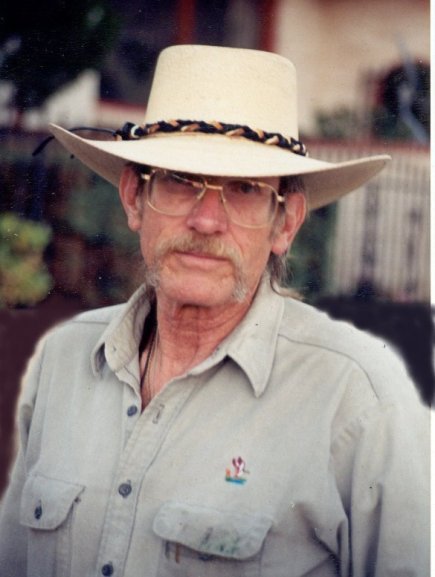
Harper, TX 2010 123

Old Jules, what is the meaning of ‘the perfect victory is to triumph over oneself’?

It’s a cliche disguised as wisdom evangelizing a particular viewpoint concerning the nature of victory. A wisdomoid.

Old Jules, what have we done to show our love to god?

We’ve done a great deal more, say, than God’s done to show his love for us. Even if we’ve done nothing at all. We haven’t given him any sexually transmitted diseases, any brain cancer, any strokes and paralysis. Which a believer would insist God has done for us.
In a lot of ways we humans are Job, trying to walk the walk and talk the talk while God’s out there making wagers with Lucifer about our ability to keep the faith while He turns up the heat and cuts us off at the knees.
My personal thought is that Job wasted his love. He’d have been better served by Lucifer.
But of course, I don’t happen to believe much of what those old savage ancient Hebrews dreamed up as a God for themselves.

Old Jules, wouldn’t an objectively ‘good’ person try to alleviate suffering at every available opportunity? If people want to draw a line between ‘good’ and ‘evil’, wouldn’t someone who is good have to show compassion and generosity at every available opportunity?

No.
A ‘good’ person would tend his own affairs because a ‘good’ person would realize he/she isn’t wise enough to know what’s ‘good’ for someone else.
A good person would recognize interfering in the challenges of others is mere self-aggrandizement.
A good person realizes he/she isn’t wise, perfection incarnate, and that there’s plenty of pulling out of kinks in his/her own life without presuming to advise others.

Old Jules, why do human beings have to die?

If they didn’t you’d rapidly come to wish they did. Human beings would already be stacked up like cord wood a mile high and climbing, instead of that being the case half-century from now.
The quality of life would suffer if you were having to climb over half-mile of human beings to get home for supper.

Old Jules, what are the most important lessons you’ve learned in your lifetime?

Among the most important in my case was gratitude as a method of neutralizing anger issues I’d brought into this life and carried around 50-odd years. Someone told me about gratitude affirmations at a time when I happened to be capable of listening.
All my life I’d been described by people who knew me as an ‘angry person’. I never understood what they were talking about. It was so much a part of me I couldn’t even see it.
Within a couple of weeks of gratitude affirmations morning and night I began to actually recognize anger in myself. Within a month it was only a residue of a lifetime of mental habit. Shortly thereafter I added forgiveness affirmations…. Both are daily rituals in my life. And I’m the most fortunate man in the world to have learned about them 15 years or so ago.


Hats You Can’t Wear Sideways or Backwards

mexican saguaro

I found this in drafts, no idea when it was written–Jeanne

For a number of years I’ve watched people wearing ball caps turned backward and sideways, nobody raising an eyebrow.  I’m not sure why they do it because the purpose of the visor on a ball cap is to protect the nose from Old Sol’s battering.  But I gradually began to wonder if people just didn’t know which piece of a hat is the front, which is the side, and which is the back.

Eventually I decided to perform an experiment.  I carefully selected a hat for my next trip to town, determined to wear it backward all day, seemingly oblivious to that.  I wanted particularly to corner-of-my-eye observe the reactions of people wearing their ball caps backward and sideways.

My findings weren’t ambiguous.  From my first stops of the day I saw that people of every age and gender did double-takes, then attempted to surreptitiously call the attention of someone else to the fact I was wearing my hat backward.  If they had no companion they’d nudge a stranger to share it.  Not once did anyone sidle up to me and whisper, “You’ve got your hat on backward,” as they’d have done if my fly was unzipped.

If I’m wearing a hat when I eat in town I usually take it off a moment while I briefly acknowledge gratitude.  On this occasion the hat was on backward when I entered and took my seat, ordered my food and waited to be served.  The café was well populated and though I pretended to be reading I observed the hat was a subject of notice and concealed, smiling discussion at almost every table.

When the food arrived, after the waitress left, I removed the hat and bowed my head a moment, then replaced it, facing forward.  But, pretending to notice I’d put it on forward, I took it off, looked at it, then turned it backward again on my head, and began eating while still occupied with my book, watching the other patrons.

This brought giggles and laughter, even among those wearing ball caps turned backward and sideways.

My conclusion from this study is that people don’t know what is the front and what is the back of a ball cap, but they do know the front from the back of western-style headgear.  I believe the findings are important enough to justify more in-depth study by PHD candidates in anthropology, sociology and fashion.

Jack