Category Archives: Country Life

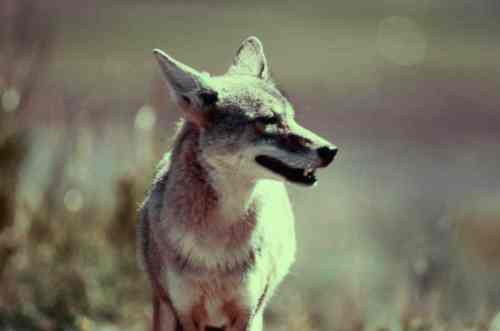
Brother Coyote

If it weren’t for the big cats, the spiders, the rattlers, the various predatory… and when I think about it, regular non-predatory birds… I’d be tempted to say the wild critter I love most is Brother Coyote.

But that’s when I don’t pause to think of those others individually.  Old Cuervo (Brother Raven)  is hard to beat if you let your mind wander to him.

Frustrating.  I began this blog post to talk about Brother Coyote and why I love him and somehow find myself having to tip my hat to ravens and rattlers and bob-cats and owls and blue birds and spiders.

How’s a man supposed to get anything said about one thing when his mind gets all clogged up with all those others dancing out of the wings wearing clown suits, somersaulting and tooting horns trying for some attention?

Dragging myself back to the issue at hand.  Brother Coyote’s maybe the critter out there that’s most like man.  Intelligent enough to have you shaking your head out of respect.  Loves himself, loves being a coyote.  Never wants to be something else, knows everything else was put here for his amusement, and frequently, for his destruction.

I suppose that’s the long and short of it.  Why,  I’ve studied Brother Coyote and often seen him studying me, seen his sign and his track behind a bush where he was sitting, tongue lolling, laughing as I stumbled noise-making through life.

But if I try to say more this will get too long for the attention spans of you readers.  I’ll save the stuff I planned to tell you about Brother Coyote for another entry or three sometime later.

Meanwhile, the moon’s full this pre-dawn.  Pause and have a look-see for a moment.  When you do, know it’s another thing you share with Brother Coyote.  He loves that moon same as you do.

And if he could get to it to destroy it, he’d do that, also.  Same as you.

Old Jules

You’ll enjoy this short video of a rising moon with a running coyote:
http://www.flickr.com/photos/ddsimages/5371270617/?reg=1&src=comment

Coyotes
by Bob McDill, sung by Don Edwards
http://www.youtube.com/watch?v=8kVdOxXB8fg

Cunning vs Habit

Coyotes soon learn
Becoming trap-wise in time
Never snare-wise
In time.

from Poems of the New Old West,  NineLives Press, copyright 2004

A Question for the Brave New World


When I went back to my hometown as a young soldier on leave, Christmas, 1961, it was enough of an event to bring my granddad in from his hardscrabble farm.

We sat around the living room, my mom and step-dad, sisters, and granddad, mulling over the war we were certain to have with the Soviet Union soon.

At that point I was as well-educated (by usual standards) as any of the people in the room and all our ancestors by virtue of having completed high school prior to entering the Army.

In talking about the (then current) brink-of-war crisis my granddad muttered something in Latin.  My mother and step-dad cocked an ear.

“Cicero’s probably not the best place to gain any wisdom about America today,”  My step-dad frowned and adjusted his dentures, followed by another Latin quote.

“Neither is Pliny.”  My mom shook her head at both of them.

Young man who knew everything worth knowing, I was.

I didn’t know any Latin, didn’t know who Pliny was, nor Cicero.  I was as ‘well educated’ as anyone in the room and considered my knowledge sufficient to have a wealth of valuable opinion on the issues of the day.  I felt a vague discomfort with them spouting Latin back and forth at one another and naming people I knew nothing about.

I had reason to recall that conversation in 1976, the US Bicentennial year, when the state of America and the state of education was being examined and bandied about.  Thoughtful minds were concerning themselves that Americans were becoming illiterate and ill-educated.

The thinkers of 1976, asked Americans to ask themselves whether they were better educated than their parents and grandparents, despite many more years spent in formal educational institutions.

The general answer in polls was that Americans considered themselves more canny, better informed than their parents, though weaker in most areas of knowledge once considered essential for a person to be ‘educated’.

The moving finger writes and then moves on.

Are you better educated than your parents and grandparents?

Better educated?
Less well-educated?
Know more about everything but less well-educated?
Less well-educated, less well-informed than parents?
Smarter and with more common-sense without Latin, history, philosophy, and other useless studies?

Sam Cooke- Wonderful World


The Great Speckled Bird: Respecting our Betters

We humans cross paths with nobility so rarely, the surprise is in the fact we recognize there’s something akin to reality behind the concept.  Instead of looking for it we make heroes of celebrities, preachers, soldiers, cops, politicians, popular science personalities and any gender capable of making our genitals tingle.

We need heroes too badly to hold out for anything worthy of admiration in our fellow humans.  Far better to have a fat, power-drunken political radio rhetorician, an angry, strutting songster shouting a drumbeat of communal self-pity,  a tribe of pierced, tattoo–branded cattle, anyone who can catch a football  to represent the best we can find as objects of our veneration,  than to have nothing at all.

But I’ve digressed.

Probably Christendom runs amok with people who share their lives with creatures they believe are noble, worthy of a higher level of respect than the fantasy masturbation indulged in when they consider their favorite preacher, guru, rock star, or pleasing features.  A cat, a horse, a dog– anything capable of out-doing a human being when it comes to loyalty and the ability to do well what nature gave it the means of doing.  Most settle for less, knowing it doesn’t require perfection to trump any competition the human species is likely to put forward.

I’ve known a good many cats, and share my life with some now I’d stack up against the great majority of humans I’ve met in 6.8 decades of life.  They were good, each in ways we measure felines.

But the Great Speckled Bird is in a class all his own.

He was given to me as a discard, a crippled leg, a wing that hung low from some past injury.  I took him, but I wasn’t glad.  Not until a few days later when I saw him trying to convince a hen that a particular spot was okay for laying eggs.  Not until he snuggled himself into the spot while she looked on, hen-like.  Not until he stood guard at the entry while she did her business.

That was my first hint there was something special going on here.  I’ve admired roosters for conspicuous courage, smiled at their pride and posturing, cursed their wrong-headedness, acknowledged over time that traits of average roosters bear a lot of similarity to those of human heroes, celebrities, and the common run of mankind, only the roosters are more consistent, better at  it.

Learning to respect the Great Speckled Bird required me to suspend disbelief.  I had to learn to believe my eyes and forget the expectations acquired by long acquaintance with roosters.

Over time I watched him deprive himself as a matter of ritual, calling the hens to any food he found, picking it up showing it to them, dropping the morsel for them to fight over.  Refusing to go into the chicken-house at night until all the hens were safely inside.  A few months after his arrival I’d lost seven hens to some predator within a couple of days.  I was indoors when I heard the cacophony of flock alarm somewhere out back, took up a long gun and hurried to see what was wrong.  The Great Speckled Bird took flank position and we trekked in the direction of loose feathers up the hill.  I knew I’d lost another chicken, but I saw no sign of what got her.

Suddenly TGSB spread his wings and made a run for a cedar about 40 yards away.  When he was a few yards away a fox darted from beneath, crosswise to both our paths.  I fired and the fox chose to visit the place where chickens don’t have roosters and men with guns to guard them, or whatever place fox-folk think they go when they die.

Last winter was a tough one for the Great Speckled Bird.  Younger roosters were maturing and a long cold spell weakened him enough so the beta birds discovered they could beat him out in a fight.  I caged them so they couldn’t follow through, and he recovered.

But I’ve just pulled a brooding hen off nine eggs she sat for 25 days, none of them fertile.  The winter must have done more damage than his frost-bitten comb and the beatings from the other roosters.  No more chicks around here until he’s gone, but I doubt he’ll make it through another winter.

One morning I’ll go out there, see him lying beneath the roosting hens and whisper, the king is dead.  Long live the king.

Old Jules