Tag Archives: pre-columbian

Worthy of the Displayed Petroglyphs

I don’t know much about art, except knowing what I wouldn’t want to fall on me.  Most artists I’ve known were just doing it for the same reasons I write things down.  They mostly just did it without wondering why.  And I’ve always suspected most of them secretly hoped some piece of it would survive them.

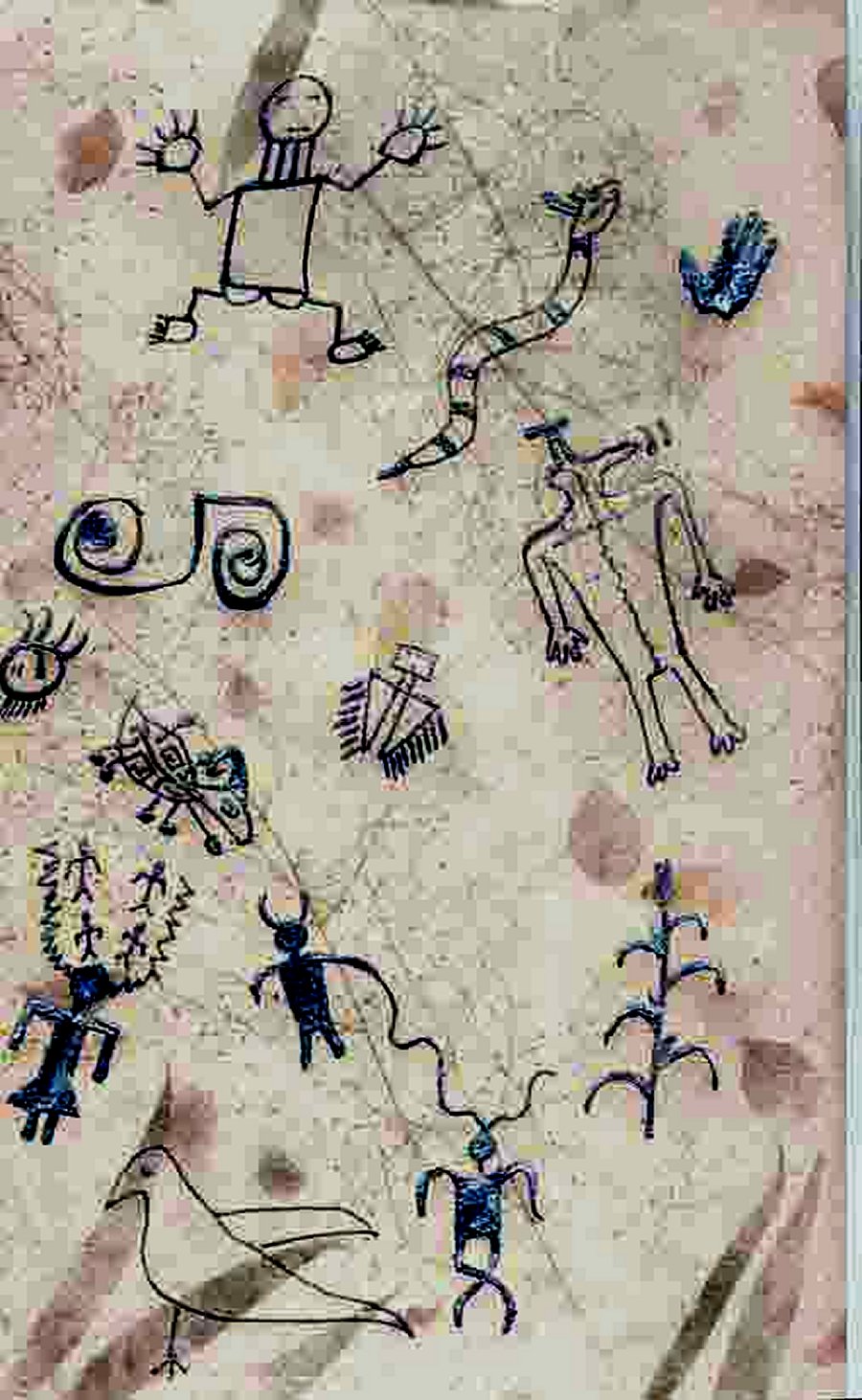
Probably the same is true of the people all over the backassed places who scratched things on rocks or painted pictures a person today often has difficulty understanding.

But sometimes in the heat of the moment those artists pulled off coups leaving no doubt what was being said, why it was being said.  Messages speaking of events in their lives still able to increase the heartbeat of a viewer looking from another world.  Another reality.  Another time.  For instance, of the hundreds of petroglyphs I’ve seen in my life, a couple come to mind that satisfy that description. 

One’s in the desert east of Socorro, New Mexico.  Under a cliff overhang 50, maybe 100 yards long someone a long time ago painted [yeah, I know.  Not a petroglyph per se] a series of scenes of people wearing jockstraps pulling men in armor off horses, beating them to death, stabbing them, generally giving them whatfer. 

I’m only speculating on this, but I’ve always suspected that scene depicts a piece of action took place with scouts or the rear-guard of the Spaniards retreating from New Mexico fleeing the Terrors.  The Revolt of 1690.  The route passed within a few miles of there, some maybe right across it.

The other is in Frijole Canyon a few miles upgrade from Bandera.   Three guys in jockstraps surrounding a bear ten times their size and a dozen times their ugly.  The two on the sides have spears in positions to thrust.  The third is in front of the bear, close, spear broken, bear paw with claws outstretched on the way to adjusting the future to contain one fewer human being.

But I’ve digressed. 

Modern art’s more subtle and a lot of it probably won’t last so long.  To clarify the message, modern artists frequently add words.  Not everyone’s able to just look at a painted likeness of a horney toad and recognize the underlying action, profundity, statement about the human condition represented.


A lot of people might, for example, glance at this and assume they’re seeing an automobile with red headlights belonging to some wealthy person, ready to toodle off to the hair dresser or enjoy a $5.00 cup of Latte somewhere.

But the reality is somewhere else entirely.  That steel plate depicts a piece of modern life most folks never get around to acknowledging.  KEEP TEXAS WILD is the only way the artist managed to convey the work has a deeper meaning.

Because what you’re seeing is men in Texas living behind bars, being gang raped by their fellow prisoners.  Being forced to join White Aryan Brotherhood, the Crips, other prison gangs as an alternative to constantly having the crap beaten out of them, being forced to perform oral sex on the competing ethnic group, experiencing growth experiences of the anal sphincter.

You’re seeing prosecuting attorneys increasing their power, their office space, their staffs.  You’re seeing opportunities for advancement to judgeships.  You’re seeing money allocated to new cars, sophisticated weaponry, better copshops. 

You’re seeing legions of defense attorneys wallowing around in money Scrooge McDuck-like, circulating the product through the system.

And you’re seeing corporate America at its best, building and operating private prisons.  Discovering a new product while it was sending all the others outside US borders to be manufactured.  A product able to be used over and over to feed the necessities of the artists:   private hotels for the artists and guards to admire their work.

And a plea to keep Texas wild.   Wild enough to need more of the same.  Wild enough to keep the money rolling in.  Wild enough to keep things interesting while the products enjoy brief interludes outside with the rest of us.

Seems to me overall that’s a pretty decent piece of art.  Even though it’s obviously one of a numbered series.

Old Jules
Vacating the Premises – A Vanishing Act

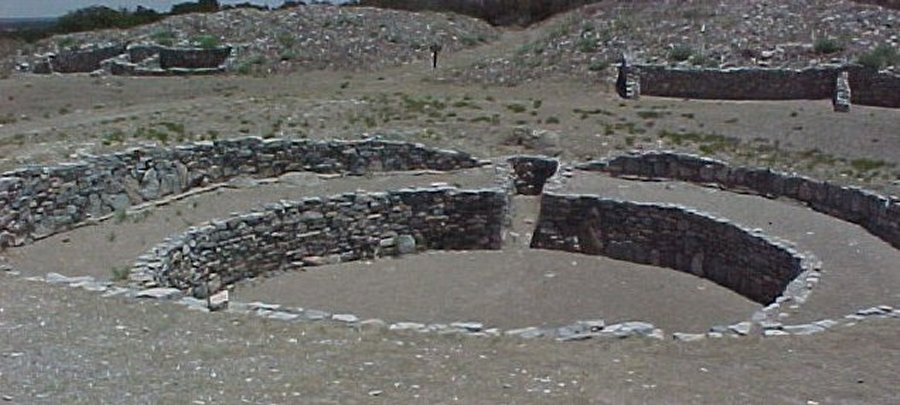
The mountain I used to prospect for several years is covered with ruins wherever there is water.  Big ruins.   I used to sit on one near my camp and try to imagine what it must have been like.

One summer solstice afternoon I was sitting on the cliff boundary of the ruin watching the sunset.  In the basin below there’s a volcanic knob out toward the center of the plains.   I’d discovered a single kiva on top of it years before and puzzled over it vaguely.  What was that kiva doing there, miles away from the big houses?

But because that day happened to be solstice, I suddenly noticed when the sun went down, it vanished directly behind the point of that Kiva knob!  Yon damned Mogollons used it to mark summer solstice!

A place like that fires the imagination, and I spent a lot of time thinking of those people who lived in that ruin. Some of these groups had evidently been in the same locations for 300-400 years, and suddenly their government leaders decided they had to leave.  Politicians, or priests, or both, deciding what was best for them.

One day they  just left.  I’ve always thought it was because of that grim civil war nobody knows anything about that happened among them around the time these ruins were abandoned.  Bashing in the heads of anyone who didn’t agree to migrating.

They probably watched and even hosted strings of these travellers along the trail until their own turn came.

What a thing it must have been to be one of them on that last day, saying good bye to the place your great-grand-dad, your granddad, your dad, and everyone else as far back as anyone could remember, including you were all born, lived, and mostly died.

Everyone voluntarily packed a few belongings, a medicine bag and blanket or two, a stone hatchet and a few scrapers, and left, leaving corn in the bin for those coming behind.  Abandoned pots lying around all over the place measured the things they couldn’t carry.

Sometimes sitting on that mountain early in the morning it sort of overwhelmed me, the pain and sorrow in those villagers.  Probably they all left in the morning one day, after a while of maybe being notified it was their turn.  A few weeks of  planning.  What to take?  What to leave behind.

Finally they probably finished the last minute packing the night before.  At dawn they made a line down the basin heading south, looking back over their shoulders as long as they could, feeling so sad.  Knowing they’d never go home again, wondering about the place they were going.

Remembering how it was playing on the mountain with their grandads when they were  kids, remembering the special, secret places kids always have.  Just looking and yearning to stay, and already missing that long home where their ancestors had roamed for 2000 years.

They’d have tried to keep it in sight as long as they could, each one stopping to wipe the trail dust off his face, pretending to catch his breaths.  But yearning back at the old home place, piercing the heat waves with their eyes, straining to see it one last time, maybe crying, certainly crying inside.  The kids probably screeching enough to cover everyone elses grief.

As they trekked south they were joined by other groups from the neighboring villages.  The dust rose on the trail making a plume, a cloud around them.  They examined these strangers who were now trail mates and wondered who they were.

Some, they probably soon discovered had a mother-in-law, or uncle who came from their village.  They got to know one another better there on that hot, sad, lonesome trail away from all they they’d ever known, and they shared the hardships of the journey together for a long time.

Today, it’s just piles of rock, potsherds, holes left by scholars and other diggers for spoils.  The land still falls off across Johnson Basin, sun going down over that volcanic nub that once measured the time to plant.  Cow men ride their motorized hosses across the old trails, cows stomp around looking for grass, making the pottery fragments even smaller.

But sometimes late at night when the wind howls down the mountain a man might hear, or think he hears an echo of the chants, the drums, the night mumbles and whispers of lovers, the ghosts of lovers.  Pulls the bag tighter around his ears and wonders.

Old Jules


Today on Ask Old Jules:  What is Forgiveness?