The father of a man I used to know had been a Hungarian tank commander on the Eastern front during WWII. (He bore a striking resemblance to an aging Robert Shaw in his role as a German tank commander in Battle of the Bulge). He was there for the Axis invasion of the USSR, all the way to the suburbs of Moscow.
He was captured by the Soviets early in the war before they began shooting their officer prisoners, then exchanged and sent back to Hungary to recuperate. But later as the casualties mounted and the Eastern Front meat grinder demanded more meat, he was sent back.
One of the battles late in the war provided him a ticket to a German Hospital facility and an injury sufficient to keep him there until the surrender. Surrender, by incredible luck, he vowed, to US forces. He was held in a camp while prisoners from USSR-held countries were sent back for mass executions. His membership in the NAZI party in Hungary would have made his demise a certainty.
Disguised as a woman, this man escaped the camp and journeyed to South America. That’s where my amigo was born. Afterward the family moved to Canada. I became friends with his son during the ’70s at the University of Texas where he was several years ‘all-but-dissertation’ for his PHD in Linguistics. His father’s status as a ‘wanted’ war criminal in Hungary remained in force throughout the old man’s entire life.
I asked him once about the Eastern Front experience, knowing he was unrepentant. I’d been carrying a nagging curiosity about it for years.
“Those were heady times,” he smiled, “Kind of fun, actually. Going up against infantry and squadrons of Soviet cavalry in an armored vehicle. Sometimes you might kill a hundred men before breakfast.“
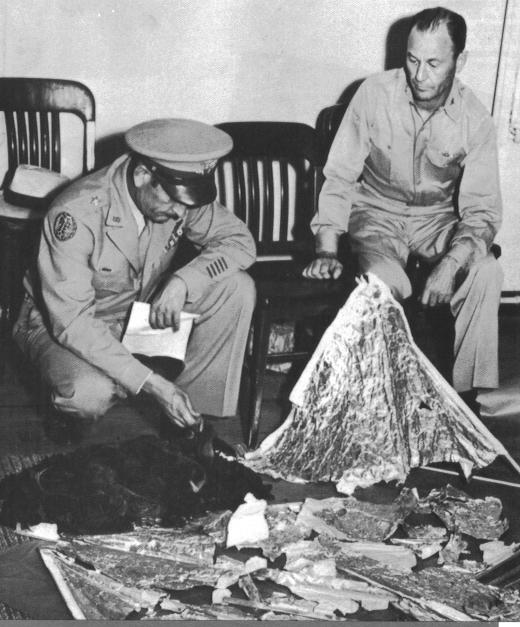
Kay, the wife side of the couple owning the cabin where I live, is part of the family owning the property adjoining the ranch where the Roswell Incident happened in 1947. Her Aunt Loretta was the step-mother of Dee Proctor, the youngster with Mac Brazel when he discovered the debris on his land.
Loretta was there when Brazel brought Dee home that day carrying pieces of what they’d found. She sat at the table with the rest of the family considering while Mac Brazel tried to make sense of it, tried to decide what he should do.
“The piece he [Mac Brazel] brought looked like a kind of tan, light brown plastic. It was very lightweight, like balsa wood. It wasn’t a large piece, maybe about four inches long, maybe just a little larger than a pencil. We cut on it with a knife and would hold a match on it, and it wouldn’t burn. We knew it wasn’t wood. It was smooth like plastic.” “According to Brazel’s neighbor Loretta Proctor, her 7-year old son Timothy or “Dee” was with Brazel when he first discovered the debris field. But he was also with Brazel when he discovered something else at another site 2-1/2 miles to the east that left him deeply traumatized for the rest of his life.” This is frequently quoted from numerous locations on the web and in books about Roswell, but it provides a good summation or paraphrase of what Loretta had to say about that part of her experience during our visit recently.
Dee [the accounts continue] never told her exactly what he saw there but did take her to the location in 1994 saying, “Here is where Mack found something else.” Dee Proctor would also duck all attempts at interview and died in 2006.
However, Dee never ducked any conversations with Aunt Loretta, nor with his step-sister regarding the incident, though he was reticent to a degree according to the two women.
The popular accounts continue: “However, other rancher children are believed to have visited the site, including Sydney “Jack” Wright, who said that two sons of rancher Thomas Edington and one of rancher Truman Pierce’s daughters got to “the other location.” Wright in 1998 would state, “There were bodies, small bodies with big heads and eyes. And Mack was there too. We couldn’t get away from there fast enough.”
—————
A while back Gale, Kay and I went up to Comanche to visit her Aunt Loretta for an afternoon. I’d recently read Thomas J. Carey and Donald R. Schmitt’s book, Witness to Roswell. Even though I ‘d thought before reading it the subject had beaten to death several decades ago, the book renewed my interest, so I was enthusiastic about meeting Aunt Loretta and discussing it with her, so I carried a recorder with me.
Loretta lives with her daughter now, raising goats, dancing one night a week, sharp of mind, intelligent and quick of wit. At 95, she’s a woman with a lot still to say, but careful about how she says it.
I was prepared by recent readings mentioned above, ready with questions, as were Gale and Kay, who’d also done the reading of Witness to Roswell. We sat for several hours, asked, and she and her daughter answered, sometimes drifting into nuance, squinting with loaded, pointed implication.
As we drove back Gale, Kay and I talked a lot about what Loretta and her daughter told us that afternoon. It all boiled down to what she’d personally observed, remembrances of Dee when he and Mac arrived at their ranch, asides about Dee, afterward, almost certainly still in possession of the ‘memory metal’ after it was supposed to have been all turned over to the Army. “A certain little brat kept it hidden away his whole life!” Loretta declared with a measure of smiling venom.
According to Aunt Loretta, Mac was in a quandry over what to do about the mess on his ranch. He’d heard somewhere the Army would pay a reward for anyone who found a ‘flying saucer’, but he had a lot of qualms about whether to get involved with the government. Like a lot of people of that time and that area, Mac didn’t have a lot of trust in them. A huge tract of land not far away had been confiscated from the families owning it just a few years earlier to create White Sands Proving Grounds, and the Trinity Site of the first atomic bomb detonation was just down the road and only a couple of years in the past.
There, in Loretta’s kitchen, Mac decided to go visit his wife and kids in Las Cruces for the next few days to think it over. It wasn’t until his return from Cruces he went to Roswell and reported what he’d found. Because of that delay of a week a lot of people in the Corona area knew about it a considerable while before the government did.
She’d provided a vivid description of the site, almost without seeming to realize she was doing it. The way the ridge was scoured of any plant life, the ‘remembrance’ of the ‘impact’ zone as she gazed at the wall telling about it. I came away believing Loretta probably visited the site herself, sometime shortly after the event.
But of all the questions we asked Loretta that afternoon the one thing that didn’t happen was any hint of denial of anything related to her, Dee, the events of those days as described in “Witness to Roswell”.
Whatever happened back there in 1947, there’s not much room to doubt that Loretta’s interpretation of it all doesn’t agree at all with government accounts and seems to agree in all ways where her personal experience and observations come into the events, with just about everything the ‘other side’ has been saying all along.
http://www.alienresistance.org/roswellufocrashsitephotos.htm
Causey, New Mexico, was a dot in the road. Pavement from nowhere to nowhere running between a scattering of frame houses, a small roadside store and gas station. A rock schoolhouse, a church, and a few rusting hulks of worn out farm machinery in the weeds. http://www.ghosttowns.com/states/nm/causey.html
Our cottage was on the same side of the road as the schoolhouse. Most of the village was on the other side, including the windmill across the road from our house where my sister and I went for water and carrying the bucket between us to tote it home.
To my tiny, four-year-old mind, the center of town was the store, diagonally across the road, to the left of the windmill. Everything of importance happened there. Cars from other places stopped for gas. The store had Milk Nickles. Ice cream on a stick, covered with chocolate. Pure heaven that didn’t come often.
If the store was heaven, behind our house was hell. The toilet. A ramshackle tower with dust flecks floating in the shafts of light that came through the cracks between the boards, light coming through underneath where the ground had caved away from the wall. Home of black widow spiders and the occasional rattlesnake. The place was a chamber of terrors for me. I was always certain I’d fall through the hole to the horrors beneath when I used it.
Our little cottage had two rooms. A sort of kitchen, living area in front also had a little counter where my mom tried to operate a little variety store. Keychains, trinkets, a handkerchief or two. Things that wouldn’t be found across the street at the store.
She was also a seamstress. Most of my memories of that time include her huddled over a treadle sewing machine working on the felt curtains she was making for the stage of the school auditorium. Mom was a woman twice divorced. In 1947, that was no small thing. In that time and place broken marriage was considered to be the fault of an untrained, unskilled, unwise, probably immoral woman. Two divorces, three children, and no resources made my mother the subject of mistrust by the woman of the community, and disdain by the men.
Memories have probably faded and altered with the half century since all this happened. The perspectives of a child plagued with fears and insecurities seem real in my recollections, but they, too, have probably been twisted with the turns and circles the planet has made around the sun; with the endless webs of human interactions, relationships formed and ended.
My sisters went to school in that village. Frances, my sister who died a few years ago, must have been in the second grade. Becky, maybe in the 5th. I hung around doing whatever preschoolers do in that environment when everyone else is busy. I have flashing memories of standing by the road throwing rocks at cars; trying to get the little girl down the road to show me her ‘wet-thing’.
I remember being lonely; of wishing aloud my mom would give me a little brother to play with. “I wish I could,” she’d reply, “but you tore me up so much when you were born, I can’t have any more kids.”
That trauma of my birth was a favorite theme of my mom. She was fond of telling me how the doctors were long arriving when I was ready to be born; how a nurse and my dad held her legs down so I couldn’t emerge until the proper people were there. How it damaged her insides and caused her to have to undergo all kinds of surgery later.
I recall I felt pretty badly about that.
During harvest season it seemed to me the entire community turned out to work in the fields. We’d all gather in the pre-dawn at the store, then ride together to the cotton fields in the back of an open truck. Mom and the girls were all there, along with the neighbors and some of their kids. Two of the kids were about my age: Wayne and Sharon Landrum.
In retrospect I doubt we preschoolers helped much. My mom had put a strap on a pillowcase and promised a Milk-Nickle every time it was filled. This was probably more to keep me busy and out of trouble than it was to pay for the ice cream bar. I can’t imagine that a pillowcase would have held the ten pounds of cotton it would have taken to pay a nickle.
The lure of sweets weren’t sufficient to occupy smaller kids, I suppose. There came a time when Wayne, Sharon, and I wandered off from the field. At first it was just to take a walk, but the road was long and we must have made some turns. Before too long we’d gotten so far from the farm we didn’t know the way back. We were frightened and kept moving.
In the end we found the lights of a farmhouse sometime after dark. The family brought us inside and fed us something. We sat around a stove trying to keep warm until some of the searchers came and picked us up.
In the morning at the store all those field workers who’d had to lose part of a day of wages wanted vivid descriptions of the spankings we got. They wanted to make sure.
That was my first experience with running away, at least on my own part. My mom had done some of it, running away from my dad and her second husband. My dad had done some of it, letting his kids go off, first to Arizona into the shelter of a brutal, drunken step-dad, then into the shack in Causey.
I think my mom would have made a deal with the devil for one of these in 1947. She didn’t get one, nor anything else of the sort until around 1957, but I don’t recall her washing clothes in a washtub after the early 1950s. From around 1954 until she got a home washing machine she went to the Laundromats with most of the other ladies. I’m guessing this one was probably manufactured in the late 1940s.
I’d watched in one of the thrift stores in town for some while, them asking $55, then marking it down to $35, nobody interested enough to plug it in and find out if it worked. But after it had been there long enough to cause me to figure they were getting tired of seeing it I plugged it in.
“HUMMMMMM!”
No vibration, nothing moving, just a clicking of the spring loaded timer and the sound of an electric motor trying to push the immoveable object. I unplugged it more quickly than I plugged it in, carried it up to the cashier and told him it didn’t work, told him what it was doing and what was going to happen if someone plugged it in and left it trying to run.
“We can’t fix it. We don’t have a repair department.”
“Yeah, maybe nobody can. They haven’t manufactured parts for it in 50 years. But maybe someone can.”
“Do you want to try?”
“Maybe. How much do I have to risk betting I can?”
He made me an offer I couldn’t refuse.
The only tool required to get it running was my foldup Leatherman, oil, and a rag. It’s out there washing seven pairs of my jockey shorts at the moment. I don’t envy it.
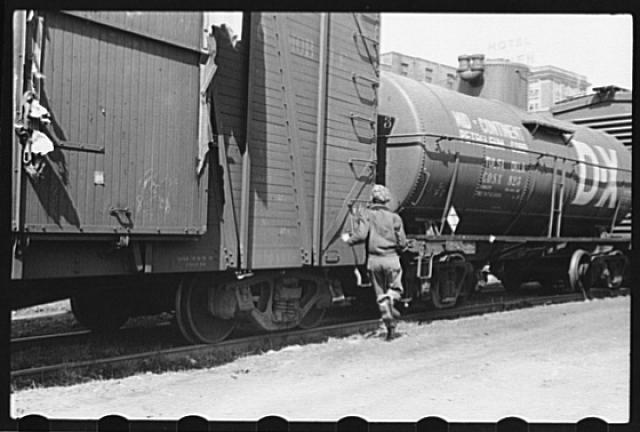
One of the the ways youngsters in Portales, New Mexico, used to entertain themselves summer days was hopping a freight train for a ride to Clovis, twenty miles away. We’d hang around a while doing nothing, then hop another back to Portales.
Bums hanging around the Clovis yard would tell us which trains not to catch. A kid wouldn’t want to be on a mile-a-minute diesel locomotive as it went through Portales and end up in Roswell, 90 miles west, wondering how to get home without the war department discovering what he’d been doing.
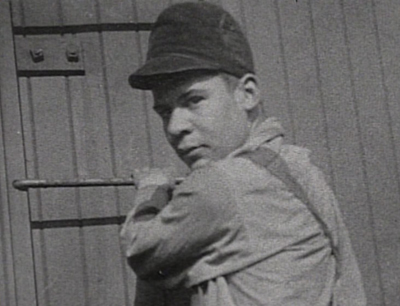
It wasn’t quite a decade later, summer, 1964, I was in NYC hanging around Greenwich Village thinking I was a beatnik. I decided to head back to the desert Southwest. The easiest way of getting out of the city appeared to be to hop a freight. Seemed logical that any train I caught ought to be going South, or West, or Southwest.
Sometime after dark the train stopped at Rochester and and two cops had their pistols pointed at me. Handcuffs, fingerprints, paperwork, and off to the slammer. Rochester, New York, awaiting an arraignment so’s they could decide whether to charge me with the NY felony of riding freight trains and send me off to the pen two-to-five years.
That Rochester jail was the first place I ever heard the phrase, ‘riding the rap’. Prisoners used it to describe what happens when you’re caught (the rap) and sentenced (serving your time – riding it).
Considering how frequently we humans are wrong about almost everything, and how seldom we’re right, it’s a mystery. We go to sooo much trouble convincing ourselves we’re right. Once we adopt an opinion about how things are, we hang onto it with hair, teeth, and toenails and ride it.
At the beginning of the 20th Century a consortium of top-scientists announced to that all the major discoveries science would ever make had already been made. Human beings all over the world believed them. They’ve continued patting themselves on the back from then until now. The airplane, the atomic bombs, moon landings, plastic, computers, tubeless tires, television, and quantum physics were just tying up loose ends.
In our personal lives this brave new century is a time to pick something safe, something that will stay on the rails. Something that won’t provide us with any growth experiences. Safety nets. Insurance policies. Spectator sports. World news.
We might be bored to tears, but by damn we know who the Bulgarians ought to elect for their president, and by damn, we know who killed John Kennedy and what’s the best ball team.
The only rap we have to ride is knowing our lives are slipping away without our having done anything but a little flag-waving. Whoopteedoo, watched the Super Bowl. Whoopteedoo, went to a concert. Whoopteedoo, got a car. Whoopteedoo, died of cancer.
But by God, I was right. Knew, by damn, who the Bulgarians should have elected for their prez. Knew which ball club was best, win or lose.
Life flashing before the eyes during the last minute of life, I wonder if a person gets to thrill again to the 1999 Super Bowl.
Or whether he might wish he’d chosen some other rap to ride. Chosen a life with more risk, more flair, so they wouldn’t write his epitaph, “He knew everything already and played it safe. Sixty times around the sun and he never fixed a flat tire.”
74 years old, a resident of Leavenworth, KS, in an apartment located on the VA campus. Partnered with a black shorthaired cat named Mister Midnight. (1943-2020)
Since April, 2020, this blog is maintained by Jeanne Kasten (See "About" page for further information).
https://sofarfromheaven.com/2020/04/21/au-revoir-old-jules-jack-purcell/
I’m sharing it with you because there’s almost no likelihood you’ll believe it. This lunatic asylum I call my life has so many unexpected twists and turns I won’t even try to guess where it’s going. I’d suggest you try to find some laughs here. You won’t find wisdom. Good luck.





 So Far From Heaven


