Category Archives: Emergency Preparedness

Desert Emergency Survival Basics

You survival and preparedness-oriented readers might find something you didn’t already know in here to be useful.  The Introduction section to the book Desert Emergency Survival Basics explains my purposes for writing it better than I can today:
The potential range of human experience includes finding ourselves in unanticipated dangerous situations. Most of those situations have been examined minutely and described in print in the form of survival manuals. Desert survival is not an exception. Excellent books are available to explain primitive survival in the desert southwest duplicating lifestyles of Native Americans a thousand years ago. That is not the intent of this book.

A few decades ago I had an acquaintance with a man named Walter Yates. Walter had the distinction of surviving a helicopter crash in the far north woods by jumping into a snowdrift before the impact. He managed to survive winter months with almost nothing except the clothes on his back when he jumped.

Walter’s experience was a worthy test of human potential for emergency survival in extreme conditions. The margin for error was microscopic. The reason he survived rested on his ability to quickly detach his mind from how things had been in the past, how he wished they were, and accept completely the situation he was in. He wouldn’t have made it out of those woods if he couldn’t rapidly assess his new needs and examine every possibility of fulfilling them. “It’s all in the mind,” he once told me.

The margin for error in the desert is also narrow. That margin is dehydration. Extremes of temperature are also a factor, but they are more easily managed than the needs of the human body for water. Anyone who survives an unanticipated week in desert country did so by either having water, by carrying it in, or finding it.

Over the years I’ve followed a number of search and rescue accounts and discussed the issue with searchers. The general thinking among those workers is that a person missing in the desert southwest should be found or walk out within three to five days. After three days the chances for live return spiral downward. Returns after five days are lottery winners. When a missing person isn’t found within a week, it’s usually because he’s been dead for five days.

This book is to assist in avoiding situations that lead to the need to survive those crucial three days, and to provide the basics of how to walk out and how to find water in the desert southwest. If you need the emergency information here it will be because you became lost, stranded by mechanical failure, or physically incapacitated. I won’t address the bugs and plants you might find to eat. If you have water you’ll survive without eating until rescue.

When this book was written I had a close association with New Mexico State Search and Rescue (SAR). I was also writing a book about a lost gold mine at the time. The State Search and Rescue Coordinator (SARC) knew about the book. I had a special arrangement with him because I was spending a lot of time in remote canyons searching. If something delayed me there I didn’t want them to send out the SAR guys to look for me.

One day in the coffee-room SARC asked me about my progress in the search and the gold mine book. I explained the lost gold mine search to him and how the information available in the past was sketchy.

“So you’re writing a book that’s likely to cause flatlanders to go out into the desert searching for this thing?”

I thought about it a moment before I answered. “It might. A lot of people would have tried anyway, but this book might bring in some who wouldn’t have come otherwise.”

SARC glared at me. His whole world revolved around  flat-landers getting lost in the mountains or desert. Several times every month they’d scramble the forces to try to locate someone misplaced. Sometimes it’s a brain surgeon from Houston who got himself mis-located mountain climbing on the east face of Sandia Mountain within sight of Albuquerque . Other times a physicist from California gets off the pavement in the desert and loses his bearings. Sometimes SAR arrived in time to save their lives. New Mexico back country can be unforgiving.

“If you’re going to publish a book that will take a lot of idiots out where they can get into trouble you’d damned well better include some warnings on desert survival and how they can stay out of trouble! I don’t want to spend the next five years dragging the bodies of your readers out of the arroyos in body bags.”

That conversation ultimately resulted in this tome.

Over time it’s been expanded and rewritten numerous times to eventually become what’s posted here. Here’s the link, but there’s a new page for it on the navigation bar at the top of the page.
Desert Emergency Survival Basics

Old Jules


Sons Of The Pioneers – Cool Water

To Live is to Fly


Good morning everyone, Admin. (Jeanne) here.

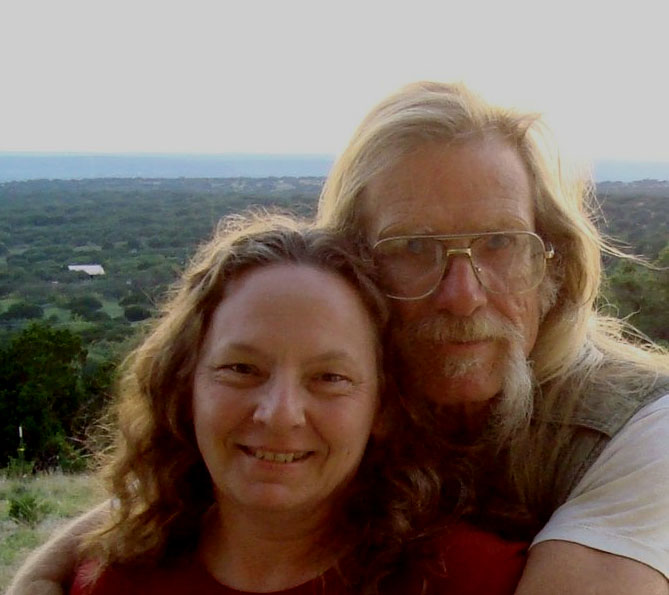
Old Jules told me that some folks have been asking about who I am and wonder how I came to be “behind the scenes” on this blog. He asked  me  to explain a bit about how we met and got to this point.

We actually met in a y2k chat room. When my ex and  I were researching y2k in ’98, I  was new to the internet and immediately became addicted to chat, where this guy who could really turn a phrase caught my attention with his sharp, although often warped, sense of humor. He obviously was an expert about  emergency preparedness and soon he and his y2k website became my number one resource.

When he got his property at a land auction in the summer of ’99, we also bought a piece of land and I went from Kansas to  New Mexico for the first time to sign the closing papers. My family put up our own getaway cabin about a mile and a half down the road from his place.  After three more trips to put supplies in place, I had a suspicion that y2k was going to be less of an event than had been predicted. I  decided to take advantage of the chance to give my kids a taste of a life not only in a different culture, but without telephone, electricity, or indoor plumbing. By New Year’s I was there with all five of my kids, and I  lived there for 4 more months with the three of them that were homeschooling.  Jules and my family became good neighbors. He again became a valuable resource for us when we were studying New Mexico culture, history, and geography.

After my family reunited back in Kansas, we stayed in close contact. When I quit homeschooling and began working outside the home, he again became a mentor for me, since his career  in management positions gave him perspectives that would have taken me years to learn.  After my divorce a few years later we shared a house in Placitas, N.M. for a couple of years before I again moved back to Kansas. I’ve visited Old Jules in New Mexico many times, and in Texas a few times.  We’ve taken a lot of day trips, hit the thrift stores, and shared our cats, music, and books.  We’ve also collaborated on various  projects.  He’s been great about encouraging me in my art work, too.

I work two library jobs, and I’ve always had a passion for reading and writing.  I’ve had blogs myself, but I decided a while ago that my own expression should focus more on my art  than writing. I have other friends who are writers and I enjoy following their progress. Living on the edge as Old Jules does, with a slow dial-up connection on a phone line that I happen to know has a tree branch lying across it right now, makes it difficult for him to maintain a blog site. Since I’ve always enjoyed reading what Old Jules writes, I’m happy to help by using my fast internet connection to set up and maintain the blog.  So this blog is truly a joint project.  When we can, we use photos that we’ve taken ourselves, and discussing which music  fits each post is one of the parts about it that I enjoy most.

Because we live 800 miles apart, we don’t actually see each other very often,  so we’re grateful to live in a time when y2k didn’t bring down the grid,  destroying communications and becoming the end of the world as we know it.
We hope you’re grateful, too.

Mandala 56
Addendum: Here’s a link to my Deviant Art page for those who’d like to see more of my drawings. I don’t update the page very often, but it’s a handy place to have a gallery!
http://mandalagal.deviantart.com/gallery/

Townes Van Zandt– To Live is to Fly

Thursday morning meanderings

SOLAR RADIO BURSTS: This week’s sharp increase in solar activity has turned the sun into a radio transmitter. Bursts of shortwave static are coming from the unstable magnetic canopy of sunspot 1283. Tuesday in New Mexico, amateur radio astronomer Thomas Ashcraft recorded some samples at 21 MHz: listen. Radio listeners should remain alert for this kind of solar activity as sunspot 1283 continues to seethe.  http://spaceweather.com/

———————————-

Got a call last night from Gale saying they were in Van Horn, headed home. They should have arrived around midnight, so they can take care of their own animalcules this morning.

He said the Hatch Chili Festival probably won’t be among their future plans for having a booth. Sales were flat on most of his crafts, though the Siberian Wolf fang jewelry sold a bit, and his old stand-by steak turners with elk-antler shaped handles might have brought him to the break-even point.  He sounded a bit down-hearted and beat to a small frazzle.  But those craft shows are a big piece of the glue holding this place and their lifestyle together.

I’ve wondered for some while how long financial ventures depending on consumers buying non-essentials could hold up in a lousy economy.

———————————

Came across an interesting blog: dumpster find of the week: boot haul, boat haul – Seems to be a kindred spirit.

————————————

I’ve been doing a lot of thinking over the past while about various news items I wouldn’t be aware of if it weren’t for the Internet and blogs I read.  It’s guided my thinking into directions I probably wouldn’t otherwise drift, such as actually having conscious priorities in my life for a while.  At least sort-of priorities.

Not to suggest anyone’s a good economic prognosticator, but with all that guessing going on out there, and with what appears to be a lot of contributory factors, I probably owe it to the cats, at least, to have a backup plan.  A way to get the hell out of Dodge intact if things go sour, that has room in it for four cats.  If something happens to Gale or their finances, or SS is eroded by inflation, or both, hedging against the sleep-under-a-bridge alternative probably makes sense.

My obvious first priority is to get my new truck running and street legal.

But after that’s done, I’m either going to need to build a house to live in on the bed of it, find an old overcab camper to fit in it, or find a camper-trailer sitting out somewhere I can pick up for nearly nothing for fixing up to pull behind it.

I see these sitting around with weeds growing up around them a lot.  I think once I have transportation I’ll have to get serious about trying to acquire one or something rhyming with it as a future place for me and the felines if the Coincidence Coordinators decide to play dirty.

I’m thinking if things get too rough I might be able to slick out further west and establish a moving circuit of campsite homes on US Bureau of Land Management and US Forestry Service lands, changing locations every couple of weeks to stay legal.  The cats don’t care for the idea, but they tell me they’d agree to it if I won’t get any chickens.

I’ll probably talk more about various facets of all this in future posts.  Progress reports, learnings, that sort of thing.

————————————————-

Meanwhile, happy posthumorous birthday to Jimmie Rodgers

http://youtu.be/qEIBmGZxAhg

He’d have known exactly how a person ought to go about becoming an honest-to-goodness hobo with a house.

Old Jules

——————————–

Swatting Flies in the Last Century


A letter to 6 year old Julia in Kansas before Y2K:

Sunday, Nov. 7, 1999
The Great Divide

Good morning, Julia.

I’m sitting here in the cool dawn, sipping a cup of coffee, listening to the chickens crow and being heckled unmercifully by the blacks for favors. The two polish roosters, Rosencrantz and Guildenstern, are beginning to try their hands at crowing without notable success. They tend to be off on their time and they cut the crowing short of the ur-ur-urrrrr of the more mature birds.

But enough of this chicken news.  I began writing this to discuss the subject of fly swatting with you, certainly a more worthy focus of discourse when watching the birds in their activities, which reminded me how gratified I was by your interest in the various flock members during your visit. So I’ll finish the chicken component of this letter by saying you are right to be interested in them.

The importance of chickens in human life, now and in the past, cannot be over-stated. Even the great human philosopher, Plato, in the Socrates dialogues, put mention of a chicken in the final words of Socrates, prior to his death. Socrates, pacing, reflecting, and finally on the verge of succumbing to the hemlock he’d taken, spoke abruptly; almost as an afterthought, to Crito, (one of his yes-men): “Crito, we owe a cock to Asclepius. Please pay without fail.”

So there you are. In fact, one of the deeper philosophical questions of this and earlier times contemplated by wise men everywhere is, “Why did the chicken cross the road?”

Why, indeed. However, as I’ve said, the subject of this letter was intended to be fly swatting, not chickens, and I’ll not have it compromised by endless meanderings on lesser matters. The prowess with the flyswatter you demonstrated during your visit demands nothing less.

I’ll begin by saying that when I was a youngster (back when the 20th century had only begun its interminable mid-life crisis), it was widely, almost universally,  recognized that children are far more adept at killing flies than are adults. Probably because of their lightning reflexes and sharper eye. This wisdom has suffered neglect partly because of screen doors, refrigeration, air conditioning, indoor plumbing, and other curses of modern life.

In my day, anytime there was a gathering of adults for dominoes or canasta, picnics or outdoor parties, even if there was only one child present, he would quickly be given a fly swatter and put to the task. When more than one child was present, usually it was thought that the rowdiest, most rambunctious child, the one most likely to lead the others to acts of courage, bravado, or cunning, would be the best suited to ridding the affair of the fly nuisance.

I can promise you that in those days my fly swatting skills were second to none. However, over the years I’ve lost my razor edge. My reflexes are no longer as sharp, and the keenness of eye is largely gone, as the case with most adults.

Of course, the proper tools are also the victims of disuse. There were giants in the earth for fly swatting tools back then. For a dime you could purchase a fly swatter with a limber wooden handle and a flap of heavy rubber or leather that was equal to the most severe fly nuisance. My granddad had one he’d made himself of tooled leather that could sometimes send three or four flies at once off to the hereafter.

In those times the fly problem was probably worse than it is today. I’ve never seen it happen, but I was told many times by adults who had themselves seen it, of incidents where a child lapsed in the task he’d been assigned, fell behind, and was actually carried away by swarms of the angry insects.

Anyway, I’m sitting here, a burned-out has-been in the fly swatting arena, hoping to give you a few tips – the old worn out champ passing on a few tricks to a future talent who is yet a novice. Even with the fly swatting tools available in stores today, I firmly believe you can hone the skills with diligence and patience to become, as Marlon Brando coined the phrase in, “On the Waterfront”, a contender.

First off, it’s important to recognize that flies frequently jump backward or drop downward in their efforts to elude the slap. If you anticipate this and lead them a little, you’ll find what would otherwise have been a useless swing that did little more than knock over a lamp or a porcelain knick-knack, will result in the satisfying trophy of a fly in the dishwater or in a large bowl of coleslaw underneath the target area.

Secondly, you need to always keep in mind that while fly killing is a high priority to adults when they put you to the task, the priority invariably changes when they see a dead fly dropping into their drink. So, unless you do it unobserved, I’d suggest you’ll be more widely acclaimed for your skills if you steer well clear of anything but the most subtle or inadvertent trajectory of a defunct fly into any food or drink which is in view of an adult or older child who can’t be trusted to remain silent in the shared joy of secret knowledge. Most can’t, I myself learned in the hard school of experience.

Thirdly, the swing, or swings. Usually the fly swatter, (the tool, not the child wielding it) works best with short abrupt flicks of the wrist from an area only a foot or so above the insect. With the lighter tools of today’s world, the swing probably needs to be handled with vigor and with a little attention to the follow-through. On a window or other surface where the flies are thickly gathered, sometimes a series of rat-tat-tat slaps can net a goodly pile of carcasses and numbers for your growing record book.

Keep in mind that even on days when you are approaching previous records, adults are unlikely to be impressed when a previous record broken is accompanied by fly remains smeared across the front of the refrigerator or permanently embedded in a window screen. Fly killing is a matter involving politics, philosophy, and judgment, as well as the keenness of eye and lightening reflexes mentioned earlier.

I suppose the thing that got me started thinking of writing you about flies is the abundance of them in this house the last couple of days. I don’t know why. Usually they are attracted to areas where there’s livestock. But here there is no livestock. Just the three cats, the chickens, and myself.

You might tell your mom and dad I’ve been using my wood stove the last couple of days. It’s enough to roast a human out of the house with a single large log burning on a cold night. But getting it hot enough to cook food requires a lot of smaller wood. With large logs inside it won’t boil water between now and the day you, Julia, become the bride of some fortunate suitor.

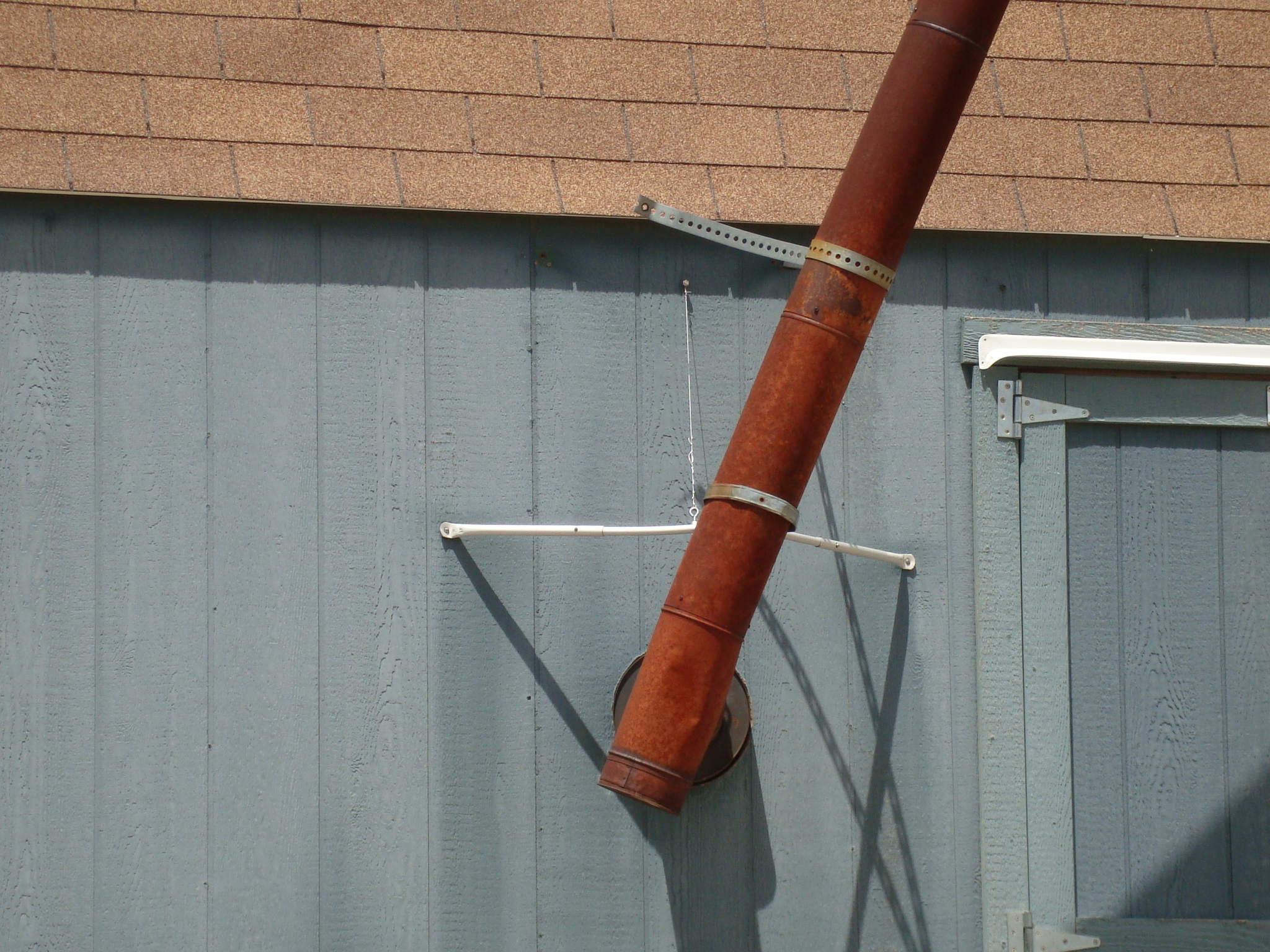
Your dad will want to know the thing I went through the wall with did fine with normal fires, but when I determined to stoke it full of small wood for a breakfast fire and coffee this morning it charred the paper front on the insulation around the outer pipe. Of course, the stovepipe was glowing red through that episode, which is to be avoided.

You might also mention that trying to erect a stovepipe along a wall by one’s self is a thing you haven’t really lived until you’ve done. Cartoons used to show shanty houses with zigzagging stovepipe. I never knew why until now.

Hanging the kitchen cabinets alone was also one of those experiences which, like the man who decided to carry a cat home by the tail, will most likely remain burned in memory for a while.

I’m not inclined to regret anything in my recent past and hope I never will. The person I now am differs from the person I was at your age as a result of cumulative lessons I’ve learned from choices I’ve made between that time and this. However, there’s nevertheless a temptation to gnash my teeth a little for not having taken advantage of your dad’s kind offer to help with the electrical wiring from the windmill, solar panels, inverter, and batteries, into the house. I’m reminded of that offer each time I fiddle with the connections and the hidden short somewhere shuts down the inverter.

Hmmm… this letter has gone on and on. There’s nothing particularly personal or confidential about it, except the tips on fly killing, so feel free to share it with your family. Or keep it until you are able to read better and read it yourself.

Best wishes to your brothers and your mom and dad.

Affectionately,
Old Jules

Note from Julia in 2008:
I honestly don’t remember this at all. This is by far the best letter ever written to me, I’m just glad I can read it and appreciate it now!
~ Julia

Burl Ives– Blue Tail Fly
http://youtu.be/1ardNXjE-_I

Artful Communications – White Trash Repairs 3

That’s my telephone line running horizontally across the pre-dawn.  It used to didn’t look precisely as it does now.  For a while, maybe a couple of years that piece of plastic electrical tape wasn’t hanging down from it, giving it a tidier, more professional appearance.

Before that, even, it had the standard non-innovative, regular stretched-across-to-the-house look you find in other, less interesting, living places.

When I moved into this cabin several years ago that phone line was one boring piece of wire with plastic insulation.  All over this planet unimaginative people are gazing at telephone lines going to their houses, probably wondering what they could do to add some savoir faire, something with flair, to the scene.

Luckily, mine was the result of careful planning and artful inspiration.

The first few years I lived here this land was plagued with cows the owner of the place didn’t own, but didn’t want to put the money into fencing out.  Fencing this place well enough to keep cows out would run in the neighborhood of $10,000, maybe higher.

But Texas, being the forward-thinking place it is, doesn’t require a person who wants to run cows to provide fences to keep them inside grazing on his own land.  Texas figures if someone doesn’t want livestock belonging to someone else running all over him eating his grass, tearing things up, knocking things over, Texas, I was going to say, figures a narrow-minded person of that sort needs to put his money where his mouth is and build a fence.

The default position is that a cow’s gotta do what a cow’s gotta do and the onliest way a cow can be kept from doing it is for someone who doesn’t like it to belly up to the bar and pay to keep her from doing it.  Beef prices being what they are you sure as hell can’t expect the man running the herd to pay for fencing them in.  He’d be robbing himself of graze surrounding his own holdings.  He’d be cutting into his own profit, lifestyle, devil-take-the-hindmost image, and he’d be eroding the tradition ranchers all over the west have worked hard for generations to maintain of being lowlife, cheap, greedy, penny-pinching scum who would do anything for a buck.

But I’ve digressed.  I wanted to tell you about my phone line, how it came to pass that it needed to change from a regular piece of unbroken wire into the work of art you see before you in that pic.

There were cows running all over this place when I got here.  They weren’t scared of anyone, nor anything, because they’d had it demonstrated nobody was going to shoot them and go to jail for it.  The man who owned them lived a long way off somewhere, never checked on them, never fed them, and the drought going on here had left them some of the poorest, scrawniest, lousiest cows a person could want.  There wasn’t a blade of grass on this, on any of the several other unfenced properties where they ran, more than an inch high.

But cows get lonely, even when they aren’t wanted.  Out in the woods spending the night they can’t find water hoses to chew to pieces, things to knock over, break, buildings to rub up against to get rid to the fleas and ticks plaguing them.  So, when those cows were here they loved to gather up around Gale’s house up on the hill, and around this cabin.  We tried everything short of building an expensive bunch of fences to keep them out.

But I need to get to the telephone and quit this rambling.

One night when I’d had a bellyful of cows already I heard them outside the window.  Things were falling and the sounds of them rubbing against other things told me to get the spotlight and have a look-see.  Might have been 20-30 cows out there, a few feet from the window.

I grabbed the 12 gauge from behind the door, ran outside in my birthday suit, lifted that shotgun to my shoulder and carefully shot my telephone line in two.  It was dark, but I heard it fall, knew something was amiss, but I could hear the fridge running, so I knew I still had electricity.
Next morning I looked around for something I could use to splice it back together, then twist around to get it back up sky-level instead of hanging around low for someone to forever be tripping on or cows chewing to pieces.

Art is function.  Art is simplicity.  Art conveys emotion, the human condition, the need of humans to communicate with other humans.

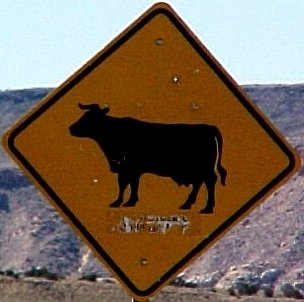
When you’re driving along and you see this sign it means you are in a free-ranging area and that the man running cows without having to fence them off the public right-of-way will get a prize-breeding-stock price for his beef from your insurance company if he can arrange a way for you to run one over.

That’s the reason you see straw scattered on the blacktop and in the grader ditch.

Old Jules

Afterthought:  One positive thing about having those cows around was that Shiva the Cowcat and I used to spend a lot of quality time together running around the hills chasing those cows off with a slingshot.  It kept me in shape and provided Shiva the Cowcat with cheap thrills of having something big run from her. Shiva misses those cows something awful.

Eddy Arnold – The Lonesome Cattle Call
http://youtu.be/MHE496Z-Sf0

Slouching into the Millennium – August 1998

The Beginning

We staff members of the New Mexico State Emergency Management Planning and Coordination Bureau [EMPAC] didn’t laugh much.  We were a collection of old guys mostly retired from something else, except for a few youngsters, mostly support and training staff.

Radiation Response and Recovery [the RAD catchers] was a retiree Bird Colonel from the US Army named Sam.  Hazardous Materials Response and Recovery was headed by Joe, a retired US Air Force Lt. Colonel who’d piloted B47s for the Strategic Air Command in his youth.  Joe sat at the end of a runway in a B47 loaded with hydrogen bombs for two weeks during the Cuban Missile Crisis.  Natural Disasters – Earthquake Preparedness was a shot-up in-Vietnam old Lt. Colonel, infantry.  And so on.  My program was Flood Plain Management and local coordination and training for one of the regions.  Too long out of the military to remember whether I was enlisted or an officer.

Our Bureau Chief, Larry, was a retired Master Sergeant, US Army Search and Rescue, another Vietnam vet. An enlisted man coordinating the activities of field grade officers, giving instructions, approving their work and their per diem expenditures would have been a potential source of laughter if we’d all held our mouths right, but “That’s what happens when you put an enlisted man doing the job of an officer,” was a frequent grumble every time something went awry.

The staff meeting was in the bomb shelter of the old National Guard Headquarters building in Santa Fe where our offices were located.

“I had a weird call from one of the aids to the Governor this morning.”Larry’s eyes searched our dozen blank faces. “Any of you know anything about Y2K?”   Calls from the Governor’s office to anyone at EMPAC was bad news.  We liked to think we were invisible, nobody knew we existed.  This particular governor, however, we considered a space cadet.  A flake.

We all exchanged scowls while my mind toyed with the phrase. “Y2K. Y2K? Where the hell have I heard about Y2K lately?” The thing rang a bell in my head, but I couldn’t think why.

“The Gov just got back from a meeting of the Association of State Governors. They did a big program on Y2K. He’s all excited about it. Evidently there’s some damned thing going on with computers to make them all fail January first, 2000.” Sneers and a chuckle or two.  We all agreed on something.

“Do any of you know what other states are doing? Any ideas what we should be doing? We have to send an answer over to the Gov’s office. We have to put together a plan of some kind.”

Background rumble around the table.  “Y2K?  Why the hell would all the computers crash when the 20th century turns over?”  “Damned idiot governor.”

“Hmmm computers. That’s it.” Now I remembered.

“It’s all a farce, Larry.” I was remembering a conversation and exchange of emails I’d had with my ex-wife. “Carolyn heads the department in Texas that’s supposed to be preparing for it. She told me a while back they were spending a lot of money on it, hiring a lot of people. Pissed her off when I said it was just another bureaucratic scare plot to build more empires.”

Larry stared at me, mind busy with what I’d said. “Could you find out what they are doing over there?”

“Sure. Why not?”

“Also, get on the internet. Find out what people are saying is going to happen. Find out everything you can about what all the other states are doing.”

The others in the room relaxed a little. No one wanted this project and now it was clearly mine. “How much time do you want me to spend on this?”

“A week. Two maybe. We just need to put together a plan that makes sense.”

As I left the staff meeting I was feeling pleased with the diversion this offered me. Something away from flood plain management and routine emergency management coordination. I didn’t expect it to be any problem at all.

I began by sending an email to Carolyn. This was the response I got:

“The Year 2000 deal is a real threat. Lots of people have been doing lots of
work to mitigate the consequences, and we’re still ‘influencing the future’.

The real problem is that we can generally fix what we know about, but there is
so much we don’t know.

For example, the power grid – there are many many power generators and power distributors in this country, and many “embedded systems” in each company. Some companies are taking the problem seriously by contacting their suppliers (of power grid equipment, as an example) to see if components will work.

Afraid of litigation, the manufacturers hem and haw around and provide no definitive data. Yes, I think there will be power outages, thus water problems, heating problems, etc, but I don’t think the whole US will go dark, and we still have some time to work on it.

One scenario I’ve heard is that elect. companies will work to distribute what power they have so that rolling black or brown outs will limit the negative affects of the power failures.

Some good news, the banking industry in the US is in very good shape. Our only
fear there is fear itself. I think a lot of IT systems are being corrected at a
more rapid pace than originally anticipated, and governors like yours and mine
are at least anticipating problems so they can prepare for them. I think if the
people anticipate the problems, and know that someone has already developed a
work around, we’ll be fine.

Any disruptions will probably be short lived.
I could go on, but duty calls.
C.

I trusted Carolyn about as much as any man can trust an ex-wife after 25 years of marriage.

I didn’t know it yet, but for me this began the end of one lifetime and heralded the start of another.

Old Jules

Creedence Clearwater Revival– Bad Moon Rising
http://youtu.be/5BmEGm-mraE


Reflections of a Y2K Survivor

I was one of those weirdos who believed so thoroughly in Y2K that I quit the last years of a career, cashed in my retirement, walked away from the IRS, all the bills, a house mortgage,  totally believing it was all moot because in just a few months it would all collapse.  I figured there was  a chance high enough to bet on that everyone left after the chaos would be wandering around hungry, diseased, and dying, if the computer gurus were telling the truth.  January 1, 1999, I performed the irreversible deed.  The retirement money made a down payment on 140 acres of land in remote high desert, I drilled a well, built a cabin, stocked up on countless items the throngs of hopeless survivors would need to survive a bit longer.

I knew there was a medium possibility the IRS, the land payments, all the rest would eventually come due if Y2K didn’t happen, but I thought the consequences of it happening and me not doing it were worse than the alternative of taking the plunge and it not happening. Once a person considers seriously  the possibility that society might collapse, it’s surprising how reasonable it seems to think so.

Did my best to be a refugee camp waiting to happen. I bought a lot of chicks to be eggs and food for the future hungry.  I knew I couldn’t survive long because of the shelf-life of a medication I require to stay alive, but I had hopes a few folks could survive thanks to a lot of training and experience I’d had in woods lore, emergency management, and survival. I moved in to a tent on the 140 acres in mid-1999, until the cabin was built and the well drilled.

I spent the next 16-18 months pretty much alone, sometimes going weeks without seeing another person. It was the best time of my entire life. I loved it.  I wouldn’t change a minute of 1999 until now, but they were the hardest years I’ve ever lived.  I’m a risk taker, more than most, but I’m also a damned fool.  Fool enough to believe Y2K not happening January 1, 2000, doesn’t mean Y2K won’t ever happen.  But also fool enough to know I’m not wise enough to know when it will, nor whether it will.

This blog will include some of the material written during that time. The rest is a compilation of reflections, before and since, of my varied runs at the brick wall of something rhyming with wisdom.

Old Jules
Steve Goodman–The 20th Century is Almost Over

http://tiny.cc/trxiy