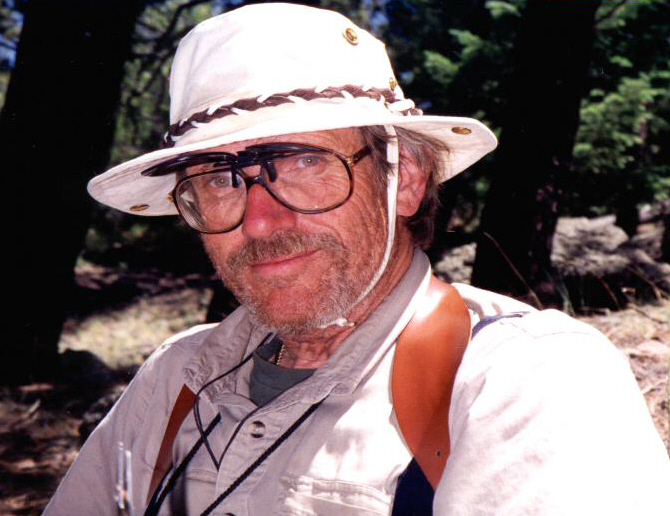
City-slicker coyotes

Jack wrote this in September, 2006:

Morning blogsters:

Last night one of the cats awakened me from the window, even though that window’s now covered with foggy plastic.  I don’t know how she was able to pick up on what was going on outside, but I glanced at the monitor for the security camera when I saw the security light was on in the yard.

A spring coyote pup was out there wandering around checking things out.  That one’s going to be a problem before too long, I’m thinking.

Old timey country coyotes were as cunning as a living creature can be, but they could be depended upon to behave in certain ways.  They had a healthy respect for the cunning and destructive abilities of humans.  Out away from town one of the ways a person could keep down the number of coyotes coming in close bothering what wasn’t to be bothered was to urinate around the chicken house daily, and around the perimeter of where you didn’t want them.

When a person was bothered by with coyote-trouble, it would be a single one, not the entire pack.  The person could study him, identify him by a dozen traits, figure out his habits, and take him out without having to go after the whole pack.

Not so, these newfangled city coyotes.

I read in National Geographic magazine, I think it was, or maybe Smithsonian, yeah, I think it was a Smithsonian that Jeanne gave me, that coyotes have done a turnabout during the last 15 years…. nobody understands why.

There’s a new kind of coyote moving into the cities and towns, first time anyone knows about, and they’re living right there among us.  The article focused on the ones in one of the parks in Washington D.C.

I suppose I have more respect for the intellect of country coyotes than perhaps any other wild creature.  To be honest, I hate to even contemplate what’s going to become of things when a large population of them grows up in cities unafraid of people, watching people, same as they do in the wild, studying them, learning from them.

We haven’t heard the last of this.

Jack

Deviant Art

For several years, Jack was posting some writing on the website Deviant Art, a popular site for artists of all types: https://www.deviantart.com/
He went by the name screwball, if you’re interested in looking over his page: https://www.deviantart.com/screwball He wrote this during that time.

1961-63. Boston.  I fancied myself a writer and humdinger of a poet.

Five lady nursing students I went in and out of romance with all lived together in an apartment in Brookline.  Their parties included all manner of pointee headed types from Harvard, MIT, and Boston University.

Christmas, 1962, they had an enormous party at their apartment.  I composed a booklet poem to them with a chapter for each.  A Christmas present. 

I was overpleased with myself.  The piece was about on a par with a lot of the young poet work you see on DA.  The girls properly ohhhhed and ahhhhed and the booklet passed around to anyone at the party who wanted to look at it.

Late that evening a lady I’d been admiring from afar most of the night came into the kitchen while I was making a drink.  She was a senior, an English Major attending the University of Texas, but home for the holidays.

“I’d like to talk to you about that poem.”

I swelled up like a stuffed frog, expecting the praise people had heaped on me all evening.  “Yeah?” I preened.

“It really isn’t good.”  She was kind, not vicious.  “You needed to work on a lot more before you put it out for everyone to see.  They’ll think less of you for what you did.”

I don’t recall my response.  I do recall my shame, a few weeks later when the immortal words had simmered long enough to become trash.  I still appreciate what that woman did. 

There’s something analogous to DA in this incident.  It’s one of the reasons I like DA.

Jack

A delicate balance

Jack wrote this in September, 2006:

  • We want the rest of the world to be like us.
  • We want the rest of the world to want to be like us.

Time was not so long ago when the US cared so little about whether the rest of the world wanted to be like us, or not, the thought would have never entered their heads yea or nay.

What the rest of the world did was the business of the rest of the world.

The leaders of this country at the same time never wondered what the leaders of the rest of the world thought about them, or this country, nor cared.

During the Civil War, when the UK was trying to decide whether to join the French in the invasion of Mexico, the Prime Minister was saying a lot of things to the Queen about the leadership of the country (Abraham Lincoln), the reasons for the war, the conduct of the war, that Americans would have found painful to hear if they hadn’t been too busy killing one another to pay attention.

But they’d have found those remarks between the PM and the Queen painful because they contained so much truth.  Not because they cared a damn what the leaders of the UK thought about the US.

We’ve spent the last half-century trying to make the rest of the world want to emulate us, politically.  Most of the world wasn’t interested.

But we did succeed in a lot of ways nobody anticipated.

We shipped all our industry off to the countries we spent a lot of lives and treasure whupping the socks off of, trying to help them be like us.

We shipped all our industry off to third world countries because of the cheap labor trying to help them to be like us.

When we were minding our own business we had thriving industry, plenty of jobs, affluence.  Anyone who wanted a job could find one.

When we succeeded in making the rest of the world in our own image in some unanticipated ways, our industry became a dead shell.  All our jobs became government related, or pure government.

And in the process, the world we made in our own image wanted to be like us.  They wanted cars, television sets, air conditioners, microwave ovens.

They became super-consumers.  They began needing petroleum products for energy, for plastic rubber monster toys for the kids.  Petroleum to run their powerplants to refrigerate.  Petroleum to run their hair dryers.  Petroleum to run their industries.

They became like us.

The dead hull of US industry didn’t demand so much energy, but our automobiles, air conditioners and plastics requirements continued to do so.

But the rest of the world wanted it, too.

They became like us.  Prices skyrocketed.

So, now we don’t have any industry, don’t produce anything, but still need the energy to run.

And so, also, does the rest of the world because they’ve done as we hoped.  They became like us.

Now maybe we need to find some other ways to make them want to be like us, before they decide to be like us in some other unanticipated ways we’ll like a lot less.

Jack

Ask Old Jules: Most worthy gift, Does the soul die, Favorite year, Open-minded/Closed-minded

IMG_0041

Old Jules, what “gift” is most worthy of giving and receiving?

Giving the ability to recognize what an adventure life is if such a thing could be given and received. As nearly as I can tell it’s not among the alternatives human beings are capable of communicating to one another.

Old Jules, is it possible for your soul to die ?

They don’t actually die but politicians put theirs in a blind trust for the duration of their terms in office.

Old Jules, what was your favorite year of your life so far?

Probably 50 was best – 1992. I changed careers, moved to Santa Fe, New Mexico, revved up my search for a particular lost gold mine, started spending a lot of time climbing and unclimbing mountains. They’ve all been good but that one might qualify as my favorite.

Old Jules, if you had to generalize Americans, how would you describe them?

Spectators

Old Jules, can an open-minded person admit he is actually closed-minded?

Open mindedness is something some of us aspire to and it’s something we rarely achieve completely. A battle with the self for open-mindedness doesn’t get won, followed by a lifetime residing in a state of open-mindedness. It’s a discipline and the challenge to it is constant. What a person says about open mindedness in himself/herself doesn’t have anything to do with open-mindedness beginning the moment after it’s been said.

A few subtle ways to become a good American (and a good human being)

Jack wrote this in September, 2006. I posted it on this blog shortly after his death, but since that was more than two years ago, I think it’s okay to post one more time.

Being a good American and a good human being isn’t about waving a flag, hating Democrats or republicans, Muslims, or people who say ugly words about political leaders.  It ain’t about fear, hysterical dialect, consumerism and waste.

Being a good American and a good human being is about personal responsibility.  About having enough confidence and courage not to feel threatened by every little thing.  About assuming the responsibility of not being part of the problem any more than is absolutely necessary.  About self-reliance.

Sometimes it’s not obvious how a person might accomplish those things.

  • On a personal level your life will find itself a lot better place if you can recognize the fact you are going to die as a means of exiting it.  Maybe disease, a car wreck, any of a thousand common ways that don’t have a damned thing to do with any foreign country, foreign leader, foreign war.  You are going to die.  No point in going into frenzies of terror and hate because the death you get stands a billion-to-one shot at being the act of a terrorist.  Trust me on that.  You are going to die, and I’ll only be the tiniest, most microscopic bit of a liar when I tell you it won’t be from anything any foreigner does  to cause it.
  • On a personal level you’ll find it’s a hell of a lot better place if you can learn what is your own business, and what isn’t.  If you can change it, it’s your business.  If you can’t, it ain’t worth concerning yourself with, getting all worked up about.
  • On a personal level you’ll find your life’s a lot better place if you spend considerable energies looking at it, instead of other places, looking at what you like about it, and what you don’t like about it, and changing what you can.  Looking in a metaphorical mirror at the sort of person you are and asking yourself if that is the sort of person you want to be.  You can’t change the kind of person the prez of bongobongoland is, but you can change the kind of person you are into someone you have more respect for.  No one respects a dishonest, hysterical coward, including you when you see it in others.

If all of us could pull that off our own lives would be a lot better, and America would be a better place for it.  But insofar as personal responsibility and being a good American, we can expand on that a bit.  Here are a few things a good American might do without having to shout from the rooftops about what an admirable person he/she is:

Dependence on hydrocarbons is the ultimate problem of this nation you say you love.

  • Be conscious of your own energy use.
  • Every plastic grocery or garbage bag, every foam-plastic hamburger box, no matter where it was produced, drives up the price of oil.
  • Every time you fire up that hair-dryer you drive up the world-wide price of hydrocarbons.
  • Every made-in-China yellow ribbon you buy to stick on your car drives up the price of hydrocarbons world-wide, increases the demand.
  • Every made-in-China flag made of nylon you wave drives up the price of oil and increases worldwide demand.
  • Every new plastic radio, CD player, computer monitor.  Every plastic wrapper from that frozen pizza pie.  Every celophane cover and foam plastic bottom covering the piece of animal you’re having for supper and sending to the landfill afterward is driving up the world-wide competition for oil.
  • Sure, there’s the other obvious things.  The things Jimmy Carter used to beg you to do when he was prez, to help you quit relying on foreign petroleum products.  Turn down the heater.  Turn up the thermostat on the AC.  Don’t drive anymore than you have to.  Which, of course, you didn’t care for then and immediately forgot when he left office (which is part of the reason you’re in the fix you are in now.)

But there’s a lot more to being a good American, as opposed to a good human being.  Here are a few more ways you could try to be part of the solution, rather than part of the problem:

Quit buying ANY foreign product if you can avoid it.  Even if it saves you a few cents.  Just say no.  Refuse and make it clear why you’re refusing.

If this country is going to survive another century the population is going to have to begin manufacturing what it consumes, energy-wise and every other wise.  Building hamburgers to sell back and forth to one another isn’t enough to keep a country sound.

Americans are going to have to produce products, and the other Americans are going to have to buy them.  We can’t continue indefinitely sending our chunks of our trade deficit off to bongo-bongoland for petroleum, to China for plastic bags, television sets, seat covers and rubber monster toys.  We can’t starve out our farmers by buying agricultural products from Mexico and Argentina.

Being a good American involves a hell of a lot more than getting angry when some foreigner says something ugly about it.  Loyalty to America and Americans is about keeping America alive, productive, self-reliant, healthy economically.

If we can do those things we’ll find we’re spending a lot less time hurling empty rhetoric back and forth, hating the owners of bongo-bongoland oil, a lot less time bombing the hell out of foreign lands, a lot less angry and full of fear and hatred.

And we wouldn’t need to wave flags to prove we were good Americans.

Jack

Looking for metaphysics discussions

Jack wrote this in June, 2005. He was posting on a lottery discussion site and threw out some ideas to his readers about metaphysical approaches to understanding lottery number behavior.

Those of us who are ‘in’ to metaphysical ways of looking at reality tend to become fairly specialized, narrow as any country preacher in our approaches.  We no sooner discover there’s another side of things than we begin building fences around what we’ve discovered, laying rules for it, generally trying to keep it corralled.  Maybe it’s just so we can saddle break it with some confidence it won’t strike out for the tall timber dragging us along behind with a foot hung in a stirrup, bouncing across all manner of cactus and sharp rocks.

Fact is, there are a lot of metaphysical approaches to looking at the lottery numbers in new ways.  There are a lot of ways everyone can develop talents (I believe) most of us share, but don’t listen to.

One is Silva Mind Control, which I’ve mentioned various places.  It teaches techniques for doing things, and when you learn one you suddenly find you’ve opened doors into a lot of other places you never dreamed existed.  For those who are concerned that this gets over into some sort of sinning, it doesn’t.  Jose Silva developed it.  He was a devout Catholic, and after some jockeying for position, his methods were approved by the Catholic Church.  The various Silva method sites have some downloadable (free) CDs you can listen to, things to introduce you to ‘alpha’ state and give you an idea whether you’d like to pursue it further.  To be honest, it’s used mostly for healing, but it’s good for an entire spectrum of metaphysical activities, but with the hocus pocus removed.

Another source of training is the late Bevy Jaegger.  Bevy was a remote viewer extraordinaire…. spent her later years doing pro-bono remote viewing finding missing persons, etc.  But that was after she’d made her money doing precisely what you are attempting to do on this site.  You’ll probably have to do some digging, but I’m almost certain Bevy’s training tapes are still available somewhere on the web.

Some other approaches:

Dowsing.  There are several good dowsing mailing lists.  You might wish to subscribe to one and read what’s going on among modern dowsers when there aren’t a lot of wells that need digging.  Mostly healing, but it covers the waterfront all the way down to helping you find a lost pair of specs or which way to turn on this crossroads to get to the nearest petrol when the tanks sitting on empty.

Skrying:  That’s what Nostrdamas did.  It verges on getting into a different level of things, but if you don’t mind that, it’s new and interesting (maybe).

I sort of believe this thread is going to fall flat from lack of response.  But I thought it might be worthwhile to take a shot at it.

Anyone want to talk about metaphysical methods of trying to find the right numbers?  About spiritual/metaphysical healing?  About anything in this arena that involves methodology, as opposed to pronouncements?

That’s my cards on the table.  Feel free to call, raise, or just fold.

Jack

Early Morning

Jack wrote this in 2005:

I read somewhere about fifty years ago that you can tell the exact moment of dawn by holding a white thread at arms length and when you’re able to distinguish whether the thread is black or white, it’s dawn.  I’ve always intended to try that sometime.  But I’ve never been able to make it a priority enough to remember to do it.  Can’t think of a single reason, that time of the morning, to want to know the exact moment of dawn.

You can get a fair bead on when it is because of all the night critters tucking themselves in and yawning, and all the day critters walking around yawning and wiping the sleep from their eyes.  Makes it a good time for the cats, because nothing’s as alert as it might be, except felines.

Occasionally one of the close by people will see a pair of coyotes run between our houses on their way to a lair in that pile of wood in the thicket yonder about this time, but after they’ve killed a few pets bunched up too closely together in time, things tend to get too hot for them to be showing themselves for a while.

But I see I’m rambling …. I was planning to offer up a few observations about those MM numbers last night, but I think I’d best put on some coffee, instead, and go out front for another smoke while I wait for it to burble.

Jack


Sailing under the Jolly Roger

Jack wrote this in September, 2006. An additional “comment” at the end.

One of the blessings of not knowing much about history, which most Americans carefully do not, is the blessing of not having to trouble one’s self with knowing how current affairs bear a lot of similarity to past events.

“Remember the Maine” was the cry that stirred up public sentiment for the Spanish American War.  The USS Maine was sunk in harbor by sabatage, which was the stated cause for that war, giving the US ownership of Cuba and the Phillipines Islands.

A couple of generations afterward, historians quietly discovered the incident was almost certainly perpetrated by the US Government.

“Remember the Lusitania” was the cry, along with the interception of the Zimmerman Telegram, that stirred up the US population against Germany and got the US into WWI.  Until those two events, the US was unsure even which side it would fight on, assuming it fought.  To this day, noone understands what WWI was all about.  It’s still a mystery to historians all over the world, except that it was clearly a doorway into WWII and the Cold War.

But by the 1980s, one fact was being quietly discovered by historians thanks to the US Supreme Court rulings involving the release of US Security Archives documents when security issues were no longer involved.  The sinking of the Lusitania, and the Zimmerman Telegram were not as they were represented to the American people  at the time.  The Zimmerman Telegram was a complete fabrication, created and released for the sole purpose of angering Americans and provoking them to enter the war in Europe.  The Lusitania was not merely an unarmed passenger ship attacked by the German navy.

“Remember Pearl Harbor” was the cry that got us into WWII.  Franklin Roosevelt’s famous, “Day that will live in infamy” speech was almost certainly written months earlier.  There’s absolutely no question among historians that Roosevelt and Churchill, in agreeing to cut off the Japanese Empire oil supply at Singapore, during a meeting in August, 1941, deliberately created a situation that left the Japanese no alternative other than an attack on the US.  The intent was to force a ‘surprise’ attack on US territory to stir up American opinion in favor of entering WWII.

One of the reasons I consider Roosevelt the worst prez in US history is the fact he miscalculated, almost losing us WWII before we got into it.  He intended the attack to come in Manila Harbor and warned the US Navy to prepare during September, October, and November, 1941.  Pearl Harbor was the surprise.  Sometimes people just don’t behave the way we want them to.

The Spanish American War didn’t need to happen, and the US didn’t need to be involved in WWI.  Neither would have happened without sleight-of-hand, trickery, and deliberate manipulation of public opinion.

The Japanese Empire did need stopping in 1941.  So did the 3rd Reich.  But the smart-alec rulers of this country couldn’t trust the US population to do what was right, they believed, without trickery and lies.

One out of three ain’t bad, I suppose.

Today, with the Internet and modern communications and investigative and forensics techniques, secrets are a lot more difficult to keep.

There’s a growing body of evidence world-wide, that 9/11 was planned and executed by persons inside the US Government.  If true, one can assume the motives for this atrocity involved stirring up public opinion to support a war.

One of the blessings of  knowing much about history, which I do,  is the blessing of not having to trouble one’s self about what’s going on in the world today.   It all rhymes with the past.

Jack


I failed to mention this one:

30-year Anniversary: Tonkin Gulf Lie Launched Vietnam War

Media Beat (7/27/94)

By Jeff Cohen and Norman Solomon

Thirty years ago, it all seemed very clear.

“American Planes Hit North Vietnam After Second Attack on Our Destroyers; Move Taken to Halt New Aggression”, announced a Washington Post headline on Aug. 5, 1964.

That same day, the front page of the New York Times reported: “President Johnson has ordered retaliatory action against gunboats and ‘certain supporting facilities in North Vietnam’ after renewed attacks against American destroyers in the Gulf of Tonkin.”

But there was no “second attack” by North Vietnam â_” no “renewed attacks against American destroyers.” By reporting official claims as absolute truths, American journalism opened the floodgates for the bloody Vietnam War.

A pattern took hold: continuous government lies passed on by pliant mass media…leading to over 50,000 American deaths and millions of Vietnamese casualties.

The official story was that North Vietnamese torpedo boats launched an “unprovoked attack” against a U.S. destroyer on “routine patrol” in the Tonkin Gulf on Aug. 2 â_” and that North Vietnamese PT boats followed up with a “deliberate attack” on a pair of U.S. ships two days later.

The truth was very different.

Rather than being on a routine patrol Aug. 2, the U.S. destroyer Maddox was actually engaged in aggressive intelligence-gathering maneuvers â_” in sync with coordinated attacks on North Vietnam by the South Vietnamese navy and the Laotian air force.

“The day before, two attacks on North Vietnam…had taken place,” writes scholar Daniel C. Hallin. Those assaults were “part of a campaign of increasing military pressure on the North that the United States had been pursuing since early 1964.”

On the night of Aug. 4, the Pentagon proclaimed that a second attack by North Vietnamese PT boats had occurred earlier that day in the Tonkin Gulf â_” a report cited by President Johnson as he went on national TV that evening to announce a momentous escalation in the war: air strikes against North Vietnam.

But Johnson ordered U.S. bombers to “retaliate” for a North Vietnamese torpedo attack that never happened.

Prior to the U.S. air strikes, top officials in Washington had reason to doubt that any Aug. 4 attack by North Vietnam had occurred. Cables from the U.S. task force commander in the Tonkin Gulf, Captain John J. Herrick, referred to “freak weather effects,” “almost total darkness” and an “overeager sonarman” who “was hearing ship’s own propeller beat.”

One of the Navy pilots flying overhead that night was squadron commander James Stockdale, who gained fame later as a POW and then Ross Perot’s vice presidential candidate. “I had the best seat in the house to watch that event,” recalled Stockdale a few years ago, “and our destroyers were just shooting at phantom targets â_” there were no PT boats there…. There was nothing there but black water and American fire power.”

In 1965, Lyndon Johnson commented: “For all I know, our Navy was shooting at whales out there.”

But Johnson’s deceitful speech of Aug. 4, 1964, won accolades from editorial writers. The president, proclaimed the New York Times, “went to the American people last night with the somber facts.” The Los Angeles Times urged Americans to “face the fact that the Communists, by their attack on American vessels in international waters, have themselves escalated the hostilities.”

An exhaustive new book, The War Within: America’s Battle Over Vietnam, begins with a dramatic account of the Tonkin Gulf incidents. In an interview, author Tom Wells told us that American media “described the air strikes that Johnson launched in response as merely `tit for tat’ â_” when in reality they reflected plans the administration had already drawn up for gradually increasing its overt military pressure against the North.”

Why such inaccurate news coverage? Wells points to the media’s “almost exclusive reliance on U.S. government officials as sources of information” â_” as well as “reluctance to question official pronouncements on ‘national security issues.'”

Daniel Hallin’s classic book The “Uncensored War” observes that journalists had “a great deal of information available which contradicted the official account [of Tonkin Gulf events]; it simply wasn’t used. The day before the first incident, Hanoi had protested the attacks on its territory by Laotian aircraft and South Vietnamese gunboats.”

What’s more, “It was generally known…that `covert’ operations against North Vietnam, carried out by South Vietnamese forces with U.S. support and direction, had been going on for some time.”

In the absence of independent journalism, the Gulf of Tonkin Resolution â_” the closest thing there ever was to a declaration of war against North Vietnam â_” sailed through Congress on Aug. 7. (Two courageous senators, Wayne Morse of Oregon and Ernest Gruening of Alaska, provided the only “no” votes.) The resolution authorized the president “to take all necessary measures to repel any armed attack against the forces of the United States and to prevent further aggression.”

The rest is tragic history.

Nearly three decades later, during the Gulf War, columnist Sydney Schanberg warned journalists not to forget “our unquestioning chorus of agreeability when Lyndon Johnson bamboozled us with his fabrication of the Gulf of Tonkin incident.”

Schanberg blamed not only the press but also “the apparent amnesia of the wider American public.”

And he added: “We Americans are the ultimate innocents. We are forever desperate to believe that this time the government is telling us the truth.”

Four Preludes to Playthings in the Wind

Jack posted this in September, 2006. His favorite poets were Robert Frost, Archibald MacLeish, and Rudyard Kipling, but he owned, among many others, a copy of the complete works of Carl Sandburg.

Four Preludes On Playthings Of The WindBy Carl Sandburg (1878-1967)

“The past is a bucket of ashes.”

1

The woman named Tomorrow
sits with a hairpin in her teeth
and takes her time
and does her hair the way she wants it
and fastens at last the last braid and coil
and puts the hairpin where it belongs
and turns and drawls: Well, what of it?
My grandmother, Yesterday, is gone.
What of it? Let the dead be dead.

2

The doors were cedar
and the panels strips of gold
and the girls were golden girls
and the panels read and the girls chanted:
We are the greatest city,
the greatest nation:
nothing like us ever was.
The doors are twisted on broken hinges.
Sheets of rain swish through on the wind
where the golden girls ran and the panels read:
We are the greatest city,
the greatest nation,
nothing like us ever was.

3

It has happened before.
Strong men put up a city and got
a nation together,
and paid singers to sing and women
to warble: We are the greatest city,
the greatest nation,
nothing like us ever was.

And while the singers sang
and the strong men listened
and paid the singers well
and felt good about it all,
there were rats and lizards who listened
…and the only listeners left now
…are…the rats…and the lizards.

And there are black crows
crying, “Caw, caw,”
bringing mud and sticks
building a nest
over the words carved
on the doors where the panels were cedar
and the strips on the panels were gold
and the golden girls came singing:
We are the greatest city,
the greatest nation,
nothing like us ever was.

The only singers now are crows crying, “Caw, caw,”
And the sheets of rain whine in the wind and doorways.
And the only listeners now are…the rats…and the lizards.

4

The feet of the rats
scribble on the doorsills;
the hieroglyphs of the rat footprints
chatter the pedigrees of the rats
and babble of the blood
and gabble of the breed
of the grandfathers and the great-grandfathers
of the rats.

And the wind shifts
and the dust on a doorsill shifts
and even the writing of the rat footprints
tells us nothing, nothing at all
about the greatest city, the greatest nation
where the strong men listened
and the women warbled: Nothing like us ever was.

Ask Old Jules: Difference between dead and alive people, How life leads to improvement, Survival of humanity, Individual importance

Mandala Back Up CD2 238

Old Jules, no one chooses his or her country of birth, so isn’t it foolish to be proud of it?

Yeah. It’s crazy. Incomprehensible.

Old Jules, what is the difference between a dead man and a live man ?

Not much if you didn’t know either of them personally. When you read a book or article do you care whether the writer is alive or dead? When you listen to music, particularly older music, there’s an excellent chance the songwriter and performer as well as the backup musicians are all dead. Does it matter? Does it change anything?

Old Jules, in which way does life lead you to be better?

Life tends to run in stages. If you live long enough you’ll probably do it all, and all of it will contribute to the person you are at any given moment. The noble cause and helping others is one phase, but eventually you’ll have done it and discover it’s just one of the balloons you blow up in life, then release into the sky to go on to other things. The same is true of most of the rest of it. Life truly is an adventure and you don’t have to stay in lockstep with something you were a decade ago, or a quarter-century ago. That was then, this is now, and all of it counts.

Old Jules, would you care whether or not humanity survives beyond your own lifetime?

Not in the least. For that matter I don’t care if we all die together before my lifetime ends. Humans die. I don’t see an advantage to all those alive today dying over 100 years as opposed to all dying in a single day. They’ll have all lived and all died, same as every human before them. They all had their individual shots at living their lives. Whether any human being walks the face of the planet at any given time being something of value seems to me to be a humanocentric concern, which I don’t share.

Old Jules, what is the healthiest philosophical perspective on our own individual importance in this world?

The healthiest perspective would probably be that we aren’t at all important in this world except to the people who know us personally and care about what happens to us, and to ourselves. We’ve got to earn our self-respect and if we don’t nobody else is going to respect us [which is unimportant except by implication].