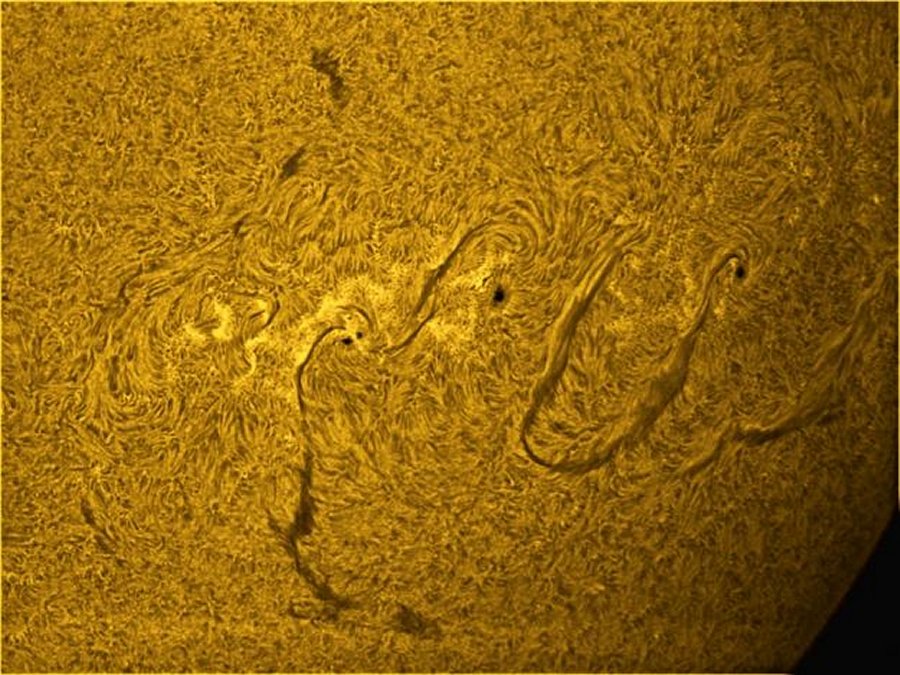
Author Archives: Old Jules

Letting a Camel Get a Nose Under the Tent

Good morning readers.  Thanks for coming by for a read this morning.

Most of you who read here frequently know I’m a man who prefers insanity and what a lot of you might consider hardship to compromise of a lot of things you’d assign no value to.  The world I live in is a place with a rigid value structure teetering on the edge of an abyss I do my best to keep it from falling into.

Yesterday I was tending my own affairs when the newish neighbor up the hill drove down and offered me a Shiner Boch beer.  Which I considered a tasty gesture.  I bought a case of beer sometime last summer and was down to almost my last one in the fridge.  That Shiner pulled me a beer into the future.

A while back I’d offered, neighborly, if the neighbor ever needed anyone to lift the other end of something I’d be pleased to lift it.  I don’t mind being a help when someone needs something I can do.  Glad to do it, in fact.

So, as I sat there sipping that Shiner Boch he explained to me he’d fired a likely young man he had up there working for him.  Said he’d like me to come work up there helping him a while.  Offered me an hourly wage to do it.

Given my financial situation I was sorely tempted and tentatively accepted, fully aware of the dangers inherent in changing the nature of my relationship with a neighbor from helpful, casual acquaintance to one of employer/bought-and-paid-for-employee.  And asking myself how the hell I could charge a wage to do something I’d have done anyway for nothing if he’d asked.

You’ll probably consider it foolish, maybe melodramatic when I tell you the entire damned issue kept me awake a lot longer last night than it had any business doing.

The man has a lot of machinery up there, all of it different by one nuance or another, from anything I’ve operated before.  Never operated a track machine, which I’d like to learn to do.  Never operated any machine that wasn’t gasoline fueled.  So if I have an opportunity to learn I’d consider the learning a potential value to me sometime.

And the guy has a lot of experience as a mechanic, believes he might be able to get that old Ford F350 Gale gave me that’s still sitting up there quietly waiting, running.  [ Got me a new truck!, The New Truck ResurrectionAnother Bug on the Windshield of Life – The Tow Bar, Running the Obstacle Course – the F 350, Learning How to Not Be So Stupid].

If he managed doing it, there’d be a lot more value for me than any damned wage he’d be likely to pay.  If he tried, but didn’t succeed, no big deal.

It’s not a quid pro quo that way.  Just two folks, each one needing a helping hand, extending one each to the other.

No camels putting their noses under the tent.  Nobody bought and paid for.

As a person who’s seen and experienced the entire range of potentials for neighbors wanting to shoot or beat the bejesus out of one another, this seems to me a decent way of disarming it all.  If a person’s driving off a few miles to work for someone and everything begins as a clear exchange of dollar value for labor it’s safe.  Someone decides to lean harder than someone else is willing to be leaned on, they easily go their separate ways.  No harm done.

But two people essentially handcuffed to one another by proximity don’t need to be throwing that sort of temptations out to human frailties.

So, here in a little while I’m going to wander up there and see what he wants me to do in exchange for fixing that damned old Communist F350.

Old Jules

US Citizenry Herding the Future Into New Chutes

Climate change no longer tops US environment worries

The people who get on the telephone and pester other people to tell them what’s important and what isn’t have made a disturbing discovery.  Whereas the US public used to think global climate change was the daddy longlegs to fret about, they’ve switched horses.  Now they’re worrying about whether they’re going to have enough water to drink, along with a few other things.

Considering how well informed, literate, intelligent and prone the US public is to worry about what celebrity is fooling around on a spouse, or what dress some celebrity wore to some function, this represents a surprisingly practical and unlikely issue for the citizenry to choose for concern.

Not to say it’s timely.  Timely might have been better defined as back before the fish in all those major rivers downstream from cities discharging treated sewage into them developed worrisome ulcers on their skins.  And became scary to eat in other ways.

Timely would have been back when there weren’t houses over all the major aquifers built to demand future water until the mortgages were paid off in four decades.  Timely would certainly have included a population asking itself,

“Am I going to be able to eat [or even smoke] the grass I’m irrigating by robbing water from an aquifer with a 100,000 year recharge cycle?  Any chance this golf course would grow grain crops as a better use of non-renewable and as-yet uncontaminated water?”

But the telephone pesterers didn’t go a step further and ask the well-informed pestered what, precisely, they’re each doing to better the situation.  Maybe the next p0ll will do that.  The answers will involve writing letters to politicians and signing petitions, almost certainly.  Not flushing the commode once a day and keeping the showers short. 

Sure as hell not letting the lawn die and the golf clubs rust.

Old Jules

Magnetic Fingers et al Preliminary Hypothesis

Good morning readers.  Thanks for coming by for a read this morning.

Flux Transfer Event Topology,

Old Sol – Fondling Mother Earth With Magnetic Fingers

I doubt anyone’s going to be edified by this, understand what I’m saying, or assign anything serious to it.  But I’m going to say it anyway. 

Those flux transfer events between earth and Old Sol and their 8 minute dayside intervals are manifesting themselves in a number of indirect, measurable ways a person in his right mind wouldn’t be inclined to attribute to them.   The 8 minute gap isn’t actually an 8 minute gap, but is filled in with flux transfer events targeted somehow to other solar system bodies.  Those show up as reflected energy detectable and measurable on darkside earth, distinguishable by the magnitudes and distances of the objects doing the reflecting.

The hypothesis, weak enough to begin, weakens further relative to the ‘active’ and ‘passive’ events sunside, spinward and anti-spinword, and the ‘hidden’ events the guy at University of Iowa detected.  But there’s a body of indications the passive events are actually the boundary zone where the reflective energy merges and influences the weakening dayside events.

It’s not my intention to persuade anyone to the accuracy of what I’ve said here.  The limited testing I’ve done to form the hypothesis has been almost entirely on darkside and twilight-zone data.  However, the data I’m using is probably only one of the ways these events are manifesting themselves and being recorded as unrelated phenomena.  Anyone with an interest and a smidgen of imagination can probably find other datasets equally measurable and testable.

And anyone not interested enough to do it probably is better qualified to judge whether there’s any validity to it.

Old Jules

Firecrackers Day Celebrations – Name Your Poison

Good morning readers.  Thanks for coming by for a read this morning.

A while back I was talking on the phone with my bud, Rich, in North Carolina.  He’d just returned from a visit to the Georgia Guidestones and was telling me about them, and the general history of the area where they’re located.  One anecdote involved the local hero of the American Revolutionary War.

Seems there was a woman settler in the area famous enough for her contribution to be recognized as a hero and locally a focus of veneration.  She got a bunch of British soldiers drunk and murdered them while they slept.

I don’t doubt a few more dead enemy soldiers was a boon at the time, but I found myself wondering how the woman felt about it after the dust settled, say three, four decades later.  It ain’t as though your average British soldier was a lot different than the people he was fighting against at the time.  Just grunts, following orders, doing what they were told to do, same as soldiers everywhere.  Probably it’s possible to assemble a set of reasonings to appreciate the impact the event had on the outcome of the Revolution, but it’s less easy to bring up any admiration for the lady who did it.

In fact, I’d guess her neighbors and husband were careful not to offend her during her time around them later.  A person who’d do what she did is nobody to be trifled with.

But thinking about all that led me to consider the whole issue of the way we humans celebrate history.  Fairly bizarre, when you consider it carefully.  The British celebrate a guy who attempted to blow up Parliament, but was thwarted, for instance.  Lots of fireworks, but I wonder if they’re cheering the attempt to do it, or the failure of the effort?

For that matter, I wonder if they do much celebrating out on the Rez, shooting off fireworks and cheering the ethnic memory of, say, Custer’s Last Stand.  Or the slaughter of Fetterman’s troops during the Red Cloud uprising.  If they don’t, are they being sufficiently true to their own tribal histories?, I speculates.

Or, at least as grotesque, are the black citizens of the projects all over the US going to be cheering for the institution of slavery that brought their ancestors to this geography so’s to allow them to be here, not Africa?  Whatever the shortcomings of life in modern US ghettos, probably the average modern resident of their ancestral homelands would gladly change places.  Can I hear a few “Amens!” for the institution of slavery in this land concurrent with [gulp, sigh] remembering our noble founding fathers?  Their unselfish efforts and sacrifices along the avenue toward ‘freeing themselves’ from British oppression and tyranny?   

Is anyone in Georgia going to be singing, Marching Through Georgia tomorrow?  Cheering Sherman’s scorched earth burning of Atlanta, and churning across the state burning and looting the citizenry, civilian and military, all the way to Savannah?

Fact is, it all comes out of the same cauldron.  Sip a spoonful of it and you have to either like the overall taste, or focus on the flavor of the meat while ignoring the onions and garlic.  Here, and everywhere else.

For instance, the Japanese probably have enjoyed their post-WWII / pre-tsunami affluence, freedoms, non-involvement in military adventures.  They’d never have gotten any of that without Hiroshima, Nagasaki, Okinawa, the Bataan Death March, the Rape of Nanking, Midway,  Tarawa, et al.  The destruction of the Japanese Empire.

But I’m betting they don’t have a day of celebration for it.

Probably somewhere in Georgia there’s a community of UK citizens visiting, or living out their lives.  Or folks who came here from the UK and became US Citizens.  Maybe tomorrow would be a good day for them to visit the Georgia Guidestones, wave a US flag around to acknowledge that history’s a different place for them now, than it used to be.  In any case, maybe they ought to be conscious of how much they drink and where they do their drinking.  Georgia still has woman patriots.

History’s not an overly hospitable environment without some selectivity and flexibility.  Going out tomorrow and killing a few Brits, Japanese, Yankees, whites, Mexicans, Spaniards, Germans, Vietnamese, Apache, Navajo, Lakota, maybe a few Russians for good measure would help everyone remember, better, what patriotism’s all about.  Or get’em drunk and cut their throats.

At least it wouldn’t be as boring as a parade.  An honest tribute to our ancestors, whomever they might have been, would help us make the same mistakes they did.  Which we will.

Old Jules


Who needs fireworks anyway, when you can have the real thing?


Old Sol – Fondling Mother Earth With Magnetic Fingers

spaceweather.com

Me:  How’s the hammer hanging this morning, big guy?  You ready to rock and roll?  Ready to kick some serious ass of darkness?

Old Sol:  Depends on the part of the spectrum you’re referring to.  I imagine where you’re standing it’s the impression you’ll be left with.

Me:  Cool.  Hey, while I’m thinking about it, been intending to ask you about this a couple of days.  About all this sneaky pinching and feeling around on Mama Earth’s magnetic field every eight minutes . . .[Flux Transfer Event Topology]

Old Sol:  Hold on just a minute there, Bubba.  Just because you took so long noticing doesn’t mean I’ve been hiding anything.  Nothing illicit, surreptitious going on at all.

Me:  Okay.  Forget I said that part.  But We, and I think I speak for everyone on the planet in asking this.  We, I was going to say, are curious about a couple of things.  First, what are you getting back out of it?  Some sort of erotic feedback? 

Old Sol:  You need to get your mind out of the gutter.  First off, my relationship with your planet is strictly platonic.  Free exchange of hmmm, not ideas, exactly, but something that rhymes with ideas on a somewhat larger scale.

Me:  Yeah.  So you say.  But those little throbs every eight minutes don’t seem all that platonic to the disinterested observer.  Is this connection, this rubbing around against one another something you just do with Earth?  Or are you doing with the other objects you can reach, too? 

Old Sol:  Think about it before you start your holier than thou moralizing.  Do you think I can resist a magnetic field anywhere close enough for me to feel it?  I’ve been watching you long enough to know, when it comes to issues of resisting, you’ve got no more going for you than I have.

Me:  We’re not talking about me here.  Quit trying to dodge the issue.  You got your pulsing little fingers out there on Jupiter, Neptune, Saturn, Uranus all the time, too?  And what’s with the eight-minute thing?

Old Sol:  Some are more satisfying than others, I’ll admit.  Those crustal magnetic fields don’t give me much of a lift, but they can be a nice quickie.  But there’s nothing like a good core magnetic field to wake up against on a cold morning.  I’m an old renaissance star in a lot of ways.  I can go either way, crustal, or core.   Either way’s fairly celestial on my end of things.  And nobody out there’s complaining, that I’ve heard.

Me:  Mama Earth know about all this?

Old Sol:  No.  And don’t you go telling her about it, either.

Old Jules

Running Around Bare-Assed Naked – Visitors, Telescopes and Determination

Good morning readers.  Thanks for coming by for a read this morning.

Yesterday afternoon I was sitting outdoors reading Mitcheners, The Bridges at Toko-Ri [a truly bizarre piece of twisted logic intended to explain why the US was fighting a war in Korea nobody understood] wearing nothing but a pair of shoes.  Nobody much comes here, but I heard a vehicle on the hill, glanced up and saw a truck making its way down.  Ran indoors and slipped on a pair of trousers, still zipping up and pulling my galluses over my shoulders when the newish neighbor pulled up in front of the cabin.

Which has happened occasionally since he moved up there.  Something just to get used to, me being a guy who ain’t interested in what neighbors think of me if they have to use binoculars or come unexpected to get around to thinking it.

We talked a while, had a pleasant visit, and he left without commenting on the fact he’d probably gotten a forbidden view of my almost 70 year old traffic stopping bod.

But this morning when I logged on and glanced through the daily digests of Yahoo Group posts I came across this posted yesterday on the “Not Your Usual Goat” list:

Re: OT: Zillow
 
Fri Jun 29, 2012 9:33 am (PDT) . Posted by: “Cheridehart” thumber_smiget
I am to open to even consider going out nude more or less even in my nighty
. We are to open for that . Even with the neighbors on the next 20 acre lot
We are in farm land area my place was a wheat field at one time what trees
I have around the house I planted . I was adjusting the telescope one day for the hubby for sky watching and
focused in on a house going up on the hill side say about 25 miles away . I
did not think anything of it it was being built did not know someone was
staying there had not seen any one . Had hubby check it out if I had it set
for him okay it was a little blurred for me he wears glasses . Well when he
looked the guy was taking a shower in the garage part of the place right
where I had it pointing Hubby ask me if I was spying on the neighbors and
how many times have I watched him shower . I told him for now on he can
adjust it for him self from now on I am sticking to my own scope which is
pointed a Venus at the moment be going back to the moon soon . We have very
few out side lights so makes for a very good night sky watching around here
Can not believe how may satellites are up their blinking there way across
the skies. The last three good sky events we have had we where so clouded
could not see anything. Cheri
Led me to consider the big house someone built on the ridge about 10 miles away from here, which I watched them build through a telescope.  As it happens, I shower outdoors every day pouring gallon orange juice jugs of water warmed by sunlight over my head.  Direct line of sight from the big house on the ridge.
 
Got me wondering whether Cheri might be up there looking at my private stuff through a spyglass pretending I’m Venus.
 
Which I ain’t.
 
Maybe I need to start keeping one hand over my crotch.
 
Old Jules
 
Afterthought:  About The Bridges at Toko-Ri
Paraphrased
 
Navy Task Force Admiral character:  “No, this war isn’t necessary.  We could let them have it [read, let the North Koreans have Korea].  But what would we give them next?  Japan?  Hawaii?  California?  Besides, it’s honorable.”
 
Soon-to-be-dead fighter pilot:  “I’ve got to do this because the bastards shot down a guy I admired while he was directing fire on their advancing troops.  I can’t let my buddies down.  Wouldn’t be honorable.”
 
Soon-to-be-dead helicopter rescue pilot:  “I do it because I hate communists.  I’m a gutsy guy.  Not some coward.”
 
Weepy wifee of soon to be dead fighter pilot:  “I was against the war, didn’t want my hubby killed.  But I changed my mind after the Admiral explained why it’s necessary.  Now I’m okay with it, though I still whine and weep.  Now I whine and weep in a noble, more courageous way.”


The Electric Kool Aid Acid Test

Hi readers.  Thanks for coming by.

Maybe the reason I lured myself into allowing my hopes to include that 1977 C60 school bus was just a time warp slipped in briefly.  Fond memories have a way of coming back to haunt folks as they approach the jumping off place, I reckons.

A million years ago, Back Just Before Hippies Were Invented, summer, 1964, when KoolAid was just KoolAid and acid was still just something to excite a strip of litmus paper, I had my first experience driving a school bus.

As described in the post linked above, I’d gotten out of jail in Rochester, NY, walked halfway down Ohio, been picked up by a taxicab going deadhead back to Terre Haute, Indiana, after taking a drunken businessman to Columbus, OH, to see his estranged wife and kids.  He left me on a street corner in Terre Haute, where I dodged beer bottles thrown by kids the rest of the night.

Mid-morning a yellow school bus pulled across the intersection where I was standing, a car pulling a trailer pulling in behind it.  Loma Linda Academy painted on the side.  The door popped open and the driver yelled, “Do you know how to drive this thing?”

I had a middling amount of experience driving dump trucks and such when I was younger, and I was hungry enough for a ride to lie through my teeth.  “Sure thing.  Nothing to it!”  He vacated the driver seat, I took it, and we said goodbye to Terre Haute.

Turned out he was a Baptist minister moving his family to Las Vegas, New Mexico.  He’d contracted with the manufacturer to take the bus to Loma Linda, California, figuring he’d stack the seats in back, load up his belongings in the empty space, and get the hauling expenses paid for by delivering the bus.

Rick Riehardt was his name.  Young, 30ish man with a nice family.  One of several Baptist ministers I’ve met in my life I came to respect and was able to enjoy their company.  But a menace behind the steering wheel of a school bus.

The rear of the bus was loaded with his belongings, forward of that, loose seats stacked, with about half the seats still bolted to the floor, up front.  Rick had a five-gallon jug of KoolAid and a cooler loaded with Bologna sandwiches behind the driver seat.  He was “a loaf of bread and a pound of red” sort of man when it came to eating on the road.

We struck up a salubrious acquaintance as we motored along in that bus, picking up other hitch-hikers as we came to them.  Enough, at times, to fill the intact seats in the bus.  College kids, soldiers on leave or in transit, bums, beatniks, people who didn’t care to admit where they’d been, where they were going. 

One kid who’d just been down south working with SNCC and marching with emerging civil rights movement, marching, getting beat-hell-out-of by redneck sheriffs, getting treated like a stinking step-child by a lot of the blacks he was supporting.

The hitchers rotated on and off the bus as we drove southwest, Rick and my ownself being the only constants, me being the only driver.  We hadn’t gone far before Rick began cajoling me to drive the bus on to California after he’d unloaded it in Las Vegas, re-installed the seats, and he’d leave the family behind.  But I was headed for Portales, New Mexico.  Figured on getting off and heading south at Santa Rosa, well east of Las Vegas.

Eventually I agreed to it because I didn’t think there was a chance in hell he’d get the bus to California in one piece driving it himself.  That, and I was probably hallucinating on KoolAid and bologna sandwiches by that time.

We parted as friends, him offering to buy me a bus ticket back to Portales, me insisting I’d ride my thumb.  Caught a ride in Needles, CA, with four drunken US Marines in a new Mercury Station Wagon on 72 hour pass.  Headed for Colorado Springs.  All they wanted from me was for me to stay sober and awake watching for Arizona Highway Patrol airplanes.  Every time I dozed they’d catch me at it and threaten to put me back afoot.

We made it from Needles, CA, to Albuquerque alive, about 1100 miles in 12 hours.  I was ready for a rest.  Crawled into a culvert and slept until I had my head back on straight enough to stick out my thumb again.

Rick and I used to exchange post cards for a decade or so, but I lost track of him somewhere back there.  Never lost track of the KoolAid and bologna, though.  I still keep it around in my head in case I ever need it.

Old Jules

A worthy read. J

The Kitchen's Garden

Yesterday as I walked about in the heat with my hose making sure animals had water to stand in and cold water in their troughs I began to wonder about how much water I was  using. How much water is needed to run a sustainable, organic farmy.

So I did a little research.

Daisy (milking dairy cow) will consume between 30 and 40 gallons of water a day.  It takes 4 gallons of water to make 1 gallon of milk. She produces over 7 gallons a day.

Queenie  (beef heifer) will drink 15 – 20 gallons a day.  The steer will drink the same. It takes 3 gallons of water to produce one hamburger pattie. Though pound by pound chicken takes massively less water than beef. Hmm.  The chickens will drink about a pint each a day.

Mama (a lactating ewe) will drink 2-3 gallons a day and the other…

View original post 696 more words

Flux Transfer Event Topology

http://science.nasa.gov/science-news/science-at-nasa/2008/30oct_ftes/

Good morning readers.  I’m going to have to kick this around with Old Sol while I’m coaxing him up this morning.  Meanwhile, I’ll tell you it’s nice seeing something coming out of NASA occasionally a person could consider useful and exciting.

The whole 2008 business about the 8 minute cycling had completely escaped my notice until I came across this at http://spaceweather.com/this morning.

HIDDEN PORTALS IN EARTH’S MAGNETIC FIELD: A NASA-sponsored researcher at the University of Iowa has developed a way for spacecraft to hunt down hidden magnetic portals in the vicinity of Earth. These gateways link the magnetic field of our planet to that of the sun, setting the tage for stormy space weather. [video]

Then, a bit of searching turned up this:

Magnetic Portals Connect Earth to the Sun

 http://science.nasa.gov/science-news/science-at-nasa/2008/30oct_ftes/

“We used to think the connection was permanent and that solar wind could trickle into the near-Earth environment anytime the wind was active,” says Sibeck. “We were wrong. The connections are not steady at all. They are often brief, bursty and very dynamic.”

Several speakers at the Workshop have outlined how FTEs form: On the dayside of Earth (the side closest to the sun), Earth’s magnetic field presses against the sun’s magnetic field. Approximately every eight minutes, the two fields briefly merge or “reconnect,” forming a portal through which particles can flow. The portal takes the form of a magnetic cylinder about as wide as Earth. The European Space Agency’s fleet of four Cluster spacecraft and NASA’s five THEMIS probes have flown through and surrounded these cylinders, measuring their dimensions and sensing the particles that shoot through. “They’re real,” says Sibeck.

Now that Cluster and THEMIS have directly sampled FTEs, theorists can use those measurements to simulate FTEs in their computers and predict how they might behave. Space physicist Jimmy Raeder of the University of New Hampshire presented one such simulation at the Workshop. He told his colleagues that the cylindrical portals tend to form above Earth’s equator and then roll over Earth’s winter pole. In December, FTEs roll over the north pole; in July they roll over the south pole.

Sibeck believes this is happening twice as often as previously thought. “I think there are two varieties of FTEs: active and passive.” Active FTEs are magnetic cylinders that allow particles to flow through rather easily; they are important conduits of energy for Earth’s magnetosphere. Passive FTEs are magnetic cylinders that offer more resistance; their internal structure does not admit such an easy flow of particles and fields. (For experts: Active FTEs form at equatorial latitudes when the IMF tips south; passive FTEs form at higher latitudes when the IMF tips north.) Sibeck has calculated the properties of passive FTEs and he is encouraging his colleagues to hunt for signs of them in data from THEMIS and Cluster. “Passive FTEs may not be very important, but until we know more about them we can’t be sure.”

There are many unanswered questions: Why do the portals form every 8 minutes? How do magnetic fields inside the cylinder twist and coil? “We’re doing some heavy thinking about this at the Workshop,” says Sibeck.

If NASA’s going to be throwing money around like a drunken sailor it’s good to know sometimes it hits something worth knowing.  Even a blind hog finds an acorn now and then, I reckons.

Old Jules

Massacre Canyon – Long After the Dust Settled

Hi readers.  I might have once thought I knew what a massacre was, but time’s eroded my perspective.  During the mid-1990s I made the toughest backpacking trip of my life to spend 8-9 days in there to try for a better understanding of the subject.

Here’s the basic story of the events leading to it being named, “Massacre Canyon”:

http://www.livestockweekly.com/papers/97/07/03/3bowser.html

RETIRED GENERAL Michael Cody served in a somewhat more modern army than the men he and others honored recently at Massacre Canyon in New Mexico, but Cody’s army still traces its history to the men who helped open the West. A student of the era and the area, Cody has an affinity for and an understanding of the men who fought on both sides of the conflict more than a century ago.

Massacre In Las Animas Canyon
Led To End Of Apache Victorio

By David Bowser

HILLSBORO, N.M. — Indian legend maintains that rain at a funeral means the gods are weeping over the death of a great man.

Black clouds boil up over the Black Range Mountains as Michael Cody, a retired U.S. Army general, addresses a gathering along Animas Creek. Soldiers and spectators traveled to this clearing to dedicate a headstone honoring those who fought in Massacre Canyon more than a century ago. Three Congressional Medals of Honor were awarded in that clash Sept. 18, 1879, between the buffalo soldiers of the Ninth U.S. Cavalry and the Apache warriors of Victorio.

“The Battle of Las Animas Canyon did not begin on the 18th of September, 1879,” says Cody, who is working on several books concerning the era. “It had its beginning long before then.”

Until 1872, the Tchine, the Red Paint People of the Apache, made their home around Ojo Caliente in New Mexico.

Prior to 1872, there was a reservation at Ojo Caliente for the Tchine. By 1872, miners and ranchers had come, and the Apache were moved.

They were shifted from reservation to reservation until 1876, when Victorio and the rest of the Tchine left the reservation and went to Ojo Caliente. That winter, they surrendered and were taken to the Mescalero reservation near present-day Ruidoso. They stayed until August, 1878.

“Unable to stand it any longer, Victorio and his segundo, Nana, a 73 year-old man, took the entire Tchine nation, almost 600 people, and left the Mescalero reservation to go home to Ojo Caliente,” Cody says.

The Ninth United States Cavalry, the most decorated unit in the history of the United States Army, was responsible for the area. They were headquartered at Fort Bayard under Col. Edward Hatch.

“When Victorio left the reservation, he headed for Ojo Caliente,” Cody says. “When he got there, he found E Company of the Ninth United States Cavalry. It took Victorio about 10 minutes to turn E Company from cavalry to infantry. He killed about 11 people, eight troopers and three civilians, took 68 horses and mules, and headed out.”

Victorio moved south toward Silver City, New Mexico.

“He hit a couple of small ranchitos to get food, to get some ammunition,” Cody says. “Somewhere between Silver City and Kingston, he ran into a militia group made up of miners.”

Victorio’s band killed about 10 men, took another 50 horses and went down the Animas. Victorio had not lost a man.

Two of the 15 graves in this clearing are those of Navajo scouts who rode with the Ninth Cavalry.

“They were from the Sixth Cavalry, but detached to the Ninth,” Cody explains. “They picked up Victorio’s trail and the entire Ninth United States Cavalry went to the field.”

Second Lt. Robert Temple Emmet was on court martial duty in Santa Fe, N.M., when word came of the attack at Ojo Caliente. Emmet traveled 48 hours by stagecoach to Fort Bayard to rejoin his troops following Victorio down the Animas.

“There are several versions of what happened next,” Cody says. “The stories according to the Apache and in army records does not differ much.”

The First Battalion, commanded by Capt. Byron Dawson with Lt. Mathias Day and a Lt. H. Wright, came upon either an Indian woman down by the creek or a couple of Apache warriors who fired shots at the approaching soldiers.

Ignoring the Navajo scouts’ warnings not to follow, the cavalry chased the Indian woman — or the two warriors — across this clearing about a quarter mile and into what has become known as Massacre Canyon.

The canyon entrance is about 30 yards wide with spires of rock on either side. The trail makes an S-curve through the canyon with a rock outcropping that is about 16 yards wide and three yards deep.

“It’s flat as an arrow,” Cody says. “It’s a perfect place to put about 20 guys with rifles.”

The First Battalion, 25 men from Companies A and B of the Ninth Cavalry and perhaps 50 from Company E, remounted and came through the entrance in single file. With the 75 men well inside the canyon, Victorio opened fire.

Sixty-one Tchine lay along the ridgeline. There were 60 warriors and one woman, Nahdoste, the sister of Geronimo and Nana’s wife.

In the first volley of fire, 32 horses fell. The First Battalion was trapped.

The Second Battalion under the command of Capt. Charles Beyer with First Lt. William H. Hugo and Second Lt. Emmet heard the gunfire and came down the Animas.

As they approached Massacre Canyon, Victorio lifted his fire, let them get close, then opened up again. Victorio now had four companies of cavalry pinned down.

“All this started at 9 a.m. on 18 September 1879,” Cody says. “Victorio followed a classic method of warfare: kill the horses first, then kill the troopers at your leisure — a perfectly executed ambush.”

Late in the afternoon, Lt. Day with a small detachment attempted to break to the head of the canyon to climb up the steep slope and come back along the ridgeline to roll Victorio’s flank.

“As he got on the ridgeline,” Cody says, “the Apache held their fire until he was totally exposed, then opened fire on his flank. Day and his detachment were pinned down.”

Hugo and Emmet with a detachment outside the canyon attempted the same maneuver on Victorio’s other flank. They tried to come up a little canyon on the other side of the ridgeline, climb the massive slope and roll the Apache flank.

“The Apache let him in, then opened fire on his flank,” Cody says.

Now Hugo and Emmet were pinned down.

“By late in the afternoon, it was time to get out of there,” Cody says. “Troops on the valley floor were down to two or three rounds of ammunition per man. The order was given to withdraw. Lt. Day at the head of the canyon refused to obey. He had a man, one of his troopers, wounded on the ridgeline above him, and rather than obey the order, he climbed onto that ridgeline under fire to rescue his trooper. For this the commander of troops threatened him with court martial for refusal to obey his order to withdraw.”

Hugo and Emmet were also given the order to withdraw. They fired three volleys in an attempt to get the Apaches’ attention so the people on the valley floor could get out. It worked, but Emmet also refused to obey the order to withdraw.

“Five of his troopers, buffalo soldiers, were exposed on the ridgeline above him,” Cody says. “Rather than obey the order to withdraw, he climbed the ridgeline to get above those five, drawing fire, then laying down a base of fire so his men could escape. For this Lt. Robert Emmet was threatened with a court martial for refusal to obey an order.”

On the valley floor, Pvt. Freeland was wounded in the first volley. By late afternoon, he was in bad shape. He had taken a bullet through his thigh, breaking the bone.

First Sgt. John Denny, lying on the ridgeline about a quarter mile away, ran through the exposed rock-strewn area to pick up Pvt. Freeland, got him on his shoulders and ran back 400 yards, all under direct fire.

Day, Emmet and Denny were each awarded the Congressional Medal of Honor for their actions.

The field commander, Lt. Col. Nathan A.M. Dudley, who threatened both lieutenants with court martial for not withdrawing, was relieved by Major Albert P. Morrow.

Morrow and the Ninth Cavalry, working with the Tenth Cavalry, continued to chase Victorio.

“The 10th Cavalry blocked the water holes,” Cody says. “The Ninth followed the Apache. The Ninth kept the pressure on the Apache until October 1880 at Tres Cabrillos, when Col. Juaquin Terrazas of the Mexican cavalry got into the act.”

The Mexican government granted permission for the U.S. Army to follow Victorio into Mexico. Morrow’s scouts pinned Victorio down at Tres Cabrillos. Victorio had women, elders and children, and many wounded. They were out of food and ammunition. Morrow informed Col. Terrazas of his intention to surround Victorio and ask for his surrender.

At that, Terrazas withdrew the Mexican government’s permission for the U.S. Army to operate south of the border, insisting that Morrow return to the United States. The Ninth Cavalry wheeled and went back to U.S. soil.

Terrazas surrounded Victorio’s band and slaughtered them.

“It was an abject massacre,” Cody says. “He slaughtered them. He took about 100 women and younger children — not the real little ones — those they eviserated and smashed their skulls. The ones that were old enough, they kept for slaves.”

But Nana, now 75 years old, was out with Nahdoste and 14 warriors gathering provisions. Author Max Evans, whose book on Nana is to be published next year, claims that an Apache medicine woman, Lozen, was also with Nana. According to Evans, Lozen could sense approaching danger. If she had been with Victorio, Evans reasons, the band would have escaped.

“When they got back, they found this slaughter,” Cody says. “That was the beginning of the Nana vengence campaign.”

Every raid that Nana led from then on, he took no prisoners. Nana and his warriors burned and destroyed. Finally, they caught Col. Terrazas.

Nana and his band finally came in.

“When Nana did surrender, he was 76 years old,” Cody says. “They took him to the reservation in Oklahoma and he died there, but he died as an unrepentent hater of the Mexican people. It’s understandable. Honorable men fight for dishonorable causes, but that doesn’t take away from the fact that they are honorable. Nana was an extraordinary, historic figure.”

The services here were the result of seven years of work by Gene Ballinger, a historian and author; Cody and a number of others representing such groups as the Medal of Honor Society, The Buffalo Soldiers Society and other parties interested in preserving New Mexico history.

Twice during the services here on the F Cross Ranch of Jimmy Bason, rain splattered the soldiers and civilians gathered along the Animas.

That evening as most of the participants and spectators sat in their motel rooms in Truth or Consequences or at the S Bar X bar in Hillsboro, the clouds opened up in this rugged, arid land, washing the long-ago battlefield with a heavy mourning rain.

As you can see, it’s not easy to escape a lot of theatrical hand wringing and rhetorical horse manure carried along as baggage when it comes from some retired Army scud with the name Cody worn as a pair of crutches.  A dozen-or-two decades establishes fairly well what those soldiers died for in that canyon.

Even though there’s a USFS road [maintained by US taxpayer funding] leading in from the East, access to the site is denied by the owners of the giant ranch.  For you, me, and any Mescalero Apaches who’d like to see where their ancestors taught the US Army a few basics about ambush.

The only way in involves backpacking down from the Mimbres Divide.  Tough tough tough tough.

But worth every minute of it.  Every drop of sweat it takes to get there.

A person can still examine the pockmarks on the watermelon-sized rocks those soldiers were trying to squinch themselves down behind.  Can still pan spent, deformed rounds out of the canyon bottom.  See the inside of the mind of Victorio, where he placed his men, the landmark selected to commence firing when the troops passed it.

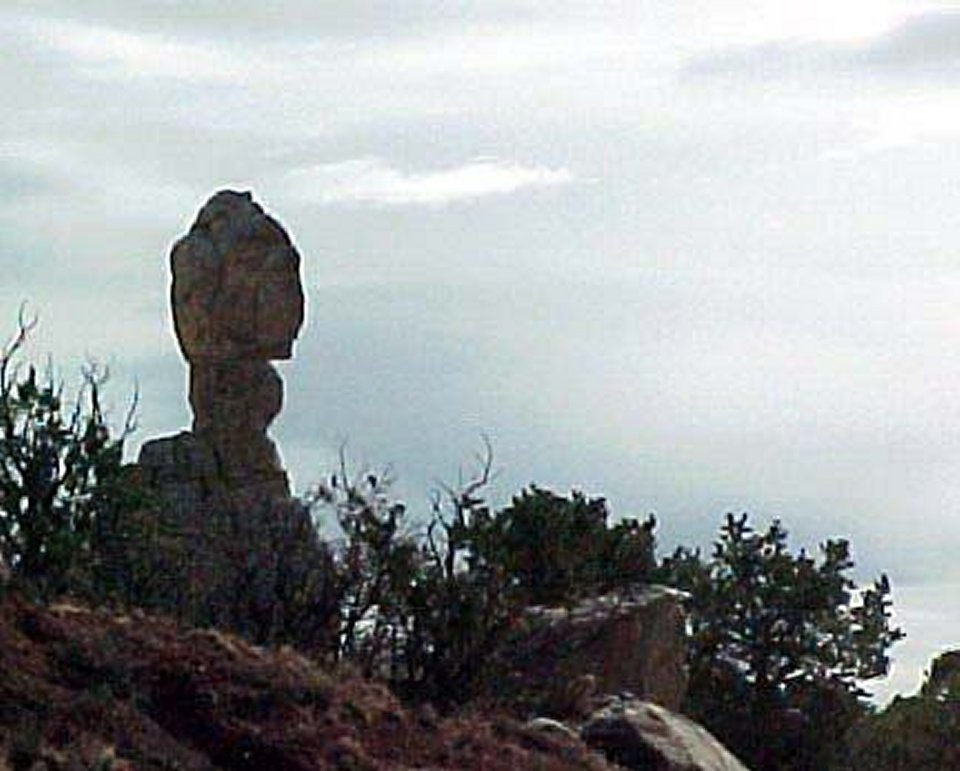
In those days guys like Cody and Gene Ballinger were already doing a lot of posturing and flag waving about the 12 unmarked graves on the plateau you can see in the picture toward the center.  Cody, Ballinger et al didn’t have to pack in.  The rancher to the East allowed them access by the Forest Road.

So during my eight days in there part of the way I passed the time was digging down a couple of feet below the surface various places in the canyon, plateau, and further up Animas Canyon, carefully gathering and placing rocks.  Creating enough other unmarked graves to make it difficult for them to go in and rob artifacts out of the actual graves.  Which I believed then and now, they were in the process of doing.

Old Jules