Category Archives: Native Americans

An Addendum About My Personal View of Mormons

I didn’t say this in the post because I didn’t think it needed saying, but I think it might.

I’ve got nothing bad to say about Mormons.  I’ve never been ill-treated by them, cheated by them, lied to by them so far as I know.  The ones I’ve met have generally been solid, hard-working, honest people.  Seemingly more so compared to the impression I’ve been left with in my seven decades of experience with the remainder of the population.  Christians, Gentile, Jew, atheist, Muslim and agnostic.  Even Buddhists, Taoists, Hindu, and the herd of New Age Gurus.  Even Hopi Elders and Ambiguous Native American Shamans.

My interest in Mormons came to being with the gradual realization that the parties involved in the lost gold mine I searched for so many years were predominantly Mormons.  It was a factor left entirely out of the legend as it came out of the 19th Century and it required years of research to uncover that fact.  The cousin of one of the central characters was evidently the second wife of Brigham Young.  Family names of the lost gold mine participants also show up among people involved in Mountain Meadows.

The timing on the lost gold mine incident and that of the Mountain Meadows massacre originally drew my interest.

What Mormons believe about polygamy, same-sex marriages, almost anything at all has no bearing on my impression and generally benevolent attitude toward them as a whole.  In areas where we disagree I’m willing to forgive them for being wrongheaded, same as I try to forgive everyone else who disagrees with me.  Otherwise I’d be forever having to keep score of who was right in this world, and who is wrong.  It just ain’t worth the effort even those relatively few areas where I can’t restrain myself from having an opinion.

Old Jules

Seems the advantages of being out of sight and out of mind for most of the population aren’t necessarily advantages when the out-of-sight geography includes something a multi-national corporation wants. All those city folks needing to keep the air conditioners turned down to 70 and to be able to light up the hair dryers every morning probably never ask themselves where the electricity popped out of the ground and hopped into the wires they plug things into.

One more bug on the windshield of civilization.  Old Jules


BEYOND THE MESAS, LLC

[The following letter was written by former Hopi Tribe chairman Benjamin H. Nuvamsa from Shungopavi.  He presented the letter to the Hopi Tribal Council on Friday January 13, 2012]

January 13, 2012
Hopi Tribal Council
Hopi – Tewa Senom

It is time we have a serious discussion about coal mining on our reservation, our water rights and our environment.  For far too long, we have pushed these issues aside, not willing to talk about how these issues impact our lives.  We must talk about how the Peabody Western Coal Company and Navajo Generating Station are affecting our lives.  Since the mid 1960’s, Peabody Coal has been mining our coal, pumping our precious Navajo Aquifer water and paying us pennies on the dollar in return.  Navajo Generating Station is emitting dangerous and harmful particulates into the air we breathe.  Our coal resources are being depleted.  Our Navajo Aquifer has been damaged…

View original post 979 more words

Exploring Alley Oop’s Home Circa 1947

When my mom left her second husband near Apache Junction, Arizona  to move near my granddad’s place at Causey, New Mexico, I was considerable upset about it all.  I’d become overfond of the Arizona guy, liked him a lot despite his human flaws that bothered my mom.

Time proved my level of upset couldn’t be handled by beating it out of me, nor by any of the other usual ways people tried back then to nudge a kid back into being seen and not heard.  The Runaways, 1947

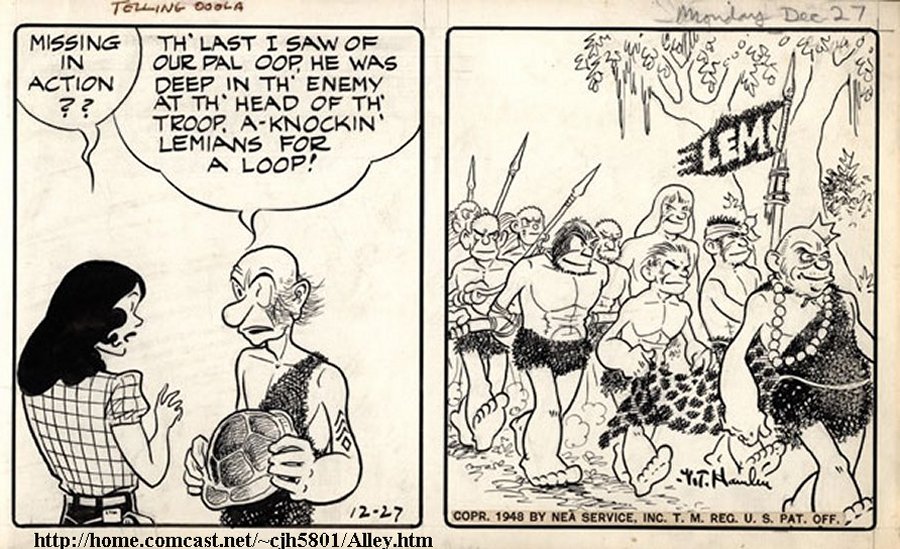
My first step-dad [Arizona] was fond of reading the Alley Oop comic strip to me and I was a huge fan.  Alley was a cave man skipping forward and backward in time thanks to a 20th Century scientist.  Alley even had a 20th Century lady friend named Oola. 

About the only thing I’d brought with me from Arizona was my stack of Alley Oop comic strips.  We’d travelled light across the desert.  And when we arrived in Causey one of the jobs my sisters had was reading those Alley Oops to me, trying to bring up my spirits.  Which I suppose it did until they’d finished reading them to me.

Something more permanent had to be done, and my granddad decided to have a shot at it.  He promised to take me to visit Alley’s home.  Mesa Verde, Colorado.

What a trip that must have been, me pestering him whether we were there yet, how much further before we’d see Alley’s home.  I don’t know how long we stayed, but I never forgot old Alley and his home.  I still had one picture of the cave dwelling he took back then until Y2K.

And of the hundreds of ancient ruins, documented and undocumented, I’ve poked around in during my life, I’ve never visited one, found one, without thinking to myself with a smile that Alley Oop might have lived there, visited there ahead of me.

When Mel King and I were exploring the ruin on Gobbler’s Knob and were driving back to Socorro when he reached into his daypack for something, came out with a human skull it was the first thing I said to him.  “What the hell is that?  You packed off Oola’s skull.  Get it the hell out of this truck!” 

I screeched onto the shoulder and he hid it behind a cedar until  we’d be headed back to Gobber’s Knob so he could put it back where it belongs.

Nowadays I think I have more in common with Alley Oop than with any modern human being.  If there was ever a right time for me to pop out of the gene pool it would probably have been more appropriate temporally in some other Universe where Alley Oop lived and breathed.  It made more sense than this one.

Old Jules


The Great Continental Divide – The Rot Started at the Top

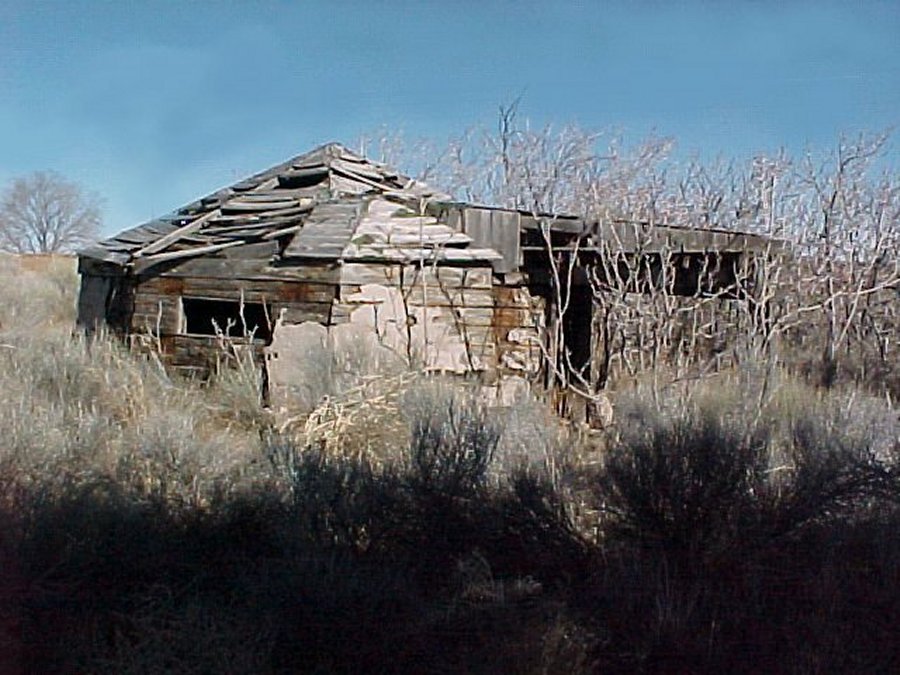
A few generations ago this parking lot was full of people journeying along Route 66.  People stopped here because their engines were overheating, or the kids needed to stretch their legs, or they just wanted to pause for a view of how the water divided.

The view wasn’t all that much, but a dad could walk down below with the kids, step behind a phony hogan, and tell they chillerns if they pee here their water would go both ways, ending up in two different oceans.

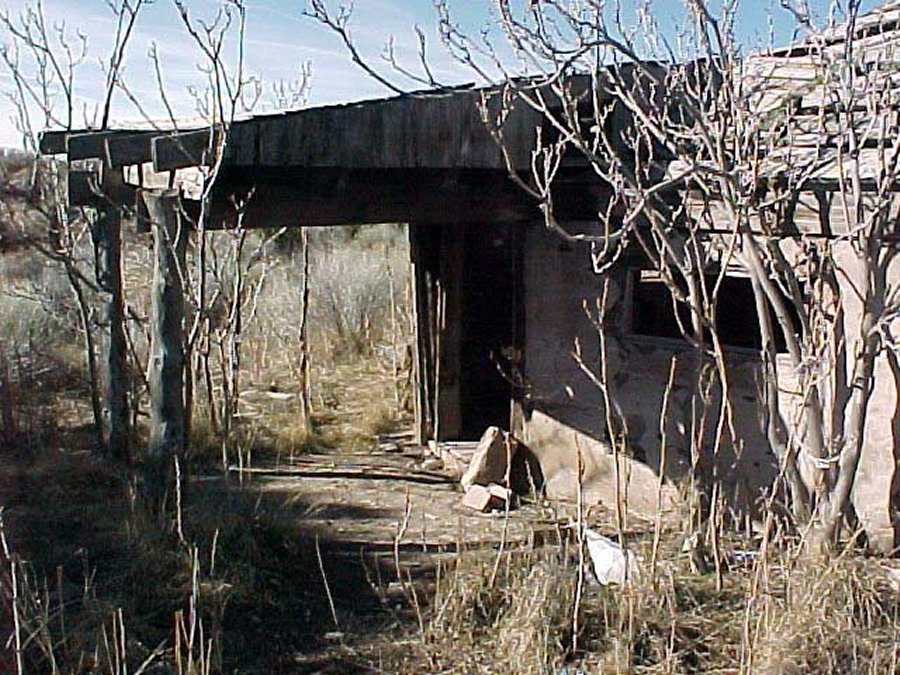
The hogan was a lot more inviting back then.

It hadn’t played hotel to a thousand stranded hitch-hikers and drunks looking for a roof.

The roof, of course, still held out the rain and snow.

It hadn’t entered the phase before even the drunks avoided it.

Though all the seeds were planted.  All they needed was nurturing a generation or two.

Garden Deluxe comes into Gallup on tanker trucks and railcars from California.  A local business family bottles it, labels it and keeps it thrifty enough so a bottle could be bought for half a US dollar when that roof still didn’t leak.

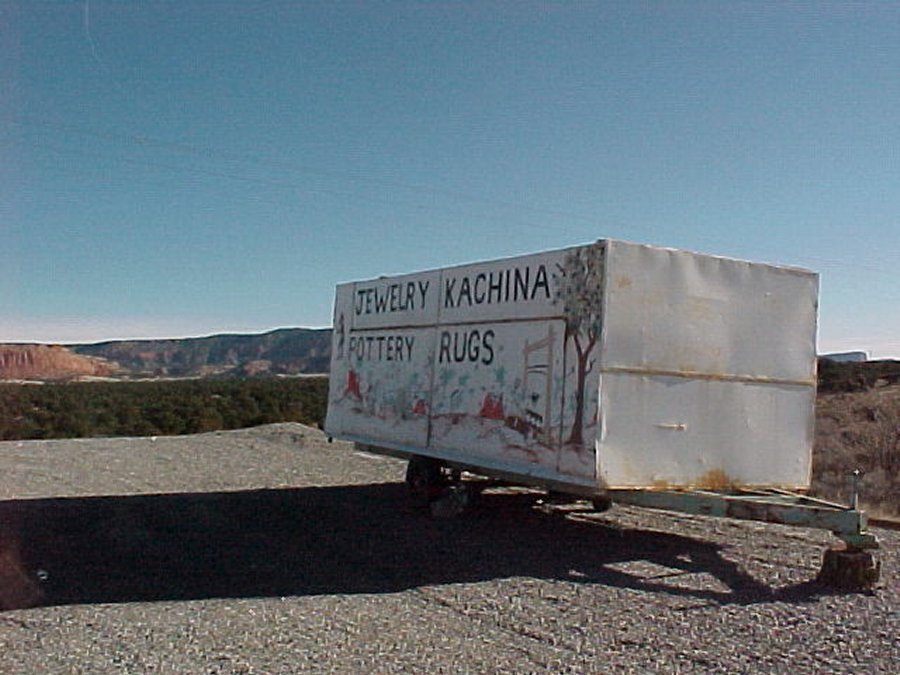
The Kachina were Hopi and Zuni.  Pottery, and silversmithing, all the tribes in the area.  Rugs, Navajo.  But while the years took the roof off that hogan the businessmen discovered Asians can make Kachina, junk jewelry, rugs, and pottery a lot cheaper than anyone struggling to hack out a living with craftsmanship on the Rez.

The motorists didn’t care.  They wanted the Made In China stamp already filling their homes in the lowlands.  The world they lived in took longer to send all their own jobs to Asia.  

Old Jules


Wobblehead Extensions, Crowfoots and Mayan Ruins in Georgia

Good morning readers. I’m grateful you’re here reading this cold morning.

Every time we think we’ve got things figured out and can make pronouncements to one another without fear of someone making a counter-pronouncement back at us with any danger of validity this seems to happen.  Some smarty-pants academian digs around where he’s got no business being and spang finds something to cut us off at the knees.

In this instance it’s fairly solid physical evidence a Mayan city once thrived in the otherwise non-Mayan and feet-implanted-in-the-ground US state of Georgia.  The offending pointee-headed guy with the cheek to find it doesn’t even have the courtesy to be a US academian who can be bludgeoned by grant money and sneers from his peers to shut the hell up about it and not go around shaking and rattling previous pronouncements.

1,100-year-old Mayan ruins found in North Georgia http://tinyurl.com/d5gwjpq

When evidence began to turn up of Mayan connections to the Georgia site, South African archeologist Johannes Loubser brought teams to the site who took soil samples and analyzed pottery shards which dated the site and indicated that it had been inhabited for many decades approximately 1000 years ago. The people who settled there were known as Itza Maya, a word that carried over into the Cherokee language of the region.

The city that is being uncovered there is believed to have been called Yupaha, which Spanish explorer Hernando de Soto searched for unsuccessfully in 1540. So far, archeologists have unearthed “at least 154 stone masonry walls for agricultural terraces, plus evidence of a sophisticated irrigation system and ruins of several other stone structures.” Much more may still be hidden underground.

A good level-headed other good US scholar took a more level-headed approach to the finds:

UPDATE: Raw Story contacted another UGA Scientist, Dr. B. T. Thomas of the Department of Environmental Science, who indicated that, while it is unlikely that the Mayan people migrated en masse from Central America to settle in what is now the United States, he refused to characterize Thornton’s conclusions as “wrong,” stating that it is entirely possible that some Mayans and their descendants migrated north, bringing Mayan building and agricultural techniques to the Southeastern U.S. as they integrated with the existing indigenous people there.

He didn’t go on to say what needs saying.  Namely that the South African guy needs to go home and  tend his own affairs.  There’s plenty of digging to be done in Africa and plenty of good US academians capable of handling any digging needs doing here.  And most especially the South African guy needs to be kept away from the copper artifacts found in Florida and Georgia in other mounds that bear a strong similarity to Aztec artifacts in Mexico.

We don’t need any guys running around in pickup trucks drinking beer and talking about Mayan calendars.  Things are already complicated enough.

Which brings me to crowfoots and wobblehead extensions.  I borrowed Little Red yesterday and went into Kerrville.  I spent a goodly while hanging around in the AutoZone store picking the brains of guys in bib overalls with grease under their fingernails.

Those wobblehead extensions offer a new lease on life for the hope of getting the starter off the Communist Toyota.  The crowfoots might be helpful getting the new one back on.  Not pictured here, but also new to  the anti-Japanese engineering arsenal is a mirror that swivels at the end of a telescoping handle for looking into places nobody ever intended them to be looked into.

Old Jules

You’re Métis? So which of your parents is an Indian?

âpihtawikosisân

In a previous post, I described what it is like as an Alberta Métis to come to Quebec and realise that ‘Métis’ does not mean the same thing here.  I’m not a shut-in…I realised that there were different definitions out there, I simply hadn’t lived where I was defined by them before.

In another post, I talked about Pan-Indianism, and also Pan-Métisism.  What this post and those previous two have in common, is that they are about identity.

The topic of Status was a much easier discussion, because I avoided delving into identity issues in order to give you the bare bones legislative context.  Trust me, there are much larger identity discussions yet to be had on ‘who is an Indian’.  More important, I’d argue, than just knowing the state of the categories right now…but you have to start from somewhere!

However, there is no real legislative context…

View original post 2,528 more words

Got Status? Indian Status in Canada, sort of explained.

âpihtawikosisân

It has been my experience that many Canadians do not understand the difference between Status and membership, or why so many different terms are used to refer to native peoples.  The confusion is understandable; this is a complex issue and the terms used in any given context can vary greatly. Many people agree that the term ‘Indian’ is a somewhat outdated and inappropriate descriptor and have adopted the presently more common ‘First Nations’.  It can seem strange then when the term ‘Indian’ continues to be used, in particular by the government, or in media publications.  The fact that ‘Indian’ is a legislative term is not often explained.

As a Métis, I find myself often answering questions about whether or not I have Status, which invariably turns into an explanation about what Status means in the Canadian context. The nice thing is, as time passes, fewer people ask me this because…

View original post 2,181 more words

Tribes, Reservations, Tribal Sovereignty and the BIA

A lot of changes and challenges are lurking in the wings whispering to the 21st Century.  Some of those will happen where nobody much will see them except the people on the receiving end.  One of those probably includes the Indian Reservation system inside the US.

By hindsight the entire construction appears to have been a cynical wink-and-nod method of getting the tribes out of the way long enough and quietly enough to rape from them with a corncob and lie whatever they’d been promised.  This worked fairly well as demonstrated in Arkansas, the ‘Cherokee Strip’ in Oklahoma, the Black Hills of South Dakota when gold was discovered, and countless other places.

There must have been some vague notion that eventually the tribal members would be absorbed into the general population to live and work alongside whites and other ethnic groups.   But any attempt to visualize a long-term role for the tribes living on the Rez resulted in thinking about something else, instead.

Chief Supreme Court Justice John Marshall took a lot of the fun out of the now-you-see-it-now-you-don’t reservation philosophy and launched federal trusteeship of tribal lands into a new phase.

The Federal Trust Responsibility In A Self-Determination Era
By Lynn H. Slade

http://library.findlaw.com/1999/May/20/132928.html

“Chief Justice John Marshall’s early opinion in Cherokee Nation v. Georgia is bedrock: describing tribes as “domestic dependent nations,” Justice Marshall characterized tribes as weak and unsophisticated, reliant upon the protection of the United States:

“They occupy a territory to which we assert a title independent of their will, . . . meanwhile they are in a state of pupilage. Their relation to the United States resembles that of a ward to his guardian.(7)

“Marshall’s premise, that tribes need federal protection of their lands and resources, continues to animate contemporary trust doctrine opinions.”

But today, in a time of profound national debt and joblessness the financial picture of the tribes is certain to raise legislative eyebrows.  $6.5 billion dollars in visible expenditures to maintain the current system with no end in sight seems unlikely to survive in an economic climate where the only certainties are military, law enforcement, bailouts of banks and muli-nationals, and benefits for politicians.

Cost of running the Bureau of Indian Affairs:

http://www.doi.gov/budget/2012/data/pdf/testimony_INTH_LH20110330.pdf

STATEMENT OF LARRY ECHO HAWK ASSISTANT SECRETARY – INDIAN AFFAIRS BEFORE THE SUBCOMMITTEE ON INTERIOR, ENVIRONMENT, AND RELATED AGENCIES COMMITTEE ON APPROPRIATIONS U.S. HOUSE OF REPRESENTATIVES ON THE PRESIDENT’S FISCAL YEAR 2012 BUDGET REQUEST FOR INDIAN PROGRAMS IN THE DEPARTMENT OF THE INTERIOR MARCH 30, 2011

“The FY 2012 budget request for Indian Affairs programs within the Department totals $2.5 billion in current appropriations.

“This reflects $118.9 million, a 4.5 percent decrease, from the FY 2010 enacted level. The budget includes a reduction of $50.0 million to eliminate the one-time forward funding provided in 2010 to Tribal Colleges and Universities; a reduction of $41.5 million for detention center new facility construction due to a similar program within the Department of Justice; and a reduction of $22.1 for administrative cost savings and management efficiencies.”

Cost of providing health care for tribal members:

http://en.wikipedia.org/wiki/Indian_Health_Service#Budget

The 2010 United States federal budget includes over $4 billion for the IHS to support and expand the provision of health care services and public health programs for American Indians and Alaska Natives (AI/ANs). Investments in the Indian health system will focus on improving the health outcomes of AI/ANs and promoting healthy Indian communities. The Budget builds upon resources provided in the recovery Act for IHS.[15] This covers 2.5 million Native Americans and Alaskan Natives for an average cost per person of $1,600, far less than the average cost of health care for other United States Citizens.[16]

The Indian Health Service (IHS) is an operating division (OPDIV) within the U.S. Department of Health and Human Services (HHS). IHS is responsible for providing medical and public health services to members of federally recognized Tribes and Alaska Natives. IHS is the principal federal health care provider and health advocate for Indian people, and its goal is to raise their health status to the highest possible level. IHS provides health care to American Indians and Alaska Natives at 33 hospitals, 59 health centers, and 50 health stations. Thirty-four urban Indian health projects supplement these facilities with a variety of health and referral services.

A 2010 report by Senate Committee on Indian Affairs Chairman Byron Dorgan, D-N.D., found that the Aberdeen Area of the Indian Health Service(IHS) is in a “chronic state of crisis.”[1] “Serious management problems and a lack of oversight of this region have adversely affected the access and quality of health care provided to Native Americans in the Aberdeen Area, which serves 18 tribes in the states of North Dakota, South Dakota, Nebraska and Iowa,” according to the report.

IHS was established in 1955 to take over health care of American Indian and Alaska Natives from the Bureau of Indian Affairs. The provision of health services to members of federally recognized tribes grew out of the special government-to-government relationship between the federal government and Indian tribes. This relationship, established in 1787, is based on Article I, Section 8 of the Constitution, and has been given form and substance by numerous treaties, laws, Supreme Court decisions, and Executive Orders. The IHS currently provides health services to approximately 1.8 million of the 3.3 million American Indians and Alaska Natives who belong to more than 557 federally recognized tribes in 35 states. The agency’s annual budget is about $4.3 billion (as of December 2011).

EmploymentThe IHS employs approximately 2,700 nurses, 900 physicians, 400 engineers, 500 pharmacists, and 300 dentists, as well as other health professionals totaling more than 15,000 in all. The Indian Health Service is one of two federal agencies mandated to use Indian Preference in hiring. This law requires the agency to give preference hiring to qualified Indian applicants before considering non-Indian candidates for positions. IHS draws a large number of its professional employees from the U.S. Public Health Service Commissioned Corps. This is a non-armed service branch of the uniformed services of the United States. Professional categories of IHS Commissioned corps officers include physicians, physician assistant’s, nurses, dentists, pharmacists, engineers, environmental health officers, and dietitians. Many IHS jobs are in remote areas as well as Rockville, MD Headquarters, and at Phoenix Indian Medical Center. In 2007, most IHS job openings were on the Navajo reservation. 71% of IHS employees are American Indian/Alaska Native.[2]

Efficiency and Public Law 93-638 (Tribal Self Determination – 1975)

More.gov lists four rated areas of IHS: federally-administered activities (moderately effective), healthcare-facilities construction (effective), resource- and patient-management systems (effective), and sanitation-facilities construction (moderately effective). All federally-recognized Native American and Alaska Natives are entitled to health care. This health care is provided by the Indian Health Service, either through IHS-run hospitals and clinics or tribal contracts to provide healthcare services. IHS-run hospitals and clinics serve any registered Indian/Alaska Native, regardless of tribe or income. Tribal-contract health care facilities serve only their tribal members, with other qualified Indians/Alaska Natives being offered care on a space-available basis. This policy makes it difficult for an Indian who leaves their tribal home for education or employment to receive health care services to which they are legally entitled. An IHS fact sheet clarifies that Indians are also eligible to apply for low-income health care coverage provided by state and local governments, such as Medicaid. IHS 2007 third-party collections were $767 million, and estimated to be $780 million in 2008.[3] Most tribally-operated health services clinics require Native Americans who qualify for Medicaid to use their benefits at their clinics, supplementing the block-grant funds they receive from IHS to serve their tribe’s medical needs. This has the potential to create profits in federally-funded. tribally-operated health clinics[citation needed].

The Indian Health Service suffers from inadequate funding, and is unable to adequately serve the population it is trying to serve.[4] Some of those who are served by the system are not satisfied with the efficiency of IHS. A contributor to Indianz.com, a website for Native American news, feels that Native Americans are “suffering” at the hands of IHS.[5] She feels IHS is underfunded, and necessary services are unavailable. Others have concerns that the restrictions of the Indian-preference policy do not allow for the hiring of the most highly-qualified health professionals and administration staff, so quality of care and efficiency of administration suffer.[citation needed]

IHS also hires Native/non-Native American interns, who are referred to as “externs”; one position available every summer at area offices is the Engineering Externship. Participants are paid according to the GS pay-grade system, which is beneficial for college students. Their GS level is determined according to credit-hours acquired from an accredited college. Engineering Extern participants generally practice field work as needed and office work.
The Federal Trust Responsibility In A Self-Determination Era, by Lynn H. Slade continues:

These trust concepts and changing visions of the tribe require re-examination of trust doctrine. It is, at the very least, incongruous for a tribe to seek or obtain regulatory primacy, yet still claim the need for a guardian’s protection from improvident transactions. It seems indisputable that the skill and knowledge sets and administrative machinery required to manage leasing and mineral contracting are of no higher an order than those required to administer the provisions of the Clean Air Act and Clean Water Act. Congress’ provision for such delegations impliedly rejects the central premise underlying the trust doctrine, that tribes cannot be trusted to manage their affairs.(198) Moreover, some tribes are insisting that resource developers recognize the tribal government and tribal courts as having general jurisdiction over them and the same powers as state governments.(199) If these trends continue, the premise of a need for federal guardianship inherent in Chief Justice Marshall’s description of tribes as “domestic dependent nations” increasingly will be false.

Any way you cut it things aren’t going to be easy for the tribes during the 21st Century.  As demonstrated by Social Security, having anything in the federal trust is a lousy idea, even if it seems untouchable.  And a middle-class citizenry that can’t afford health care for itself, pay for its own schools and libraries, and chaffs under its own costs for housing, roads, sewers isn’t likely to be sympathetic to a genre of people who have that provided by the government.

A few days of focus by daytime talk radio hosts would change the whole tone of discussions about reservations and lands held in trust by the US government.  If I had any land in Federal Trust I think I’d be trying to figure out how to get it out before someone deeds it to the Chinese or Citibank.

Old Jules

A Few Things Zuni – Part 1

During the early 1990s the Coincidence Coordinators conspired to make Zuni Pueblo and the geography surrounding it a major focus in my life.  I mentioned a bit about Zuni here:  This is Zuni Salt Lake, but over the next couple of whiles I’d like to tell you a bit more about them. 

At the time the overwhelming part of my salary was paid by FEMA and a part of my job involved mitigation of recurring natural disaster damage behind federal disaster expenditures.  In New Mexico a huge percentage of the recurring expense was located on Navajo lands, but flooding on the Zuni River reared its head as a concern during the same time period.

Meanwhile, the Coincidence Coordinators got into the act.  The search for the lost gold mine was being driven by documents from the US Archives, New Mexico State Archives, fragments of mention from 19th Century newspapers, later-in-life memories of men connected to the events and documented in books, topo maps and other researched sources.

Keith and I, examining and submerging ourselves together during that phase of my search, concluded the areas to the east of Zuni, and to the south were prime candidates for the location.  Candidates based on what we knew at the time.  Wilderness Threats.

By my own recollection that phase of the search lasted only three, maybe four years, maybe less.  But it led by numerous routes, into more than a decade of closer association with Zuni, both as a tribe, and as a geography.  I’ll be posting more about that, about Keith’s and my explorations, about the Zuni pueblo and the people living there, and about some aspects of the history and culture.

But I’ll begin by posting this piece of doggerel I wrote a long time ago about my first visit to the Zuni Rez and my first encounter with the Zuni and Ramah Navajo.  That meeting with the Zuni Tribal Council burned itself into my memory as few things I’ve experienced this lifetime have.

Flooding on the Zuni land
Tribal chairman calls
Upstream Ramah Din’e band
Over grazing galls.

Ancient ruins I travel past
Forgotten tribes of old
And finally arrive at last
On Zuni land as told:
Tribal council meets, he chants
A time warp history.

I Listen long the raves and rants
And river mystery:
Navajo must have his sheep
To have his wealth, it’s plain.
Too many kids, too many sheep
Too little grass and rain.
Forgotten white man wrongs and deeds
The raids of Navajo
Corn that didn’t sprout the seeds
And stumbled Shalako
More sheep grazed than in the past
Arroyos grew wide and deep
Siltation settled hard and fast
In riverbed to sleep.

Navajo siltation choked
An ancient channel bed
Water rose above the banks
200 cattle dead
Houses flooded, ruined cars
Fields of grain were lost
A playground field a channel mars
And who should bear the cost?

The tribal chairman Ramah band
Listened to my tale
Stony silence, steady hand
Informed me I would fail.

“If those Zunis don’t like floods
Tell them to reduce the chances;
We’ll hold back our streams of muds
If they’ll call off their damned rain
dances.”

(Doggerel to smile by)

Old Jules

Post-Y2K Cross-Cultural Trials, Trucks and Unwelcome Wisdom

The Cohoe women raised and sheared the sheep, made the dye, hand-wove this rug.

As the post-non-Y2K hard times hardened, I did a lot of scrambling trying to make ends meet. One by-product of that squeeze was that I began doing some trading with the tribes for pottery, rock art, rugs, and other products to resell.

This got me acquainted with a Navajo man who became a running buddy for a while. Curtis Cohoe.  [Not to be mistaken for his namesake, the Mescalero referred to on several posts.]  A man about 50 years old. Pine Hill (Self-determination) Rez. Good family, a generation earlier. His mom and aunt still raise sheep, shear, dye the wool with dye they make from crushed rock and plants, and weave good rugs the old way.

Early in his life, Curtis started out pretty well.  He was intelligent, talented, and I’ve always assumed he must have attended a university.  When he was being an artist everything he did was in demand.  He was an excellent shade-tree baling-wire and chewing-gum vehicle mechanic, and he could chop a cord of wood with an axe almost as fast as I could cut one with a chainsaw.

Worked for the US Forestry Service as a fire fighter, then as a Ranger in California until things went haywire. Back in New Mexico, a cop raped his younger sister and got by with it. Curtis came back and beat the cop to death with his fists, which got him 10 years in prison.

Once that decade of bars was over, Curtis never really got back onto the right track. He had a lot of anger in him, and he had some brothers who were in and out of prison a lot, who kept the pressure on from the law. (Curtis was fairly frightened of one of the brothers, whom he described as a bad-ass. The other was an evangelical preacher who sold some drugs and stole in between times).

Curtis was much of a man in a lot of ways when he was sober, or mostly sober. I’d known him a considerable while before I ever saw him drunk, never realized he was sometimes a drinker.  He shifted his residence frequently between the family place on the Rez and Grants, New Mexico.  Maybe that’s how it escaped my notice. 

But early in our friendship one day I drove up to a place he was doing some artwork painting on a table top in an alleyway next to the railroad track in Grants. I was just in time to see three semi-drunk Din’e toughs in their mid-20s approach him, exchange a few words, and start swinging.

By the time I got out of the truck to help him he didn’t need any help. The two fully conscious ones got to their feet and left at a stumbling run.  The less-conscious one stuck around long enough for me to try to stop the bleeding by tying a bandana around his head while Curtis intermittently kicked in his ribcage.  I’m glad I never met the brother Curtis was scared of and considered a badass.

I don’t know whether I knew Curtis didn’t have a license to drive an automobile.  He frequently drove my truck running errands and chores.  I had no qualms about loaning the Ford pickup to him when he needed to go out to the Rez for one reason or another provided my old Isuzu was running okay. 

One day we were preparing for a trading trip to Shiprock and Curtis left in the Ford to get it gassed up for the trip.  When he didn’t come back for a couple of hours and I saw a wrecker go past towing my truck I immediately went over to the wrecker to find out what was going on. 

“Is this yours?”  He grinned because he knew damned well it was mine.  My apartment was no more than 150 yards from his yard and we both occasionally had coffee a few feet apart in the Chinese restaurant between his place and mine.  “Your damned Indian’s in jail.  Towing fee on the truck’s $50.”

What did he do?”

“They stopped him for a routine traffic check.  He didn’t have a license and when they called it in they found out he’d had a lot of DWIs.  He’s going to be in there a while.”

I paid out the $50 to get the truck out of hock and seethed about it considerably.  It would have been too easy for it all not to happen and I found myself thinking Curtis had about outlived his usefulness in my affairs.

But mutual acquaintances brought me a message from Curtis asking me to bail him out of jail, telling me how sorry he was about it all.  He was going to be stuck in there for at least six weeks if he couldn’t raise bail.  Swore he’d pay me back everything he’d cost me.

I wasn’t Mister Moneybags, but I could squeeze $500 if I had to, and I did over a few days, selling things cheaper than I’d intended.  Once he was released he brought a friend from the Rez over and told me he was going back to Pine Hill for a while.  Asked if he could borrow my pickup for his friend to drive him back out there.  His friend had a license, and I loaned it to him, figuring it would be gone for a day, maximum.

The truck never came back.  Curtis and his friend evidently got drunk on the way to Ramah and got chased by a Navajo-hired cop on the State Highway until they ran the truck into a tree, Curtis driving.  I wasn’t long finding out he was being held in the private penal facility outside Grants, and that he was looking at two years in prison, and I was looking at losing the bail money.

A week or two later I heard a guard had grabbed him and Curtis knocked him down.  He was now looking at no-less-than five years hard time.

Everything else being equal I wouldn’t be surprised if he’s still there.

Sometime afterward I had a buyer for one of the rugs his mother and aunt made, so I stopped in on her for a visit at Pine Hill.  Naturally the subject of Curtis came up.

He needed to stay out of town,” was all she said.

Old Jules