Category Archives: Outdoors

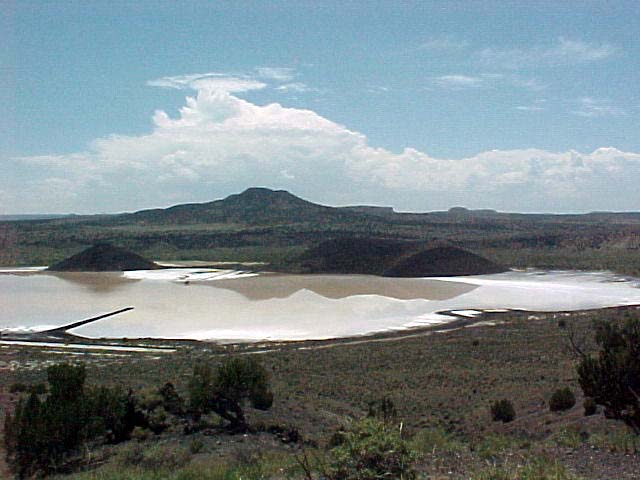
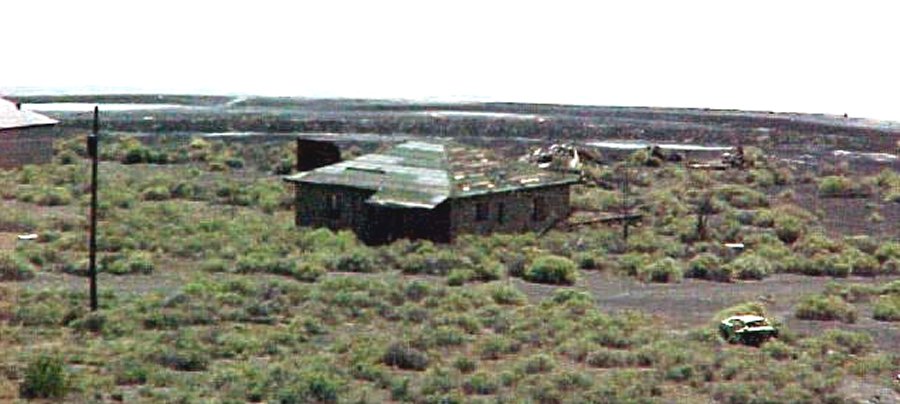
This is Zuni Salt Lake


It’s about forty miles south of the Zuni Rez, almost in AZ.

There’s a ghost town you can barely see in the pic…. used to be a considerable community down in there when it was private land, from the mid-1800s until the 1950s, evaporating salt from the huge concrete beds.  Most of the buildings are still intact, though they’re going away rapidly.

Today it belongs to the Zuni tribe, one section of land, but it’s not in the national trust as part of the Rez.  Tribes have been acquiring a lot of land from casino monies and other ways during the past decades, making the lands acquired ‘tribal’, but not Rez, which puts them into an interestingly ambiguous position insofar as road maintenance and county taxes.

Salt Lake was acquired as a piece of a lawsuit against the US government involving an airplane with a hydrogen bomb aboard that crashed on the Rez, with first responders being Zunis, but which the feds didn’t bother telling them about the bomb, leaving emergency workers exposed to hazardous materials without knowing it.  The tribe got a few million out of that, which they used to purchase 60k acres of land to the south of the Rez, but Salt Lake was thrown in as a bonus.
Salt Lake’s a sacred place for the Zunis, home of Salt Mother.  If you are willing to risk hopping the fence and wandering around down there ….. it’s a volcano crater with a hollow secondary plug you can climb, then a spiral trail leading back down inside … that’s where most of the rituals for Salt Mother are held… but all over that section you’ll pass over various religious items from recent times you’d be well advised to leave untouched.

Salt Lake used to be the place all the warring tribes got their salt throughout history.  A place where a constant truce between enemy tribes existed.

It’s also part of what the power companies would love to strip mine.   The great percentage of the desert surrounding it, from north of Springerville, and Saint Johns, Arizona is government land with shallow coal deposits comparatively inexpensive to ‘recover’.  They’ve already converted the desert on the Arizona side to a wasteland.  Still desert, but more in the moonscape vein than the usual, regular arid country mode.

The people in El Paso and Phoenix need electricity so they can fire up their hair dryers every morning, and keep their homes refrigerated.   Those places have climates uncomfortable to the human skin most of the time and they’d rather savage a few million acres of country they’ve never visited and never will than suffer a few degrees of discomfort and use a towel to dry their hair.

Which the Zuni believe would thoroughly piss off Salt Mother, with considerable resulting pain for the Zunis, and all the rest of us.

They might be right.

The Zuni and a few commie-pinko-obstructionist greenie environmentalists are the only people who give a damn, and the other desert-dwellers in the area would welcome the jobs helping ravage the country around them would bring to the area.  The last time I looked the Zuni tribe was burning up a lot of tribal money trying to stop the mine expansion into New Mexico.  The prospects didn’t appear promising because the New Mexico government, the feds, and the mining interests were stacked up singing songs of human progress and greater good.

Heck, it’s been a few years now.  Maybe they’re already mining it.  Probably easier to ask someone in Phoenix or El Paso whether the hair dryer worked this morning and if it did, assume that desert has gone to the moon.

Old Jules


Crazy Lost Gold Mine-ism

This post requires some background to get to what it’s about.  The first part is background.  The actual subject of the post doesn’t start until ‘way on down toward the bottom.

Back before Y2K happened I spent a lot of years and energy researching and searching the mountains of SW New Mexico for a particular lost gold mine.

Doing a thing of that sort, the smart individual would keep his mouth shut about it.  But I don’t qualify in that regard.  I spent several years poring over records and winter nights poring over maps with a magnifying glass, almost always certain of knowing where it was, chawing at the bit to get out into the barrancas to file a claim on it.  But also putting my research into a form others searching for it might find helpful.  Insane.

Eventually I found a location where evidence on the ground fit the legend locations well enough to keep me working the west face of that mountain, climbing and unclimbing it with friends and associates, building up a lot of muscle, finding a lot of interesting rocks, and getting surprising assays, but no joy to speak of on gold.

“A burned out cabin ruin with an aspen tree growing out of the inside, bear claw marks 12 feet up, 3 hand forged nails, a longtom sluicebox axed out of a 3 foot diameter log, a spring 75 feet above the sluice, an arrastra below.  A mysterious map chiseled on the face of a 300 pound rock surface depicting the exact layout of the canyon, the cabin, the waterfall, all so accurately depicted the person had to have scrutinized the layout from the mountaintop, then scratched it on this stone 600 vertical feet below and half a mile away.  The rock was carefully placed on the canyon wall above eye-level so it was easily seen, but only by someone looking up.”

By 1998 I’d spent a lot more treasure, worn out vehicles, worn out relationships with lady friends and put a lot of friends to sleep going on about it and spending all my waking hours thinking, searching, or talking about it.  I decided it had taken up enough of my life and it was time to move on to other things after one final effort.

I took several weeks of vacation from work and spent it determined to get that gold mine out of my life, or into it in a way that didn’t include continued searching for it.  During part of it Gale and Dana, another old friend, joined me up there.

But that’s all another story.

During the 1990s I used to get several letters and phone calls a week from other people who were searching for the mine, asking questions about specifics of my research findings, asking questions about various terrain features, or just wanting me to go climb a mountain where they knew it was but didn’t feel like climbing themselves, willing to give me 10% of it if they were correct.  Of course they always knew they were correct.

But gradually that all tapered off.  In 2003, in the desperate throes of surviving the desperate financial aftermath of Y2K I published a book about my research, and the calls, emails and letters started coming in again for a while, but again gradually receded after a few years.  Those guys all got old and everything quieted down.

That lost gold mine slid spang out of my life.

But finally, here’s what this post is about.

Suddenly, beginning a couple of months ago, my old email address box began a new trickle, becoming a stream, of questions about all manner of details about those canyons and researches I elaborated on in the book.  Old guys, some older than I, were suddenly making noises about ideas, searches, evidently studying the book and maps, wanting refinements on what I’d described.

2011, every old worn-out has-been treasure hunter in Christendom  is suddenly wanting me to search my memory-banks about canyons I once stomped around in.  I’ve mostly answered the emails, tried to remember and flesh out what most of them were asking about, but a lot of it’s just too mixed in with too many other canyons, rocks and trails to recover with clarity.

But some of them are actually being subtle but provacative, wanting to argue with me about research findings, value judgements I made regarding 160 year old documents I dug up in the US Archives, military records, and a particular Apache I consider a key in the affair.

Heck, it ain’t as though I found the damned mine.  I don’t know where it is, though I spent a lot of years, treasure, sweat, and women thinking I did.  Now, suddenly I have people coming out of the woodwork wanting me to change my mind about where I thought it was because my reasons for thinking it weren’t the same as their reasons for thinking it’s somewhere I didn’t think it was.

Absolooooodle, incomprehensibly, insane.

Yeah.  It’s real important where I think it is.  If I don’t think it’s where it is, that old gold mine’s likely to switch places with where it thought it was.  Next thing you know it will be where I thought it was.  And that ain’t where these other guys now think it is, so I need to change my mind and think it’s where they think it is.  Otherwise it won’t be there.

I have no idea what the hell this is all about.  Maybe the price of gold combined with worrying about Social Security has the geezers going crazy thinking they’re 50 years old again.

Old Jules

Billy Vaughn And His Orchestra – The Shifting Whispering Sands ( 1956 )

Desert Emergency Survival Basics

You survival and preparedness-oriented readers might find something you didn’t already know in here to be useful.  The Introduction section to the book Desert Emergency Survival Basics explains my purposes for writing it better than I can today:

The potential range of human experience includes finding ourselves in unanticipated dangerous situations. Most of those situations have been examined minutely and described in print in the form of survival manuals. Desert survival is not an exception. Excellent books are available to explain primitive survival in the desert southwest duplicating lifestyles of Native Americans a thousand years ago. That is not the intent of this book.

A few decades ago I had an acquaintance with a man named Walter Yates. Walter had the distinction of surviving a helicopter crash in the far north woods by jumping into a snowdrift before the impact. He managed to survive winter months with almost nothing except the clothes on his back when he jumped.

Walter’s experience was a worthy test of human potential for emergency survival in extreme conditions. The margin for error was microscopic. The reason he survived rested on his ability to quickly detach his mind from how things had been in the past, how he wished they were, and accept completely the situation he was in. He wouldn’t have made it out of those woods if he couldn’t rapidly assess his new needs and examine every possibility of fulfilling them. “It’s all in the mind,” he once told me.

The margin for error in the desert is also narrow. That margin is dehydration. Extremes of temperature are also a factor, but they are more easily managed than the needs of the human body for water. Anyone who survives an unanticipated week in desert country did so by either having water, by carrying it in, or finding it.

Over the years I’ve followed a number of search and rescue accounts and discussed the issue with searchers. The general thinking among those workers is that a person missing in the desert southwest should be found or walk out within three to five days. After three days the chances for live return spiral downward. Returns after five days are lottery winners. When a missing person isn’t found within a week, it’s usually because he’s been dead for five days.

This book is to assist in avoiding situations that lead to the need to survive those crucial three days, and to provide the basics of how to walk out and how to find water in the desert southwest. If you need the emergency information here it will be because you became lost, stranded by mechanical failure, or physically incapacitated. I won’t address the bugs and plants you might find to eat. If you have water you’ll survive without eating until rescue.

When this book was written I had a close association with New Mexico State Search and Rescue (SAR). I was also writing a book about a lost gold mine at the time. The State Search and Rescue Coordinator (SARC) knew about the book. I had a special arrangement with him because I was spending a lot of time in remote canyons searching. If something delayed me there I didn’t want them to send out the SAR guys to look for me.

One day in the coffee-room SARC asked me about my progress in the search and the gold mine book. I explained the lost gold mine search to him and how the information available in the past was sketchy.

“So you’re writing a book that’s likely to cause flatlanders to go out into the desert searching for this thing?”

I thought about it a moment before I answered. “It might. A lot of people would have tried anyway, but this book might bring in some who wouldn’t have come otherwise.”

SARC glared at me. His whole world revolved around  flat-landers getting lost in the mountains or desert. Several times every month they’d scramble the forces to try to locate someone misplaced. Sometimes it’s a brain surgeon from Houston who got himself mis-located mountain climbing on the east face of Sandia Mountain within sight of Albuquerque . Other times a physicist from California gets off the pavement in the desert and loses his bearings. Sometimes SAR arrived in time to save their lives. New Mexico back country can be unforgiving.

“If you’re going to publish a book that will take a lot of idiots out where they can get into trouble you’d damned well better include some warnings on desert survival and how they can stay out of trouble! I don’t want to spend the next five years dragging the bodies of your readers out of the arroyos in body bags.”

That conversation ultimately resulted in this tome.

Over time it’s been expanded and rewritten numerous times to eventually become what’s posted here. Here’s the link, but there’s a new page for it on the navigation bar at the top of the page.
Desert Emergency Survival Basics

Old Jules


Sons Of The Pioneers – Cool Water

News from the Middle of Nowhere

Old Sol’s going through some unusual upheavals today.  I don’t recall ever seeing such an array of sunspots reported:

“GIANT SINE WAVE: Imagine a sine wave 400,000 km long. Today, NASA’s Solar Dynamics Observatory is monitoring just such a structure. It’s an enormous filament of magnetism slithering over the sun’s northeastern limb:”

http://spaceweather.com/

Meanwhile it’s a red morning out there, so all you salesmen probably need to take warning.

Last night I was planning to haul water but I was interrupted by a wild hog meandering out from behind the truck as I came around the corner of Gale’s house.  We stood and looked at one another from about 20 feet, him undecided about whether he wanted some of me, while though I’d decided I couldn’t think of anything to do about it if he did.  When he wandered off behind a hedge I ducked inside to seal an agreement with him that we’d postpone any drama until we could each feel better about invading the personal spaces of the other.

Gale had told me he was having a lot of hogs troubling him but he didn’t mention I needed to pack a .45 walking around the place.

Maybe more later.  I’ve got to go let his chickens out.

07:45 AM – Snagged enough water to hold things together a couple of days down here without seeing any porkers.  Kay’s duck, which was missing last night when I locked down the chickens and caused me concern, flew in while I was filling the water jugs.  Eased my conscience considerable.  I hate having one of their critters come up KIA or MIA while I’m the one taking care of things.

While I was driving back down here I got to thinking about that tusker last night and the fact something’s been tearing up the pen where I keep the roosters every night.  Went out looking for hints of what might be doing it and found pig scat all around out there.  If it was there before I hadn’t noticed it and it appeared fresh.

I’m guessing whatever water source the wild hogs were using somewhere else must have dried up and motivated them with ambition to do some exploring.  It’s been a year since pigs were a problem here except for brief spatterings, a herd passing through.   I’m hoping these will follow the pattern, what’s left of them.

Tidbits you’ll be glad to know:

On this day in 1948 the Chinese formed the Peoples Republic of China, intended to create a nation of manufacturers to create all the stuff Western Europeans and US workers were having to make for themselves previously, getting their hands dirty.

On this day in 1926 Turkey began allowing civil marriage, the results of which subsequently became obvious.

On this day in 1918 the first US troops landed in Vladivostok, Russia, to help settle things down and restore the aristocrats overthrown by wossname, revolutionaries.  For those guys WWI didn’t end until 1920.

On this day in 1866, Navajo Chief Manuelito turned himself in at Fort Wingate, New Mexico, thus putting the final touches on getting all those Navajo over into the temporary [15 years] rez at Bosque Redondo, Fort Sumner bunched up with the Mescalero so’s to get the numbers down to something more tidy and manageable, which they did. [The Long Walk of the Navajo http://www.logoi.com/notes/long_walk.html ]

Old Jules

“The Java Jive” (Ink Spots, 1940)
http://www.youtube.com/watch?v=iP6IUqrFHjw&feature=related

Misplaced Worries

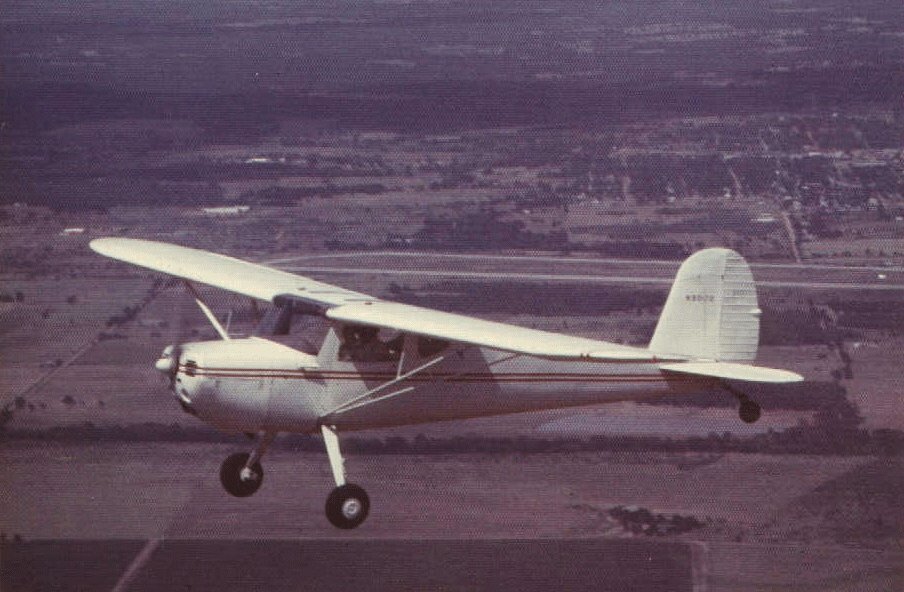
Writing an earlier y2k entry got me thinking how often we humans tend to worry about the wrong things.  Reminded me of a guy I used to fly with a bit during the late 1970s named John Rynertson.  John was a man who flew a blue Cessna 120.  It was a lot like the 140 Helldragger I flew (pictured above).  But he was also a man prone to introduce himself to people around the Killeen, Texas airport as “one of the best pilots around”.

Naturally there were those who didn’t favor his self-introductions involving pilot skills.

John wasn’t a man who could claim a lot of friends.  But he did have a wife almost as desirable as that 120 he flew.  So pretty, she was, that whenever he wasn’t flying, John was worrying about her.  He fretted over what she might be doing when he was off flying, or when he was almost anywhere he couldn’t keep an eye on her.  Which was a good bit of the time.  Old John just worried himself silly about that woman.

Then one day he was flying with some warrant officer from Fort Hood and managed to get more airspeed than that old airframe was willing to put up with.  The 120 wasn’t rated for snap rolls.  But being one of the best pilots around, John just naturally figured they weren’t referring to him when they rated the airplane.  Wings came spang off that mama at about 3,000 feet above the ground.

Turned out John didn’t need to be worrying about what his wife was doing.  If he was going to worry, he needed to be focusing on learning to stay alive and fly at the same time.

Whatever his wife might or mightn’t have been doing while he was alive, she certainly did it after he was grease scattered over an acre of ground.

Similarly, I recall all those kids who used to spend all their time worrying about getting drafted for Vietnam, then overdosed on something and ended up corpses right here in the good old US of A with never having been fired at in anger.

A person needs to use a lot of care, consult an internal map, look at the compass and GPS, picking things to be worried about.  Otherwise he’ll spend all his time worrying about things that don’t happen while the things that do sneak up behind him and tap him above the ear with a ball-peen hammer.
Old Jules

Nat Shilkret & The Victor Orchestra – Lucky Lindy
http://youtu.be/kflQSovXfw0

The Liar: The Great Speckled Bird, Part 2

I’ve described a few of the attributes of the GSB on another entry, http://tinyurl.com/4yxat2b,  but I didn’t get around to mentioning another  facet of his complex character traits.  He’s a liar.

When he finds food he’ll burble in a special way for the hens, he won’t eat, but pecks it, lifts it with his beak and drops it, bringing the hens running from all directions to fight over whatever it is.

But sometimes GSB gets lonely when he hasn’t found any food.  He’s crippled up and has to move about with a crow-hop, so chasing hens down when he’s lonely doesn’t come easy the way it does for other roosters.

GSB’s developed a practical solution to the problem.  He lies.

When things get slow and GSB wants companionship he’ll pick a spot where he might have found food if there’d been some there, and he’ll burble, scratch and peck, picking up imaginary food and dropping it.  The hens are wise to this tactic.  Somehow they’re able to sense he’s faking it, so they keep on with whatever they’re doing.

But GSB knows hens.  Keeps right on, insisting he’s actually got something they’d like.  Gets excited, urgent in his pronouncements about what he’s offering.  Eventually, one or another of the hens will begin to meander toward him, curiosity overcoming the weight of her experience and common sense.  Usually when one hen heads toward him the others can’t stand the thought she might get something they’ll miss, so the momentum increases and becomes a race to see who’ll get to him first.

When a hen reaches him GSB lifts the imaginary morsel one more time, burbles, and mounts her for a quickie.  The other hens lose interest, GSB dismounts and wanders away, and the hen stays squatted on the spot a couple of minutes on the chance he’ll come back for more.

But if it’s to be done, best it were done quickly.

Old Jules

The Taker – Kris Kristofferson
http://www.youtube.com/watch?v=bfkN2i-yS04

He’s a giver, he’ll give her
The kind of attention that she’s never known
He’s a helper, he’ll help her
To open the doors that she can’t on her own
He’s a lover, he’ll love her
In ways that she never has been loved before
And he’s a getter, he’ll get her
By gettin her into the world she’s been hungerin’ for

’cause he’s a taker, he’ll take her
To places and make her fly higher than she’s ever dared to
He’ll take his time before takin’ advantage
Takin’ her easy and slow
And after he’s taken the body and soul
That she gives him, he’ll take her for granted
Then he’ll take off and leave her
Takin’ all of her pride as he goes

He’s a charmer, and he’ll charm her
With money and manners that I never learned
He’s a leader, and he’ll lead her
Across pretty bridges he’s planning to burn
He’s a talker, he’ll talk her
Right off of her feet, but he won’t talk for long
Cause he’s a doer, and he’ll do her
The way that I never
And damned if he won’t do her wrong
’cause he’s a taker, he’ll take her
To places and make her fly higher than she’s ever dared to
He’ll take his time before takin’ advantage
Takin’ her easy and slow
And after he’s taken the body and soul
That she gives him, he’ll take her for granted
Then he’ll take off and leave her
Takin’ all of her pride as he goes

Brother Coyote

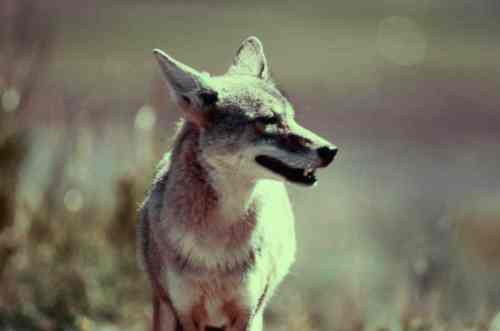
If it weren’t for the big cats, the spiders, the rattlers, the various predatory… and when I think about it, regular non-predatory birds… I’d be tempted to say the wild critter I love most is Brother Coyote.

But that’s when I don’t pause to think of those others individually.  Old Cuervo (Brother Raven)  is hard to beat if you let your mind wander to him.

Frustrating.  I began this blog post to talk about Brother Coyote and why I love him and somehow find myself having to tip my hat to ravens and rattlers and bob-cats and owls and blue birds and spiders.

How’s a man supposed to get anything said about one thing when his mind gets all clogged up with all those others dancing out of the wings wearing clown suits, somersaulting and tooting horns trying for some attention?

Dragging myself back to the issue at hand.  Brother Coyote’s maybe the critter out there that’s most like man.  Intelligent enough to have you shaking your head out of respect.  Loves himself, loves being a coyote.  Never wants to be something else, knows everything else was put here for his amusement, and frequently, for his destruction.

I suppose that’s the long and short of it.  Why,  I’ve studied Brother Coyote and often seen him studying me, seen his sign and his track behind a bush where he was sitting, tongue lolling, laughing as I stumbled noise-making through life.

But if I try to say more this will get too long for the attention spans of you readers.  I’ll save the stuff I planned to tell you about Brother Coyote for another entry or three sometime later.

Meanwhile, the moon’s full this pre-dawn.  Pause and have a look-see for a moment.  When you do, know it’s another thing you share with Brother Coyote.  He loves that moon same as you do.

And if he could get to it to destroy it, he’d do that, also.  Same as you.

Old Jules

You’ll enjoy this short video of a rising moon with a running coyote:
http://www.flickr.com/photos/ddsimages/5371270617/?reg=1&src=comment

Coyotes
by Bob McDill, sung by Don Edwards
http://www.youtube.com/watch?v=8kVdOxXB8fg

Cunning vs Habit

Coyotes soon learn
Becoming trap-wise in time
Never snare-wise
In time.

from Poems of the New Old West,  NineLives Press, copyright 2004