Tag Archives: culture

I’d love to have this guy for a neighbor

Good morning readers. Thanks for coming bvy for a read this morning.

I don’t have anything much to report, other than cat news, weather news, and various skeletons beating on the doors of the closets of my past life.  All of which are causes for unsettling consternation on my own part, but better left hanging out to dry until the moisture’s dripped out of them enough to allow me to make emotional sense of them.

So I’m going to introduce you to someone you mightn’t have encountered, might feel, as I do, you’d like to have him for a neighbor.  My personal experience with neighbors is that they’re mostly uninterested in anything I might have to say, except as it serves as a lead-in for something they wish to say.  Fred doesn’t appear to be much different in that respect.  You won’t get to say anything much back to him, which is typical of neighbors.

However, Fred differs, in that what he says is always interesting, thought provoking, almost never venal.  He doesn’t need anything I might say to lead in directions I find mind expanding and challenging.  Never inane and never boring:

Fred On Everything —
Scurrilous Commentary by Fred Reed
http://www.fredoneverything.net/MakingSense.shtml

Making SenseA Guide to Our Times July 8, 2013
For reasons of voume and poor vision I cannot answer much of my email. I know that it is offensive to write and not get a response, but I can’t help it. My apologies.

In 1950 America was conservative, prosperous and, superficially anyway, happy. The war had been won. America had no competition of any kind anywhere. Calm prevailed. The races lived separately with little conflict. Men went to work and women stayed home to raise the kids. The schools saw their job as teaching reading, grammar, spelling, and arithmetic.

Divorce was almost unheard of, bastardy—as it could then be called—close to zero. Drugs, pornography, free love and perversion—as homosexuality was then said to be—were at most distant rumors. Perhaps they could be found in Paris and New York, where such exotics as William Burroughs and Henry Miller abode. These things were mere frissons around the edges.

But change came. Women wearied of substantially empty lives in the suburbs, making peanut butter sandwiches and perhaps secretly drinking themselves silly. They wanted to be lawyers and biologists. It made sense. No moral or legal principle prevented it. Men didn’t want to be Little League slaves, so why should women? The country could use their intelligence. Anyway, it was their business.

So women went wholesale into the workforce. Which meant wholesale out of the home. Thus the latchkeys came into being, unsupervised and wondering whether their parents cared.

Next it was thought desirable to make divorce easier. It was better for all concerned, the thinking ran, to end the union of miserably unhappy couples than to leave them to stew. It made sense. Who wanted to be forever unhappy? Before long, the rate of divorce hit fifty percent.

Pornography became acceptable. It made sense. There was the First Amendment. Besides, what right did a bunch of shriveled prudes in Boston or anywhere else have to tell me that I could not read Tropic of Cancer or The Naked Lunch or The Canterbury Tales? It was a matter of personal conscience. Soon you could see photos on the web of bleeding genitals pierced with fish hooks.

Next it was said that segregation amounted to South African apartheid, which it did, and that it inflicted grave disadvantages on blacks, which it did, and gave America a bad reputation in the world, which it did. So the Supreme Court ended segregation. It made sense. There followed racial hostility and endless problems as the races proved immiscible.

Sexual cohabitation came. Urbanization made it less conspicuous. The Pill made it safe. What was wrong with it? Surely a matter of personal conscience, it was better than leaping into an ill-advised marriage. It made sense. With college and graduate school delaying marriage, living together provided a needed sexual outlet.

Next the divorce courts took cognizance of the propensity of men, who were perverted, brutal, and unconcerned about their children, to wreak havoc if granted custody following the divorce. They had to be controlled. It made sense. Who wanted to sentence kids to that? The description of fathers was credible since it was attested by Lesbian feminists with no interest in either children or men. This ensured objectivity. Soon countless children were growing up without fathers in the care of mothers who couldn’t control them.

Bastardy came, being quickly softened to “illegitimacy.” The perky phrase “single mom” came into style in for whites and “love child” for blacks. It was said, reasonably enough, that nobody had the right to tell women when they could and could not reproduce. It made sense. Anyway, it was a matter of personal conscience. Soon the bastardy rate hit thirty percent among whites and close to eighty among blacks.

Homosexuality then changed from being a perversion to being an orientation, and gays, as they came to be called, came out of the closet. It made sense. Anal sex like any other kind was a question of personal conscience. What business did the government have in the bedroom? Gays were harmless and productive. If Lesbians tended to be disagreeable, they would be as much so in as out of the closet.

What with porn, the celebration of homosexuality, the pill, and relaxation of censorship, society became sexualized to a degree unimaginable in 1950. Scenes of copulation became common in film. But what was wrong with this? Sex, God knows, is natural. Everyone is interested in it. Who wants to live in a prissy atmosphere of Victorian repression? Soon middle-school girls were giving blow jobs to their boyfriends.

Homosexual marriage came. It made sense. Surely people of the same sex can love each other, and what business does society have in telling people who they can marry? It is a matter of personal conscience.

One might ask with an eye to the future, why not polygamy? It makes sense. The same arguments apply as well to it as to homosexual marriage, a point which has not been raised because there are more gays than Mormons. Polygamy is not a perversion, and has a long history in Christianity. Consider the wives of Solomon. Legalizing it makes sense.

Anyway, the schools became feminized, taught by mental dregs since all the smart women were now lawyers and biochemists. Having little interest in learning—the dull never do—they focused on inculcating Appropriate Thought and on turning little boys into little girls. In its way it made sense. Who wanted young Bobby to learn violence from dodge ball and grow up as a rapist and wife-beater?

Drugs? Almost unheard of in 1950, they came to be accepted by all regions of society. Soft drugs, such as grass and Prozac, flowed freely in respectable society. Acid was great fun. Why shouldn’t people use these reality-enhancers if they chose? It made sense. They did less harm than alcohol and tobacco, which were legal. Soon middle-school kids were selling crystal meth.

As it turned out, there were minor downsides to these sensible policies, but nothing serious. Our children are unattended drug-ridden mall rats, often divorce wreckage, our daughters sexually used at thirteen and growing up hating men, our sons drugged by their teachers and shaped into unhappy transgendered puzzloids. Men avoid marriage because of vindictive feminist courts, the young avoid marriage because of assured divorce. The schools and universities have been enstupidated to hide the failures of particular groups and genders, merit has been superseded by group identity, and here come the Chinese.

But it makes sense.

Ever wondered who the Vietcong were?

Eddie Adams

Eddie Adams photo 1968

Last night I came across a thrift store book I’d never gotten around to reading.  One of those ‘last resort’ books set aside again and again.  A backup for a time when I would be desperate for anything besides the labels on sardine cans.

But as I thumbed through it I was abruptly captured.   When Heaven and Earth Changed Places: A Vietnamese Woman’s Journey from War to Peace, by Le Ly Hayslip.

Here’s a woman born in 1949 in a Vietcong controlled village near Danang where her family’s spent the previous generations fighting, first the French, then the Japanese, then the French again.  As a small child she watches relatives and neighbors in her village raped and slaughtered by French mercenaries.  Then:   http://en.wikipedia.org/wiki/Le_Ly_Hayslip

“Hayslip was born in Ky La, now Xa Hao Qui, a small town in central Vietnam just south of Da Nang. She was the sixth and youngest child born to farmers. American helicopters landed in her village when she was 12 years old. At the age of 14, she endured torture in a South Vietnamese government prison for “revolutionary sympathies”. After being released, she had fallen under suspicion of being a government spy, and was sentenced to death but instead raped by two Viet Cong soldiers.[2]

“She fled to Saigon, where she and her mother worked as housekeepers for a wealthy Vietnamese family, but this position ended after Hayslip’s affair with her employer and subsequent pregnancy. Hayslip and her mother fled to Da Nang. During this time, Hayslip supported both her mother and an infant son, Hung (whom she would later rename Jimmy), while unmarried and working in the black market, as an occasional drug courier and, once, as a prostitute.

“She worked for a short period of time as a nurse assistant in a Da Nang hospital and began dating Americans. She had several disastrous, heartbreaking affairs before meeting and marrying an American civilian contractor named Ed Munro in 1969. Although he was more than twice her age, she had another son with him, Thomas. The following year Hayslip moved to San Diego, California, to join him, and briefly supported her family as a homemaker. In 1973, he died of emphysema, leaving Le Ly a widow at age 24.

“In 1974 she married Dennis Hayslip. Her second marriage, however, was not a happy one. Dennis was a heavy drinker, clinically depressed and full of rage. Her third and youngest son, Alan, was fathered by Dennis and born on her 26th birthday. The couple filed for divorce in 1982 after Dennis committed domestic violence. Shortly thereafter, he was found dead in a parked van outside a school building. He had established a trust fund, however, that left his wife with some money, and he had insurance that paid off the mortgage of the house.”

So here’s a woman, a real, no-shit Vietcong, tortured by the South Vietnamese, suspected of being a traitor by the Vietcong and sentenced to death, raped and escaped.  Married a US civilian and became a US citizen.

Probably a person couldn’t be more caught-in-between from birth than she was.  Surrounded by hundreds, thousands of other peasants caught in-between.  Trying to dodge the steamrollers of forces they didn’t understand, South Vietnamese and US rifles pointed at them daytimes, Vietcong rifles pointed at them nights.

Yep, this lady is one of the people the guys with Vietnam Veteran caps walking around mining for praise and ‘Thank you,” spent their tours in Vietnam trying to kill.

Damned book ought to be required reading for anyone buying a SUPPORT OUR TROOPS sticker.  Because at a foundation level, SUPPORT OUR TROOPS isn’t about the troops.  It’s about people who are being defined as ‘the enemy’ those troops are going to do everything in their power to ruin the lives of.

People in US government who couldn’t locate the place on the map defining one side as ‘the enemy’ and the other side as ‘friends’.

Old Jules

Grandkid:  Granpaw, what did you do in the Vietnam War?

Old Vet:  I helped Presidents Kennedy, Johnson and Nixon kill a lot of people who didn’t need killing, helped destroy a country that didn’t need destroying, helped get a lot of GIs killed and maimed in the process.  And I’m damned proud I did.

Grandkid:  Oh wow!  Thank you Grandpaw!

The Runaways – 1947

Good morning readers.  Thanks for coming by for a read this morning.

I wrote this post a year-or-two ago, but never posted it because it was overly long.  But because the nightmare post below seems to lead here, and the only news I have is Tabby-news, I’ll post it despite the length. 

The Runaways 1947

Causey, New Mexico, was a dot in the road.  Pavement from nowhere to nowhere running between a scattering of frame houses, a small roadside store and gas station.  A rock schoolhouse, a church, and a few rusting hulks of worn out farm machinery in the weeds.

Our cottage was on the same side of the road as the schoolhouse.  Most of the village was on the other side, including the windmill across the road from our house where my sister and I went for water and carrying the bucket between us to tote it home. 

To my tiny, four-year-old mind, the center of town was the store, diagonally across the road, to the left of the windmill.  Everything of importance happened there.  Cars from other places stopped for gas.  The store had Milk Nickles.  Ice cream on a stick, covered with chocolate.  Pure heaven that didn’t come often.

If the store was heaven, behind our house was hell.  The toilet.  A ramshackle tower with dust flecks floating in the shafts of light that came through the cracks between the boards, light coming through underneath where the ground had caved away from the wall.  Home of black widow spiders and the occasional rattlesnake.  The place was a chamber of terrors for me.  I was always certain I’d fall through the hole to the horrors beneath when I used it.

Our little cottage had two rooms.  A sort of kitchen, living area in front also had a little counter where my mom tried to operate a little variety store.  Keychains, trinkets, a handkerchief or two.  Things that wouldn’t be found across the street at the store. 

She was also a seamstress.  Most of my memories of that time include her huddled over a treddle sewing machine working on the felt curtains she was making for the stage of the school auditorium.  Mom was a woman twice divorced.  In 1947, that was no small thing.  In that time and place broken marriage was considered to be the fault of an untrained, unskilled, unwise, probably immoral woman.  Two divorces, three children, and no resources made my mother the subject of mistrust by the woman of the community, and disdain by the men.

Memories have probably faded and altered with the half century since all this happened.  The perspectives of a child plagued with fears and insecurities seem real in my recollections, but they, too, have probably been twisted with the turns and circles the planet has made around the sun; with the endless webs of human interactions, relationships formed and ended.

My sisters went to school in that village.  Frances, my sister who died a few years ago, must have been in the second grade.  Becky, maybe in the 5th.  I hung around doing whatever preschoolers do in that environment when everyone else is busy.  I have flashing memories of standing by the road throwing rocks at cars; trying to get the little girl down the road to show me her ‘wet-thing’. 
 
I remember being lonely; of wishing aloud my mom would give me a little brother to play with.  “I wish I could,” she’d reply, “but you tore me up so much when you were born, I can’t have any more kids.”

That trauma of my birth was a favorite theme of my mom.  She was fond of telling me how the doctors were long arriving when I was ready to be born;  how a nurse and my dad held her legs down so I couldn’t emerge until the proper people were there.  How it damaged her insides and caused her to have to undergo all kinds of surgery later.

I recall I felt pretty badly about that. 

During harvest season it seemed to me the entire community turned out to work in the fields.  We’d all gather in the pre-dawn at the store, then ride together to the cotton fields in the back of an open truck.  Mom and the girls were all there, along with the neighbors and some of their kids.  Two of the kids were about my age:  Wayne and Sharon Landrum.

In retrospect I doubt we pre-schoolers helped much.  My mom had put a strap on a pillowcase and promised a Milk-Nickle every time it was filled.  This was probably more to keep me busy and out of trouble than it was to pay for the ice cream bar.  I can’t imagine that a pillowcase would have held the ten pounds of cotton it would have taken to pay a nickle.

The lure of sweets weren’t sufficient to occupy smaller kids, I suppose.  There came a time when Wayne, Sharon, and I wandered off from the field.  At first it was just to take a walk, but the road was long and we must have made some turns.  Before too long we’d gotten so far from the farm we didn’t know the way back.  We were frightened and kept moving.

In the end we found the lights of a farmhouse sometime after dark.  The family brought us inside and fed us something.  We sat around a stove trying to keep warm until some of the searchers came and picked us up. 

In the morning at the store all those field workers who’d had to lose part of a day of wages wanted vivid descriptions of the spankings we got.  They wanted to make sure.

That was my first experience with running away, at least on my own part.  My mom had done some of it, running away from my dad and her second husband.  My dad had done some of it, letting his kids go off, first to Arizona into the shelter of a brutal, drunken step-dad, then into the shack in Causey.

Afterthought, July 9, 2013

Reading through it this morning I find it difficult to create a context for this anecdote that isn’t submerged and overwhelmed by 21st Century value judgements and popular perspectives created by generations of affluence and ease for the general population of the US. 

This isn’t a tale of ‘oh shit, we had it hard’, ‘oh damn, life is sure tough’, whining and complaining or just bragging.  It’s a statement of perspective.  In 1947 things were a lot different in a lot of ways. 

Every adult had been alive through the Great Depression.  Hardship was no stranger to most of them, and the yardsticks for measuring hardship would have all placed what happened with our tiny family as ‘challenging’.  Not easy, but certainly not ‘hard’.

What our little capsule of humanity went through wasn’t poverty.  And what’s measured today as poverty sure as hell wouldn’t have qualified, by any standard that existed at that time.  Compared to the conditions a huge part of humanity was enduring in 1947 we could as accurately been called wealthy, as poor.

Old Jules

The nightmares of acceptance

high water

Good morning readers.  Thanks for coming by for a read this morning.

Probably I was four years old, must have been 1947, I was a kid with a recurring nightmare.  I was walking along a raised roadway with my mom, my granddad, and my two sisters.  A deep gravel pit reached alongside the road and my feet slipped, I fell and began sliding into the pit screaming for help.  None of them looked around, none paused, they all just kept walking and I kept sliding and screaming until I’d wake.

With all these decades of hindsight I find that dream of a four-year-old amazing.  I had no business knowing that much about people, about life, about my particular gene-pool at that age. 

At the time my mom was between marriages and we were living in Causey, New Mexico in a two-room shack with no running water, an outdoor toilet, maybe no electricity, though we might have had electricity.  I can’t recall.  My granddad’s presence in the area was the only thing to draw us there.  My mom was doing anything, seamstress work, pulling cotton, trying to operate a miniscule variety store in the house to earn a living. 

A deeply troubled young woman with three kids and almost certainly more nightmares of her own to keep her company than anyone purely needs.  Her financial woes gradually improved when she married again, but my thought is her mental processes turned concurrently to lies and manipulation.  Maybe they’d never been otherwise.

Such a woman!  I don’t believe my sisters ever recovered from the experience of having her for a mother, of always being caught in the vice of ‘love your mother’ and that mother being a destructive, master manipulative sociopath.  I believe I did recover, but it’s just me believing it.  I do know that when she died a couple of years back and I heard the news I felt nothing but a sense of deep relief, of peace.

I suppose it was the neighbor got me thinking of this.  He came down bringing a cup of expensive coffee before dusk.  As we sat he told me about some trial in Florida of a man who killed someone who was beating him up in a parking lot.  An angry tale of violence and racial politics and justice.

As he described it to me I remembered something else he’d told me a while back, off-hand and matter-of-fact, about how his father had murdered two, maybe three people he [the neighbor] knew of.  One a whiskey salesman who didn’t get his purchases for the bar he operated delivered.  Beat him to death on the sidewalk in front of his bar.  Another salesman he beat badly might have lived, might have died.  I can’t recall for certain because when I heard the story I was still digesting the first salesman.

The next homicide by his father he was sure of involved a Mexican [or at least a Hispanic] who did farm work.  Evidently screwed up a switch on an irrigation pump.  That night the neighbor says the father took his .22 pistol and went out somewhere.  The next day the Mexican farm worker was found dead on the railroad tracks shot nine times with a .22, then run over by a train.

The jokes around town proclaimed it to be the most elaborate suicide ever.

When he told me this story it didn’t include any value judgements, no overtones, no repudiation, no anger of the sort contained in the story of the trial in Florida.

I suppose an infinite number of monkeys pounding an infinite number of typewriters will indeed eventually write the Decline and Fall of the Roman Empire, as someone claimed.  I’ve seen enough families and enough parenting this lifetime to accept that some families and some parenting must fall within the ‘normal’ part of the bell-shaped curve.

But to go a step further and suggest there’s enough ‘normal’ floating around among the father and mother components to celebrate seems to me to be a possible overstatement.  I count myself lucky my nightmares were only my own.  When Bobby Dylan’s song offered to let me be in his dream if I’d let him be in mine I was never tempted.  Still ain’t.

Old Jules

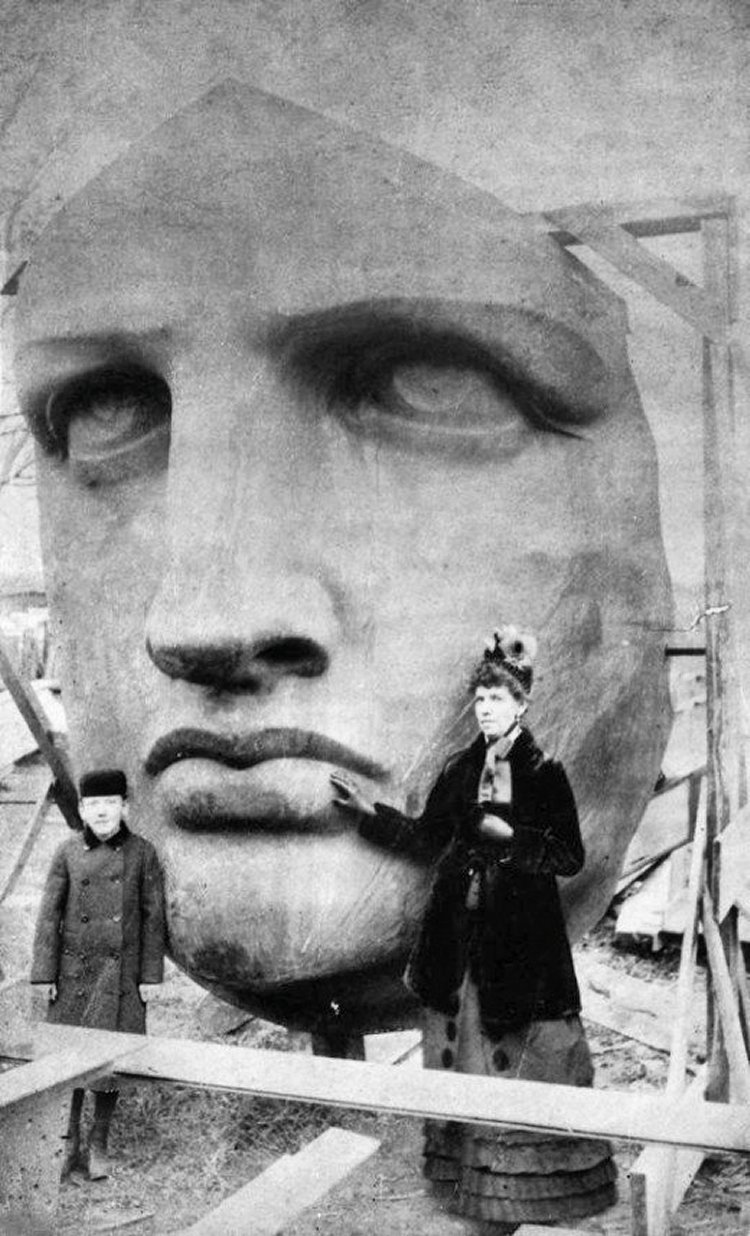
Learning to trust dishonesty

liberty

Me:  “Okay Tabby.  This has gone on long enough.   Time we had a heart-to-heart about whatever’s bothering you.”

 Tabby:  “I don’t want to talk about it.”

Me:  “That’s obvious enough.  But the fact is, I’m holding all the cards.  We’re going to work this out, or you’re going to find yourself out of a job.”

Tabby:  “I knew it was going to come to that.  You’ve never liked me.”

Me:  “Well, it’s true I didn’t pick you to be part of the clan.  You’ve never been one I’d have deliberately selected.  But I’ve tried my best to be dishonest about it consistently and not show it.”

Tabby:  “The other cats have never liked me, never accepted me.”

Me:  “Yeah, you’ve bullied them and they’ve bullied you.  I’ve had to pull you off Niaid, and I’ve had to pull Hydrox off you.  I’ve tried not to show a preference.  I even used to have to pull you off Shiva, your own mother. 

“But I’ve also held you upside down, sweet talked you, petted you, treated you as affectionately as all the rest of them were treated anytime you’d allow it.  You quit allowing it.  I didn’t quit trying.”

Tabby: That’s because I finally realized you’re a liar.  That you were being dishonest.  That you really don’t like me at all.”

Me:  “Yeah, but I’ve been consistently dishonest.  I’ve tried to hide the fact I don’t like you much during those times I didn’t and I worked hard at liking you.  If you want to stay around here and be a part of the ‘us’, Hydrox, Niaid, you and me, you’re going to have to trust me to keep on being dishonest.”

Tabby“I’m not sure I can do that.”

Me: If you can’t you stand a good shot at me starting to be honest.  I’m an old Jellicle cat man from ‘way back.  You’re a Tabby.  I learned to love your mom, even though she’s a Tabby.  I’ll keep working at it, and meanwhile I’ll keep being dishonest.  But don’t push it too far.  The clock’s running.”

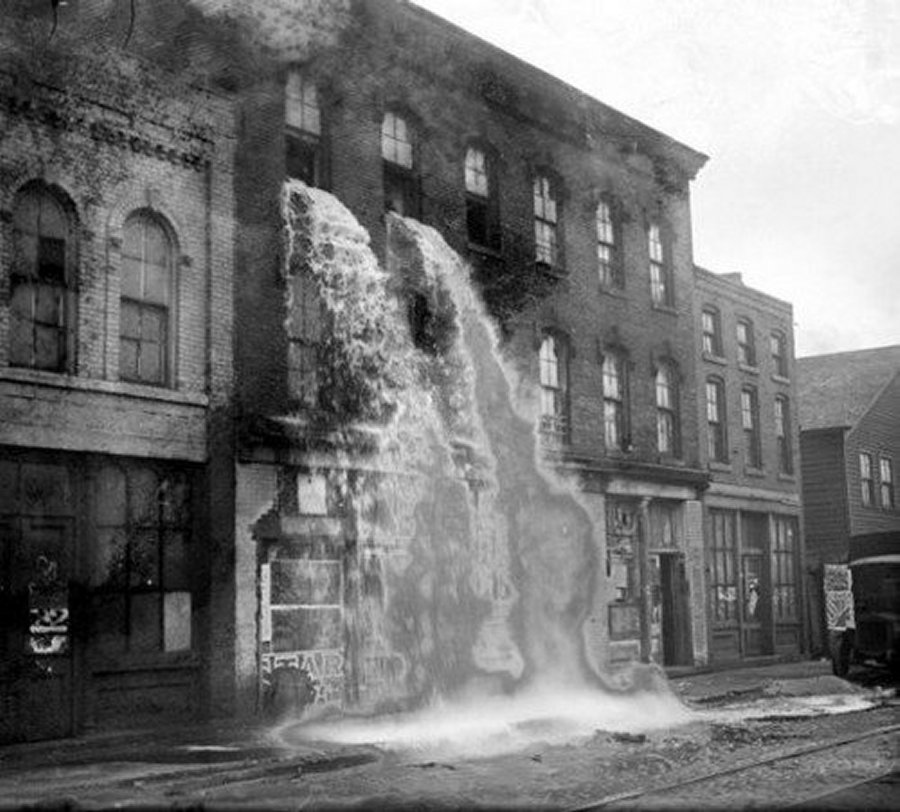
The illusion of progress

Escape route 2.51Good morning readers. Thanks for coming by for a read this morning.

Old Sol’s having to fight his way through a lot of haze this morning.   The residue of patriotic zeal, most likely.  I’m not seeing it in the western sky, so I’m guessing someone between here and Harper managed to set the world on fire with a Chinese firework, or Chinese-manufactured US flag waving in the wrong dry grass.  But the Far Departments in this part of Texas know how to deal with such things and likely they’re used to them.

Incidently, for those interested, the Invader Cat turns out not to be defunct.  Re-emerged a couple of days ago l0oking sleek and fat, minus the damaged eye and skull on that side.  Treating himself as though he’s part of the program here.

Meanwhile, Tabby’s still refusing to enter the RV, though she’s being sociable enough, otherwise.  I picked up some more un-flavored Chinese sardines at Dollar Tree in Kerrville early in the week figuring to try luring her into accustoming herself to it.  If that doesn’t succeed, I’ll have to resort to starvation as the next instrument of persuasion.

It’s time I began feeding them all in there, anyway, if only to encourage the Invader Cat to go back where it is someone’s feeding him.

Went to the laundry in Kerrville while I was in town, which was novel and uplifting.  Nice way to get clothes clean, when you think about it.  Sat around in there watching the odor of unwashed clothing being replaced by a white tornado turned sideways.  Listened to people discuss how hot it is, how dry it is, and got a bit of reading done.

Went around to the various oil-change and lube people and found the ones with the best deals for oil changes and lubes at the moment have doors too low to allow the RV inside.  Even WalMart.  But there are a couple of the QuickLube, JiffyLube types of places I haven’t tried yet.

Before I left here I loaded up the RV with belongings to be taken to storage in Harper, which is the illusion of progress I mentioned at the beginning.  I’ll have a number more of those trips before I hit the road.

Swung by one of the side streets lured by a sign, “FRESH PEACHES” while I was in Harper and ended talking chickens to the lady selling them.  Nice coming across someone who likes chickens as much as I do.

There’s an old RV behind a house near Harper about the same vintage as this one, looks as though it hasn’t been moved in years.  I looked at it through binoculars to see whether the ladder was intact [the one on this one’s going to have to be replaced], then knocked a while at the door.  Finally left a note asking whether they’d be interested in selling the ladder.

If they get back in touch with me there’s another item or two I might also be able to buy off that one…. another piece of the illusion of progress.

But sometimes progress manages to be just marching in place.  I’m hearing from Rich and Jeanne that the hot and dry out west is severe enough to justify stalling until something breaks with the heat and moisture.  New Mexico and Arizona are either in the process of burning, or getting ready to burn.  I’m not crazy about putting the kinds of stresses on the tires and drive-train going across pavement hot enough to fry an egg on will provide.

Maybe in a few weeks it will be more inviting.

Old Jules

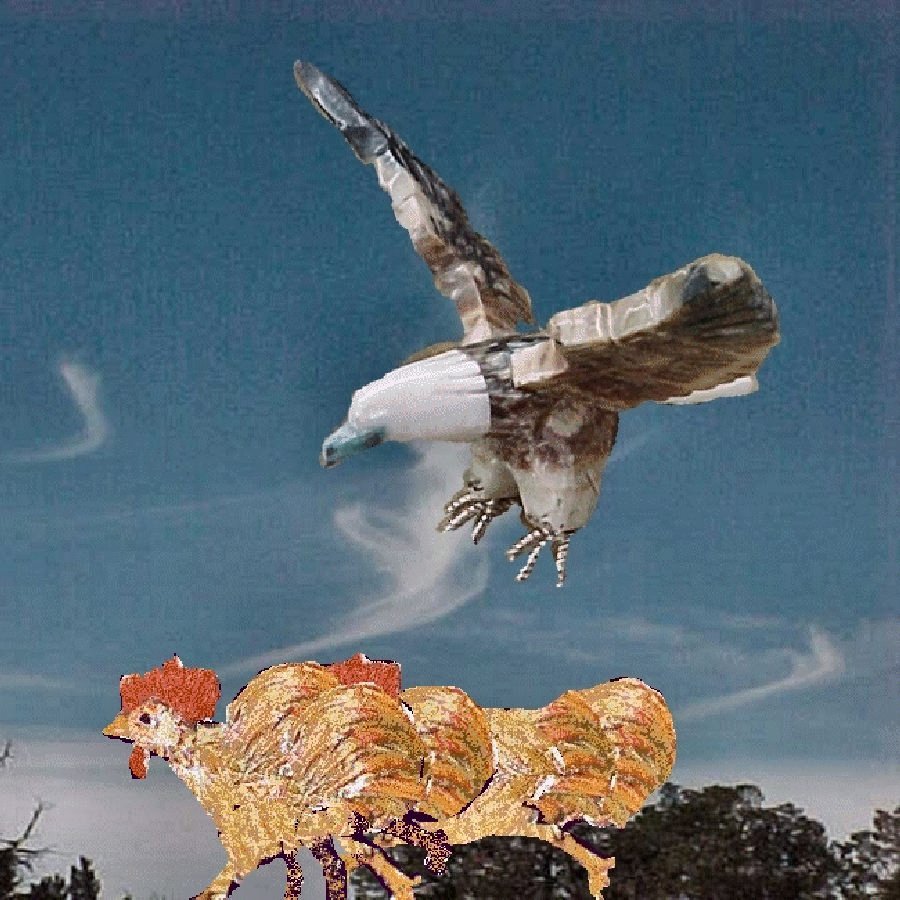
Picking your symbolism: The biggest food bird, or the biggest predator?

hero patriot2

Good morning readers.  Thanks for coming by for a read this morning.

Hydrox, Niaid and I were out in the RV a little while ago, two of we three scurrying for new places to hide every time a new dash of thunder rolled across the landscape, rain pelting the roof and some edifying lightning to season it all.

Finally the drama ended, but the rain continued a while and the cats decided the world wouldn’t end.  I sat there gazing across the meadow, opened a side window to let the odor of fresh rain inside.  Something big moved around the other RV ……. six wild turkeys grazing on apple cores I’d thrown out the window.  Occasionally letting out enough turkey noise to scare the bejesus out of the cats and have them scurrying for cover.

Watching those turkeys got me thinking about how they were runners-up to become the National Bird, once.  This is no BS.

Time was when most of the people in this country were acutely aware they had relatives, distant cousins somewhere, still laboring for nothing, starving to death, fighting wars and living under the iron heel of aristocrats.  Aristocrats who had histories as far back as anyone could remember of using the biggest predatory bird anyone could think of as a symbol of what aggressive sons-of-bitches they were.

Eagles.  Imperial eagles.  Regal Eagles.  Birds that didn’t do a damned thing but come down out of the sky and kill anything they could catch.  Birds nobody anywhere ever ate.

So a lot of people in this new land thought they’d donealready had everything they wanted to do with eagles and starving, and having heavy heels on their necks by a bunch of damned aristocrats.  They figured if they were going to pick a bird to symbolize the way of life they wanted, a the biggest bird people could make a meal of would be a good symbol.

A symbol of common people with full bellies for a change.  A symbol of people being able to go out into the woods and get a wild meal without some aristocrat telling them that deer, or turkey, or rabbit belonged to them, the aristorcrat, and common people would do better to starve than get caught eating one.

Well, friends and neighbors, we donealready had an aristocracy putting itself together, deciding whether we wanted to be represented by the biggest predatory bird with a complete history of aggression, repression and exploitation.  They knew whether they wanted to be represented by a turkey, or a Regal Eagle.

You can look around you and see which one they picked.  And you can consider the 50 tons of laws they’ve made since they adopted that eagle for their symbol, the several tons they’ll pass this year, and know why they picked it.  50 tons of laws telling you what you can’t do, a few tons more this year.

But you have the satisfaction of knowing you have a proud bird for a national symbol.  Not some damned turkey you could make a meal of in a pinch if there weren’t a law against it.

Old Jules

Don’t take any chances – CC all your emails and posts to the NSA

Good morning readers.  Thanks for coming by for a read this morning.

Got to thinking last night before I slid off to sleep, “What if the NSA ain’t reading my emails and other stuff I write?  What if some get lost in the shuffle, or worse, what if they just aren’t interested enough to read mine?

How damned de-humanizing is THAT?

Sheeze!  Brought me spang awake with a start.  Those bastards might be going flaccid on the job, reading everyone elses’ stuff, but not mine.

I thought about it a while as I scratched niaid behind the ears, got up and took my third [under pressure] cold shower of the day, dried off and scratched Hydrox behind the ears pondering it.

Still felt insecure and de-machoed, so I kicked on the AC unit for a few minutes to knock the edge off the cold sweat I was breaking out in.

Okay.  First crack out of the box, this ain’t something I’m going to sit still for, ain’t going to tolerate it.  Those bastards are going to read my stuff whether they like it or not.  I’m going to put them on the list of CCs for all my emails, and if I can find out who my senator or congressman is, I’ll write them.

See if I can get a congressional committee started to get those guys from NSA in and test them, grill them hard to make sure they aren’t falling down on the job.

Piss me off.

Old Jules

Hungry for heroes? Find a thief, a robber, a killer, or an aristocrat

 frank and jesse james

Good morning readers.  Thanks for coming by for a read.

I was thinking last night before I dozed off about what TV, movies and fiction have done for us that reality couldn’t.  I concluded it all boils down to mythology and self definition.  An attempt to bring little guys into a larger picture where, in fact, they don’t exist.

Consider this:  Can you name a single person involved in the American Revolution below the rank of Colonel other than Paul Revere?  Anyone between then and the War of 1812? 

From then until the Mexican War you might recall Nat Turner and his brief slave rebellion, or Davy Crockett, Travis, Sam Houston, et al.  The mountain men and the fur traders.  Meriwether Lewis and Clark, the Kit Carsons, Bridgers, the Coulters and Joe Meeks.  The wild and wooly.

And all the names from the lower paygrades you might recall from the Mexican War are there because they were colonels and higher during the Civil War.

Follow it right on through from then until the Wars and whatever else is happening today.  Where the hell are the lower-paygrade heroes?

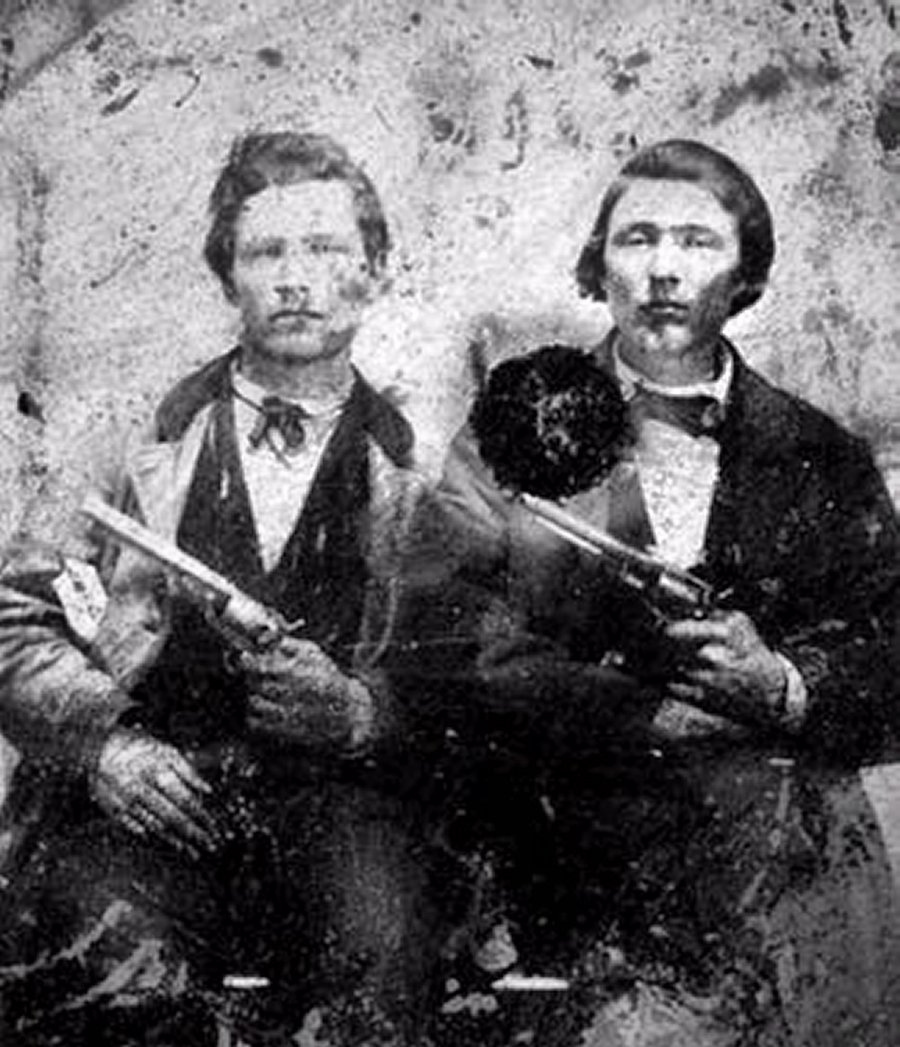
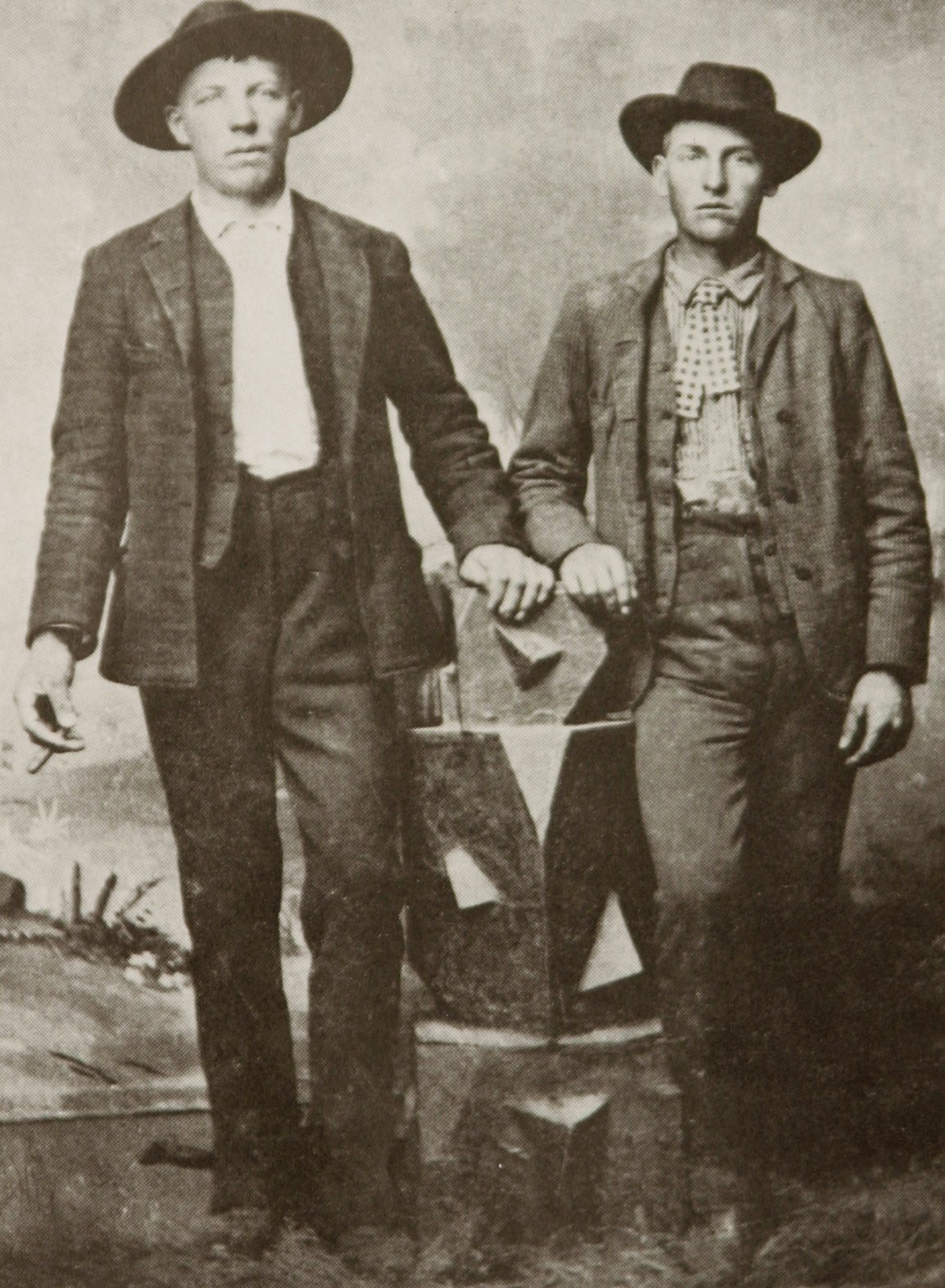
Younger, Cole & James left to right

Well, the fact is, they were out there at the time.  They were the outlaws, the killers, the people most successful at taking what didn’t belong to them away from the people it belonged to.  The James Gang, the Daltons, Butch and Sundance, Billy the wossname, Kid, the Youngers.  Buffalo Bill, wiping a species off the face of the continent so’s the trains wouldn’t be troubled by them and cow men could use the land for cows.  Masterson, the Earps, Hickok.  Steely-eyed killers.

The US needed the genre fiction, the film industry and television to clean up history.  The country needed common people out there getting massacred by Apache, Lakota, Comanche, people with names.  People below the rank of colonel with names that weren’t John Jacob Astor and weren’t just getting filthy rich and powerful from it all.

So you want the heroes of the west today?  Well, there’s John Wayne.  Henry Fonda.  Steve McQueen.  Jeff Chandler on the generic Indian side.  Burt Lancaster.  Gary Cooper. 

All of whom also, by coincidence, became the heroes of all the other wars the US fought.  Became the common men of history where none existed before.  Winning the west from the people who owned it, whupping the Germans and Japanese, the Vietcong and NVA, the Chinese and North Koreans. 

All those heroes, frequently below the paygrade of colonel, helping us to understand our great heritage.  Because, after all, our heroes define us in ways we’d be too modest to define ourselves.  Most of us ain’t all that successful at taking shit that doesn’t belong to us, individually.

At least those of us who never got higher than the rank of major.  The aristocratic dynasties went to Washington but the heroes all came out of Hollywood.

Old Jules

Lookee here what I’ve got! Lookee here what I did!

Hi readers. Thanks for coming by for a read.

Tabby: Lookee here what I’ve got!  Lookee here what I did!”

Me:  “Well, Tabby, whatever the hell it is you’ve got, evidently at least it ain’t rabies.  Which is more than I can say for most of the human species.  As for what you did, I admire the time you spent preparing a hole to do it in.  I’m awed by the cable you laid precisely into that hole.  And I’m impressed by the patience you demonstrated and the trouble you took covering it, afterward.”  More than I can say for the human species.

——————

Humane Society Thrift Store cashier [to the old guy ahead of me wearing a ball cap declaring he was once a US Marine]:    “You were a marine?”

Old guy, standing a bit straighter:  “Yes.”

She: Well.  Thank you.  Thank you for ‘being there’.

Old guy:  “Um.”  To himself:  “Well, shit.  Why do you think I’m wearing the cap?  Never done anything else in my life anyone was likely to thank me for.  But I did shoot at some people nobody remembers once a long time ago.  Never figured out exactly why.  But if someone thinks that’s worth thanking me  for, I’ll try to believe them.”

————————

Restaurant in town, two oldsters talking across a table.

Oldster #1:  “Look what they’re doing!  Voting themselves pay raises, benefits.  Giving everything away to the niggers and Mescins!”

Oldster #2: Sons of bitches.  They multiply like rabbits.  Now they’re getting to be voting age, controlling the government.  Half of them can’t even speak English.”

Oldster #1:  “Yeah, bastard Communists!  They don’t believe in democracy!”

—————————————

Seems to me the great majority of the oldsters I come across, watch, listen to as they interact and try to maneuver around in life, are lost.  Are fools.  No better, no worse than me.  Fools, knowing they spent their lives chasing the illusion that the more shit they could acquire, the wiser they’d be thought to be by someone, somewhere.

Some aren’t well off, sure as hell nobody cares what they think about anything because they didn’t pass the test.  But then there are the others, walking around in golf shirts, loafers, trying to demonstrate by their cars, their bumper stickers, their personal bearing, that they passed the test.  That they know shit someone should want to hear.

Nobody wants to hear it.  Not the oldsters without anything, because they aren’t taking anymore tests.  Not the youngsters because there’s nothing they see to admire in those richer-than-18-inches-up-a-bull’s-ass oldsters.  Nothing they want to emulate except having more shit sooner than the oldsters got it.

———————-

Back before civilization kicked in, tribes and villages supposedly thought oldsters were wise, looked to them for guidance, gave them a role in things.  But all that went away when things got complex.  Politicians, aristocrats, academians and priests were assigned the roles oldsters had when things were simpler.

Probably not because politicians, aristocrats, academians and priests were better equipped with wisdom.  But because the oldsters had demonstrated they weren’t.

No smarter, no wiser than they are today.  Maybe it’s time to find some other cadre of fools to replace the politicians, aristocrats, adademians and priests, who’ve had their chance and come up wanting.

How about rappers?  Ganstas?  How about celebrities?  TeeVee stars and rock-and-rollers?  Bikers?

They might not be any good, but they ain’t going to be any worse.

And what they get mightn’t be rabies.