Tag Archives: environment

US Citizenry Herding the Future Into New Chutes

Climate change no longer tops US environment worries

The people who get on the telephone and pester other people to tell them what’s important and what isn’t have made a disturbing discovery.  Whereas the US public used to think global climate change was the daddy longlegs to fret about, they’ve switched horses.  Now they’re worrying about whether they’re going to have enough water to drink, along with a few other things.

Considering how well informed, literate, intelligent and prone the US public is to worry about what celebrity is fooling around on a spouse, or what dress some celebrity wore to some function, this represents a surprisingly practical and unlikely issue for the citizenry to choose for concern.

Not to say it’s timely.  Timely might have been better defined as back before the fish in all those major rivers downstream from cities discharging treated sewage into them developed worrisome ulcers on their skins.  And became scary to eat in other ways.

Timely would have been back when there weren’t houses over all the major aquifers built to demand future water until the mortgages were paid off in four decades.  Timely would certainly have included a population asking itself,

“Am I going to be able to eat [or even smoke] the grass I’m irrigating by robbing water from an aquifer with a 100,000 year recharge cycle?  Any chance this golf course would grow grain crops as a better use of non-renewable and as-yet uncontaminated water?”

But the telephone pesterers didn’t go a step further and ask the well-informed pestered what, precisely, they’re each doing to better the situation.  Maybe the next p0ll will do that.  The answers will involve writing letters to politicians and signing petitions, almost certainly.  Not flushing the commode once a day and keeping the showers short. 

Sure as hell not letting the lawn die and the golf clubs rust.

Old Jules

Old Sol – Fondling Mother Earth With Magnetic Fingers

spaceweather.com

Me:  How’s the hammer hanging this morning, big guy?  You ready to rock and roll?  Ready to kick some serious ass of darkness?

Old Sol:  Depends on the part of the spectrum you’re referring to.  I imagine where you’re standing it’s the impression you’ll be left with.

Me:  Cool.  Hey, while I’m thinking about it, been intending to ask you about this a couple of days.  About all this sneaky pinching and feeling around on Mama Earth’s magnetic field every eight minutes . . .[Flux Transfer Event Topology]

Old Sol:  Hold on just a minute there, Bubba.  Just because you took so long noticing doesn’t mean I’ve been hiding anything.  Nothing illicit, surreptitious going on at all.

Me:  Okay.  Forget I said that part.  But We, and I think I speak for everyone on the planet in asking this.  We, I was going to say, are curious about a couple of things.  First, what are you getting back out of it?  Some sort of erotic feedback? 

Old Sol:  You need to get your mind out of the gutter.  First off, my relationship with your planet is strictly platonic.  Free exchange of hmmm, not ideas, exactly, but something that rhymes with ideas on a somewhat larger scale.

Me:  Yeah.  So you say.  But those little throbs every eight minutes don’t seem all that platonic to the disinterested observer.  Is this connection, this rubbing around against one another something you just do with Earth?  Or are you doing with the other objects you can reach, too? 

Old Sol:  Think about it before you start your holier than thou moralizing.  Do you think I can resist a magnetic field anywhere close enough for me to feel it?  I’ve been watching you long enough to know, when it comes to issues of resisting, you’ve got no more going for you than I have.

Me:  We’re not talking about me here.  Quit trying to dodge the issue.  You got your pulsing little fingers out there on Jupiter, Neptune, Saturn, Uranus all the time, too?  And what’s with the eight-minute thing?

Old Sol:  Some are more satisfying than others, I’ll admit.  Those crustal magnetic fields don’t give me much of a lift, but they can be a nice quickie.  But there’s nothing like a good core magnetic field to wake up against on a cold morning.  I’m an old renaissance star in a lot of ways.  I can go either way, crustal, or core.   Either way’s fairly celestial on my end of things.  And nobody out there’s complaining, that I’ve heard.

Me:  Mama Earth know about all this?

Old Sol:  No.  And don’t you go telling her about it, either.

Old Jules

Massacre Canyon – Long After the Dust Settled

Hi readers.  I might have once thought I knew what a massacre was, but time’s eroded my perspective.  During the mid-1990s I made the toughest backpacking trip of my life to spend 8-9 days in there to try for a better understanding of the subject.

Here’s the basic story of the events leading to it being named, “Massacre Canyon”:

http://www.livestockweekly.com/papers/97/07/03/3bowser.html

RETIRED GENERAL Michael Cody served in a somewhat more modern army than the men he and others honored recently at Massacre Canyon in New Mexico, but Cody’s army still traces its history to the men who helped open the West. A student of the era and the area, Cody has an affinity for and an understanding of the men who fought on both sides of the conflict more than a century ago.

Massacre In Las Animas Canyon
Led To End Of Apache Victorio

By David Bowser

HILLSBORO, N.M. — Indian legend maintains that rain at a funeral means the gods are weeping over the death of a great man.

Black clouds boil up over the Black Range Mountains as Michael Cody, a retired U.S. Army general, addresses a gathering along Animas Creek. Soldiers and spectators traveled to this clearing to dedicate a headstone honoring those who fought in Massacre Canyon more than a century ago. Three Congressional Medals of Honor were awarded in that clash Sept. 18, 1879, between the buffalo soldiers of the Ninth U.S. Cavalry and the Apache warriors of Victorio.

“The Battle of Las Animas Canyon did not begin on the 18th of September, 1879,” says Cody, who is working on several books concerning the era. “It had its beginning long before then.”

Until 1872, the Tchine, the Red Paint People of the Apache, made their home around Ojo Caliente in New Mexico.

Prior to 1872, there was a reservation at Ojo Caliente for the Tchine. By 1872, miners and ranchers had come, and the Apache were moved.

They were shifted from reservation to reservation until 1876, when Victorio and the rest of the Tchine left the reservation and went to Ojo Caliente. That winter, they surrendered and were taken to the Mescalero reservation near present-day Ruidoso. They stayed until August, 1878.

“Unable to stand it any longer, Victorio and his segundo, Nana, a 73 year-old man, took the entire Tchine nation, almost 600 people, and left the Mescalero reservation to go home to Ojo Caliente,” Cody says.

The Ninth United States Cavalry, the most decorated unit in the history of the United States Army, was responsible for the area. They were headquartered at Fort Bayard under Col. Edward Hatch.

“When Victorio left the reservation, he headed for Ojo Caliente,” Cody says. “When he got there, he found E Company of the Ninth United States Cavalry. It took Victorio about 10 minutes to turn E Company from cavalry to infantry. He killed about 11 people, eight troopers and three civilians, took 68 horses and mules, and headed out.”

Victorio moved south toward Silver City, New Mexico.

“He hit a couple of small ranchitos to get food, to get some ammunition,” Cody says. “Somewhere between Silver City and Kingston, he ran into a militia group made up of miners.”

Victorio’s band killed about 10 men, took another 50 horses and went down the Animas. Victorio had not lost a man.

Two of the 15 graves in this clearing are those of Navajo scouts who rode with the Ninth Cavalry.

“They were from the Sixth Cavalry, but detached to the Ninth,” Cody explains. “They picked up Victorio’s trail and the entire Ninth United States Cavalry went to the field.”

Second Lt. Robert Temple Emmet was on court martial duty in Santa Fe, N.M., when word came of the attack at Ojo Caliente. Emmet traveled 48 hours by stagecoach to Fort Bayard to rejoin his troops following Victorio down the Animas.

“There are several versions of what happened next,” Cody says. “The stories according to the Apache and in army records does not differ much.”

The First Battalion, commanded by Capt. Byron Dawson with Lt. Mathias Day and a Lt. H. Wright, came upon either an Indian woman down by the creek or a couple of Apache warriors who fired shots at the approaching soldiers.

Ignoring the Navajo scouts’ warnings not to follow, the cavalry chased the Indian woman — or the two warriors — across this clearing about a quarter mile and into what has become known as Massacre Canyon.

The canyon entrance is about 30 yards wide with spires of rock on either side. The trail makes an S-curve through the canyon with a rock outcropping that is about 16 yards wide and three yards deep.

“It’s flat as an arrow,” Cody says. “It’s a perfect place to put about 20 guys with rifles.”

The First Battalion, 25 men from Companies A and B of the Ninth Cavalry and perhaps 50 from Company E, remounted and came through the entrance in single file. With the 75 men well inside the canyon, Victorio opened fire.

Sixty-one Tchine lay along the ridgeline. There were 60 warriors and one woman, Nahdoste, the sister of Geronimo and Nana’s wife.

In the first volley of fire, 32 horses fell. The First Battalion was trapped.

The Second Battalion under the command of Capt. Charles Beyer with First Lt. William H. Hugo and Second Lt. Emmet heard the gunfire and came down the Animas.

As they approached Massacre Canyon, Victorio lifted his fire, let them get close, then opened up again. Victorio now had four companies of cavalry pinned down.

“All this started at 9 a.m. on 18 September 1879,” Cody says. “Victorio followed a classic method of warfare: kill the horses first, then kill the troopers at your leisure — a perfectly executed ambush.”

Late in the afternoon, Lt. Day with a small detachment attempted to break to the head of the canyon to climb up the steep slope and come back along the ridgeline to roll Victorio’s flank.

“As he got on the ridgeline,” Cody says, “the Apache held their fire until he was totally exposed, then opened fire on his flank. Day and his detachment were pinned down.”

Hugo and Emmet with a detachment outside the canyon attempted the same maneuver on Victorio’s other flank. They tried to come up a little canyon on the other side of the ridgeline, climb the massive slope and roll the Apache flank.

“The Apache let him in, then opened fire on his flank,” Cody says.

Now Hugo and Emmet were pinned down.

“By late in the afternoon, it was time to get out of there,” Cody says. “Troops on the valley floor were down to two or three rounds of ammunition per man. The order was given to withdraw. Lt. Day at the head of the canyon refused to obey. He had a man, one of his troopers, wounded on the ridgeline above him, and rather than obey the order, he climbed onto that ridgeline under fire to rescue his trooper. For this the commander of troops threatened him with court martial for refusal to obey his order to withdraw.”

Hugo and Emmet were also given the order to withdraw. They fired three volleys in an attempt to get the Apaches’ attention so the people on the valley floor could get out. It worked, but Emmet also refused to obey the order to withdraw.

“Five of his troopers, buffalo soldiers, were exposed on the ridgeline above him,” Cody says. “Rather than obey the order to withdraw, he climbed the ridgeline to get above those five, drawing fire, then laying down a base of fire so his men could escape. For this Lt. Robert Emmet was threatened with a court martial for refusal to obey an order.”

On the valley floor, Pvt. Freeland was wounded in the first volley. By late afternoon, he was in bad shape. He had taken a bullet through his thigh, breaking the bone.

First Sgt. John Denny, lying on the ridgeline about a quarter mile away, ran through the exposed rock-strewn area to pick up Pvt. Freeland, got him on his shoulders and ran back 400 yards, all under direct fire.

Day, Emmet and Denny were each awarded the Congressional Medal of Honor for their actions.

The field commander, Lt. Col. Nathan A.M. Dudley, who threatened both lieutenants with court martial for not withdrawing, was relieved by Major Albert P. Morrow.

Morrow and the Ninth Cavalry, working with the Tenth Cavalry, continued to chase Victorio.

“The 10th Cavalry blocked the water holes,” Cody says. “The Ninth followed the Apache. The Ninth kept the pressure on the Apache until October 1880 at Tres Cabrillos, when Col. Juaquin Terrazas of the Mexican cavalry got into the act.”

The Mexican government granted permission for the U.S. Army to follow Victorio into Mexico. Morrow’s scouts pinned Victorio down at Tres Cabrillos. Victorio had women, elders and children, and many wounded. They were out of food and ammunition. Morrow informed Col. Terrazas of his intention to surround Victorio and ask for his surrender.

At that, Terrazas withdrew the Mexican government’s permission for the U.S. Army to operate south of the border, insisting that Morrow return to the United States. The Ninth Cavalry wheeled and went back to U.S. soil.

Terrazas surrounded Victorio’s band and slaughtered them.

“It was an abject massacre,” Cody says. “He slaughtered them. He took about 100 women and younger children — not the real little ones — those they eviserated and smashed their skulls. The ones that were old enough, they kept for slaves.”

But Nana, now 75 years old, was out with Nahdoste and 14 warriors gathering provisions. Author Max Evans, whose book on Nana is to be published next year, claims that an Apache medicine woman, Lozen, was also with Nana. According to Evans, Lozen could sense approaching danger. If she had been with Victorio, Evans reasons, the band would have escaped.

“When they got back, they found this slaughter,” Cody says. “That was the beginning of the Nana vengence campaign.”

Every raid that Nana led from then on, he took no prisoners. Nana and his warriors burned and destroyed. Finally, they caught Col. Terrazas.

Nana and his band finally came in.

“When Nana did surrender, he was 76 years old,” Cody says. “They took him to the reservation in Oklahoma and he died there, but he died as an unrepentent hater of the Mexican people. It’s understandable. Honorable men fight for dishonorable causes, but that doesn’t take away from the fact that they are honorable. Nana was an extraordinary, historic figure.”

The services here were the result of seven years of work by Gene Ballinger, a historian and author; Cody and a number of others representing such groups as the Medal of Honor Society, The Buffalo Soldiers Society and other parties interested in preserving New Mexico history.

Twice during the services here on the F Cross Ranch of Jimmy Bason, rain splattered the soldiers and civilians gathered along the Animas.

That evening as most of the participants and spectators sat in their motel rooms in Truth or Consequences or at the S Bar X bar in Hillsboro, the clouds opened up in this rugged, arid land, washing the long-ago battlefield with a heavy mourning rain.

As you can see, it’s not easy to escape a lot of theatrical hand wringing and rhetorical horse manure carried along as baggage when it comes from some retired Army scud with the name Cody worn as a pair of crutches.  A dozen-or-two decades establishes fairly well what those soldiers died for in that canyon.

Even though there’s a USFS road [maintained by US taxpayer funding] leading in from the East, access to the site is denied by the owners of the giant ranch.  For you, me, and any Mescalero Apaches who’d like to see where their ancestors taught the US Army a few basics about ambush.

The only way in involves backpacking down from the Mimbres Divide.  Tough tough tough tough.

But worth every minute of it.  Every drop of sweat it takes to get there.

A person can still examine the pockmarks on the watermelon-sized rocks those soldiers were trying to squinch themselves down behind.  Can still pan spent, deformed rounds out of the canyon bottom.  See the inside of the mind of Victorio, where he placed his men, the landmark selected to commence firing when the troops passed it.

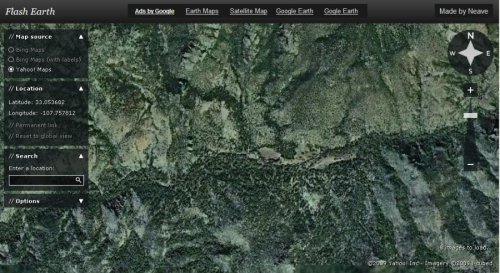
In those days guys like Cody and Gene Ballinger were already doing a lot of posturing and flag waving about the 12 unmarked graves on the plateau you can see in the picture toward the center.  Cody, Ballinger et al didn’t have to pack in.  The rancher to the East allowed them access by the Forest Road.

So during my eight days in there part of the way I passed the time was digging down a couple of feet below the surface various places in the canyon, plateau, and further up Animas Canyon, carefully gathering and placing rocks.  Creating enough other unmarked graves to make it difficult for them to go in and rob artifacts out of the actual graves.  Which I believed then and now, they were in the process of doing.

Old Jules

Suppression of Public Discussion of How Damned Hot It Is

Good morning readers.  Thanks for coming by for a read this morning.

I went to town a few days ago to get the stolen car covered by liability insurance, and when I returned the Great Speckled Bird was defunct.  Evidently decided it was better to take his chances on ending up in a factory farm for chickens next lifetime than put up with more of Old Sol’s blessings during this one.

Naturally his passing stirred things up considerably here.  The bachelor roosters were promoted to full-fledged hen-chasers and released to free range daily, sleep with the flock, nights.  But it’s also caused an undercurrent of rumors.  Whisperings and quiet cluckings nights when the doers can’t be identified and prosecuted.  Claims that it wasn’t just the heat offed TGSB, but radioactive fallout. 

It’s partly my own fault.  One of the felines was probably sneaking a look when I was reading trivia such as the article below:

http://www.prweb.com/releases/2012/5/prweb9498292.htm

Gen. Stubblebine’s prognosis is dire: “When the highly radioactive Spent Fuel Rods are exposed to air, there will be massive explosions releasing many times the amount or radiation released thus far. Bizarrely, they are stored three stories above ground in open concrete storage pools. Whether through evaporation of the water in the pools, or due to the inevitable further collapse of the structure, there is a severe risk. United States public health authorities agree that tens of thousands of North Americans have already died from the Fukushima calamity. When the final cataclysm occurs, sooner rather than later, the whole Northern Hemisphere is at risk of becoming largely uninhabitable.

“. . . The US Government’s statistics document an excess death rate of 20,000 US residents, mostly healthy infants, in the first 9 months following the multiple nuclear events at Fukushima. . As a humanitarian, strategist, intelligence analyst, father and grandfather, General Bert understands that doing nothing is, quite simply, not an option.

“. . . The lack of information is, however, a matter of State policy in Japan where it is now a felony offense to discuss negative aspects of either nuclear power or the Fukushima situation in particular.”

Old General Bert’s correct, the cats, chickens and I all agree.  Doing nothing is not an option.  But as Commander in Chief around here, I’m not aware of a damned thing I can do, nor of anything the cats and chickens can do to influence whether the Northern Hemisphere becomes largely uninhabitable.

Any more than we can do anything about this heat wave, except hunker down and try to think of ways to not follow TGSB into the next incarnation.  And maybe try to find something useful to occupy ourselves despite the standing 8-count we’re all trying to function in.

For starters, I’m declaring martial law within the hearing-radius of the cabin and henhouse.  Japan, at least, can be accused of doing something, even though not a damned thing can be done.  I’m taking a page from Japan’s book and making it a criminal offence for any item of poultry, feline, or human being here to say, “Damn it’s hot.”  Or, “Reckon how radioactive it is today?”

Old Jules

RC Royal Crown Cola and Tom’s Toasted Peanuts

Despite the fact of Asians having become so much more intelligent, better educated, industrious, innovative, inventive and economically responsible than westerners during the last half-century, a few things are still out there they’ll never catch up on.  One of those is RC Royal Crown Cola with a bag of Tom’s Toasted Peanuts or Planter’s Peanuts floating in it.

A couple of other things they’ll never surpass us on include the kind of Italian food you’ll get down at the Fongoul Restaurant, Mexican food New Mexico style with green such as you’ll get at Cojone’s Mexican Cafe, and those fantastic Greek sandwiches I can’t recall the name of.  Guido? 

You’d have to have peeked into the kitchens of a few Chinese restaurants during your lifetime to know that, though all other Asians have it figured out, the Chinese got left behind about 10,000 years ago in matters of basic food sanitation.  If you eat in Chinese food joints much there’s a middling good chance you’ve eaten something that’s already been through a Chinese digestive tract, introduced to the food when he clipped his toenails into the egg drop soup.

That’s the reason Chinese restaurants use all that MSG, even though they know it will probably give you a stroke one of these days.  Covers up the taste of other things got in there, either by accident, or design.

I don’t claim to understand why it’s so.  Koreans, Japanese, Cambodians, Vietnamese, Thai, they’re all probably more concientious about food sanitation in their restaurants than the average westerner.  But the Chinese restaurant that isn’t feeding customers cockroaches, toenails and spit is by far the exception, rather than the rule.

I’ve heard the matter discussed among health department inspectors more times than I can remember [none of whom would dare eat Chinese without having gone over the food preparation area before-hand].

Maybe they’re still trying to get even with Christian missionaries for the Taiping rebellion and figure everyone else qualifies as collateral damage.

Old Jules

Let Big Daddy Fix It

Good morning readers.  I appreciate your visit and read.  I hope you won’t consider this frivolous.

It’s Daddy Day, and there’s a growing body of shrill opinion being expressed on the Web concerning those out-of-control nuclear reactors in Japan and how Big Daddy United States needs to step up to the plate to fix it.  Even though Big Daddy has no more clue than anyone else how to go about doing it.

First off, those reactors haven’t reached their full potential yet, so it’s probably too soon to have the Lincoln Memorial try to jump a motorcycle across them. 

Even though PT Barnham’s loose in Washington and trying to perfect that method of solving historical difficulties, jumping a motorcycle across the problem is still considered extreme, untested, uncertain, at best.

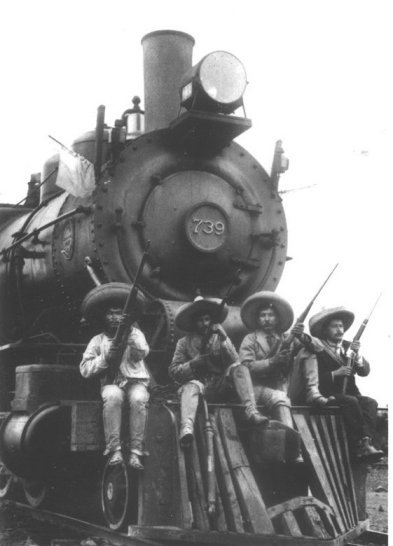
Probably it would be better to try time-tested methods first.  Some of the ways Big Daddy US has solved other pesky difficulties.  Homeland Security and attempts to deal with illegal immigration might provide a model.

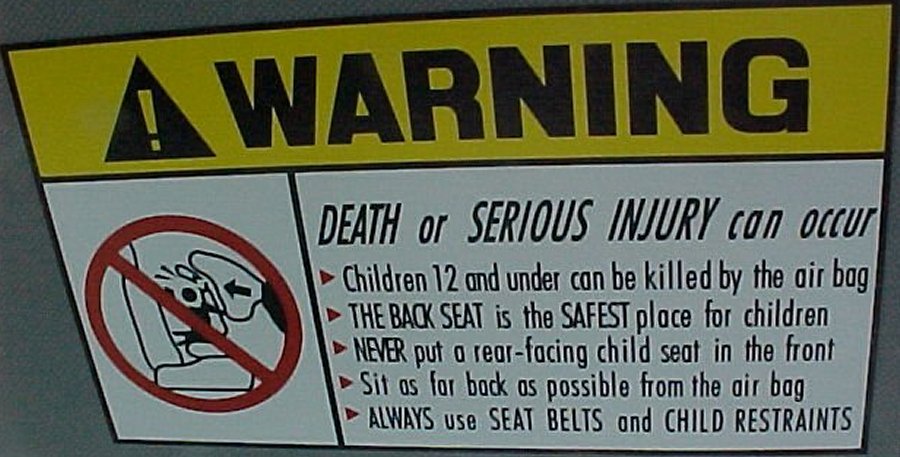
Or failing that, there’s always the old airbag fix:

Anyone strangled to death by an airbag isn’t going to be worrying about mutants, teeth falling out, that sort of thing.

Sending some crews of jailbirds out to pick the fallout up before it can do any damage offers some hope.  Got lots of jailbirds and not-all-that-much radiation yet.  If the radiation increases, hell it won’t do it faster than our number of prisons.

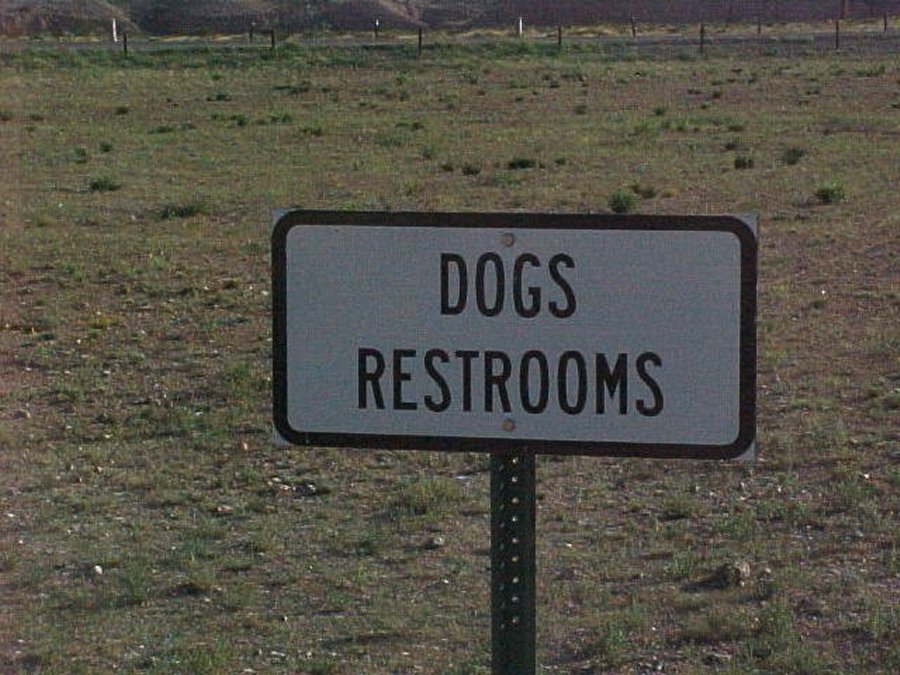
People who never learned to program a VCR, [including me] might find radiation detection instruments confusing, so sniffer dogs trained to detect it could answer the question of where it is and where it ain’t.

Naturally they’d have to be provided facilities.

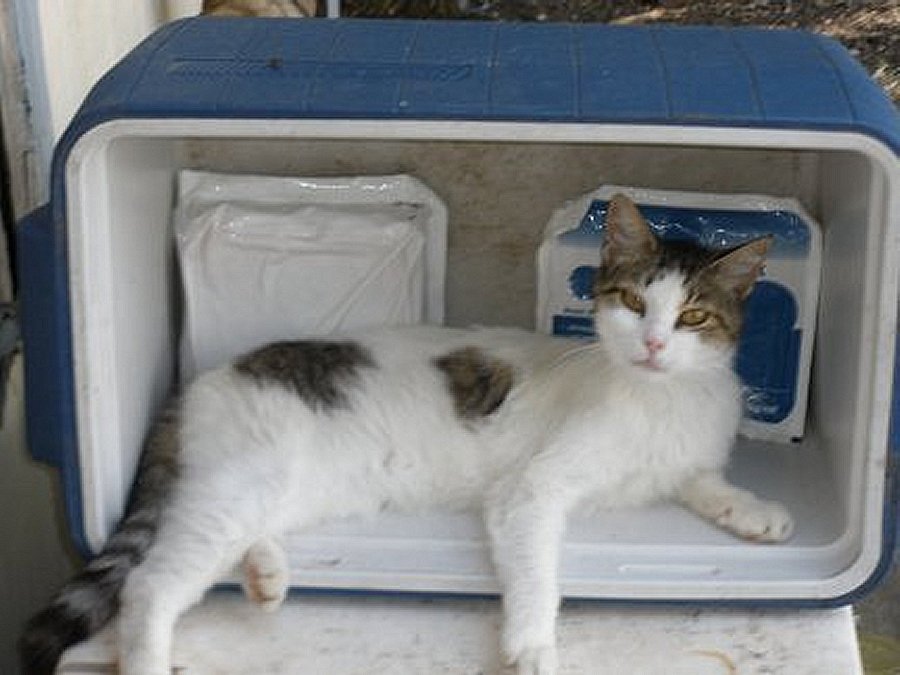
And protection from reckless drivers.

Failing that, a little magic might help.

Or just an acknowledgement there’s a problem.

If everything else fails, this worked for grandaddy and there’s no reason to think it won’t work again.

The Japanese have never been all that receptive to allowing imports from the US, but I’ll bet they’d welcome a few shiploads of those signs.  And there’s potential for a new manufacturing industry here to replace what went to Asia.

It ain’t as though there’s nothing to do in a fallout shelter.

Big Daddy’s tour d’force is entertainment.  Still is.  Never been better.

You can’t argue with a history of success.  I say, “Let’s go for it!”  What are we waiting for?

Old Jules

The Illusion of Survival

Several years ago during that pesky time when the publishing house had accepted Desert Emergency Survival Basics for publication, but I hadn’t yet seen the contract they were proposing, the editor was asking for re-writes and a number of changes in the final draft. We discussed it on the phone a number of times and I was pecking away at it, but holding back until I’d seen what they were bringing to the table. 

But before I got too far along I got a call from him because of a news event.  A family in Oregon, or Washington had taken a back road in the National Forest, gotten snowed in, and died because they didn’t apply some of the basics suggested in the Survival Book.

Him:  The scope of the book is broader than the name suggests.  It shouldn’t require a lot of work to make it a general survival manual.

Me: A lot of work’s already gone into it.  And I’ve already re-written it the way you suggest earlier.  You’ve got it in front of you.  Before I do any more work on it you and I need to talk about money.  Every time I’ve asked about what you’re offering as an advance you’ve hedged.  Said you needed to discuss it with the boss.

Him:  We don’t usually offer much in the way of advances.  We’re not that big, even though we offer a lot of titles.

Me:  Then you and I probably don’t have much to talk about.  You know and I know I’m never going to see a penny beyond the advance.  I have a fair idea what’s contained in your standard contract.  I’m not going to lift another finger on this book until I see an advance, and if it’s not enough to pay for my time already, hearing you’re going to be flexible about changing the contract details.

Him:  I’ll talk to the boss.  But that book needs to be published.  That family might have survived if they’d read it.

Me:  I’ve got some survival issues of my own here.  Hypothetical people who might die won’t pay my rent.  I’ve already done the work.  But if you’re proposing to print that book and give it away so neither of us makes anything on it what you’re saying might make sense.  Appeal to my better nature.

Him:  I can’t do that.  We’re in business.

Ultimately they sent me the standard contract and offered a token advance.  The willingness to alter the details of the contract didn’t include changes that would have allowed me to eventually get paid for my labor by eliminating provisions for them to squirm out of paying.

I’ve thought about that a lot over the years and eventually concluded the entire concept of survival and survival books qualifies as a cruel hoax.  An ironic illusion.  Because human beings are going to experience death inevitably as a means of exiting the vehicle.  Some are going to die getting lost in the woods.  If they survive getting lost it’s almost certainly going to be luck, instinct, or common sense.

As an example, somewhere earlier on this blog I described a snowstorm Keith and I got caught in on Santa Rita mesa, and how the GPS seemed to be lying about where the truck was.  How we believed the GPS instead of what we knew to be true, and more-or-less quickly found the truck.

That same snowstorm, not too far away, a kid was lost.  The news was full of it, Search and Rescue eventually was ready to give him up for dead.  But the kid, clothed in a light jacket, used his brain, sheltered under a rock ledge, and made it out after five unlikely days.

Which isn’t at all the same as saying the kid survived.  He won’t.  Neither will anyone else.

Old Jules

The Great, Great Speckled Bird

The Great Speckled Bird: Respecting our Betters

Good morning readers.  Thanks for coming by for a read this morning.

A few years ago when I had a lot larger flock of chickens a pair of fox-critters killed over half of them in the space of two days.  The second day I heard another chicken-drama taking place, grabbed the nearest long-gun and ran out to investigate.

Confusion out there.  The hens were all huddled underneath cedars pointing at one another, hoping someone else would be selected by whatever had them scared.  But The Great Speckled Bird was out in the open, craning his neck, looking for the problem.  As I ran by, he joined me, then hopped out front.  He ran straight for a cedar tree about 30 yards from me.

A fox was under that cedar, saw the rooster approaching, probably saw me, as well, and turned to scurry away.  I quickly dispatched him a few yards into the escape.  At that point TGSB joined me as I examined the carcass, dancing, clucking excitedly.

I’d never heard of a rooster behaving hunting-dog, thought it was an anomaly.

But yesterday he strutted his stuff again, and he’s still got it.  Hens were acting about as before, one out in the open making a lot of fuss, though.  I looked out and saw TGSB running across the meadow for the henhouse.  I snagged the long-gun and headed out to find out what was happening.  Arrived about the same time as TGSB.

A glance inside the henhouse showed black feathers lying around inside.  Probably came from the Australorp raising the dickens initially.  But TGSB was clucking, rubbed my leg and I looked down.  He was dancing around the rear-end of a coon, hind legs and tail sticking out from under Battlestar Gallinica. 

I’m sure the coon didn’t realize any of it wasn’t hidden, and I’d never have seen it if TGSB hadn’t pointed it out.

Battlestar Gallinica, the US Space Program, and Fluid Reality

Having resolved the coon issue, I just paused, drew a deep breath and admired him for the ten-thousanth time.

Some of you have wondered why I keep an old, crippled, useless rooster around.  I’ll confess, TGSB is the reason I keep the hens around.

Old Jules

A Matter of Curiosity, Mostly

Good morning readers:

I doubt anyone among the current readers is going to put my speculative assertions about the abundance of platinum of a few days ago to the test.  But someone who finds the blog on a search engine someday might.  It would be a lot simpler and easier today than it was a decade-or-so ago.  Not to mention cheaper.

So, for that potential reader, here’s what I’d suggest as a minor project:

Get one of these – They’re getting cheaper every day.  $100 will probably get you one.

QX5 Microscope – Digital Blue QX5 Digital Microscope

The QX5 Microscope is the upgraded version of the award-winning Intel QX3 computer USB microscope.

Explore the microscopic world with the only USB microscope that connects to a computer. The QX5 USB Microscope includes software that allows you to view, edit, animate and even measure samples, then create slideshows and videos. The QX5 USB Microscope has the mobility to come out of its base for the viewing of larger or possibly live samples in their natural habitats.

Then build one of these:

Build a high resolution spectrograph in 15 minutes

http://sci-toys.com/scitoys/scitoys/light/spectrograph/spectrograph.html

Find a weathered Quaternary caldera and dig into the inside of the rim, near the top, saving the sample below about an inch deep to a foot deep in a five gallon bucket.  Carefully, carefully, carefully pan down the sample until whatever’s heaviest is all that’s left on the bottom of the pan. 

Then do direct microscopy on the sample, after familiarizing yourself with the appearance of micron platinum.  If you see some prime suspects work the sample down a lot further, but saving the spoils because you’re going to be interested in whatever else is left in the sample, and micron minerals are prone to float on the static surface of the water.

Once you’ve got it separated, use the spectrograph you built to determine whether what you’re seeing is actually platinum, and what else is in there with it.

If you don’t have a Quaternary caldera, but would still like to give it a try, go somewhere with a history of active vulcanism during the Quaternary, find a corrugated culvert 4-5 feet diameter going under a road  downstream, but as far upgrade as possible.  Crawl into the culvert with a whisk-broom and large spoon and take concentrate samples from the bottoms of the corrugations.

Then do your direct microscopy and spectograpy on the concentrates, same as above.

You could do something similar from streambeds in mineral bearing areas, but you’d need to learn to ‘read’ a channel so’s to know where to take your samples.

Old Jules

Honoring the Oceans in the Hen House

Me:  Why so quiet there Ms. Australorp?  Thinking of giving up on those chalk eggs?

Her:  No.  I’m just feeling a little reflective and sad.  I spent yesterday honoring the oceans.

Me:  You WHAT?  You spent yesterday wearing down those chalk eggs, same as every other day for the past couple of weeks. Honoring the oceans?  I need to pull those eggs out from under you.  A few days out chasing grasshoppers will help you regain perspective.

Her:  No.  Really.  I was thinking about all that radioactivity in the North Pacific.  Thinking about the Great Pacific Garbage Patch.  All those poor turtles and plankton.

Me:  Thinking of signing some petitions?  Thinking of voting for someone who knows what to do about that garbage in the ocean vortices?  Those two roosters caged over there know as much about what to do about it all as any human being.

Her:  I know.  Still, I feel sad about it.  I think an empty, meaningless gesture or two might help me feel better.  Maybe a rally and a few petitions after these eggs hatch.

Me:  Rest your mind on that one, babe.  I’m pulling those eggs.  The golf ball, too.

Old Jules