Tag Archives: New Mexico

Lying Consistently or Telling the Truth

When I got out of the US Army in 1964 I was a confused young man.  I had no idea what I wanted to do with the rest of my life, but initially I felt some urgency to get started doing it.  My first thought was to buy a farm in the vicinity of Portales, New Mexico, where I’d spent most of my youth and done a lot of farm labor.  That area was in the process of the subtle change from hardscrabble family farms to agribusiness farms, though I didn’t recognize it.

Although my granddad had a small farm a few miles from town, and although the main revenue for the population was farm-related, most non-farmers didn’t hold  farmers in high regard.  Including my granddad, with reasons he considered adequate.

The result was that my granddad, my mom and my step-dad took active measures, once I found a 160 acre irrigated farm I could swing for, to make certain with the local bank that I didn’t get financing to buy it.  They each pronounced separately to me that I was destined for ‘better things’ than farming, which I bitterly resented.

Someone mentioned to me the Peace Corps was a place where young people at loose ends were volunteering to go off and set the world right.  Relatively new at the time, I’d never heard of it, but I applied.

Then, as I’d done numerous times before, I hitch-hiked out of that town.  The World Fair was going on in New York, and I headed that direction, and spent the summer in Greenwich Village simulating being a beatnik.

I might talk more about all this in future posts, but I’ve digressed from my original intentions for this one.

I began my Peace Corps training in Hilo, Hawaii.  India X Peace Corps Project, intended to send bright young Americans off to Gujarat, India, to teach the locals how to raise chickens.  Sometime I’ll probably wax poetic about all that, but I’m trying to limit my digressions.

Training was intended to be a time of intense learning, but it was also clear, we were cautioned from the beginning, it also served as a filter to remove the great percentage of the trainees  through observation, psychological testing, peer ratings, and voluntary withdrawals.  A sort of basic training with the emphasis on washing out all trainees with potential shortcomings.  About 2/3 of India X washed out of training before the end, including me.

But I’m having a lot of trouble getting to the point of this post because of all the background material.  Enough!

One of the methods of screening trainees was the Minnesota Multi-Phase Personality Test.  Most of the trainees were well-enough educated to be familiar with it.  The MMPP was reputed to be ‘unbeatable’, and we were each acutely aware of our personal shortcomings.  Most of us agreed if the Peace Corps had any idea what was going on in our heads they’d faint, revive themselves, and deselect us without further ado.

During the week prior to the test we’d gather at night to discuss the best strategy for foiling the Peace Corps cadre and the MMPP.  The two obvious approaches were, a] Tell the truth and suffer the consequences, and hope to be forgiven, or, b] Lie consistently.

By reputation, the MMPP wasn’t capable of being lied to consistently without catching you out.

Most of us viewed ourselves as the cream of US youth.  The Peace Corps told us that’s what we were from the first day of acceptance for training.  We’d been picked from hundreds, maybe thousands of applicants.

So we’d already fooled them that much.

Our consensus as a group was to lie consistently.  Some of us succeeded.

This is getting lengthy, so I’ll use it as a launchpad, most likely, for some future posts.

John Prine– Let’s Talk Dirty in Hawaiian
http://youtu.be/r_vTY67Wd9I

So Long, and Thanks for all the Valentines


During the early 1990s I had a lady friend with whom I was close enough to
exclusively share a few years of my life.  Interior decorator lady who grew up in the same town and entirely different social strata than I did.

I first remember noticing her in the fifth grade, and from then until the time I left that burg as a high-schooler, I don’t believe she ever spoke to me.  She was upper crust and I was somewhere down there below the lower crust.

Anyway, 30-35 years later we spent a few years together seeing one another every day and night.  She had a lot of strong points, beautiful woman, smart, and well-intentioned.  I’d mentioned to her once that it used to really hurt my feelings in school on Valentine’s Day.  I hated it, all those kids getting valentines from one another and I didn’t get any.

Valentine’s Day, maybe 1993, ’94, I headed down to her house after work.  Came in the door and fell over.   She’d decorated the house with valentines, fed me a piece of cake shaped like a valentine, and handed me a box shaped like a valentine wrapped. Made me open it.

Crazy woman had filled that box with old-timey valentines like were around when we were kids…… full, chock full, that box was, with valentines claiming to be from kids we went to school with, all addressed to the kid I used to be …… the lower-class scum of yesteryear. Crazy stuff.

I’ve cried maybe twice during my adulthood, but for some reason I was having to hold back tears on that one. But that isn’t why I’m writing this blog entry.  I just wanted to preface the next thing with that one, so you’d understand she wasn’t a bad person underneath everything.

Anyway, she had two habits I found particularly irritating, aside from being miserable and liking to spread it around, toward the end of our relationship. She pronounced the “G” in guacamole. “Gwakamohlee.”  Drove me nuts.  Knew better, but maybe couldn’t remember, maybe didn’t care.

Secondly, she had this thing I figure came from being upper- crust as a kid.

“You find someone to work on the roof?” I might ask.

“Oh yes,” she might warble. ” Hired this little Mexican man.”

When I see the guy, he ain’t little.  He’s 240 pounds.  But he is Hispanic.

“Oh!” she might say.  “I hired this little Indian woman to do some bead work for me.”  Turned out the little Indian woman was taller than she was and weighed in heavier than the roof repair man.

You get the picture. Non-Anglo-Saxons were little, particularly if they were hired to do something.

No, the lady wasn’t a bigot, precisely.  She wouldn’t sit still for racial slurs unless they were subtle, oblique, or less so, but about Navajo folks, whom she generally disliked.  She conveyed the impression instead, that she found little men who did repairs to the plumbing so cute, so lovable, so adorable and quaint.  Something akin to looking through the big end of a telescope at them standing there so tiny doing their assigned jobs.

When we parted company after a few years it wasn’t pleasant, but I learned a lot about myself from her, once she began explaining what all was wrong with me.  It was worth a lengthy listen because she probably knew me as well as anyone ever has.

After I decided it was over I continued talking to her every night on the telephone for about a month, an hour-or-so per night, determined to listen carefully and consider everything ugly she could think of to say about me without any argument.  She mightn’t be right, or she might be right but about something I didn’t want to change, or she might be right and I might want to change it.

But we don’t get many opportunities in this life to have someone who knows us well go into loving detail explaining every flaw and wart, everything we haven’t noticed  about ourselves.  There aren’t any little people a person could hire to do that.

Eventually I came to realize she was enjoying those protracted nightly diatribes more than was possibly good for her.  She’d begun repeating herself, also.  So I told her it was over.

I mostly remember her for the valentine side.  The going up big was worth the coming down little.

Old Jules

P.S.  For you bloggers, a note from Jeanne (Admin):

Click here for a chance to win a slot in The Bloggess sidebar for a month sponsored by freefringes.com
http://freefringes.com/2011/09/20/lovelinks-24-open/

P.P.S. Another note from Jeanne (Admin):
We’re getting a few new readers from the contest site who are probably confused about my linking  to some old guy’s blog… so I wanted to mention that I’m a background partner on this blog and no, I didn’t write most of these posts!  I didn’t really understand the submission forms, so the blog is listed under “Jeanne Kasten”. I don’t know why. Sorry for any confusion!

Paul Simon– Diamonds on the Soles of Her Shoes

Could you choose to live on the street?

That little farm you see down there is the place where I spent a good many of my formative years after my mother remarried and we moved to Portales, New Mexico. As you can see, we’d had a pretty good year for hay, which dates the picture to 1949, or 1950, before the big drought hit.

When we sat outdoors in the evening the red neon lights blinked “Schumpert Farm Supply” across the top of the long building running diagonally to the railroad tracks until I went to bed. From my limited perspective the Schumperts were ‘rich’. In that small town that railroad running through didn’t identify who was rich but it did identify who wasn’t. That little farm I lived on and no other property that side of the tracks had any rich people.

In the rigidly established social structure in Portales business men generally came down on the side of being ‘rich’, along with professors at Eastern New Mexico University, bankers, physicians, preachers, school teachers and a few elderly ladies who lived in houses big enough to be thought of as mansions. Farmers, ranchers, Mexicans and people who worked in the businesses weren’t ‘rich’.

I doubt the adults paid a lot of attention to the social strata, but school teachers did, and the kids adopted it more firmly than a religion. Rich kids were easy to recognize because they made good grades, weren’t hassled by teachers, got elected to everything, brought cookies to school Christmas, Easter and Halloween, and had the best bicycles early, cars later. For the most part they were insufferable snobs.

But not the Schumpert boys. I was in school with Stephen and Billy, and there was a precocious younger one I don’t recall the name of. Stephen was a year older than me, Billy a year younger, and there wasn’t a breath of snobbery in the entire family. Stephen, particularly, had a knack for getting in just the right amount of just the right kinds of trouble to keep from qualifying as a goody-goody. Good solid boys from a good solid family. I had a lot of respect for all of them.

I left that town early and stayed mostly away for several decades. I lost track of almost everyone I ever knew there.

But after Y2K when I moved into town to Grants, New Mexico, I came across Billy Schumpert being president of a bank there. Naturally we got together and talked about whatever we each knew that might interest the other. Billy’s the one told me what happened to Stephen.

Stephen worked as a bank examiner several years, then became president of a bank in Colorado, maybe Denver. Had a regular family, seemed to be destined to follow a career path and eventually retire. But one morning he didn’t show for work late in the 1980s. Nobody had any idea what became of him. He wasn’t a drinker, didn’t use drugs, didn’t have a ‘secret life’. He just vanished for no apparent reason.

Over time the police and other agencies gave up, assumed he was the victim of some crime, dead. But the family put up a reward for information about Stephen, sent private investigators and others searching for him. Eventually, six, seven years later they located him living under a bridge in Seattle.

Over time everyone who loved Stephen went up there trying to talk him into returning to real life, return home.

“No! I had enough!” That’s all he’d say and he never came back.

I’ve pondered Stephen a lot during the years since I learned what he’d done with his life. In some ways I think I understand, though I’m not sure. My own life has been a long series of reversals in direction. It’s meandered, cutting as wide a swath of human experience as I was able to pack into it. So, from that perspective, I can gnaw at the edges of understanding Stephen’s behavior. But I was a wild kid and I’ve always pushed the envelope, all my life.

Stephen was ‘tame’.

I’d like to see old Stephen again if he’s alive. He’d be 70, 71 years old now and maybe wiser than he was in the 1980s when something told him he’d had enough. I’d like to sit on the porch and talk with him a long time to come to know how he came to make his choice to isolate himself, to impoverish himself.

Simon & Garfunkel – Richard Cory 1966 live
http://youtu.be/euuCiSY0qYs

How Do You Say the Pledge Nowadays?

It’s come to my attention that school is starting already. I recall being in a school auditorium as a youngster when they added the words,
‘under God’ to the Pledge of Allegiance. Mr. Doak and Mr. Burke, Civics and
History teachers, were up there trying to get it right while teaching it to a couple of hundred kids.  Kids who were still on shaky ground from learning it the first time. That would have been in the mid-1950s:

Mr. Doak:  “Okay.  This isn’t complicated and shouldn’t take long.  Just say it like you always said it, but after, ‘one nation’, pause, then say, ‘under God’, then pause again before going on.

“Try it.  I pledge allegiance to the flag of the United States of America and to the Republic for which it stands, one nation,

under God,

with liberty and justice for all.”

Cacophony of 300 kids lost mid-way through.  Mr. Doak pauses with a frown waiting for the noise to die down. Mr. Burke’s frowning too.  He nudges Mr. Doak.

Mr. Burke:  “Eh, John, hold on a minute.  I think it’s supposed to be ‘one
nation under God’, not ‘one nation with a pause, under God with a pause.”

Mr.Doak:  “Ralph, look at it.  The comma’s in front of and after ‘under God.'”

Mr.  Burke: “John, that doesn’t mean it’s supposed to sound like some run-on sentence.  This is the Pledge of allegiance!”

Mr. Doak:  “Ralph, I know what it is.”  Doak scowls and turns back to the 300 lost faces.  “Let’s try it again now.”

Burke:  “No, no, no, John.  Let’s try it one time my way.”

Doak grinding his teeth:  “Ralph, we have to get this over with.”

Burke:  “I’m not the one holding it up John.  We’ve got to get this right.  What you’re telling them is wrong.”

Doak:  “Who’s in charge of this, Ralph?  When Livingston said one of us has to do it you didn’t volunteer to get up here and explain it.”

Burke:  “Neither did you.”

Doak:  “No, but I eventually agreed to.  You just agreed to come up and help.”

Burke:  “Never mind.  Tell them to do it any way you want to.  The Pledge is yours!  I have nothing more to say.”

Doak:  “Good.”  Turns back to the 300.  “Okay, let’s try it again.”

The question of whether the framers of the Constitution would have thought a child having to say, ‘under God’ is a fairly weird one, by hindsight.  But not because the placement of the commas is a major issue.

The reason it’s weird lies in the fact that the question of whether this nation
is indivisible was never considered by the Supreme Court, never mentioned in the US Constitution.  The founders put off any debate about the indivisibility issue because every member knew that no state would agree to become a member if the decision was irreversible, whatever the circumstances.  So, while it was discussed, it was also pointedly not discussed in loving detail.

Half century later it was discussed, however.  The discussion began at Fort
Sumter and ended with Lee’s surrender at Appomattox Courthouse. That avoidance by the founding fathers of an inevitably crucial issue was decided by force of arms, one half, (the half possessing an army) of the nation believing it was indivisible, the other half believing it was divisible. The stronger half forced the weaker half to accept indivisibility at gunpoint after a lot of bloodshed.

Thus, the Pledge of Allegiance came into existence after Lee’s surrender at
Appomattox. The winning side forced each surrendering Confederate soldier to say a pledge accepting indivisibility as one of the precepts of citizenship, followed afterward by many generations saying the pledge from early childhood since then.

But the US Supreme Court was never asked whether that Pledge acknowledging indivisibility was Constitutional, which might have saved a hundred thousand lives, legs, arms, and a whole different approach to US governance.

Instead, they’ve been asked repeatedly to decide the easier matter of whether it’s a violation of a child’s civil liberty to utter the words, “Under God”.

Old Jules

Civil War Songs – Oh I’m A Good Old Rebel
http://youtu.be/mO2cL64Fbaw

Battle Cry of Freedom — Civil War song on mountain dulcimer
http://youtu.be/K_jANE2QPFE

Fife and drum – Battle Cry of Freedom – 145th Gettysburg
http://youtu.be/eAsD4Bg0st0

Note:  The flag with a Native American waving a weapon flies summertimes near the booths along IH10 as it passes through the Laguna tribal lands.  Although the Laguna universally despise the Acoma neighbors neither tribe has engaged in warfare against anyone since 1597. 

I Can’t Stop Illegal Aliens, But I Can Slow You Down, Old Timer

In 1961, I joined the US Army for three years with the intention of killing young Russian men to keep this from happening in the US:

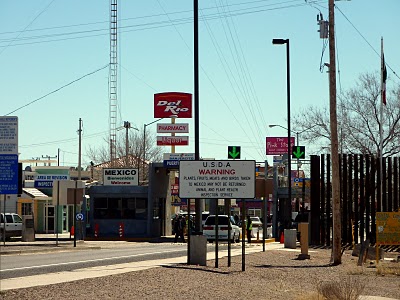
On a regular basis,  I join the throngs of US senior citizens crossing the International Boundary to trek a couple of blocks into Mexico to buy prescription medications.  The reason we  all brave the hot, the skyrocketing gas prices, the long drive and the short walk?

A block south of the border prescription meds cost a tiny fraction of their cost a block north of the International Boundary. Plus, you don’t need a prescription.

But that’s another issue for another time.

Coming back waiting on the US side behind a line of oldsters in the US Border patrol station the fun begins.

Guy with a gun, a uniform and a Hitler mustache:  “Do you have anything to declare?”

Elderly lady pushes through the turnstile to stand in front of his table.  “I have this.”  She holds up a bulging plastic bag.

Guy with a gun, a uniform and a Hitler mustache:  “I didn’t tell you you could come through the turnstile.  Go back to the other side.”

She goes back to wherever a person is when on the other side of the turnstile.

Guy with a gun, a uniform and a Hitler mustache:  “OK.  Now you can come through.”

She goes back through the turnstile, stands in front of him.  “Do you have anything to declare?  Medications, anything?”

She holds up the bag again, but before she can speak, elderly hubby, the other side of the turnstile, holds up a bag.  “I’ve got the medications here.”  Pushes part way through the turnstile holding up the bag.

“DO NOT COME THROUGH THAT TURNSTILE UNTIL I SAY YOU CAN!”

Old man, startled, backs into never-never-land, turnstile clicking.

Hitler mustache to woman:  “Do you have anything to declare?  Medications?  Anything?”

Hubby across the turnstile to wife:  “God damn it!  I told him I have the medications over here.”

And so, ad infinitum.

Mr. Uniformed Mustache with a gun never came out and said,

“I am one stupid son of a bitch here to give elderly US citizens a hard time after they have to walk into another country to get their medications at a reasonable price.”

He didn’t need to.

Old Jules

Tom Russell– Who’s Going to Build Your Wall?
http://youtu.be/LZkAoosVLkA

Note:  I wrote this after my last trip to Mexico.  Afterward I curtailed my trips and started buying my blood pressure and other med off the Internet from Canada and India.  But I decided to post it after reading this yesterday:

Border Patrol Antics or (I got searched), Tire
http://terlinguabound.blogspot.com/2011/08/border-patrol-antics-or-i-got-searched.html

7:30 AM musings over coffee:

Maybe it’s just me, or maybe it’s a piece of a paradigm shift [whatever the hell that is] but one of the corner-of-the-eye changes I believe has happened in my lifetime within the US is a morbid fascination and indulgence in, patience with and capitulation to fears.  Maybe it’s a replacement for anger, maybe just boredom needing to speed up the heartbeat.

Back when every day was a brink-of-war crisis with the USSR the attitude was duck and cover, build a bomb shelter and bomb the bejesus out of them.  A conspicuous absence of fear.    Contrasted half-century later with a citizenry frightened so badly by a microscopic possibility a terrorist will harm them, they hire a few new layers of police, agree to be searched, and humiliated for their own protection, and indulge in a series of self-bankrupting foreign adventures with the stated intention of finding an outlaw gang hidden in fantasyville, Asia.

Hiring thugs to protect us from other thugs has probably been around for a longish while.  But never worked all that well.


The Runaways, 1947

Causey, New Mexico, was a dot in the road.  Pavement from nowhere to nowhere running between a scattering of frame houses, a small roadside store and gas station.  A rock schoolhouse, a church, and a few rusting hulks of worn out farm machinery in the weeds. http://www.ghosttowns.com/states/nm/causey.html

Our cottage was on the same side of the road as the schoolhouse.  Most of the village was on the other side, including the windmill across the road from our house where my sister and I went for water and carrying the bucket between us to tote it home.

To my tiny, four-year-old mind, the center of town was the store, diagonally across the road, to the left of the windmill.  Everything of importance happened there.  Cars from other places stopped for gas.  The store had Milk Nickles.  Ice cream on a stick, covered with chocolate.  Pure heaven that didn’t come often.

If the store was heaven, behind our house was hell.  The toilet.  A ramshackle tower with dust flecks floating in the shafts of light that came through the cracks between the boards, light coming through underneath where the ground had caved away from the wall.  Home of black widow spiders and the occasional rattlesnake.  The place was a chamber of terrors for me.  I was always certain I’d fall through the hole to the horrors beneath when I used it.

Our little cottage had two rooms.  A sort of kitchen, living area in front also had a little counter where my mom tried to operate a little variety store.  Keychains, trinkets, a handkerchief or two.  Things that wouldn’t be found across the street at the store.

She was also a seamstress.  Most of my memories of that time include her huddled over a treadle sewing machine working on the felt curtains she was making for the stage of the school auditorium.  Mom was a woman twice divorced.  In 1947, that was no small thing.  In that time and place broken marriage was considered to be the fault of an untrained, unskilled, unwise, probably immoral woman.  Two divorces, three children, and no resources made my mother the subject of mistrust by the woman of the community, and disdain by the men.

Memories have probably faded and altered with the half century since all this happened.  The perspectives of a child plagued with fears and insecurities seem real in my recollections, but they, too, have probably been twisted with the turns and circles the planet has made around the sun; with the endless webs of human interactions, relationships formed and ended.

My sisters went to school in that village.  Frances, my sister who died a few years ago, must have been in the second grade.  Becky, maybe in the 5th.  I hung around doing whatever preschoolers do in that environment when everyone else is busy.  I have flashing memories of standing by the road throwing rocks at cars; trying to get the little girl down the road to show me her ‘wet-thing’.

I remember being lonely; of wishing aloud my mom would give me a little brother to play with.  “I wish I could,” she’d reply, “but you tore me up so much when you were born, I can’t have any more kids.”

That trauma of my birth was a favorite theme of my mom.  She was fond of telling me how the doctors were long arriving when I was ready to be born;  how a nurse and my dad held her legs down so I couldn’t emerge until the proper people were there.  How it damaged her insides and caused her to have to undergo all kinds of surgery later.

I recall I felt pretty badly about that.

During harvest season it seemed to me the entire community turned out to work in the fields.  We’d all gather in the pre-dawn at the store, then ride together to the cotton fields in the back of an open truck.  Mom and the girls were all there, along with the neighbors and some of their kids.  Two of the kids were about my age:  Wayne and Sharon Landrum.

In retrospect I doubt we preschoolers helped much.  My mom had put a strap on a pillowcase and promised a Milk-Nickle every time it was filled.  This was probably more to keep me busy and out of trouble than it was to pay for the ice cream bar.  I can’t imagine that a pillowcase would have held the ten pounds of cotton it would have taken to pay a nickle.

The lure of sweets weren’t sufficient to occupy smaller kids, I suppose.  There came a time when Wayne, Sharon, and I wandered off from the field.  At first it was just to take a walk, but the road was long and we must have made some turns.  Before too long we’d gotten so far from the farm we didn’t know the way back.  We were frightened and kept moving.

In the end we found the lights of a farmhouse sometime after dark.  The family brought us inside and fed us something.  We sat around a stove trying to keep warm until some of the searchers came and picked us up.

In the morning at the store all those field workers who’d had to lose part of a day of wages wanted vivid descriptions of the spankings we got.  They wanted to make sure.

That was my first experience with running away, at least on my own part.  My mom had done some of it, running away from my dad and her second husband.  My dad had done some of it, letting his kids go off, first to Arizona into the shelter of a brutal, drunken step-dad, then into the shack in Causey.

Old Jules

Johnny Cash– In Them Old Cotton Fields Back Home
http://www.youtube.com/watch?v=1vCK8mSyhb0

Make my day, stranger!

I don’t know when we began giving power to strangers. I think it’s a relatively recent phenomenon. Maybe we watched too many Westerns during our formative years, learned from those steely eyed men in saloons that what strangers think about us is worth a gunfight.

Nowadays the extreme version happens in city traffic. Someone shoots someone else a bird. Next step is an exchange of gunfire.

Here’s how the scenario runs:

Some complete stranger pronounces a bias we don’t share.

Our thought response:

“This offends me.”

That thought process is driven by a deeper one:

“I want to be offended. I give this stranger the power to offend me. I assign enough value to what this stranger says, or believes, to allow it to trigger a negative emotional path within me. What this stranger says or believes matters.”

We know better.

Strangers cut too wide a swath in their traits to have any real value. They span the breadth of potential human biases. But even knowing this we give them the power to ruin a moment.

I say this is a recent phenomenon because humans of the past behaved differently. Our forefathers didn’t care what Brits thought about us because they recognized that Brits live within an entirely different set of interests.

Even today a Zuni doesn’t care what a Navajo thinks about anything because from the perspective of a Zuni, Navajos don’t have anything valid to contribute to any meaningful discussion. Navajos live in a different reality from Zunis.

Both Navajos and Zunis choose to allow themselves to be offended by the opinions of Anglos and Hispanics, but there’s a reason. They’ve found taking offense is a means of gaining power over those groups.

But neither a Zuni, nor a Navajo would bother being offended by the thoughts and words of the other because to each there’s nothing the other might think that carries the weight of validity.

Not long ago the same was true of people almost everywhere. The people in the town where I was reared cared about the opinions of people within that town, but they couldn’t have cared less what the people in Clovis, twenty miles away thought. It was generally understood that Clovis people were stupid and might think and say anything.

Today we care what everyone thinks about almost everything. We pretend to believe what they think carries value, but we know better. We just like the feel of being offended..

Make my day, Stranger! I’m handing you the power to offend me.

This leaves me cold.

Human opinion hasn’t held up well under scrutiny. It’s worth about what it costs. Mine aren’t that reliable and I haven’t found those of others to be any better.

Instrumental Theme to Dirty Harry:
http://youtu.be/ZDKRD2q3bYo

Slouching into the Millennium – August 1998

The Beginning

We staff members of the New Mexico State Emergency Management Planning and Coordination Bureau [EMPAC] didn’t laugh much.  We were a collection of old guys mostly retired from something else, except for a few youngsters, mostly support and training staff.

Radiation Response and Recovery [the RAD catchers] was a retiree Bird Colonel from the US Army named Sam.  Hazardous Materials Response and Recovery was headed by Joe, a retired US Air Force Lt. Colonel who’d piloted B47s for the Strategic Air Command in his youth.  Joe sat at the end of a runway in a B47 loaded with hydrogen bombs for two weeks during the Cuban Missile Crisis.  Natural Disasters – Earthquake Preparedness was a shot-up in-Vietnam old Lt. Colonel, infantry.  And so on.  My program was Flood Plain Management and local coordination and training for one of the regions.  Too long out of the military to remember whether I was enlisted or an officer.

Our Bureau Chief, Larry, was a retired Master Sergeant, US Army Search and Rescue, another Vietnam vet. An enlisted man coordinating the activities of field grade officers, giving instructions, approving their work and their per diem expenditures would have been a potential source of laughter if we’d all held our mouths right, but “That’s what happens when you put an enlisted man doing the job of an officer,” was a frequent grumble every time something went awry.

The staff meeting was in the bomb shelter of the old National Guard Headquarters building in Santa Fe where our offices were located.

“I had a weird call from one of the aids to the Governor this morning.”Larry’s eyes searched our dozen blank faces. “Any of you know anything about Y2K?”   Calls from the Governor’s office to anyone at EMPAC was bad news.  We liked to think we were invisible, nobody knew we existed.  This particular governor, however, we considered a space cadet.  A flake.

We all exchanged scowls while my mind toyed with the phrase. “Y2K. Y2K? Where the hell have I heard about Y2K lately?” The thing rang a bell in my head, but I couldn’t think why.

“The Gov just got back from a meeting of the Association of State Governors. They did a big program on Y2K. He’s all excited about it. Evidently there’s some damned thing going on with computers to make them all fail January first, 2000.” Sneers and a chuckle or two.  We all agreed on something.

“Do any of you know what other states are doing? Any ideas what we should be doing? We have to send an answer over to the Gov’s office. We have to put together a plan of some kind.”

Background rumble around the table.  “Y2K?  Why the hell would all the computers crash when the 20th century turns over?”  “Damned idiot governor.”

“Hmmm computers. That’s it.” Now I remembered.

“It’s all a farce, Larry.” I was remembering a conversation and exchange of emails I’d had with my ex-wife. “Carolyn heads the department in Texas that’s supposed to be preparing for it. She told me a while back they were spending a lot of money on it, hiring a lot of people. Pissed her off when I said it was just another bureaucratic scare plot to build more empires.”

Larry stared at me, mind busy with what I’d said. “Could you find out what they are doing over there?”

“Sure. Why not?”

“Also, get on the internet. Find out what people are saying is going to happen. Find out everything you can about what all the other states are doing.”

The others in the room relaxed a little. No one wanted this project and now it was clearly mine. “How much time do you want me to spend on this?”

“A week. Two maybe. We just need to put together a plan that makes sense.”

As I left the staff meeting I was feeling pleased with the diversion this offered me. Something away from flood plain management and routine emergency management coordination. I didn’t expect it to be any problem at all.

I began by sending an email to Carolyn. This was the response I got:

“The Year 2000 deal is a real threat. Lots of people have been doing lots of
work to mitigate the consequences, and we’re still ‘influencing the future’.

The real problem is that we can generally fix what we know about, but there is
so much we don’t know.

For example, the power grid – there are many many power generators and power distributors in this country, and many “embedded systems” in each company. Some companies are taking the problem seriously by contacting their suppliers (of power grid equipment, as an example) to see if components will work.

Afraid of litigation, the manufacturers hem and haw around and provide no definitive data. Yes, I think there will be power outages, thus water problems, heating problems, etc, but I don’t think the whole US will go dark, and we still have some time to work on it.

One scenario I’ve heard is that elect. companies will work to distribute what power they have so that rolling black or brown outs will limit the negative affects of the power failures.

Some good news, the banking industry in the US is in very good shape. Our only
fear there is fear itself. I think a lot of IT systems are being corrected at a
more rapid pace than originally anticipated, and governors like yours and mine
are at least anticipating problems so they can prepare for them. I think if the
people anticipate the problems, and know that someone has already developed a
work around, we’ll be fine.

Any disruptions will probably be short lived.
I could go on, but duty calls.
C.

I trusted Carolyn about as much as any man can trust an ex-wife after 25 years of marriage.

I didn’t know it yet, but for me this began the end of one lifetime and heralded the start of another.

Old Jules

Creedence Clearwater Revival– Bad Moon Rising
http://youtu.be/5BmEGm-mraE


Give a Person a Fish

Hi blogsters:

I never see that phrase about fish without a flash of memory.

During the 1950s drought stock ponds were drying up all over the southwest.  There came a day a lot like this one, though it was probably warmer, when a kid named David Cagle and I were wandering around the ruins of cow country and came across a pond that was maybe five acres of surface and about three inches deep in water.  Every square foot of water had a fish flopping in it.  I’ve never seen anything like it.

A few hundred yards from the pond was an abandoned barn where we’d noticed an old galvanized washtub someone had probably used to water calves when there was still water, or feed them when there was still food.  We hoofed over to that barn and snagged the tub, waded into that fish and cow-mud calf deep throwing fish into the tub.

We glowed over that tub full of fish all the way home, him on one handle, me on the other, thinking how deeeeeelighted our folks would be with the treasure we were bringing them.

Both of us smelled a joyous combination of cow-mud and fish when we got to David’s house, went in through the kitchen door and watched his mama shriek even before she turned around and saw the fish.

“Get those fish out of this house!”

We got them out and she followed us into the yard to hose him down before she’d allow him inside.  Me, she ordered to take those fish with me and head down the road.

My own mom took a more circumspect view of things, mainly because she wasn’t home when I got there.  I cleaned myself up and filled the kitchen sink with all the fish it would hold and started killing and gutting them.  The job was far enough along to make quitting a moot point when she got home.

I gutted a lot of fish over the next couple of days, though I did move the operation out into the back yard.

My mom’s one of those kind of people who remember such things after she can’t remember her own name.  I’m not sure I’ve ever returned to her company during the past 50 years without being reminded of it.

Give a person a fish and he might not appreciate it, but he won’t starve until the fish is digested.

But give a person a fishing pole and he’ll almost surely hook an ear or nostril before it’s over.

Old Jules

Sons of the Pioneers–  Cool Clear Water

Woody Guthrie–Dust Bowl Blues
http://www.youtube.com/watch?v=jQYKJaWuj0Y

Reflections of a Y2K Survivor

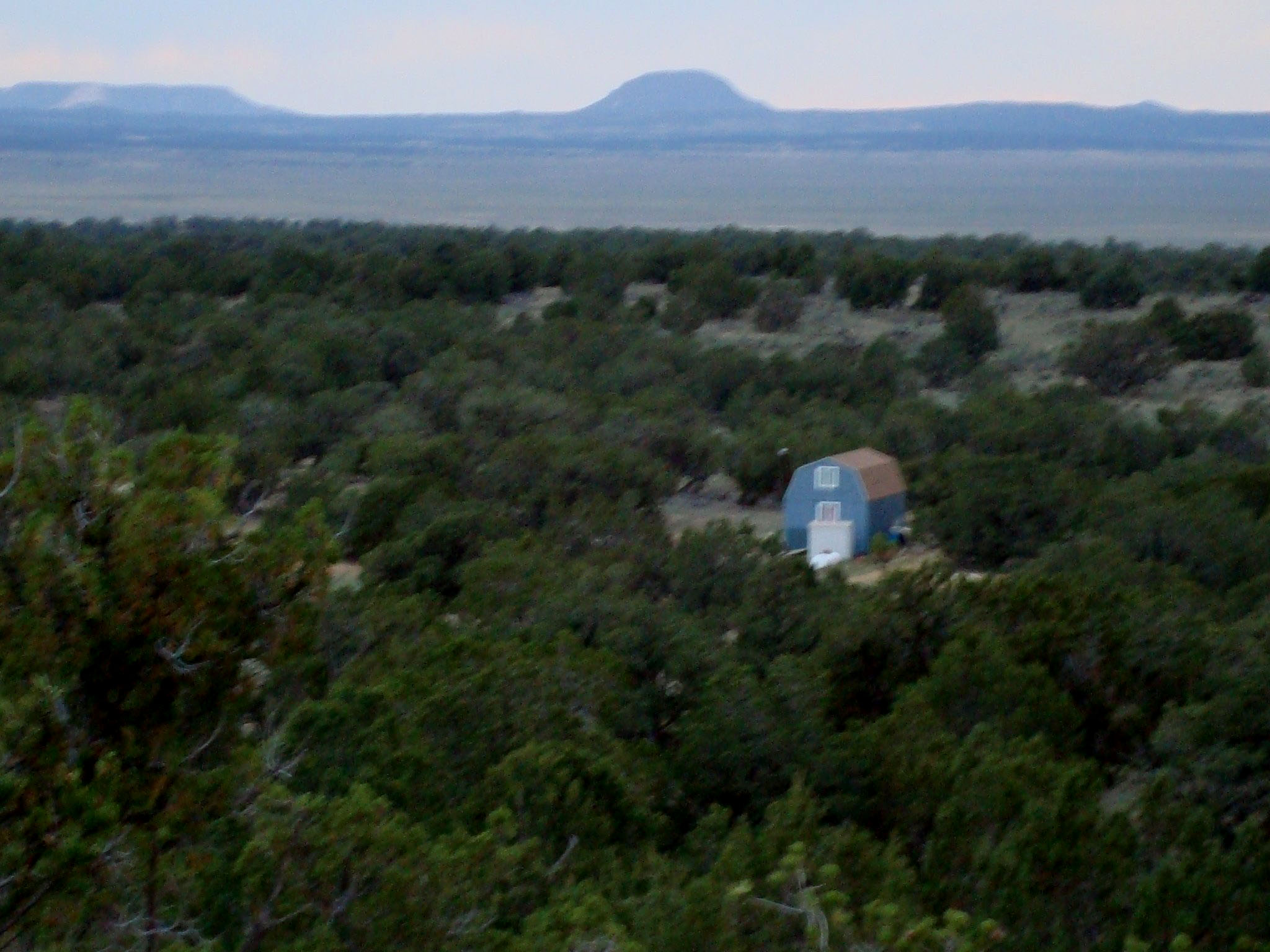
I was one of those weirdos who believed so thoroughly in Y2K that I quit the last years of a career, cashed in my retirement, walked away from the IRS, all the bills, a house mortgage,  totally believing it was all moot because in just a few months it would all collapse.  I figured there was  a chance high enough to bet on that everyone left after the chaos would be wandering around hungry, diseased, and dying, if the computer gurus were telling the truth.  January 1, 1999, I performed the irreversible deed.  The retirement money made a down payment on 140 acres of land in remote high desert, I drilled a well, built a cabin, stocked up on countless items the throngs of hopeless survivors would need to survive a bit longer.

I knew there was a medium possibility the IRS, the land payments, all the rest would eventually come due if Y2K didn’t happen, but I thought the consequences of it happening and me not doing it were worse than the alternative of taking the plunge and it not happening. Once a person considers seriously  the possibility that society might collapse, it’s surprising how reasonable it seems to think so.

Did my best to be a refugee camp waiting to happen. I bought a lot of chicks to be eggs and food for the future hungry.  I knew I couldn’t survive long because of the shelf-life of a medication I require to stay alive, but I had hopes a few folks could survive thanks to a lot of training and experience I’d had in woods lore, emergency management, and survival. I moved in to a tent on the 140 acres in mid-1999, until the cabin was built and the well drilled.

I spent the next 16-18 months pretty much alone, sometimes going weeks without seeing another person. It was the best time of my entire life. I loved it.  I wouldn’t change a minute of 1999 until now, but they were the hardest years I’ve ever lived.  I’m a risk taker, more than most, but I’m also a damned fool.  Fool enough to believe Y2K not happening January 1, 2000, doesn’t mean Y2K won’t ever happen.  But also fool enough to know I’m not wise enough to know when it will, nor whether it will.

This blog will include some of the material written during that time. The rest is a compilation of reflections, before and since, of my varied runs at the brick wall of something rhyming with wisdom.

Old Jules
Steve Goodman–The 20th Century is Almost Over

http://tiny.cc/trxiy