In some ways we’re a lot like the US Government out here. Particularly when it’s manifested in the ‘May-your-flock-increase’ syndrome.
It couldn’t have been more than three, maybe four years ago I was building Battlestar Gallinica, letting those silky hens crank out chicks and doing it on autopilot. Never stopping to consider that I already had a flock of chickens more numerous than my needs. Never stopping to wonder just how big a flock of chickens needed to be.
Oblivious to the fact that forces of history were at work, driving up the future cost of chicken feed, unravelling the warp and weave of whatever blanket I must have thought was wrapped around the coming years.
I suppose my habits of thinking were just too pleasurable to allow seemingly obvious factors to slow me down. Somewhat like the US Super-Power habit of thinking and all the militarism of the Cold War when the Rooskies packed up their tents, went home and the Berlin Wall went down.
The obvious thing to do was let things settle a bit to make sure it wasn’t an illusion, then bring all that military and equipment home, mothball it, and reduce, downsize, try to let the nightmare of the 20th Century fade into history where it belonged.
But I had a growing flock to keep me occupied, and the US Super-Power had a huge military lying around needed something to occupy it. The only alternative the US Government had was to indulge in an endless series of military adventures to justify continuing bankrupting itself keeping on keeping on.
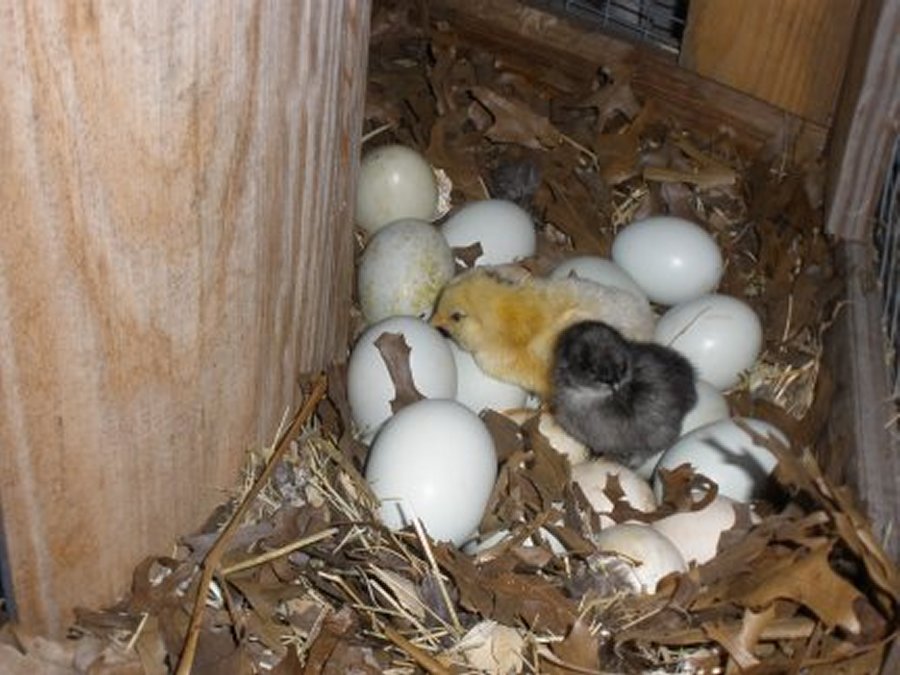
Whereas, I had silky hens brightening my day every time I turned around, hatching out chicks to watch survive and mature, beginning and ending on this piece of land.
What I needed was some heavy thinking in my agenda, taking into account that nothing lasts forever and that a flock of chickens is as much a responsibility in my reality as the health, jobs, production and manufacturing, and generally peaceful well-being of the country was to the people in it when the Cold War ended.
So here I am with a lot of chickens dear to me I’ve got to figure out how to deal with, Battlestar Gallinica sitting out there idle, and a half-built woodshed that’s nothing more than a reminder of my own unclear vision of reality.
And here’s the country I live in, sacrificed everything, a leading edge Space Program, a thriving economy of employed people, industry, innovation, hope, in favor of bankrupting itself for cheap and easy coincident with the pride of remaining the strongest military power on earth.
Battlestar Gallinica can be manufactured a lot more easily and cheaply in China if it’s needed. So long as we can keep those boys and girls wearing Nazi helmets and cammy occupying foreign soil somewhere, we’re still good.
Maybe it still isn’t too late to take a second look at the ‘may your flock increase’ habit of thinking.
In the pic they’re patrolling in Placitas, New Mexico. But it’s the same here.
Good morning readers. Thanks for coming by for a read.
There’s a rich-people kind of house up the hill, a quarter-mile south of me. It sits on 90-odd acres of land, has a barn worthy of the name, and it’s been sitting vacant during all the years I’ve been here. Vacant, but for sale.
But a couple of weeks ago a couple of strangers pulled up in front of the cabin on a four-wheeler with side-by-side seats. It’s the first time I’ve ever had an unexpected visitor here except Gale or Gale and Kay. Naturally I scrambled out to find out what they wanted.
Turned out he’d just bought the place and wanted to introduce himself to his nearest neighbor. That done, he left saying they’d be moving in soon. Friendly exchange.
Then yesterday I went up to Gale’s and he was there. They’d just done their moving into their new home. He and Gale were discussing things and I sat down for a quick cup of coffee before going on about my business.
“I’m hoping you won’t shoot my dog.”
“Is it a chicken killer?” Thinking whatever danger there was to his dog probably came in the form of dead chickens.
“It’s never been around chickens. It’s a mutt, a rescued dog, part lab, part herder, part pit-bull. What killing it’s done was cats. I had a lot of feral cats on the last place I lived.” He paused. “I know you have cats down there.”
That gave me pause for thought. While I was thinking, he added, “If you see him, he’s gun shy. Just fire into the air and he’ll run away.”
I’m a man who has a huge respect for how badly neighbor problems can intrude and make life a hell for both neighbors. But I’m also aware that animals can cause neighbor problems lightning-fast. Quicker than almost anything else. For instance, there’s almost nothing that will piss a man off worse than killing his dog, no matter what the dog was doing at the time of demise.
“Tell you what. I’ll make sure my cats don’t come up here killing your dog if you’ll make sure your dog doesn’t come down here killing my cats.” Seemed a fair enough proposition to me. I pretty much figure if my cats go up there attacking his dog, anything on his place, he’s welcome to shoot them, but it would be more fitting if he came down here and put a bullet between my eyes.
He expressed a concern that his dog might mistake me for a cat, saying that since I’m around them I’d have their scent on me, but I assured him that wasn’t a concern. I’ve never met a dog I couldn’t stand off. And I shouldn’t have any reason to be around this one. During my years here I’ve only set foot on that place a couple of times. Once because of cows, and once challenging some people who were up there loading things into a truck. I just politely asked if they had permission, and noted the license number of the vehicle.
The man’s 74 years old, seems a nice guy. Ex-pilot. And if we need to talk we probably will enjoy most things we might discuss.
I surely hope my cats don’t go up there attacking his dog, though, because I’d expect him to shoot them.
Good morning readers. Thanks for coming by for a read this morning.
I trekked up to Gale’s yesterday for a while to talk wind and see whether his face had gotten over the baboon butt similarity it had the previous week. He had a good photo of it during the worst stage I begged him to allow me to post for you, but his refusal didn’t appear to leave it open for discussion.
But he told me about a project I’m feeling uppidy about working on during the year. This place has been overgrazed, probably since the invention of barbed wire, and it shows. I’ve thought from the time I arrived here I’d like to do some cheap but time consuming erosion control, but it never had a priority.
Seems to keep his agricultural tax exemption on the land, though, Gale could go back to having three cows fighting over every blade of grass in the traditional Texas fashion, or he could switch to wildlife management. He had a lady from Texas Parks and Wildlife out here going over the place with him the other day helping devise a plan to submit to the County.
Assuming it gets accepted, I’m figuring something I learned in one of my professions, at least, will finally get put to some worthy use. Between now and my departure from here I’ll have rock and brush dams collecting water and soil into every channel on the place.
I truly love erosion control, but it had slipped my mind how much. I hate to admit the urge to dance naked in the meadow celebrating.
The bottom oven-mitten is your brain if you’re not on drugs. The top oven mitten is your brain if you are on drugs.
A cheap antibiotic normally prescribed to teenagers for acne is to be tested as a treatment to alleviate the symptoms of psychosis in patients with schizophrenia, in a trial that could advance scientific understanding of the causes of mental illness.
Scientists believe that schizophrenia and other mental illnesses including depression and Alzheimer’s disease may result from inflammatory processes in the brain. Minocycline has anti-inflammatory and neuroprotective effects which they believe could account for the positive findings.
The first account of minocycline’s effects appeared in 2007 when a 23-year-old Japanese man was admitted to hospital suffering from persecutory delusions and paranoid ideas. He had no previous psychiatric history but became agitated and suffered auditory hallucinations, anxiety and insomnia.
Blood tests and brain scans showed no abnormality and he was started on the powerful anti-psychotic drug halperidol. The treatment had no effect and he was still suffering from psychotic symptoms a week later when he developed severe pneumonia.
He was prescribed minocycline to treat the pneumonia and within two weeks the infection was cleared and the psychosis resolved. Minocycline was stopped and his psychiatric symptoms worsened. Treatment with the drug was resumed and within three days he was better again. Halperidol was reduced but he remained on minocycline. Two years after his psychotic episode, he was still well.
The article describes at length how and where the tests on patients are going on all over the world.
But Mad Scientists, meanwhile, have another alternative. If you’ve been noticing you are crazy, you can order some of the stuff online from India. A lot cheaper than if a Medico wrote it down on a slip and you trucked to a drugstore for a bottle. And do your own scientific testing.
Or you could just make up some colloidal silver and take an eyedropper-full of it every day. Which is how I keep me and the cats and chickens free of insanity.
Japanese scientists with the National Institute of Advanced Industrial Science and Technology claimed this week that they have developed a novel new weapon by combining two specialized technologies in such a way that they are now capable of rendering someone unable to speak.
While it’s not technically a weapon, their “portable speech-jamming gun” could certainly be used as one, especially against political leaders or others who speak to large audiences for a living.
Combining a directional microphone and a directional speaker, the “Speechjammer” records and quickly plays back whatever words someone is uttering, making it very difficult for the speaker to focus on what words come next. The effect is called “artificial stuttering.”
Joe Stalin he might be
Fingers drumming green felt
Calculating his next purge
Fill an other gulag
With Ukrainians
Finger tapping
Focus on the down cards
Other players
Cardboard faces
Pasteboard numbers
Shouts past me
“Double down! Double down!”
Tired first base trucker
Parlaying his bets
To survive another hand or two
In this hell-camp.
Stalin tosses three greens
Past me to the trucker
From his four inch high
Stack of blacks and greens
“Double down! Double down!”
Astonished trucker pushes back
A weathered straw hat
Gazes at the green chips
The dealer upturned six
And his own sixteen
And doubles down.
On and on
Same vein
Stalin winks at me
At second base
Throwing chips past me
The driver promptly loses
But always looks now
To see what Stalin
Thinks is best
While downstream
In third base Stalin
Plays three hands all at once
Table max 200 on each place
And wins wins wins
Speznatz tattoos
On chubby knucklebacks
Stalin and I exchange small talk
And knowing smiles
Once advised
The other side of a line
I was on this side of
Did his final tour in Afghan
Got out first chance he could
When things got shaky
And the walls went down
Now he hauls produce
From east to west coast
Always stops here in-between
Shouting orders
“Double down! Double down!”
To the bloated capitalist pigs
Grumbles price of fuel
Trainloads of Chinese goods
And tyrant highway cops.
First off, The Invader Cat’s not becoming a fixture around here. It’s just hanging around getting meals and paying the fare by being bullied by chickens and the other cats. It has a home somewhere. I’m certain of it because sometimes it vanishes for a couple of days.
But it’s not a fixture and it’s not becoming a fixture. Even though when I was putting the piece of the can of feed I’d saved for it down last night, it came within a couple of feet of me scratching it behind the ears.
Secondly, if you’re among those trying to figure out what’s not happening by tracking Ganymede, you’re a day late and a dollar short. Ganymede looks great at first, but the further you hone things down the more you’ll conclude something’s missing. I’d suggest doing some dizzying calculations correlating Ganymede positions with with the position of Mercury. Which, if you run through enough ways of measuring where they are, will give you a lot clearer view of what’s not happening.
Thirdly, I worked a lot on the brush dams in the ruts on the road coming down here yesterday in hopes of further rainfall runoff forcing the hill to give up more of the dirt it’s been bringing down from above. Over the years it’s gradually been filling the worst blow-out-a-tire, high-centering ruts. Now if we can keep getting a few of these male rains I think this will finish it off.
Which is to say, spectacular erosion won’t be happening and past erosion will have reversed itself somewhat.
Lastly, despite your hardheadedness on the issue if you’ve got any, cold weather isn’t happening.
If you’re going to be a part of what’s happening you’re going to have to switch from felt to straw. If you try to hang on to your outdated good-times idea about felt you’re going to have sweat running down around your eyelids and getting into your ears next time you go to town. And you won’t be happening.
Just saying.
Old Jules
Edit 8:37 am: I neglected to mention earlier while talking about Mercury and Ganymede that Saturn seems to be happening a little bit. Even though it’s way to hell and gone off the other side of things where you’d expect it to have to be.
I probably should post this on Ask Old Jules, but nobody much reads that blog. Not that it matters whether anyone reads it, I suppose. But if I’m going to compose words something in me likes it better thinking it will be read by someone else, than to just fade into oblivion.
I’ve been thinking a lot about this solitude addiction of mine lately, attempting to be candid with myself about it and what it means. The tripwire involved several emails I’ve received asking what makes me do it, want it, whatever. It’s plain enough the emails were sincere and genuinely interested, at least on some level. But it’s also patently obvious the concept is foreign enough to those asking to leave them without a foundation for thinking about it.
One of the emailers was a cautious man carefully lo0king for someone to keep an eye on a property he owns in a remote area. He’s somewhat caught between conflicting realities, I suppose. There’s a need for someone ‘responsible, someone he can trust. But anyone who’d stay there and do what needs doing is going to be a person he can’t understand, can’t identify with.
His concern’s legitimate. If he allows someone to occupy the place and they happen to be the sort to cook meth on the side, or grow illegal herb, he’s in danger of having the property confiscated. But he also runs that risk even if the grower or cook enter the unattended property without his knowing it. Absentee ownership isn’t as seductive a proposition as it once was.
But the email exchange did get me asking myself to form some candid understanding of exactly what motivates me and why I’m a lot happier not being around people much. And the eventual answer startled me a bit, seemed internally inconsistent.
I generally like people okay as individuals, I concluded, but dislike them in the composite. I don’t have much in common with groups, but I can almost always find something in common with individuals. So when I meet strangers in town I find I’m able to have friendly, enjoyable exchanges, though brief.
But I’m always acutely aware that each of those strangers is a part of some larger we, identifying with it, considering himself and it inseparable at some fundamental level. And almost every ‘we’ I’ve ever examined closely has led me to want nothing to do with it.
However, another piece of being around ‘we’ identifications scattered around all over urban landscapes is the forced realization of isolation and exclusion of a different sort than that of a hermit, deliberately self-imposing solitude.
The simple fact is, I get lonely and hell when I’m around people. And I’m not lonely at all when I’m not.
At least I think I might if I tried it. I actually don’t recall ever feeling lonely under those circumstances, though I do recall not caring for it.
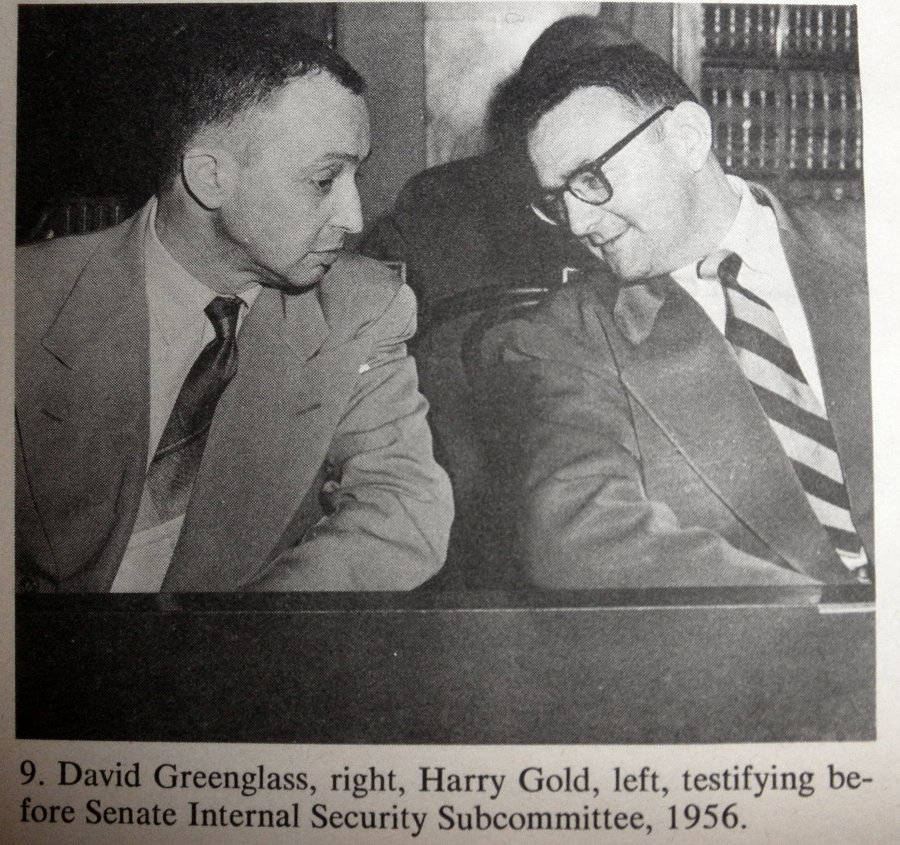
Even the dispicable can’t always dodge the steamroller. Kaufman was rewarded, Greenglass spent a few years in prison, punctuated by testimonies before Congressional Committees to help forge a US package of ideas about a war on International Communism. Appropriate enough, liar lying to other liars to create a consistent set of lies. Not to suggest C0mmunists weren’t also lying. They mostly just weren’t elected and appointed officials sworn to uphold the Constitution of the United States.
Federal Judge Irving Kaufman, who subverted the legal processes in his own courtroom to predjudice the jury in favor of conviction of both Rosenbergs, then sentence them to death in the electric chair:
In 1953, Julius and Ethel Rosenberg were sent to the electric chair for stealing the secret of the atom bomb for the Soviet Union.
They were called the “Atom Spies,” and 50 years ago this summer, they were executed for giving the secret of the atomic bomb to the Soviet Union. They are the only Americans ever executed for espionage in peacetime. Greenglass was the star witness for the prosecution against the Rosenbergs – and he also happened to be Ethel Rosenberg’s brother. He served 10 years in prison for his actions as a traitor, and then changed his name and dropped out of sight. As he neared 80, Greenglass decided to break his silence. He talked only after 60 Minutes II agreed to disguise his face and voice.
His story begins in the summer of 1950 when the FBI took Greenglass in for questioning. He confessed almost immediately for spying, and quickly implicated Julius, Ethel and his own wife, Ruth. David and the Rosenbergs were arrested. Ruth Greenglass never was charged.
“That’s what I told the FBI,” says Greenglass. “I said, ‘If you indict my wife, you can forget it. I’ll never say a word about anybody.'”
It was quite simply his choice, he says today. So Greenglass says he turned on his sister to save his wife. “I would not sacrifice my wife and my children for my sister. How do you like that?”
Greenglass made his choice when America was at war with communists in Korea, and in fear of the Soviet Union, which had recently tested its own atomic bomb.
The four spies were unlikely actors in a Cold War drama: Julius was an unsuccessful engineer; Ethel spent most of her time raising their two young sons; Greenglass was a draftsman and a tinkerer; and his wife Ruth was a wife and mother. All had been ardent communists.
During World War II, Greenglass, then a sergeant, was posted to Los Alamos, the secret army base in New Mexico, where thousands of scientists and soldiers were building the atom bomb. Although he had a low-level job, Greenglass says he knew what was going on.
He says Julius Rosenberg recruited him to spy with a simple sales pitch: “He said, ‘We have to help our ally.'” By ally, he meant Russia. “Russia was an ally at the time, and that we have to help them with all the information we get.”
Greenglass told the FBI that he gave the Russians sketches and details on the device used to trigger a nuclear blast. But he says he didn’t enjoy being a spy.
“I was continually conscious of what’s behind me. I didn’t enjoy it. I just did it because I said I would,” says Greenglass.
Did he realize how dangerous it was? “I didn’t really think it was, because I didn’t think the Russians were an enemy,” he says.
His career in espionage came to an end soon after the war ended. Back in civilian life, Greenglass and Julius opened a machine shop together. They argued over the business, and over Greenglass’ growing disenchantment with Communism.
Four years later, Julius warned Greenglass that the FBI was on to them, and urged him to flee the country. Greenglass had a family passport picture taken, but he had no intention of using it.
“I didn’t want to leave the United States to go to some hellhole like Russia or China, or wherever the hell he wanted to send me,” says Greenglass. Instead, he took a bus to the Catskill Mountains. “I figured I’d find an obscure place. And I see that the FBI is following me. And they lose me.”
But he never made it to the Catskills. He went into custody instead. And within hours, he began cooperating with the FBI, sealing the Rosenberg’s fate.
He was the star witness for the prosecution at their trial, and he told the jury about his espionage, and described the activities of Julius, Ethel and his wife, Ruth.
He testified that one evening, he and Ruth brought sketches and handwritten notes about the atom bomb to the Rosenberg’s New York apartment. After dinner, Greenglass said they set up a typewriter on a folding bridge table in the living room, and turned his hand-written notes into a neatly-typed document for the Soviets.
Prosecutors asked Greenglass who did the typing. He said under oath that Ethel did the typing. His wife, who also took the stand, told virtually the same story.
That story was virtually the only evidence the government had against Ethel Rosenberg. But prosecutors argued that Ethel’s typing proved she was an active participant in the spy ring. After the trial, they admitted that without the typing testimony, they could never have convinced the jury that Ethel was anything more than the wife of a spy – and that’s not a crime.
Why did Greenglass lie on the stand? He now says Roy Cohn, an assistant prosecutor in the Rosenberg case, made him do it. Cohn went on to become Joseph McCarthy’s right-hand man.
Greenglass says that Cohn encouraged him to testify that he saw Ethel type up the notes. And he says he didn’t realize at the time the importance of that testimony.
But the jury knew how important it was, and found both Julius and Ethel Rosenberg guilty of conspiring to commit espionage. Judge Irving Kaufman imposed the death penalty.
Fifty years later, we know a lot more than anyone could have known in 1951. For example, we know that much of what David Greenglass said about Julius Rosenberg is true. It has been verified by other, independent, sources, all of which confirm that Julius Rosenberg was a Soviet spy. We also know that there is very little, if any, evidence that implicates his wife, Ethel, in any illegal activity.
But in the days before the execution, there were protests and vigils in New York, Washington and Europe. The Rosenbergs both claimed they were innocent, and many believed in them. There were a flurry of last-minute attempts to get a stay of execution. And there was no shortage of Americans who felt that justice was being done.
Up until the last minute, the authorities were willing to commute the death sentences if the Rosenbergs cooperated and named names. But they refused and were executed on June 19, 1953 – without ever breaking their silence.
Why did Greenglass think Julius and Ethel maintained their silence to the end? “One word: stupidity,” says Greenglass, who holds his own sister responsible for her own death.
—————————————-
But I promised a Denouement:
Of course, it makes no difference now. Any more than it matters who killed JFK, Robert Kennedy, MLK, and President Diem of Vietnam.
Doesn’t matter, really, any more than it matters that the Gulf of Tonkin Incident, the incident used to justify the US involvement Vietnam War, was a manufactured incident. A cynical lie to dupe the US public and arouse patriotic fervor. Same as the Rosenberg trial.
A pyramid of lies, once the foundation’s in place, builds on itself. Only the names of the liars and the names of the victims change. It’s only incidental that sometimes the victims are also liars.
If any lessons can be learned from it all it’s probably only that the romantic patriots can always be trusted. Trusted to believe the lies. The liars can’t trust one another, but they know they can always trust the romantic patriots.
The liars couldn’t succeed without them.
Old Jules
Today on Ask Old Jules on Facebook:
Old Jules, what’s your definition of an idealist?
An idealist is a person who locks his teeth into the ankle of an abstraction and doesn’t let go, doesn’t look for another ankle, doesn’t look closely at whatever’s above and below the ankle.
When Louis Nizer penned The Implosion Conspiracyit might be said enough time had passed to provide perspective. Two decades had passed since the trial and execution of the Rosenbergs rocked the nation. Nizer disliked Communists, asserted he’d refuse to defend one in his profession as a defense attorney. However, he wrote a lengthy analysis of the trial, the transcripts, testimonies, the individuals involved in an even-handed manner that wouldn’t have been possible during the Commie craze days of the events.
Basic events leading to the trial: The US was developing the atomic bomb at Los Alamos, New Mexico during the late stages of WWII. The information was being shared with the US Ally, Britain, but kept secret from the US Ally, the USSR. Elaborate security measures were in place to assure the developments remained the exclusive property of the US and British governments. Elaborate almost beyond description, devised by the US military and the FBI.
But the British liaison to the project was physicist Klaus Fuchs, a spy for the Soviet Union. The Germans knew Fuchs to be a Soviet spy, but the British and Americans didn’t, until they gained access to records captured as they advanced into Germany.
Aside from Fuchs, the other USSR source for information about developments at Los Alamos was David Greenglass, a US Army machinist and brother to Ethyl Rosenberg. Greenglass had been a Communist his entire adult life and had been separated from an earlier military job because of questions about his loyalty and honesty.
David Greenglass stole the crucial secrets of the lens molds used to detonate the bomb, the implosion device. By hindsight, it’s clear he did it for money, for the same reasons he stole automobile parts, uranium, anything he could lay hands on to sell on the black market.
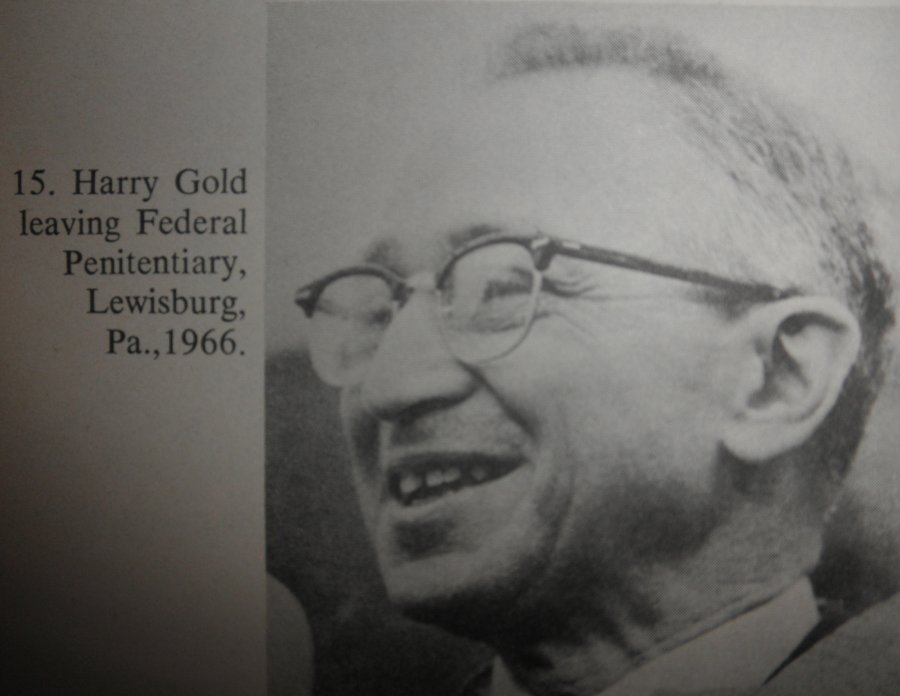
Greenglass passed the secrets to his wife, Ruth, who passed them to Harry Gold. Gold was the direct connection to the Soviet spymaster, Yakovlev, in the Soviet Embassy. It’s clear enough from everything provided in evidence and testimony that Gold was a man without loyalty to any nation, ideal, idea, or human being other than himself. He did it for the money and for no other reason.
The testimony of Greenglass, awaiting trial for treason, and his wife, Ruth, who was never charged, provided the testimony connecting Julius and Ethyl Rosenberg to the plot. The witness stand accusations by Greenglass against his sister and brother-in-law, and the corroborating testimony from his wife, who didn’t yet know whether she’d be charged, constituted almost the only evidence of the prosecution. The other witnesses directly involved in the plot mostly did not know the Rosenbergs, or barely knew them and knew little of their activities.
Because of the weakness of the government case insofar as testimony and physical evidence of the Rosenberg involvement in actual spy activities, the focus of the prosecution became a trial of Communist ideology. Witnesses who knew nothing about the plot, the bomb secrets, the Rosenbergs were called to testify about how they’d switched their own loyalties from Fascism to Communism, then become loyal US citizen-experts making a living selling books and giving lectures on the insidiousness of Communism.
The trial transcripts excerpts Nizer provides make it clear the Defense had two opponents: the US Attorney prosecutor, and the judge, who constantly intervened, interrupted, interjected in ways clearly intended to prejudice the jury against the defendants.
The key players who gave, or sold the atomic bomb to the USSR in 1945 went free, or were given relatively light sentences.
The Rosenbergs, clearly Communist idealists, possibly part of the plot, died in the electric chair.
When Allied forces found documents in Germany revealing Fuchs as a Soviet spy the chain of resulting indictments followed a path to almost all the conspirators except the Rosenbergs. Before spymaster Yakovlev fled the US, during his last meeting with Gold, he made the following observations:
Yakovlev: Don’t you remember anything I tell you? You’ve been a sitting duck all this time. We probably are being watched right now. How we pick such morons I’ll never understand! We’ve been living in a goldfish bowl because of you. Idiot! Idiot!
I am leaving the country immediately. I’ll never see you again. Just go away. Don’t follow me.
He went.
But the answer to Yakoviev’s question is worth an answer. They recruited from the US Government, the US military, from US universities, from US businessmen.
From the same pool of applicants who later sold their industries, their industrial tools, secrets, capabilities, economies, and debts to the Peoples Republic of China and other foreign nations.
They weren’t Communists, like the Rosenbergs. They were opportunists, entrepreneurs, devil-take-the-hindmost politicians, like their descendants a few generations later.
Old Jules, does an animal’s life mean as much or nearly as much to you as a human’s, or do you feel animals are insignificant/worthless in comparison? Also, do you believe it is ever morally right to harm/kill animals? What about humans?
74 years old, a resident of Leavenworth, KS, in an apartment located on the VA campus. Partnered with a black shorthaired cat named Mister Midnight. (1943-2020)
Since April, 2020, this blog is maintained by Jeanne Kasten (See "About" page for further information).
https://sofarfromheaven.com/2020/04/21/au-revoir-old-jules-jack-purcell/
I’m sharing it with you because there’s almost no likelihood you’ll believe it. This lunatic asylum I call my life has so many unexpected twists and turns I won’t even try to guess where it’s going. I’d suggest you try to find some laughs here. You won’t find wisdom. Good luck.













 So Far From Heaven