Tag Archives: society

New Chinatown for Idaho

I’ve read somewhere that Chicago sold off their City Parking Meters and Towing Services to Arabs, maybe other public services, as well.  Evidently some other cities are looking into similar measures, maybe already doing it.  Haven’t heard of any National Parks, National Forests or other federal holdings being handed over to the Chinese to allay the servicing of our debt to them, or our trade deficit.
However, maybe that’s also coming down the pike.

“We’re getting calls from investors from all across Asia who are interested in Idaho,” she said.

Idaho’s location, only another 45 minutes farther by air than Seattle from Asia, will open many opportunities, state and local officials said.
The state’s low cost for doing business will help, too.Fact is, the government debt is owned by every US citizen.  When the nation is mortgaged the people who hold the note loaned it with some assurance they’d either get the money back, get paid back in kind, or they’d get concessions to their advantage to make the loaning of it worth doing.
There’s no indication that industrial zone in Idaho would put any US citizens back to work, but it might do a lot to put Chinese to work on US soil, so’s they don’t have to ship their products so far to US consumers who can’t manufacture their own products such as toasters, television sets, kids toys and shoes.
Old Jules

Kingston Trio–Merry Minuet

http://youtu.be/bp6dsKleGpU

White Trash Repairs: Throwing Down the Gauntlet

It’s a slow day here, is the reason I’m posting this.  It’s not because I was over reading White Trash Repairs/There, I Fixed It – Repairs blog http://thereifixedit.failblog.org/ and got riled with their uppidy attitudes.

No, I just feel a need to be forthright about the kind of person I choose to be.  Maybe that can best be expressed with a sneak preview of some projects I’ll be discussing here later.

After I haul some more rocks the above is going to be a woodshed with a watertight roof.  The hot tub was on the porch when I moved here, cracked, home to wildlife.  Now it’s metamorphosing into an eventual place to keep my firewood dry.
There’s a lot of work yet to be done raising that roof a few more feet.

Then there’s this.  A nesting box for brooding hens to keep them separate until the chicks are old enough to mix with the flock, but still protected from predators.  Refrigerator shelves cut down to fit the cable spool, mounted on a sawed-in-half lawn mower platform for mobility:

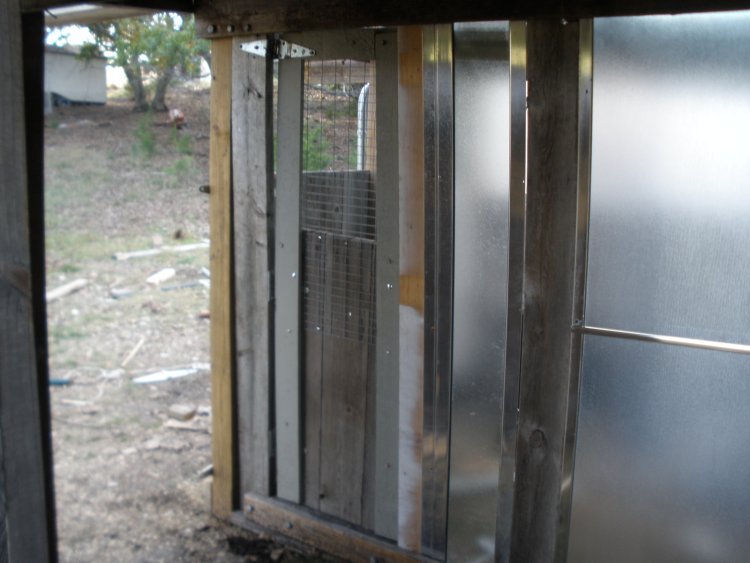
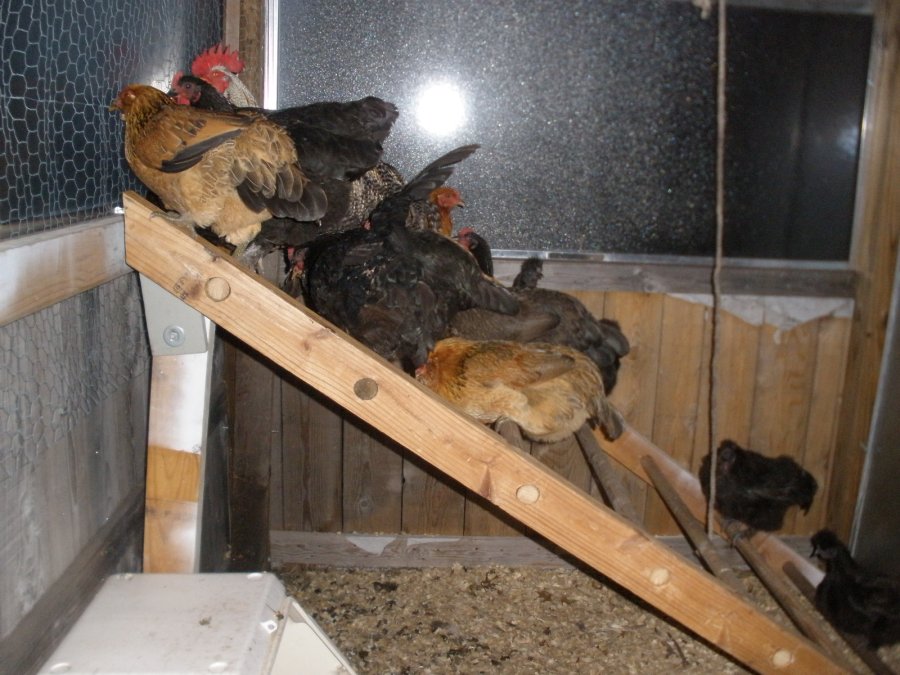
Or this:  A chicken-house fabricated entirely from salvage, discarded shower doors, camper shell roof, refrigerator shelves, whatever came to hand free:


There.  I fixed it.

Old Jules

Slouching into the Millennium – August 1998

The Beginning

We staff members of the New Mexico State Emergency Management Planning and Coordination Bureau [EMPAC] didn’t laugh much.  We were a collection of old guys mostly retired from something else, except for a few youngsters, mostly support and training staff.

Radiation Response and Recovery [the RAD catchers] was a retiree Bird Colonel from the US Army named Sam.  Hazardous Materials Response and Recovery was headed by Joe, a retired US Air Force Lt. Colonel who’d piloted B47s for the Strategic Air Command in his youth.  Joe sat at the end of a runway in a B47 loaded with hydrogen bombs for two weeks during the Cuban Missile Crisis.  Natural Disasters – Earthquake Preparedness was a shot-up in-Vietnam old Lt. Colonel, infantry.  And so on.  My program was Flood Plain Management and local coordination and training for one of the regions.  Too long out of the military to remember whether I was enlisted or an officer.

Our Bureau Chief, Larry, was a retired Master Sergeant, US Army Search and Rescue, another Vietnam vet. An enlisted man coordinating the activities of field grade officers, giving instructions, approving their work and their per diem expenditures would have been a potential source of laughter if we’d all held our mouths right, but “That’s what happens when you put an enlisted man doing the job of an officer,” was a frequent grumble every time something went awry.

The staff meeting was in the bomb shelter of the old National Guard Headquarters building in Santa Fe where our offices were located.

“I had a weird call from one of the aids to the Governor this morning.”Larry’s eyes searched our dozen blank faces. “Any of you know anything about Y2K?”   Calls from the Governor’s office to anyone at EMPAC was bad news.  We liked to think we were invisible, nobody knew we existed.  This particular governor, however, we considered a space cadet.  A flake.

We all exchanged scowls while my mind toyed with the phrase. “Y2K. Y2K? Where the hell have I heard about Y2K lately?” The thing rang a bell in my head, but I couldn’t think why.

“The Gov just got back from a meeting of the Association of State Governors. They did a big program on Y2K. He’s all excited about it. Evidently there’s some damned thing going on with computers to make them all fail January first, 2000.” Sneers and a chuckle or two.  We all agreed on something.

“Do any of you know what other states are doing? Any ideas what we should be doing? We have to send an answer over to the Gov’s office. We have to put together a plan of some kind.”

Background rumble around the table.  “Y2K?  Why the hell would all the computers crash when the 20th century turns over?”  “Damned idiot governor.”

“Hmmm computers. That’s it.” Now I remembered.

“It’s all a farce, Larry.” I was remembering a conversation and exchange of emails I’d had with my ex-wife. “Carolyn heads the department in Texas that’s supposed to be preparing for it. She told me a while back they were spending a lot of money on it, hiring a lot of people. Pissed her off when I said it was just another bureaucratic scare plot to build more empires.”

Larry stared at me, mind busy with what I’d said. “Could you find out what they are doing over there?”

“Sure. Why not?”

“Also, get on the internet. Find out what people are saying is going to happen. Find out everything you can about what all the other states are doing.”

The others in the room relaxed a little. No one wanted this project and now it was clearly mine. “How much time do you want me to spend on this?”

“A week. Two maybe. We just need to put together a plan that makes sense.”

As I left the staff meeting I was feeling pleased with the diversion this offered me. Something away from flood plain management and routine emergency management coordination. I didn’t expect it to be any problem at all.

I began by sending an email to Carolyn. This was the response I got:

“The Year 2000 deal is a real threat. Lots of people have been doing lots of
work to mitigate the consequences, and we’re still ‘influencing the future’.

The real problem is that we can generally fix what we know about, but there is
so much we don’t know.

For example, the power grid – there are many many power generators and power distributors in this country, and many “embedded systems” in each company. Some companies are taking the problem seriously by contacting their suppliers (of power grid equipment, as an example) to see if components will work.

Afraid of litigation, the manufacturers hem and haw around and provide no definitive data. Yes, I think there will be power outages, thus water problems, heating problems, etc, but I don’t think the whole US will go dark, and we still have some time to work on it.

One scenario I’ve heard is that elect. companies will work to distribute what power they have so that rolling black or brown outs will limit the negative affects of the power failures.

Some good news, the banking industry in the US is in very good shape. Our only
fear there is fear itself. I think a lot of IT systems are being corrected at a
more rapid pace than originally anticipated, and governors like yours and mine
are at least anticipating problems so they can prepare for them. I think if the
people anticipate the problems, and know that someone has already developed a
work around, we’ll be fine.

Any disruptions will probably be short lived.
I could go on, but duty calls.
C.

I trusted Carolyn about as much as any man can trust an ex-wife after 25 years of marriage.

I didn’t know it yet, but for me this began the end of one lifetime and heralded the start of another.

Old Jules

Creedence Clearwater Revival– Bad Moon Rising
http://youtu.be/5BmEGm-mraE


Learning to Live with Being Stupid

The discovery, beginning about 15 years ago, that I’m not anywhere near as smart as I think I am, and that I’m a world away from knowing as much as I think I know, has been unsettling and somewhat disruptive.  That realization, along with the concurrent observation that an overwhelming piece of what I do know is wrong, hasn’t been as easy to incorporate into something useful in my life as you might think.

Before my smarts and knowings all started to unravel I was a fairly impressive person.  I could explain, without you even asking me to do it, just about anything you might be wondering about.  I knew what you ought to do with your life, how your life became the lousy, empty mess it appears to me to be, and what the government ought to do about anything it had the power to do.  I knew what men ought to do about women and other men, and I knew what women ought to do about men and other women.

I began to get screwed out of that when  out of the corner of my eye I noticed some aspects of my own life that I wouldn’t recommend to anyone.  It crept into my consciousness that I’d made a lot of choices and given a plethora of advice to others that simply didn’t have a lot of merit.

This didn’t come all at once.  It started as a trickle with a lot of seemingly small matters I couldn’t help noticing, which I tried to compartmentalize and ignore, same as everyone else does.  But eventually I couldn’t keep them inside the fences I’d built for them.  They were forever sneaking over mingling with others I’d locked up in file drawers I’d clearly marked, “TOP SECRET – DO NOT OPEN”.

This forced me to try to herd them back where they belonged, but in doing so the others tagged along, dancing and clowning and shamelessly demanding I recognize they existed, wanting me to scratch them behind the ears and pay some attention to them.

I figured the easiest approach would be to have a look at their blood lines and shoot the mongrels and mutts, but keep the purebreds.  This required an examination of how I came by all that knowing of every description.

It rocked me to my boot heels to find almost every one of those certainties  came from something someone else said, and I believed it, hugged it tight, and called it my own.  That wouldn’t have been so bad if I hadn’t then asked myself where the people I’d heard it from came to own it.   Imagine my surprise when it dawned on me they’d also heard it from someone else, who heard it from someone else.

Gradually, I realized I hadn’t done much thinking for myself.  In fact, I hadn’t based much of anything on the evidence of my own eyes and observations.  Strangers with the voice of authority told me many things other strangers had told them and I frequently accepted it as gospel.  I often abdicated my intelligence in favor of those strangers many times removed.   Without consciously deciding to do so, I treated truth as though it relied on a vote-count of humans to decide its own nature.

I hate it, discovering something like that.  The last 15 years of dismantling a system of giving strangers default authority to control my mind and my life hasn’t even been entirely successful.  I still constantly find the opinions of strangers creeping in, waving their arms around, trying to grab control so I won’t be stupid anymore.

But I’m determined to keep at it.  All those strangers saying things back and forth to one another and believing it over time hasn’t done much good for the people who believe it now.

And it never did me a damned bit of good, even though I was smarter when I believed it, too.
Old Jules

Glen Campbell – Gentle on My Mind
http://www.youtube.com/watch?v=cFIRTtn_ZSE

Riding the Rap

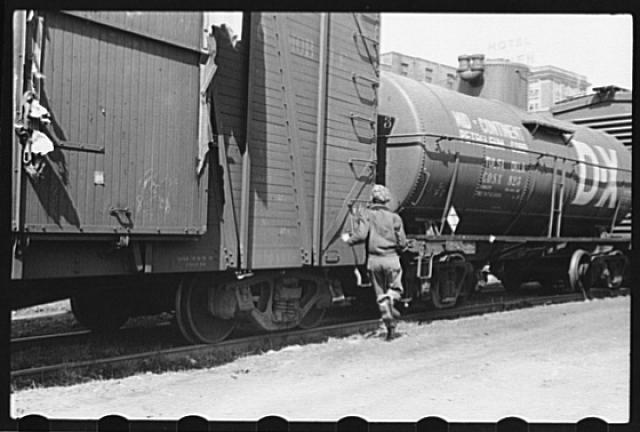
One of the the ways youngsters in Portales, New Mexico, used to entertain themselves summer days was hopping a freight train for a ride to Clovis, twenty miles away.  We’d hang around a while doing nothing, then hop another back to Portales.

Bums hanging around the Clovis yard would tell us which trains not to catch.  A kid wouldn’t want to be on a mile-a-minute diesel locomotive as it went through Portales and end up in Roswell, 90 miles west, wondering how to get home without the war department discovering what he’d been doing.

It wasn’t quite a decade later, summer, 1964, I was in NYC hanging around Greenwich Village thinking I was a beatnik.  I decided to head back to the desert Southwest.  The easiest way of getting out of the city appeared to be to hop a freight.  Seemed logical that any train I caught ought to be going South, or West, or Southwest.

Sometime after dark the train stopped at Rochester and and two cops had their pistols pointed at me.  Handcuffs, fingerprints, paperwork, and off to the slammer.  Rochester, New York, awaiting an arraignment so’s they could decide whether to charge me with the NY felony of riding freight trains and send me off to the pen two-to-five years.

That Rochester jail was the first place I ever heard the phrase, ‘riding the rap’.  Prisoners used it to describe what happens when you’re caught (the rap) and sentenced (serving your time – riding it).

Considering how frequently we humans are wrong about almost everything, and how seldom we’re right, it’s a mystery.  We go to sooo much trouble convincing ourselves we’re right.  Once we adopt an opinion about how things are, we hang onto it with hair,  teeth, and toenails and ride it.

At the beginning of the 20th Century a consortium of top-scientists announced to that all the major discoveries science would ever make had already been made.  Human beings all over the world believed them.  They’ve continued patting themselves on the back from then until now.  The airplane, the atomic bombs, moon landings, plastic, computers, tubeless tires, television,  and quantum physics were just tying up loose ends.

In our personal lives this brave new century is a time to pick something safe, something that will stay on the rails.  Something that won’t provide us with any growth experiences.  Safety nets.  Insurance policies.  Spectator sports.  World news.

We might be bored to tears, but by damn we know who the Bulgarians ought to elect for their president, and by damn, we know who killed John Kennedy and what’s the best ball team.

The only rap we have to ride is knowing our lives are slipping away without our having done anything but a little flag-waving.  Whoopteedoo, watched the Super Bowl.  Whoopteedoo, went to a concert.  Whoopteedoo, got a car.  Whoopteedoo, died of cancer.

But by God, I was right.  Knew, by damn, who the Bulgarians should have elected for their prez.  Knew which ball club was best, win or lose.

Life flashing before the eyes during the last minute of life, I wonder if a person gets to thrill again to the 1999 Super Bowl.

Or whether he might wish he’d chosen some other rap to ride.  Chosen a life with more risk, more flair, so they wouldn’t write his epitaph, “He knew everything already and played it safe.  Sixty times around the sun and he never fixed a flat tire.”

Old Jules

Creedence Clearwater Revival- Midnight Special
http://www.youtube.com/watch?v=DksGi7B5BdM&feature=related

A Question for the Brave New World


When I went back to my hometown as a young soldier on leave, Christmas, 1961, it was enough of an event to bring my granddad in from his hardscrabble farm.

We sat around the living room, my mom and step-dad, sisters, and granddad, mulling over the war we were certain to have with the Soviet Union soon.

At that point I was as well-educated (by usual standards) as any of the people in the room and all our ancestors by virtue of having completed high school prior to entering the Army.

In talking about the (then current) brink-of-war crisis my granddad muttered something in Latin.  My mother and step-dad cocked an ear.

“Cicero’s probably not the best place to gain any wisdom about America today,”  My step-dad frowned and adjusted his dentures, followed by another Latin quote.

“Neither is Pliny.”  My mom shook her head at both of them.

Young man who knew everything worth knowing, I was.

I didn’t know any Latin, didn’t know who Pliny was, nor Cicero.  I was as ‘well educated’ as anyone in the room and considered my knowledge sufficient to have a wealth of valuable opinion on the issues of the day.  I felt a vague discomfort with them spouting Latin back and forth at one another and naming people I knew nothing about.

I had reason to recall that conversation in 1976, the US Bicentennial year, when the state of America and the state of education was being examined and bandied about.  Thoughtful minds were concerning themselves that Americans were becoming illiterate and ill-educated.

The thinkers of 1976, asked Americans to ask themselves whether they were better educated than their parents and grandparents, despite many more years spent in formal educational institutions.

The general answer in polls was that Americans considered themselves more canny, better informed than their parents, though weaker in most areas of knowledge once considered essential for a person to be ‘educated’.

The moving finger writes and then moves on.

Are you better educated than your parents and grandparents?

Better educated?
Less well-educated?
Know more about everything but less well-educated?
Less well-educated, less well-informed than parents?
Smarter and with more common-sense without Latin, history, philosophy, and other useless studies?

Sam Cooke- Wonderful World


A Strange Way of Thinking

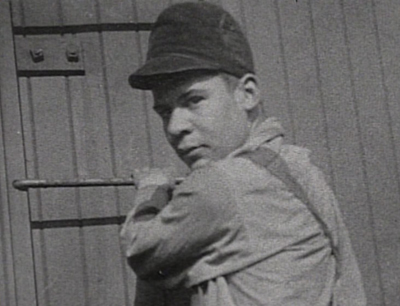
I’ve encountered this other places, but the first time was several years ago from the man in the picture.

Dean Kindsvater.  Deano.  A man who never saw $50,000 free and clear in his sixty-four years of life.  He played the lottery, but he’d scoff when the prizes weren’t in the high millions.  He’d buy tickets for the big jackpots and wouldn’t even check them if nobody won.  “Hell,” he’d say, “those small prizes aren’t even worth the trouble!”

Here’s a guy, never finished high school, left home in his low-teen years, bounced around as a dish washer and short-order cook for years.  Finally got into the HeeChee jewelry manufacturing business in the early `70s.  Bought an old railroad hotel in Belen, NM, ran a team of illegal aliens out of the top floor until someone discovered Heechee  could be made cheaper in Southeast Asia.

Deano rode through, living in one room of the bottom floor of that hotel the remainder of his life.  Windows all boarded up, top floor a vacant ruin of pigeon droppings and the debris of the life of the man.  He opened a junk shop and sold odds and ends and made up the difference moving a little jade on the side.  Lived downstairs with a propane bottle for heat, extension cords running all over the place from the one outlet, keeping the TV going, the microwave oven for coffee, refrigerator for TV dinners. Cold water sink to wash his utensils.

Three mongrel dogs living there with him.

The only book Dean ever read in his entire life convinced him he could make a living playing Blackjack, which he couldn’t.  Visiting him in that hotel the first time, knocking on that door, hearing him coming from the interior coughing, reminded me of a Frankenstein movie, him as Igor.

I was with him once when someone asked him what religion he was.  “Christian.”…. “No… I mean what denomination?  Catholic?  Baptist?”

Deano thought about it before he answered.  “Catholic.”  But the conversation afterward suggested Deano didn’t know the difference between a Catholic and a Baptist.  He’d never stopped to think about it.  To him those churches he never went into were all alike, all the same bunch of folks.  Never entered his mind that it might be something worth thinking about.  Never been in a church in 64 years of life, never paused to wonder anything at all about anything at all, so far as I could tell.  A unique man.

But Deano thought the prizes too small to bother with if the jackpot was just $10 million.  Never even bothered to check if he’d won  the $100K someone had a ticket for in NM, but had never claimed.  He had, in common with a lot of other people, that scorn for the smaller prizes that could have changed his life.  He’d probably be shyly flattered, knowing his picture was up here for strangers to see.  Flattered and a little suspicious.  “How’s this going to make anyone any money?” he’d ask the universe.

RIP Deano.

Hope the prizes are bigger wherever the heck you are these days.

Old Jules