The folks who run it are insufferably smug, downtalking, and annoying smarty-pantses. But they evidently have a cadre of followers scouting the planet for good ideas, which they post as ‘fails’, or bad, or quaintly bad taste compared to the tastes of the higher-minded posters and readers there.
So several times every day I open an email of the latest good ideas they’ve posted, allow them time to load and study them carefully. Ignoring the source. And every few posts another lightbulb goes off in my head as a result. Someone, somewhere had a problem similar to one I share, and figured out a way to solve it in a way I might also solve mine.
I suppose the people running the place are just out after hit-counts and making as much money as they can any way they can, and the downtalking smugness, they’ve found in their statistics, appeals to more people than the alternative approaches.
But whatever the reasons, I’m grateful they do what they do, and I sincerely hope they continue doing it.
Good morning readers. I’m grateful you’re here reading this cold morning.
Every time we think we’ve got things figured out and can make pronouncements to one another without fear of someone making a counter-pronouncement back at us with any danger of validity this seems to happen. Some smarty-pants academian digs around where he’s got no business being and spang finds something to cut us off at the knees.
In this instance it’s fairly solid physical evidence a Mayan city once thrived in the otherwise non-Mayan and feet-implanted-in-the-ground US state of Georgia. The offending pointee-headed guy with the cheek to find it doesn’t even have the courtesy to be a US academian who can be bludgeoned by grant money and sneers from his peers to shut the hell up about it and not go around shaking and rattling previous pronouncements.
When evidence began to turn up of Mayan connections to the Georgia site, South African archeologist Johannes Loubser brought teams to the site who took soil samples and analyzed pottery shards which dated the site and indicated that it had been inhabited for many decades approximately 1000 years ago. The people who settled there were known as Itza Maya, a word that carried over into the Cherokee language of the region.
The city that is being uncovered there is believed to have been called Yupaha, which Spanish explorer Hernando de Soto searched for unsuccessfully in 1540. So far, archeologists have unearthed “at least 154 stone masonry walls for agricultural terraces, plus evidence of a sophisticated irrigation system and ruins of several other stone structures.” Much more may still be hidden underground.
A good level-headed other good US scholar took a more level-headed approach to the finds:
UPDATE: Raw Story contacted another UGA Scientist, Dr. B. T. Thomas of the Department of Environmental Science, who indicated that, while it is unlikely that the Mayan people migrated en masse from Central America to settle in what is now the United States, he refused to characterize Thornton’s conclusions as “wrong,” stating that it is entirely possible that some Mayans and their descendants migrated north, bringing Mayan building and agricultural techniques to the Southeastern U.S. as they integrated with the existing indigenous people there.
He didn’t go on to say what needs saying. Namely that the South African guy needs to go home and tend his own affairs. There’s plenty of digging to be done in Africa and plenty of good US academians capable of handling any digging needs doing here. And most especially the South African guy needs to be kept away from the copper artifacts found in Florida and Georgia in other mounds that bear a strong similarity to Aztec artifacts in Mexico.
We don’t need any guys running around in pickup trucks drinking beer and talking about Mayan calendars. Things are already complicated enough.
Which brings me to crowfoots and wobblehead extensions. I borrowed Little Red yesterday and went into Kerrville. I spent a goodly while hanging around in the AutoZone store picking the brains of guys in bib overalls with grease under their fingernails.
Those wobblehead extensions offer a new lease on life for the hope of getting the starter off the Communist Toyota. The crowfoots might be helpful getting the new one back on. Not pictured here, but also new to the anti-Japanese engineering arsenal is a mirror that swivels at the end of a telescoping handle for looking into places nobody ever intended them to be looked into.
In a previous post, I described what it is like as an Alberta Métis to come to Quebec and realise that ‘Métis’ does not mean the same thing here. I’m not a shut-in…I realised that there were different definitions out there, I simply hadn’t lived where I was defined by them before.
In another post, I talked about Pan-Indianism, and also Pan-Métisism. What this post and those previous two have in common, is that they are about identity.
The topic of Status was a much easier discussion, because I avoided delving into identity issues in order to give you the bare bones legislative context. Trust me, there are much larger identity discussions yet to be had on ‘who is an Indian’. More important, I’d argue, than just knowing the state of the categories right now…but you have to start from somewhere!
It has been my experience that many Canadians do not understand the difference between Status and membership, or why so many different terms are used to refer to native peoples. The confusion is understandable; this is a complex issue and the terms used in any given context can vary greatly. Many people agree that the term ‘Indian’ is a somewhat outdated and inappropriate descriptor and have adopted the presently more common ‘First Nations’. It can seem strange then when the term ‘Indian’ continues to be used, in particular by the government, or in media publications. The fact that ‘Indian’ is a legislative term is not often explained.
As a Métis, I find myself often answering questions about whether or not I have Status, which invariably turns into an explanation about what Status means in the Canadian context. The nice thing is, as time passes, fewer people ask me this because…
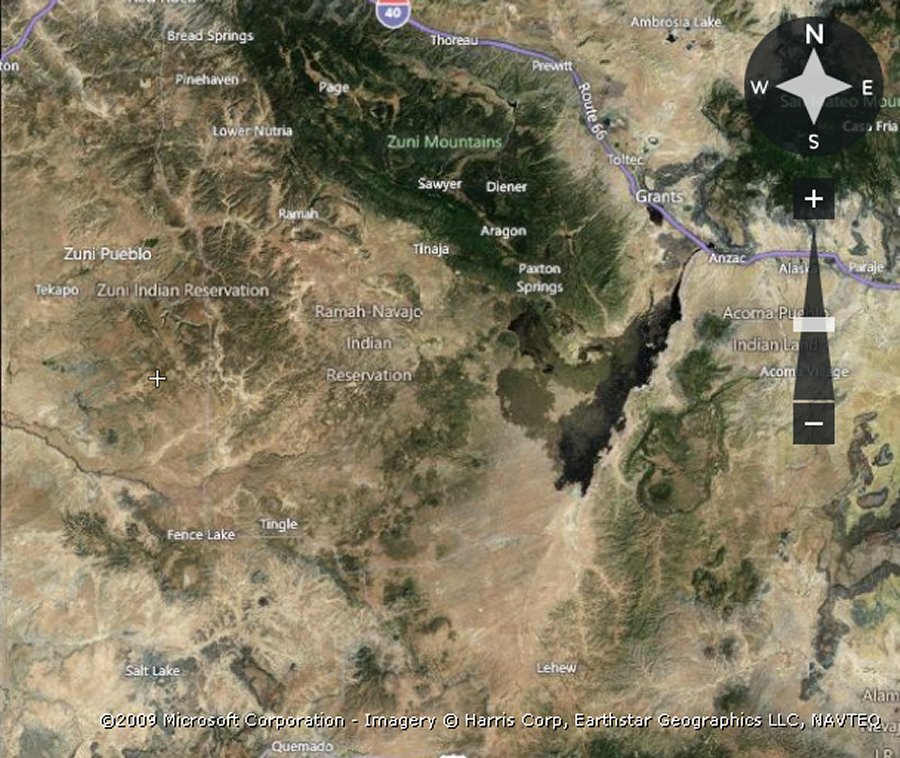
During the early 1990s the Coincidence Coordinators conspired to make Zuni Pueblo and the geography surrounding it a major focus in my life. I mentioned a bit about Zuni here: This is Zuni Salt Lake, but over the next couple of whiles I’d like to tell you a bit more about them.
At the time the overwhelming part of my salary was paid by FEMA and a part of my job involved mitigation of recurring natural disaster damage behind federal disaster expenditures. In New Mexico a huge percentage of the recurring expense was located on Navajo lands, but flooding on the Zuni River reared its head as a concern during the same time period.
Meanwhile, the Coincidence Coordinators got into the act. The search for the lost gold mine was being driven by documents from the US Archives, New Mexico State Archives, fragments of mention from 19th Century newspapers, later-in-life memories of men connected to the events and documented in books, topo maps and other researched sources.
Keith and I, examining and submerging ourselves together during that phase of my search, concluded the areas to the east of Zuni, and to the south were prime candidates for the location. Candidates based on what we knew at the time. Wilderness Threats.
By my own recollection that phase of the search lasted only three, maybe four years, maybe less. But it led by numerous routes, into more than a decade of closer association with Zuni, both as a tribe, and as a geography. I’ll be posting more about that, about Keith’s and my explorations, about the Zuni pueblo and the people living there, and about some aspects of the history and culture.
But I’ll begin by posting this piece of doggerel I wrote a long time ago about my first visit to the Zuni Rez and my first encounter with the Zuni and Ramah Navajo. That meeting with the Zuni Tribal Council burned itself into my memory as few things I’ve experienced this lifetime have.
Flooding on the Zuni land
Tribal chairman calls
Upstream Ramah Din’e band
Over grazing galls.
Ancient ruins I travel past
Forgotten tribes of old
And finally arrive at last
On Zuni land as told:
Tribal council meets, he chants
A time warp history.
I Listen long the raves and rants
And river mystery:
Navajo must have his sheep
To have his wealth, it’s plain.
Too many kids, too many sheep
Too little grass and rain.
Forgotten white man wrongs and deeds
The raids of Navajo
Corn that didn’t sprout the seeds
And stumbled Shalako
More sheep grazed than in the past
Arroyos grew wide and deep
Siltation settled hard and fast
In riverbed to sleep.
Navajo siltation choked
An ancient channel bed
Water rose above the banks
200 cattle dead
Houses flooded, ruined cars
Fields of grain were lost
A playground field a channel mars
And who should bear the cost?
The tribal chairman Ramah band
Listened to my tale
Stony silence, steady hand
Informed me I would fail.
“If those Zunis don’t like floods
Tell them to reduce the chances;
We’ll hold back our streams of muds
If they’ll call off their damned rain
dances.”
The Cohoe women raised and sheared the sheep, made the dye, hand-wove this rug.
As the post-non-Y2K hard times hardened, I did a lot of scrambling trying to make ends meet. One by-product of that squeeze was that I began doing some trading with the tribes for pottery, rock art, rugs, and other products to resell.
This got me acquainted with a Navajo man who became a running buddy for a while. Curtis Cohoe. [Not to be mistaken for his namesake, the Mescalero referred to on several posts.] A man about 50 years old. Pine Hill (Self-determination) Rez. Good family, a generation earlier. His mom and aunt still raise sheep, shear, dye the wool with dye they make from crushed rock and plants, and weave good rugs the old way.
Early in his life, Curtis started out pretty well. He was intelligent, talented, and I’ve always assumed he must have attended a university. When he was being an artist everything he did was in demand. He was an excellent shade-tree baling-wire and chewing-gum vehicle mechanic, and he could chop a cord of wood with an axe almost as fast as I could cut one with a chainsaw.
Worked for the US Forestry Service as a fire fighter, then as a Ranger in California until things went haywire. Back in New Mexico, a cop raped his younger sister and got by with it. Curtis came back and beat the cop to death with his fists, which got him 10 years in prison.
Once that decade of bars was over, Curtis never really got back onto the right track. He had a lot of anger in him, and he had some brothers who were in and out of prison a lot, who kept the pressure on from the law. (Curtis was fairly frightened of one of the brothers, whom he described as a bad-ass. The other was an evangelical preacher who sold some drugs and stole in between times).
Curtis was much of a man in a lot of ways when he was sober, or mostly sober. I’d known him a considerable while before I ever saw him drunk, never realized he was sometimes a drinker. He shifted his residence frequently between the family place on the Rez and Grants, New Mexico. Maybe that’s how it escaped my notice.
But early in our friendship one day I drove up to a place he was doing some artwork painting on a table top in an alleyway next to the railroad track in Grants. I was just in time to see three semi-drunk Din’e toughs in their mid-20s approach him, exchange a few words, and start swinging.
By the time I got out of the truck to help him he didn’t need any help. The two fully conscious ones got to their feet and left at a stumbling run. The less-conscious one stuck around long enough for me to try to stop the bleeding by tying a bandana around his head while Curtis intermittently kicked in his ribcage. I’m glad I never met the brother Curtis was scared of and considered a badass.
I don’t know whether I knew Curtis didn’t have a license to drive an automobile. He frequently drove my truck running errands and chores. I had no qualms about loaning the Ford pickup to him when he needed to go out to the Rez for one reason or another provided my old Isuzu was running okay.
One day we were preparing for a trading trip to Shiprock and Curtis left in the Ford to get it gassed up for the trip. When he didn’t come back for a couple of hours and I saw a wrecker go past towing my truck I immediately went over to the wrecker to find out what was going on.
“Is this yours?” He grinned because he knew damned well it was mine. My apartment was no more than 150 yards from his yard and we both occasionally had coffee a few feet apart in the Chinese restaurant between his place and mine. “Your damned Indian’s in jail. Towing fee on the truck’s $50.”
“What did he do?”
“They stopped him for a routine traffic check. He didn’t have a license and when they called it in they found out he’d had a lot of DWIs. He’s going to be in there a while.”
I paid out the $50 to get the truck out of hock and seethed about it considerably. It would have been too easy for it all not to happen and I found myself thinking Curtis had about outlived his usefulness in my affairs.
But mutual acquaintances brought me a message from Curtis asking me to bail him out of jail, telling me how sorry he was about it all. He was going to be stuck in there for at least six weeks if he couldn’t raise bail. Swore he’d pay me back everything he’d cost me.
I wasn’t Mister Moneybags, but I could squeeze $500 if I had to, and I did over a few days, selling things cheaper than I’d intended. Once he was released he brought a friend from the Rez over and told me he was going back to Pine Hill for a while. Asked if he could borrow my pickup for his friend to drive him back out there. His friend had a license, and I loaned it to him, figuring it would be gone for a day, maximum.
The truck never came back. Curtis and his friend evidently got drunk on the way to Ramah and got chased by a Navajo-hired cop on the State Highway until they ran the truck into a tree, Curtis driving. I wasn’t long finding out he was being held in the private penal facility outside Grants, and that he was looking at two years in prison, and I was looking at losing the bail money.
A week or two later I heard a guard had grabbed him and Curtis knocked him down. He was now looking at no-less-than five years hard time.
Everything else being equal I wouldn’t be surprised if he’s still there.
Sometime afterward I had a buyer for one of the rugs his mother and aunt made, so I stopped in on her for a visit at Pine Hill. Naturally the subject of Curtis came up.
“He needed to stay out of town,” was all she said.
This video is called Shopping at the Third Hand Store, aka Dumpster Diving. I love these guys. Shopping carts, cell phones, watermelons. Too cute for words.
We have been eating out of dumpsters for a little more than a year now. We have never gone hungry and we have never been sick. In fact, we now eat way better than we ever did when we had money, and our immunity to illness seems to have been bolstered from dumpstering for food.
A while back I received the following comment from Poland on one of my YouTube dumpster videos:
That’s possible only in America!
In Polish dumpsters we have only stinky dump, and i mean it, just dump.
What you have here it’s not dumpster as i know it, just place when people leave useful stuff. I think i’ll just move to America and live from Dumpster diving, it would higher…
My old friend Keith stopped into the blog a few days ago and commented on one of the posts. By doing so he reminded me I haven’t said much about a subject dear to my heart: Outrageous adventure.
When Keith and I were searching together we were both in our early 50s, both involved in careers, both plenty old enough to know we weren’t going to find that lost gold mine, though I, particularly figured we would. [I still held by the statement from my neophyte search early in the 1980s, “If I can’t find that mine I’m not half the man I think I am.”]
Keith and I plotted, planned and trekked into more canyons than either of us can remember and, while we didn’t find that lost gold mine we saw places not many human beings have ever seen, certainly not many in a longish time. We systematically explored promising locations from the Zuni Mountains, to Santa Rita Mesa, to Pelona on the south side of the Plains of San Augustin, to the Gallinas.
I don’t know how Keith thinks about all this these days, but I know how I think about it. I wouldn’t subtract one mile, one minute, one canyon of it from my life, though we never found what we were looking for.
Not from that, not from Y2K, not from flying a Cessna 140 all over the sky for a number of years, and not from this current adventure of survival that’s my life today, for that matter.
It seems to me people have become too ‘smart’ and ‘wise’ with the debunking culture to allow themselves a piece of outrageous risk with minimal prospects for any returns. It’s been that way for a considerable while. I believe it’s robbed a lot of people of experiencing a side of life that once a particular sort of individual demanded of himself.
An old man who wasn't afraid of adventure
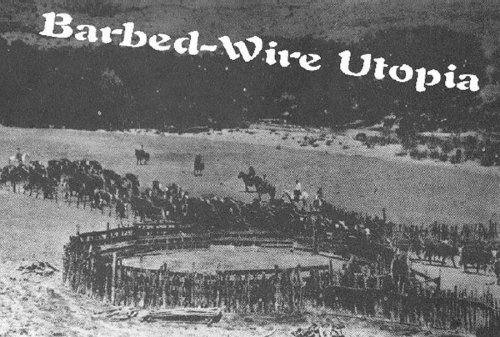
When I say it’s been going on a long while I mean it. During the early 1950s my granddad and step-dad became the laughingstocks of Portales, Dora, Garrison and Causey, New Mexico, by injecting a piece of it into their lives. They bought a WWII jeep, equipment, and joined thousands of other similar men searching for uranium. Probably the last ‘rush’ in US history.
They were gone several months, didn’t find a thing, and when they returned they endured the jeers and snide laughs of everyone around them. But both men cherished the memories of that time as long as they lived. They had something the stay-at-home sneerers would never have because they were too smart, too dedicated to the other side of human existence to allow it into their lives.
And the venom they expressed for anyone else doing it provides a hint they probably wished they had.
“So,” says I to Mr. Hydrox, my second-in-command. “Just what-the-hell do we think we’re doing?”
“Who?” Hydrox explains.
“Us. You. Me. Niaid, Shiva, Tabby. The Great Speckled Bird and the hens. It’s coming on Christmas. Why aren’t we gearing up? Going on buying sprees? Getting into the spirit of things?”
Christmas where the desert went and why
“Hmmm,” Hydrox frowns, scratching behind his ear. “You’re thinking of what? Maybe buying a few miles of lights and stringing them up? Finding some ways of burning up some more kilowatt hours without warming the cabin, pumping water, creating anything, putting food on the table or adding anything necessary to things around here at all?”
I pulls at the suspenders to my insulated coveralls, stalling for time. “Well, yeah. Everyone else does it. Remember when we lived in Placitas and the whole town got drunk and walked around the village singing? Don’t you miss that?”
“I hated it,” Scrooge McHydrox mutters. “So did the other cats. Christmas. Halloween. Easter. But especially Christmas. Kids buzzing around the roads on new motorcycles trying to run one another over. Garbage piled up around the pickup containers. You humans are a mystery to me. Can’t think of enough things to buy and throw away.
“But all the while yapyap yapping about how hard times are. Yap yapping about the cost of just staying alive. You humans don’t even know how to eat a pound of meat that didn’t come in half-pound of plastic.”
This raised my hackles a bit. “We’re smart. We’re on top of things. Every one of those empty cat food cans in that barrel over there are a sign of human progress and intelligence. Someone somewhere dug that ore out of the ground. Someone else smelted it and rolled it down into sheets to make into cans to hold meat someone else grew and killed and butchered so you can have a full belly.
“You eat better than the people who did all that work. You cats eat better than the progeny of the people of the people I buy it from are likely to.”
Hydrox glared at me in a way I like to think of as put-in-his-place. “Yeah. And who’s responsible for all that?”
“Human progress,” I replied proudly. “The religion of I-Got-Mine.”
74 years old, a resident of Leavenworth, KS, in an apartment located on the VA campus. Partnered with a black shorthaired cat named Mister Midnight. (1943-2020)
Since April, 2020, this blog is maintained by Jeanne Kasten (See "About" page for further information).
https://sofarfromheaven.com/2020/04/21/au-revoir-old-jules-jack-purcell/
I’m sharing it with you because there’s almost no likelihood you’ll believe it. This lunatic asylum I call my life has so many unexpected twists and turns I won’t even try to guess where it’s going. I’d suggest you try to find some laughs here. You won’t find wisdom. Good luck.











 So Far From Heaven