Tag Archives: technology

Magnetic Fingers et al Preliminary Hypothesis

Good morning readers.  Thanks for coming by for a read this morning.

Flux Transfer Event Topology,

Old Sol – Fondling Mother Earth With Magnetic Fingers

I doubt anyone’s going to be edified by this, understand what I’m saying, or assign anything serious to it.  But I’m going to say it anyway. 

Those flux transfer events between earth and Old Sol and their 8 minute dayside intervals are manifesting themselves in a number of indirect, measurable ways a person in his right mind wouldn’t be inclined to attribute to them.   The 8 minute gap isn’t actually an 8 minute gap, but is filled in with flux transfer events targeted somehow to other solar system bodies.  Those show up as reflected energy detectable and measurable on darkside earth, distinguishable by the magnitudes and distances of the objects doing the reflecting.
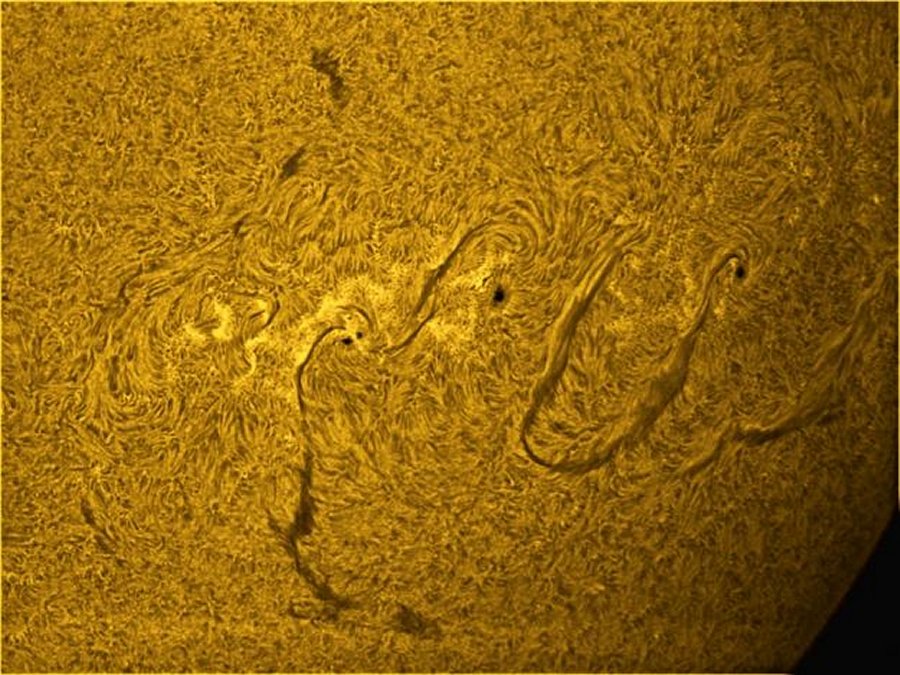
The hypothesis, weak enough to begin, weakens further relative to the ‘active’ and ‘passive’ events sunside, spinward and anti-spinword, and the ‘hidden’ events the guy at University of Iowa detected.  But there’s a body of indications the passive events are actually the boundary zone where the reflective energy merges and influences the weakening dayside events.

It’s not my intention to persuade anyone to the accuracy of what I’ve said here.  The limited testing I’ve done to form the hypothesis has been almost entirely on darkside and twilight-zone data.  However, the data I’m using is probably only one of the ways these events are manifesting themselves and being recorded as unrelated phenomena.  Anyone with an interest and a smidgen of imagination can probably find other datasets equally measurable and testable.

And anyone not interested enough to do it probably is better qualified to judge whether there’s any validity to it.

Old Jules

Old Sol – Fondling Mother Earth With Magnetic Fingers

spaceweather.com

Me:  How’s the hammer hanging this morning, big guy?  You ready to rock and roll?  Ready to kick some serious ass of darkness?

Old Sol:  Depends on the part of the spectrum you’re referring to.  I imagine where you’re standing it’s the impression you’ll be left with.

Me:  Cool.  Hey, while I’m thinking about it, been intending to ask you about this a couple of days.  About all this sneaky pinching and feeling around on Mama Earth’s magnetic field every eight minutes . . .[Flux Transfer Event Topology]

Old Sol:  Hold on just a minute there, Bubba.  Just because you took so long noticing doesn’t mean I’ve been hiding anything.  Nothing illicit, surreptitious going on at all.

Me:  Okay.  Forget I said that part.  But We, and I think I speak for everyone on the planet in asking this.  We, I was going to say, are curious about a couple of things.  First, what are you getting back out of it?  Some sort of erotic feedback? 

Old Sol:  You need to get your mind out of the gutter.  First off, my relationship with your planet is strictly platonic.  Free exchange of hmmm, not ideas, exactly, but something that rhymes with ideas on a somewhat larger scale.

Me:  Yeah.  So you say.  But those little throbs every eight minutes don’t seem all that platonic to the disinterested observer.  Is this connection, this rubbing around against one another something you just do with Earth?  Or are you doing with the other objects you can reach, too? 

Old Sol:  Think about it before you start your holier than thou moralizing.  Do you think I can resist a magnetic field anywhere close enough for me to feel it?  I’ve been watching you long enough to know, when it comes to issues of resisting, you’ve got no more going for you than I have.

Me:  We’re not talking about me here.  Quit trying to dodge the issue.  You got your pulsing little fingers out there on Jupiter, Neptune, Saturn, Uranus all the time, too?  And what’s with the eight-minute thing?

Old Sol:  Some are more satisfying than others, I’ll admit.  Those crustal magnetic fields don’t give me much of a lift, but they can be a nice quickie.  But there’s nothing like a good core magnetic field to wake up against on a cold morning.  I’m an old renaissance star in a lot of ways.  I can go either way, crustal, or core.   Either way’s fairly celestial on my end of things.  And nobody out there’s complaining, that I’ve heard.

Me:  Mama Earth know about all this?

Old Sol:  No.  And don’t you go telling her about it, either.

Old Jules

Flux Transfer Event Topology

http://science.nasa.gov/science-news/science-at-nasa/2008/30oct_ftes/

Good morning readers.  I’m going to have to kick this around with Old Sol while I’m coaxing him up this morning.  Meanwhile, I’ll tell you it’s nice seeing something coming out of NASA occasionally a person could consider useful and exciting.

The whole 2008 business about the 8 minute cycling had completely escaped my notice until I came across this at http://spaceweather.com/this morning.

HIDDEN PORTALS IN EARTH’S MAGNETIC FIELD: A NASA-sponsored researcher at the University of Iowa has developed a way for spacecraft to hunt down hidden magnetic portals in the vicinity of Earth. These gateways link the magnetic field of our planet to that of the sun, setting the tage for stormy space weather. [video]

Then, a bit of searching turned up this:

Magnetic Portals Connect Earth to the Sun

 http://science.nasa.gov/science-news/science-at-nasa/2008/30oct_ftes/

“We used to think the connection was permanent and that solar wind could trickle into the near-Earth environment anytime the wind was active,” says Sibeck. “We were wrong. The connections are not steady at all. They are often brief, bursty and very dynamic.”

Several speakers at the Workshop have outlined how FTEs form: On the dayside of Earth (the side closest to the sun), Earth’s magnetic field presses against the sun’s magnetic field. Approximately every eight minutes, the two fields briefly merge or “reconnect,” forming a portal through which particles can flow. The portal takes the form of a magnetic cylinder about as wide as Earth. The European Space Agency’s fleet of four Cluster spacecraft and NASA’s five THEMIS probes have flown through and surrounded these cylinders, measuring their dimensions and sensing the particles that shoot through. “They’re real,” says Sibeck.

Now that Cluster and THEMIS have directly sampled FTEs, theorists can use those measurements to simulate FTEs in their computers and predict how they might behave. Space physicist Jimmy Raeder of the University of New Hampshire presented one such simulation at the Workshop. He told his colleagues that the cylindrical portals tend to form above Earth’s equator and then roll over Earth’s winter pole. In December, FTEs roll over the north pole; in July they roll over the south pole.

Sibeck believes this is happening twice as often as previously thought. “I think there are two varieties of FTEs: active and passive.” Active FTEs are magnetic cylinders that allow particles to flow through rather easily; they are important conduits of energy for Earth’s magnetosphere. Passive FTEs are magnetic cylinders that offer more resistance; their internal structure does not admit such an easy flow of particles and fields. (For experts: Active FTEs form at equatorial latitudes when the IMF tips south; passive FTEs form at higher latitudes when the IMF tips north.) Sibeck has calculated the properties of passive FTEs and he is encouraging his colleagues to hunt for signs of them in data from THEMIS and Cluster. “Passive FTEs may not be very important, but until we know more about them we can’t be sure.”

There are many unanswered questions: Why do the portals form every 8 minutes? How do magnetic fields inside the cylinder twist and coil? “We’re doing some heavy thinking about this at the Workshop,” says Sibeck.

If NASA’s going to be throwing money around like a drunken sailor it’s good to know sometimes it hits something worth knowing.  Even a blind hog finds an acorn now and then, I reckons.

Old Jules

RC Royal Crown Cola and Tom’s Toasted Peanuts

Despite the fact of Asians having become so much more intelligent, better educated, industrious, innovative, inventive and economically responsible than westerners during the last half-century, a few things are still out there they’ll never catch up on.  One of those is RC Royal Crown Cola with a bag of Tom’s Toasted Peanuts or Planter’s Peanuts floating in it.

A couple of other things they’ll never surpass us on include the kind of Italian food you’ll get down at the Fongoul Restaurant, Mexican food New Mexico style with green such as you’ll get at Cojone’s Mexican Cafe, and those fantastic Greek sandwiches I can’t recall the name of.  Guido? 

You’d have to have peeked into the kitchens of a few Chinese restaurants during your lifetime to know that, though all other Asians have it figured out, the Chinese got left behind about 10,000 years ago in matters of basic food sanitation.  If you eat in Chinese food joints much there’s a middling good chance you’ve eaten something that’s already been through a Chinese digestive tract, introduced to the food when he clipped his toenails into the egg drop soup.

That’s the reason Chinese restaurants use all that MSG, even though they know it will probably give you a stroke one of these days.  Covers up the taste of other things got in there, either by accident, or design.

I don’t claim to understand why it’s so.  Koreans, Japanese, Cambodians, Vietnamese, Thai, they’re all probably more concientious about food sanitation in their restaurants than the average westerner.  But the Chinese restaurant that isn’t feeding customers cockroaches, toenails and spit is by far the exception, rather than the rule.

I’ve heard the matter discussed among health department inspectors more times than I can remember [none of whom would dare eat Chinese without having gone over the food preparation area before-hand].

Maybe they’re still trying to get even with Christian missionaries for the Taiping rebellion and figure everyone else qualifies as collateral damage.

Old Jules

Uppidy Modern Human Beings

Good morning readers.  Thanks for coming by for a read this morning.

21st Century human beings, and those of us left over from the 20th tend to get fairly uppidy and smarty pants about all the people we managed to slaughter during the 20th Century.  That, and how many we’re likely to off inadvertently here pretty soon [what with the Japanese sewer plants spewing radioactivity into next week’s cat food and whatnot].  We think we were special and innovative with WWI, WWII, the Gulags, Cambodia, Viagra – er, Biafra, the German camps, the Rape of Nanking and other incidentals perpetrated by the Japanese Empire, the pre-WWII French death camps in the Carib for their felons and political problems, Mexican revolutions, Great Cultural Revolution in China.

Mostly fairly piddly stuff compared do what a lot of our ancestors pulled off.  About the time we Americans were bragging about how many people got slaughtered at Gettysburg, in China they were actually doing it up right with the Taiping rebellion.  Bloodiest civil war in the history of humanity and until WWII took the trophy for killing more people than any war of any kind.  100,000 people slaughtered in a single day in the battle of Nanking.

A government clerk named Hung got hold of a Christian Missionary tract in the 1850s,  “Good Words to Admonish the Age“, understood it and decided he was the brother of Jesus.  Set about establishing a new heaven on earth with one-hell-of-a-lot fewer people in it, none of whom didn’t believe he was the brother of Jesus.  Came damned close to succeeding, too, insofar as the Manchu Empire was concerned.

Then there was Queen Ranavalona I of Madagascar, decided she didn’t like people who didn’t belong to her own tribe, killed off two-three million of them during the 1840s.  Survivors dressed up like Europeans, did opera, ate with the right forks and spoons.  But honestly didn’t like Europeans, either.  Butchered or enslaved any of them they could catch.  On second thought, didn’t like anyone else, either.  Gave them mostly the same treatment when they could catch them.

Keep in mind there were a lot fewer people available to be offed in those days, and a million was a lot, compared to the 20th Century where it dwindled down and got piddly.

Just because you’ve got a television where you can hear about it and keep count with a computer doesn’t mean you’re any better at it than your great-granddad.  Considering the tools he had to work with, he was better at it than you.

Old Jules

Loaded With Extras

I take the view the only really necessary parts on a vehicle are:

  1. Engine and drive train,
  2. wheels of some description
  3. Steering device
  4. Throttle
  5. Someplace to sit or stand.

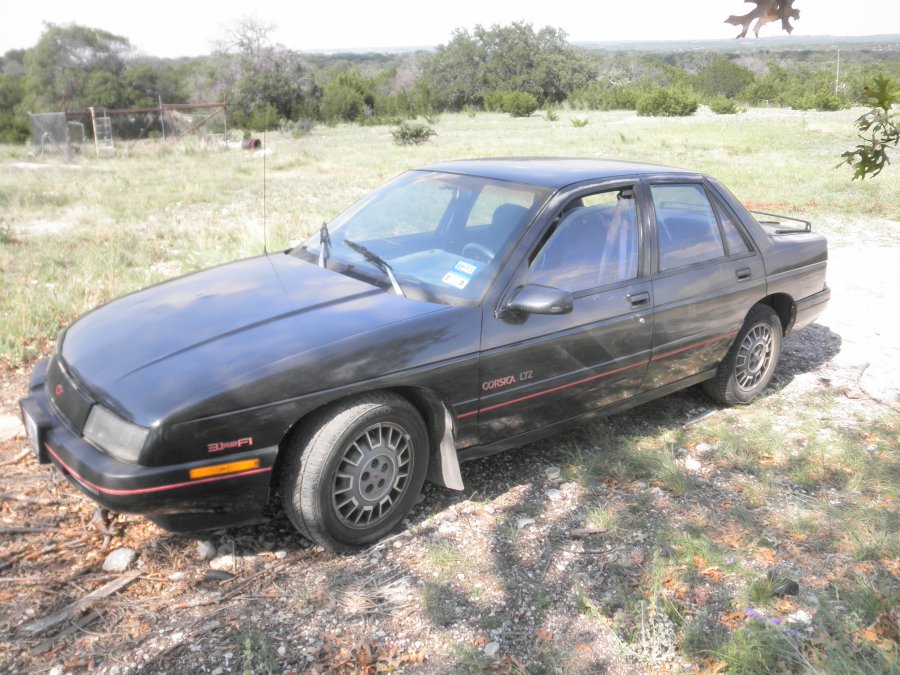
This car is loaded with extra parts.  For instance, notice that hood with all the paint on it and the little hump.  That hump was caused sometime when something flew off the engine and instead of heading off somewhere the driver wouldn’t have to deal with it, bounced it back into the engine compartment.

Paint is a definite useless extra, and the hood doesn’t do anything except make it more difficult to get to the engine.  Same as that windshield.  Just something else to break.  If the car didn’t have a windshield it wouldn’t need windshield wipers forever wearing out.

Look at all that expensive, useless crap they hang on those cars.  Bumper.  Mirrors, lights.  Just more stuff to go wrong or get knocked off.  Something covering the radiator.

More useless paint, little signs hung all over the place, hubcaps.  Reflectors.

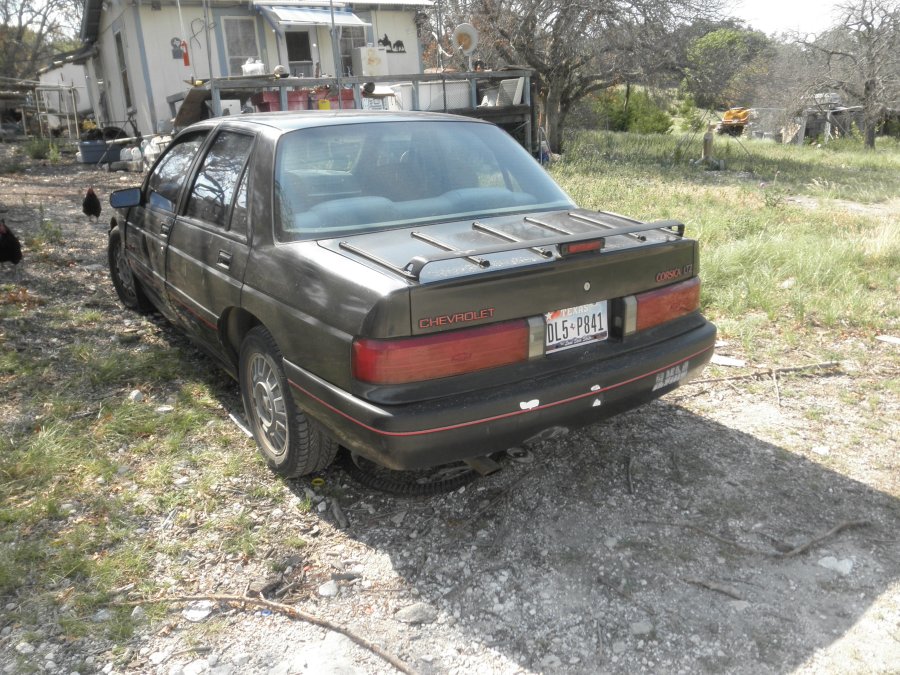
All that stuff on the tires to wear out.  If they’d just wrap the hubs with electrical tap they’d never go flat.  Or make them out of solid rubber so’s a person could wear them all the way down to the axles, or at least the hubs.

Look at all this junk!  Tail lights.  Some kind of weird handle across the trunk.  More little signs.  A back window.  A tail pipe!  A dadgummed tail pipe hanging out there to catch on rocks and deadfall trees.  But most of this extra stuff will take care of itself over time just getting in and out of here. 

Luckily, the brakes are fairly spongy so’s I won’t have to trouble myself with them long.  If I need to stop planned, I’ll just shut down the engine.  Or emergencies, put it into reverse, or parking gear.  Or run it into something heavy.

Old Jules

Let Big Daddy Fix It

Good morning readers.  I appreciate your visit and read.  I hope you won’t consider this frivolous.

It’s Daddy Day, and there’s a growing body of shrill opinion being expressed on the Web concerning those out-of-control nuclear reactors in Japan and how Big Daddy United States needs to step up to the plate to fix it.  Even though Big Daddy has no more clue than anyone else how to go about doing it.

First off, those reactors haven’t reached their full potential yet, so it’s probably too soon to have the Lincoln Memorial try to jump a motorcycle across them. 

Even though PT Barnham’s loose in Washington and trying to perfect that method of solving historical difficulties, jumping a motorcycle across the problem is still considered extreme, untested, uncertain, at best.

Probably it would be better to try time-tested methods first.  Some of the ways Big Daddy US has solved other pesky difficulties.  Homeland Security and attempts to deal with illegal immigration might provide a model.

Or failing that, there’s always the old airbag fix:

Anyone strangled to death by an airbag isn’t going to be worrying about mutants, teeth falling out, that sort of thing.

Sending some crews of jailbirds out to pick the fallout up before it can do any damage offers some hope.  Got lots of jailbirds and not-all-that-much radiation yet.  If the radiation increases, hell it won’t do it faster than our number of prisons.

People who never learned to program a VCR, [including me] might find radiation detection instruments confusing, so sniffer dogs trained to detect it could answer the question of where it is and where it ain’t.

Naturally they’d have to be provided facilities.

And protection from reckless drivers.

Failing that, a little magic might help.

Or just an acknowledgement there’s a problem.

If everything else fails, this worked for grandaddy and there’s no reason to think it won’t work again.

The Japanese have never been all that receptive to allowing imports from the US, but I’ll bet they’d welcome a few shiploads of those signs.  And there’s potential for a new manufacturing industry here to replace what went to Asia.

It ain’t as though there’s nothing to do in a fallout shelter.

Big Daddy’s tour d’force is entertainment.  Still is.  Never been better.

You can’t argue with a history of success.  I say, “Let’s go for it!”  What are we waiting for?

Old Jules

A Matter of Curiosity, Mostly

Good morning readers:

I doubt anyone among the current readers is going to put my speculative assertions about the abundance of platinum of a few days ago to the test.  But someone who finds the blog on a search engine someday might.  It would be a lot simpler and easier today than it was a decade-or-so ago.  Not to mention cheaper.

So, for that potential reader, here’s what I’d suggest as a minor project:

Get one of these – They’re getting cheaper every day.  $100 will probably get you one.

QX5 Microscope – Digital Blue QX5 Digital Microscope

The QX5 Microscope is the upgraded version of the award-winning Intel QX3 computer USB microscope.

Explore the microscopic world with the only USB microscope that connects to a computer. The QX5 USB Microscope includes software that allows you to view, edit, animate and even measure samples, then create slideshows and videos. The QX5 USB Microscope has the mobility to come out of its base for the viewing of larger or possibly live samples in their natural habitats.

Then build one of these:

Build a high resolution spectrograph in 15 minutes

http://sci-toys.com/scitoys/scitoys/light/spectrograph/spectrograph.html

Find a weathered Quaternary caldera and dig into the inside of the rim, near the top, saving the sample below about an inch deep to a foot deep in a five gallon bucket.  Carefully, carefully, carefully pan down the sample until whatever’s heaviest is all that’s left on the bottom of the pan. 

Then do direct microscopy on the sample, after familiarizing yourself with the appearance of micron platinum.  If you see some prime suspects work the sample down a lot further, but saving the spoils because you’re going to be interested in whatever else is left in the sample, and micron minerals are prone to float on the static surface of the water.

Once you’ve got it separated, use the spectrograph you built to determine whether what you’re seeing is actually platinum, and what else is in there with it.

If you don’t have a Quaternary caldera, but would still like to give it a try, go somewhere with a history of active vulcanism during the Quaternary, find a corrugated culvert 4-5 feet diameter going under a road  downstream, but as far upgrade as possible.  Crawl into the culvert with a whisk-broom and large spoon and take concentrate samples from the bottoms of the corrugations.

Then do your direct microscopy and spectograpy on the concentrates, same as above.

You could do something similar from streambeds in mineral bearing areas, but you’d need to learn to ‘read’ a channel so’s to know where to take your samples.

Old Jules

Er. . . Um – Physicists Explain Baby Black Holes to One Another

Pre-Large Hadron Collider, CERN

http://www.physicsforums.com/showthread.php?t=56569

Chroot:   The type of matter is not relevent at all. All you need to do is to put enough matter into a small enough space that its escape velocity exceeds the speed of light. Viola, you have a black hole.  – Warren

Aki:  Aren’t they presently creating baby black holes in labs right now?
 
J20QU3: I wouldnt of thought so, they may be trying but even for a baby black hole u need a huge mass first.
 
Da Willem:  You only need a huge mass density. But the problem (or I guess we should count ourselves lucky) with baby black holes, is that they evaporate very fast.
 
NANOTEC:   they are creating very very small blackholes, the size of a few protons. the part that is tough, is the sustainability. the minuature black holes created evaporate very very quickly as well. from what i guess, CERN(when finished) will help out with this part of the process.
 
Chronos:  There is reason to believe you need at least a planck mass to form a black hole [whose schwarzchild radius would be a planck length]. The limit may, however, be lower if certain higher dimensional theories are correct. In that case the Large Hadron Collider at CERN may be able to produce them. At present, none have yet been created of any size in colliders, so far as anyone knows. If the planck mass limit [~10E19 Gev] holds, we will never create one.
 
NANOTECH:  How could we benefit from creating these black holes at CERN?
 
Nereid:  I too am curious to know why NanoTech thinks mini-black holes have been created in colliders – AFAIK, there’s nothing in the data from any collisions that even hints at such production. Further, if they could be made in colliders, there’d be plenty of them formed from UHE cosmic ray collisions with N or O nuclei (in the air) – again, no hints of such in all the CR data.Mini-BHs would evaporate through Hawking radiation – at least that’s the theory. As no one has observed a mini-BH, this theory has not yet been directly tested (although it is consistent with a large body of indirect experimental and observational data).
 
Grogs:  You’re probably right about today’s nukes not having the ‘oomph’ to create a black hole. I hadn’t really thrown any numbers into the calculation. Focusing them precisely enough (smaller than the radius of an atom ) would probably be a huge problem too. It would probably still be easier than dragging 3 SM’s of material together, but it’s many, many years down the road, if it’s possible at all.For the sake of comparison (to the 1019 GeV number Chronos mentioned), what energies are the latest and greatest supercolliders producing?
 
————-
 
It’s the thought that counts, I reckons.
Old Jules

Earlier Versions of MICA Software if you can use them

Over the years this compulsive project of mine chasing what isn’t happening and when it isn’t has led me into ownership of several versions I ceased using after upgrades were released.   Salt Cedar Latillas for Erosion Control

 Even the earliest versions are better than the next-best off-the-shelf software intended to do what it does.

So I’ve got three versions of the CDs and 120 page hardback handbooks lying around drawing dust.  They’d serve for most folks who aren’t being fanatic about the kinds of issues I’m fanatic about.

If any of you readers are into what’s going on in the sky in a way that might allow you to benefit from owning a not-quite-up-to-date version, these are available for the cost of postage getting them to you.

Feel free to email me at josephusminimus@hotmail.com if you’d savor a copy.

Old Jules

An easy-to-use astronomical almanac from the U.S. Naval Observatory

About MICA

MICA, the Multiyear Interactive Computer Almanac, is a software system that provides high-precision astronomical data in tabular form for a wide variety of celestial objects. The program computes many of the astronomical quantities tabulated in the The Astronomical Almanac. However, MICA can compute this information for specific locations and flexible times, thus eliminating the need for table look-ups and additional hand calculations.

Designed primarily for professional applications, MICA is intended for intermediate-to-advanced users. Basic knowledge of astronomical terminology and positional astronomy is assumed.

MICA provides essential data for use in

Astronomy and astrophysics Space science Geodesy and surveying
Geophysics Meteorology Environmental science
Operations planning Accident reconstruction and litigation Illumination engineering
Architecture Photography  

MICA was first released in 1993 for MS-DOS and Apple Macintosh systems. MICA 2.0 was updated for Windows and modern Apple Macintosh systems and released in August 2005. MICA 2.0 provided all the data available in earlier versions of the software and included several new features. The current version of MICA is 2.2.2, which was released in January 2012.

Features

MICA can perform the following types of computations:

  • Precise positions for the Sun, Moon, major planets, Pluto, selected asteroids, selected bright stars, and cataloged objects (e.g. stars, quasars, galaxies, etc.) using external catalogs provided with the program. Up to ten different position types are available (depending on which object was chosen).
  • Various astronomical time and reference system quantities (e.g. sidereal time, nutation and obliquity, equation of the equinoxes, Earth Rotation Angle, calendar/Julian date conversions, and delta T).
  • Twilight, rise, set, and transit times for major solar system bodies, selected bright stars, selected asteroids, and cataloged objects.
  • Physical ephemerides useful for making observations of the Sun, Moon, major planets, and Pluto. Both illumination and rotation parameters are available for all listed bodies, except for the Sun.
  • Low-precision topocentric data describing the configuration of the Sun, Moon, major planets, Pluto, and selected asteroids at specified times and locations. MICA also includes a sky map option as an aid in locating the objects.
  • Visibility information for solar and lunar eclipses, as well as transits of Mercury and Venus.
  • Four different types of positions of Jupiter and the Galilean Satellites and offsets of the satellites from Jupiter.
  • Dates and circumstances of various astronomical phenomena (solstices and equinoxes, apsides of Earth and the Moon, moon phases, conjunctions, oppositions, and greatest elongations of Mercury and Venus). A phenomena search feature is also available, which generates a table similar to the ‘Diary of Phenomena’ contained in section A of The Astronomical Almanac.

New features and changes in MICA 2.2/2.2.1/2.2.2 include

  • Earth Rotation Angle (ERA) and the equation of the origins.
  • Apside times (perigee/apogee of the Moon, perihelion/aphelion of Earth) as a stand alone computation or within the Phenomena Search function.
  • The DeltaT.val file has been updated with new data. The date with the first predicted value for this file is 2455745.0 (2011 July 2 12:00).
  • Computations of future eclipses and transits now allow the user to set their own value of delta T.
  • Configurations of major solar system bodies and asteroids, lunar eclipses, and all phenomena calculations now include “Zone” as a time system option.
  • Magnitudes have been added to the positional information provided for solar system bodies and catalog stars.
  • The International Astronomical Union (IAU) 2000B nutation model was replaced with the 2000K nutation model described in USNO Circular 181, Nutation Series Evaluation in NOVAS 3.0 (Kaplan 2009).
  • Lunar distance has been added to the “Phases of the Moon” output table.
  • Physical ephemeris algorithms have been updated to account for the aberration of the Sun due to the planet’s motion.
  • Physical ephemeris calculations have been updated with data from the “Report of the IAU/IAG Working Group on cartographic coordinates and rotational elements: 2006.”
  • The ‘Planet’ column header in the solar conjunctions output has been renamed to ‘Object’ to cover both planets and asteroids.