I don’t know when we began giving power to strangers. I think it’s a relatively recent phenomenon. Maybe we watched too many Westerns during our formative years, learned from those steely eyed men in saloons that what strangers think about us is worth a gunfight.
Nowadays the extreme version happens in city traffic. Someone shoots someone else a bird. Next step is an exchange of gunfire.
Here’s how the scenario runs:
Some complete stranger pronounces a bias we don’t share.
Our thought response:
“This offends me.”
That thought process is driven by a deeper one:
“I want to be offended. I give this stranger the power to offend me. I assign enough value to what this stranger says, or believes, to allow it to trigger a negative emotional path within me. What this stranger says or believes matters.”
We know better.
Strangers cut too wide a swath in their traits to have any real value. They span the breadth of potential human biases. But even knowing this we give them the power to ruin a moment.
I say this is a recent phenomenon because humans of the past behaved differently. Our forefathers didn’t care what Brits thought about us because they recognized that Brits live within an entirely different set of interests.
Even today a Zuni doesn’t care what a Navajo thinks about anything because from the perspective of a Zuni, Navajos don’t have anything valid to contribute to any meaningful discussion. Navajos live in a different reality from Zunis.
Both Navajos and Zunis choose to allow themselves to be offended by the opinions of Anglos and Hispanics, but there’s a reason. They’ve found taking offense is a means of gaining power over those groups.
But neither a Zuni, nor a Navajo would bother being offended by the thoughts and words of the other because to each there’s nothing the other might think that carries the weight of validity.
Not long ago the same was true of people almost everywhere. The people in the town where I was reared cared about the opinions of people within that town, but they couldn’t have cared less what the people in Clovis, twenty miles away thought. It was generally understood that Clovis people were stupid and might think and say anything.
Today we care what everyone thinks about almost everything. We pretend to believe what they think carries value, but we know better. We just like the feel of being offended..
Make my day, Stranger! I’m handing you the power to offend me.
This leaves me cold.
Human opinion hasn’t held up well under scrutiny. It’s worth about what it costs. Mine aren’t that reliable and I haven’t found those of others to be any better.
I don’t know much about human beings these days, though I used to think I knew everything worth knowing about them. Putting a little distance between myself and the daily onslaught of news, spending my time in my own company instead of in the company of other people, and watch/listening instead of speaking when I’m around others has forced a realization that I don’t know spit about these creatures.
But it’s also clear to me that I didn’t know spit about them back when I knew a lot about them. Including me. I was in too close and personal, too much a part of the herd, to see what was happening around me. A person inside a jetliner going several hundred miles an hour can throw a rock from the tail section all the way to the pilot and when it plunks against his scalp that rock will have traveled further than Babe Ruth ever hit a baseball. A fly inside the cabin of a jet fighter is supersonic when it goes from the back of the cabin to the front.
In a sense, the same phenomenon is at work when humans are in the company of other humans. Bunched up together in a stadium, concert hall, skyscraper, there’s an invisible wall around them disguising the fact the rocks they throw are going further and the flies are flying faster than anyone had any right to expect. The person in the next seat, the stewardess serving meals and drinks, the movie playing seems real to them, while the 20,000 feet to the ground doesn’t, while the outside rushing by doesn’t seem real at all, and all that microscopic activity on the ground below them doesn’t count for anything.
Back when I rode airliners, worked in buildings full of people, drove around inside a vehicle in heavy traffic and kept track of events I knew a lot about human beings. Same as you do now.
But now that I’ve backed away, put some distance between myself and humanity, to me they look more like chickens than they ever looked like human beings. I understand chickens fairly well, but I don’t know squat about human beings.
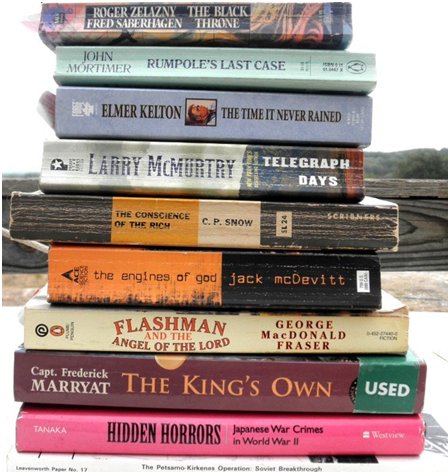
Leavenworth Papers #17 – The Petsamo-Kirkenes Operation: Soviet Breakthrough and Pursuit in the Arctic, October 1944, Major James F Gebhardt,Combat Studies Institute, US Army Command and General Staff College, 1948
Detailed examination of the Soviet success in the offensive attempting to identify what the US military should learn from it. Concluded light infantry to be the weapon of choice in arctic warfare. Examines the lessons learned by the Germans fighting under those conditions.
Good read for those interested in such matters.
Hidden Horrors – Japanese War Crimes in World War II, Yuki Tanaka, Transitions: Asians and Asian Americans Series, 1996
The Contents describes it better than I can:
1. The Sandakan POW Camp and the Geneva Convention
2. The Sandakan Death Marches and the Elimination of POWs
3. Rape and War: The Japanese Experience
4. Judge Webb and Japanese Cannibalism
5. Japanese Biological Warfare Plans and Experiments on POWs
6. Massacre of Civilians at Kavieng
Conclusion: Understanding Japanese Brutality in the Asia-Pacific War
Tanaka elaborates on the collaboration between the US and Japan to cover-up and downplay many of these events because of the post-WWII need for Japan as a strong Pacific partner against Communist aggression. Many were not investigated, prosecuted, even mentioned again in public media.
Fifty years after the Japanese surrender Tanaka writes: “Consequently, we Japanese have failed to recognize ourselves as aggressors, still less as perpetrators of war crimes. Moreover, because of the widespread perception of ourselves as victims of war, the notion of “victim” gradually expanded even to the point that the Japanese state was also seen as a victim of war.”
Reveals various deals made between the US Command under Dugout Doug and the Japanese commanders who conducted human lab experiments on POWs. Immunity from prosecution in return for everything learned in the experiments.
The King’s Own – Captain Frederick Marryat
Marryat’s a worthy read. He was a British Navy Captain when he retired in the 1820s and began publishing fiction works based on his experiences. His writings almost certainly were foundations for Horatio Hornblower and a lot of other sea yarn characters in fiction series during the 20th Century.
Marryat’s the daddy and granddaddy of them all.
Flashman and the Angel of the Lord, George MacDonald Frazer
The Flashman series is possibly the most laughing [and among the most educational] historical fiction series ever written.
I thoroughly resent Frazer dying before he wrote several more of them, though I re-read the ones he did write at least one time every decade. He’s welcome to resent me dying off without reading them again if it works out that way.
The Flashman Papers in Chronological order
Flashman [Britain, India and Afghanistan, 1839-42]
Royal Flash [England, 1842-43, Germany 1847-48]
Flashman’s Lady [England, Borneo, Madagascar 1842-45]
Flashman and the Mountain of Light [Indian Punjab 1845-46]
Flash for Freedom [England, West Africa, USA, 1848-49]
Flash and the Redskins [USA 1849-50 and 1875-76]
Flashman at the Charge [England, Crimea and Central Asia 1854-55]
Flashman in the Great Game [Scotland, England1856-58]
Flashman and the Angel of the Lord [India, South Africa, USA, 1858-59]
Flashman and the Dragon [China, 1860]
The Engines of God, Jack McDevitt
Respectable and readable sci-fi.
The Conscience of the Rich, CP Snow
Strange and unsettling book. Published during the 1950s the title’s an anachronism to such an extent the reader feels a bit lost at the beginning, figuring on some class warfare thing that would have found that name a decade later.
In fact, it’s probably the book Maugham would have written in Of Human Bondage if he’d been writing about a family of Jewish aristocrats in Britain during the 1920s and 1830s. The intractable controls imposed by the Jewish family on personal choices of family members in almost every facet of their lives.
Unsettling, but a worthy read.
Telegraph Days – Larry McMurtry
That original McMurtry book where he decided to become Louis L’Amour wasn’t bad, certainly a lot better than some that came later. I’d put Telegraph Days somewhere up near the top of his work since he became the great American novelist trying to push L’Amour out of the way.
The Time it Never Rained – Elmer Kelton
Good read about that pivotal time in the relationship between independent ranchers in the west and the US government, coincident with the drought of the 1950s.
Rumpole’s Last Case – John Mortimer
Another good Rumpole. What more needs saying?
The Black Throne – Roger Zelazny and Fred Saberhagen
Saberhagen books were always considered safe to buy at a quarter in the thrift stores until this one. I imagine it wasn’t him dropped the ball, but maybe it was just a pot-boiler for both of them. The writing craft is what’s at fault. Everything’s there, crisp dialogue, plot, characters with some depth. Good command of the language.
But something’s missing. I wouldn’t spend a quarter on it next time if I can remember when I see it again in a thrift store.
Retired university librarian. Oblique political humor of a liberal slant, frequently a smiler, sometimes a chuckler or horselaugher.
If you know more about politics than I do you might enjoy it even more. To me they’re just faces sometimes attached to names, but fun and interesting.
“Airplanes, cats, guns, war, the more than occasional rant about the party of the Confederacy, the spinelessness of the Democrats and crap about anything else that flits through the somewhat offbeat mind of an armed lesbian pinko as she slides down the Razor Blade of Life.”
I’m not crazy about a lot of the content, but the airplane pics she posts are worth the price of admission and reading the posts offers a different slant on things worth chewing on.
Visiting blogs since starting this one has been an unexpected learning experience. The general impression that almost everyone is concerned about the state of the world and the nation wasn’t a surprise.
But the fortified positions, the polarization, the nagging thought that a lot of people would gladly enforce their viewpoints on others at gunpoint if they had the option, is troubling if accurate. The middle ground, the concept of a loyal opposition, even the concept of people still potentially being okay if they have different political, religious, differing gender viewpoints just isn’t out there anymore. No live-and-let-live in the mix.
The level of rancor between opposing opinions approaches a level where it wouldn’t be too shocking if, say, a 9/11 happened in an environment limiting US victims to a particular political or religious bias, and sets of blog dialogues appearing to express:
“What the hell! They were all Tea-Baggers!”
Or,
“What the hell! They were all pinko liberals!”
Or Democrats, Republicans, Muslims, Catholics, Baptists.
There are already posts on blogs I visit saying, “Let God sort them out.”
I can’t help wondering whether I’m the only one troubled by this.
I used to know a guy, a good man, who was also an alcoholic of the sort you’d rather not be too close to. Jay was his name, an ex-Lieutenant Colonel in the US Army Air Corps, B24 pilot of um-de-umph hundred bombing missions over Germany during WWII. War hero.
By the mid-1960s Jay had a drinking problem bad enough to be placed repeatedly into the hands of the Texas Alcoholic Rehabilitation Commission to dry out. Finally, in those days a bright new shining light among the mental health medicos was the pre-frontal lobotomy, was chosen as the tool of choice for curing what ailed old Jay….. But the unfortunate side effects were that a lot of him ceased to be Jay.
But those wise medicos knew what was best for him, they’d read all the recent advances and articles, so they strapped him down to a gurney and inserted electrodes on his temples and shot the juice to him. Several times.
I’d heard about all this, thought it was fairly awful, but what the hell. A few months later I was among a group of young folks friends of his who got invited to spend a day on Galveston Bay cruising around in Jay’s cabin cruiser down there.
Jay was wearing a tee-shirt that proclaimed, “I’d rather have a bottle in front of me than a prefrontal lobotomy”. And he did.
It finally killed him, alcohol, the lobotomy didn’t change that…. but he always believed, afterward, that it was a fairly shabby thing for society to have done to him, that lobotomy. Deprived him of his right to make his own mistakes. At least, it attempted to.
If you boil all that down and scrape the leavings off the bottom of the pot, that’s about the way I feel about the likely outcome of the undercurrents at work in this country.
Someone’s going to get the upper hand, one side or the other.
The ones left holding smaller bag might need a bottle to soften up the resulting enforced prefrontal lobotomies and attitude adjustments.
A Great Cultural Revolution
If old Jay were alive he’d probably buy a tee-shirt.
I think my mom would have made a deal with the devil for one of these in 1947. She didn’t get one, nor anything else of the sort until around 1957, but I don’t recall her washing clothes in a washtub after the early 1950s. From around 1954 until she got a home washing machine she went to the Laundromats with most of the other ladies. I’m guessing this one was probably manufactured in the late 1940s.
I’d watched in one of the thrift stores in town for some while, them asking $55, then marking it down to $35, nobody interested enough to plug it in and find out if it worked. But after it had been there long enough to cause me to figure they were getting tired of seeing it I plugged it in.
“HUMMMMMM!”
No vibration, nothing moving, just a clicking of the spring loaded timer and the sound of an electric motor trying to push the immoveable object. I unplugged it more quickly than I plugged it in, carried it up to the cashier and told him it didn’t work, told him what it was doing and what was going to happen if someone plugged it in and left it trying to run.
“We can’t fix it. We don’t have a repair department.”
“Yeah, maybe nobody can. They haven’t manufactured parts for it in 50 years. But maybe someone can.”
“Do you want to try?”
“Maybe. How much do I have to risk betting I can?”
He made me an offer I couldn’t refuse.
The only tool required to get it running was my foldup Leatherman, oil, and a rag. It’s out there washing seven pairs of my jockey shorts at the moment. I don’t envy it.
The discovery, beginning about 15 years ago, that I’m not anywhere near as smart as I think I am, and that I’m a world away from knowing as much as I think I know, has been unsettling and somewhat disruptive. That realization, along with the concurrent observation that an overwhelming piece of what I do know is wrong, hasn’t been as easy to incorporate into something useful in my life as you might think.
Before my smarts and knowings all started to unravel I was a fairly impressive person. I could explain, without you even asking me to do it, just about anything you might be wondering about. I knew what you ought to do with your life, how your life became the lousy, empty mess it appears to me to be, and what the government ought to do about anything it had the power to do. I knew what men ought to do about women and other men, and I knew what women ought to do about men and other women.
I began to get screwed out of that when out of the corner of my eye I noticed some aspects of my own life that I wouldn’t recommend to anyone. It crept into my consciousness that I’d made a lot of choices and given a plethora of advice to others that simply didn’t have a lot of merit.
This didn’t come all at once. It started as a trickle with a lot of seemingly small matters I couldn’t help noticing, which I tried to compartmentalize and ignore, same as everyone else does. But eventually I couldn’t keep them inside the fences I’d built for them. They were forever sneaking over mingling with others I’d locked up in file drawers I’d clearly marked, “TOP SECRET – DO NOT OPEN”.
This forced me to try to herd them back where they belonged, but in doing so the others tagged along, dancing and clowning and shamelessly demanding I recognize they existed, wanting me to scratch them behind the ears and pay some attention to them.
I figured the easiest approach would be to have a look at their blood lines and shoot the mongrels and mutts, but keep the purebreds. This required an examination of how I came by all that knowing of every description.
It rocked me to my boot heels to find almost every one of those certainties came from something someone else said, and I believed it, hugged it tight, and called it my own. That wouldn’t have been so bad if I hadn’t then asked myself where the people I’d heard it from came to own it. Imagine my surprise when it dawned on me they’d also heard it from someone else, who heard it from someone else.
Gradually, I realized I hadn’t done much thinking for myself. In fact, I hadn’t based much of anything on the evidence of my own eyes and observations. Strangers with the voice of authority told me many things other strangers had told them and I frequently accepted it as gospel. I often abdicated my intelligence in favor of those strangers many times removed. Without consciously deciding to do so, I treated truth as though it relied on a vote-count of humans to decide its own nature.
I hate it, discovering something like that. The last 15 years of dismantling a system of giving strangers default authority to control my mind and my life hasn’t even been entirely successful. I still constantly find the opinions of strangers creeping in, waving their arms around, trying to grab control so I won’t be stupid anymore.
But I’m determined to keep at it. All those strangers saying things back and forth to one another and believing it over time hasn’t done much good for the people who believe it now.
And it never did me a damned bit of good, even though I was smarter when I believed it, too.
Old Jules
When I went back to my hometown as a young soldier on leave, Christmas, 1961, it was enough of an event to bring my granddad in from his hardscrabble farm.
We sat around the living room, my mom and step-dad, sisters, and granddad, mulling over the war we were certain to have with the Soviet Union soon.
At that point I was as well-educated (by usual standards) as any of the people in the room and all our ancestors by virtue of having completed high school prior to entering the Army.
In talking about the (then current) brink-of-war crisis my granddad muttered something in Latin. My mother and step-dad cocked an ear.
“Cicero’s probably not the best place to gain any wisdom about America today,” My step-dad frowned and adjusted his dentures, followed by another Latin quote.
“Neither is Pliny.” My mom shook her head at both of them.
Young man who knew everything worth knowing, I was.
I didn’t know any Latin, didn’t know who Pliny was, nor Cicero.I was as ‘well educated’ as anyone in the room and considered my knowledge sufficient to have a wealth of valuable opinion on the issues of the day. I felt a vague discomfort with them spouting Latin back and forth at one another and naming people I knew nothing about.
I had reason to recall that conversation in 1976, the US Bicentennial year, when the state of America and the state of education was being examined and bandied about. Thoughtful minds were concerning themselves that Americans were becoming illiterate and ill-educated.
The thinkers of 1976, asked Americans to ask themselves whether they were better educated than their parents and grandparents, despite many more years spent in formal educational institutions.
The general answer in polls was that Americans considered themselves more canny, better informed than their parents, though weaker in most areas of knowledge once considered essential for a person to be ‘educated’.
The moving finger writes and then moves on.
Are you better educated than your parents and grandparents?
Better educated?
Less well-educated?
Know more about everything but less well-educated?
Less well-educated, less well-informed than parents?
Smarter and with more common-sense without Latin, history, philosophy, and other useless studies?
74 years old, a resident of Leavenworth, KS, in an apartment located on the VA campus. Partnered with a black shorthaired cat named Mister Midnight. (1943-2020)
Since April, 2020, this blog is maintained by Jeanne Kasten (See "About" page for further information).
https://sofarfromheaven.com/2020/04/21/au-revoir-old-jules-jack-purcell/
I’m sharing it with you because there’s almost no likelihood you’ll believe it. This lunatic asylum I call my life has so many unexpected twists and turns I won’t even try to guess where it’s going. I’d suggest you try to find some laughs here. You won’t find wisdom. Good luck.

 I don’t know when we began giving power to strangers. I think it’s a relatively recent phenomenon. Maybe we watched too many Westerns during our formative years, learned from those steely eyed men in saloons that what strangers think about us is worth a gunfight.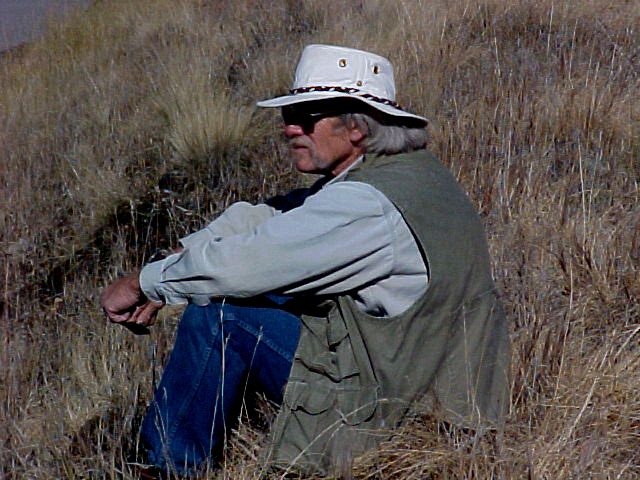


 So Far From Heaven

