Category Archives: 1950’s

The Hitch-Hiking Hoodoos

I was reading clickclack gorilla’s hitching story and it dawned on me what’s going on in Europe with hitch-hiking is entirely different from it in the US.  Evidently thumbing rides there still includes ‘respectable’ people.  It wasn’t so long ago the same was true in the US.

As a youngster and young man I hitched across the US up-down and sideways more times than I’ve traveled it any other way.  In the military it used to be the most common way soldiers traveled, but it was also a legitimate way of getting to a destination for anyone else, as well.  When I got out of jail for riding trains in Rochester, New York, in 1964, the judge at the arraignment told me, “Don’t you know hopping trains in New York is a FELONY?”

“No sir.  I didn’t know that.”

“Is there someone you can contact to get money for a bus ticket to get back to New Mexico?”

“No sir, there isn’t.”

“I’m going to say this, then I’m going to let you go.  Hitch-hiking is only a misdemeanor in New York.”

After I was released a police officer drove me out to the Interstate and let me off at a freeway entrance.  And way led onto way.

All that hitching as a youth was an adventure I suspect a lot of people alive today haven’t experienced.  Every trip was a hundred stories, including the one above.  And every hitch-hiker I’ve picked up over the decades since [I still do] has been a story in itself.  I keep a case of Dinty Moore stew in the truck and usually give them a can or two if they’ve convinced me they’re hungry.

Today people are generally frightened of hitch-hikers, or just don’t believe the potential feel-good rewards of picking them up is worth the risk of getting robbed, assaulted, or just being trapped inside a vehicle with a person who smells as though he’s been on the road a while is worth it.  I’d opine they’re thinking smart.   I’d be lying if I said I haven’t had some close calls, both hitching, and picking up hitch-hikers.

But I do it anyway, and I’m glad I do, glad I have, wouldn’t trade having done it for the alternative.

I’m thinking I might throw in a few of those hitch-hiking, hitch-hiker tales on this blog occasionally.  Some are chilling, some are strange, but every one is unique.

Old Jules

CREEDENCE CLEARWATER REVIVAL – SWEET HITCH-HIKER
Did You Ever Fake Reading a Book?

The e-newsletter  Shelf Awareness  occasionally includes author interviews where a standard question is “What book have you faked reading?”   This brought to mind something I can tell  now because I don’t think they can take my high school diploma back from me.

When we students who began school in the first half of the 20th Century in Portales, New Mexico entered Junior High in 1957, they explained a lot of what we had to get done during the next few years if we wanted to graduate from high school. If those years passed and we hadn’t done each thing on the list we’d be pumping gas the remainder of our lives.

Among the various academic requirements was Major Book Report every year. I didn’t see this as a problem up front. I was a heavy reader and couldn’t imagine a deadline arriving on that one without me nailing it in plenty of time.

But somehow the 8th or 9th grade came along and spang, there I was, with Mrs. Wilbanks standing before the class announcing day-after-tomorrow our big book reports were due. Suddenly I was in a panic. I’d read plenty of books, but none that came to mind as qualifying for a big book report. Those normally had to be cleared with the teacher ahead of time, which somehow slipped by me for one reason or another.

I don’t know what made me decide to invent a book that didn’t exist.  It seems insane all these decades later.  But I suppose  I concluded I just hadn’t read any Big Books after I went to the library and saw the lists of the ones other kids had been thumbing through and dogearing.

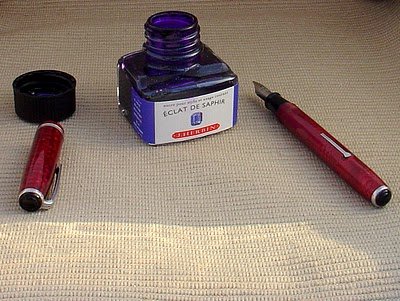
But I got out my Esterbrook fountain pen with the turquoise ink and set to work inventing a Big Book I’d read.  “Chessman”, by Borden Deal .  It was a good book and I regret Borden Deal never wrote it.  I turned in the book report on time and sighed thinking I’d cheated death one more time.

A few days later Mrs. Wilbanks brought the graded book reports in and prepared to pass them back, but she cautioned us to just look at the grades and corrections, then hand them back in.  They’d go into our permanent files with our other Big Book Reports until we graduated High School.

Then she pulled out a book report from the stack I could recognize from my desk near the back of the room.  Sloppy, turquoise handwriting on yellow paper.

I don’t give A+ on Big Book Rep0rts, but I’ve made an exception this time.”  She lighted up the room with her smile and gestured toward me with it while I sank into my seat.  “I believe this might be the best Big Book Report ever written by one of my students.”

Knowing that book report was up there hanging over my head as evidence bothered me a lot.  When I left Portales and headed for another school my 11th year, I hoped they’d let me carry my records so I could snag it, but it wasn’t to be.  Next year I changed schools again and again didn’t get an opportunity to steal it back.

Not until I graduated in 1961 did I again get my hands on my Big Book Report on “Chessman”, by Borden Deal.  I packed it away with all my other important papers and kept it until Y2K, when it went into the fire after one last read.

If you haven’t read the book I recommend you write it.  It’s a winner.

Old Jules


The Coasters – Charlie Brown
http://youtu.be/dS9sOCRH3MU

“Number, Please?”

A few years ago my cell phone fell out of my overalls pocket into an irrigation ditch when I reached down to worry a valve.  Sank spang to the bottom, but came out seemingly okay after I dried it out.  But was never the same afterward …. grew progressively worse until it was useless for a couple of months.  I waited, figuring it might come back, or that I might decide I just didn’t need a cell phone.  But I’m a pansy-arsed modern man these days and I finally just decided to give in to progress.

Got myself a new one.  Gives me something of a start, the stuff on that new phone.  Rattles me to the core that we’ve become so futuristic Dick Tracy-esque.

This thing will take pictures!  It will surreptitiously  take videos or recordings of the cop who’s leaning over your car window acting the way cops shouldn’t.  It will do all manner of things I don’t know how to do with it yet and maybe won’t be able to justify learning.  Gives me the fantods thinking about trying to figure that thing out.

Reminds me of when I was a kid and we got our first phone.  They were teaching me about it, how you put this end to your ear and that end to your mouth and listen for an operator to say, “Number, please.”

Then how you say, “3621” if you need to call Jeanne Ann and Hollis because someone had an accident and you need to get help.  Or when you call KENM radio station to give the answer to the College Dairy Quiz and win movie tickets for the family.

And how you stay the hell off of it in all other circumstances.

I was a precocious kid and had a tendency to get us all to the movies pretty often, but my problem was that when that operator came on I usually blew up.  My mind went blank, I’m ashamed to say, when I heard that beeeeeeutiful female operator voice.

Fortunately, the operators got on my side after a while, with the College Dairy Quiz.  At 6pm when I lifted that phone they’d just say, “I’m ringing them, dear.” without me having to say anything.
This one won’t do that, but it’s still okay without any operators.

Note:   I recently came across this, written before I left New Mexico.  Tweaked it a bit, but nowadays it’s foreign to me because it’s “NO SERVICE” when you click the button.

Old Jules

Johnny Rivers– Memphis
http://youtu.be/V1kGuUZUgI0

Could you choose to live on the street?

That little farm you see down there is the place where I spent a good many of my formative years after my mother remarried and we moved to Portales, New Mexico. As you can see, we’d had a pretty good year for hay, which dates the picture to 1949, or 1950, before the big drought hit.

When we sat outdoors in the evening the red neon lights blinked “Schumpert Farm Supply” across the top of the long building running diagonally to the railroad tracks until I went to bed. From my limited perspective the Schumperts were ‘rich’. In that small town that railroad running through didn’t identify who was rich but it did identify who wasn’t. That little farm I lived on and no other property that side of the tracks had any rich people.

In the rigidly established social structure in Portales business men generally came down on the side of being ‘rich’, along with professors at Eastern New Mexico University, bankers, physicians, preachers, school teachers and a few elderly ladies who lived in houses big enough to be thought of as mansions. Farmers, ranchers, Mexicans and people who worked in the businesses weren’t ‘rich’.

I doubt the adults paid a lot of attention to the social strata, but school teachers did, and the kids adopted it more firmly than a religion. Rich kids were easy to recognize because they made good grades, weren’t hassled by teachers, got elected to everything, brought cookies to school Christmas, Easter and Halloween, and had the best bicycles early, cars later. For the most part they were insufferable snobs.

But not the Schumpert boys. I was in school with Stephen and Billy, and there was a precocious younger one I don’t recall the name of. Stephen was a year older than me, Billy a year younger, and there wasn’t a breath of snobbery in the entire family. Stephen, particularly, had a knack for getting in just the right amount of just the right kinds of trouble to keep from qualifying as a goody-goody. Good solid boys from a good solid family. I had a lot of respect for all of them.

I left that town early and stayed mostly away for several decades. I lost track of almost everyone I ever knew there.

But after Y2K when I moved into town to Grants, New Mexico, I came across Billy Schumpert being president of a bank there. Naturally we got together and talked about whatever we each knew that might interest the other. Billy’s the one told me what happened to Stephen.

Stephen worked as a bank examiner several years, then became president of a bank in Colorado, maybe Denver. Had a regular family, seemed to be destined to follow a career path and eventually retire. But one morning he didn’t show for work late in the 1980s. Nobody had any idea what became of him. He wasn’t a drinker, didn’t use drugs, didn’t have a ‘secret life’. He just vanished for no apparent reason.

Over time the police and other agencies gave up, assumed he was the victim of some crime, dead. But the family put up a reward for information about Stephen, sent private investigators and others searching for him. Eventually, six, seven years later they located him living under a bridge in Seattle.

Over time everyone who loved Stephen went up there trying to talk him into returning to real life, return home.

“No! I had enough!” That’s all he’d say and he never came back.

I’ve pondered Stephen a lot during the years since I learned what he’d done with his life. In some ways I think I understand, though I’m not sure. My own life has been a long series of reversals in direction. It’s meandered, cutting as wide a swath of human experience as I was able to pack into it. So, from that perspective, I can gnaw at the edges of understanding Stephen’s behavior. But I was a wild kid and I’ve always pushed the envelope, all my life.

Stephen was ‘tame’.

I’d like to see old Stephen again if he’s alive. He’d be 70, 71 years old now and maybe wiser than he was in the 1980s when something told him he’d had enough. I’d like to sit on the porch and talk with him a long time to come to know how he came to make his choice to isolate himself, to impoverish himself.

Simon & Garfunkel – Richard Cory 1966 live
http://youtu.be/euuCiSY0qYs

How Do You Say the Pledge Nowadays?

It’s come to my attention that school is starting already. I recall being in a school auditorium as a youngster when they added the words,
‘under God’ to the Pledge of Allegiance. Mr. Doak and Mr. Burke, Civics and
History teachers, were up there trying to get it right while teaching it to a couple of hundred kids.  Kids who were still on shaky ground from learning it the first time. That would have been in the mid-1950s:

Mr. Doak:  “Okay.  This isn’t complicated and shouldn’t take long.  Just say it like you always said it, but after, ‘one nation’, pause, then say, ‘under God’, then pause again before going on.

“Try it.  I pledge allegiance to the flag of the United States of America and to the Republic for which it stands, one nation,

under God,

with liberty and justice for all.”

Cacophony of 300 kids lost mid-way through.  Mr. Doak pauses with a frown waiting for the noise to die down. Mr. Burke’s frowning too.  He nudges Mr. Doak.

Mr. Burke:  “Eh, John, hold on a minute.  I think it’s supposed to be ‘one
nation under God’, not ‘one nation with a pause, under God with a pause.”

Mr.Doak:  “Ralph, look at it.  The comma’s in front of and after ‘under God.'”

Mr.  Burke: “John, that doesn’t mean it’s supposed to sound like some run-on sentence.  This is the Pledge of allegiance!”

Mr. Doak:  “Ralph, I know what it is.”  Doak scowls and turns back to the 300 lost faces.  “Let’s try it again now.”

Burke:  “No, no, no, John.  Let’s try it one time my way.”

Doak grinding his teeth:  “Ralph, we have to get this over with.”

Burke:  “I’m not the one holding it up John.  We’ve got to get this right.  What you’re telling them is wrong.”

Doak:  “Who’s in charge of this, Ralph?  When Livingston said one of us has to do it you didn’t volunteer to get up here and explain it.”

Burke:  “Neither did you.”

Doak:  “No, but I eventually agreed to.  You just agreed to come up and help.”

Burke:  “Never mind.  Tell them to do it any way you want to.  The Pledge is yours!  I have nothing more to say.”

Doak:  “Good.”  Turns back to the 300.  “Okay, let’s try it again.”

The question of whether the framers of the Constitution would have thought a child having to say, ‘under God’ is a fairly weird one, by hindsight.  But not because the placement of the commas is a major issue.

The reason it’s weird lies in the fact that the question of whether this nation
is indivisible was never considered by the Supreme Court, never mentioned in the US Constitution.  The founders put off any debate about the indivisibility issue because every member knew that no state would agree to become a member if the decision was irreversible, whatever the circumstances.  So, while it was discussed, it was also pointedly not discussed in loving detail.

Half century later it was discussed, however.  The discussion began at Fort
Sumter and ended with Lee’s surrender at Appomattox Courthouse. That avoidance by the founding fathers of an inevitably crucial issue was decided by force of arms, one half, (the half possessing an army) of the nation believing it was indivisible, the other half believing it was divisible. The stronger half forced the weaker half to accept indivisibility at gunpoint after a lot of bloodshed.

Thus, the Pledge of Allegiance came into existence after Lee’s surrender at
Appomattox. The winning side forced each surrendering Confederate soldier to say a pledge accepting indivisibility as one of the precepts of citizenship, followed afterward by many generations saying the pledge from early childhood since then.

But the US Supreme Court was never asked whether that Pledge acknowledging indivisibility was Constitutional, which might have saved a hundred thousand lives, legs, arms, and a whole different approach to US governance.

Instead, they’ve been asked repeatedly to decide the easier matter of whether it’s a violation of a child’s civil liberty to utter the words, “Under God”.

Old Jules

Civil War Songs – Oh I’m A Good Old Rebel
http://youtu.be/mO2cL64Fbaw

Battle Cry of Freedom — Civil War song on mountain dulcimer
http://youtu.be/K_jANE2QPFE

Fife and drum – Battle Cry of Freedom – 145th Gettysburg
http://youtu.be/eAsD4Bg0st0

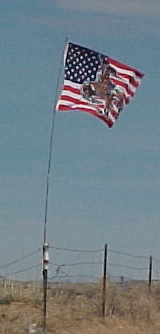
Note:  The flag with a Native American waving a weapon flies summertimes near the booths along IH10 as it passes through the Laguna tribal lands.  Although the Laguna universally despise the Acoma neighbors neither tribe has engaged in warfare against anyone since 1597. 

Give a Person a Fish

Hi blogsters:

I never see that phrase about fish without a flash of memory.

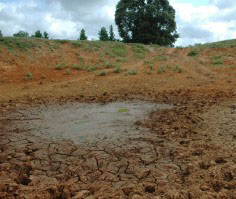
During the 1950s drought stock ponds were drying up all over the southwest.  There came a day a lot like this one, though it was probably warmer, when a kid named David Cagle and I were wandering around the ruins of cow country and came across a pond that was maybe five acres of surface and about three inches deep in water.  Every square foot of water had a fish flopping in it.  I’ve never seen anything like it.

A few hundred yards from the pond was an abandoned barn where we’d noticed an old galvanized washtub someone had probably used to water calves when there was still water, or feed them when there was still food.  We hoofed over to that barn and snagged the tub, waded into that fish and cow-mud calf deep throwing fish into the tub.

We glowed over that tub full of fish all the way home, him on one handle, me on the other, thinking how deeeeeelighted our folks would be with the treasure we were bringing them.

Both of us smelled a joyous combination of cow-mud and fish when we got to David’s house, went in through the kitchen door and watched his mama shriek even before she turned around and saw the fish.

“Get those fish out of this house!”

We got them out and she followed us into the yard to hose him down before she’d allow him inside.  Me, she ordered to take those fish with me and head down the road.

My own mom took a more circumspect view of things, mainly because she wasn’t home when I got there.  I cleaned myself up and filled the kitchen sink with all the fish it would hold and started killing and gutting them.  The job was far enough along to make quitting a moot point when she got home.

I gutted a lot of fish over the next couple of days, though I did move the operation out into the back yard.

My mom’s one of those kind of people who remember such things after she can’t remember her own name.  I’m not sure I’ve ever returned to her company during the past 50 years without being reminded of it.

Give a person a fish and he might not appreciate it, but he won’t starve until the fish is digested.

But give a person a fishing pole and he’ll almost surely hook an ear or nostril before it’s over.

Old Jules

Sons of the Pioneers–  Cool Clear Water

Woody Guthrie–Dust Bowl Blues
http://www.youtube.com/watch?v=jQYKJaWuj0Y