Category Archives: History

Picking Your Own Hills Worth Dying For

“Hey!  Congratulations man!  You picked a hill worth dying for and just got your leg shot off instead of dying.  Cool!”

“I didn’t pick it man.  I don’t know who picked it.  Maybe the General.  Maybe the Colonel.  Maybe the other side.  I din’t do any picking.  Nobody asked me anything.”
“Wow.  You got your leg shot off and didn’t even make your own choice about whether it was worth the effort?”

“Higher than my paygrade.  Not my job to figure out whether hopping around on a stump of a leg the rest of my life or spilling my guts across the landscape is worth why they think I should do it.  It’s up to the big brains to decide that.  The Generals, and Colonels and Lieutenants.  The people who see the bigger picture.  I’m not into long-term thinking.”

“Sheeze man.  Tough gig.”

Bloody Valverde.  Measured in percentage of casualties among those participating, the second bloodiest battle of the Civil War.
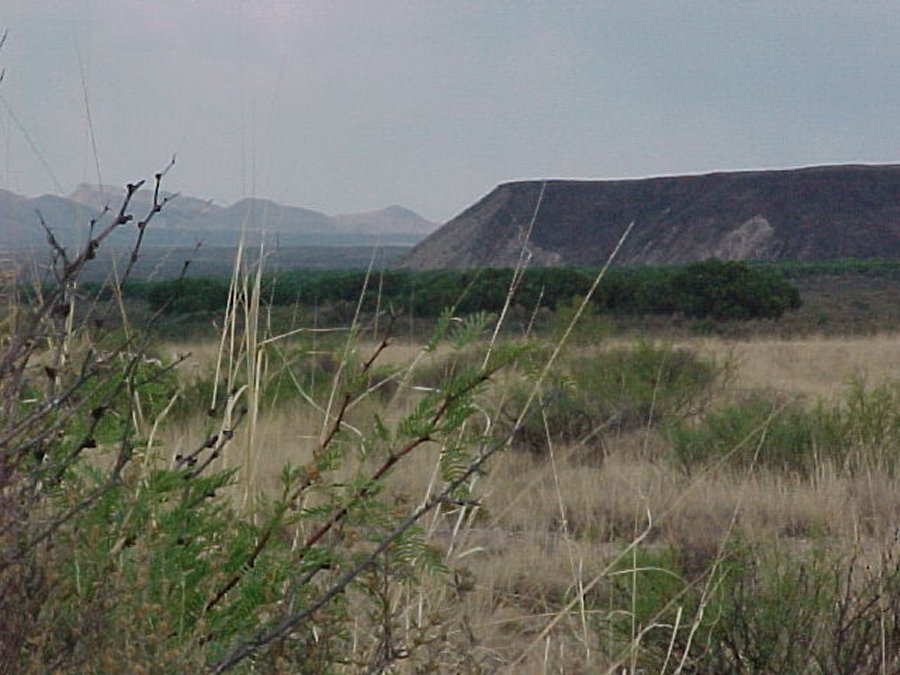
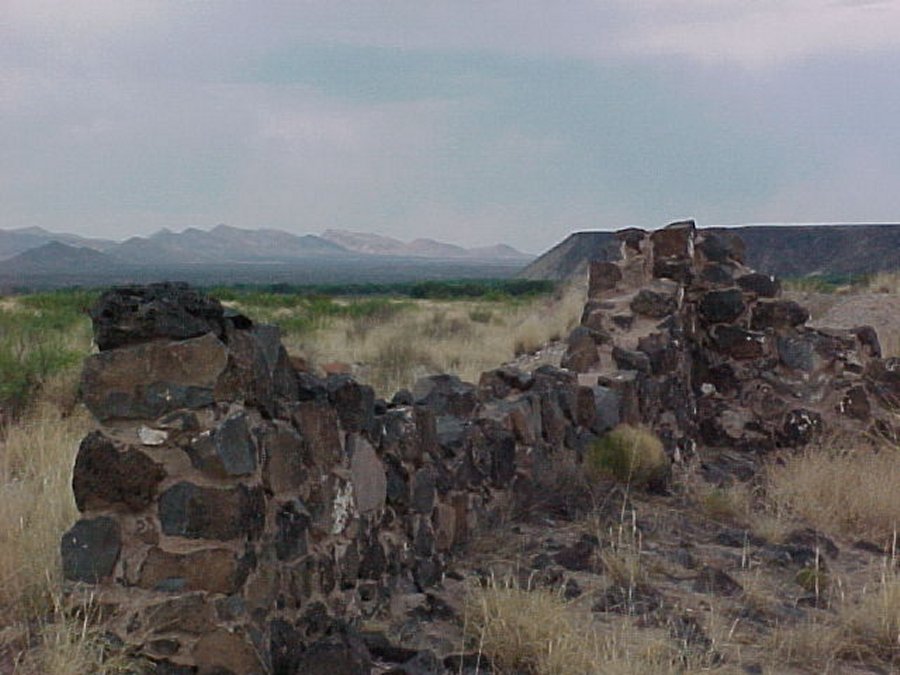
Texas Mounted Volunteers were on that mesa, coming down to cross the Rio Grande just below the left end.

Federals and New Mexico Volunteers were below and across the river trying to keep them from doing it.
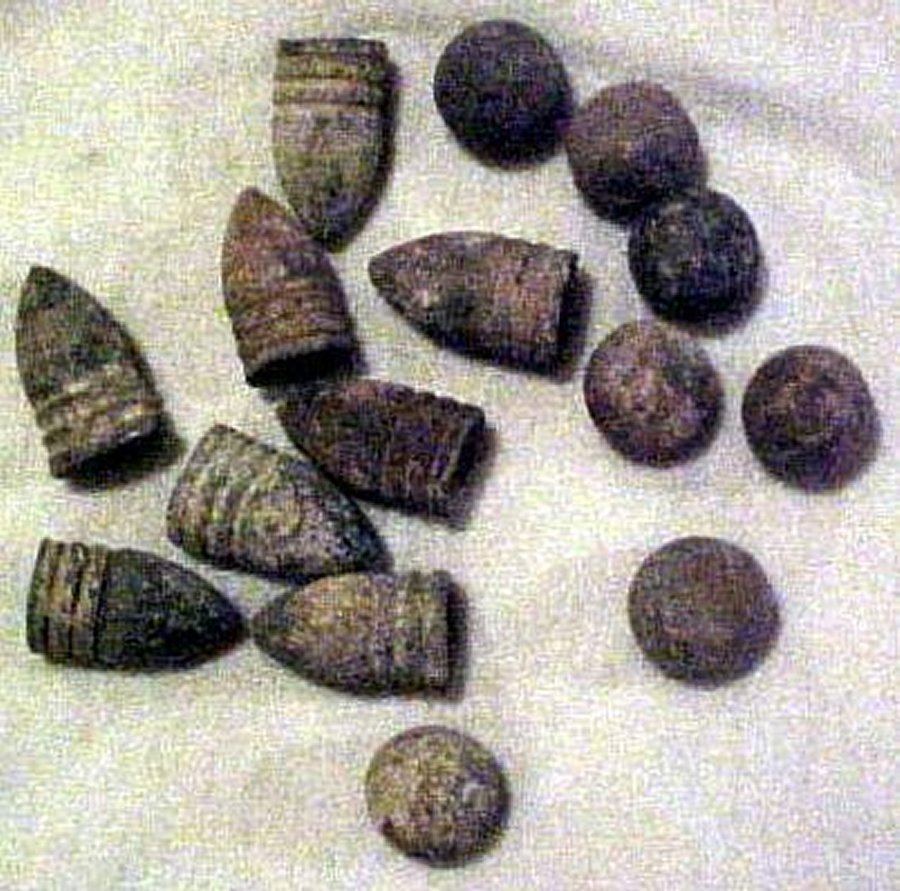
You can’t get over there anymore without breaking some laws.  The railroad police will arrest you for trespass if they catch you trying to cross the RR bridge.  Last I heard, Ted Turner owns the ranch the mesa is on.  He has riders out there who’ll haul you off for trespass if the RR police don’t get you.

A few cows graze up there and Ted Turner can’t have people up there bothering them by poking around among the pockmarked hideyholes and artillery placements.  A lot of men on both sides died so Ted Turner could keep the right to keep you off his holdings and bothering his cows.
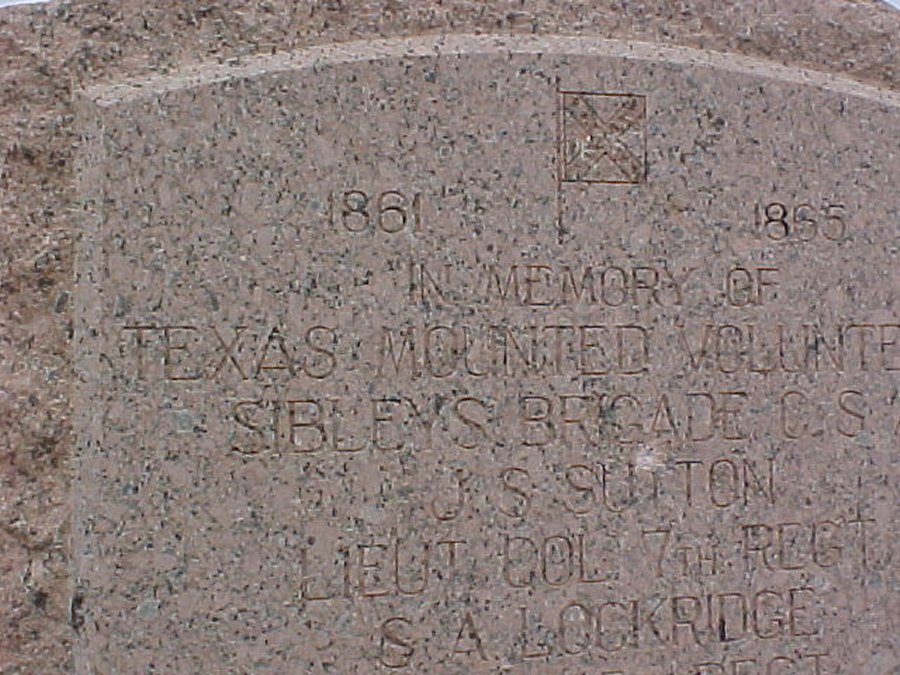
If you sighted across the top of that monument across the end of the mesa and drew a tight bead you’d be looking at a mushroom cloud about 50 miles away when they fired off the first atomic bomb in 1945.

But by 1945 the government and scientists all finally realized the place wasn’t worth anyone getting excited about, getting legs shot off or dying for.  By that time they knew it wasn’t worth anything except for blowing up with an atomic bomb.   You can’t go over there, either, for what that’s worth.
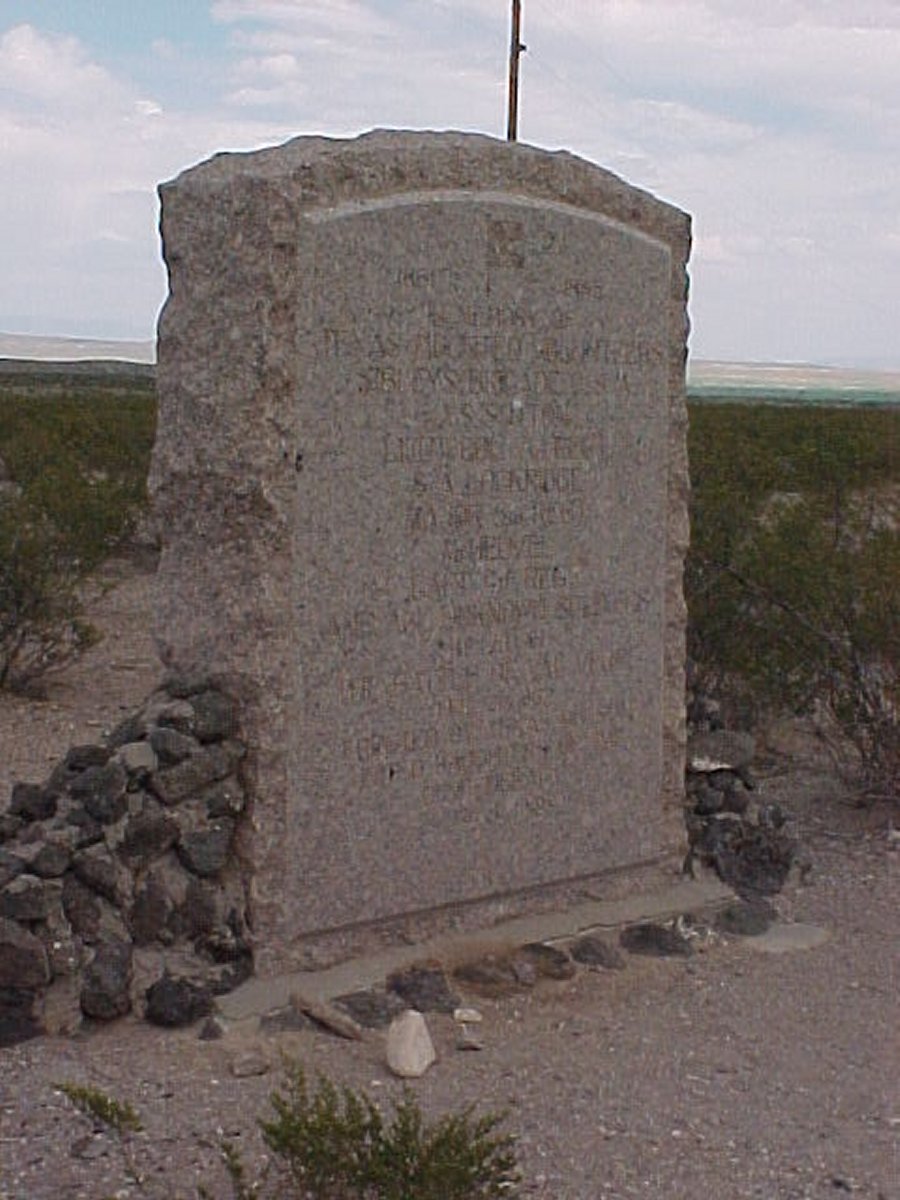
Pretty big hunk of granite for such a little event.  But nobody much winds around those desert roads to look at it.

I used to have a pretty nice cannon ball that came off that battlefield.  Wonder what ever became of it.  Hope I didn’t scare any of Ted’s cows or stir up any future atomic bomb attacks on the place by the US Government.

Old Jules


A Search for the Meaning of Life

In 1992, when my 25 year marriage dissolved and I moved to Santa Fe, New Mexico, one of the projects I was determined to pursue was an attempt to understand the meaning of life, or something in the neighborhood.  I did a lot of thinking and planning about how to approach the matter in a way I considered the most likely possibility for success.

Part of the project involved learning everything I could about religions and metaphysics, and I began with an intense study of Christianity, early Christian history, pre-Nicean Christian documents, practices and beliefs at a time before anything qualified as Canon.  For a couple of years I submerged myself in the subject.

During the same time period I got up 3:30 am and spent a couple of hours watching Christian television to get a better understanding of what was going on with Christianity today.  I found I got a lot of enjoyment doing it, and I discovered one I liked particularly well and thought of almost as an old friend.

Garner Ted Armstrong.  I spent a year or so in my early 20s working for Rainbow Baking Company in Houston loading bread trucks off a conveyor belt 12 hours a day, and I filled some of the solitude listening to Garner Ted over a portable radio and earpiece.  I considered him one of the best rhetoricians of the 20th Century already when I found him preaching on television.

But what I hadn’t realized was his level of scholarship and open mindedness about Christian history.  The fact I was submerged in it at the time led me to write a letter to him asking his take on some issues I’d found ambiguous.

From that time until his death several years later, Garner Ted Armstrong and I indulged in exchanges of 20 page letters discussing the nuances of Christian history, Christian texts, the implications of the Nag Hammadi codices, news coming out of the Dead Sea Scrolls, where Christianity had been and possibly where it was going.

A truly strange time of my life, though just one of those side-trails that had little to do with my coincident search and research involving a lost gold mine, nor with understanding the meaning of life.  The former, I never found, and the latter, when I found it, didn’t need elaboration.

I still miss old Garner Ted Armstrong and those long letters.

Old Jules

Redcoat, by Richard Holmes – Book Review

When an author succeeds in creating a page turner from a segment of history beaten thoroughly to death by a thousand other historians and writers of historical fiction there should be some background music and applause.


Richard Holmes has succeeded. 

Redcoat follows the British soldier through the Seven Year War, the Peninsula War, the wars in the Americas, the wars in India through the Sepoy Mutiny and Afghanistan to the Crimea.    And every page contains some new surprise, some fragment of detail the reader won’t have encountered previously. 

Ever wondered where the idea for Hornblower’s fascination with the Lady Barbara Wellesley most likely originated?  Illustrations:  “Below:  The Marquess of Anglesey was a talented cavalry commander who, when Lord Paget, beat the French at Benavente and Sahagun.  Unfortunately he ran off with Wellington’s sister-in-law and could not be re-employed in the Peninsula.  As Lord Uxbridge he lost a leg at Waterloo.”

Or, page 154, Lt. Arthur Moffat Lang, “Many are given to drink and drunkenness like the Germans.  Foreign wines on account of their being accustomed to beer, does not agree with them, and in hot countries over-seas brings on burning fevers . . .”

Holmes has sifted through the chaff of history to cover the subject thoroughly on the outside in a 427 page epidermis, along with constant peeks at the liver, the bladder, the spleen and the dirt under the fingernails of the British soldier:  A man as limited and flawed as the Brown Bess musket he carried into battle, but one who experienced a surprisingly long series of successes where failure would have been far more appropriate.

‘Christopher Duffy suggests of the eighteenth century that:  “The most pronounced moral traits of the English were violence and patriotism.”‘

If that sounds familiar today it might be worth pondering whether it’s part of the package the 20th Century delivered to your own doorstep. 

Excellent work and a worthy read, Redcoat.

Old Jules

An Addendum About My Personal View of Mormons

I didn’t say this in the post because I didn’t think it needed saying, but I think it might.

I’ve got nothing bad to say about Mormons.  I’ve never been ill-treated by them, cheated by them, lied to by them so far as I know.  The ones I’ve met have generally been solid, hard-working, honest people.  Seemingly more so compared to the impression I’ve been left with in my seven decades of experience with the remainder of the population.  Christians, Gentile, Jew, atheist, Muslim and agnostic.  Even Buddhists, Taoists, Hindu, and the herd of New Age Gurus.  Even Hopi Elders and Ambiguous Native American Shamans.

My interest in Mormons came to being with the gradual realization that the parties involved in the lost gold mine I searched for so many years were predominantly Mormons.  It was a factor left entirely out of the legend as it came out of the 19th Century and it required years of research to uncover that fact.  The cousin of one of the central characters was evidently the second wife of Brigham Young.  Family names of the lost gold mine participants also show up among people involved in Mountain Meadows.

The timing on the lost gold mine incident and that of the Mountain Meadows massacre originally drew my interest.

What Mormons believe about polygamy, same-sex marriages, almost anything at all has no bearing on my impression and generally benevolent attitude toward them as a whole.  In areas where we disagree I’m willing to forgive them for being wrongheaded, same as I try to forgive everyone else who disagrees with me.  Otherwise I’d be forever having to keep score of who was right in this world, and who is wrong.  It just ain’t worth the effort even those relatively few areas where I can’t restrain myself from having an opinion.

Old Jules

The Mountain Meadows Massacre – Juanita Brooks

I’m re-reading The Mountain Meadows Massacre, by Juanita Brooks at the moment.  Twenty or thirty years ago when I submerged myself in everything I could find about the event I concluded the Brooks work was the best out there.  When it came into my hands again recently I held back beginning it again to savor the anticipation.  Now I’m midway through it again and it’s as fine a piece of research as ever.

Brooks was a Mormon lady, which made the Mountain Meadows Massacre a work of courage on her part.  The LDS church had spent a century suppressing the realities about the mass homicide of an estimated 60-120 men, women, and children of the Fancher wagon train journeying through Utah to California in 1857, by Mormons and members of a tribe of Native Americans.

The event happened at a time when there was plenty of massacre going on across North America, but was unusual for a couple of reasons.  First, because the people involved were Mormons killing Christians, as opposed to Christians killing Mormons, and the motivation wasn’t acquisition of territory belonging to someone else.   Second, because the circumstances surrounding the massacre involved ‘normal’, dutiful, pious people behaving in ways anyone outside the context could only consider far from normal.  Believing the killing was defensively justified and necessary.

Brooks establishes clearly and thoroughly that the heads of the LDS ordered the massacre and that John Lee, who’d been hanged for it and handed full responsibility by the LDS Church, was carrying out those orders.

An excellent read for anyone interested in history, human behavior, duty, and the ability of the human mind to justify anything it applies itself to.

Old Jules

Sweatsocks, Milo Maize and Microwaves

Morning readers.  I’m obliged you came by for a read.

Some of you are too young to remember why microwave ovens and electricity were invented.  It’s a fact worth knowing.

The pioneers, when they invented this country, lived mostly in dugouts.  Dugout canoes in the summer, dugout houses in the winter.  Those winters tended to get them cold on their backsides and necks.  So they started growing wheat, milo maize, rice, to try heating up and putting in some warm container to throw around their necks to try to keep warm.

They tried all manner of containers, those cold natured ancestors of ours.  Tried skinning rabbits and sewing up grain inside the hides, but it didn’t take any time at all before the only benefit they were getting from it was the smell of burning hair.  So they invented sweat socks to put it in.

But they needed a way to heat it up without burning it, so they invented microwave ovens.  Trouble was, the microwaves sat there for generations full of sweatsox waiting for electricity to be invented.

Then along came Nicoli Tesla Edison with the solution.

So nowadays all you have to do is plug that mama in, that microwave, shove in a sweat sock full of grain, run it about five minutes, and you have a thingamabob you can drape around your neck when it’s cold, or stiff, or for when the old shoulder’s reminding you of a motorcycle that wrapped itself around a tree 40 years ago, and you can toss in another one for putting at the foot of your blankets to give the cats a place to get hacked off when you throw them off it and go to bed.

Got two of them in that microwave right this very moment.

Thankee universe for nicola tesla edison and joseph h. microwave and their yankee ingenuity inventions.  And thankee universe for joseph cotton’s development of sweatsocks.  Also Horatio Milo, the developer of Milo Maize.

We lucky to have this universe to provide such blessings.

Old Jules

Exploring Alley Oop’s Home Circa 1947

When my mom left her second husband near Apache Junction, Arizona  to move near my granddad’s place at Causey, New Mexico, I was considerable upset about it all.  I’d become overfond of the Arizona guy, liked him a lot despite his human flaws that bothered my mom.

Time proved my level of upset couldn’t be handled by beating it out of me, nor by any of the other usual ways people tried back then to nudge a kid back into being seen and not heard.  The Runaways, 1947

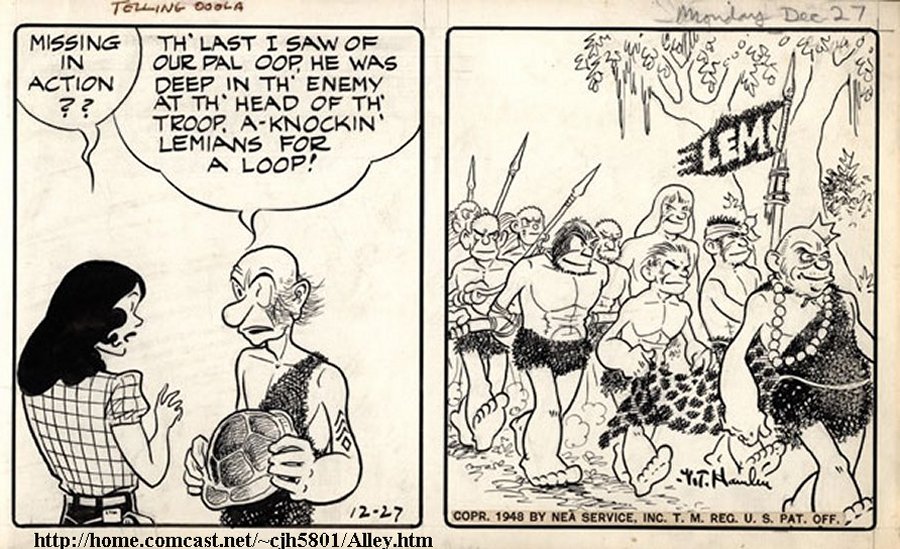
My first step-dad [Arizona] was fond of reading the Alley Oop comic strip to me and I was a huge fan.  Alley was a cave man skipping forward and backward in time thanks to a 20th Century scientist.  Alley even had a 20th Century lady friend named Oola. 

About the only thing I’d brought with me from Arizona was my stack of Alley Oop comic strips.  We’d travelled light across the desert.  And when we arrived in Causey one of the jobs my sisters had was reading those Alley Oops to me, trying to bring up my spirits.  Which I suppose it did until they’d finished reading them to me.

Something more permanent had to be done, and my granddad decided to have a shot at it.  He promised to take me to visit Alley’s home.  Mesa Verde, Colorado.

What a trip that must have been, me pestering him whether we were there yet, how much further before we’d see Alley’s home.  I don’t know how long we stayed, but I never forgot old Alley and his home.  I still had one picture of the cave dwelling he took back then until Y2K.

And of the hundreds of ancient ruins, documented and undocumented, I’ve poked around in during my life, I’ve never visited one, found one, without thinking to myself with a smile that Alley Oop might have lived there, visited there ahead of me.

When Mel King and I were exploring the ruin on Gobbler’s Knob and were driving back to Socorro when he reached into his daypack for something, came out with a human skull it was the first thing I said to him.  “What the hell is that?  You packed off Oola’s skull.  Get it the hell out of this truck!” 

I screeched onto the shoulder and he hid it behind a cedar until  we’d be headed back to Gobber’s Knob so he could put it back where it belongs.

Nowadays I think I have more in common with Alley Oop than with any modern human being.  If there was ever a right time for me to pop out of the gene pool it would probably have been more appropriate temporally in some other Universe where Alley Oop lived and breathed.  It made more sense than this one.

Old Jules


Back Just Before Hippies Were Invented

1964 was a big year in my life.  I rode the USNS Breckinridge troop ship back from Korea with 2000 other GIs coming home, separated from the army late in June.  Hung around Portales, New Mexico for a while, applied to join the Peace Corps, then hitch-hiked to New York to pass the time until I heard from the Peace Corps.

Beatniks hadn’t yet been displaced by hippies and Greenwich Village was jam-packed with thousands of us implying we were beatniks but carefully not saying so.  Hanging around coffee shops writing poetry, playing chess, saying momentous deep-thinking things back and forth to one another.  Listening to folk singers. 

Being rocked back on our heels in mock, simulated shock and disgust when wheat-straw blondes from Westchester down for the weekend to be beatniks, too, refused our advances.  “WHAT?  You don’t believe in FREE LOVE?”

Which, surprisingly, almost always worked.  Provided you’d done a convincing enough job trickling out the bona fides of being a REAL beatnik.  And wouldn’t even think of hopping in the sack with someone so uncool she didn’t even believe in free love.  Even if she did iron her long hair out straight.

So after I hopped the freight to go back to New Mexico, got thrown in jail in Rochester for taking the wrong train, The Hitch-Hiking Hoodoos, got released to hitch home, things stayed eventful for a while.

A guy from Buffalo picked me up on the Interstate, older guy in his 30s.  When I got in I threw the pillow-case with my belongings into the back seat“I don’t know why I picked you up,” he glanced at me with disgust.  “I never pick up hitch hikers.”  

Over the next few miles he questioned me about who I was, where I was from, what I was doing hitching, what I’d do when I arrived, and I explained it all in loving detail.

“Well, I’ve never had any trouble with a hitch hiker the few times I’ve picked them up.  But if I do ever get killed by a hitcher it will probably be some half-baked kid who doesn’t know what he wants in life.”  He thought about it a minute.  “But I don’t have to worry about you.  You threw your gun into the back seat in that pillow case when you got in.”

We talked a lot over the highway between Rochester and Buffalo.  Enough so he didn’t take the Buffalo exit and carried me down to where a tollway squeezed the traffic going south to Cincinnati, Ohio.  He pulled up beside a car with a family in it, man, woman and a couple of kids.  Motioned for them to roll down the passenger-side window.

“Are you going on through Cincinnati?  I’ve carried this guy all the way from Rochester and he’s okay.  He’s going to New Mexico.  But I’d like to get him a ride past Cincinnati.  He’ll never get through that town walking.”

The couple said they were just going to Cincinnati, but we were all watching the traffic edge forward to the toll gates.  “We’d better take him anyway.  He might not get another ride.”

The Buffalo guy was right, but it began the next phase of a long story.  Guess I’d best hold it for another day.

Old Jules


Elvis Presley Blues

The King Is Dead
Long Live The King

Behold, sweet sovereign of song,
creator, keeper, carrion king
of Rock and Roll,
how we miss you.

Old now, my liege, how we hum
how we whistle distant echoes
of your reign
and remember!

Not for you, sweet prince,
mediocre marble monuments,
bronze busts in barren halls.

How you were us!
How, in your dotage,
your swollen jowl,
your sallow cheeks,
your leaden eye
became our own.

Not for you, the canvas likeness hung on walls
with saints, small children, gods and golden men.
Not you!
For you, lord, the paper likeness,
the image on black velour;
in plaster lamps,
plastic icons,
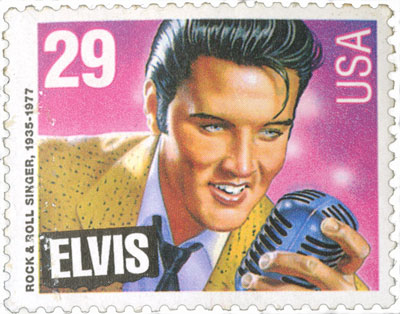
and now this final homage
to your fiery youth.

With every moist touch of these lips, this tongue
we wash away the mucous of those later years
of yours and ours;
summon forth the young prince;
call back those vibrant times
of yesteryear
when the bud shot forth from the vine
and you emerged
and we emerged.

Every touch, sweet prince, to brush away
the bloated darkness of those later
aftertimes
and stay the past within this tiny,
glossy image forth.

Goodnight, sweet prince.

Old Jules
©NineLives Press

Time Travel

Good morning readers. I’m obliged you came by. 

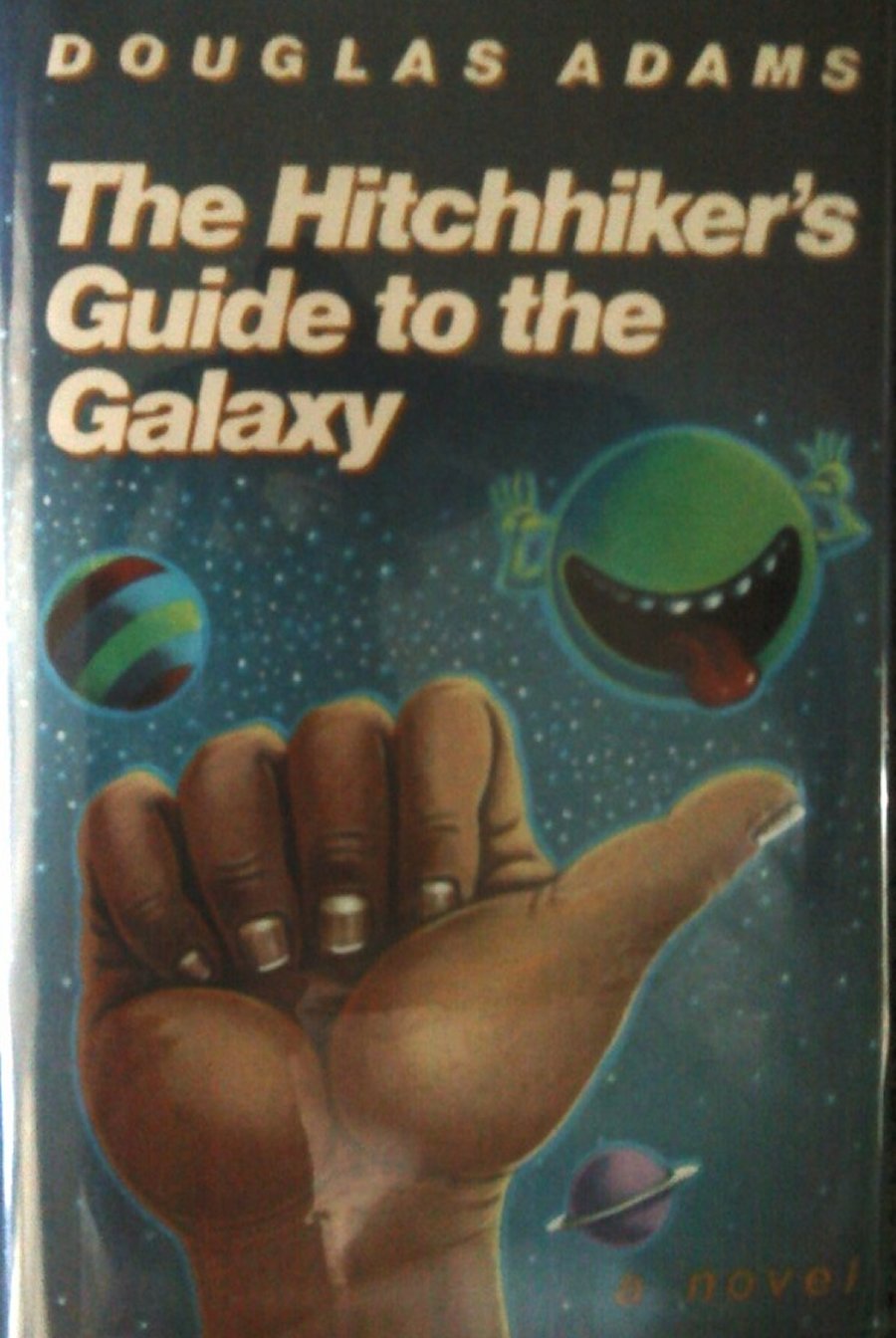
If you went outdoors with a clear sky last night early evening and craned your neck to look directly overhead you might have seen Altair.   Around the time the light that met your eye was leaving Altair I was a young man approaching the age of 50. 

I was beginning a new career, male hormones raging, severely involved in a tempestuous relationship with the lady described if you clicked the ROMANCE [https://sofarfromheaven.com/romance/ ] tab above.  [When the light reaching your eye from Cassiopia is as old as the light last night from Altair]

When that last night Altair light was leaving home on the way to a rendezvous with your eye my old friend Keith and I were doing a different kind of time travel.  We were stomping up and down mountains exploring the country around Santa Fe,  discovering the ruins of numerous hippie communes begun and abandoned around the time the Altair-light was leaving on the journey to meet our then-eyes.

We were also searching the Zuni Mountains for a lost gold mine from a time when the orange giant in Scorpio was headed on its voyage to our eyes as we sat around our night camps gazing at the sky.

I was going to do a lot longer post about this, but I’m having a connection problem slowing things down.  Probably moisture getting into the repaired phone line:

Artful Communications – White Trash Repairs 3

.

http://spaceweather.com/

The light leaving Old Sol at the time I hit SAVE DRAFT will reach the earth about the time this furshlugginer computer finishes doing it.  Roughly 8.5 minutes.  I’m going to have to do more on this sometime when the connection’s not taking much longer than the light from moon-to-earth, start to finish.

Old Jules