Category Archives: Prospecting

Crazy Lost Gold Mine-ism Re-visited

Crazy Lost Gold Mine-ism

Good morning readers.  Thanks for coming by for a read this cold morning.

The adventurers are getting old and long in the tooth.  I’ve written about this in the past a number of times, but a few days ago I got an email that got me thinking about it again:

Hi J,  I hope this finds you well….cats too.

Age 72. Raised in northern Wyoming. Made my living mostly in electronics and related technology. Army vet.

I have been obsessed with that lost gold mine since 1974 and many years ago received a copy of your CD via a guy I think you know….If you had ever watched him shovel.

Bought your book several years ago. Lots of good stuff but editing sucked on the CD.. Also, someone you might know, Bob Gordon of Dallas went on a trip with us once to the Mangus Mt. area (probably in the early ’80’s) and I think I gave him his first copy of Allens and Byerts.  Excuse me, but I am currently too many margaritas along right now and need to cut this short. I am convinced I have a lot of the story figured out….Yeah, like I’m alone. But seriously. 

I would like to chat with you if only email,  Fergy

I replied to his email saying I’d be willing to discuss it by email.  Back during the day I spent enough hours on the telephone hearing where it was to break me of any desire to ever do that again.  But there’s always a chance someone will come along and add the piece to finish out the puzzle.

When his reply elaborating on his ponderings arrived, he didn’t clear anything up, but it did get me thinking about some things. 

Over the years those phone calls and emails have gradually squeezed down to men of advancing age.  Most of us are getting so old we’re not likely to tromp up high mountains anymore.  And we’re dying off.  Of the hundreds of letters and phone calls I got over the years, every one of the originators had solved the mystery, or was near unto solving it.  As I always was.  Heck, as I still am, though I don’t think about it much anymore.

During the 20th Century thousands of men tried to find that lost mine, as did a similar number during the 19th Century.  There was even a movie made about it in the late 1960s. 

Mackenna’s Gold (1969)

Format:  Mackenna's Gold DVD 
 
Sprawling frontier adventure with Gregory Peck as a sheriff who is given a map, said to show the location of a large cache of gold hidden in a valley, and soon finds he’s the target of every fortune hunter in the West. The star-laden cast also includes Omar Sharif, Telly Savalas, Julie Newmar, Lee J. Cobb, Edward G. Robinson. 123 min. Standard; Soundtracks: English Dolby Digital 5.1, Dolby Digital stereo; Subtitles: English, Chinese, Korean, Portuguese, Spanish, Thai; biographies; theatrical trailers.


But as the 20th Century wound down something interesting happened.  There were no new legions of youngsters replacing the old ones, researching, reading, poring over maps and trekking into remote canyons.   Something was gone, and it’s over.

Old Fergy, Keith and I, a few others are still out there thinking about it, but what we are and what we were is something modern humanity has left behind without noticing it’s done so.  I don’t know what that means, but I’m not overjoyed about it.  My preferred view of humanity and youth is going to require some adjustment.

Old Jules

Previous posts referring to the lost gold mine search:

Crazy Lost Gold Mine-ism, Wilderness Threats, Adventure, Imagination and Keeping the Juices Flowing, Cold Mystery, Fevered Romance and Lost Gold

Today on Ask Old Jules:

Old Jules, which prophet out of known prophets could make a good philosopher, and vice-versa, and why?

http://askoldjules.com/2012/02/13/prophets-and-philosophers/
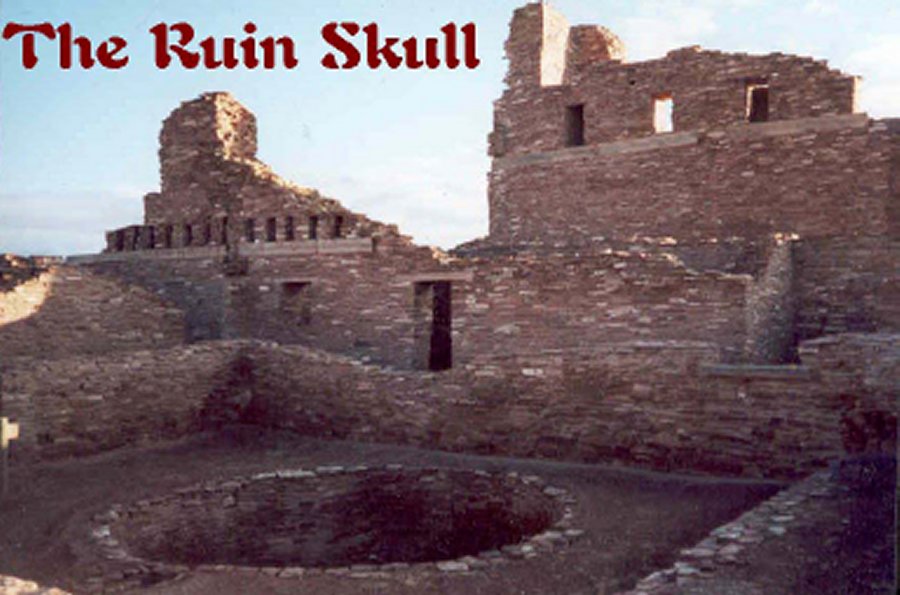
The Ruin Skull – A Long Day Ago

No one remembers anyone
Who remembers anyone
Who remembers
Why she died
But there she is
Wealthy woman young
Good teeth,
No slave.

Those killers
Didn’t kill the slaves
Took them away squat beneath
The loot the weight of
What they carried off
As they did before for her,
Before emancipation
To slave for someone else.

Arroyo cut through ruin
Showed her to the wind and sky
And me a thousand years
After noise and smoke
And screams
Stone hatchet broke the head
Flames brought down the roof
Around her,
Her and her kin
Charred corn
Still on cob
Beside her skull.

She died and partly burned
A long forgotten civil war
Between someone
And someone else
No one remembers
Over something
Neither wind nor sun
Nor these charred bones
Remember.

Old Jules
Copyright©NineLives Press

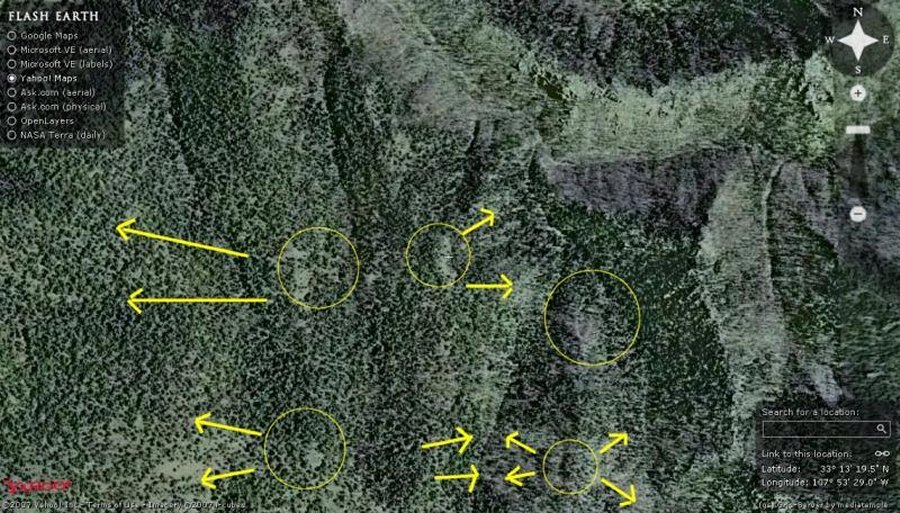
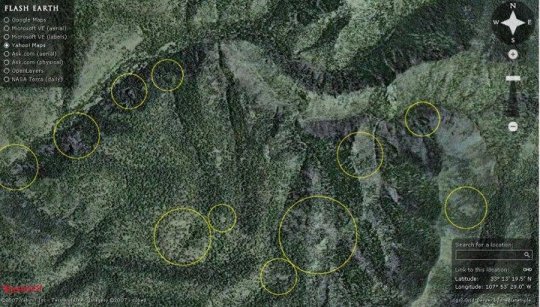
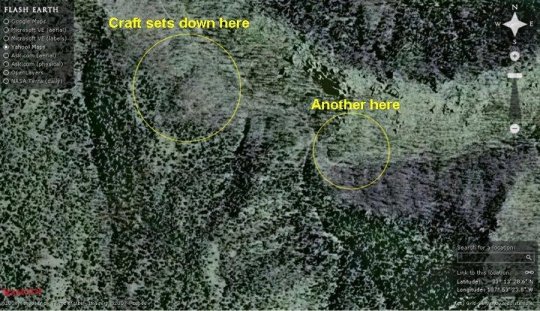
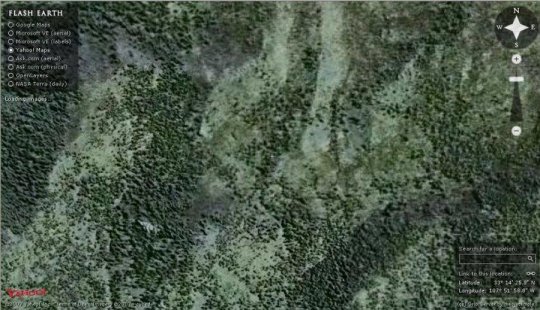
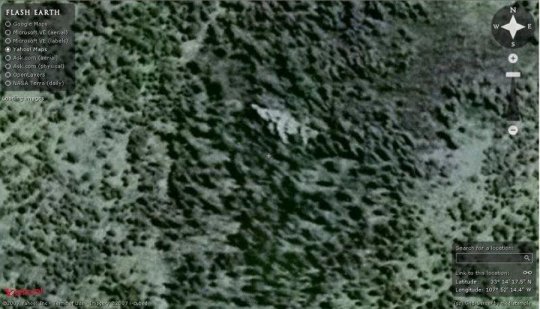
A Scene of an Ancient Massive UFO Crash

This is located almost atop the Continental Divide in the Gila Wilderness at around 8000′-9000′ above Mean Sea Level elevation.  Nobody much goes up there.  I was actually looking for something else when  two comparatively ‘small’ parallel gouges mid-picture first caught my eye.

Trench deep on our left pushes up rocks ahead
Closer view of key impact
 
 
Bad things happening to good people
 
 
Impacts and energy events stage 1
 
Stage 2 Along path breaks up and explodes
 
Impact trenches
 
Hot spots
 
Stage 2 energy events


Main pieces remaining
 
Interesting local geology
 
Aftermath investigation and cleanup
 
Better view of initial ground contact
 
Pilot applies full power – Dire emergency attempt at recovery
 
Meanwhile a couple of ridges away 1


Meanwhile a couple of ridges away 2
 
Mother nature anticipating and waiting – It only needed the human imagination to complete the picture
 
Skeptics probably won’t believe this is a UFO crash site.  I personally don’t. and so far as I’m aware I’m the only person who’s ever suggested it might be.  I’d surely like to get up there and have a look at it sometime, but for other reasons than the UFO story.
 
I’d like to spend about a month up there with half-dozen pack goats just nosing around the immediate area.  Some places don’t need a crashed ancient UFO to have appeal.
 
Old Jules
 
Edit:  You can have a look for yourself by going to flashearth dot com and entering the longitude/latitude coordinates in the lower right corner of each image.

Cold Mystery, Fevered Romance and Lost Gold

A burned out cabin ruin with an aspen tree growing out of the inside, bear claw marks 12 feet up, 3 hand forged nails, a longtom sluicebox axed out of a 3 foot diameter log, a spring 75 feet above the sluice, an arrastra below. 

A mysterious map chiseled on the face of a 300 pound rock surface depicting the exact layout of the canyon, the cabin, the waterfall, all so accurately depicted the person had to have scrutinized the layout from the mountaintop, then scratched it on this stone 600 vertical feet below and half a mile away.  The rock was carefully placed on the canyon wall above eye-level so it was easily seen, but only by someone looking up.

I’m guessing the date must have been spring, 1995.  I’d moved my search to the mountain I described above and was performing a systematic search of  the canyon from the discharge to the mountain crest.  I’d filed two mining claims at the location of the cabin and sluicebox pictured in the earlier post, and downstream.  I hadn’t yet found the map rock, and I was spending every moment I could squeeze between job duties, romantic obligations and financial constraints camped on that mountain.

I headed down there planning on spending a week, but on the road the Mitzubishi Montero sprung a water hose a few miles outside of Grants.  It was raining while I mucked under the hood, taping the hose and getting enough coolant in it to drive it to a parts house in Grants, where I installed it in the rain.  I was chilled and soaked as I drove south from Grants, but in too much of a hurry now to change clothes.

By the time I arrived at my usual camp site I was running a high fever and feeling my breathing becoming hard labor.  I hastily dragged a tarp out of the truck,  put my sleeping bag under it and got inside, hoping I’d shake off what I was afraid was coming.  I’d had pneumonia enough times this lifetime to recognize the onset.

The next morning found me weak, fever skylining, knowing I’d better try to get out of there while I still could.  I threw some brush over my gear because I was too weak to reload it onto the truck, and started down the mountain.  My vision was blurred and I was hallucinating, barely able to stay on the two-track.  When I reached the US Forest Service road a line of fenceposts ahead briefly became a line of riflemen aiming at me.

I remember nothing of the trip after that until I found myself at the home of my lady friend in Albuquerque, wrapped in a blanket on the floor of her downstairs because I wasn’t strong enough to climb them, burning with fever, shaking with chills.  She, nursing me with herbs and leftover antibiotics from her medicine cabinet.

“There are some people missing out there where your claims are.”  She was sipping coffee at the table, looking over the paper at me.  “A man and his wife.  The State has people out searching for them.”  She shook her head.  “They must have been right near where you were.”

The couple lived across a basin at the base of the mountain.  I could probably see their dwelling through binoculars from the mountaintop.  They were woodcutters, but I’d never encountered them, to my knowledge. 

As I recovered in Albuquerque the search died away.  The local sheriff announced the couple had probably just abandoned their house and gone somewhere else.  They were nobody, outsiders.  He refused to treat their vanishing act as a possible crime, didn’t allow the State Police to investigate their home.  But the time on the floor in Albuquerque weak as a kitten, tended hand and foot is one of those tender, grateful memories of my years with the lady.

Over the next several months I continued, sometimes in company with Keith, sometimes with other friends, sometimes alone, exploring, sampling, puzzling over what I was finding there.  Then, the first day of elk season that fall I encountered two elk hunters with their truck stuck in a stream bed.  When I finished towing them out, we introduced ourselves.

“Did you hear about those bodies they found in the canyon over there?”  He gestured to the mountain indicating a canyone one over from mine, plus one.   Renfro Canyon on the rock map sketch.  Less than a mile from my claims.  “A bear dug them up.  They were buried in an Indian ruin and a hunter found them this morning.”

The bodies turned out to be the people who’d turned up missing while I was giving myself pneumonia.  I felt reasonably confident the police would be contacting me with questions about whether I’d seen anything, because I was probably the only person on the mountain besides the victims and the murderers at the time it happened.

The Bureau I worked for, Emergency Management Planning and Coordination [EMPAC] was part of the New Mexico Department of Public Safety, though a step-child and somewhat separate.  I went to my Bureau Chief and explained what had happened, asked whether he thought I should go over to the State copshop and volunteer to talk to them about it.

“Man, I wouldn’t touch that.  Let them come to you.  You might be the best suspect they’ve got.”  A lawyer friend gave me the same advice, informally.

So I kept quiet and waited, and they never came.  I kept working that mountain, homicides and multiple-homicides continued to happen over the next couple of years remaining unsolved and generally thought to be uninvestigated, and the entire county became a quagmire of paranoia.  Everyone carrying firearms, nobody trusting anyone.

Meanwhile, the mountain echoed the weirdness and pressure the county was experiencing.  Somewhere during that time began the strangest chain of events and experiences of my entire life.

Which I might describe in a later blog or series of blog posts.

Old Jules

A Few Things Zuni – Part 1

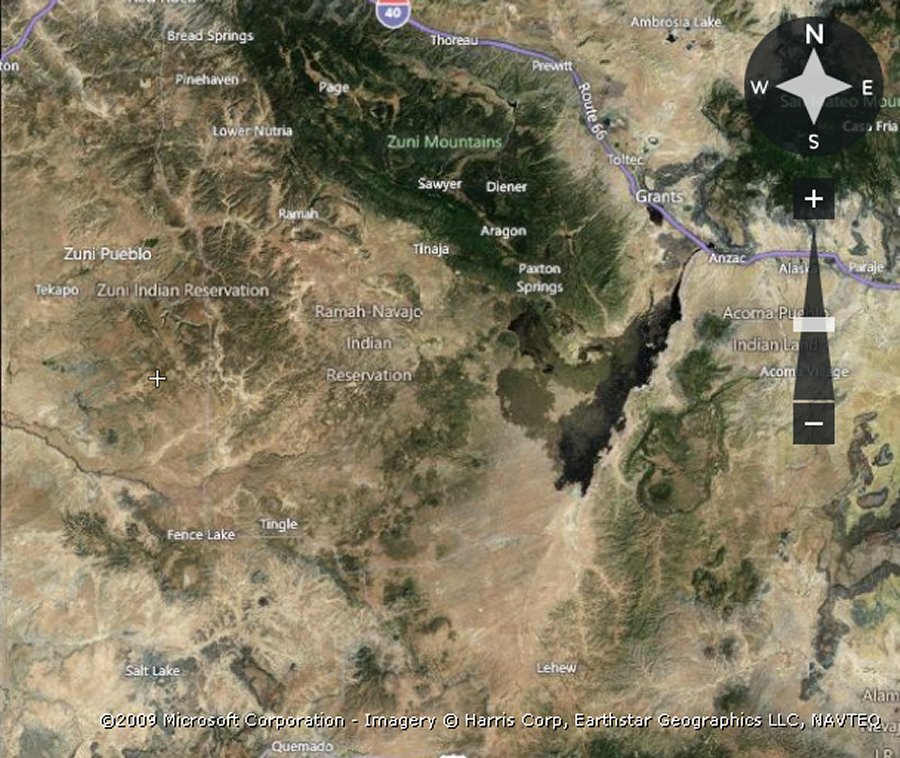
During the early 1990s the Coincidence Coordinators conspired to make Zuni Pueblo and the geography surrounding it a major focus in my life.  I mentioned a bit about Zuni here:  This is Zuni Salt Lake, but over the next couple of whiles I’d like to tell you a bit more about them. 

At the time the overwhelming part of my salary was paid by FEMA and a part of my job involved mitigation of recurring natural disaster damage behind federal disaster expenditures.  In New Mexico a huge percentage of the recurring expense was located on Navajo lands, but flooding on the Zuni River reared its head as a concern during the same time period.

Meanwhile, the Coincidence Coordinators got into the act.  The search for the lost gold mine was being driven by documents from the US Archives, New Mexico State Archives, fragments of mention from 19th Century newspapers, later-in-life memories of men connected to the events and documented in books, topo maps and other researched sources.

Keith and I, examining and submerging ourselves together during that phase of my search, concluded the areas to the east of Zuni, and to the south were prime candidates for the location.  Candidates based on what we knew at the time.  Wilderness Threats.

By my own recollection that phase of the search lasted only three, maybe four years, maybe less.  But it led by numerous routes, into more than a decade of closer association with Zuni, both as a tribe, and as a geography.  I’ll be posting more about that, about Keith’s and my explorations, about the Zuni pueblo and the people living there, and about some aspects of the history and culture.

But I’ll begin by posting this piece of doggerel I wrote a long time ago about my first visit to the Zuni Rez and my first encounter with the Zuni and Ramah Navajo.  That meeting with the Zuni Tribal Council burned itself into my memory as few things I’ve experienced this lifetime have.

Flooding on the Zuni land
Tribal chairman calls
Upstream Ramah Din’e band
Over grazing galls.

Ancient ruins I travel past
Forgotten tribes of old
And finally arrive at last
On Zuni land as told:
Tribal council meets, he chants
A time warp history.

I Listen long the raves and rants
And river mystery:
Navajo must have his sheep
To have his wealth, it’s plain.
Too many kids, too many sheep
Too little grass and rain.
Forgotten white man wrongs and deeds
The raids of Navajo
Corn that didn’t sprout the seeds
And stumbled Shalako
More sheep grazed than in the past
Arroyos grew wide and deep
Siltation settled hard and fast
In riverbed to sleep.

Navajo siltation choked
An ancient channel bed
Water rose above the banks
200 cattle dead
Houses flooded, ruined cars
Fields of grain were lost
A playground field a channel mars
And who should bear the cost?

The tribal chairman Ramah band
Listened to my tale
Stony silence, steady hand
Informed me I would fail.

“If those Zunis don’t like floods
Tell them to reduce the chances;
We’ll hold back our streams of muds
If they’ll call off their damned rain
dances.”

(Doggerel to smile by)

Old Jules

Wilderness Threats


A man I went to grammar school, junior high and some high school with, then several decades later became reacquainted and huff-puffed a lot of up and down mountain canyons recently began visiting this blog.  If no other reader enjoys the tale, at least he will, because he was there:

The following is copyrighted material from a book I wrote once.  I give myself permission to use it here. [ Crazy Lost Gold Mine-ism]

I’ve never concerned myself much with the dangers of wild animals during my extensive time in the woods.  Mostly they’ll mind their own business if a person takes reasonable precautions and doesn’t go out of his way to provoke them.  In New Mexico backlands of the late 20th century the real threats usually come in the form of humans.  When those happen they usually come as suddenly and unexpectedly as finding one’s self in the middle of a herd of elk.

Grasshopper Canyon and Stinking Springs are on the northern end of the Zunis below Oso Ridge on the west face of the mesa.  Two canyons run north and south, parallel to the face, half a mile apart, separated from one another by steep, narrow walls several hundred feet high.  These two walls consist of coral reef from some ancient time when Oso Ridge was an island.  The canyons aren’t easily accessible, so I prospected there a while.

The land below Oso Ridge around Grasshopper Canyon is checker-boarded in ownership.  Grasshopper is all National Forest, but immediately south is a section of Navajo tribal land.  Adjacent to the Navajo section is a section belonging to the Zuni tribe.  Fences between these sections allow a person to always know whether he’s on public land or tribal land.

I was working Grasshopper Canyon with my friend Keith, a stockbroker from Santa Fe. We separated and worked the arroyos southward parallel to one another, gradually moving toward the fence delineating the Navajo section.  Occasionally we’d call out through the woods to make certain we weren’t out-distancing one another.  The last thing either of us expected was an encounter with another human in those woods.

I was bent over taking samples from the bed of a shallow arroyo, just deep enough so when I straightened I could view the small meadow around me.  I stood getting my breath and stretching the kinks out of my back when I saw a man dressed in cammies backing out of the woods at the edge of the meadow.  He was being stealthy, carrying a .22 rifle in a ready position.  He had twenty to thirty colorful birds hanging on a string around his neck the way a fisherman carries a stringer of fish.  As I watched, almost invisible to him with only the top of my head showing above the arroyo, his eyes searched the woods to his right where Keith was working.  Keith had called out from there a few moments previously.

Still watching Keith’s direction the man backed toward me until he was only a few feet away from me.  “Nice string of birds.”  I scrambled up the bank while he spun and pointed the .22 in my general direction.

My partner’s in the woods back behind you.  You don’t want to be firing in that direction.”  We studied one another.  He eyed the shoulder rig I was wearing and the butt of the 9 mm automatic showing from the bottom.  “’You out here killing songbirds?”

Mister Songbird was a young man and from appearances, a Zuni.  He stared a moment longer before answering.  My impression was that he was considering whether I was a game warden or other law enforcement official.  “I’m getting them for Zuni New Year.  They let us do that.”

We talked for a few minutes, me accepting what he said at face value, and the tension gradually dissolved.  He agreed to get the hell out of the canyon because we were working there and wouldn’t want any shooting.  Besides, we’d probably messed up his hunt with our yelling and bustling around the woods.  I watched him back into the meadow to the south and allowed myself to sigh with relief.

Back in Santa Fe I called the US Fish and Game Department.  I thought there was a remote chance the feds were really allowing Zunis to kill protected species birds on National Forest land.  If so, I was prepared to be indignant.

When I told my story the fed was silent a moment.  “You are a lucky man,” he observed.  “You confronted an armed man committing multiple Federal felonies and he didn’t shoot you.”

*     The following didn’t make it into the final draft of the manuscript: The fed also observed the Zuni lad would have spent a lot more years in prison for killing those songbirds than he would have for killing me.  I drew a good bit of comfort from knowing that.

Eventually logic won out over the other appeals of the Zuni Mountains as a location for the lost gold mine I was searching for.  Although the Zunis were handy for me, being only a few hours drive from Santa Fe, they were too far from Tucson.

Also, too many prominent landmarks in the area would have immediately brought the original survivors back.  The route I imagined them following would have taken them within sight of Los Gigantes and enough other one-of-a-kind eccentricities to make the location unmistakable.

Even the Big Notch and Little Notch in the Continental Divide can be seen from miles to the west.  There’s nothing else similar to it in North America.

Marty Robbins – Little Green Valley

http://youtu.be/WT5qegD28Wo

Crazy Lost Gold Mine-ism

This post requires some background to get to what it’s about.  The first part is background.  The actual subject of the post doesn’t start until ‘way on down toward the bottom.

Back before Y2K happened I spent a lot of years and energy researching and searching the mountains of SW New Mexico for a particular lost gold mine.

Doing a thing of that sort, the smart individual would keep his mouth shut about it.  But I don’t qualify in that regard.  I spent several years poring over records and winter nights poring over maps with a magnifying glass, almost always certain of knowing where it was, chawing at the bit to get out into the barrancas to file a claim on it.  But also putting my research into a form others searching for it might find helpful.  Insane.

Eventually I found a location where evidence on the ground fit the legend locations well enough to keep me working the west face of that mountain, climbing and unclimbing it with friends and associates, building up a lot of muscle, finding a lot of interesting rocks, and getting surprising assays, but no joy to speak of on gold.

“A burned out cabin ruin with an aspen tree growing out of the inside, bear claw marks 12 feet up, 3 hand forged nails, a longtom sluicebox axed out of a 3 foot diameter log, a spring 75 feet above the sluice, an arrastra below.  A mysterious map chiseled on the face of a 300 pound rock surface depicting the exact layout of the canyon, the cabin, the waterfall, all so accurately depicted the person had to have scrutinized the layout from the mountaintop, then scratched it on this stone 600 vertical feet below and half a mile away.  The rock was carefully placed on the canyon wall above eye-level so it was easily seen, but only by someone looking up.”

By 1998 I’d spent a lot more treasure, worn out vehicles, worn out relationships with lady friends and put a lot of friends to sleep going on about it and spending all my waking hours thinking, searching, or talking about it.  I decided it had taken up enough of my life and it was time to move on to other things after one final effort.

I took several weeks of vacation from work and spent it determined to get that gold mine out of my life, or into it in a way that didn’t include continued searching for it.  During part of it Gale and Dana, another old friend, joined me up there.

But that’s all another story.

During the 1990s I used to get several letters and phone calls a week from other people who were searching for the mine, asking questions about specifics of my research findings, asking questions about various terrain features, or just wanting me to go climb a mountain where they knew it was but didn’t feel like climbing themselves, willing to give me 10% of it if they were correct.  Of course they always knew they were correct.

But gradually that all tapered off.  In 2003, in the desperate throes of surviving the desperate financial aftermath of Y2K I published a book about my research, and the calls, emails and letters started coming in again for a while, but again gradually receded after a few years.  Those guys all got old and everything quieted down.

That lost gold mine slid spang out of my life.

But finally, here’s what this post is about.

Suddenly, beginning a couple of months ago, my old email address box began a new trickle, becoming a stream, of questions about all manner of details about those canyons and researches I elaborated on in the book.  Old guys, some older than I, were suddenly making noises about ideas, searches, evidently studying the book and maps, wanting refinements on what I’d described.

2011, every old worn-out has-been treasure hunter in Christendom  is suddenly wanting me to search my memory-banks about canyons I once stomped around in.  I’ve mostly answered the emails, tried to remember and flesh out what most of them were asking about, but a lot of it’s just too mixed in with too many other canyons, rocks and trails to recover with clarity.

But some of them are actually being subtle but provacative, wanting to argue with me about research findings, value judgements I made regarding 160 year old documents I dug up in the US Archives, military records, and a particular Apache I consider a key in the affair.

Heck, it ain’t as though I found the damned mine.  I don’t know where it is, though I spent a lot of years, treasure, sweat, and women thinking I did.  Now, suddenly I have people coming out of the woodwork wanting me to change my mind about where I thought it was because my reasons for thinking it weren’t the same as their reasons for thinking it’s somewhere I didn’t think it was.

Absolooooodle, incomprehensibly, insane.

Yeah.  It’s real important where I think it is.  If I don’t think it’s where it is, that old gold mine’s likely to switch places with where it thought it was.  Next thing you know it will be where I thought it was.  And that ain’t where these other guys now think it is, so I need to change my mind and think it’s where they think it is.  Otherwise it won’t be there.

I have no idea what the hell this is all about.  Maybe the price of gold combined with worrying about Social Security has the geezers going crazy thinking they’re 50 years old again.

Old Jules

Billy Vaughn And His Orchestra – The Shifting Whispering Sands ( 1956 )