I never knew the lady well, but I was briefly acquainted with her when I was writing the piece for Men In Adventure Magazine, Vietcong Seductress, et al. She was a lot more understanding about the slant the editors put on the piece than Sheriff Jim Flournoy. But that was before the Texas news jumped onto the bandwagon.
Edna Milton Chadwell, Last Madam of ‘Chicken Ranch’ Bordello, Dies at 84
.
Edna Milton Chadwell, the last madam of the infamous Chicken Ranch brothel, died last week at the age of 84. The Chicken Ranch of La Grange, Texas, was the house of ill repute that inspired the Broadway musical, “The Best Little Whorehouse in Texas.” It later became a hit movie.
After the Chicken Ranch’s demise, Chadwell moved to Arizona where she met her husband and remained for the rest of her life. Her obituary from the Associated Pressquotes her nephew, Robert Kleffman.
“She was a hard-nosed lady. She was very straightforward, didn’t put up with no monkey business, no nonsense,” he said. “Hard-nosed. But with a spine of steel and a heart of gold.” Kleffman added that his aunt didn’t like to talk about her time in La Grange, but she also wasn’t ashamed of it.
Joe Stalin he might be
Fingers drumming green felt
Calculating his next purge
Fill an other gulag
With Ukrainians
Finger tapping
Focus on the down cards
Other players
Cardboard faces
Pasteboard numbers
Shouts past me
“Double down! Double down!”
Tired first base trucker
Parlaying his bets
To survive another hand or two
In this hell-camp.
Stalin tosses three greens
Past me to the trucker
From his four inch high
Stack of blacks and greens
“Double down! Double down!”
Astonished trucker pushes back
A weathered straw hat
Gazes at the green chips
The dealer upturned six
And his own sixteen
And doubles down.
On and on
Same vein
Stalin winks at me
At second base
Throwing chips past me
The driver promptly loses
But always looks now
To see what Stalin
Thinks is best
While downstream
In third base Stalin
Plays three hands all at once
Table max 200 on each place
And wins wins wins
Speznatz tattoos
On chubby knucklebacks
Stalin and I exchange small talk
And knowing smiles
Once advised
The other side of a line
I was on this side of
Did his final tour in Afghan
Got out first chance he could
When things got shaky
And the walls went down
Now he hauls produce
From east to west coast
Always stops here in-between
Shouting orders
“Double down! Double down!”
To the bloated capitalist pigs
Grumbles price of fuel
Trainloads of Chinese goods
And tyrant highway cops.
Even the dispicable can’t always dodge the steamroller. Kaufman was rewarded, Greenglass spent a few years in prison, punctuated by testimonies before Congressional Committees to help forge a US package of ideas about a war on International Communism. Appropriate enough, liar lying to other liars to create a consistent set of lies. Not to suggest C0mmunists weren’t also lying. They mostly just weren’t elected and appointed officials sworn to uphold the Constitution of the United States.
Federal Judge Irving Kaufman, who subverted the legal processes in his own courtroom to predjudice the jury in favor of conviction of both Rosenbergs, then sentence them to death in the electric chair:
In 1953, Julius and Ethel Rosenberg were sent to the electric chair for stealing the secret of the atom bomb for the Soviet Union.
They were called the “Atom Spies,” and 50 years ago this summer, they were executed for giving the secret of the atomic bomb to the Soviet Union. They are the only Americans ever executed for espionage in peacetime. Greenglass was the star witness for the prosecution against the Rosenbergs – and he also happened to be Ethel Rosenberg’s brother. He served 10 years in prison for his actions as a traitor, and then changed his name and dropped out of sight. As he neared 80, Greenglass decided to break his silence. He talked only after 60 Minutes II agreed to disguise his face and voice.
His story begins in the summer of 1950 when the FBI took Greenglass in for questioning. He confessed almost immediately for spying, and quickly implicated Julius, Ethel and his own wife, Ruth. David and the Rosenbergs were arrested. Ruth Greenglass never was charged.
“That’s what I told the FBI,” says Greenglass. “I said, ‘If you indict my wife, you can forget it. I’ll never say a word about anybody.'”
It was quite simply his choice, he says today. So Greenglass says he turned on his sister to save his wife. “I would not sacrifice my wife and my children for my sister. How do you like that?”
Greenglass made his choice when America was at war with communists in Korea, and in fear of the Soviet Union, which had recently tested its own atomic bomb.
The four spies were unlikely actors in a Cold War drama: Julius was an unsuccessful engineer; Ethel spent most of her time raising their two young sons; Greenglass was a draftsman and a tinkerer; and his wife Ruth was a wife and mother. All had been ardent communists.
During World War II, Greenglass, then a sergeant, was posted to Los Alamos, the secret army base in New Mexico, where thousands of scientists and soldiers were building the atom bomb. Although he had a low-level job, Greenglass says he knew what was going on.
He says Julius Rosenberg recruited him to spy with a simple sales pitch: “He said, ‘We have to help our ally.'” By ally, he meant Russia. “Russia was an ally at the time, and that we have to help them with all the information we get.”
Greenglass told the FBI that he gave the Russians sketches and details on the device used to trigger a nuclear blast. But he says he didn’t enjoy being a spy.
“I was continually conscious of what’s behind me. I didn’t enjoy it. I just did it because I said I would,” says Greenglass.
Did he realize how dangerous it was? “I didn’t really think it was, because I didn’t think the Russians were an enemy,” he says.
His career in espionage came to an end soon after the war ended. Back in civilian life, Greenglass and Julius opened a machine shop together. They argued over the business, and over Greenglass’ growing disenchantment with Communism.
Four years later, Julius warned Greenglass that the FBI was on to them, and urged him to flee the country. Greenglass had a family passport picture taken, but he had no intention of using it.
“I didn’t want to leave the United States to go to some hellhole like Russia or China, or wherever the hell he wanted to send me,” says Greenglass. Instead, he took a bus to the Catskill Mountains. “I figured I’d find an obscure place. And I see that the FBI is following me. And they lose me.”
But he never made it to the Catskills. He went into custody instead. And within hours, he began cooperating with the FBI, sealing the Rosenberg’s fate.
He was the star witness for the prosecution at their trial, and he told the jury about his espionage, and described the activities of Julius, Ethel and his wife, Ruth.
He testified that one evening, he and Ruth brought sketches and handwritten notes about the atom bomb to the Rosenberg’s New York apartment. After dinner, Greenglass said they set up a typewriter on a folding bridge table in the living room, and turned his hand-written notes into a neatly-typed document for the Soviets.
Prosecutors asked Greenglass who did the typing. He said under oath that Ethel did the typing. His wife, who also took the stand, told virtually the same story.
That story was virtually the only evidence the government had against Ethel Rosenberg. But prosecutors argued that Ethel’s typing proved she was an active participant in the spy ring. After the trial, they admitted that without the typing testimony, they could never have convinced the jury that Ethel was anything more than the wife of a spy – and that’s not a crime.
Why did Greenglass lie on the stand? He now says Roy Cohn, an assistant prosecutor in the Rosenberg case, made him do it. Cohn went on to become Joseph McCarthy’s right-hand man.
Greenglass says that Cohn encouraged him to testify that he saw Ethel type up the notes. And he says he didn’t realize at the time the importance of that testimony.
But the jury knew how important it was, and found both Julius and Ethel Rosenberg guilty of conspiring to commit espionage. Judge Irving Kaufman imposed the death penalty.
Fifty years later, we know a lot more than anyone could have known in 1951. For example, we know that much of what David Greenglass said about Julius Rosenberg is true. It has been verified by other, independent, sources, all of which confirm that Julius Rosenberg was a Soviet spy. We also know that there is very little, if any, evidence that implicates his wife, Ethel, in any illegal activity.
But in the days before the execution, there were protests and vigils in New York, Washington and Europe. The Rosenbergs both claimed they were innocent, and many believed in them. There were a flurry of last-minute attempts to get a stay of execution. And there was no shortage of Americans who felt that justice was being done.
Up until the last minute, the authorities were willing to commute the death sentences if the Rosenbergs cooperated and named names. But they refused and were executed on June 19, 1953 – without ever breaking their silence.
Why did Greenglass think Julius and Ethel maintained their silence to the end? “One word: stupidity,” says Greenglass, who holds his own sister responsible for her own death.
—————————————-
But I promised a Denouement:
Of course, it makes no difference now. Any more than it matters who killed JFK, Robert Kennedy, MLK, and President Diem of Vietnam.
Doesn’t matter, really, any more than it matters that the Gulf of Tonkin Incident, the incident used to justify the US involvement Vietnam War, was a manufactured incident. A cynical lie to dupe the US public and arouse patriotic fervor. Same as the Rosenberg trial.
A pyramid of lies, once the foundation’s in place, builds on itself. Only the names of the liars and the names of the victims change. It’s only incidental that sometimes the victims are also liars.
If any lessons can be learned from it all it’s probably only that the romantic patriots can always be trusted. Trusted to believe the lies. The liars can’t trust one another, but they know they can always trust the romantic patriots.
The liars couldn’t succeed without them.
Old Jules
Today on Ask Old Jules on Facebook:
Old Jules, what’s your definition of an idealist?
An idealist is a person who locks his teeth into the ankle of an abstraction and doesn’t let go, doesn’t look for another ankle, doesn’t look closely at whatever’s above and below the ankle.
When Louis Nizer penned The Implosion Conspiracyit might be said enough time had passed to provide perspective. Two decades had passed since the trial and execution of the Rosenbergs rocked the nation. Nizer disliked Communists, asserted he’d refuse to defend one in his profession as a defense attorney. However, he wrote a lengthy analysis of the trial, the transcripts, testimonies, the individuals involved in an even-handed manner that wouldn’t have been possible during the Commie craze days of the events.
Basic events leading to the trial: The US was developing the atomic bomb at Los Alamos, New Mexico during the late stages of WWII. The information was being shared with the US Ally, Britain, but kept secret from the US Ally, the USSR. Elaborate security measures were in place to assure the developments remained the exclusive property of the US and British governments. Elaborate almost beyond description, devised by the US military and the FBI.
But the British liaison to the project was physicist Klaus Fuchs, a spy for the Soviet Union. The Germans knew Fuchs to be a Soviet spy, but the British and Americans didn’t, until they gained access to records captured as they advanced into Germany.
Aside from Fuchs, the other USSR source for information about developments at Los Alamos was David Greenglass, a US Army machinist and brother to Ethyl Rosenberg. Greenglass had been a Communist his entire adult life and had been separated from an earlier military job because of questions about his loyalty and honesty.
David Greenglass stole the crucial secrets of the lens molds used to detonate the bomb, the implosion device. By hindsight, it’s clear he did it for money, for the same reasons he stole automobile parts, uranium, anything he could lay hands on to sell on the black market.
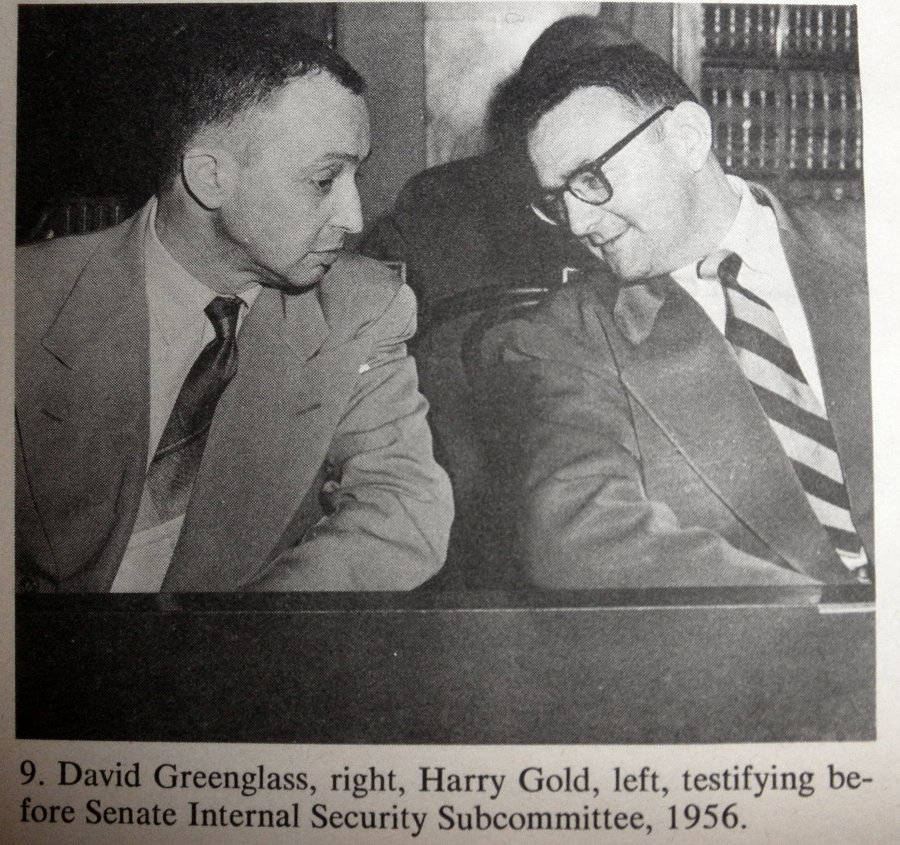
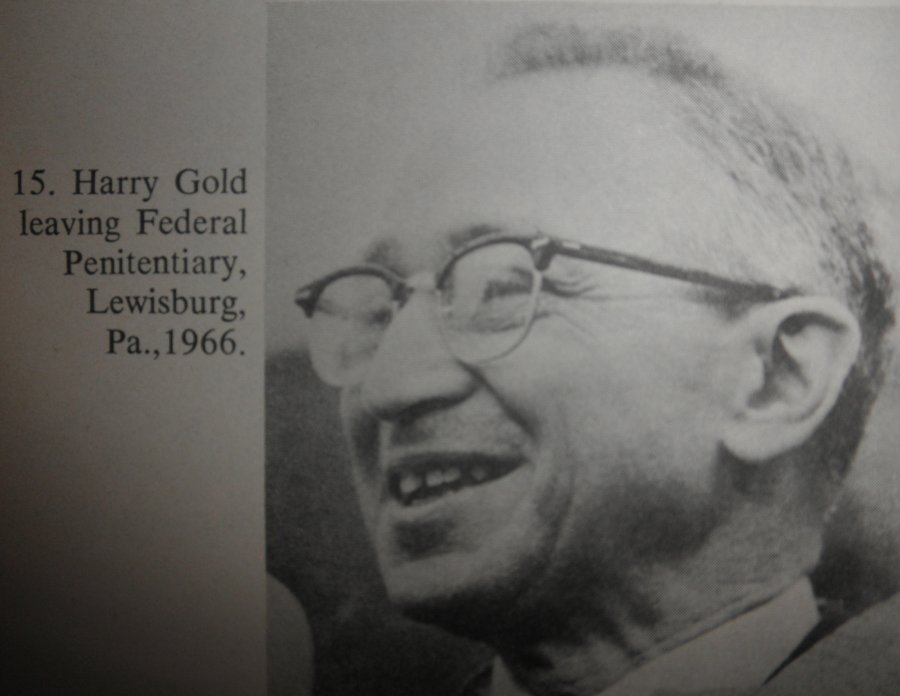
Greenglass passed the secrets to his wife, Ruth, who passed them to Harry Gold. Gold was the direct connection to the Soviet spymaster, Yakovlev, in the Soviet Embassy. It’s clear enough from everything provided in evidence and testimony that Gold was a man without loyalty to any nation, ideal, idea, or human being other than himself. He did it for the money and for no other reason.
The testimony of Greenglass, awaiting trial for treason, and his wife, Ruth, who was never charged, provided the testimony connecting Julius and Ethyl Rosenberg to the plot. The witness stand accusations by Greenglass against his sister and brother-in-law, and the corroborating testimony from his wife, who didn’t yet know whether she’d be charged, constituted almost the only evidence of the prosecution. The other witnesses directly involved in the plot mostly did not know the Rosenbergs, or barely knew them and knew little of their activities.
Because of the weakness of the government case insofar as testimony and physical evidence of the Rosenberg involvement in actual spy activities, the focus of the prosecution became a trial of Communist ideology. Witnesses who knew nothing about the plot, the bomb secrets, the Rosenbergs were called to testify about how they’d switched their own loyalties from Fascism to Communism, then become loyal US citizen-experts making a living selling books and giving lectures on the insidiousness of Communism.
The trial transcripts excerpts Nizer provides make it clear the Defense had two opponents: the US Attorney prosecutor, and the judge, who constantly intervened, interrupted, interjected in ways clearly intended to prejudice the jury against the defendants.
The key players who gave, or sold the atomic bomb to the USSR in 1945 went free, or were given relatively light sentences.
The Rosenbergs, clearly Communist idealists, possibly part of the plot, died in the electric chair.
When Allied forces found documents in Germany revealing Fuchs as a Soviet spy the chain of resulting indictments followed a path to almost all the conspirators except the Rosenbergs. Before spymaster Yakovlev fled the US, during his last meeting with Gold, he made the following observations:
Yakovlev: Don’t you remember anything I tell you? You’ve been a sitting duck all this time. We probably are being watched right now. How we pick such morons I’ll never understand! We’ve been living in a goldfish bowl because of you. Idiot! Idiot!
I am leaving the country immediately. I’ll never see you again. Just go away. Don’t follow me.
He went.
But the answer to Yakoviev’s question is worth an answer. They recruited from the US Government, the US military, from US universities, from US businessmen.
From the same pool of applicants who later sold their industries, their industrial tools, secrets, capabilities, economies, and debts to the Peoples Republic of China and other foreign nations.
They weren’t Communists, like the Rosenbergs. They were opportunists, entrepreneurs, devil-take-the-hindmost politicians, like their descendants a few generations later.
Old Jules, does an animal’s life mean as much or nearly as much to you as a human’s, or do you feel animals are insignificant/worthless in comparison? Also, do you believe it is ever morally right to harm/kill animals? What about humans?
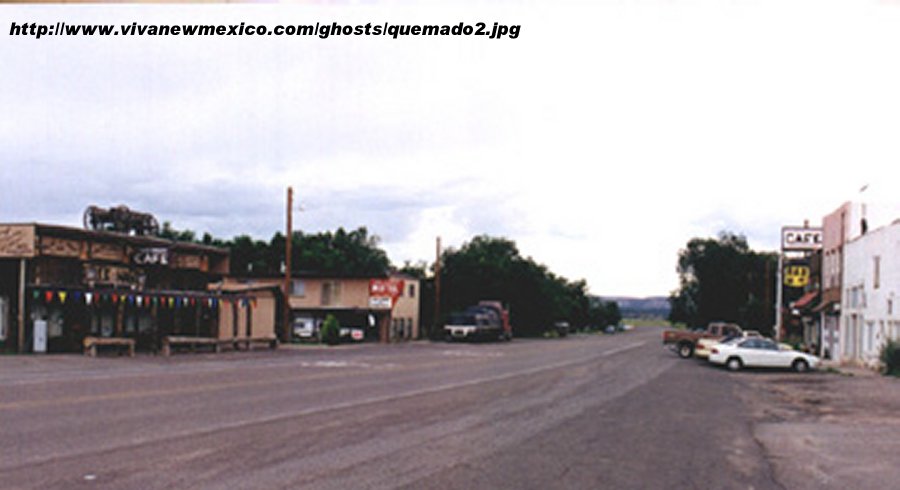
It must have been an Eve, Christmas or New Year, 1996 or 1997. Keith and I, or Mel and I were partnered that trip and the cold, or the mud drove us into town. We got a room in the motel you see just beyond the cafe with the chuckwagon on the roof. Quemado was dead, every business in town shut down except the bar underneath the yellow sign on the right side of the picture.
Sometime after dark we wandered across the highway to the bar. A couple of pickups were parked in front and we hoped there’d be a hamburger and beer to be had. At least we figured it would be warmer than the motel room.
We stepped up to the bar and examined the half-dozen other customers through the smoke as we pulled off our coats. Behind the bar a guy probably named Bad Teeth was grinning, looking us over. Same as everyone else in there, all of whom appeared to be ten-generations of first cousins inter-married to Bad Teeth’s ancestors.
“Any chance of getting something to eat?” The faint odor of hamburgers lingered in the background.
Bad Teeth just grinned and looked past me at the badasses huddled over one of the tables. “You won’t be here that long.”
“Long enough for a beer, anyway.” My partner was showing signs of irritation.
“Only certain kinds of people come in here.” My eyes followed where Bad Teeth was pointing at the cluster of bullet holes in the ceiling. “Nobody else stays long.”
But my partner, Mister Wiseass, wasn’t looking at the ceiling. He was letting his gaze size up all the drinkers, them doing the same to us. “Gay bar in Quemado?” He poked me in the ribs with his elbow, laughing. “He’s right. If anyplace else was open we ought to go there.”
The door was only a few steps away. I grabbed his arm and headed for it. “Let’s go there anyway. The smoke’s stuffing up my sinuses.” I suppose we’d have just been too much trouble. Nobody followed us out to the street.
Or maybe it really was a gay bar. I’m happy enough not knowing.
Bad judgement was driving to Quemado instead of another 80 miles to Springerville, AZ, if we wanted something as complicated as a hamburger. Just saying.
When Ned Sublette used to sing the song linked below at a honkytonk out on the West Mesa in Albuquerque he always got out alive. Maybe all those cowboys were just glad someone finally said it.
Old Jules
Ned Sublette: Cowboys are Frequently, Secretly Fond of Each Other:
A legendary man in the Quemado/Reserve area nicknamed ‘Squirrelly’ Armijo had a good working claim down near Queen’s Head in the Gallos near Apache Creek in the 1940s through the 1960s. Maybe that’s where he came across a skeleton, and probably just figured he might as well take it home, so he put it in his truck.
Driving up those winding mountain roads he lost control of the truck and rolled it. Squirrelly was thrown clear and the truck caught fire. He must have been out of his head, maybe with a concussion, because he evidently wandered into the mountains in a daze.
The police arrived and found the burned out truck with a skeleton inside and assumed because the truck belonged to him the remains were Squirrelly’s. He was pronounced dead, an expensive funeral held, and he was buried.
Twelve days later Squirrelly wandered out of the woods several miles away, which was a source of, first joy and awe, then suspicion. Initially it was thought he’d killed the person the skeleton belonged to. Then the lawsuits began, the Armijo family and the Funeral home arguing heatedly about who owed money to whom for burying some anonymous skeleton.
The story is so well-known it was used in a book about forensic pathology in New Mexico during the 1990s, the forensic pathologist explaining such a thing could never happen these more enlightened times. Journey in Forensic Anthropology, Stanley Rhine, University of New Mexico Press, Albuquerque, 1998. Author Rhine elected to change Squirrelly’s surname to Aramando to avoid any sort of civil action. The Armijo family’s been herding sheep in that country since the time there was nobody out there but them and Mimbres Apaches. A lot of them are still there.
“A Premature Funeral
“Bones and Fire “On June 4, 1959, Forest Service lookouts reported smoke rising from what was assumed to be a small forest fire just east of the Arizona state line, among the 8,000-feet peaks of the San Francisco Mountains of southwestern New Mexico. A firefighting crew dispatched to the scene discovered no forest fire, but an automobile burning furiously on the side of a gravel forest road. Dousing the flames, they found a mass of burned flesh, a skull, some other bones, and some teeth resting inside the burned-out hulk.
“The car was found to belong to a Mr. Armando, well known in the lightly populated region. His fiery demise prompted the organization of a six-person coroner’s inquest in Catron County. According to former Catron County Sheriff and now Washoe County ( Nevada) Coroner Vernon McCarty, the “six responsible citizens” required by 1950s New Mexico law were most easily found by the justices of the peace at a local bar.
“McCarty observed that an insufficiency of able-bodied citizens could be remedied either by visiting several such spots or by prolonging the official quest at one of them for as long as it took to empanel the necessary six people.
“The resulting coroner’s jury in this case was made up of ranchers, Forest Service firefighters, two bartenders, and a service station attendant. It concluded that the remains were “badly burned and charred beyond positive identification,” according to the Albuquerque Journal for June 17, 1960. Nonetheless, an identification was made by Armando’s two brothers-in-law and the district attorney, apparently functioning in his multiple roles of death investigator and skeletal “expert.” That it was Armando was attested to the by the fact that the human skull was accompanied by some impressively large upper incisors. These prominent choppers had . . .”
Probably Squirrelly never paused to wonder about any moral or ethical issues when he put that skeleton into his truck. He just did it absent-mindedly the way any of us might. Probably somewhat as Mel did on Gobblers Knob:
I suppose the Squirrelly story came to mind because it’s a synopsis of the possibilities carried to the ultimate extreme, accompanied by the fact I recently had an email from his great-nephew wanting to ask some questions about my mention of his Queenshead claim in my lost gold mine book.
Old Jules, if someone had a mirror from 40+ years ago, could something be gathered from its backing?
Old Jules replies: The pastametric pressure of all that stored history would almost certainly explode backward opening a hole into a parallel universe carrying with it the identities and souls of everyone who ever looked into the mirror. Read more …..
Good morning readers. Thanks for stopping by for a read this morning.
Those of you who haven’t been getting enough magnetism in your areas will be glad to know we’ll be having a nice little geomagnetic storm today.
CME TARGETS EARTH, MARS: A coronal mass ejection (CME) launched from the sun on Feb. 24th appears set to hit both Earth and Mars. According to analysts at the Goddard Space Weather Lab, the cloud should reach Earth today, Feb. 26th around 1330 UT, followed by Mars two days later.
The CME was hurled into space by a filament of magnetism, which rose up from the sun’s northestern limb and erupted on Feb. 24th: SDO movie. Although much of the cloud headed north, out of the plane of the planets, the cloud’s lower edge will dip down low enough to intersect Earth, Curiosity, and Mars.
It couldn’t have come at a better time here. The ranchers have been complaining something awful about the magnetic drought.
Meanwhile, it’s mostly business as usual here. When I went out onto the porch to say my hellos to the felines it was all present and accounted for except the invader cat. It was out there last night, but I figure it’s commuting to whatever place it has real people somewhere, keeping them on edge, then hurrying back here where things are really happening. But that leaves it open to the possibility of missing something both places.
I’m thinking it will carry on this game as long as it thinks it can get by with it at both ends.
Those of you who believe radio waves are messing with your heads will be gratified to know there’s a place in the US where you can get away from it.
There’s a 13,000-square-mile section of West Virginia known as the Quiet Zone where there’s no WiFi, no cell service, and strict regulations placed on any device that could pollute the airwaves. Those unique conditions are enforced (and aided by the surrounding mountains) to protect the radio telescopes in the area from interference, and it’s hardly anything new — as The Huffington Post notes, Wired did an extensive profile of the zone back in 2004 (the area itself was established in 1958). But as the BBC recently reported, the Quiet Zone is also now serving as something of a refuge for people who believe that wireless technology makes them sick — a condition sometimes called Electromagnetic Hypersensitivity (or EHS). Those claims are, of course, in dispute by most medical professionals, but that apparently hasn’t stopped folks from calling the local real estate agent “every other week or so” to inquire about a place in the zone.
For those who don’t want to migrate to West Virginia, however, experts suggest a person might just hit the switch at the power pole and see whether it results in any improvement.
One body of opinion leans to the thought that radio waves have a lot more influence on the human mind when they’re allowed to enter an antenna, swoop down through some receiver to an amplifier, then out to a speaker. Then back through the air where they encounter a human ear.
Making sure those radio waves don’t get passage through and convert themselves to something the human mind can interpret into pictures and words, those experts say, interrupts the damage they can do, or at least reduces it.
If it hadn’t been for an old friend who was a pilot telling me I could fly an airplane as cheaply as I could spend an hour on the range practicing with a large-bore pistol every week, I’d probably never have thought of doing it. But something about the idea grabbed me.
I went out to the Killeen, Texas airport and took a few lessons to find out whether flying was one of the adventures I wanted to give myself this lifetime. Turned out there was no question in the question.
But being a man of ideas, not much time passed before I decided I could buy an old aircraft and save a lot of the cost of renting one while I learned. A 1947 Cessna was sitting on the strip with a for sale sign on it, that one at the top of the post, so I bought it.
But finding an instructor to teach me to fly a taildragger cut down a lot of my options. I ended up with a guy named John Rynertson, who introduced himself by saying he was one of the best pilots around. He owned a Cessna 120, and John taught me enough to get me started.
But we had a falling out, him not soloing me in a timely manner, me thinking he wasn’t doing so because he wanted to maximize the trainer fees. One day we landed, me thinking this was the day of the solo, and he sneered I wasn’t ready yet. We were standing by the airplane, so I climbed inside, started the engine and taxied down to the end of the runway, gave myself my first solo flight, illegal.
John and I didn’t have much truck with one another after that. I flew that old Cessna without having a ticket allowing me to do it, while he flew his C120 up one day and pulled the wings off it in a snap-roll, killing himself exactly the way a man ought to do if he’s going to pull the wings off a Cessna.
I didn’t realize it at the time, but I’d taken off downwind for the first time. I couldn’t find another instructor, and I was relocating to another town at the time, where nobody knew me. So for several years I flew that Cessna, 500+ hours flying time, as though I was entirely legal. Flew out to New Mexico, over to Savanna, Georgia, sleeping under the wing along the way, with no license to pilot an aircraft.
But eventually word got around the Georgetown Municipal Airport and someone cautioned me the FBO was going to rat me out to the FAA. I decided it was time to complete my training. Found an old outlaw pilot to sign me off and made an appointment with the FAA examiner in Austin.
When he looked at my log and saw I had 500 hours he shook his head a longish time. “I’ve been checking out pilots for thirty years. Before you the one with the most flying hours I’d ever seen was a guy with 100 hours, and he almost killed me during the check ride. Couldn’t fly an airplane.”
I grinned at him. “You care to watch me take it around the patch a few times before we do the check ride? I’ll get the numbers every time around and turn off by the first taxi way.”
We did the check ride and I flew back to Georgetown legal, for the first time.
NCOs dressing down fresh arrivals who didn’t clean their rifles or had Frito Lay in their gas-mask bags always began, “When Joe Chink comes across that line [fill in the blank]. Joe Chink. The imaginary Chinamen poised across the DMZ sharpening their bayonets. We were there to scare them into not coming South, and whup if they did. 50,000 of us.
They’re still over there waiting, those GIs, 25,000 of them, but nowadays I doubt they’re being threatened with Joe Chink. Joe Chink makes the parts for all their weapons, ammunition, their boots, every item of their equipment. Joe Chink loans money to their overlords to pay for it and pay their salaries.
And back in the God, Country and My Baby heaven Joe Chink’s athletic shoes carry America’s finest boys and jerseys up and down pastures carrying Joe Chink’s footballs for the edification of cheering spectators wearing Joe Chink’s clothing, head-t0-foot.
Back then most of us who had any knowledge of the Republic of Korea military didn’t have much doubt the ROK Army [South Korean] could whip the pants off the US Army if they wanted to, and have plenty left over to take care of Joe Chink if he came across the DMZ.
But nowadays it’s probably North Koreans the US Army’s scaring into not doing anything ugly to all those factories in South Korea making the rest of what US consumers need but can’t get from Joe Chink. Factories, and the ROK Army which could almost certainly still whip the pants off those 25,000 GIs still over there.
“Thank you for your service,” romantic patriots are fond of saying.
Even for people who lived it, the past squirms around and tries to avoid close examination of how things looked going in, compared to how things appeared later.
It’s not easy for the mind to put itself into a time when Vietnam wasn’t a name anyone would recognize. But in 1962 when all the enlisted men in my unit in Massachusetts were required to attend counter-insurgency training the first session required an explanation: “Vietnam is Indochina. Next to Laos.”
Everyone had vivid recollections of a ‘brink of war’ incident in Laos a short while earlier. And Everyone remembered the daily news reports from a few years earlier of the French getting themselves soundly booted out of French Indochina.
Counter-insurgency training turned out to be the pointee-heads in the US Army feeling around for soldiers interested in one of two particular types of duty. ‘Special Forces’ units were being organized, mainly for people who’d already gone through Airborne and Ranger training. Some were already serving in Laos, Cambodia and Thailand. “Sneaky Petes” they were dubbed.
The other type was the Military Advisory Group. MAG. Regular troops stationed in remote areas with Republic of Vietnam units to provide advice, which we Americans were already good at giving a lot of without following it ourselves.
We went through the training, but nobody from my unit volunteered for either of those duties. But within a couple of months three of us who’d attended the training were levied for overseas, to Military Advisory Groups in Vietnam. May, or June, 1963, we’d arrive there.
In those early days a soldier, even an enlisted one, had a number of options regarding assignments, despite the initial levies, if he played his cards right. Sitting down with a friendly Sargeant-Major early in the game and asking advice was the first step.
Vietnam and MAG duty was considered a ‘hardship’ tour, as was Korea, and at that time, Alaska. It wasn’t combat duty. It was just one of the particularly lousy places a troop could be sent in the service of Queen Jacqueline Kennedy.
“It’s a tough call.” Sargeant-Major Griggs had served all over the Pacific during WWII and afterward. “Korea’s colder than hell in the winter. It’s the reason we call it ‘Frozen Chosen’.” He held up his hand showing me the finger he’d had shot off while he watched the Chinese coming across the Yalu River during the Korean War.
“But unless you want to take a chance on getting Malaria, you might be better off in Korea. All that crap down in the South Pacific is a mosquito hell. If you’d like me to I can call the Sargeant-Major of the Army in the Pentagon and see if we can get you a tour in Korea instead of Indochina.”
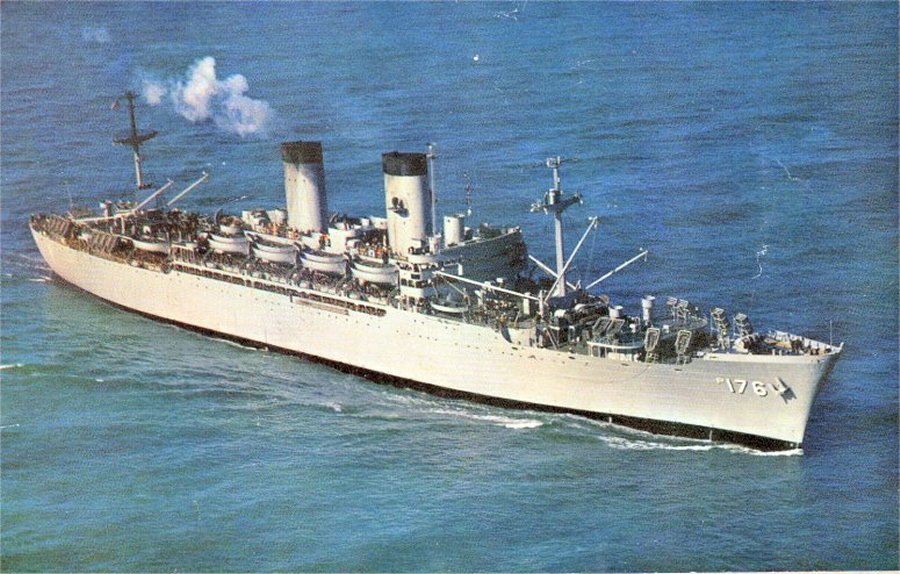
So, after kicking it around a while, I asked him to make his call and find me an assignment in Korea. May, 1963, I found myself on the USNS Sultan with around 2000 other GIs headed for Frozen Chosen.
We had a wild old time on the Sultan. The cruise was a long one because every few hours they’d shut down the engines and lower some kind of sensor to the ocean bottom as part of an ongoing undersea research project. The sea was generally calm, almost glass most of the way, porpoise and flying fish cutting the surface, sometimes banging themselves against the side of the ship.
Below-decks fortunes by enlisted-man standards were lost and won in 24/7 poker, gin, and rummy games. So long as there was no fighting nobody cared what went on down there.
We reached Pearl Harbor and everyone got shore leave for a few hours, preceded by dire warnings about HASP. Hawaii Armed Services Police. “Don’t mess with them. Do what they say or you’ll end up in the stockade or back here on a stretcher.” But 2000 GIs with cabin-fever were too many even for the HASP to keep in line. “Be back on board by midnight. Anyone who isn’t checked in here at midnight is going to wave us goodbye from the stockade.”
Hotel Street briefly had all the usual suspects of merchant mariners, US Navy, and enough wild-assed drunk youngsters off the Sultan to satisfy the most discerning needs of the community. At 11:30 I was standing in line at a tattoo parlor waiting to get a tattoo on a dare. The guy in front of me was getting a cherry tattoo with the words, “Here’s mine! Where’s yours?”
As the artist finished up someone shouted, “We’ve got to get back to the ship. We’ll be lucky if we make it!”
Luckyluckyluckylucky. Back on board as everyone began sobering up the head was full of GIs trying to wash off tattoos. One guy had “In Memory of My Mother” with a rose vine wrapping itself around a tombstone on his bicep. “She ain’t even dead. What the hell did I do that for?”
More endless days at sea, a brief stop in Japan for half-dozen of us toughees to get the socks whipped off us outside a bar by three Australian Merchant Mariners, and on to Inchon.
13 months later the trip home on the USNS Breckinridge was a different matter entirely. The sea was rough, pervasive odor of vomit on all decks. Discipline severe, pecker checks every few days to ferret out the multitude of VD cases. I’ve sometimes thought those troop-ship pecker-checkers might have found the sorriest job a human being could have. Imagine hitting the floor in the morning knowing you’re about to have to watch 2000 of those things milked down before breakfast.
And everyone suddenly knew exactly where Vietnam was. Rumor had it anyone who was going stateside reassignment would be going there in a few months.
74 years old, a resident of Leavenworth, KS, in an apartment located on the VA campus. Partnered with a black shorthaired cat named Mister Midnight. (1943-2020)
Since April, 2020, this blog is maintained by Jeanne Kasten (See "About" page for further information).
https://sofarfromheaven.com/2020/04/21/au-revoir-old-jules-jack-purcell/
I’m sharing it with you because there’s almost no likelihood you’ll believe it. This lunatic asylum I call my life has so many unexpected twists and turns I won’t even try to guess where it’s going. I’d suggest you try to find some laughs here. You won’t find wisdom. Good luck.







 So Far From Heaven

.jpg)