Tag Archives: lifestyle

Running Around Bare-Assed Naked – Visitors, Telescopes and Determination

Good morning readers.  Thanks for coming by for a read this morning.

Yesterday afternoon I was sitting outdoors reading Mitcheners, The Bridges at Toko-Ri [a truly bizarre piece of twisted logic intended to explain why the US was fighting a war in Korea nobody understood] wearing nothing but a pair of shoes.  Nobody much comes here, but I heard a vehicle on the hill, glanced up and saw a truck making its way down.  Ran indoors and slipped on a pair of trousers, still zipping up and pulling my galluses over my shoulders when the newish neighbor pulled up in front of the cabin.

Which has happened occasionally since he moved up there.  Something just to get used to, me being a guy who ain’t interested in what neighbors think of me if they have to use binoculars or come unexpected to get around to thinking it.

We talked a while, had a pleasant visit, and he left without commenting on the fact he’d probably gotten a forbidden view of my almost 70 year old traffic stopping bod.

But this morning when I logged on and glanced through the daily digests of Yahoo Group posts I came across this posted yesterday on the “Not Your Usual Goat” list:

Re: OT: Zillow
 
Fri Jun 29, 2012 9:33 am (PDT) . Posted by: “Cheridehart” thumber_smiget
I am to open to even consider going out nude more or less even in my nighty
. We are to open for that . Even with the neighbors on the next 20 acre lot
We are in farm land area my place was a wheat field at one time what trees
I have around the house I planted . I was adjusting the telescope one day for the hubby for sky watching and
focused in on a house going up on the hill side say about 25 miles away . I
did not think anything of it it was being built did not know someone was
staying there had not seen any one . Had hubby check it out if I had it set
for him okay it was a little blurred for me he wears glasses . Well when he
looked the guy was taking a shower in the garage part of the place right
where I had it pointing Hubby ask me if I was spying on the neighbors and
how many times have I watched him shower . I told him for now on he can
adjust it for him self from now on I am sticking to my own scope which is
pointed a Venus at the moment be going back to the moon soon . We have very
few out side lights so makes for a very good night sky watching around here
Can not believe how may satellites are up their blinking there way across
the skies. The last three good sky events we have had we where so clouded
could not see anything. Cheri
Led me to consider the big house someone built on the ridge about 10 miles away from here, which I watched them build through a telescope.  As it happens, I shower outdoors every day pouring gallon orange juice jugs of water warmed by sunlight over my head.  Direct line of sight from the big house on the ridge.
 
Got me wondering whether Cheri might be up there looking at my private stuff through a spyglass pretending I’m Venus.
 
Which I ain’t.
 
Maybe I need to start keeping one hand over my crotch.
 
Old Jules
 
Afterthought:  About The Bridges at Toko-Ri
Paraphrased
 
Navy Task Force Admiral character:  “No, this war isn’t necessary.  We could let them have it [read, let the North Koreans have Korea].  But what would we give them next?  Japan?  Hawaii?  California?  Besides, it’s honorable.”
 
Soon-to-be-dead fighter pilot:  “I’ve got to do this because the bastards shot down a guy I admired while he was directing fire on their advancing troops.  I can’t let my buddies down.  Wouldn’t be honorable.”
 
Soon-to-be-dead helicopter rescue pilot:  “I do it because I hate communists.  I’m a gutsy guy.  Not some coward.”
 
Weepy wifee of soon to be dead fighter pilot:  “I was against the war, didn’t want my hubby killed.  But I changed my mind after the Admiral explained why it’s necessary.  Now I’m okay with it, though I still whine and weep.  Now I whine and weep in a noble, more courageous way.”


The Electric Kool Aid Acid Test

Hi readers.  Thanks for coming by.

Maybe the reason I lured myself into allowing my hopes to include that 1977 C60 school bus was just a time warp slipped in briefly.  Fond memories have a way of coming back to haunt folks as they approach the jumping off place, I reckons.

A million years ago, Back Just Before Hippies Were Invented, summer, 1964, when KoolAid was just KoolAid and acid was still just something to excite a strip of litmus paper, I had my first experience driving a school bus.

As described in the post linked above, I’d gotten out of jail in Rochester, NY, walked halfway down Ohio, been picked up by a taxicab going deadhead back to Terre Haute, Indiana, after taking a drunken businessman to Columbus, OH, to see his estranged wife and kids.  He left me on a street corner in Terre Haute, where I dodged beer bottles thrown by kids the rest of the night.

Mid-morning a yellow school bus pulled across the intersection where I was standing, a car pulling a trailer pulling in behind it.  Loma Linda Academy painted on the side.  The door popped open and the driver yelled, “Do you know how to drive this thing?”

I had a middling amount of experience driving dump trucks and such when I was younger, and I was hungry enough for a ride to lie through my teeth.  “Sure thing.  Nothing to it!”  He vacated the driver seat, I took it, and we said goodbye to Terre Haute.

Turned out he was a Baptist minister moving his family to Las Vegas, New Mexico.  He’d contracted with the manufacturer to take the bus to Loma Linda, California, figuring he’d stack the seats in back, load up his belongings in the empty space, and get the hauling expenses paid for by delivering the bus.

Rick Riehardt was his name.  Young, 30ish man with a nice family.  One of several Baptist ministers I’ve met in my life I came to respect and was able to enjoy their company.  But a menace behind the steering wheel of a school bus.

The rear of the bus was loaded with his belongings, forward of that, loose seats stacked, with about half the seats still bolted to the floor, up front.  Rick had a five-gallon jug of KoolAid and a cooler loaded with Bologna sandwiches behind the driver seat.  He was “a loaf of bread and a pound of red” sort of man when it came to eating on the road.

We struck up a salubrious acquaintance as we motored along in that bus, picking up other hitch-hikers as we came to them.  Enough, at times, to fill the intact seats in the bus.  College kids, soldiers on leave or in transit, bums, beatniks, people who didn’t care to admit where they’d been, where they were going. 

One kid who’d just been down south working with SNCC and marching with emerging civil rights movement, marching, getting beat-hell-out-of by redneck sheriffs, getting treated like a stinking step-child by a lot of the blacks he was supporting.

The hitchers rotated on and off the bus as we drove southwest, Rick and my ownself being the only constants, me being the only driver.  We hadn’t gone far before Rick began cajoling me to drive the bus on to California after he’d unloaded it in Las Vegas, re-installed the seats, and he’d leave the family behind.  But I was headed for Portales, New Mexico.  Figured on getting off and heading south at Santa Rosa, well east of Las Vegas.

Eventually I agreed to it because I didn’t think there was a chance in hell he’d get the bus to California in one piece driving it himself.  That, and I was probably hallucinating on KoolAid and bologna sandwiches by that time.

We parted as friends, him offering to buy me a bus ticket back to Portales, me insisting I’d ride my thumb.  Caught a ride in Needles, CA, with four drunken US Marines in a new Mercury Station Wagon on 72 hour pass.  Headed for Colorado Springs.  All they wanted from me was for me to stay sober and awake watching for Arizona Highway Patrol airplanes.  Every time I dozed they’d catch me at it and threaten to put me back afoot.

We made it from Needles, CA, to Albuquerque alive, about 1100 miles in 12 hours.  I was ready for a rest.  Crawled into a culvert and slept until I had my head back on straight enough to stick out my thumb again.

Rick and I used to exchange post cards for a decade or so, but I lost track of him somewhere back there.  Never lost track of the KoolAid and bologna, though.  I still keep it around in my head in case I ever need it.

Old Jules

Massacre Canyon – Long After the Dust Settled

Hi readers.  I might have once thought I knew what a massacre was, but time’s eroded my perspective.  During the mid-1990s I made the toughest backpacking trip of my life to spend 8-9 days in there to try for a better understanding of the subject.

Here’s the basic story of the events leading to it being named, “Massacre Canyon”:

http://www.livestockweekly.com/papers/97/07/03/3bowser.html

RETIRED GENERAL Michael Cody served in a somewhat more modern army than the men he and others honored recently at Massacre Canyon in New Mexico, but Cody’s army still traces its history to the men who helped open the West. A student of the era and the area, Cody has an affinity for and an understanding of the men who fought on both sides of the conflict more than a century ago.

Massacre In Las Animas Canyon
Led To End Of Apache Victorio

By David Bowser

HILLSBORO, N.M. — Indian legend maintains that rain at a funeral means the gods are weeping over the death of a great man.

Black clouds boil up over the Black Range Mountains as Michael Cody, a retired U.S. Army general, addresses a gathering along Animas Creek. Soldiers and spectators traveled to this clearing to dedicate a headstone honoring those who fought in Massacre Canyon more than a century ago. Three Congressional Medals of Honor were awarded in that clash Sept. 18, 1879, between the buffalo soldiers of the Ninth U.S. Cavalry and the Apache warriors of Victorio.

“The Battle of Las Animas Canyon did not begin on the 18th of September, 1879,” says Cody, who is working on several books concerning the era. “It had its beginning long before then.”

Until 1872, the Tchine, the Red Paint People of the Apache, made their home around Ojo Caliente in New Mexico.

Prior to 1872, there was a reservation at Ojo Caliente for the Tchine. By 1872, miners and ranchers had come, and the Apache were moved.

They were shifted from reservation to reservation until 1876, when Victorio and the rest of the Tchine left the reservation and went to Ojo Caliente. That winter, they surrendered and were taken to the Mescalero reservation near present-day Ruidoso. They stayed until August, 1878.

“Unable to stand it any longer, Victorio and his segundo, Nana, a 73 year-old man, took the entire Tchine nation, almost 600 people, and left the Mescalero reservation to go home to Ojo Caliente,” Cody says.

The Ninth United States Cavalry, the most decorated unit in the history of the United States Army, was responsible for the area. They were headquartered at Fort Bayard under Col. Edward Hatch.

“When Victorio left the reservation, he headed for Ojo Caliente,” Cody says. “When he got there, he found E Company of the Ninth United States Cavalry. It took Victorio about 10 minutes to turn E Company from cavalry to infantry. He killed about 11 people, eight troopers and three civilians, took 68 horses and mules, and headed out.”

Victorio moved south toward Silver City, New Mexico.

“He hit a couple of small ranchitos to get food, to get some ammunition,” Cody says. “Somewhere between Silver City and Kingston, he ran into a militia group made up of miners.”

Victorio’s band killed about 10 men, took another 50 horses and went down the Animas. Victorio had not lost a man.

Two of the 15 graves in this clearing are those of Navajo scouts who rode with the Ninth Cavalry.

“They were from the Sixth Cavalry, but detached to the Ninth,” Cody explains. “They picked up Victorio’s trail and the entire Ninth United States Cavalry went to the field.”

Second Lt. Robert Temple Emmet was on court martial duty in Santa Fe, N.M., when word came of the attack at Ojo Caliente. Emmet traveled 48 hours by stagecoach to Fort Bayard to rejoin his troops following Victorio down the Animas.

“There are several versions of what happened next,” Cody says. “The stories according to the Apache and in army records does not differ much.”

The First Battalion, commanded by Capt. Byron Dawson with Lt. Mathias Day and a Lt. H. Wright, came upon either an Indian woman down by the creek or a couple of Apache warriors who fired shots at the approaching soldiers.

Ignoring the Navajo scouts’ warnings not to follow, the cavalry chased the Indian woman — or the two warriors — across this clearing about a quarter mile and into what has become known as Massacre Canyon.

The canyon entrance is about 30 yards wide with spires of rock on either side. The trail makes an S-curve through the canyon with a rock outcropping that is about 16 yards wide and three yards deep.

“It’s flat as an arrow,” Cody says. “It’s a perfect place to put about 20 guys with rifles.”

The First Battalion, 25 men from Companies A and B of the Ninth Cavalry and perhaps 50 from Company E, remounted and came through the entrance in single file. With the 75 men well inside the canyon, Victorio opened fire.

Sixty-one Tchine lay along the ridgeline. There were 60 warriors and one woman, Nahdoste, the sister of Geronimo and Nana’s wife.

In the first volley of fire, 32 horses fell. The First Battalion was trapped.

The Second Battalion under the command of Capt. Charles Beyer with First Lt. William H. Hugo and Second Lt. Emmet heard the gunfire and came down the Animas.

As they approached Massacre Canyon, Victorio lifted his fire, let them get close, then opened up again. Victorio now had four companies of cavalry pinned down.

“All this started at 9 a.m. on 18 September 1879,” Cody says. “Victorio followed a classic method of warfare: kill the horses first, then kill the troopers at your leisure — a perfectly executed ambush.”

Late in the afternoon, Lt. Day with a small detachment attempted to break to the head of the canyon to climb up the steep slope and come back along the ridgeline to roll Victorio’s flank.

“As he got on the ridgeline,” Cody says, “the Apache held their fire until he was totally exposed, then opened fire on his flank. Day and his detachment were pinned down.”

Hugo and Emmet with a detachment outside the canyon attempted the same maneuver on Victorio’s other flank. They tried to come up a little canyon on the other side of the ridgeline, climb the massive slope and roll the Apache flank.

“The Apache let him in, then opened fire on his flank,” Cody says.

Now Hugo and Emmet were pinned down.

“By late in the afternoon, it was time to get out of there,” Cody says. “Troops on the valley floor were down to two or three rounds of ammunition per man. The order was given to withdraw. Lt. Day at the head of the canyon refused to obey. He had a man, one of his troopers, wounded on the ridgeline above him, and rather than obey the order, he climbed onto that ridgeline under fire to rescue his trooper. For this the commander of troops threatened him with court martial for refusal to obey his order to withdraw.”

Hugo and Emmet were also given the order to withdraw. They fired three volleys in an attempt to get the Apaches’ attention so the people on the valley floor could get out. It worked, but Emmet also refused to obey the order to withdraw.

“Five of his troopers, buffalo soldiers, were exposed on the ridgeline above him,” Cody says. “Rather than obey the order to withdraw, he climbed the ridgeline to get above those five, drawing fire, then laying down a base of fire so his men could escape. For this Lt. Robert Emmet was threatened with a court martial for refusal to obey an order.”

On the valley floor, Pvt. Freeland was wounded in the first volley. By late afternoon, he was in bad shape. He had taken a bullet through his thigh, breaking the bone.

First Sgt. John Denny, lying on the ridgeline about a quarter mile away, ran through the exposed rock-strewn area to pick up Pvt. Freeland, got him on his shoulders and ran back 400 yards, all under direct fire.

Day, Emmet and Denny were each awarded the Congressional Medal of Honor for their actions.

The field commander, Lt. Col. Nathan A.M. Dudley, who threatened both lieutenants with court martial for not withdrawing, was relieved by Major Albert P. Morrow.

Morrow and the Ninth Cavalry, working with the Tenth Cavalry, continued to chase Victorio.

“The 10th Cavalry blocked the water holes,” Cody says. “The Ninth followed the Apache. The Ninth kept the pressure on the Apache until October 1880 at Tres Cabrillos, when Col. Juaquin Terrazas of the Mexican cavalry got into the act.”

The Mexican government granted permission for the U.S. Army to follow Victorio into Mexico. Morrow’s scouts pinned Victorio down at Tres Cabrillos. Victorio had women, elders and children, and many wounded. They were out of food and ammunition. Morrow informed Col. Terrazas of his intention to surround Victorio and ask for his surrender.

At that, Terrazas withdrew the Mexican government’s permission for the U.S. Army to operate south of the border, insisting that Morrow return to the United States. The Ninth Cavalry wheeled and went back to U.S. soil.

Terrazas surrounded Victorio’s band and slaughtered them.

“It was an abject massacre,” Cody says. “He slaughtered them. He took about 100 women and younger children — not the real little ones — those they eviserated and smashed their skulls. The ones that were old enough, they kept for slaves.”

But Nana, now 75 years old, was out with Nahdoste and 14 warriors gathering provisions. Author Max Evans, whose book on Nana is to be published next year, claims that an Apache medicine woman, Lozen, was also with Nana. According to Evans, Lozen could sense approaching danger. If she had been with Victorio, Evans reasons, the band would have escaped.

“When they got back, they found this slaughter,” Cody says. “That was the beginning of the Nana vengence campaign.”

Every raid that Nana led from then on, he took no prisoners. Nana and his warriors burned and destroyed. Finally, they caught Col. Terrazas.

Nana and his band finally came in.

“When Nana did surrender, he was 76 years old,” Cody says. “They took him to the reservation in Oklahoma and he died there, but he died as an unrepentent hater of the Mexican people. It’s understandable. Honorable men fight for dishonorable causes, but that doesn’t take away from the fact that they are honorable. Nana was an extraordinary, historic figure.”

The services here were the result of seven years of work by Gene Ballinger, a historian and author; Cody and a number of others representing such groups as the Medal of Honor Society, The Buffalo Soldiers Society and other parties interested in preserving New Mexico history.

Twice during the services here on the F Cross Ranch of Jimmy Bason, rain splattered the soldiers and civilians gathered along the Animas.

That evening as most of the participants and spectators sat in their motel rooms in Truth or Consequences or at the S Bar X bar in Hillsboro, the clouds opened up in this rugged, arid land, washing the long-ago battlefield with a heavy mourning rain.

As you can see, it’s not easy to escape a lot of theatrical hand wringing and rhetorical horse manure carried along as baggage when it comes from some retired Army scud with the name Cody worn as a pair of crutches.  A dozen-or-two decades establishes fairly well what those soldiers died for in that canyon.

Even though there’s a USFS road [maintained by US taxpayer funding] leading in from the East, access to the site is denied by the owners of the giant ranch.  For you, me, and any Mescalero Apaches who’d like to see where their ancestors taught the US Army a few basics about ambush.

The only way in involves backpacking down from the Mimbres Divide.  Tough tough tough tough.

But worth every minute of it.  Every drop of sweat it takes to get there.

A person can still examine the pockmarks on the watermelon-sized rocks those soldiers were trying to squinch themselves down behind.  Can still pan spent, deformed rounds out of the canyon bottom.  See the inside of the mind of Victorio, where he placed his men, the landmark selected to commence firing when the troops passed it.

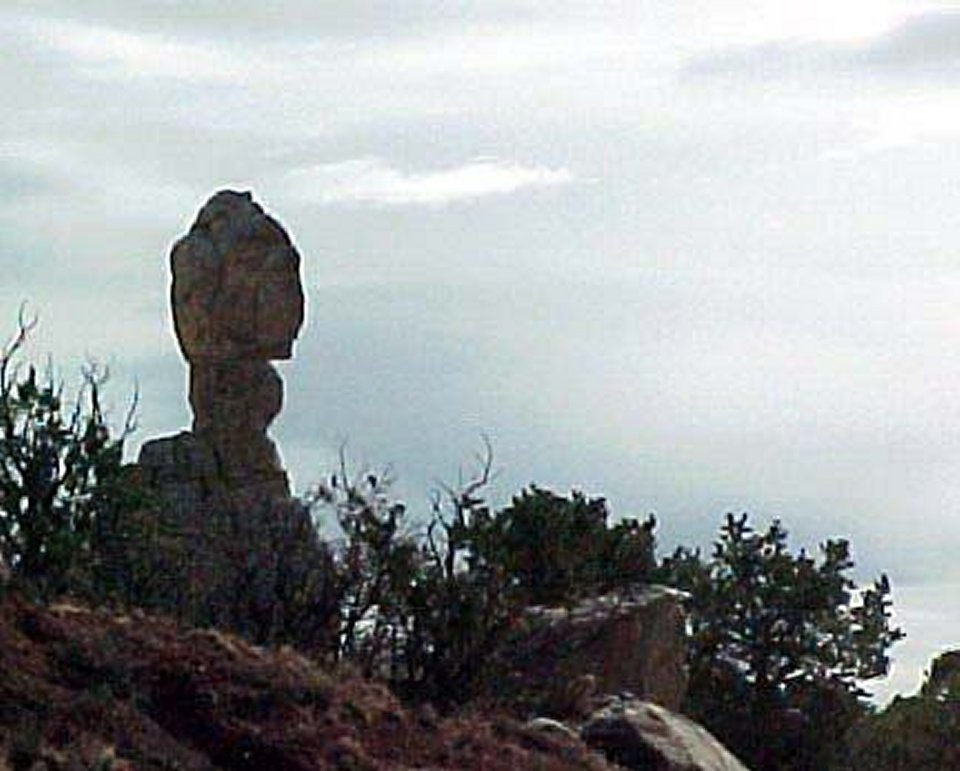
In those days guys like Cody and Gene Ballinger were already doing a lot of posturing and flag waving about the 12 unmarked graves on the plateau you can see in the picture toward the center.  Cody, Ballinger et al didn’t have to pack in.  The rancher to the East allowed them access by the Forest Road.

So during my eight days in there part of the way I passed the time was digging down a couple of feet below the surface various places in the canyon, plateau, and further up Animas Canyon, carefully gathering and placing rocks.  Creating enough other unmarked graves to make it difficult for them to go in and rob artifacts out of the actual graves.  Which I believed then and now, they were in the process of doing.

Old Jules

Suppression of Public Discussion of How Damned Hot It Is

Good morning readers.  Thanks for coming by for a read this morning.

I went to town a few days ago to get the stolen car covered by liability insurance, and when I returned the Great Speckled Bird was defunct.  Evidently decided it was better to take his chances on ending up in a factory farm for chickens next lifetime than put up with more of Old Sol’s blessings during this one.

Naturally his passing stirred things up considerably here.  The bachelor roosters were promoted to full-fledged hen-chasers and released to free range daily, sleep with the flock, nights.  But it’s also caused an undercurrent of rumors.  Whisperings and quiet cluckings nights when the doers can’t be identified and prosecuted.  Claims that it wasn’t just the heat offed TGSB, but radioactive fallout. 

It’s partly my own fault.  One of the felines was probably sneaking a look when I was reading trivia such as the article below:

http://www.prweb.com/releases/2012/5/prweb9498292.htm

Gen. Stubblebine’s prognosis is dire: “When the highly radioactive Spent Fuel Rods are exposed to air, there will be massive explosions releasing many times the amount or radiation released thus far. Bizarrely, they are stored three stories above ground in open concrete storage pools. Whether through evaporation of the water in the pools, or due to the inevitable further collapse of the structure, there is a severe risk. United States public health authorities agree that tens of thousands of North Americans have already died from the Fukushima calamity. When the final cataclysm occurs, sooner rather than later, the whole Northern Hemisphere is at risk of becoming largely uninhabitable.

“. . . The US Government’s statistics document an excess death rate of 20,000 US residents, mostly healthy infants, in the first 9 months following the multiple nuclear events at Fukushima. . As a humanitarian, strategist, intelligence analyst, father and grandfather, General Bert understands that doing nothing is, quite simply, not an option.

“. . . The lack of information is, however, a matter of State policy in Japan where it is now a felony offense to discuss negative aspects of either nuclear power or the Fukushima situation in particular.”

Old General Bert’s correct, the cats, chickens and I all agree.  Doing nothing is not an option.  But as Commander in Chief around here, I’m not aware of a damned thing I can do, nor of anything the cats and chickens can do to influence whether the Northern Hemisphere becomes largely uninhabitable.

Any more than we can do anything about this heat wave, except hunker down and try to think of ways to not follow TGSB into the next incarnation.  And maybe try to find something useful to occupy ourselves despite the standing 8-count we’re all trying to function in.

For starters, I’m declaring martial law within the hearing-radius of the cabin and henhouse.  Japan, at least, can be accused of doing something, even though not a damned thing can be done.  I’m taking a page from Japan’s book and making it a criminal offence for any item of poultry, feline, or human being here to say, “Damn it’s hot.”  Or, “Reckon how radioactive it is today?”

Old Jules

RC Royal Crown Cola and Tom’s Toasted Peanuts

Despite the fact of Asians having become so much more intelligent, better educated, industrious, innovative, inventive and economically responsible than westerners during the last half-century, a few things are still out there they’ll never catch up on.  One of those is RC Royal Crown Cola with a bag of Tom’s Toasted Peanuts or Planter’s Peanuts floating in it.

A couple of other things they’ll never surpass us on include the kind of Italian food you’ll get down at the Fongoul Restaurant, Mexican food New Mexico style with green such as you’ll get at Cojone’s Mexican Cafe, and those fantastic Greek sandwiches I can’t recall the name of.  Guido? 

You’d have to have peeked into the kitchens of a few Chinese restaurants during your lifetime to know that, though all other Asians have it figured out, the Chinese got left behind about 10,000 years ago in matters of basic food sanitation.  If you eat in Chinese food joints much there’s a middling good chance you’ve eaten something that’s already been through a Chinese digestive tract, introduced to the food when he clipped his toenails into the egg drop soup.

That’s the reason Chinese restaurants use all that MSG, even though they know it will probably give you a stroke one of these days.  Covers up the taste of other things got in there, either by accident, or design.

I don’t claim to understand why it’s so.  Koreans, Japanese, Cambodians, Vietnamese, Thai, they’re all probably more concientious about food sanitation in their restaurants than the average westerner.  But the Chinese restaurant that isn’t feeding customers cockroaches, toenails and spit is by far the exception, rather than the rule.

I’ve heard the matter discussed among health department inspectors more times than I can remember [none of whom would dare eat Chinese without having gone over the food preparation area before-hand].

Maybe they’re still trying to get even with Christian missionaries for the Taiping rebellion and figure everyone else qualifies as collateral damage.

Old Jules

Uppidy Modern Human Beings

Good morning readers.  Thanks for coming by for a read this morning.

21st Century human beings, and those of us left over from the 20th tend to get fairly uppidy and smarty pants about all the people we managed to slaughter during the 20th Century.  That, and how many we’re likely to off inadvertently here pretty soon [what with the Japanese sewer plants spewing radioactivity into next week’s cat food and whatnot].  We think we were special and innovative with WWI, WWII, the Gulags, Cambodia, Viagra – er, Biafra, the German camps, the Rape of Nanking and other incidentals perpetrated by the Japanese Empire, the pre-WWII French death camps in the Carib for their felons and political problems, Mexican revolutions, Great Cultural Revolution in China.

Mostly fairly piddly stuff compared do what a lot of our ancestors pulled off.  About the time we Americans were bragging about how many people got slaughtered at Gettysburg, in China they were actually doing it up right with the Taiping rebellion.  Bloodiest civil war in the history of humanity and until WWII took the trophy for killing more people than any war of any kind.  100,000 people slaughtered in a single day in the battle of Nanking.

A government clerk named Hung got hold of a Christian Missionary tract in the 1850s,  “Good Words to Admonish the Age“, understood it and decided he was the brother of Jesus.  Set about establishing a new heaven on earth with one-hell-of-a-lot fewer people in it, none of whom didn’t believe he was the brother of Jesus.  Came damned close to succeeding, too, insofar as the Manchu Empire was concerned.

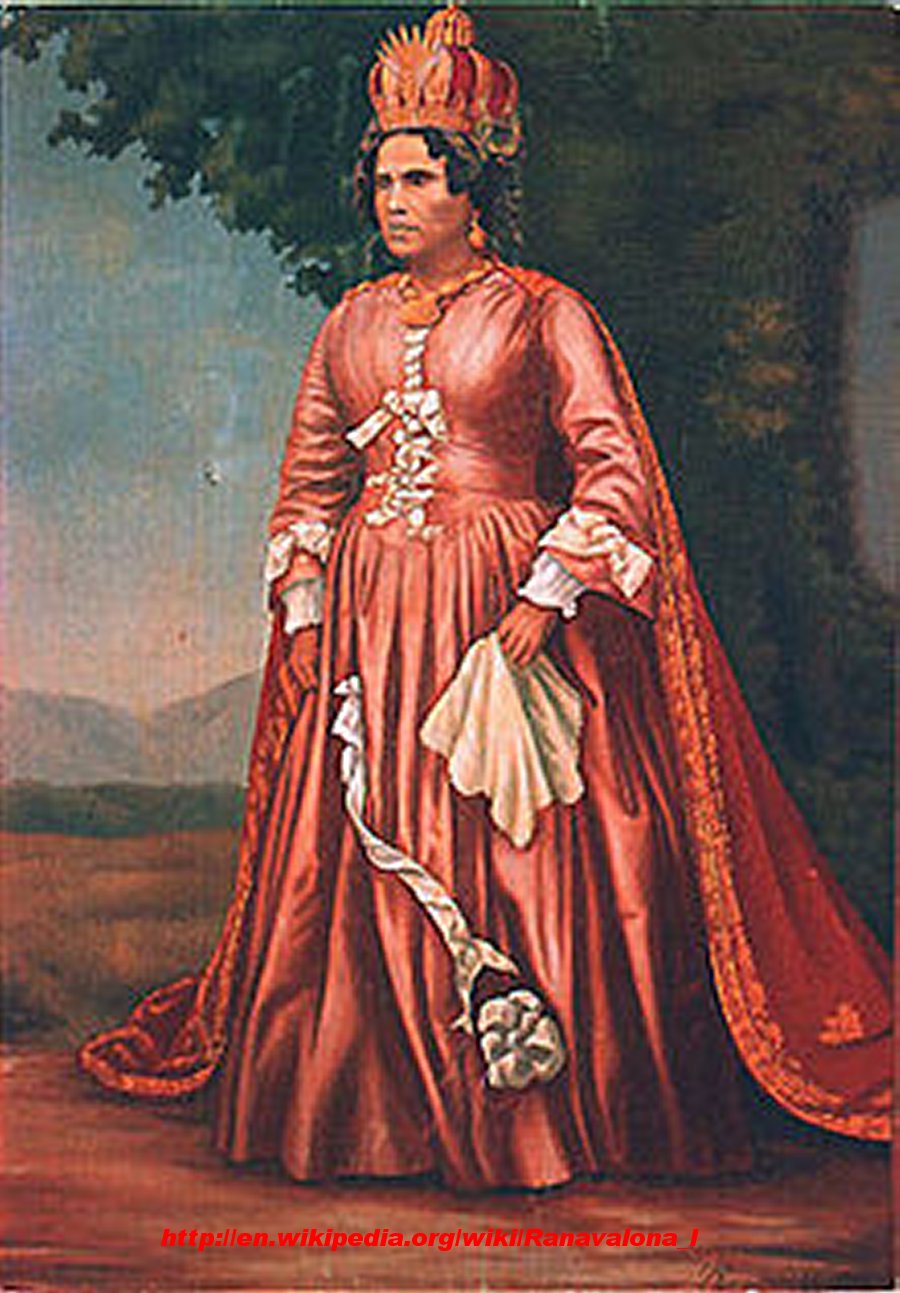
Then there was Queen Ranavalona I of Madagascar, decided she didn’t like people who didn’t belong to her own tribe, killed off two-three million of them during the 1840s.  Survivors dressed up like Europeans, did opera, ate with the right forks and spoons.  But honestly didn’t like Europeans, either.  Butchered or enslaved any of them they could catch.  On second thought, didn’t like anyone else, either.  Gave them mostly the same treatment when they could catch them.

Keep in mind there were a lot fewer people available to be offed in those days, and a million was a lot, compared to the 20th Century where it dwindled down and got piddly.

Just because you’ve got a television where you can hear about it and keep count with a computer doesn’t mean you’re any better at it than your great-granddad.  Considering the tools he had to work with, he was better at it than you.

Old Jules

Loaded With Extras

I take the view the only really necessary parts on a vehicle are:

  1. Engine and drive train,
  2. wheels of some description
  3. Steering device
  4. Throttle
  5. Someplace to sit or stand.

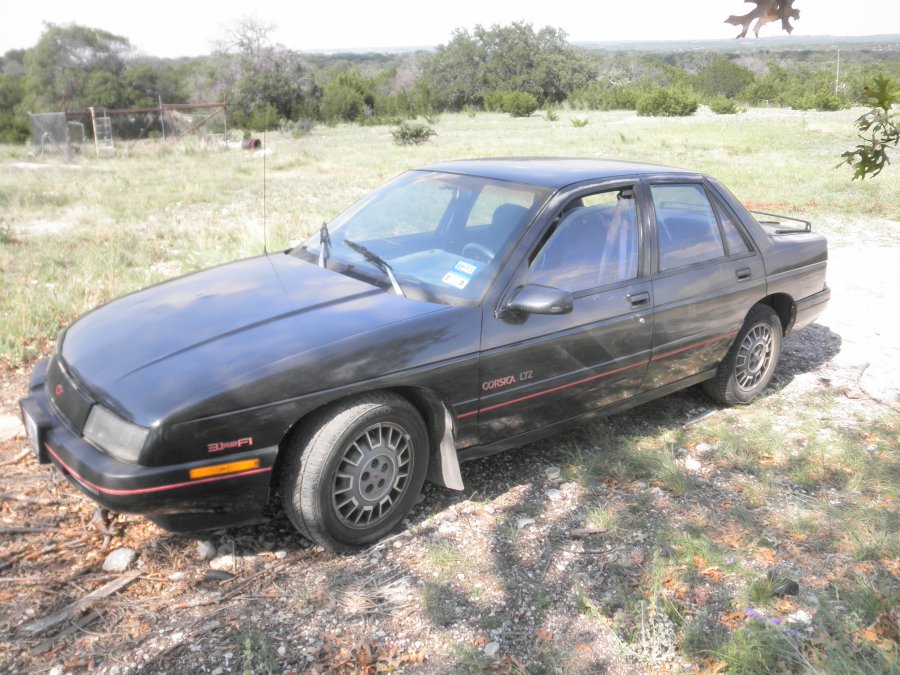
This car is loaded with extra parts.  For instance, notice that hood with all the paint on it and the little hump.  That hump was caused sometime when something flew off the engine and instead of heading off somewhere the driver wouldn’t have to deal with it, bounced it back into the engine compartment.

Paint is a definite useless extra, and the hood doesn’t do anything except make it more difficult to get to the engine.  Same as that windshield.  Just something else to break.  If the car didn’t have a windshield it wouldn’t need windshield wipers forever wearing out.

Look at all that expensive, useless crap they hang on those cars.  Bumper.  Mirrors, lights.  Just more stuff to go wrong or get knocked off.  Something covering the radiator.

More useless paint, little signs hung all over the place, hubcaps.  Reflectors.

All that stuff on the tires to wear out.  If they’d just wrap the hubs with electrical tap they’d never go flat.  Or make them out of solid rubber so’s a person could wear them all the way down to the axles, or at least the hubs.

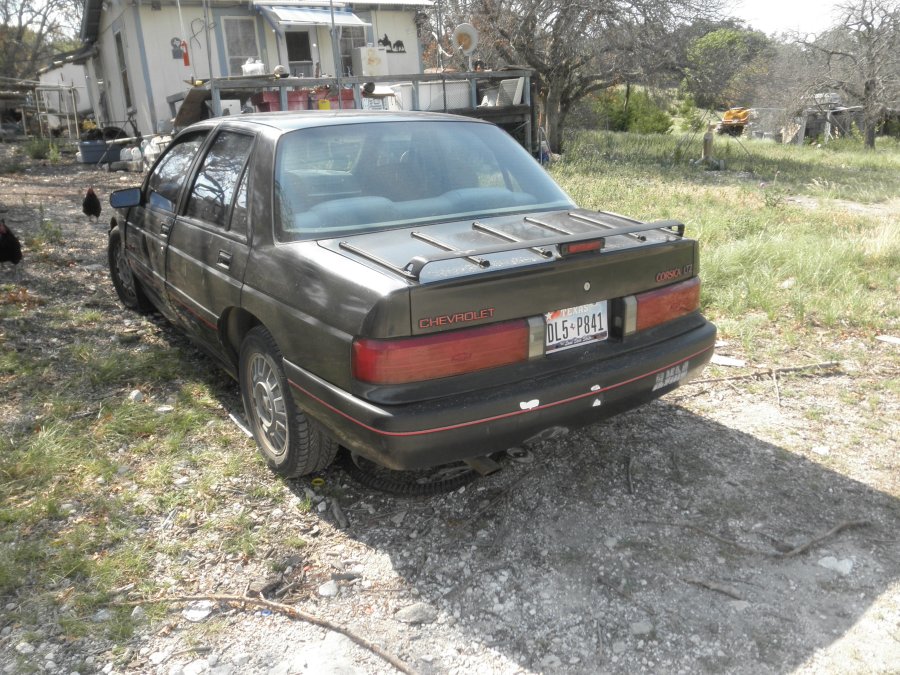
Look at all this junk!  Tail lights.  Some kind of weird handle across the trunk.  More little signs.  A back window.  A tail pipe!  A dadgummed tail pipe hanging out there to catch on rocks and deadfall trees.  But most of this extra stuff will take care of itself over time just getting in and out of here. 

Luckily, the brakes are fairly spongy so’s I won’t have to trouble myself with them long.  If I need to stop planned, I’ll just shut down the engine.  Or emergencies, put it into reverse, or parking gear.  Or run it into something heavy.

Old Jules

Unplanned Protrusions

Good morning readers.  Thanks for coming by for a read this morning.

A person with his ear to the ground listening for possibilities and interference from the Coincidence Coordinators can find himself in unexpected places, which I did.  Yesterday.

Had to go into town for groceries and animal necessities, but I’d been watching that bus for about six weeks.  Thought it might be time to begin feeling around in the head of the man who owns it. 

We were sitting in the car lot office circling the issue, nobody putting a toe in the water when a Lincoln pulled up in front and a guy got out, shouting, “I put serious stuff up my nose!”  He was shouting it non-verbally, but body language communicates sufficiently sometimes.

He jitterbugged into the office – it was clear he and the owner knew one another – and pointed across the lot to an older model American somewhat small car. 

Tweaker talking a mile a minute:  I’ve got checks out I need to beat to the bank with cash.  Would you buy that car from me for $1400 cash right now?

Owner:  No.

Tweaker:  $1300?

Owner:  No.

This progress worked its way down $100 at a time to $400, the owner nodding negative.  The tweaker paused.  “No?”

Owner:  NO.  I’ve got a cash flow problem here.  When I sold you that car I’d taken it on a trade in.

Tweaker turns to me:  Would you buy it?:

Me:  No.  That ain’t my kind of car.

Tweaker:  Huh.  I guess I’d better try to sell it to someone else then.  I’ll get my stuff out of it.

Tweaker goes out to the Chevi, takes a lot of stuff out of the back seat and carries it over to the Lincoln.  Meanwhile, I’m thinking.

Me to owner:  Would it be any problem for you if I bought that car from him?

Owner:  He bought it from me.  I don’t have anything to do with it now.

So, I got to the car about the same time as the tweaker returned to it, asked him about it.  Keep in mind, he’d talked to me in the office a few minutes earlier, asked if I’d buy it for $400.

Tweaker:  Would you buy it for $1400.

Me, scowling:  No

Tweaker:  $1300?

Me:  No.  Do you remember me?  I was in there with you and him a few minutes ago.

Tweaker:  Sure.  Would you give me $1200?

Me:  No.

We worked our way back down, me assuring him I honestly wasn’t certain I was interested at any price.  So we went over it, looking at everything, listening to the engine, driving it around the parking lot.

Tweaker:  Are you going to buy it?

Me:  You only got down to $600.  We aren’t down to talking about it yet.

Tweaker:  But you haven’t made any offer.

Me:  I’ll give you $400 lock stock and barrel.  No sales tax, no nothing else.

Tweaker:  That’s just the amount I was hoping for.

Turned out the papers from him buying it hadn’t come back from DVM yet, so I sent him off to get whatever was needed to sign it over to me and he left, saying he’d be back there at 2:00 pm.  I went off to a couple of thrift shops and returned at 2:00.  He was nowhere to be seen, so I hung around chewing the fat with the car lot owner until he arrived back and we did the motions of transferring things him jittering and jotting, talking incoherently.  We had a blank form and he signed it, wrote out a bill of sale on a piece of notebook paper.  Barely readable.

The story should have ended there, me coming back here to get Gale to haul me to town to pick it up.  But the tweaker had a lot of dances and fast peter-piper-picked-a-pail-of-pickle-peppers left in him he needed to get out.  Asked me if he should give me $100 back on the car.  No idea why.

Me:  No.  We’re okay. 

Eventually I nudged him friendly out to the Lincoln so he could go take care of the bank.  Went back inside the office shaking my head, made arrangements to leave it in the lot a few hours, or until this morning so’s I could come pick it up.  We all shook our heads at one another, shrugged, shook our heads some more and I was on the road home.

Gale was ecstatic, knowing he won’t be loaning me Little Red anymore for my necessaries.

Me, I’m just tickled the Coincidence Coordinators are so much smarter than me.  When the time comes I’ve figured out I don’t need it I’m comfortable I won’t lose money on it, provided it still runs.  But even as junk I won’t lose much if it comes to that.

Old Jules

Tough realities

Good morning readers.  During a thunder storm passed over here a few nights ago I was pondering this experience most people think of as a lifetime.  Specifically, this one of mine and where it appears to be from where I’m viewing it.  Lowest common denominators, that sort of thing.

Maybe it was one of those lightning bolts came through the roof and dropped a cargo in my head.  But it came to me in a flash of uninvited insight that if a person wants to decrease the volume or surface area of a cone or cylinder in any significant way, it’s the radius, not the height he’s going to have to change.

My first thought was it’s a lousy piece of news, but it isn’t news.  It’s been there all along.  I just didn’t happen to focus my attention on it.  Can’t possibly be lousy news if it was there all the time.

Old Jules

Keeping the Sacrifices Hidden – Straw Men, Trojan Horses and Pick-Pockets

Good morning readers.  Thanks for coming by for a read this morning.

I’ve been pondering this strange dearth of political bumper-stickers, which seems to me to be unprecedented for a year of national elections.  Particularly contests over who’s to be king.  Maybe it’s just the fact it doesn’t matter anymore.  The scrapings of US production so far gone what’s left isn’t worth stealing. 

But maybe there’s another factor at work.

One of the big let-downs of the post WWII era for kings, king-makers, wannabe kings and king-makers, war profiteers, and economic shell-game artists, was the citizenry.  They were stupid, but not as stupid as they needed to be to satisfy the hopes and expectations of those who needed their [preferably active, but at leat tacit] consent to be gang raped.

By the end of the Vietnam War it became obvious that, aside from a few mindless flag-wavers and a re-definition of the word ‘patriot’, most of the citizenry wouldn’t support long-duration undeclared wars, for instance.  Even when the body-bags only contained volunteers.  Even when the sacrifices were disguised in exponential growth of national debt.

Frustrating, tricky business.  Constantly having to dream up Wars on Poverty, Wars on Drugs, Wars on Terrorism to keep them from  noticing their pocketbooks and jobs were going away.  Convincing them  the reason was undocumented workers, non-Christian religious fanatics, and the folks who couldn’t find jobs.

Maybe there’s just a growing realization within the population that it’s already been robbed of everything of value, that it allowed itself to be surrounded with cops, mercenaries, a huge prison system, sophisticated weaponry, and personal debt it can never repay.

And not a single name they could put on a bumper sticker who isn’t a part of what did it, will continue doing it.

Maybe they’re finally just saying, “To hell with it.  They can kill me, but they can’t eat me.”  At least not until someone discovers a way for politicians, bankers, multi-national chief executives, and dynastic wealthy to live longer by ‘donated’ body parts of the citizenry as a means of collecting personal debts or paying off national ones.

Old Jules