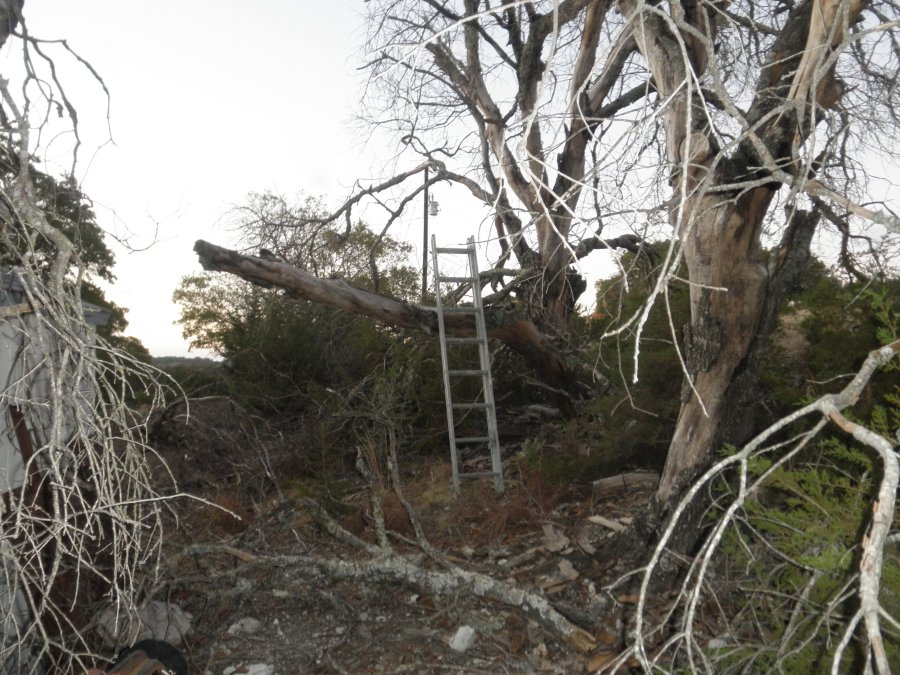
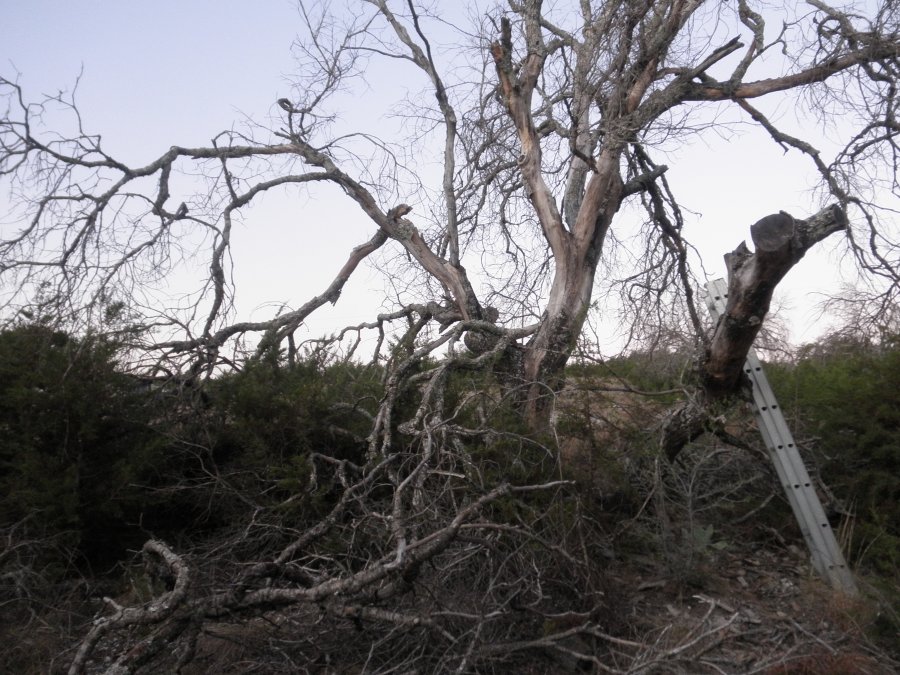
About a year ago the trees in the vicinity of the cabin began dying. I’d been fairly certain it would happen because there’s a grove immediately above about 100 yards that had all died off two or three years ago. It appears to have started at the power line easement atop the hill and is making a path of dead trees moving east, or downhill.
Conventional wisdom is that it’s Red Oak Wilt, or Red Oak Disease. There aren’t a lot of certainties about it, no preventive measures or cures anyone’s aware of.
Over the space of about a month they lost all their leaves and the bark began separating from the wood. One of the problems with trying to get them down is the abundance of wasps making nests between the wood and the bark. Hundreds of wasp nests and clouds of angry wasps. The temptation is to wait for a cold day.
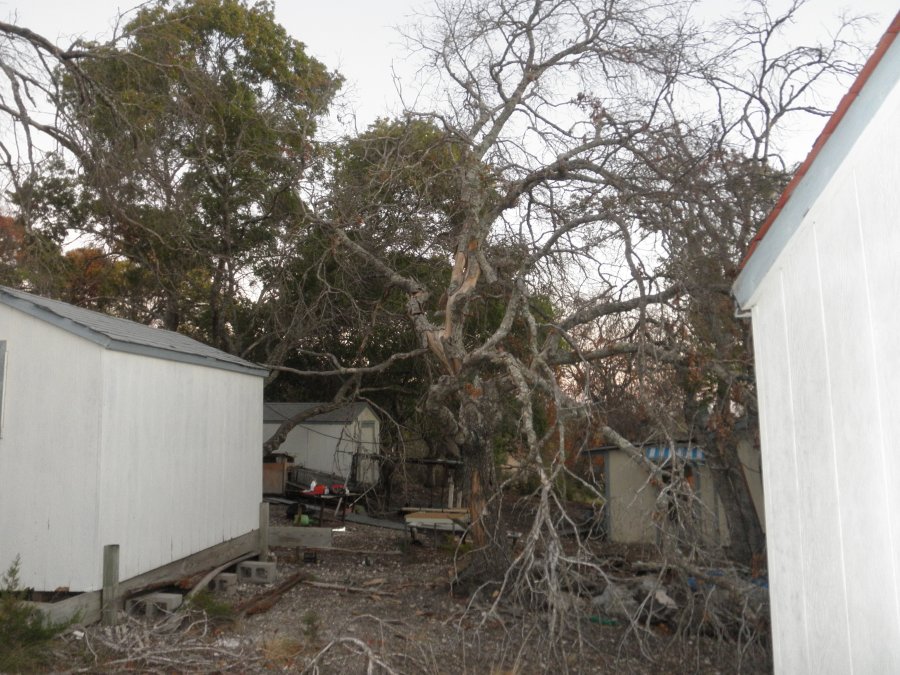
There was a certain amount of urgency about trying to take some of them down because after Oak Wilt kills a tree the first strong wind often brings it down. Evidently the disease rots the root system long before anything shows above ground. Several of the dozen-or-so trees dying immediately around the cabin and outbuildings actually have large limbs hanging over roofs.
But the nights are cooling enough to send the message it’s time to begin building a pile of firewood. It won’t take much hauling this year. Some of it I could almost cut and allow it to drop down the chimney pipe.
The larger trunks are going to be a major undertaking to split, so I’m thinking I might sawmill any of them with potentially good lumber left. Sometimes Oak Wilt rots out the center too badly to leave anything worth using except to burn, but sometimes it leaves the heartwood almost untouched.
If there’s enough capable of being sawmilled it might provide enough oak for a project I have in mind cut relatively thin into planks usable for building a structure. But in any case it ought to stay toasty inside the cabin this winter.
I had a friend for a few years who lived everything the American Dream used to think it was. He was working for a steel fabrication company in Silver City, New Mexico during the 1970s doing grunt labor, but thinking. He saw around him some flaws in the ways the process sequences were performed, believed he could advance in the company by suggesting improvements.
Marsh, I’ll call him, went home nights and worked in his garage inventing a tubing bender far more efficient than the one used where he worked. After it was complete, he took it to the company, expecting praise and rewards. They shrugged, brushed him off and kept him busier at work.
So Marsh applied for a patent, began manufacturing his bender in his garage. He couldn’t keep up with the orders, so he quit his job and expanded, meanwhile inventing other improvements on what he’d seen, manufacturing and selling those, also, becoming a surprisingly wealthy man within a decade or so.
His business flourished, his children matured, and one of his sons started another business, inventing, patenting, marketing. His son became wealthier than Marsh, far more rapidly. The son, carefully examining his conscience and human needs, his business thriving, spent a million dollars and several months in Afghanistan during the early 2000s building housing, providing shelter for those left homeless by the wars there.
But during those same years Marsh began seeing his patented designs showing up in Harbor Freight and other Chinese import outlets priced lower than he could manufacture them. His patents were being violated and the US government was allowing those violations to be imported with impunity. During a Republican administration. His own inventions competing with him in stores all over the US.
Marsh was outraged and gradually the business he’d built was being destroyed by theft with the complicity of the US government.
Marsh listened to daytime talk radio a lot during those years. He got daily doses of opinion telling him the source of his problems, and those problems were caused, he allowed himself to be persuaded, by liberals in politics. When the Tea Party emerged, he attended meetings and demonstrations hoping to bring about political change, hoping somehow to save his business, his livelihood. Furious, frantic, determined, certain now, this president, this administration was out to destroy him.
Last I heard, it was doing so. His business was declining to such an extent he was being forced to lay off longtime employees vital to continued operation.
All the years I knew him Marsh was an honorable, honest, solid, hard-working man, dedicated to the betterment of himself, his employees, his country and humanity.
But somehow he missed the point, maybe because he was standing too close to the problem. Maybe because he was holding to a dream of how things are that no longer was.
Marsh, to this outsider looking in, was destroyed by a government comprised of the illusion of two parties. Both were bought-and-paid-for by people bigger than Marsh. Neither of those parties cared what happened to Marsh, to his family and employees, to the dream, the innovation, the drive, the ideal he represented.
Marsh was betrayed by the people who own the talk-radio host he listens to, who own the Tea-Party, who own every facet of this country where the decisions are made as to whether US citizens work, prosper and are rewarded for their labors rather than being merely consumers of foreign products.
Marsh didn’t belong in the Tea Party. He belonged in Occupy Wall Street.
It’s become popular during the past few decades for individuals believing they have come connection to a group of dead men judged by hindsight to have harmed other groups of dead men, to apologize for the offending activities of the deceased they believe they’re responsible for to living people it didn’t happen to.
My granddad had a cap and ball pistol he inherited from his granddad. The butt had a lot of notches carved into it, which probably meant the weapon had been the instrument of the untimely deaths of a good many people who might otherwise have lived longer.
Genetic karma?
The man pictured above owned slaves in his lifetime, fought in wars and feuds. He was the great-grandfather of the man below, my biological father.
But his daughter was the mother of this man: Cole Younger. Killer, bank and train robber, rider with Quantrill during the Civil War.
Meanwhile the same genetic pool was spreading itself across the continent like some sexually transmitted disease. Cherokee, Choctaw and other tribes sneaked into the mix.
So here’s the problem:
I want to make all this right with all the people in the gene pool derived from the dead people who were wronged by the dead people within my own gene pool. I’d like to offer them an apology for the ugly stuff those who share my gene pool did to them.
For instance, the guy with all the hair on his face was part of the ugliness perpetrated against the Cherokee and Choctaw and the Trail of Tears. Naturally, if I’m to rid myself of the overwhelming guilt I need to apologize to some group of living people those painful things did not happen to. Cherokee and Choctaw, preferably.
But, whoooowah! The people on the Cherokee and Choctaw side of my gene pool are me. How can I convey my regrets to the Cherokee and Choctaw in me from the guilt-laden Anglo side? And can I assume without fear of error that my Cherokee and Choctaw genes don’t include someone who did something to some other group I need to absolve?
Is there some living group of people out there seething over something that didn’t happen to them, but happened to their ancestors as a result of some offense committed by holders of the Cherokee Choctaw genes?
And what’s all that turmoil and guilt churning around in my gene pool doing to my cells and whatnot?
Just to be on the safe side and try to set things right I think I’d best give myself a present as a gesture to calm things down. Yeah, I think I’ll eat an orange or banana.
Coming back from Fredericksburg yesterday I spotted this sitting in a field 100 yards off the pavement. I felt an immediate kinship, made a U-turn to go back for a closer look.
The first new vehicle I ever owned was a 1970 F150. Standing here looking at this one too-long left in a pasture, flat tires, dents and proud sign I flashed a brief, joyful memory of driving mine back to Austin from the dealership in Luling.
Someone did the same with this one from some other dealership. I wonder if he remembers the day, wonder if he’s even alive to remember some piece of geography he shared with this heap of steel, glass and rubber before me.
The young don’t know enough
About being young
They squander youth
And never know ’til later.
Any lad of twelve will testify
An eight-year-old can’t even qualify
To be a child
At eighteen our own ignorance
At fifteen is finally written
In language we comprehend:
We know the score
Reality’s the icing on the cake
Of youthful fantasies;
When the young grow old
They know a lot
About being young
But almost nothing
About being old.
But trucks know
Trucks have the dents
Worn bearings
Frayed seat-covers
Holding a thousand
Passed-gas kisses
Spilled drinks
Forgotten miles
Of those who forgot.
Recurring dreams of life
Disturbed his slumber
Nightmares they often were
But they were dreams
Had to wait in line
Almost forever
To even get a nightmare
Ticket out
For just that tiny while
From all that somnolent
Incessant
Endless nothing
Broken now and then
By welcome
Welcome dreams;
Nightmare punctuation
In a twenty-chapter sentence
Was a blessing;
Wished he could kill himself
When he killed himself
In dreams
But never quite learned
To love the nightmares
While he dreamed them
The human mind is a strange place to find ourselves living if we ever get enough distance from the background noise to notice. I tend to notice it a lot.
This morning seemed destined to be just another day. Gale and Kay were doing the Austin Gem and Mineral Show, so I’d figured to walk up to his house to get the truck mid-day so’s to take care of putting their chickens to bed tonight. Startled me a bit when I looked up and there he sat in Little Red a few feet away, having brought it down to me. My hearing must be further gone than I’d realized.
Seemed they’d no sooner gone than I got an email from Jeanne saying my old friend from childhood and later lost-gold-mine chasing days was in Fredericksburg trying to get hold of me hoping I could get over there for lunch. Heck, it must be 15 years or more since I’ve seen Keith, though recently he’s been reading this blog. Naturally him being 40 miles away and me with a truck sitting there available, I headed over there.
Really nice visit, but in the course of bringing one another up-to-date he asked me a number of questions about my situation here that forced me to take a hard look and organize my thoughts about it all. That kicked off a series of trails of thinking to organize clearer, more concrete priorities for myself within a realistic examination of my options.
There aren’t a lot of them, but they’re all stacked atop a single one: having the means of leaving this place in a relatively short time if the need arises. It’s time I decided on a single course of action and begin leading events in a direction that allows it to congeal in a way that accomodates the needs of the cats.
But the process of thinking about it in an organized way had a parallel thinking-path over whispering somewhere else in my brain wiggling out a sort of excitement, anticipation about it. Here’s something that will be pure trauma and agony for the cats I do everything possible to spare such things, and my ticker’s beating a little faster in a pleasurable way just considering it.
That, combined with the certainty the process of getting things together to execute the plan I come with is going to involve some unpleasantness, excruciating work and fingernail chewing as it goes along.
Seems I’ve somehow contrived to be two different places at the same time inside my mind. One being pushed by probabilities to do what makes sense rather than what I’d prefer, the cats would prefer. And one reaching somewhere into fond memories of pinon trees, high mountains and an entirely different sort of solitude than I have here.
Keith confided to me today, “Everyone thinks you’re crazy.” I can’t find any good argument that everyone’s wrong. It’s nice being crazy and still being as happy as I manage to be all the time, though.
Anyway, to satisfy that fiddle-footed nagging, here are some songs of the highway and the road.
For a number of years I’ve watched people wearing ball caps turned backward and sideways, nobody raising an eyebrow. I’m not sure why they do it because the purpose of the visor on a ball cap is to protect the nose from Old Sol’s battering. But I gradually began to wonder if people just didn’t know which piece of a hat is the front, which is the side, and which is the back.
Eventually I decided to perform an experiment. I carefully selected a hat for my next trip to town, determined to wear it backward all day, seemingly oblivious to that. I wanted particularly to corner-of-my-eye observe the reactions of people wearing their ball caps backward and sideways.
My findings weren’t ambiguous. From my first stops of the day I saw that people of every age and gender did double-takes, then attempted to surreptitiously call the attention of someone else to the fact I was wearing my hat backward. If they had no companion they’d nudge a stranger to share it. Not once did anyone sidle up to me and whisper, “You’ve got your hat on backward,” as they’d have done if my fly was unzipped.
If I’m wearing a hat when I eat in town I usually take it off a moment while I briefly acknowledge gratitude. On this occasion the hat was on backward when I entered and took my seat, ordered my food and waited to be served. The café was well populated and though I pretended to be reading I observed the hat was a subject of notice and concealed, smiling discussion at almost every table.
When the food arrived, after the waitress left, I removed the hat and bowed my head a moment, then replaced it, facing forward. But, pretending to notice I’d put it on forward, I took it off, looked at it, then turned it backward again on my head, and began eating while still occupied with my book, watching the other patrons.
This brought giggles and laughter, even among those wearing ball caps turned backward and sideways.
My conclusion from this study is that people don’t know what is the front and what is the back of a ball cap, but they do know the front from the back of western-style headgear. I believe the findings are important enough to justify more in-depth study by PHD candidates in anthropology, sociology and fashion.
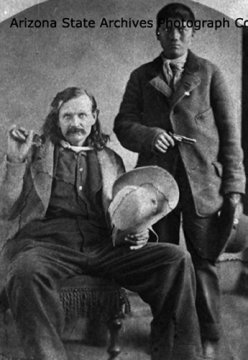
This is Jack Swilling, founder of Phoenix, Arizona, who died in prison awaiting trial for homicide. He was posthumously acquitted. However, Swilling’s hat is the issue here. There’s a bullet hole in it, and it’s been ripped almost in half and sewn back together. Swilling’s hat could be worn backward, forward or sideways and nobody at all would allow himself to notice.
Here are some other examples of non-ball caps that might be worn backward without concern:
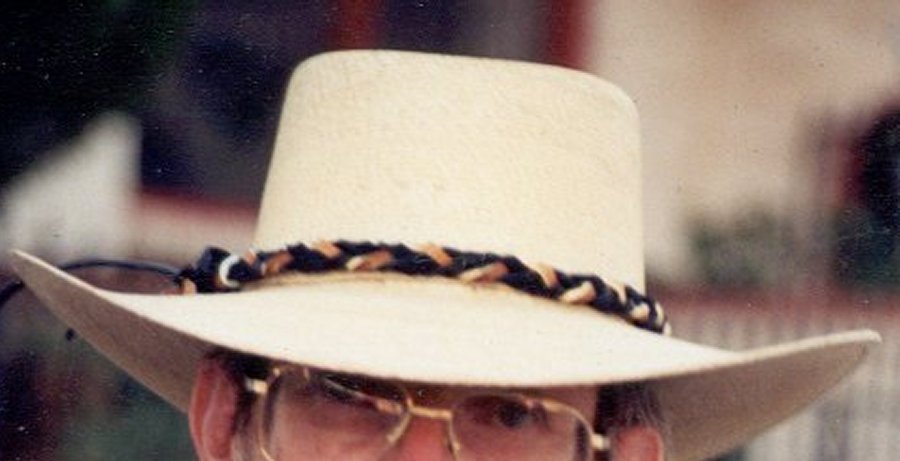
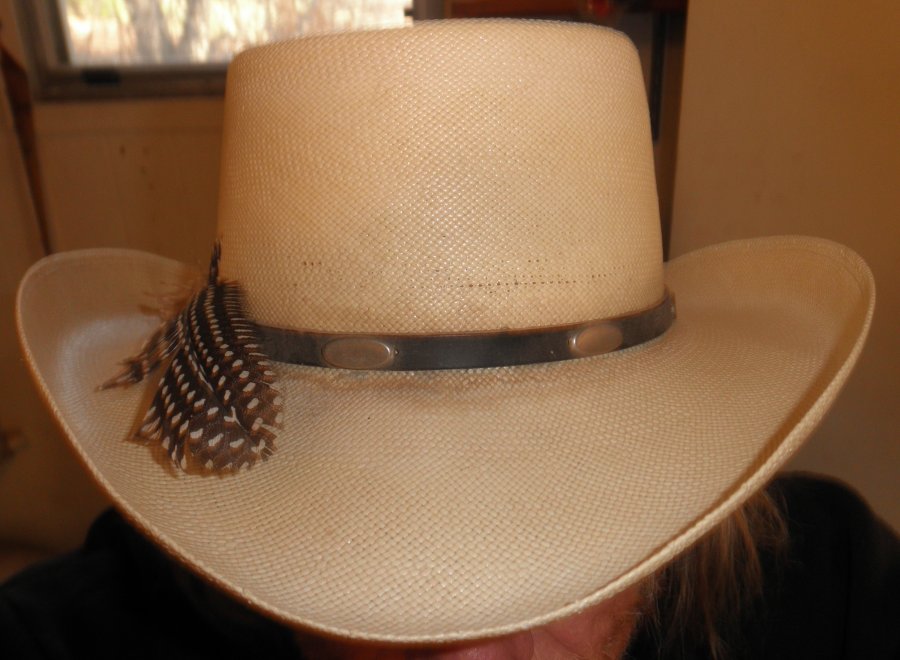
Manny Gammage of Texas Hatters made this hat for me in 1971, or 1972. The style was dubbed The High-Roller.
Here it is today with the original Mystic Weave band Manny put on it when he made it. I’ll leave it to your judgement and the judgement of the PHD candidates whether it ‘works’ backward.
Other possible backward hats:
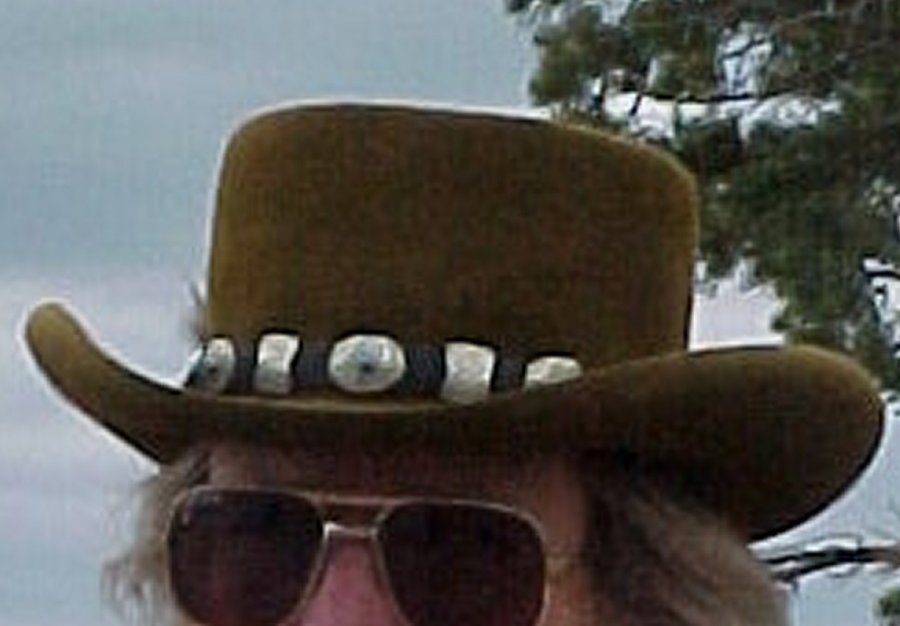
This pic was taken around 1976 worn conventionally.
Here’s the same hat today, backward. Your call.
Straw John B. Stetson backward.
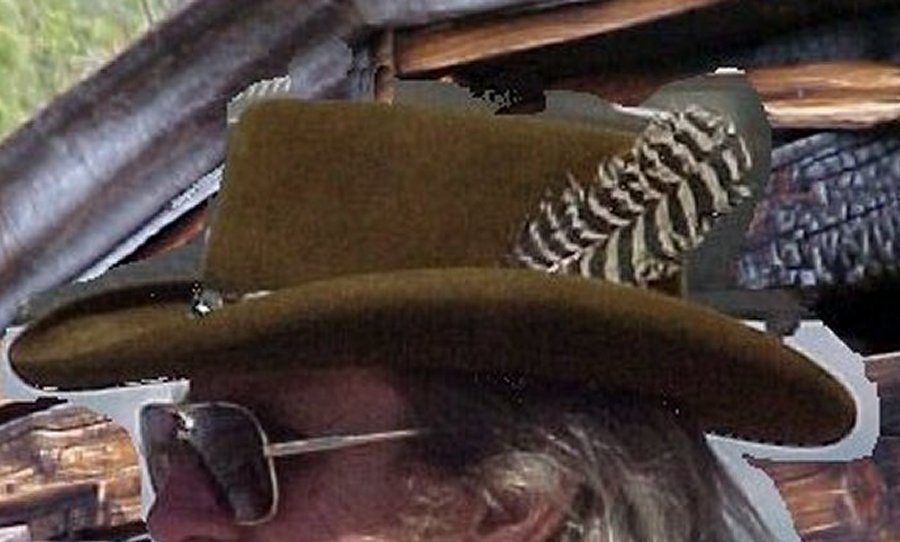
Felt John B. Stetson backward. These last two and the next one are hats I inherited from dead men sent me through thrift stores and flea markets and arranged by the Coincidence Coordinators.
This one is Guatamala palm leaf bought for a dollar in a thrift store. Maybe the best straw hat ever made.
Backward’s not much different.
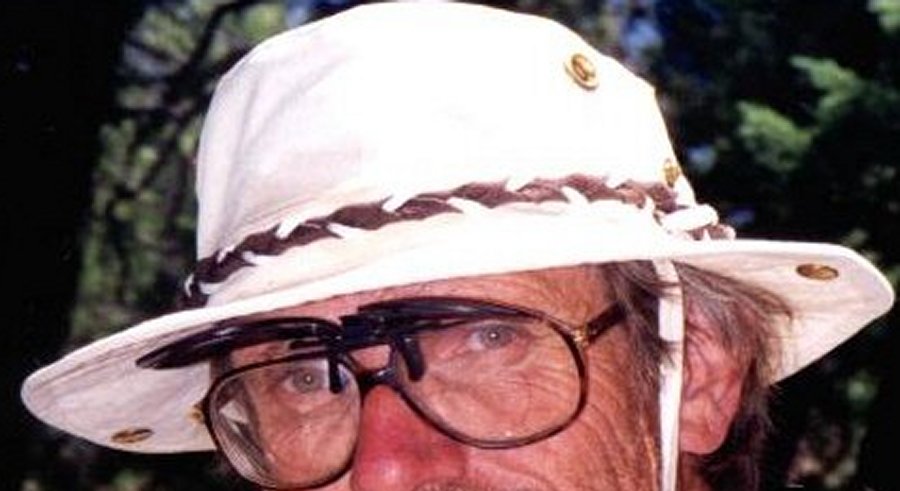
This is a Tilley, the best canvas hat made anywhere. It can be worn backward or forward without fear.
This is a Tilley knockoff. Can’t be worn backward or forward with pride.
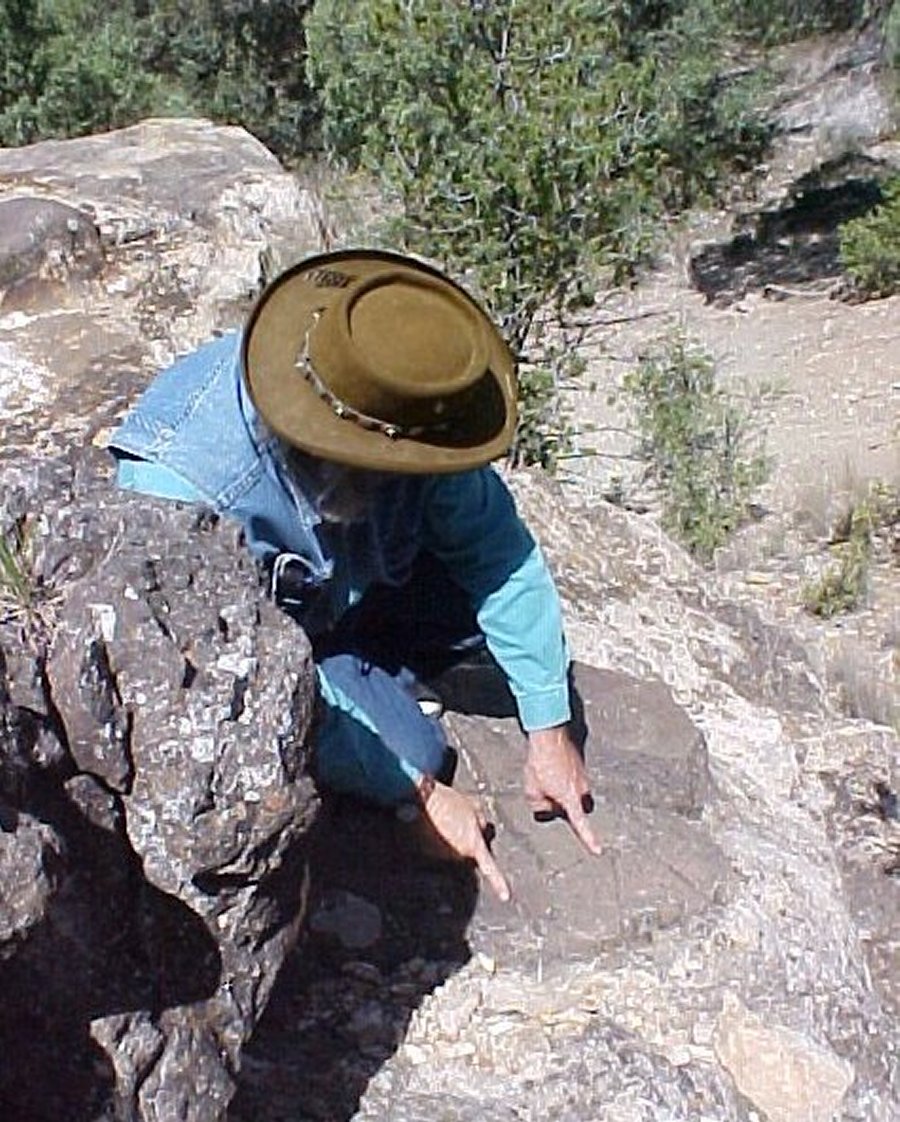
Gale gave me this dead man hat he picked up somewhere. Here it’s worn backward. You can just never tell.
Old Jules
Carl Sandburg, Hats:
HATS, where do you belong?
what is under you?
On the rim of a skyscraper’s forehead
I looked down and saw: hats: fifty thousand hats:
Swarming with a noise of bees and sheep, cattle and waterfalls,
Stopping with a silence of sea grass, a silence of prairie corn.
Hats: tell me your high hopes.
Carl Sandburg, Hats are Sky Pieces:
Proudly the fedoras march on the heads of the some-
what careless men.
Proudly the slouches march on the heads of the still
more careless men.
Proudly the panamas perch on the noggins of dapper
debonair men.
Comically somber the derbies gloom on the earnest solemn noodles.
And the sombrero, most proud, most careless, most dapper and debonair of all, somberly the sombrero marches on the heads of important men who know
what they want.
Hats are sky-pieces; hats have a destiny; wish your hat
slowly; your hat is you.
Greg Bear gave himself a hefty job of work for this 473 page tome. The subject is the arrival of aliens on the surface of the earth, the gradual discovery of their motive to ‘eat’ the planet, and the reactions of science and politicos as the realization becomes certainty.
In some ways the internal plotting resembles Heinlein’s, The Puppet Masters, in others, Larry Niven’s, Lucifer’s Hammer. However, if you’re a reader who finds himself studying the characterization as the author develops it, the tool used in furthering the plot, you might find this one a bit annoying.
Although Greg Bear’s handling of the plot requires the introduction of a lot of characters for the reader to attempt to keep track of, he does a fairly craftsman-like job. He’s obviously aware of the problem and uses a lot of internal plotting to provide the reader with anchors of segment for each of them to assist. If he hadn’t been a workmanlike writer he’d never have succeeded as well as he did, which isn’t to say he succeeded completely. Greg Bear’s skill at characterization kept the work from becoming a complete disaster.
The plot develops rather slowly, and to keep the interest of the reader the author introduces a number of not-often-used event features as crucial pieces of his plot. This served in my instance to keep me determined to finish the book.
The concepts Greg Bear introduces are compelling enough to cause me to pause in the reading about 2/3 of the way through to allow some digestion of it all before continuing. There was no temptation to leave it alone after a day, but I found when I returned I found I already had to reorient myself, reacquaint myself with the individuals connected to names among his multitude of characters, briefly re-study which sub-plot I’d absented myself from when I stopped to contemplate what he was doing.
I believe authors could gain a lot of benefit by carefully studying Bear’s handling of a complex plot broken constantly by updating internal, brief sub-plots, and constant shuffling a population of characters within. Before reading the book I might have thought it was an impossible task. After reading it I’d conclude it was merely improbable in a Tolstoyesque sort of way.
I’ve pondered how he might have done it better, considering the task he set for himself, and haven’t thought of any way it could have been done without removing some of the sub-plots, which he’d made essential to the overall plot development. A trap he’s too competent an author to have caught himself in unaware.
Too busy might be how I’d describe the book, but still compelling enough to cause the reader to work hard to struggle through. At least some patient readers.
74 years old, a resident of Leavenworth, KS, in an apartment located on the VA campus. Partnered with a black shorthaired cat named Mister Midnight. (1943-2020)
Since April, 2020, this blog is maintained by Jeanne Kasten (See "About" page for further information).
https://sofarfromheaven.com/2020/04/21/au-revoir-old-jules-jack-purcell/
I’m sharing it with you because there’s almost no likelihood you’ll believe it. This lunatic asylum I call my life has so many unexpected twists and turns I won’t even try to guess where it’s going. I’d suggest you try to find some laughs here. You won’t find wisdom. Good luck.














 So Far From Heaven