Tag Archives: sociology

I Don’t Know What A Homophobic Is

But I wouldn’t want my brother to marry one.
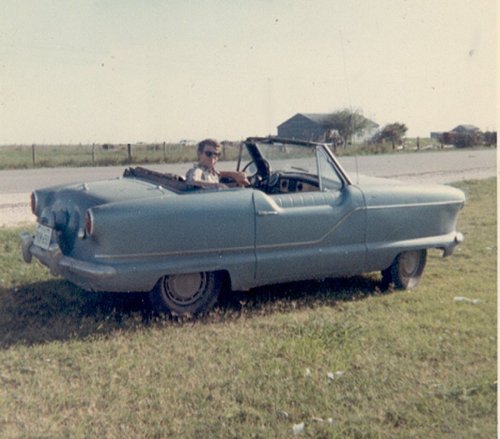
In 1967 I was working 5.5 days a week doing hard physical labor, taking night courses at the University of Houston and having an urgent, compelling romance with my wife-to-be living in Port Lavaca, 150 miles away.  Every minute I could spare I cranked up that Metropolitan and headed west to spend a few hours with her.  Even for a young man exhaustion built and I had a lot of difficulty staying awake while driving.

Picking up hitch-hikers was one of the ways I stayed awake.  Just having someone to talk to on that endless road was a major asset.

1967 was a year of serious racial tensions and polarization.  During the years immediately previous a gradual mind-opening of tolerance was manifested in a brief cliche, “I’ve got nothing against blacks, but I wouldn’t want my sister to marry one.”   For a while a person heard that at least once a week.

One day as I was leaving Houston I stopped for two black guys hitching at an empty stretch of highway.  As they ran up to the car they saw the University of Houston sticker on back and without moving to get in they took on a grinning, belligerant-but-joshing attitude.  “You go to U of H?”

Yeah.  Where you guys headed?”

Still no move to get in.  “We go to Texas Southern [a black university in Houston].   You a queer?  The last guy picked us up went to U of H was a queer.  Dumped us out here ’cause we didn’t want none of him.”

 “I’m not a queer.  I’m going to Port Lavaca to see my girl friend.”

They relaxed and squeezed into the Metropolitan, joshing about the klutzy car, how tight it was, how they didn’t want to be seen riding with a white guy.  “Anyone sees us riding with you they’ll think you’re queer.  They’ll think we’re letting you queer us.”

  As we reached highway speed I grinned and looked over at them.  “I’ve got nothing against queers but I wouldn’t want my brother to marry one.”

Both of them gagged on that, double-took me, one another, trying to decide whether to be offended.  Finally one of them guffawed.  “Hey man, that’s a good one!”  Held his hand up to be slapped.

Turned out to be fairly nice guys headed to Corpus Christi for the weekend.  The drive to Port Lavaca went by fast, once we decided we were just three young guys not needing to fight, fear, or scrutinize every word for some slur or threat.

Sometimes it’s easy to forget how much times have changed.

Old Jules

Discarded Jewelry

Ruidoso Steak-House
Glanced at her reflection
In the plate-glass window
New squash-blossom turquoise
Sassy Stetson
Patted 50ish blonde curls
And wished
They’d eaten at the casino
Where this didn’t happen
Wrinkled pretty nose
Don’t give him anything
He’ll just get drunk!” Stage whispered
To her Houston lady friend
As though he wasn’t there
She was right of course
Except the old man Mescalero
Was already drunk
He turned away
Then turned back and mumbled
Sing the Song of Life each day
Or when the time arrives you won’t know how
To sing the Song of Death.”

Old Jules


My Genes Apologize to Your Genes

It’s become popular during the past few decades for individuals believing they have come connection to a group of dead men judged by hindsight to have harmed other groups of dead men, to apologize for the offending activities of the deceased they believe they’re responsible for to living people it didn’t happen to.

My granddad had a cap and ball pistol he inherited from his granddad.  The butt had a lot of notches carved into it, which probably meant the weapon had been the instrument of the untimely deaths of a good many people who might otherwise have lived longer.

Genetic karma?

The man pictured above owned slaves in his lifetime, fought in wars and feuds.  He was the great-grandfather of the man below, my biological father.

But his daughter was the mother of this man:  Cole Younger.  Killer, bank and train robber, rider with Quantrill during the Civil War.

Meanwhile the same genetic pool was spreading itself across the continent like some sexually transmitted disease.   Cherokee, Choctaw and other tribes sneaked into the mix.

So here’s the problem: 

I want to make all this right with all the people in the gene pool derived from the dead people who were wronged by the dead people within my own gene pool.  I’d like to offer them an apology for the ugly stuff those who share my gene pool did to them.

For instance, the guy with all the hair on his face was part of the ugliness perpetrated against the Cherokee and Choctaw and the Trail of Tears.  Naturally, if I’m to rid myself of the overwhelming guilt I need to apologize to some group of living people those painful things did not happen to.  Cherokee and Choctaw, preferably.

But, whoooowah!  The people on the Cherokee and Choctaw side of my gene pool are me.  How can I convey my regrets to the Cherokee and Choctaw in me from the guilt-laden Anglo side?  And can I assume without fear of error that my Cherokee and Choctaw genes don’t include someone who did something to some other group I need to absolve?

Is there some living group of people out there seething over something that didn’t happen to them, but happened to their ancestors as a result of some offense committed by holders of the Cherokee Choctaw genes?

And what’s all that turmoil and guilt churning around in my gene pool doing to my cells and whatnot?

Just to be on the safe side and try to set things right I think I’d best give myself a present as a gesture to calm things down.  Yeah, I think I’ll eat an orange or banana.

Old Jules


Hats You Can’t Wear Sideways or Backwards

For a number of years I’ve watched people wearing ball caps turned backward and sideways, nobody raising an eyebrow.  I’m not sure why they do it because the purpose of the visor on a ball cap is to protect the nose from Old Sol’s battering.  But I gradually began to wonder if people just didn’t know which piece of a hat is the front, which is the side, and which is the back.

Eventually I decided to perform an experiment.  I carefully selected a hat for my next trip to town, determined to wear it backward all day, seemingly oblivious to that.  I wanted particularly to corner-of-my-eye observe the reactions of people wearing their ball caps backward and sideways.

My findings weren’t ambiguous.  From my first stops of the day I saw that people of every age and gender did double-takes, then attempted to surreptitiously call the attention of someone else to the fact I was wearing my hat backward.  If they had no companion they’d nudge a stranger to share it.  Not once did anyone sidle up to me and whisper, “You’ve got your hat on backward,” as they’d have done if my fly was unzipped.

If I’m wearing a hat when I eat in town I usually take it off a moment while I briefly acknowledge gratitude.  On this occasion the hat was on backward when I entered and took my seat, ordered my food and waited to be served.  The café was well populated and though I pretended to be reading I observed the hat was a subject of notice and concealed, smiling discussion at almost every table.

When the food arrived, after the waitress left, I removed the hat and bowed my head a moment, then replaced it, facing forward.  But, pretending to notice I’d put it on forward, I took it off, looked at it, then turned it backward again on my head, and began eating while still occupied with my book, watching the other patrons.

This brought giggles and laughter, even among those wearing ball caps turned backward and sideways.

My conclusion from this study is that people don’t know what is the front and what is the back of a ball cap, but they do know the front from the back of western-style headgear.  I believe the findings are important enough to justify more in-depth study by PHD candidates in anthropology, sociology and fashion.

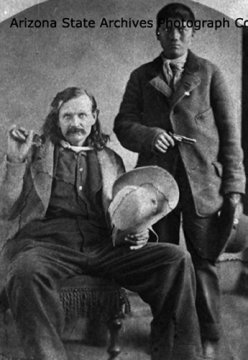
This is Jack Swilling, founder of Phoenix, Arizona, who died in prison awaiting trial for homicide.  He was posthumously acquitted.  However, Swilling’s hat is the issue here.  There’s a bullet hole in it, and it’s been ripped almost in half and sewn back together.  Swilling’s hat could be worn backward, forward or sideways and nobody at all would allow himself to notice.

Here are some other examples of non-ball caps that might be worn backward without concern:

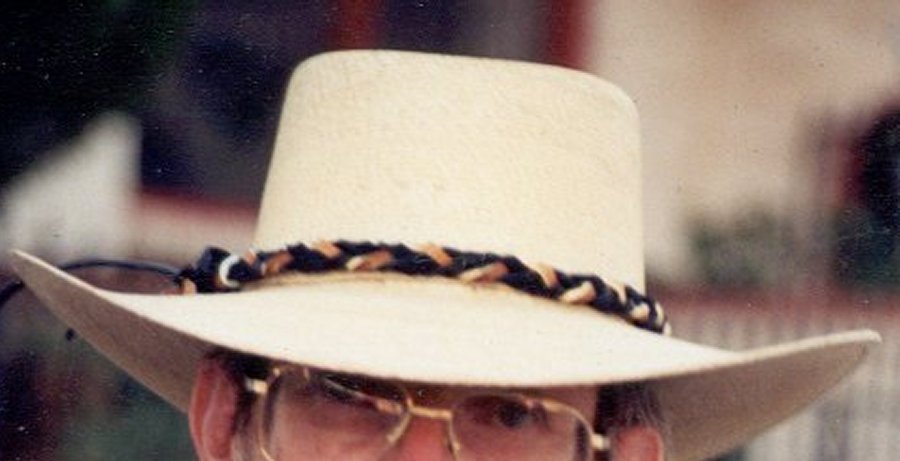
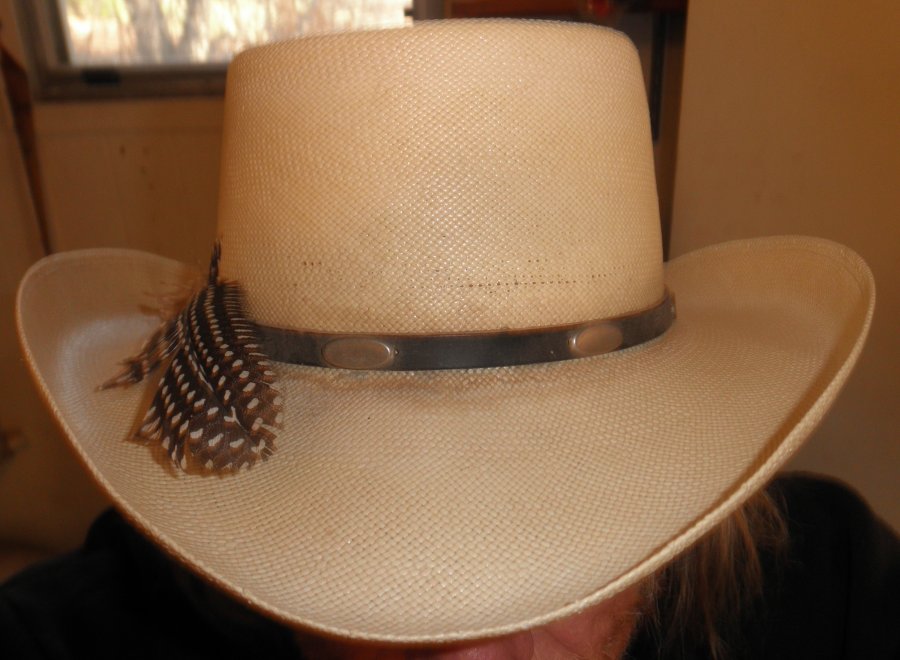
Manny Gammage of Texas Hatters made this hat for me in 1971, or 1972.  The style was dubbed The High-Roller.

Here it is today with the original Mystic Weave band Manny put on it when he made it.  I’ll leave it to your judgement and the judgement of the PHD candidates whether it ‘works’ backward.

Other possible backward hats:

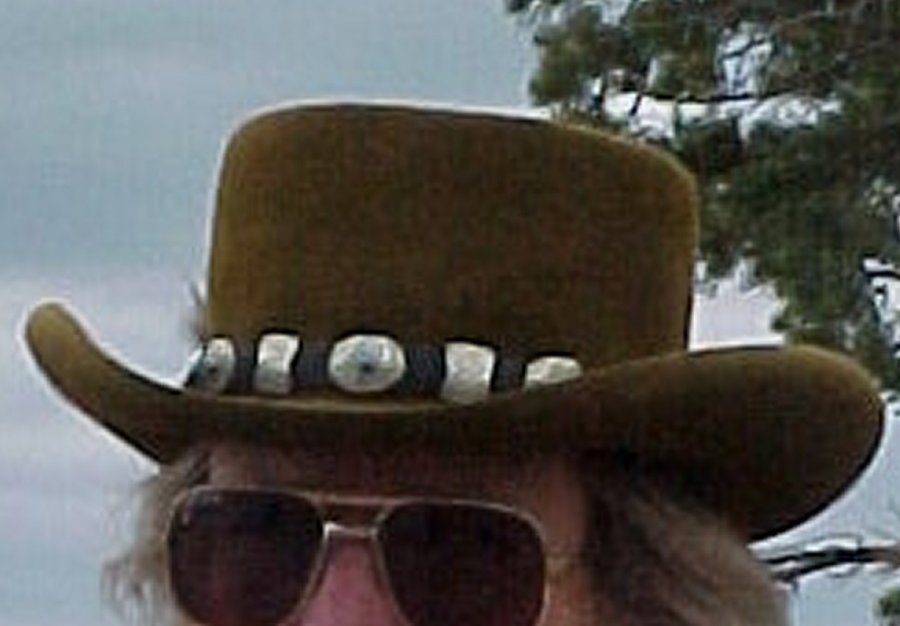
This pic was taken around 1976 worn conventionally.

Here’s the same hat today, backward.  Your call.

Straw John B. Stetson backward.

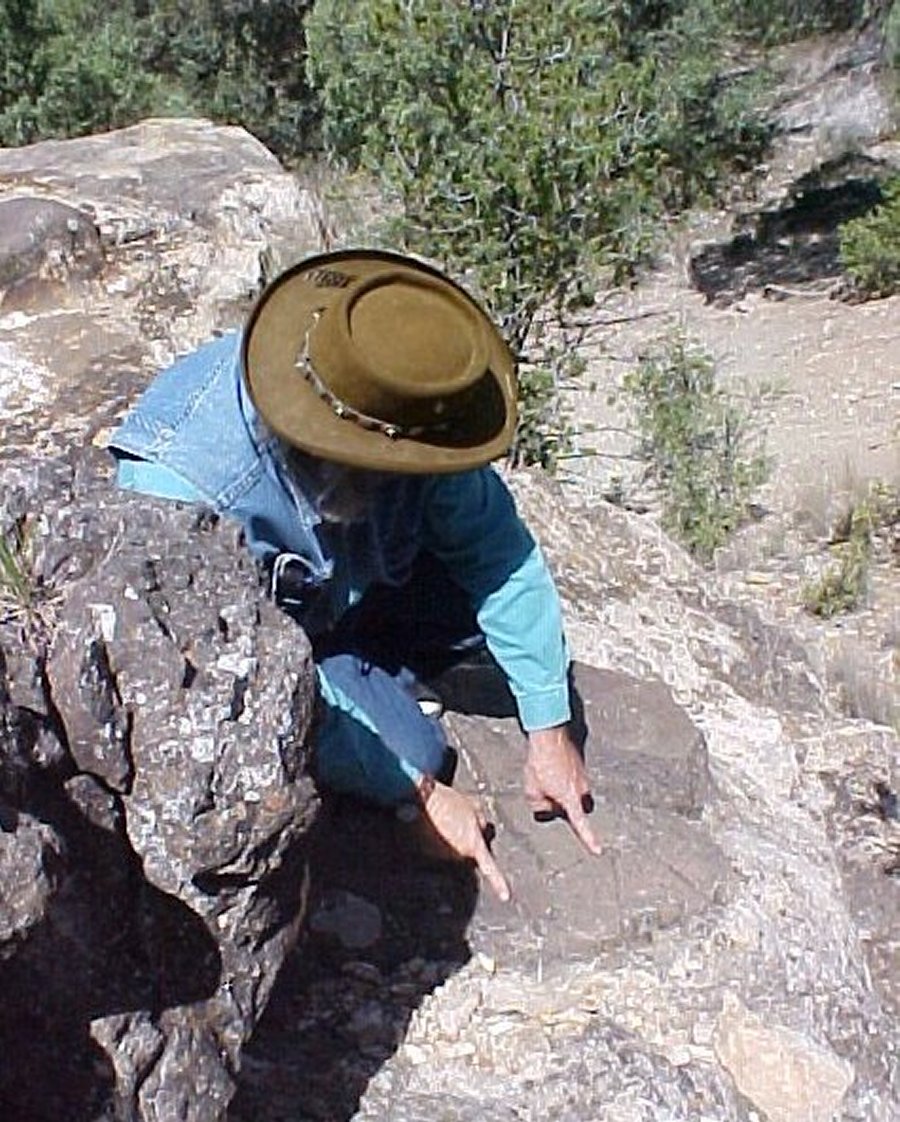
Felt John B. Stetson backward.  These last two and the next one are hats I inherited from dead men sent me through thrift stores and flea markets and arranged by the Coincidence Coordinators.

This one is Guatamala palm leaf bought for a dollar in a thrift store.  Maybe the best straw hat ever made.

Backward’s not much different.

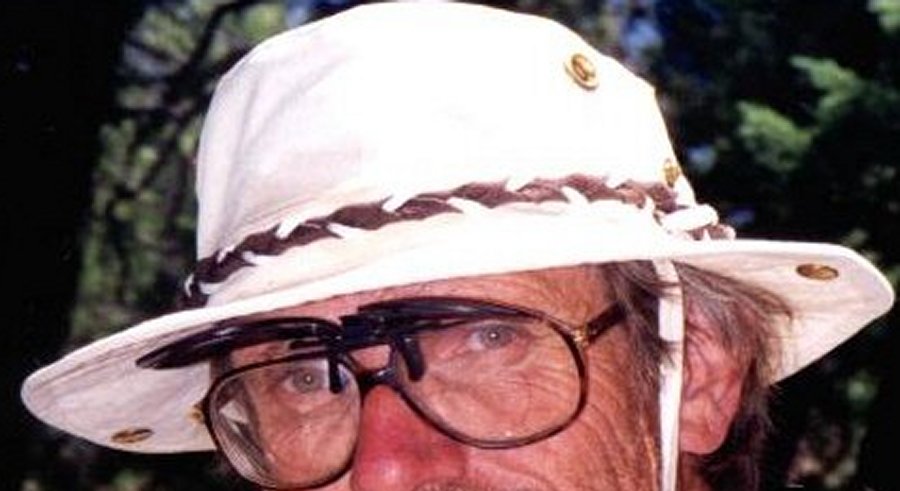
This is a Tilley, the best canvas hat made anywhere.  It can be worn backward or forward without fear.

This is a Tilley knockoff.  Can’t be worn backward or forward with pride.

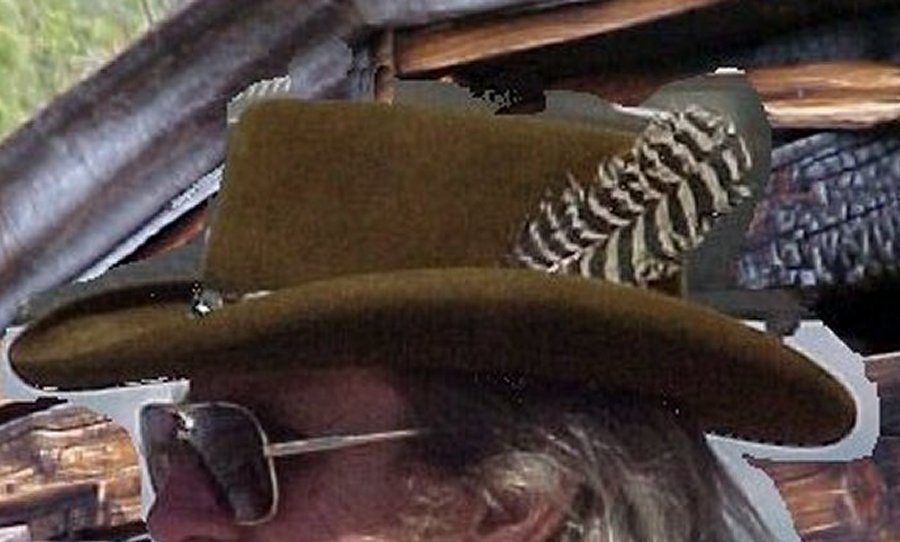
Gale gave me this dead man hat he picked up somewhere.  Here it’s worn backward.  You can just never tell.

Old Jules

Carl Sandburg, Hats:

HATS, where do you belong?
what is under you?

On the rim of a skyscraper’s forehead
I looked down and saw: hats: fifty thousand hats:
Swarming with a noise of bees and sheep, cattle and waterfalls,
Stopping with a silence of sea grass, a silence of prairie corn.
Hats: tell me your high hopes.

Carl Sandburg, Hats are Sky Pieces:

Proudly the fedoras march on the heads of the some-
what careless men.
Proudly the slouches march on the heads of the still
more careless men.
Proudly the panamas perch on the noggins of dapper
debonair men.
Comically somber the derbies gloom on the earnest solemn noodles.
And the sombrero, most proud, most careless, most dapper and debonair of all, somberly the sombrero marches on the heads of important men who know
what they want.
Hats are sky-pieces; hats have a destiny; wish your hat
slowly; your hat is you.

Joe Cocker–You Can Leave Your Hat On


Lyle Lovett– Don’t Touch my Hat