Tag Archives: thoughts

UFO and Certainties About What Isn’t

Good morning readers.  I’m obliged you came by for a read.

We human beings love ourselves better for our certainties.  Most of us take particular satisfaction in sneering about the certainties of others when we’ve applied something we pretend is logic to prove theirs are invalid.  Pulls us up by the rhetorical bootstraps in a reality where being intelligent is considered a virtue almost as resounding as being ‘right’.

One of the areas of opinion that breaks down into sneers rapidly involves unidentified flying objects and whether creatures from somewhere else have visited this planet.  The ‘right’ side of the issue is they are fig-newtons of the imagination and declaring it to be so proves intelligence, level-headedness, education and superiority to those who believe otherwise.

The ‘wrong’, ‘stupid’, ‘irrational’, ‘illogical’ side is people who’ve experienced them.  Police, airline pilots, military pilots, lawyers, psychologists, physicians, and thousands of other people who might have been ‘right’ once, but were transported into the camp of ‘wrong’ by personal observation and experience.

A while back I posted about a visit I had with Kay’s aunt, Loretta. [An Afternoon with Aunt Loretta (Proctor)- Roswell, 1947] Loretta’s one of the folks still living who was close-enough to the Roswell UFO incident to have an opinion about it based on her own experiences and observations at the time.  I’ve got a lot of respect for the lady and value what she had to say, even though it’s just naturally ‘wrong’.

But I was backed into a corner of open-mindedness on the issue by a couple of experiences of my own.  One with a lot of other witnesses on California Avenue in Socorro, New Mexico.   The second was long-lasting and relatively close-up and personal.   Back during the Y2K time.


Pie Town’s located about 30 miles west of the Very Large Array [VLA] telescopes near Datil, New Mexico.  The village sits almost atop the Continental Divide, an isolated community in the middle of nowhere.

I was in the only telephone booth in Pie Town  around midnight. The town only has a couple-hundred people and there were no lights of any sort in town. Low overcast, 500 feet or less.

Whatever it was appeared above me below the overcast and stayed there while I told the person I was talking to on the phone what was happening.  It stayed maybe 10-15 minutes and gave me the willies badly enough, I got thinking I was the reason it was there.

I told the person I was talking to adios and went to the truck, took a .45 out from under the seat and racked in a round.  It moved a bit about then, not much but some, while I stood there pointing a pistol at it waiting in the dark. It moved a little more, seemed to descend — at least it got larger, and stopped again.

I decided to just get the hell out of there if I could. Cranked up the truck and drove about a quarter-mile and pulled off the highway to make sure it wasn’t following me. It sort of drifted or glided off to the north and vanished into the overcast.

The experience motivated me enough to try to find out whether objects of that particular description and configuration were common, because I’d never heard of one. I occasionally would research various UFO sighting archives on the web.

Years later I found that within a few days of my own sighting an object of almost identical description upset a lot of on-duty military personnel by behaving almost the same way at White Sands Missile Testing Range near Alamogordo, New Mexico, a couple of hundred miles SE from Pie Town. White Sands is an extremely high security area and they take it personally when something intrudes into the airspace over the place, more personally yet when it hangs around and isn’t scared.

There was [maybe still is] a squadron of F117s stationed at Alamogordo [Luftwaffe] at the time, and they scrambled. But the object removed itself before they arrived.

As for my own experience and the times involved — I’m having to best guess. The person I was describing it to on the telephone and I took a stab at it toward the end of our conversation before I decided to evacuate. But things seem longer and it mightn’t have been that long. Afterward, while I was standing there watching and pointing the .45 it’s anyone’s guess. Might have been as little as 5 minutes, seemed a lot longer.

Which is to say, I don’t know much about aliens and the things they fly around in, but I don’t put a lot of value on the speculations of people who know all about what they aren’t.   Even if they’re real smart and have a lot of school-housing.

Old Jules

 

Penis Enlargement Software from Norton Symantic

Got an email I haven’t opened, presumably from Norton Symantic noting I haven’t plugged the modem into the E Dell Machine to test the 79 mb downloaded driver.

At least I assume it’s from Norton Symantic, though the whatchallit ‘from’ says it’s from Best-Penis and the subject line says, Max-Gentleman Enlargement Pills.  But I’m not fooled.  Norton Symantic was popping screens up on me all manner of ways yesterday creeping in with things intended to interrupt my focus and goals for eventually getting this E Dell Machine online.

Norton most likely suspects a degree of trepidation on my part and is poking sharp sticks in my eye suggesting I need to grow a set of whatchallits and go ahead and test it.  After which they’ll sell me some penis enlargement software to make it work, which they figure at the moment it ain’t going to do.

Bastards.

Old Jules

Sculpting Realistic ‘We’ From the Ideal Universe

Hydrox jumped off my lap and stalked over to the bed.

“Sometimes you human beings disgust me with your pretense.”

Him being second-in-command around here, I try to keep him up-to-date on my thinkings and directions.  Seems prudent to me because he’ll have to take over if I kick.  I’d just been asking him if he thought we could get along okay living in a travel trailer.

“Just what ‘we’ are we talking about here?  You and me?  You and all the cats?”  He glared at me.  “You, the cats and the chickens?”

I shrugged, wondering where he was going with this.  I felt a tirade in the making.  “Just you cats and me.  The chickens can’t be part of it.”

“Well, that’s a relief, anyway.  But I think you need to think through this second-in-command crap and all the what-if-you-ain’t-around side of it.”  He gestured with his nose toward the porch.  “The only ‘we’ worth talking about involves mutual resolve.  Creatures willing to allow the well-being of others within the ‘we’ to influence what they do.  No creature unconcerned for the well-being of the others, no creature the others don’t have a commitment to, can be part of a meaningful ‘we’.”

I thought about it a moment.  “That makes sense.  It’s why I was trying to keep you up-to-snuff on things.”

  His frustration was obvious.  “Yeah, and that’s where you’re proving how stupid you are.  For me,” He tweaked a claw under his chin, “the only ‘we’ around here is you and me.  And maybe Niaid, just a whisker.”

This rattled me, but he went on before I could say anything.  “When that coon on the porch ran at you and I jumped in, that’s ‘we’.  When you go to town and buy food for us, that’s ‘we’.  But do you see Tabby or Shiva the Cow Cat lifting a paw for me if I was starving?  Do you see either of them jumping in if a coon attacked me?”

He waited while I considered it.   “I suppose I don’t.”

Then they’re not a part of any ‘we’ I belong to.”

The more I pondered it the more it seemed to me he’d come upon an important thread in the fabric of reality I’d been overlooking.  Not just with cats and chickens, but with every piece of human intercourse around me most of my life. 

When a person goes down to City Hall, or the County Courthouse to perform some necessary business, for instance, and the clerk begins the ritual of obstruction, a ‘we’ is in the process of being defined.  The clerk is the spear-point for a huge ‘we’ of contradictory demands on the ‘we’ you occupy. 

“Do you have proof of residence?”

“There’s my driver’s license.”

That’s not enough.  I need a utility bill or tax return.”

“I didn’t bring that.”

“Then I can’t help you.”

The ‘we’ that clerk represents just defined a boundary excluding you from that ‘we’ and placing you inside another ‘we’ it considers an enemy.  And in a real world, that definition would be mutually recognized, rather than singularly by the human spear-point drawing the boundary.

Which is probably why representative democracy was doomed to eventual failure.  In a fantasy of wishful thinking a population created ‘we’ with a set of unrealistic boundaries.  When new ‘we’ entities developed around government centers those included in the ‘we’ tribes were those they associated with, lived near, shared a commonality with.  In Washington, D.C.  In Austin, Texas. 

And inevitably those outside that ‘we’ became an obstruction, a product, an enemy to their ‘we’.

“The only ‘we’ worth talking about involves mutual resolve.  Creatures willing to allow the well-being of others within the ‘we’ to influence what they do.  No creature unconcerned for the well-being of the others within the ‘we’, no creature the others don’t have a commitment to, can be part of a meaningful ‘we’.”

Sometimes it takes an outsider to the human ‘we’ constructions, a feline with a firm hold on reality, to recognize the obvious.

Old Jules

“Electing pet skunks to guard the henhouse might work for a while.  But the skunk-instincts and  chickens behind the walls they’re guarding metamorphoses the ‘we’ they live in.  The skunks become a we with a priority of digging under chicken-house walls and the we of being pet skunks fades until it no longer can call itself a we.”  Josephus Minimus


Exploring Alley Oop’s Home Circa 1947

When my mom left her second husband near Apache Junction, Arizona  to move near my granddad’s place at Causey, New Mexico, I was considerable upset about it all.  I’d become overfond of the Arizona guy, liked him a lot despite his human flaws that bothered my mom.

Time proved my level of upset couldn’t be handled by beating it out of me, nor by any of the other usual ways people tried back then to nudge a kid back into being seen and not heard.  The Runaways, 1947

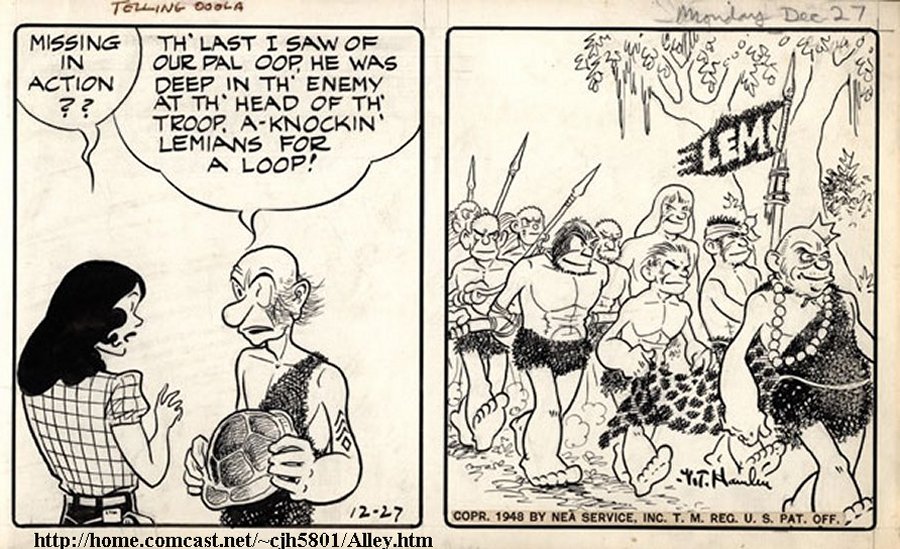
My first step-dad [Arizona] was fond of reading the Alley Oop comic strip to me and I was a huge fan.  Alley was a cave man skipping forward and backward in time thanks to a 20th Century scientist.  Alley even had a 20th Century lady friend named Oola. 

About the only thing I’d brought with me from Arizona was my stack of Alley Oop comic strips.  We’d travelled light across the desert.  And when we arrived in Causey one of the jobs my sisters had was reading those Alley Oops to me, trying to bring up my spirits.  Which I suppose it did until they’d finished reading them to me.

Something more permanent had to be done, and my granddad decided to have a shot at it.  He promised to take me to visit Alley’s home.  Mesa Verde, Colorado.

What a trip that must have been, me pestering him whether we were there yet, how much further before we’d see Alley’s home.  I don’t know how long we stayed, but I never forgot old Alley and his home.  I still had one picture of the cave dwelling he took back then until Y2K.

And of the hundreds of ancient ruins, documented and undocumented, I’ve poked around in during my life, I’ve never visited one, found one, without thinking to myself with a smile that Alley Oop might have lived there, visited there ahead of me.

When Mel King and I were exploring the ruin on Gobbler’s Knob and were driving back to Socorro when he reached into his daypack for something, came out with a human skull it was the first thing I said to him.  “What the hell is that?  You packed off Oola’s skull.  Get it the hell out of this truck!” 

I screeched onto the shoulder and he hid it behind a cedar until  we’d be headed back to Gobber’s Knob so he could put it back where it belongs.

Nowadays I think I have more in common with Alley Oop than with any modern human being.  If there was ever a right time for me to pop out of the gene pool it would probably have been more appropriate temporally in some other Universe where Alley Oop lived and breathed.  It made more sense than this one.

Old Jules


Back Just Before Hippies Were Invented

1964 was a big year in my life.  I rode the USNS Breckinridge troop ship back from Korea with 2000 other GIs coming home, separated from the army late in June.  Hung around Portales, New Mexico for a while, applied to join the Peace Corps, then hitch-hiked to New York to pass the time until I heard from the Peace Corps.

Beatniks hadn’t yet been displaced by hippies and Greenwich Village was jam-packed with thousands of us implying we were beatniks but carefully not saying so.  Hanging around coffee shops writing poetry, playing chess, saying momentous deep-thinking things back and forth to one another.  Listening to folk singers. 

Being rocked back on our heels in mock, simulated shock and disgust when wheat-straw blondes from Westchester down for the weekend to be beatniks, too, refused our advances.  “WHAT?  You don’t believe in FREE LOVE?”

Which, surprisingly, almost always worked.  Provided you’d done a convincing enough job trickling out the bona fides of being a REAL beatnik.  And wouldn’t even think of hopping in the sack with someone so uncool she didn’t even believe in free love.  Even if she did iron her long hair out straight.

So after I hopped the freight to go back to New Mexico, got thrown in jail in Rochester for taking the wrong train, The Hitch-Hiking Hoodoos, got released to hitch home, things stayed eventful for a while.

A guy from Buffalo picked me up on the Interstate, older guy in his 30s.  When I got in I threw the pillow-case with my belongings into the back seat“I don’t know why I picked you up,” he glanced at me with disgust.  “I never pick up hitch hikers.”  

Over the next few miles he questioned me about who I was, where I was from, what I was doing hitching, what I’d do when I arrived, and I explained it all in loving detail.

“Well, I’ve never had any trouble with a hitch hiker the few times I’ve picked them up.  But if I do ever get killed by a hitcher it will probably be some half-baked kid who doesn’t know what he wants in life.”  He thought about it a minute.  “But I don’t have to worry about you.  You threw your gun into the back seat in that pillow case when you got in.”

We talked a lot over the highway between Rochester and Buffalo.  Enough so he didn’t take the Buffalo exit and carried me down to where a tollway squeezed the traffic going south to Cincinnati, Ohio.  He pulled up beside a car with a family in it, man, woman and a couple of kids.  Motioned for them to roll down the passenger-side window.

“Are you going on through Cincinnati?  I’ve carried this guy all the way from Rochester and he’s okay.  He’s going to New Mexico.  But I’d like to get him a ride past Cincinnati.  He’ll never get through that town walking.”

The couple said they were just going to Cincinnati, but we were all watching the traffic edge forward to the toll gates.  “We’d better take him anyway.  He might not get another ride.”

The Buffalo guy was right, but it began the next phase of a long story.  Guess I’d best hold it for another day.

Old Jules


Spark and Tinder for the Next Country Music Wave

Morning readers.  I’m obliged you came by for a read this morning.

A while back while I was in Kerrville I was in one of the huge office supply stores that have driven all the locally owned ones out of business.  I was nosing around looking at things when I glanced at a guy, a woman and a clerk studying copiers or fax machines. 

“Small world!”  I mutters to myself.  The male customer part of the trio was a face a decade older than one I’d known too well almost a decade ago.  A guy named Tony Wossname.  Once a motel manager in Grants, New Mexico.  A man I’d been blessed to observe through the lens of the darkest side of his character. 

I changed positions in the store, moving place to place studying this later model of a man who could spot desperate need for a job when he saw it and derived a lot of pleasure out of making it as painful and difficult for the desparee as his power allowed.

After I discovered I couldn’t get any other job in Grants, New Mexico following Y2K I went to work in a motel off the Interstate, graveyard shift, as a night clerk for a while.  Besides giving me almost enough money to pay rent, utilities, and buy a little carefully selected grub, the job showed me a side of humanity I wasn’t familiar with.  And it gave me a lot of time to think about what I observed.

One of the things Tony liked about being a motel manager was his radio in the locked office the 11-7 shift clerk couldn’t access.  The radio had no speakers in the office, nor in his apartment beside it, but it did have speakers in the lobby where he couldn’t hear it.

What kind of music do you like?” Tony’d asked me conversationally during the job interview.

I like any good music.”  I shrugged, recognizing a management school tactic for getting the applicant to relax.

So do I.  But there’s some on the air these days I can’t stand.”  He scowled and shook his head.  “I hate that RAP stuff.”

I just don’t listen to the radio much.  I like older music, mostly.  The modern CW swill could probably drive me nuts.”

He had what he wanted and changed the subject, now that I was all relaxed.

I got the job, which included two lobby speakers tuned to a modern CW station, 11 pm to 7 am with the volume control and station selector behind a locked door.

I did a lot of writing on those shifts while trying to stay sane.  Here’s one night of inspiration about modern country music:

3:30 AM

Hearing this country music station wailing all night so many nights has caused me to realize what’s changed in country music. It used to encompass a fairly wide range of fairly lowbrow experiences and sentiments. Love, cheating, drinking, bull riding, hound dogs, mama, trains, trucks, car wrecks, dead friends, being broke, dreams of something or another, hopes, losses, resentment, pride of accomplishment, prison, cows, land, and clothing. Now it’s nothing but drooling whining love songs. Wonder what the hell that means?

Probably  means females are picking all the hits, buying all the records, and the men who dance lockstep with them are also females.   Something’s definitely changed, in any case.  There are still Guy Clarks out there, still Prines, still Tom Russells, still Willies and Merles. That just ain’t getting hit records.

Maybe the baby boomers lost something after their quadruple bypasses. Ever heard of a woman getting bypass surgery? I haven’t.

Maybe ten years from now we’ll be hearing country songs about bypasses and prostate cancer- about Winnebagos, casinos, golf, medicare—about grandkids wanting to  put him/her in a nursing home- about hearing aids and false teeth, thick toenails and sagging skin.

If so, it will be an improvement, and I, for one, look forward to it.   Maybe tonight I’ll write the off-the-charts hit CW song for 2012. 

Cheatin’ a Broken Heart

Westbound on the Interstate
Out on the Great Divide
Our Winnie overheated
So we pulled off on the side

The sagebrush and the red rock buttes
Invoked our reverie
While the engine cooled I thought about
My bypass surgery.

Refrain:
You can have your diabetes
Talk about your brand of “C”
But when heat waves blur the red rock
I’ll take bypass surgery

We’ll be turning south at Flagstaff
For the fairways to the south
Where my third ex-wife will meet us
With the grandkids and her mouth

Those two eggs up on whiskey toast
Home fries on the side
She always made for breakfast
Were my downfall and her pride

We’ll take the brats along with us
And camp somewhere below
The international boundary
Buying meds in Mexico

‘Cause it’s not the margaritas
Nor the senoritas sweet
It’s the discount pharmaceuticals
That tug these flattened feet

Now the engine’s finished cooling
And the wheels begin to roll
And there ain’t no bloody stool
In the RV commode bowl

Refrain:
You can have your diabetes
Talk about your brand of “C”
But when heat waves blur the red rock
I’ll take bypass surgery

So here I am, 2012 coming on strong and fast.  The lyrics for the big hit for the year already written, the New CW Wave craze all mapped and ready to take off.

Gotta find a musician.

Remember where you heard it first.

Old Jules

The Strangeness – Background Context of Unsolved Homicides

By the time this was published in 1999, I was no longer going up that particular mountain.  I was busy on my Y2K land and dwelling preparations about 50 miles northeast of Quemado.

But this will give you an idea of the general local psychological environment in the area, both while I was working the mountain and [it turned out] later, while I was doing Y2K.

http://articles.latimes.com/1999/nov/20/news/mn-36275

Unsolved Slayings Have Small N.M. Town Living in Fear

Crime: With seven people killed since 1996, residents are openly packing heat. Authorities see no connections among the deaths.

November 20, 1999|PAUL DUGGAN | THE WASHINGTON POST QUEMADO, N.M.

— There’s not much to the town. You come upon it in the vast, yellow-brown emptiness of southern New Mexico’s high desert grassland. It’s mainly just a strip of old storefronts on Highway 60, with some dusty side streets.

In a 40-mile radius of Quemado you might find 500 people, about half of them ranchers living like pioneers on the plains and in the foothills, miles from any neighbor. The rest live in town, in trailer homes and faded stucco bungalows amid the tumbleweeds and pinon trees.

The sheriff, Cliff Snyder, said it used to be a peaceful place in its lonesome way, before all the killings. Now there’s fear in the air, like a foul wind.

Who murdered Gary and Judy Wilson? It’s a mystery. They disappeared in November 1995 and turned up eight months later, so many bones in the woods. Who shoved Gilbert Stark into a 20-foot well and closed the cover in ’96? Who shot the elderly Clark couple and their daughter in ’97? Who put a bullet in the heart of James Carroll, 59, as he stood in his corral just north of town one autumn day last year? The sheriff doesn’t know.

He and the state police said they are convinced the cases aren’t related. They were random eruptions of murder where murder used to be rare, Snyder said. He has no clear explanation for it. All of the victims lived in the countryside around Quemado, about 125 miles southwest of Albuquerque. Before the Wilsons were slain, no one had died by another’s hand in this part of sprawling Catron County in nearly a decade.

And no one wants to be next. In a swath of America where gun control means hitting what you’re aiming at, a lot of folks are packing iron. They’re propping shotguns and rifles beside their beds; they’re driving with pistols on the front seats of their pickups. The sheriff said he doesn’t mind. This is the rural West, he pointed out, and guns are a heritage.

“We’re raised with them,” said Snyder, 42. He shrugged. “If I pull over a vehicle, I figure they’re armed, if they live in this county.”

At El Sarape Cafe on Quemado’s main street, Irene Jaramillo, 43, keeps a .22-caliber semiautomatic on a shelf near the griddle. One morning last week, Paul Strand, 67, who owns a horse ranch south of town, was sipping coffee in the cafe with his wife and holding forth on the subject of their firearms.

“I sleep with a Colt .45 under my pillow,” he said. “I have a loaded assault rifle beside the bed, a Russian-type, ready to roll. And a sawed-off shotgun next to that, loaded, legal, but just barely, in terms of the barrel length.”

Across the street, Carl Geng, who is in his 60s, runs the Allison Motel with his wife. They also own a ranch outside of town. Geng said he thinks he knows the culprit in one of the homicide cases. “I’ve got a .38,” he said, gesturing to his truck in the parking lot. “He sets one foot on my ranch, I’ll blow his head off.”

The sheriff said he and the state police think most or all of the victims were murdered by acquaintances with whom they had personal disputes. As for suspects, investigators have only “theories,” he said.

It’s a crime in New Mexico to carry a concealed loaded weapon in a public place but legal for anyone 21 or older to carry one openly, no permit necessary. James Clark, a Vietnam veteran, started packing two handguns after his parents, William Clark, 84, and Pearl Clark, 74, were slain in 1997 along with his sister, Sharron Hutson, 44. Folks in Quemado are used to seeing him in town with a .45-caliber Colt Peacemaker on his right hip and a .40-caliber semiautomatic in a shoulder holster.

“Which is fine,” said Irene Jaramillo’s husband, Jimmy, who is one of Snyder’s deputies. “I told him, ‘As long as I can see them.’ “

James Clark and his wife, Elaine, 42, now live in the remote trailer home where the elderly couple was murdered. Elaine Clark, who prefers a lighter-weight .35-caliber, sat in the kitchen one day last week with her husband’s heavy semiautomatic on the table in front of her. There was a loaded hunting rifle propped against the freezer by her left hand.

“We always used to brag that it was like the Old West, in the way that your house was never locked,” she said. “Someone passing by, if you were gone, they could come in and get something to eat. But now it’s more like the Old West the way you’re always on guard. You don’t walk up to my house unless I know you’re coming . . . or you could darn well get shot.”

Catron County, with just 3,000 residents, covers almost 7,000 square miles. It’s bigger than Connecticut. Snyder, who was a deputy when the seven homicides occurred, was elected sheriff last year. He has an undersheriff and four deputies, including Jaramillo, who patrols the northern half of the county around Quemado. Half a dozen state troopers also work in the county. But with such a vast area to cover, it sometimes takes an hour or more to reach the scene of an emergency.

Cold Mystery, Fevered Romance and Lost Gold

A burned out cabin ruin with an aspen tree growing out of the inside, bear claw marks 12 feet up, 3 hand forged nails, a longtom sluicebox axed out of a 3 foot diameter log, a spring 75 feet above the sluice, an arrastra below. 

A mysterious map chiseled on the face of a 300 pound rock surface depicting the exact layout of the canyon, the cabin, the waterfall, all so accurately depicted the person had to have scrutinized the layout from the mountaintop, then scratched it on this stone 600 vertical feet below and half a mile away.  The rock was carefully placed on the canyon wall above eye-level so it was easily seen, but only by someone looking up.

I’m guessing the date must have been spring, 1995.  I’d moved my search to the mountain I described above and was performing a systematic search of  the canyon from the discharge to the mountain crest.  I’d filed two mining claims at the location of the cabin and sluicebox pictured in the earlier post, and downstream.  I hadn’t yet found the map rock, and I was spending every moment I could squeeze between job duties, romantic obligations and financial constraints camped on that mountain.

I headed down there planning on spending a week, but on the road the Mitzubishi Montero sprung a water hose a few miles outside of Grants.  It was raining while I mucked under the hood, taping the hose and getting enough coolant in it to drive it to a parts house in Grants, where I installed it in the rain.  I was chilled and soaked as I drove south from Grants, but in too much of a hurry now to change clothes.

By the time I arrived at my usual camp site I was running a high fever and feeling my breathing becoming hard labor.  I hastily dragged a tarp out of the truck,  put my sleeping bag under it and got inside, hoping I’d shake off what I was afraid was coming.  I’d had pneumonia enough times this lifetime to recognize the onset.

The next morning found me weak, fever skylining, knowing I’d better try to get out of there while I still could.  I threw some brush over my gear because I was too weak to reload it onto the truck, and started down the mountain.  My vision was blurred and I was hallucinating, barely able to stay on the two-track.  When I reached the US Forest Service road a line of fenceposts ahead briefly became a line of riflemen aiming at me.

I remember nothing of the trip after that until I found myself at the home of my lady friend in Albuquerque, wrapped in a blanket on the floor of her downstairs because I wasn’t strong enough to climb them, burning with fever, shaking with chills.  She, nursing me with herbs and leftover antibiotics from her medicine cabinet.

“There are some people missing out there where your claims are.”  She was sipping coffee at the table, looking over the paper at me.  “A man and his wife.  The State has people out searching for them.”  She shook her head.  “They must have been right near where you were.”

The couple lived across a basin at the base of the mountain.  I could probably see their dwelling through binoculars from the mountaintop.  They were woodcutters, but I’d never encountered them, to my knowledge. 

As I recovered in Albuquerque the search died away.  The local sheriff announced the couple had probably just abandoned their house and gone somewhere else.  They were nobody, outsiders.  He refused to treat their vanishing act as a possible crime, didn’t allow the State Police to investigate their home.  But the time on the floor in Albuquerque weak as a kitten, tended hand and foot is one of those tender, grateful memories of my years with the lady.

Over the next several months I continued, sometimes in company with Keith, sometimes with other friends, sometimes alone, exploring, sampling, puzzling over what I was finding there.  Then, the first day of elk season that fall I encountered two elk hunters with their truck stuck in a stream bed.  When I finished towing them out, we introduced ourselves.

“Did you hear about those bodies they found in the canyon over there?”  He gestured to the mountain indicating a canyone one over from mine, plus one.   Renfro Canyon on the rock map sketch.  Less than a mile from my claims.  “A bear dug them up.  They were buried in an Indian ruin and a hunter found them this morning.”

The bodies turned out to be the people who’d turned up missing while I was giving myself pneumonia.  I felt reasonably confident the police would be contacting me with questions about whether I’d seen anything, because I was probably the only person on the mountain besides the victims and the murderers at the time it happened.

The Bureau I worked for, Emergency Management Planning and Coordination [EMPAC] was part of the New Mexico Department of Public Safety, though a step-child and somewhat separate.  I went to my Bureau Chief and explained what had happened, asked whether he thought I should go over to the State copshop and volunteer to talk to them about it.

“Man, I wouldn’t touch that.  Let them come to you.  You might be the best suspect they’ve got.”  A lawyer friend gave me the same advice, informally.

So I kept quiet and waited, and they never came.  I kept working that mountain, homicides and multiple-homicides continued to happen over the next couple of years remaining unsolved and generally thought to be uninvestigated, and the entire county became a quagmire of paranoia.  Everyone carrying firearms, nobody trusting anyone.

Meanwhile, the mountain echoed the weirdness and pressure the county was experiencing.  Somewhere during that time began the strangest chain of events and experiences of my entire life.

Which I might describe in a later blog or series of blog posts.

Old Jules

A Side to ‘Freedom’ Worth Considering

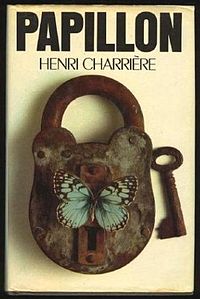
Those of us spoiled to a particular concept of freedom and the fear it’s coming unravelled might be well served to read Papillon once in a while.  I didn’t mention it in my review of it here, but I should have:  Papillon.

From one perspective the entire book is about freedom of a sort we, confined to our mental boxes containing what freedom is, refuse to acknowledge exists, can exist, for ourselves and those around us.  It’s the story by Henri Charriere of his own life, searching and occasionally finding that kind of freedom while trapped in an environment few slaves in history could match for savagery endured.  A deliberate, carefully devised savagery imposed by a modern, civilized nation.

A nation, I’ll add, not too unlike our own.

But what I intended to say about Papillon this post is one of the corner-of-the-eye aspects of freedom and Charriere’s finding of it during the most trying of times.  Once when he was in solitary confinement so severe as to be intended to drive him insane, to break him, destroy him.  Another when he was confined to a boat with other escapees mid-ocean.

These shreds of rhetorical freedom we savor can be unravelled like a wool sweater with a touch of pen to paper.  The freedom Charriere describes are immune to confiscation.   But they’re the responsibility of each of us to find within ourselves.  Nobody’s capable of giving them to us by signing a paper.  We can’t win them by force of arms by storming a Bastille, or Winter Palace.

The winds of history are eroding away those easy freedoms written on parchment and signed into some illusion of reality for most of the citizenry.  That’s happening and there aren’t any heroes likely to ride in on white horses, nor White Houses to save them. 

But we don’t have to allow ourselves the anguish of loss.  A piece of each of us lives outside the rules and the rule-makers, the savages, the rapacious Viking kings of government and finance.

Maybe the starting place for finding real freedom requires losing the illusion that Viking kings can give it to us and take it away.

Choose Something Like a Star


 Choose Something Like a Star

by Robert Frost – 1947

O Star (the fairest one in sight),
We grant your loftiness the right
To some obscurity of cloud –
It will not do to say of night,
Since dark is what brings out your light.
Some mystery becomes the proud.
But to be wholly taciturn
In your reserve is not allowed.

Say something to us we can learn
By heart and when alone repeat.
Say something! And it says “I burn.”
But say with what degree of heat.
Talk Fahrenheit, talk Centigrade.
Use language we can comprehend.
Tell us what elements you blend.

It gives us strangely little aid,
But does tell something in the end.
And steadfast as Keats’ Eremite,
Not even stooping from its sphere,
It asks a little of us here.
It asks of us a certain height,
So when at times the mob is swayed
To carry praise or blame too far,
We may choose something like a star
To stay our minds on and be staid.

It isn’t as though you have a more favorable alternative.

Old Jules

The Challenge of 2012: Not Knowing Who Wants to be King

One of my personal goals during the past several decades has been to live through an entire presidential term without knowing which politician occupies the White House.  A second goal is to not know which segment the single party occupying the Congressional seats disguised as two parties pretends to  be the one in power.

I almost made it through a presidential term without knowing who was up there once, but I fell off the wagon inadvertently because of 9/11.  I don’t recall who the guy was who was president then, but I do remember having to know who he was then for a while.

This time around I hornswoggled myself into knowing.  Him being a black guy, I was curious to see whether he’d be any different than the string of white ones preceding him.  But now I’ve satisfied myself he isn’t and my curiosity’s receded sufficiently to allow me to pound it down into the seldom-referred-to compartment of my brain where I try to keep things that are none of my affair. 

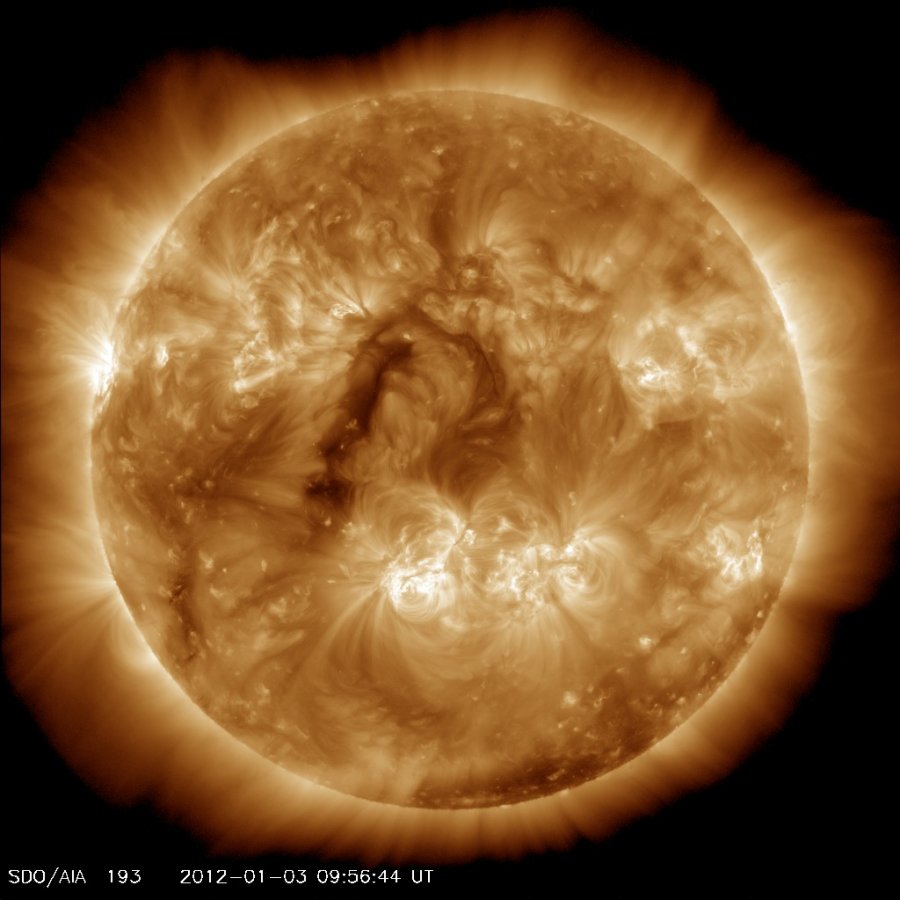
Old Sol and I have that in common, not wanting to know who is president of the US.  He doesn’t want to know, either.  Notice how he’s got his face squinched up in preparation for what he knows is coming.

But the challenge doesn’t begin with a new president.  It begins early during each election year as a Chinese fire drill of power-hungry liars telling the truth about one-another, but lies about themselves.  Along with the attitudinal lackeys of each among the citizenry saying things back and forth, repeating the lies in favor of their own preference and in opposition to those they vilify for one reason or another.

I’m going to be modifying the reading material online and offline I expose myself to so’s to help me in my goal of not knowing the names of all those lowlifes and read whatever lies they’re telling about others, and what truths are being told about them by their enemies.

From my point of view the greatest presidents of the US are those nobody ever heard of.  They did their jobs so well they barely get honorable mention in history because nothing noteworthy happened while they were president.  Which ought to be the goal of every president.

Here are some presidents I consider the great ones:

Martin Van Buren


Millard Fillmore


Franklin Pierce

Rutherford B Hayes

James Garfield

Chester A Arthur

Warren G. Harding

I’m including Jefferson Davis because nobody even acknowledges he was once president of half the country:


Here are two candidates for future greatness:

Gerald Ford


Jimmy Carter

Once the willow switch and razor strop went out of style as a method for dealing with loud, greedy, demanding children, the only methods left were ‘reasoning’ with them, which didn’t work, then ignoring them.

I’m going to skip the reasoning and just ignore them.

Old Jules