Thanks, Mr. President For all the things you’ve done The battles that you’ve won The way you deal with U.S. Steel And our problems by the ton We thank you so much
Before they decompose in the grader ditch.
Honest! It just fell!
The ugly?
A touch of class
That gall bladder used to be right THERE.
Mexican Standoff in Chinese
Tanked in China
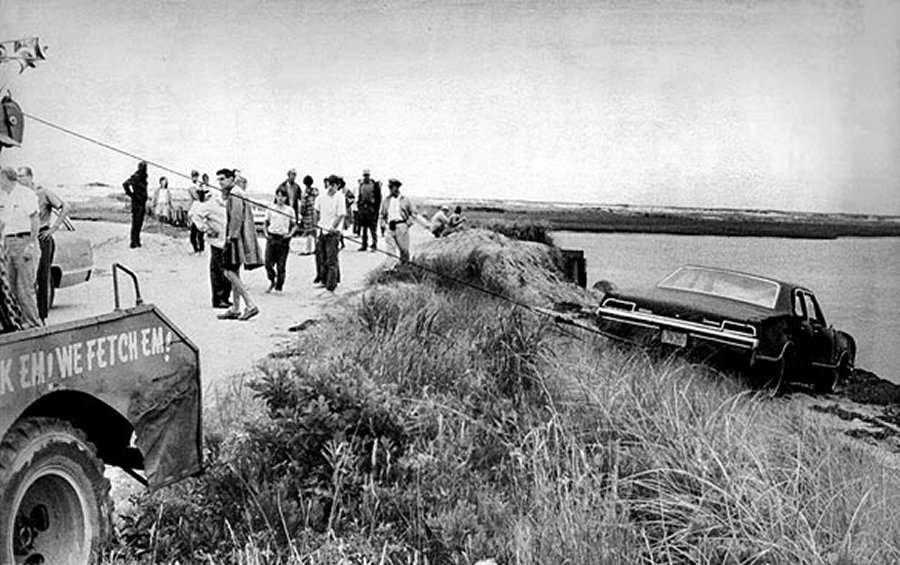
A sobering night for Ted Kennedy, but Mary Jo couldn’t swim. He bounced back, though not so high as previously expected. She didn’t.
Tanked in Martha’s Vineyard
The song has ended but the malady lingers on
Tanked elsewhere.
When Cuba still seemed nearby
The Last Roundup
Who ARE these guys?
Party animals
Hi! I’m king.
El Guapo meets Godzilla
Last one on’s a rotten egg
The Presidential War’s over! This helicopter’s destination is Panama, Grenada, El Salvadore, Kuwait, Iraq, last stop in Afghanistan! Show your tickets.
Being a person left behind by the passage of time probably leaves me out of sync with understandable concepts of humor. Or maybe mine was always too oblique to find the intended targets. Maybe that’s why Playboy never bought any of my limericks.
Fact is, I still occasionally chuckle over two jokes I first heard half-century ago.
1] A guy walked into a blacksmith shop where the blacksmith was pounding out horseshoes, the one he was working on glowing orange. While he waited, the customer noticed a horseshoe that had cooled just enough so’s it was no longer glowing. He picked it up and immediately flang it at the wall.
Blacksmith looked up grinning. “That wasn’t hot, was it?”
“No. It just doesn’t take me long to look at a horseshoe.”
2] Guy sticks his head into a barbershop. “Bob Peters here?”
Good morning readers. Thanks for coming by for a read this morning.
I gather from the email forwards that someone’s not satisfied Ayn Rand has been accepted as pathetic enough, wrong enough, dead enough to be left alone. Subject lines by non-psychiatrists, non-psychologists are taking the trouble to declare her a lunatic.
Poor, sad, bitter woman trapped inside a self yearning for men to be hairier chested, more muscled-up, more knock-em-around, slap-em-down and screw ’em. More like the good old days, taking what they want from anyone too weak to keep them from it.
I wonder why they don’t just leave her the hell alone. The 20th Century had no shortage of miserable, confused people, plenty of them writers, submerged in bitterness and misplaced notions of how it could be better.
In some ways every time Ayn Rand and her wishes come up I find myself thinking of Sylvia Plath, similar in so many ways, but with a different slant on the sort of man Rand longed for:
Daddy
by Sylvia Plath
You do not do, you do not do
Any more, black shoe
In which I have lived like a foot
For thirty years, poor and white,
Barely daring to breathe or Achoo.
Daddy, I have had to kill you.
You died before I had time–
Marble-heavy, a bag full of God,
Ghastly statue with one gray toe
Big as a Frisco seal
And a head in the freakish Atlantic
Where it pours bean green over blue
In the waters off beautiful Nauset.
I used to pray to recover you.
Ach, du.
In the German tongue, in the Polish town
Scraped flat by the roller
Of wars, wars, wars.
But the name of the town is common.
My Polack friend
Says there are a dozen or two.
So I never could tell where you
Put your foot, your root,
I never could talk to you.
The tongue stuck in my jaw.
It stuck in a barb wire snare.
Ich, ich, ich, ich,
I could hardly speak.
I thought every German was you.
And the language obscene
An engine, an engine
Chuffing me off like a Jew.
A Jew to Dachau, Auschwitz, Belsen.
I began to talk like a Jew.
I think I may well be a Jew.
The snows of the Tyrol, the clear beer of Vienna
Are not very pure or true.
With my gipsy ancestress and my weird luck
And my Taroc pack and my Taroc pack
I may be a bit of a Jew.
I have always been scared of you,
With your Luftwaffe, your gobbledygoo.
And your neat mustache
And your Aryan eye, bright blue.
Panzer-man, panzer-man, O You–
Not God but a swastika
So black no sky could squeak through.
Every woman adores a Fascist,
The boot in the face, the brute
Brute heart of a brute like you.
You stand at the blackboard, daddy,
In the picture I have of you,
A cleft in your chin instead of your foot
But no less a devil for that, no not
Any less the black man who
Bit my pretty red heart in two.
I was ten when they buried you.
At twenty I tried to die
And get back, back, back to you.
I thought even the bones would do.
But they pulled me out of the sack,
And they stuck me together with glue.
And then I knew what to do.
I made a model of you,
A man in black with a Meinkampf look
And a love of the rack and the screw.
And I said I do, I do.
So daddy, I’m finally through.
The black telephone’s off at the root,
The voices just can’t worm through.
If I’ve killed one man, I’ve killed two–
The vampire who said he was you
And drank my blood for a year,
Seven years, if you want to know.
Daddy, you can lie back now.
There’s a stake in your fat black heart
And the villagers never liked you.
They are dancing and stamping on you.
They always knew it was you.
Daddy, daddy, you bastard, I’m through.
12 October 1962
But nobody ever bothers dragging Plath up out of the grave and horsewhipping her. What the hell.
I found out the other day there’s another occasional reader here shared classrooms and the seven-year drought with me in the 1950s. Surprising, the people of that town and that vintage clicking to remember.
Every kid in Portales, New Mexico, believed Gene Brown and Bobby Thomas were lower trash than they, themselves were. Including me. I can’t recall now why they believed it, though both started smoking before they learned to masturbate, most likely.
But maybe the fact both kids were considered such lowlifes explained the reason I ran around with them a while, caught those freight trains to Clovis with them. [Riding the Rap].
Bobby Thomas quit school, lied about his age and joined the army when we were 9th graders. The next time I saw him he was a different person from the buzzard-necked, shunned youngster he’d been. I’ve often thought quitting school, for him, must have been a cheap price to pay for an opportunity to be out from under the pall of scorn the town piled on him for being whatever they thought he was.
Gene Brown, on the other hand, was still vilified as one of the historical lowlifes 30 years later when I went back for a visit. Never saw him, but I was surely impressed with how the sign the town stamped on his back stayed through the decades. Likely he came by it honestly. Certainly early.
On the other hand, a lot of the higher society folk who shunned those two managed to make lousy enough choices in life to earn their later reputations as lowlifes. And some of the kicked around, not-quite lowlifes did impressive, though maybe meaningless things with their lives.
My old friend, Fred Stevens, who spent early years as a hotshot savings and loan president, went down with the ship in the mid-80s crash, was as solid a citizen as I’ve ever known. But he assured me I’d have thought differently if I’d known him as an S&L president.
I’m sorry I didn’t get up to Seattle for a chance to reacquaint myself with the other banker from our kidship, but after he’d chosen to live under a bridge instead of running a financial institution. [Could you choose to live on the street?]
But I think the one I’d like most to know before I die is the one walked around the corner from a class reunion at the Cal Boykin Hotel in the early 1990s. Reunion for the grad classes 1960-1970. Fred Stevens told me about it. One of the attendees walked into a bank branch a block from the Cal Boykin Hotel and stuck it up. Walked clean away with $1500 and a well-deserved place in local legend.
I hope he’s remembered. Wish I’d thought of it and had the brass to do it.
Hi Readers. I just got back from the County Seat in Junction, Texas. Nice little Texas town and I managed to get the title on the $400 stolen car transferred into my name successfully.
But it was a strange experience, not only because it was raining. The whole town’s festooned with variations on the US flag and signs declaring they’ll never forget.
As nearly as I can figure, they must be celebrating the Cease Fire for the Korean War, July 27, 1953, and declaring the US ain’t ever going to bring our troops home from Korea.
Maybe the only town in the US still remembers that Cease Fire, celebrates it, and is overjoyed 25,000 US troops are still over there keeping the commies from taking over South Korea if they could.
My first introduction to science fiction came in the Portales Junior High School Library around 1958. One of the first of the hundreds of Sci-Fi books read over the course of a lifetime was Red Planet, by Robert A. Heinlein. Probably Keith, one of the readers of this blog, stood beside me in PJHS Library and argued over who’d get to check it out first.
The library didn’t include a lot to select from and we pored over them all. Thunder and Roses, by Theodore Sturgeon. City, by Clifford D. Simak. The Martian Chronicles, by Ray Bradbury. The Stars are Ours, and Star Born, by Andre Norton. And anything by Robert Heinlein.
Written in 1940, Waldo must have been one of Heinlein’s earliest novels. By the late 1950s it was still too early to be profound. Most of the setting, plot, concepts Heinlein visualized in 1940 hadn’t yet come to pass. Hadn’t made their way into human reality in a form more concrete than a pleasurable indulgence in imagination set to words. My memories of reading it were vague compared to hundreds of other works by Heinlein and other visionaries who hammered and blasted the new genre into mainstream readership.
So when Waldo showed up in a box of books in the Saint Vincent de Paul Thrift Store in Kerrville for a dime each and I bought them all, noticing Waldo among them, I was only mildly interested. Another couple of hours of something to read before dropping off to sleep, I figured.
I was wrong and discovered how wrong I was roughly 20 pages into the book. Squinted, read and re-read it far past my normal sleep time. Read it again the next day. Twice.
Aside from a goodly other phenomena Heinlein described in 1940 that eventually came to pass decades later, he discusses others that haven’t yet made it into mainstream thinking. One of which includes something I’ve been examining with insane intensity during the past several years, began experimenting with during the late 1990s. Dropped, partly because of Y2K, partly because the Internet and home computer RAM didn’t yet allow the accumulation and examination of sufficient evidence to arrive anywhere beyond conjecture and assertion.
Thankee, Saint Vincent de Paul Thrift Store. And thankee Robert Heinlein, particularly for this one.
I keep Waldo close at hand, thumb through it when I’m pondering where things are going as I go through my daily downloading rituals, working my way through the maze to the center.
You mightn’t, probably won’t be as impressed with this tome as I am. But I’m betting if you can find it you’ll be more than mildly surprised. Find yourself asking, “How the hell did Heinlein figure all that out in 1940?”
If not, you’ll at least enjoy a fun plot, good characters, a couple of hours of science fiction back when that’s what it was.
During the last 18 months of Albert Einstein’s life, November 1953 until April, 1955. he sat around with Immanuel Velikovsky on numerous occasions mulling over the implications of the historical/geological evidence described here. Largely ignored, met with a shrug by the scientific community because no explanation within accepted scientific theory could account for the massive physical evidence, the two men examined other possibilities, no matter how unconventional.
Mountain ranges yanked from their roots and moved laterally, sometimes as much as 100 miles during a short passage of time. Megafauna stacked like cordwood in cracks from southern Asia to the Arctic Circle by the millions, perhaps hundreds of millions. Countless among them quick-frozen rapidly enough to leave them relatively undecayed for examination by modern man thousands of years later.
If Einstein had lived to see the publication of Velikovsky’s book his interest, prestige and comments might have provided the momentum to carry the discussion into the overall scientific community and more widespread recognition. Might have forced the unpalatable conclusions to which examination of the evidence leads without leaving many alternatives.
Instead, Planet in Upheavalwas published quietly, largely ignored by science, Velikovsky vilified and often denounced by his peers.
But the book’s still out there, used. Probably available from Amazon for pennies. I bought my copy in a thrift store in Kerrville for $.25. I couldn’t have afforded it, wouldn’t have bought it had it cost a buck.
But I bought it for quarter and have now read it enough times to make up for a lot of the people who never did. Pick up a copy somewhere and you can make up for a few others. I suspect you won’t be satisfied with a single reading.
If you do read it you’ll be forced to conclude, Stuff Happens. Sometimes it happens fast and big. And it doesn’t need man to push it along, make it happen. Doesn’t even pause to explain itself and why it happens for the benefit of the best minds of humanity to carefully ignore.
Old Jules
Afterthought – Edited in to avoidconfusion:
The book referred to here is not Chariots of the Gods. The author is not Erich von Daniken, of whom you probably have a vague recollection as a discredited ‘scientist’, author of half-truths, incomplete truths, and fig-newtons of the imagination.
Erich von Daniken. Immanuel Velikovsky. Two entirely different individuals. They even spell their names differently. Admittedly both foreigners by heritage, but they had little else in common. Von Daniken actually had a following and readership. Velikovsky, on the other hand, was a scientist.
Nobody ever saw a bathtub without picturing her in it. Not because she was a pretty thing. She wasn’t. But somehow she managed to draw the attention of every kid in East Ward Grade School those early years of the 1950s. Not just the fact she needed that bathtub.
Poor girl had stringy hair and in surroundings where half the kids were wearing clothes their mothers sewed for them out of flour sacks, and wore hand-me-downs, she was conspicuously poor. Conspicuous enough to draw a brand of cruelty most of us probably felt ashamed of while we indulged it.
If she was in line for some reason those coming behind would make a game of trying to not be in line behind her, curling back to force someone else forward, them doing the same.
“Patsy Baines wants to be your girlfriend.” “I saw you walking home with Patsy Baines.”
If I hadn’t been so frightened of being treated the way we treated her I’d have realized a lot earlier in life how little respect I have for human beings.
Wonder why the hell she came to mind this morning. I don’t believe I’ve thought of Patsy Baines in 50 years.
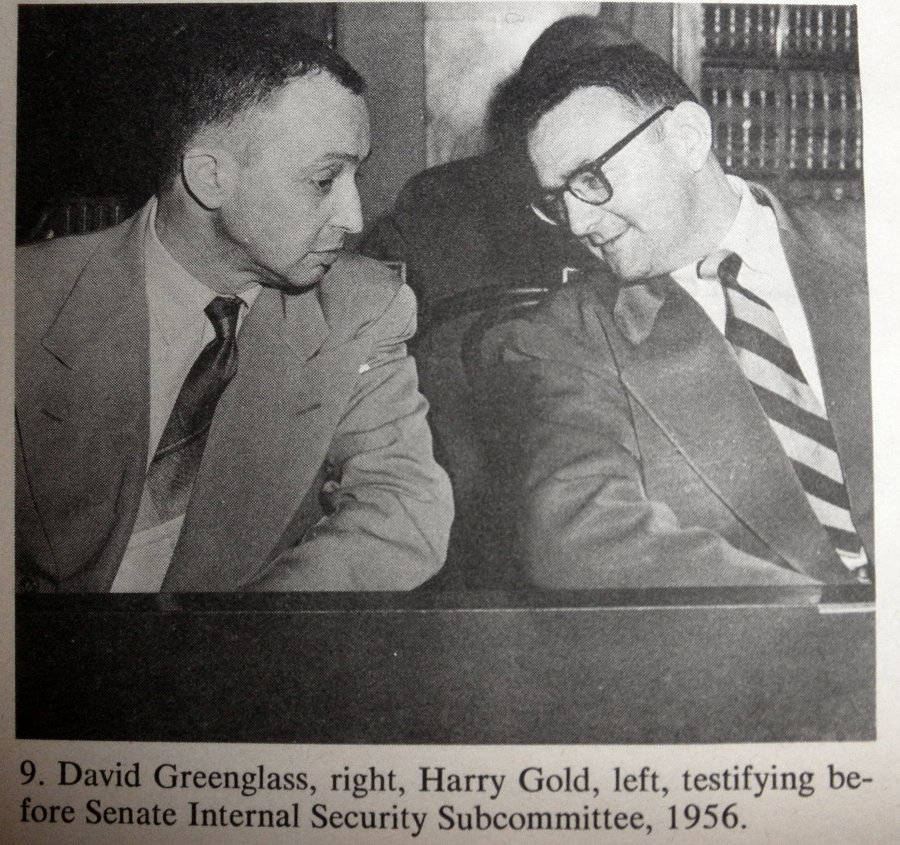
Even the dispicable can’t always dodge the steamroller. Kaufman was rewarded, Greenglass spent a few years in prison, punctuated by testimonies before Congressional Committees to help forge a US package of ideas about a war on International Communism. Appropriate enough, liar lying to other liars to create a consistent set of lies. Not to suggest C0mmunists weren’t also lying. They mostly just weren’t elected and appointed officials sworn to uphold the Constitution of the United States.
Federal Judge Irving Kaufman, who subverted the legal processes in his own courtroom to predjudice the jury in favor of conviction of both Rosenbergs, then sentence them to death in the electric chair:
In 1953, Julius and Ethel Rosenberg were sent to the electric chair for stealing the secret of the atom bomb for the Soviet Union.
They were called the “Atom Spies,” and 50 years ago this summer, they were executed for giving the secret of the atomic bomb to the Soviet Union. They are the only Americans ever executed for espionage in peacetime. Greenglass was the star witness for the prosecution against the Rosenbergs – and he also happened to be Ethel Rosenberg’s brother. He served 10 years in prison for his actions as a traitor, and then changed his name and dropped out of sight. As he neared 80, Greenglass decided to break his silence. He talked only after 60 Minutes II agreed to disguise his face and voice.
His story begins in the summer of 1950 when the FBI took Greenglass in for questioning. He confessed almost immediately for spying, and quickly implicated Julius, Ethel and his own wife, Ruth. David and the Rosenbergs were arrested. Ruth Greenglass never was charged.
“That’s what I told the FBI,” says Greenglass. “I said, ‘If you indict my wife, you can forget it. I’ll never say a word about anybody.'”
It was quite simply his choice, he says today. So Greenglass says he turned on his sister to save his wife. “I would not sacrifice my wife and my children for my sister. How do you like that?”
Greenglass made his choice when America was at war with communists in Korea, and in fear of the Soviet Union, which had recently tested its own atomic bomb.
The four spies were unlikely actors in a Cold War drama: Julius was an unsuccessful engineer; Ethel spent most of her time raising their two young sons; Greenglass was a draftsman and a tinkerer; and his wife Ruth was a wife and mother. All had been ardent communists.
During World War II, Greenglass, then a sergeant, was posted to Los Alamos, the secret army base in New Mexico, where thousands of scientists and soldiers were building the atom bomb. Although he had a low-level job, Greenglass says he knew what was going on.
He says Julius Rosenberg recruited him to spy with a simple sales pitch: “He said, ‘We have to help our ally.'” By ally, he meant Russia. “Russia was an ally at the time, and that we have to help them with all the information we get.”
Greenglass told the FBI that he gave the Russians sketches and details on the device used to trigger a nuclear blast. But he says he didn’t enjoy being a spy.
“I was continually conscious of what’s behind me. I didn’t enjoy it. I just did it because I said I would,” says Greenglass.
Did he realize how dangerous it was? “I didn’t really think it was, because I didn’t think the Russians were an enemy,” he says.
His career in espionage came to an end soon after the war ended. Back in civilian life, Greenglass and Julius opened a machine shop together. They argued over the business, and over Greenglass’ growing disenchantment with Communism.
Four years later, Julius warned Greenglass that the FBI was on to them, and urged him to flee the country. Greenglass had a family passport picture taken, but he had no intention of using it.
“I didn’t want to leave the United States to go to some hellhole like Russia or China, or wherever the hell he wanted to send me,” says Greenglass. Instead, he took a bus to the Catskill Mountains. “I figured I’d find an obscure place. And I see that the FBI is following me. And they lose me.”
But he never made it to the Catskills. He went into custody instead. And within hours, he began cooperating with the FBI, sealing the Rosenberg’s fate.
He was the star witness for the prosecution at their trial, and he told the jury about his espionage, and described the activities of Julius, Ethel and his wife, Ruth.
He testified that one evening, he and Ruth brought sketches and handwritten notes about the atom bomb to the Rosenberg’s New York apartment. After dinner, Greenglass said they set up a typewriter on a folding bridge table in the living room, and turned his hand-written notes into a neatly-typed document for the Soviets.
Prosecutors asked Greenglass who did the typing. He said under oath that Ethel did the typing. His wife, who also took the stand, told virtually the same story.
That story was virtually the only evidence the government had against Ethel Rosenberg. But prosecutors argued that Ethel’s typing proved she was an active participant in the spy ring. After the trial, they admitted that without the typing testimony, they could never have convinced the jury that Ethel was anything more than the wife of a spy – and that’s not a crime.
Why did Greenglass lie on the stand? He now says Roy Cohn, an assistant prosecutor in the Rosenberg case, made him do it. Cohn went on to become Joseph McCarthy’s right-hand man.
Greenglass says that Cohn encouraged him to testify that he saw Ethel type up the notes. And he says he didn’t realize at the time the importance of that testimony.
But the jury knew how important it was, and found both Julius and Ethel Rosenberg guilty of conspiring to commit espionage. Judge Irving Kaufman imposed the death penalty.
Fifty years later, we know a lot more than anyone could have known in 1951. For example, we know that much of what David Greenglass said about Julius Rosenberg is true. It has been verified by other, independent, sources, all of which confirm that Julius Rosenberg was a Soviet spy. We also know that there is very little, if any, evidence that implicates his wife, Ethel, in any illegal activity.
But in the days before the execution, there were protests and vigils in New York, Washington and Europe. The Rosenbergs both claimed they were innocent, and many believed in them. There were a flurry of last-minute attempts to get a stay of execution. And there was no shortage of Americans who felt that justice was being done.
Up until the last minute, the authorities were willing to commute the death sentences if the Rosenbergs cooperated and named names. But they refused and were executed on June 19, 1953 – without ever breaking their silence.
Why did Greenglass think Julius and Ethel maintained their silence to the end? “One word: stupidity,” says Greenglass, who holds his own sister responsible for her own death.
—————————————-
But I promised a Denouement:
Of course, it makes no difference now. Any more than it matters who killed JFK, Robert Kennedy, MLK, and President Diem of Vietnam.
Doesn’t matter, really, any more than it matters that the Gulf of Tonkin Incident, the incident used to justify the US involvement Vietnam War, was a manufactured incident. A cynical lie to dupe the US public and arouse patriotic fervor. Same as the Rosenberg trial.
A pyramid of lies, once the foundation’s in place, builds on itself. Only the names of the liars and the names of the victims change. It’s only incidental that sometimes the victims are also liars.
If any lessons can be learned from it all it’s probably only that the romantic patriots can always be trusted. Trusted to believe the lies. The liars can’t trust one another, but they know they can always trust the romantic patriots.
The liars couldn’t succeed without them.
Old Jules
Today on Ask Old Jules on Facebook:
Old Jules, what’s your definition of an idealist?
An idealist is a person who locks his teeth into the ankle of an abstraction and doesn’t let go, doesn’t look for another ankle, doesn’t look closely at whatever’s above and below the ankle.
When Louis Nizer penned The Implosion Conspiracyit might be said enough time had passed to provide perspective. Two decades had passed since the trial and execution of the Rosenbergs rocked the nation. Nizer disliked Communists, asserted he’d refuse to defend one in his profession as a defense attorney. However, he wrote a lengthy analysis of the trial, the transcripts, testimonies, the individuals involved in an even-handed manner that wouldn’t have been possible during the Commie craze days of the events.
Basic events leading to the trial: The US was developing the atomic bomb at Los Alamos, New Mexico during the late stages of WWII. The information was being shared with the US Ally, Britain, but kept secret from the US Ally, the USSR. Elaborate security measures were in place to assure the developments remained the exclusive property of the US and British governments. Elaborate almost beyond description, devised by the US military and the FBI.
But the British liaison to the project was physicist Klaus Fuchs, a spy for the Soviet Union. The Germans knew Fuchs to be a Soviet spy, but the British and Americans didn’t, until they gained access to records captured as they advanced into Germany.
Aside from Fuchs, the other USSR source for information about developments at Los Alamos was David Greenglass, a US Army machinist and brother to Ethyl Rosenberg. Greenglass had been a Communist his entire adult life and had been separated from an earlier military job because of questions about his loyalty and honesty.
David Greenglass stole the crucial secrets of the lens molds used to detonate the bomb, the implosion device. By hindsight, it’s clear he did it for money, for the same reasons he stole automobile parts, uranium, anything he could lay hands on to sell on the black market.
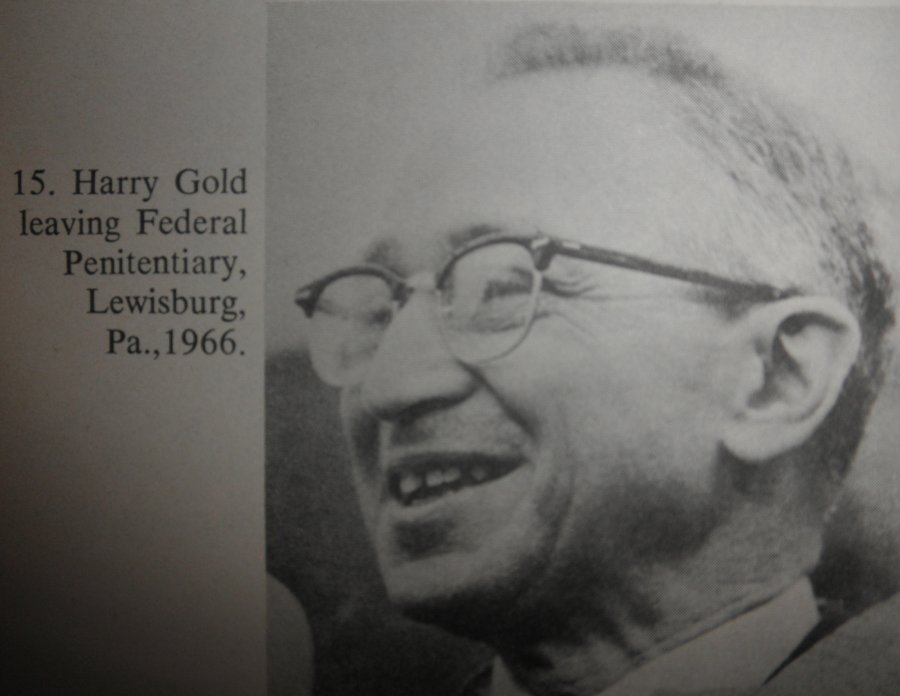
Greenglass passed the secrets to his wife, Ruth, who passed them to Harry Gold. Gold was the direct connection to the Soviet spymaster, Yakovlev, in the Soviet Embassy. It’s clear enough from everything provided in evidence and testimony that Gold was a man without loyalty to any nation, ideal, idea, or human being other than himself. He did it for the money and for no other reason.
The testimony of Greenglass, awaiting trial for treason, and his wife, Ruth, who was never charged, provided the testimony connecting Julius and Ethyl Rosenberg to the plot. The witness stand accusations by Greenglass against his sister and brother-in-law, and the corroborating testimony from his wife, who didn’t yet know whether she’d be charged, constituted almost the only evidence of the prosecution. The other witnesses directly involved in the plot mostly did not know the Rosenbergs, or barely knew them and knew little of their activities.
Because of the weakness of the government case insofar as testimony and physical evidence of the Rosenberg involvement in actual spy activities, the focus of the prosecution became a trial of Communist ideology. Witnesses who knew nothing about the plot, the bomb secrets, the Rosenbergs were called to testify about how they’d switched their own loyalties from Fascism to Communism, then become loyal US citizen-experts making a living selling books and giving lectures on the insidiousness of Communism.
The trial transcripts excerpts Nizer provides make it clear the Defense had two opponents: the US Attorney prosecutor, and the judge, who constantly intervened, interrupted, interjected in ways clearly intended to prejudice the jury against the defendants.
The key players who gave, or sold the atomic bomb to the USSR in 1945 went free, or were given relatively light sentences.
The Rosenbergs, clearly Communist idealists, possibly part of the plot, died in the electric chair.
When Allied forces found documents in Germany revealing Fuchs as a Soviet spy the chain of resulting indictments followed a path to almost all the conspirators except the Rosenbergs. Before spymaster Yakovlev fled the US, during his last meeting with Gold, he made the following observations:
Yakovlev: Don’t you remember anything I tell you? You’ve been a sitting duck all this time. We probably are being watched right now. How we pick such morons I’ll never understand! We’ve been living in a goldfish bowl because of you. Idiot! Idiot!
I am leaving the country immediately. I’ll never see you again. Just go away. Don’t follow me.
He went.
But the answer to Yakoviev’s question is worth an answer. They recruited from the US Government, the US military, from US universities, from US businessmen.
From the same pool of applicants who later sold their industries, their industrial tools, secrets, capabilities, economies, and debts to the Peoples Republic of China and other foreign nations.
They weren’t Communists, like the Rosenbergs. They were opportunists, entrepreneurs, devil-take-the-hindmost politicians, like their descendants a few generations later.
Old Jules, does an animal’s life mean as much or nearly as much to you as a human’s, or do you feel animals are insignificant/worthless in comparison? Also, do you believe it is ever morally right to harm/kill animals? What about humans?
74 years old, a resident of Leavenworth, KS, in an apartment located on the VA campus. Partnered with a black shorthaired cat named Mister Midnight. (1943-2020)
Since April, 2020, this blog is maintained by Jeanne Kasten (See "About" page for further information).
https://sofarfromheaven.com/2020/04/21/au-revoir-old-jules-jack-purcell/
I’m sharing it with you because there’s almost no likelihood you’ll believe it. This lunatic asylum I call my life has so many unexpected twists and turns I won’t even try to guess where it’s going. I’d suggest you try to find some laughs here. You won’t find wisdom. Good luck.







 So Far From Heaven