Good morning readers. Thanks for coming by for a read this morning.
Searching around in my mind as I drove to Kerrville yesterday I was trying to find something, almost anything, the word ‘we’ could be applied to that included all of humanity. Not an easy task, despite most of the lofty notions humans have about themselves.
Intelligence and thinking came to mind, but didn’t survive even long-range scrutiny. Whatever else we might be, human beings are only intelligent when compared to one another within a miniscule range of options. Probably the least intelligent human being able to function is somewhat smarter than the next-best up for consideration in the animal kingdom. And a few notches up on the yardstick, the smartest human being isn’t much more intelligent. But there’s enough difference top-to-bottom to demolish the word ‘we’ when it comes to defining anything all humans have in common.
As for thinking, there’s just not a hell of a lot of it going on. The overwhelming majority of humans are riding along on shock waves created by thinkings of an underwhelming few individuals. Of the several billion humans on this planet there’s not more than a shot-glass full who could figure out how to manufacture a lead pencil. Or, for that matter, a shot-glass. Or build a fire without materials provided by some autopilot composite of individuals not-thinking somewhere else.
Pride held up a lot better, but as I turned it over examining all the nuances I found it was handcuffed to something else. Commitment. This species couldn’t have survived this long without it any more than a tribe of beavers could survive without the non-thinking commitment to building community dams.
And pride is the glue holding it together. A necessary virtue to keep things moving, even though the commitments most frequently to dogs that don’t hunt, haven’t hunted for centuries, but nobody’s devoted enough thought to the matter to notice.
When I was a kid the adults used to say if a snapping turtle ever got a bite on you it wouldn’t turn loose until it thundered. One of the places in this reality where the word ‘we’ can be applied to humanity is our commonality to that imaginary snapping turtle. Commitments come along, sometimes the result of someone thinking something, sometimes just out of the blue, and ‘we’ lock our pride into it and don’t turn loose until it thunders.
When I began this post I intended it to examine human commitments to failed ideals and myths. I planned to reflect on our often failing repeated attempts to commit ourselves to individuals, to political parties, to geographic boundaries.
But I’m going to have to save that for some future post.
I was watching bumper stickers as I drove along considering all this. Proud to be an American. Proud to be a Texan. Proud to be a Native Texan.
Presumably those declarations are a source of pride because of the effort and personal hardship involved in achieving them. If pride had anything to do with personal achievement. Or thinking.
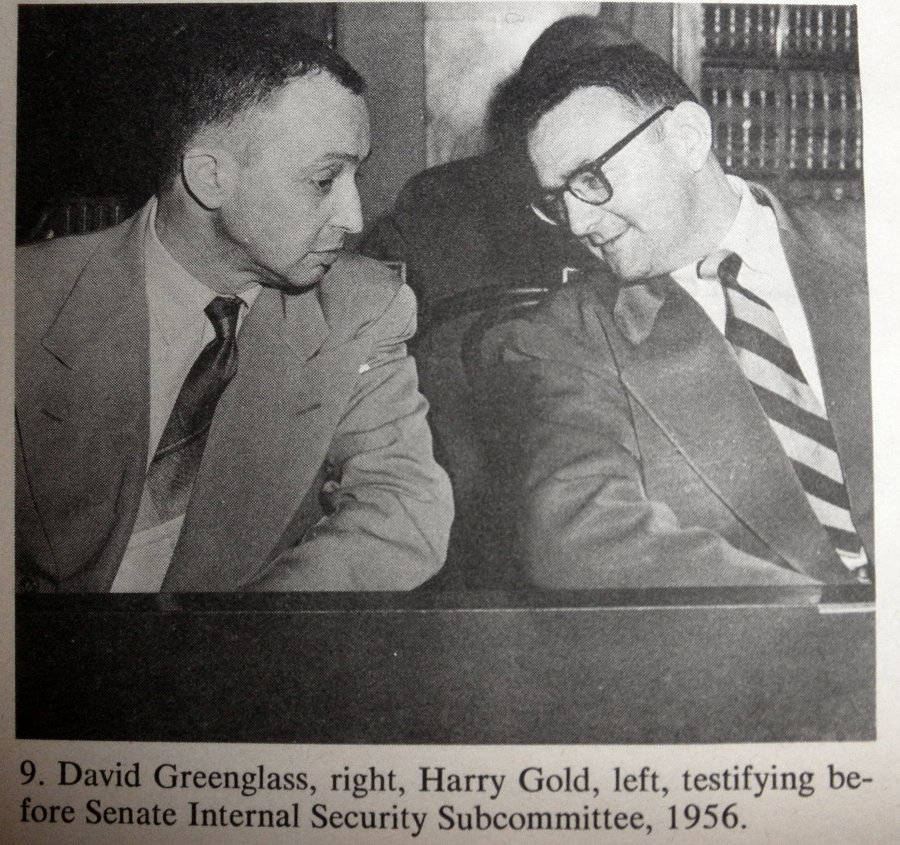
Even the dispicable can’t always dodge the steamroller. Kaufman was rewarded, Greenglass spent a few years in prison, punctuated by testimonies before Congressional Committees to help forge a US package of ideas about a war on International Communism. Appropriate enough, liar lying to other liars to create a consistent set of lies. Not to suggest C0mmunists weren’t also lying. They mostly just weren’t elected and appointed officials sworn to uphold the Constitution of the United States.
Federal Judge Irving Kaufman, who subverted the legal processes in his own courtroom to predjudice the jury in favor of conviction of both Rosenbergs, then sentence them to death in the electric chair:
In 1953, Julius and Ethel Rosenberg were sent to the electric chair for stealing the secret of the atom bomb for the Soviet Union.
They were called the “Atom Spies,” and 50 years ago this summer, they were executed for giving the secret of the atomic bomb to the Soviet Union. They are the only Americans ever executed for espionage in peacetime. Greenglass was the star witness for the prosecution against the Rosenbergs – and he also happened to be Ethel Rosenberg’s brother. He served 10 years in prison for his actions as a traitor, and then changed his name and dropped out of sight. As he neared 80, Greenglass decided to break his silence. He talked only after 60 Minutes II agreed to disguise his face and voice.
His story begins in the summer of 1950 when the FBI took Greenglass in for questioning. He confessed almost immediately for spying, and quickly implicated Julius, Ethel and his own wife, Ruth. David and the Rosenbergs were arrested. Ruth Greenglass never was charged.
“That’s what I told the FBI,” says Greenglass. “I said, ‘If you indict my wife, you can forget it. I’ll never say a word about anybody.'”
It was quite simply his choice, he says today. So Greenglass says he turned on his sister to save his wife. “I would not sacrifice my wife and my children for my sister. How do you like that?”
Greenglass made his choice when America was at war with communists in Korea, and in fear of the Soviet Union, which had recently tested its own atomic bomb.
The four spies were unlikely actors in a Cold War drama: Julius was an unsuccessful engineer; Ethel spent most of her time raising their two young sons; Greenglass was a draftsman and a tinkerer; and his wife Ruth was a wife and mother. All had been ardent communists.
During World War II, Greenglass, then a sergeant, was posted to Los Alamos, the secret army base in New Mexico, where thousands of scientists and soldiers were building the atom bomb. Although he had a low-level job, Greenglass says he knew what was going on.
He says Julius Rosenberg recruited him to spy with a simple sales pitch: “He said, ‘We have to help our ally.'” By ally, he meant Russia. “Russia was an ally at the time, and that we have to help them with all the information we get.”
Greenglass told the FBI that he gave the Russians sketches and details on the device used to trigger a nuclear blast. But he says he didn’t enjoy being a spy.
“I was continually conscious of what’s behind me. I didn’t enjoy it. I just did it because I said I would,” says Greenglass.
Did he realize how dangerous it was? “I didn’t really think it was, because I didn’t think the Russians were an enemy,” he says.
His career in espionage came to an end soon after the war ended. Back in civilian life, Greenglass and Julius opened a machine shop together. They argued over the business, and over Greenglass’ growing disenchantment with Communism.
Four years later, Julius warned Greenglass that the FBI was on to them, and urged him to flee the country. Greenglass had a family passport picture taken, but he had no intention of using it.
“I didn’t want to leave the United States to go to some hellhole like Russia or China, or wherever the hell he wanted to send me,” says Greenglass. Instead, he took a bus to the Catskill Mountains. “I figured I’d find an obscure place. And I see that the FBI is following me. And they lose me.”
But he never made it to the Catskills. He went into custody instead. And within hours, he began cooperating with the FBI, sealing the Rosenberg’s fate.
He was the star witness for the prosecution at their trial, and he told the jury about his espionage, and described the activities of Julius, Ethel and his wife, Ruth.
He testified that one evening, he and Ruth brought sketches and handwritten notes about the atom bomb to the Rosenberg’s New York apartment. After dinner, Greenglass said they set up a typewriter on a folding bridge table in the living room, and turned his hand-written notes into a neatly-typed document for the Soviets.
Prosecutors asked Greenglass who did the typing. He said under oath that Ethel did the typing. His wife, who also took the stand, told virtually the same story.
That story was virtually the only evidence the government had against Ethel Rosenberg. But prosecutors argued that Ethel’s typing proved she was an active participant in the spy ring. After the trial, they admitted that without the typing testimony, they could never have convinced the jury that Ethel was anything more than the wife of a spy – and that’s not a crime.
Why did Greenglass lie on the stand? He now says Roy Cohn, an assistant prosecutor in the Rosenberg case, made him do it. Cohn went on to become Joseph McCarthy’s right-hand man.
Greenglass says that Cohn encouraged him to testify that he saw Ethel type up the notes. And he says he didn’t realize at the time the importance of that testimony.
But the jury knew how important it was, and found both Julius and Ethel Rosenberg guilty of conspiring to commit espionage. Judge Irving Kaufman imposed the death penalty.
Fifty years later, we know a lot more than anyone could have known in 1951. For example, we know that much of what David Greenglass said about Julius Rosenberg is true. It has been verified by other, independent, sources, all of which confirm that Julius Rosenberg was a Soviet spy. We also know that there is very little, if any, evidence that implicates his wife, Ethel, in any illegal activity.
But in the days before the execution, there were protests and vigils in New York, Washington and Europe. The Rosenbergs both claimed they were innocent, and many believed in them. There were a flurry of last-minute attempts to get a stay of execution. And there was no shortage of Americans who felt that justice was being done.
Up until the last minute, the authorities were willing to commute the death sentences if the Rosenbergs cooperated and named names. But they refused and were executed on June 19, 1953 – without ever breaking their silence.
Why did Greenglass think Julius and Ethel maintained their silence to the end? “One word: stupidity,” says Greenglass, who holds his own sister responsible for her own death.
—————————————-
But I promised a Denouement:
Of course, it makes no difference now. Any more than it matters who killed JFK, Robert Kennedy, MLK, and President Diem of Vietnam.
Doesn’t matter, really, any more than it matters that the Gulf of Tonkin Incident, the incident used to justify the US involvement Vietnam War, was a manufactured incident. A cynical lie to dupe the US public and arouse patriotic fervor. Same as the Rosenberg trial.
A pyramid of lies, once the foundation’s in place, builds on itself. Only the names of the liars and the names of the victims change. It’s only incidental that sometimes the victims are also liars.
If any lessons can be learned from it all it’s probably only that the romantic patriots can always be trusted. Trusted to believe the lies. The liars can’t trust one another, but they know they can always trust the romantic patriots.
The liars couldn’t succeed without them.
Old Jules
Today on Ask Old Jules on Facebook:
Old Jules, what’s your definition of an idealist?
An idealist is a person who locks his teeth into the ankle of an abstraction and doesn’t let go, doesn’t look for another ankle, doesn’t look closely at whatever’s above and below the ankle.
When Louis Nizer penned The Implosion Conspiracyit might be said enough time had passed to provide perspective. Two decades had passed since the trial and execution of the Rosenbergs rocked the nation. Nizer disliked Communists, asserted he’d refuse to defend one in his profession as a defense attorney. However, he wrote a lengthy analysis of the trial, the transcripts, testimonies, the individuals involved in an even-handed manner that wouldn’t have been possible during the Commie craze days of the events.
Basic events leading to the trial: The US was developing the atomic bomb at Los Alamos, New Mexico during the late stages of WWII. The information was being shared with the US Ally, Britain, but kept secret from the US Ally, the USSR. Elaborate security measures were in place to assure the developments remained the exclusive property of the US and British governments. Elaborate almost beyond description, devised by the US military and the FBI.
But the British liaison to the project was physicist Klaus Fuchs, a spy for the Soviet Union. The Germans knew Fuchs to be a Soviet spy, but the British and Americans didn’t, until they gained access to records captured as they advanced into Germany.
Aside from Fuchs, the other USSR source for information about developments at Los Alamos was David Greenglass, a US Army machinist and brother to Ethyl Rosenberg. Greenglass had been a Communist his entire adult life and had been separated from an earlier military job because of questions about his loyalty and honesty.
David Greenglass stole the crucial secrets of the lens molds used to detonate the bomb, the implosion device. By hindsight, it’s clear he did it for money, for the same reasons he stole automobile parts, uranium, anything he could lay hands on to sell on the black market.
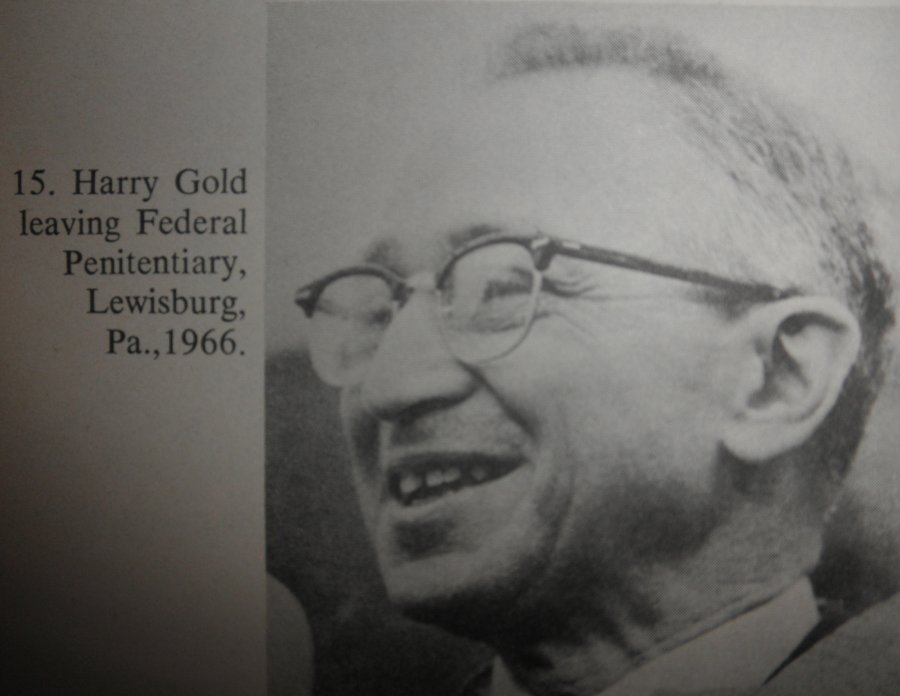
Greenglass passed the secrets to his wife, Ruth, who passed them to Harry Gold. Gold was the direct connection to the Soviet spymaster, Yakovlev, in the Soviet Embassy. It’s clear enough from everything provided in evidence and testimony that Gold was a man without loyalty to any nation, ideal, idea, or human being other than himself. He did it for the money and for no other reason.
The testimony of Greenglass, awaiting trial for treason, and his wife, Ruth, who was never charged, provided the testimony connecting Julius and Ethyl Rosenberg to the plot. The witness stand accusations by Greenglass against his sister and brother-in-law, and the corroborating testimony from his wife, who didn’t yet know whether she’d be charged, constituted almost the only evidence of the prosecution. The other witnesses directly involved in the plot mostly did not know the Rosenbergs, or barely knew them and knew little of their activities.
Because of the weakness of the government case insofar as testimony and physical evidence of the Rosenberg involvement in actual spy activities, the focus of the prosecution became a trial of Communist ideology. Witnesses who knew nothing about the plot, the bomb secrets, the Rosenbergs were called to testify about how they’d switched their own loyalties from Fascism to Communism, then become loyal US citizen-experts making a living selling books and giving lectures on the insidiousness of Communism.
The trial transcripts excerpts Nizer provides make it clear the Defense had two opponents: the US Attorney prosecutor, and the judge, who constantly intervened, interrupted, interjected in ways clearly intended to prejudice the jury against the defendants.
The key players who gave, or sold the atomic bomb to the USSR in 1945 went free, or were given relatively light sentences.
The Rosenbergs, clearly Communist idealists, possibly part of the plot, died in the electric chair.
When Allied forces found documents in Germany revealing Fuchs as a Soviet spy the chain of resulting indictments followed a path to almost all the conspirators except the Rosenbergs. Before spymaster Yakovlev fled the US, during his last meeting with Gold, he made the following observations:
Yakovlev: Don’t you remember anything I tell you? You’ve been a sitting duck all this time. We probably are being watched right now. How we pick such morons I’ll never understand! We’ve been living in a goldfish bowl because of you. Idiot! Idiot!
I am leaving the country immediately. I’ll never see you again. Just go away. Don’t follow me.
He went.
But the answer to Yakoviev’s question is worth an answer. They recruited from the US Government, the US military, from US universities, from US businessmen.
From the same pool of applicants who later sold their industries, their industrial tools, secrets, capabilities, economies, and debts to the Peoples Republic of China and other foreign nations.
They weren’t Communists, like the Rosenbergs. They were opportunists, entrepreneurs, devil-take-the-hindmost politicians, like their descendants a few generations later.
Old Jules, does an animal’s life mean as much or nearly as much to you as a human’s, or do you feel animals are insignificant/worthless in comparison? Also, do you believe it is ever morally right to harm/kill animals? What about humans?
Almost no one here is qualified to tell you how not to blow yourself up, but one of our favorite members and one of the Group’s founders, Art Corbitt, would rail about ammonia in lraches being explosive. Keyword fulminate.
Cyanide tailings are the wirst offenders, so one really has to process that out before extraction.
Geology degrees I am told could have morr chemistry and mechanical engineering, so this may be normal for the industry.
Good morning readers and thanks for coming by for a read.
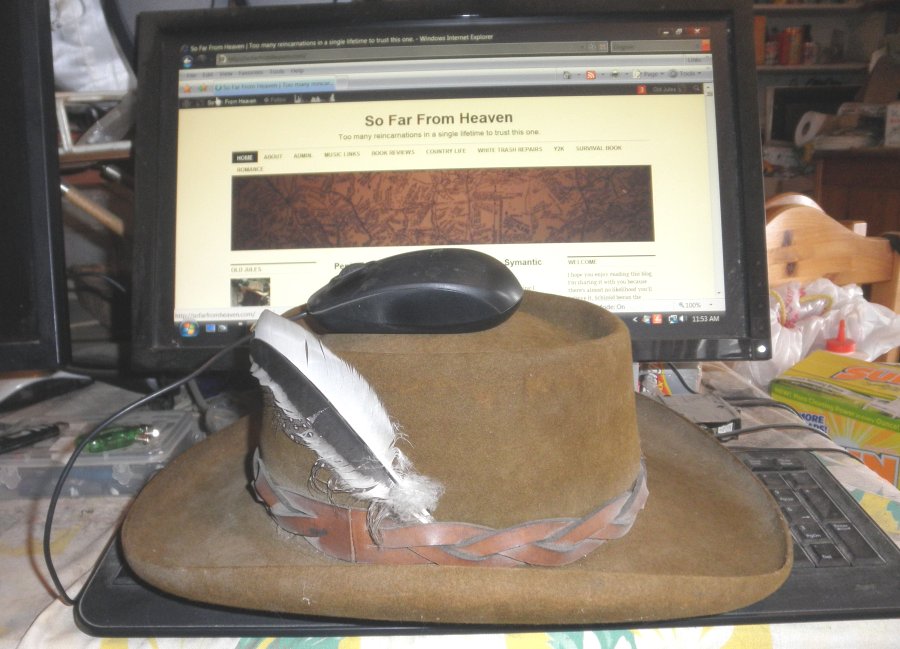
Hopefully by the time you read this I’ll be strutting like a peacock, wearing my Texas Hatters Manny Gammidge High Roller tilted at a jaunty angle, certain I’m a smarty-pants extraordinaire. At least that’s how I’m planning the final chapter of this monumental butt show.
But it’s 7:56 pm Monday evening, and I’m 43 % done on a 79 mb download of a modem driver. Six hours 29 minutes from now the box says, I’ll know whether this is going to work. Except I’ll be in bed six hours and 29 minutes from now, unless I pick that as one of the times I get up to pee.
But here’s the rundown on the plot thus far.
Ed’s comment reminded me I had a weirdly shaped and sized hard drive I’d yanked out of an old Vista E Machine I bought new at WalMart a few years ago and it died after about six months and $150 spent in repair shops.
So I pulled open the Dell and voil’aismimo! The drive looked more-or-less the same as the one from the E Machine, aside from some extra parts. I worked an hour-or-so getting the extra parts off the Dell drive and onto the E Machine one, installed it, reassembled everything, clenched my teeth really hard and squeezed my eyes shut and I turned that commie pig on.
She booted spang up, showed me a screen I hadn’t seen since the E Machine died. But, the fly in the ointment was that the modem still didn’t get recognized. I ran through a flurry of downloading alleged drivers from sites all over the web, putting them on a CD, loading in the E Dell Machine and having them snubbed like clerks in camera stores used to snub a person brought in a Brownie Hawkeye for a roll of film.
Meanwhile Norton Symantic was slipping me mickeys behind the scenes, popping screens up at me threatening to keep me company if I kept downloading from non-regular free driver places.
Which I’ll keep short by saying, led me to Dell and my current act of genius downloading 79 mb on a dialup with 12/2 Romax wrapped in electrical tape between me and the power pole.
So, tomorrow morning when you read this you’ll be seeing words of a man with a modem working on an E Dell Machine running Vista, is the way I want to end this chapter. Wearing a 1972 vintage Manny Gammidge Texas Hatters High Roller. A man commanding respect, admiration and quite possibly veneration. A man you want to be like. Same as before all this crap happened.
That’s the proposal for the chapter. Assuming the editors don’t think that 79 mb download wasn’t a high enough price for our guy to pay to get a damned modem working.
I’m going to schedule this tonight before I go to bed to post at 6:00 am. Just to make sure it goes to work before the editors finish breakfast.
Old Jules
6:46 am edit: Seems prudent to get other things done before I unplug the modem here and plug it into the other machine to test the driver. The world needs coffee before it begins the kind of foolishness this day might be destined to bring. It isn’t that I’m reluctant to step boldly into the future. It’s just a minor fit of hesitation on my part to contemplate the Odyssey Homer never had to deal with. Putting a computer on my shoulder and walking inland until someone asks me what it is might be the next step, dragging the Toyota 4-Runner along behind until someone asks me what that is, too, seems a lousy day to anticipate.
One of my personal goals during the past several decades has been to live through an entire presidential term without knowing which politician occupies the White House. A second goal is to not know which segment the single party occupying the Congressional seats disguised as two parties pretends to be the one in power.
I almost made it through a presidential term without knowing who was up there once, but I fell off the wagon inadvertently because of 9/11. I don’t recall who the guy was who was president then, but I do remember having to know who he was then for a while.
This time around I hornswoggled myself into knowing. Him being a black guy, I was curious to see whether he’d be any different than the string of white ones preceding him. But now I’ve satisfied myself he isn’t and my curiosity’s receded sufficiently to allow me to pound it down into the seldom-referred-to compartment of my brain where I try to keep things that are none of my affair.
Old Sol and I have that in common, not wanting to know who is president of the US. He doesn’t want to know, either. Notice how he’s got his face squinched up in preparation for what he knows is coming.
But the challenge doesn’t begin with a new president. It begins early during each election year as a Chinese fire drill of power-hungry liars telling the truth about one-another, but lies about themselves. Along with the attitudinal lackeys of each among the citizenry saying things back and forth, repeating the lies in favor of their own preference and in opposition to those they vilify for one reason or another.
I’m going to be modifying the reading material online and offline I expose myself to so’s to help me in my goal of not knowing the names of all those lowlifes and read whatever lies they’re telling about others, and what truths are being told about them by their enemies.
From my point of view the greatest presidents of the US are those nobody ever heard of. They did their jobs so well they barely get honorable mention in history because nothing noteworthy happened while they were president. Which ought to be the goal of every president.
Here are some presidents I consider the great ones:
Martin Van Buren
Millard Fillmore
Franklin Pierce
Rutherford B Hayes
James Garfield
Chester A Arthur
Warren G. Harding
I’m including Jefferson Davis because nobody even acknowledges he was once president of half the country:
Here are two candidates for future greatness:
Gerald Ford
Jimmy Carter
Once the willow switch and razor strop went out of style as a method for dealing with loud, greedy, demanding children, the only methods left were ‘reasoning’ with them, which didn’t work, then ignoring them.
I’m going to skip the reasoning and just ignore them.
Good morning readers. Here’s wishing each of you whatever you consider best for yourself in 2012.
Some years are better viewed by hindsight than during the actual living of them. 1954 was such a year, and I have an idea 2012 might be another. Long hindsight smooths down the rough spots and helps remove a lot of the detritus keeping us from viewing it in ways we can appreciate the strong points.
Almost everyone in that picture is dead, with the possible exceptions of the blonde kid next to me, cousin wossname, the girl behind me without glasses, and my ownself. The blonde kid might be dead, or he mightn’t.
He and I never had much truck after the time that picture was taken. He lived in Pennsylvania was part of the reason, but the other part was in the fact I accidentally shot him in the lower leg with an arrow and his mom didn’t care to bring him down our way anymore. Next time I might have improved my marksmanship, she alleged.
Fact was the kid and I were shooting at a target, taking turns. He was down close to the target waiting for me to shoot so’s to retrieve the arrows and take his turn. But just as I released, he ran in front of the target and ruined my shot, sank that arrow spang into his calf a goodly distance.
On the ground bleeding and squalling to high heaven, he denied that’s how it happened, and there was an element of belief among the adults present. Them knowing how much I despised that spoiled little prick.
Anyway, with the softening provided by the passage of all those decades and all the protagonists either dead, or might as well be, 1954 shines out as a middling good year.
Similar to how I think there’s a good chance most people who are online January 1, 2013, will have fonder recollections of 2012 around January 1 2050, than they do recapping it 2013.
Which isn’t to suggest 2012 won’t be a great year. I fully expect it will. I won’t be the least surprised if 2012 has more surprises in store than almost any year in living memory. Tremendous opportunities for growth experiences. But growth experiences do have a way of needing more hindsight to be appreciated than those years when all we do is sit around watching television.
So, here’s wishing all of you as much potential for personal growth during 2012 as you consider yourself qualified to appreciate as soon afterward as possible.
Jeanne does Christmas but she has a gift worth giving. I mostly don’t do Christmas so I tips my hat in gratitude she’s here to give it.
Note from Jeanne: This is one of the largest gel pen drawings I’ve ever made. It’s 24 x 24 inches square. I did that size as an experiment for a contest entry for a casino, but when I didn’t win, I re-worked it quite a lot and decided to show it in other exhibits. I hope you enjoy looking at it!
Morning Readers,
Hope all of you are getting the cobwebs out of your punkin heads sufficiently to maximize whatever joy a person gets out of sitting around a Christmas tree unwrapping packages.
I overslept here, didn’t wake until dawn. Maybe some of this Christmas spirit thing rubbed off on me and disrupted my routines. Nice morning. Quiet outside, cool, but not a shock to hit you when you climb out from under the covers or hit you in the face when you venture outside.
A red dawn. Sailorman would be concerned about that, I expect.
Last night the cats refused to keep me entertained, so I began reading H. D. F. Kitto’s, The Greeks. It’s a book I’ve read before, but I occasionally read it again as a refresher course. Kitto’s work is a fairly expansive treatise on life in Greece during the Classical Period, but he constantly jumps backward so’s to demonstrate how they got where they were and why.
Those Classical Greeks are worth the effort of remembering about. They’re as much how we got where we are as Homer, the Dorians, the Minoans are how they came to be what they were. We owe our ability to think in particularly organized ways to them, mathmatics, philosophy, their practical use of democracy, even our concept of drama to some extent.
But we in the West also owe the curse of the Utopian Ideal to their pointy little heads.
That Utopian Ideal has haunted us every since, even though the Greeks, themselves never actually believed in it. They knew perfectly well that human beings are fundamentally flawed in ways that assure they’ll poison their own watering holes, then run them dry. They knew that wherever human weakness fails to do the trick, fate, or the gods will step in to lend a hand.
Those Greeks studied Homer much the way really devout Christians study the Old Testament. And Homer, whatever else it might be, is a refined catalog of human strengths and weaknesses. Of the drumbeat repetition of human experience.
In their own way, the Greeks were experts on a few thousand years of history in ways we aren’t. They learned from it, not as we believe we’ve learned from it, but haven’t, but rather as an assurance that human beings make the same mistakes over and over. That they’ll go on making them as long as there’s a human being left to do the job.
The Greeks derived a wisdom from their knowledge of history, but the wisdom was an oblique one that provided a separate wisdom….. one that included the certainty there’ll never be any Utopia. Never be any meek inheriting much of anything and holding onto it.
But that’s my premise, not Kitto’s.
I hope you’ll spend a bit of time remembering what Christmas was supposed to be the anniversary of the beginning of. Not baby-Jesuses or Santa Clauses, readers, but a beginning of a spiritual commitment to peace, love, understanding.
An ideal for breaking the endless cycle of power struggles, killing, worship of gluttony and greed. A beginning for human beings to take responsibility for their own behavior, attitudes and lives.
Christmas. Jesus. A beginning of not being so frightened of everything. So angry. So aggressive and downright rattlesnake ugly mean you want to kill strangers a long way from here who are no threat to you if you’ll leave them alone, and take joy from doing it.
A beginning of having the faith that death is part of human experience, and that isn’t something you have to be so damned cowardly scared of it keeps you furious and wanting to look away at anything at all to take your thoughts away from having to do it.
I hope you’ll remember that for a few moments, readers, but I know you won’t.
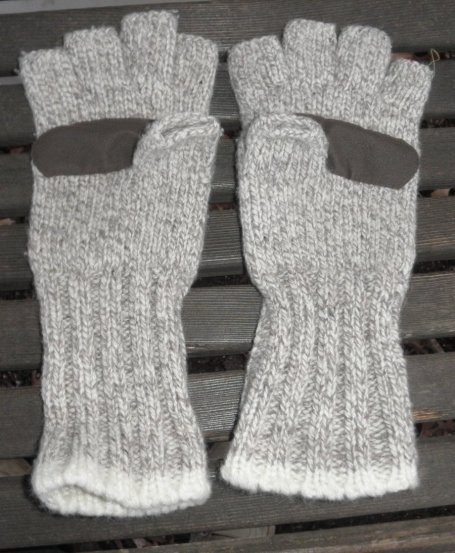
First, at the Hospice Thrift Store in Kerrville I found these gloves with no fingertips for $1.50. When it’s cold in this cabin I go to 18 layers of longjohns and sweatsuits, Sorel snowboots and innovative headgear. But my fingers stiffen until I can only use the computer with a lot of mistakes.
I’m thinking those gloves are going to fix that one.
But on arriving back home and tuning the computer to this frequency I found to my delight that Michael had explained the solution to another one I’ve been scratching my head over longer than I care to admit.
Some of you readers are a lot smarter than I am, and I happen to be stuck. I’d be obliged if any of you can wrap your minds around this problem and tell me how to do it.
One of the projects I work on daily involves series regularly scheduled ‘events’ happening across the world. Every day they’re conducted at the same locations and at repeated intervals, several hundred times each day for each location.
I know the precise geographic coordinates for the locations and the local times of the events. But one part of the experiment requires examination and comparisons of simultanious events, say, from a location in Australia, another in NY, another in Rhode Island, to keep it simple.
But two events happening, say, in Rhode Island and New York at the ‘same time’ by the clock are actually several minutes apart. They occupy the same time zone, but events in Rhode Island at 3PM aren’t the same events as those happening in NY at 3PM.
But even without taking DST into the equation, events in Australia might be 15 hours and 30 minutes later by the clock to be simultaneous with New York, or Rhode Island, and only one of the two. The event in one would be simultaneous with Australia several minutes earlier, or later, than the other.
I can calculate minute-by-minute sidereal times for each of the locations, but establishing a baseline for the relationships in terms of simulataneity eludes me. I do all this on a spreadsheet. I know nothing about programming computers.
I’d welcome any suggestions. Particularly if it involves something automatic and repeatable. It’s probably something simple, even stupid, but I’d like to get past trying to figure out how to do it and get around to actually doing it.
Gracias, Old Jules
I’ve got to get going. I’ll be back online sometime later today.
74 years old, a resident of Leavenworth, KS, in an apartment located on the VA campus. Partnered with a black shorthaired cat named Mister Midnight. (1943-2020)
Since April, 2020, this blog is maintained by Jeanne Kasten (See "About" page for further information).
https://sofarfromheaven.com/2020/04/21/au-revoir-old-jules-jack-purcell/
I’m sharing it with you because there’s almost no likelihood you’ll believe it. This lunatic asylum I call my life has so many unexpected twists and turns I won’t even try to guess where it’s going. I’d suggest you try to find some laughs here. You won’t find wisdom. Good luck.














 So Far From Heaven