Category Archives: History

The Boy Captives – J. Marvin Hunter – Book Review

Hi readers.  Thanks for coming for a read.  I bought this tome in a thrift store in Kerrville before I knew it’s the hottest piece of literature to be had in TimeWarpVille [Junction], Texas. 

I suppose that qualifies me to brag I have a nose for cool, an instinct for hot, to boast that I was also country when country wasn’t cool, same as the song said. 

Over in TimeWarpVille every business in town has a stack of these with a $10+ pricetag.  And customers standing in line to buy soft drinks, potato chips, deer corn, and steel fenceposts will each answer verbal quiz questions about it, when asked. 

They likes it.  They likes it real good.  They know the family heirs to the publishing history.  This I know to be true because I asked and was answered.

I’m reasonably comfortable some of the other parts of this non-fiction book are also true.  There’s a fair amount of documentation and affidavits from people alive at the time of the incidents certifying various parts of the story they had personal knowledge about.

I’d guess the older brother, Clinton’s part of the tale he’d possibly be able to pass a polygraph on 75-80%.  Maybe higher.  Most of the details he gives don’t conflict with anything clearly different and known under more verifiable circumstances elsewhere.

Brother Jeff’s part of the tale, however, has a somewhat different air about it, to my suspicious mind.  I ain’t going to say he wasn’t traded to the Apache, not going to say he wasn’t adopted by Geronimo.  But if I had to stake any money on the truth or fiction of it I’d put my large bills on most of his story being lost in the dust of history because it ain’t on these pages.

Not that it matters.  Fact is, the book is a hoot, an interesting read, a flashback to a time when Brother Comanche still rode southeast under a Comanche moon, killing, taking captives, stealing horses.   Good descriptions from a couple of kids of settlers before their capture about their lives, the family.

And both brothers succeed in spinning yarns Marvin Hunter could put on a printed page well enough to keep the reader turning them, not putting the book aside for something with more potential for holding the mind in place.

You Texas readers would almost certainly enjoy this tome, thinks I.

Old Jules

We Will Never Forget 7/27/53

Hi Readers. I just got back from the County Seat in Junction, Texas.  Nice little Texas town and I managed to get the title on the $400 stolen car transferred into my name successfully.

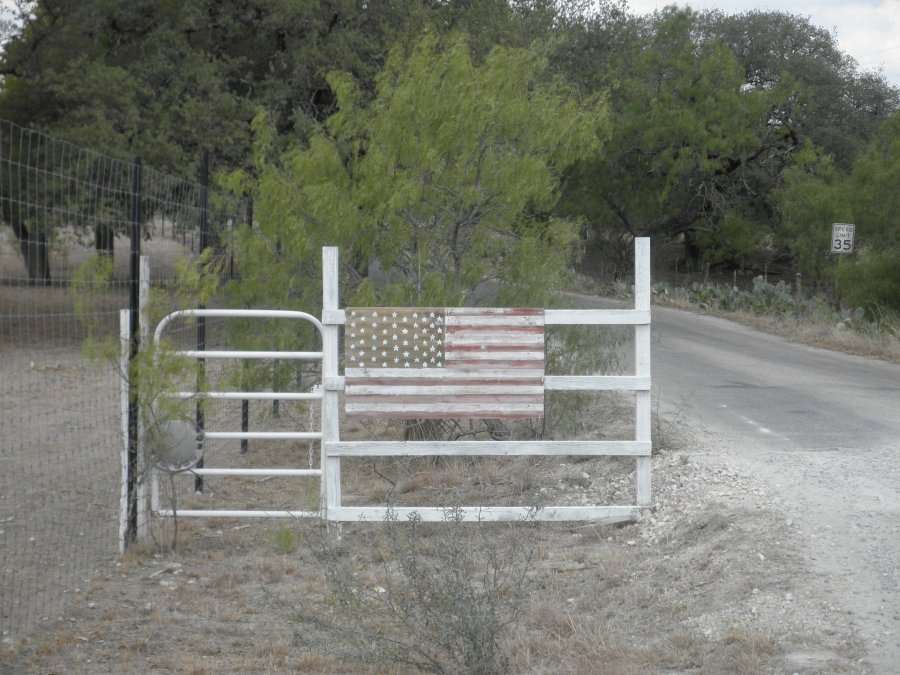
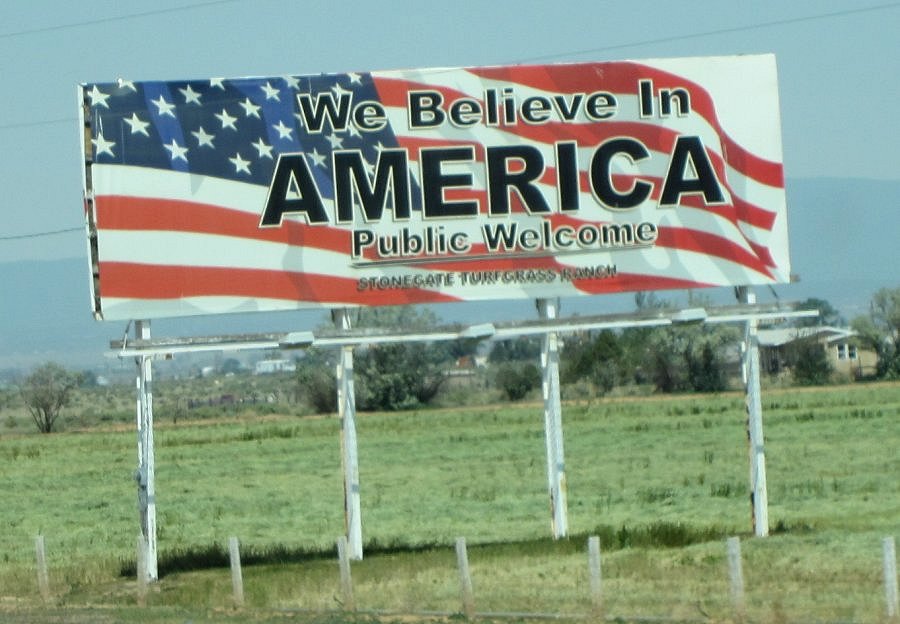
But it was a strange experience, not only because it was raining.  The whole town’s festooned with variations on the US flag and signs declaring they’ll never forget.

As nearly as I can figure, they must be celebrating the Cease Fire for the Korean War, July 27, 1953, and declaring the US ain’t ever going to bring our troops home from Korea.

Maybe the only town in the US still remembers that Cease Fire, celebrates it, and is overjoyed 25,000 US troops are still over there keeping the commies from taking over South Korea if they could.

Junction, Texas.  Time Warpville, USA

Old Jules

Pieces of the Past

When Keith and I were in the fifth grade one of our classmates at Central Grade School , a girl named Ruth Durett, came to school with an ornate, silver-handled dagger she’d dug up in her back yard.  It was known that Coronado had camped a while in the vicinity of Portales, and in those days Portales people had a lot of interest in Spaniards and conquistadors. 

Ruth’s dagger became an object of envy, conjecture and debate.  Billy ‘the kid’ Bonney had also hidden from the law and raised cattle for a while at Portales Springs.  Some thought the dagger might have belonged to him.

Eastern New Mexico University was right there on the edge of town.  Ruth’s parents evidently thought someone out there might be helpful identifying the age, at least, of the artifact.  Took it out there and left it for examination.  Vanished into thin air, that dagger.

The people who came here a while, lived their daily adventures and died couldn’t resist scattering their belongings all over the countryside.  Nobody paid a lot of attention to them for a longish while, but sometime during the 19th Century a fascination became an obsession with many.  Acquiring them by any means whatever became the rule of thumb, on the one hand, preserving them if they couldn’t be conveniently stolen, on the other.  The British Museum’s an example of stolen ones that eventually made their way into preservation.  Same with other museums.

And naturally there are legions of academians, anthropologists, who’ve developed protocols and rituals of method for stealing them in approved ways, vilifying anyone who loots the sites without the proper credentials.  Nowadays they have the law on their side.  Probably today, ENMU would have found a light-of-day legitimate means of stealing Ruth’s dagger.

Even so, it’s not always easy to resist picking off pieces of the past.  I described in an earlier entry how Mel inadvertently tried to carry Oola’s skull home with him.  Exploring Alley Oop’s Home Circa 1947 and how something similar got Squirelly Armijo into all manner of difficulties.  ‘Squirrelly’ Armijo Survives his own Funeral

Maybe something in all that explains the popularity of Gale’s ‘Hanging Tree’ belt buckles.  A number of years ago Gale managed to acquire a mesquite tree they’d cut down somewhere with a history of having criminals hanged from the branches.  Naturally he brought it home and over the years made belt buckles, all manner of jewelry items from it to sell at art and craft shows.

Not everyone wants a hanging tree belt buckle, but a lot of people do.  I’ve never been able to quite wrap my mind around why.  For me, having my belly button rubbing against a piece of wood that was part of a long series of dangling partici-whatchallits just doesn’t have a lot of appeal.  But I hold my pants up with galluses, anyway.  Rarely wear a belt.

As for artifacts, I was never attracted to run off with Oola’s skull, either.  Though I do wear this arrow head I figure offed my old prospector on the mountain hanging on a thong around my neck.  [Recapping the Lost Gold Mine Search]

Old Jules

Waldo – Robert A. Heinlein – Book Review

My first introduction to science fiction came in the Portales Junior High School Library around 1958.  One of the first of the hundreds of Sci-Fi books read over the course of a lifetime was Red Planet, by Robert A. Heinlein.  Probably Keith, one of the readers of this blog, stood beside me in PJHS Library and argued over who’d get to check it out first. 

The library didn’t include a lot to select from and we pored over them all.  Thunder and Roses, by Theodore Sturgeon.  City, by Clifford D. Simak.  The Martian Chronicles, by Ray Bradbury.  The Stars are Ours, and Star Born, by Andre Norton. And anything by Robert Heinlein.

Written in 1940, Waldo must have been one of Heinlein’s earliest novels.  By the late 1950s it was still too early to be profound.  Most of the setting, plot, concepts Heinlein visualized in 1940 hadn’t yet come to pass.  Hadn’t made their way into human reality in a form more concrete than a pleasurable indulgence in imagination set to words.  My memories of reading it were vague compared to hundreds of other works by Heinlein and other visionaries who hammered and blasted the new genre into mainstream readership. 

So when Waldo showed up in a box of books in the Saint Vincent de Paul Thrift Store in Kerrville for a dime each and I bought them all, noticing Waldo among them, I was only mildly interested.  Another couple of hours of something to read before dropping off to sleep, I figured.

I was wrong and discovered how wrong I was roughly 20 pages into the book.  Squinted, read and re-read it far past my normal sleep time.  Read it again the next day.  Twice.

Aside from a goodly other phenomena Heinlein described in 1940 that eventually came to pass decades later, he discusses others that haven’t yet made it into mainstream thinking.  One of which includes something I’ve been examining with insane intensity during the past several years, began experimenting with during the late 1990s.  Dropped, partly because of Y2K, partly because the Internet and home computer RAM didn’t yet allow the accumulation and examination of sufficient evidence to arrive anywhere beyond conjecture and assertion.

Thankee, Saint Vincent de Paul Thrift Store.  And thankee Robert Heinlein, particularly for this one.

I keep Waldo close at hand, thumb through it when I’m pondering where things are going as I go through my daily downloading rituals, working my way through the maze to the center. 

You mightn’t, probably won’t be as impressed with this tome as I am.  But I’m betting if you can find it you’ll be more than mildly surprised.  Find yourself asking, “How the hell did Heinlein figure all that out in 1940?

If not, you’ll at least enjoy a fun plot, good characters, a couple of hours of science fiction back when that’s what it was.

Old Jules

Limericks Honoring Undeclared Presidential Wars

The New Military Empireum
Just doesn’t exactly inspireum!
The wars presidential
Globular, non-essential
Don’t excite all that much to admireum.

Hairy-assed Truman began it
But maybe Joe Stalin helped plan it,
The Kennedy brothers
LBJ and the others
Threw darts at a map of the planet.

Kohreaah Bay of Pigs Vietnam,
Salvadore, Grenada and Iran
Let’s you and him fight
And do it up right
With rifles we sell you and bombs.

M16s for the Christians [our guys]
AK 47s you buys
From Rooskies and China
Moscow, Carolina
Both working three shifts get the prize.

Whoopteedo! I’m a Vet’ran you see,
Patriotic flag waver, that’s me.
Say, “Thank you!” I helped
Keep it going! But yelped
Nobody’s acknowledging me.

Say “Thank you!” Admire what I did.
The rest of my life I just slid
Along on past glories
Dreaming up good war stories
Of Commies and Muslims I rid.

I din’t get none of the riches
From selling the arms to the bitches
But I got me some poozle
And plenty of boozle
But now I’m just one of the snitches.

Contracted a dose of the clap
Saved your freedoms while you took a nap.
This bumper sign’s all that is left
Of those freedoms not taken by theft
But by always believing their crap.

Old Jules

Firecrackers Day Celebrations – Name Your Poison

Good morning readers.  Thanks for coming by for a read this morning.

A while back I was talking on the phone with my bud, Rich, in North Carolina.  He’d just returned from a visit to the Georgia Guidestones and was telling me about them, and the general history of the area where they’re located.  One anecdote involved the local hero of the American Revolutionary War.

Seems there was a woman settler in the area famous enough for her contribution to be recognized as a hero and locally a focus of veneration.  She got a bunch of British soldiers drunk and murdered them while they slept.

I don’t doubt a few more dead enemy soldiers was a boon at the time, but I found myself wondering how the woman felt about it after the dust settled, say three, four decades later.  It ain’t as though your average British soldier was a lot different than the people he was fighting against at the time.  Just grunts, following orders, doing what they were told to do, same as soldiers everywhere.  Probably it’s possible to assemble a set of reasonings to appreciate the impact the event had on the outcome of the Revolution, but it’s less easy to bring up any admiration for the lady who did it.

In fact, I’d guess her neighbors and husband were careful not to offend her during her time around them later.  A person who’d do what she did is nobody to be trifled with.

But thinking about all that led me to consider the whole issue of the way we humans celebrate history.  Fairly bizarre, when you consider it carefully.  The British celebrate a guy who attempted to blow up Parliament, but was thwarted, for instance.  Lots of fireworks, but I wonder if they’re cheering the attempt to do it, or the failure of the effort?

For that matter, I wonder if they do much celebrating out on the Rez, shooting off fireworks and cheering the ethnic memory of, say, Custer’s Last Stand.  Or the slaughter of Fetterman’s troops during the Red Cloud uprising.  If they don’t, are they being sufficiently true to their own tribal histories?, I speculates.

Or, at least as grotesque, are the black citizens of the projects all over the US going to be cheering for the institution of slavery that brought their ancestors to this geography so’s to allow them to be here, not Africa?  Whatever the shortcomings of life in modern US ghettos, probably the average modern resident of their ancestral homelands would gladly change places.  Can I hear a few “Amens!” for the institution of slavery in this land concurrent with [gulp, sigh] remembering our noble founding fathers?  Their unselfish efforts and sacrifices along the avenue toward ‘freeing themselves’ from British oppression and tyranny?   

Is anyone in Georgia going to be singing, Marching Through Georgia tomorrow?  Cheering Sherman’s scorched earth burning of Atlanta, and churning across the state burning and looting the citizenry, civilian and military, all the way to Savannah?

Fact is, it all comes out of the same cauldron.  Sip a spoonful of it and you have to either like the overall taste, or focus on the flavor of the meat while ignoring the onions and garlic.  Here, and everywhere else.

For instance, the Japanese probably have enjoyed their post-WWII / pre-tsunami affluence, freedoms, non-involvement in military adventures.  They’d never have gotten any of that without Hiroshima, Nagasaki, Okinawa, the Bataan Death March, the Rape of Nanking, Midway,  Tarawa, et al.  The destruction of the Japanese Empire.

But I’m betting they don’t have a day of celebration for it.

Probably somewhere in Georgia there’s a community of UK citizens visiting, or living out their lives.  Or folks who came here from the UK and became US Citizens.  Maybe tomorrow would be a good day for them to visit the Georgia Guidestones, wave a US flag around to acknowledge that history’s a different place for them now, than it used to be.  In any case, maybe they ought to be conscious of how much they drink and where they do their drinking.  Georgia still has woman patriots.

History’s not an overly hospitable environment without some selectivity and flexibility.  Going out tomorrow and killing a few Brits, Japanese, Yankees, whites, Mexicans, Spaniards, Germans, Vietnamese, Apache, Navajo, Lakota, maybe a few Russians for good measure would help everyone remember, better, what patriotism’s all about.  Or get’em drunk and cut their throats.

At least it wouldn’t be as boring as a parade.  An honest tribute to our ancestors, whomever they might have been, would help us make the same mistakes they did.  Which we will.

Old Jules


Who needs fireworks anyway, when you can have the real thing?


Massacre Canyon – Long After the Dust Settled

Hi readers.  I might have once thought I knew what a massacre was, but time’s eroded my perspective.  During the mid-1990s I made the toughest backpacking trip of my life to spend 8-9 days in there to try for a better understanding of the subject.

Here’s the basic story of the events leading to it being named, “Massacre Canyon”:

http://www.livestockweekly.com/papers/97/07/03/3bowser.html

RETIRED GENERAL Michael Cody served in a somewhat more modern army than the men he and others honored recently at Massacre Canyon in New Mexico, but Cody’s army still traces its history to the men who helped open the West. A student of the era and the area, Cody has an affinity for and an understanding of the men who fought on both sides of the conflict more than a century ago.

Massacre In Las Animas Canyon
Led To End Of Apache Victorio

By David Bowser

HILLSBORO, N.M. — Indian legend maintains that rain at a funeral means the gods are weeping over the death of a great man.

Black clouds boil up over the Black Range Mountains as Michael Cody, a retired U.S. Army general, addresses a gathering along Animas Creek. Soldiers and spectators traveled to this clearing to dedicate a headstone honoring those who fought in Massacre Canyon more than a century ago. Three Congressional Medals of Honor were awarded in that clash Sept. 18, 1879, between the buffalo soldiers of the Ninth U.S. Cavalry and the Apache warriors of Victorio.

“The Battle of Las Animas Canyon did not begin on the 18th of September, 1879,” says Cody, who is working on several books concerning the era. “It had its beginning long before then.”

Until 1872, the Tchine, the Red Paint People of the Apache, made their home around Ojo Caliente in New Mexico.

Prior to 1872, there was a reservation at Ojo Caliente for the Tchine. By 1872, miners and ranchers had come, and the Apache were moved.

They were shifted from reservation to reservation until 1876, when Victorio and the rest of the Tchine left the reservation and went to Ojo Caliente. That winter, they surrendered and were taken to the Mescalero reservation near present-day Ruidoso. They stayed until August, 1878.

“Unable to stand it any longer, Victorio and his segundo, Nana, a 73 year-old man, took the entire Tchine nation, almost 600 people, and left the Mescalero reservation to go home to Ojo Caliente,” Cody says.

The Ninth United States Cavalry, the most decorated unit in the history of the United States Army, was responsible for the area. They were headquartered at Fort Bayard under Col. Edward Hatch.

“When Victorio left the reservation, he headed for Ojo Caliente,” Cody says. “When he got there, he found E Company of the Ninth United States Cavalry. It took Victorio about 10 minutes to turn E Company from cavalry to infantry. He killed about 11 people, eight troopers and three civilians, took 68 horses and mules, and headed out.”

Victorio moved south toward Silver City, New Mexico.

“He hit a couple of small ranchitos to get food, to get some ammunition,” Cody says. “Somewhere between Silver City and Kingston, he ran into a militia group made up of miners.”

Victorio’s band killed about 10 men, took another 50 horses and went down the Animas. Victorio had not lost a man.

Two of the 15 graves in this clearing are those of Navajo scouts who rode with the Ninth Cavalry.

“They were from the Sixth Cavalry, but detached to the Ninth,” Cody explains. “They picked up Victorio’s trail and the entire Ninth United States Cavalry went to the field.”

Second Lt. Robert Temple Emmet was on court martial duty in Santa Fe, N.M., when word came of the attack at Ojo Caliente. Emmet traveled 48 hours by stagecoach to Fort Bayard to rejoin his troops following Victorio down the Animas.

“There are several versions of what happened next,” Cody says. “The stories according to the Apache and in army records does not differ much.”

The First Battalion, commanded by Capt. Byron Dawson with Lt. Mathias Day and a Lt. H. Wright, came upon either an Indian woman down by the creek or a couple of Apache warriors who fired shots at the approaching soldiers.

Ignoring the Navajo scouts’ warnings not to follow, the cavalry chased the Indian woman — or the two warriors — across this clearing about a quarter mile and into what has become known as Massacre Canyon.

The canyon entrance is about 30 yards wide with spires of rock on either side. The trail makes an S-curve through the canyon with a rock outcropping that is about 16 yards wide and three yards deep.

“It’s flat as an arrow,” Cody says. “It’s a perfect place to put about 20 guys with rifles.”

The First Battalion, 25 men from Companies A and B of the Ninth Cavalry and perhaps 50 from Company E, remounted and came through the entrance in single file. With the 75 men well inside the canyon, Victorio opened fire.

Sixty-one Tchine lay along the ridgeline. There were 60 warriors and one woman, Nahdoste, the sister of Geronimo and Nana’s wife.

In the first volley of fire, 32 horses fell. The First Battalion was trapped.

The Second Battalion under the command of Capt. Charles Beyer with First Lt. William H. Hugo and Second Lt. Emmet heard the gunfire and came down the Animas.

As they approached Massacre Canyon, Victorio lifted his fire, let them get close, then opened up again. Victorio now had four companies of cavalry pinned down.

“All this started at 9 a.m. on 18 September 1879,” Cody says. “Victorio followed a classic method of warfare: kill the horses first, then kill the troopers at your leisure — a perfectly executed ambush.”

Late in the afternoon, Lt. Day with a small detachment attempted to break to the head of the canyon to climb up the steep slope and come back along the ridgeline to roll Victorio’s flank.

“As he got on the ridgeline,” Cody says, “the Apache held their fire until he was totally exposed, then opened fire on his flank. Day and his detachment were pinned down.”

Hugo and Emmet with a detachment outside the canyon attempted the same maneuver on Victorio’s other flank. They tried to come up a little canyon on the other side of the ridgeline, climb the massive slope and roll the Apache flank.

“The Apache let him in, then opened fire on his flank,” Cody says.

Now Hugo and Emmet were pinned down.

“By late in the afternoon, it was time to get out of there,” Cody says. “Troops on the valley floor were down to two or three rounds of ammunition per man. The order was given to withdraw. Lt. Day at the head of the canyon refused to obey. He had a man, one of his troopers, wounded on the ridgeline above him, and rather than obey the order, he climbed onto that ridgeline under fire to rescue his trooper. For this the commander of troops threatened him with court martial for refusal to obey his order to withdraw.”

Hugo and Emmet were also given the order to withdraw. They fired three volleys in an attempt to get the Apaches’ attention so the people on the valley floor could get out. It worked, but Emmet also refused to obey the order to withdraw.

“Five of his troopers, buffalo soldiers, were exposed on the ridgeline above him,” Cody says. “Rather than obey the order to withdraw, he climbed the ridgeline to get above those five, drawing fire, then laying down a base of fire so his men could escape. For this Lt. Robert Emmet was threatened with a court martial for refusal to obey an order.”

On the valley floor, Pvt. Freeland was wounded in the first volley. By late afternoon, he was in bad shape. He had taken a bullet through his thigh, breaking the bone.

First Sgt. John Denny, lying on the ridgeline about a quarter mile away, ran through the exposed rock-strewn area to pick up Pvt. Freeland, got him on his shoulders and ran back 400 yards, all under direct fire.

Day, Emmet and Denny were each awarded the Congressional Medal of Honor for their actions.

The field commander, Lt. Col. Nathan A.M. Dudley, who threatened both lieutenants with court martial for not withdrawing, was relieved by Major Albert P. Morrow.

Morrow and the Ninth Cavalry, working with the Tenth Cavalry, continued to chase Victorio.

“The 10th Cavalry blocked the water holes,” Cody says. “The Ninth followed the Apache. The Ninth kept the pressure on the Apache until October 1880 at Tres Cabrillos, when Col. Juaquin Terrazas of the Mexican cavalry got into the act.”

The Mexican government granted permission for the U.S. Army to follow Victorio into Mexico. Morrow’s scouts pinned Victorio down at Tres Cabrillos. Victorio had women, elders and children, and many wounded. They were out of food and ammunition. Morrow informed Col. Terrazas of his intention to surround Victorio and ask for his surrender.

At that, Terrazas withdrew the Mexican government’s permission for the U.S. Army to operate south of the border, insisting that Morrow return to the United States. The Ninth Cavalry wheeled and went back to U.S. soil.

Terrazas surrounded Victorio’s band and slaughtered them.

“It was an abject massacre,” Cody says. “He slaughtered them. He took about 100 women and younger children — not the real little ones — those they eviserated and smashed their skulls. The ones that were old enough, they kept for slaves.”

But Nana, now 75 years old, was out with Nahdoste and 14 warriors gathering provisions. Author Max Evans, whose book on Nana is to be published next year, claims that an Apache medicine woman, Lozen, was also with Nana. According to Evans, Lozen could sense approaching danger. If she had been with Victorio, Evans reasons, the band would have escaped.

“When they got back, they found this slaughter,” Cody says. “That was the beginning of the Nana vengence campaign.”

Every raid that Nana led from then on, he took no prisoners. Nana and his warriors burned and destroyed. Finally, they caught Col. Terrazas.

Nana and his band finally came in.

“When Nana did surrender, he was 76 years old,” Cody says. “They took him to the reservation in Oklahoma and he died there, but he died as an unrepentent hater of the Mexican people. It’s understandable. Honorable men fight for dishonorable causes, but that doesn’t take away from the fact that they are honorable. Nana was an extraordinary, historic figure.”

The services here were the result of seven years of work by Gene Ballinger, a historian and author; Cody and a number of others representing such groups as the Medal of Honor Society, The Buffalo Soldiers Society and other parties interested in preserving New Mexico history.

Twice during the services here on the F Cross Ranch of Jimmy Bason, rain splattered the soldiers and civilians gathered along the Animas.

That evening as most of the participants and spectators sat in their motel rooms in Truth or Consequences or at the S Bar X bar in Hillsboro, the clouds opened up in this rugged, arid land, washing the long-ago battlefield with a heavy mourning rain.

As you can see, it’s not easy to escape a lot of theatrical hand wringing and rhetorical horse manure carried along as baggage when it comes from some retired Army scud with the name Cody worn as a pair of crutches.  A dozen-or-two decades establishes fairly well what those soldiers died for in that canyon.

Even though there’s a USFS road [maintained by US taxpayer funding] leading in from the East, access to the site is denied by the owners of the giant ranch.  For you, me, and any Mescalero Apaches who’d like to see where their ancestors taught the US Army a few basics about ambush.

The only way in involves backpacking down from the Mimbres Divide.  Tough tough tough tough.

But worth every minute of it.  Every drop of sweat it takes to get there.

A person can still examine the pockmarks on the watermelon-sized rocks those soldiers were trying to squinch themselves down behind.  Can still pan spent, deformed rounds out of the canyon bottom.  See the inside of the mind of Victorio, where he placed his men, the landmark selected to commence firing when the troops passed it.

In those days guys like Cody and Gene Ballinger were already doing a lot of posturing and flag waving about the 12 unmarked graves on the plateau you can see in the picture toward the center.  Cody, Ballinger et al didn’t have to pack in.  The rancher to the East allowed them access by the Forest Road.

So during my eight days in there part of the way I passed the time was digging down a couple of feet below the surface various places in the canyon, plateau, and further up Animas Canyon, carefully gathering and placing rocks.  Creating enough other unmarked graves to make it difficult for them to go in and rob artifacts out of the actual graves.  Which I believed then and now, they were in the process of doing.

Old Jules

Uppidy Modern Human Beings

Good morning readers.  Thanks for coming by for a read this morning.

21st Century human beings, and those of us left over from the 20th tend to get fairly uppidy and smarty pants about all the people we managed to slaughter during the 20th Century.  That, and how many we’re likely to off inadvertently here pretty soon [what with the Japanese sewer plants spewing radioactivity into next week’s cat food and whatnot].  We think we were special and innovative with WWI, WWII, the Gulags, Cambodia, Viagra – er, Biafra, the German camps, the Rape of Nanking and other incidentals perpetrated by the Japanese Empire, the pre-WWII French death camps in the Carib for their felons and political problems, Mexican revolutions, Great Cultural Revolution in China.

Mostly fairly piddly stuff compared do what a lot of our ancestors pulled off.  About the time we Americans were bragging about how many people got slaughtered at Gettysburg, in China they were actually doing it up right with the Taiping rebellion.  Bloodiest civil war in the history of humanity and until WWII took the trophy for killing more people than any war of any kind.  100,000 people slaughtered in a single day in the battle of Nanking.

A government clerk named Hung got hold of a Christian Missionary tract in the 1850s,  “Good Words to Admonish the Age“, understood it and decided he was the brother of Jesus.  Set about establishing a new heaven on earth with one-hell-of-a-lot fewer people in it, none of whom didn’t believe he was the brother of Jesus.  Came damned close to succeeding, too, insofar as the Manchu Empire was concerned.

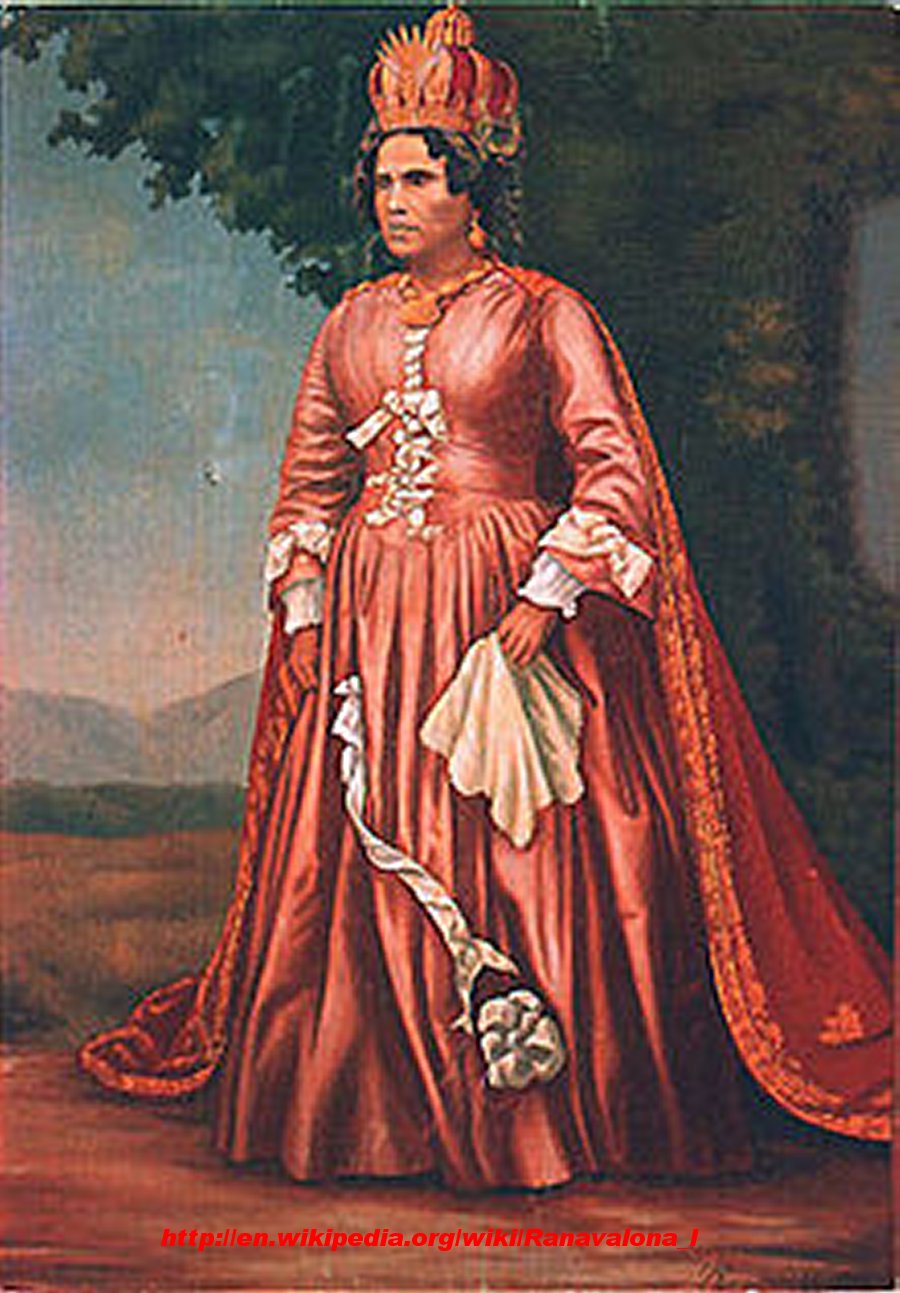
Then there was Queen Ranavalona I of Madagascar, decided she didn’t like people who didn’t belong to her own tribe, killed off two-three million of them during the 1840s.  Survivors dressed up like Europeans, did opera, ate with the right forks and spoons.  But honestly didn’t like Europeans, either.  Butchered or enslaved any of them they could catch.  On second thought, didn’t like anyone else, either.  Gave them mostly the same treatment when they could catch them.

Keep in mind there were a lot fewer people available to be offed in those days, and a million was a lot, compared to the 20th Century where it dwindled down and got piddly.

Just because you’ve got a television where you can hear about it and keep count with a computer doesn’t mean you’re any better at it than your great-granddad.  Considering the tools he had to work with, he was better at it than you.

Old Jules

Let Big Daddy Fix It

Good morning readers.  I appreciate your visit and read.  I hope you won’t consider this frivolous.

It’s Daddy Day, and there’s a growing body of shrill opinion being expressed on the Web concerning those out-of-control nuclear reactors in Japan and how Big Daddy United States needs to step up to the plate to fix it.  Even though Big Daddy has no more clue than anyone else how to go about doing it.

First off, those reactors haven’t reached their full potential yet, so it’s probably too soon to have the Lincoln Memorial try to jump a motorcycle across them. 

Even though PT Barnham’s loose in Washington and trying to perfect that method of solving historical difficulties, jumping a motorcycle across the problem is still considered extreme, untested, uncertain, at best.

Probably it would be better to try time-tested methods first.  Some of the ways Big Daddy US has solved other pesky difficulties.  Homeland Security and attempts to deal with illegal immigration might provide a model.

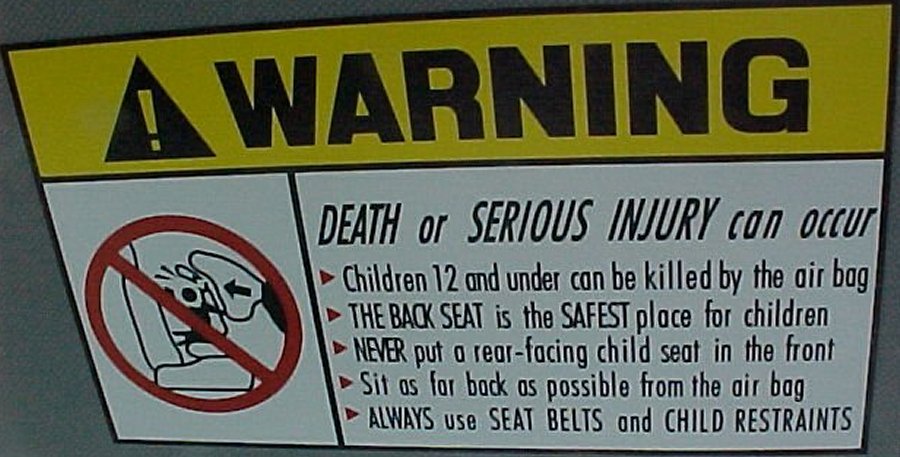
Or failing that, there’s always the old airbag fix:

Anyone strangled to death by an airbag isn’t going to be worrying about mutants, teeth falling out, that sort of thing.

Sending some crews of jailbirds out to pick the fallout up before it can do any damage offers some hope.  Got lots of jailbirds and not-all-that-much radiation yet.  If the radiation increases, hell it won’t do it faster than our number of prisons.

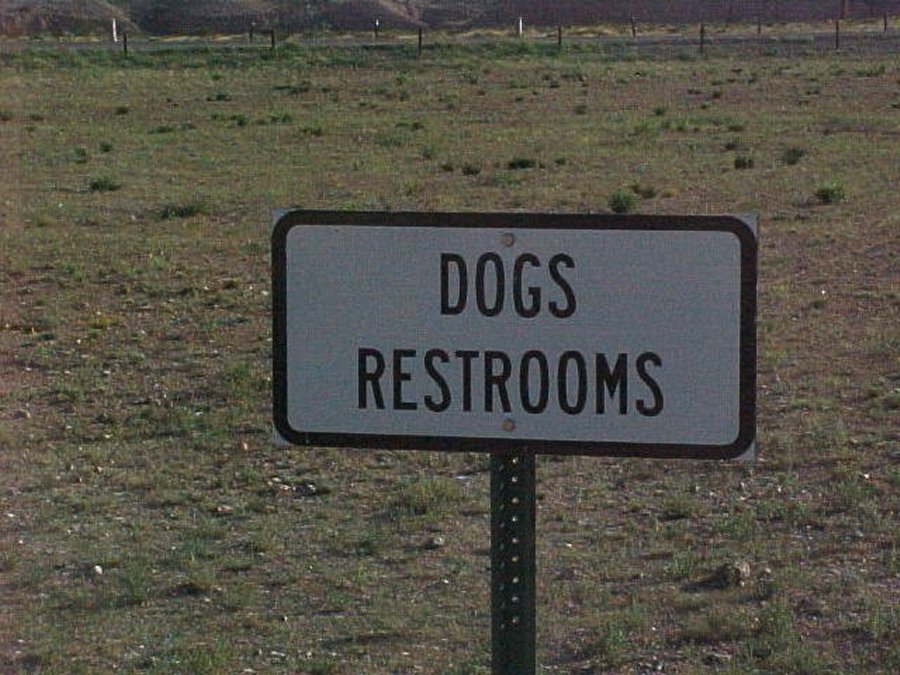
People who never learned to program a VCR, [including me] might find radiation detection instruments confusing, so sniffer dogs trained to detect it could answer the question of where it is and where it ain’t.

Naturally they’d have to be provided facilities.

And protection from reckless drivers.

Failing that, a little magic might help.

Or just an acknowledgement there’s a problem.

If everything else fails, this worked for grandaddy and there’s no reason to think it won’t work again.

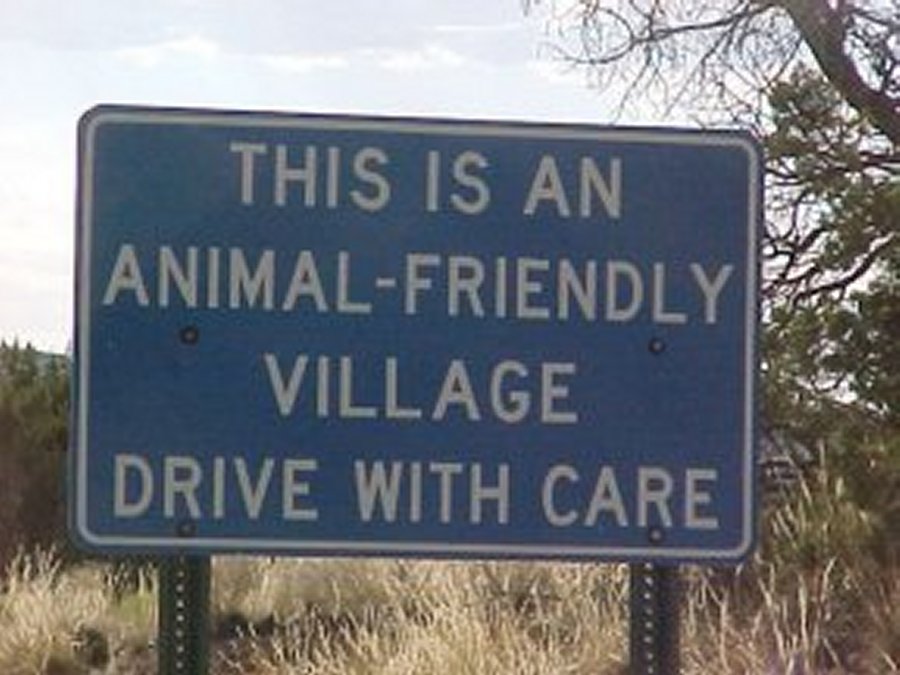
The Japanese have never been all that receptive to allowing imports from the US, but I’ll bet they’d welcome a few shiploads of those signs.  And there’s potential for a new manufacturing industry here to replace what went to Asia.

It ain’t as though there’s nothing to do in a fallout shelter.

Big Daddy’s tour d’force is entertainment.  Still is.  Never been better.

You can’t argue with a history of success.  I say, “Let’s go for it!”  What are we waiting for?

Old Jules

Gamblers, Gambling and Risk-taking

Previously blogged May 17, 2005

Saturday a recently acquired friend and I revisited one of the sites I spent a lot of time puzzling over during the search for the lost gold  mine.  The place was the focus of the ’98 search  and a good many years prior to that.  Sometimes it amazes me how many times I climbed and unclimbed the west face of that mountain, always finding something new and puzzling.  I spent most of a month camped at the top, friends coming in for a week or so, then heading back to their lives elsewhere without finding what we were looking for, but finding enough adventure, fellowship and mountain air for a while and remember as one of the good times.This was Jim’s first time up there.  We went in mainly to look at a rock pillar that’s peeling away from a cliff face.

It’s a formation that fascinated a man I’ve come to know awfully well by his work; a man I never met, but whom I followed around that mountain puzzling over what he did, how he did it and why he did it.  A man who lived and died 150 years ago, roughly.  A man who knew a gamble when he saw one, went into a canyon spang in the middle of Apache country at a time when the best he could hope for if he was a quick death, or if his luck was bad, hanging upside down over a slow fire.

I’ve been wearing the arrowhead that almost certainly killed him hanging from a leather thong around my neck for a decade or more.  The ruin a few charred logs high, a long-tom sluice he carved with an axe out of a three-foot diameter log, a 400 pound rock he chiseled down to use as an arrastra and a hundred or so signs and symbols he made on rocks, along with his various diggings are all that’s left to tell what kind of man he was.

A gambler, he was, gambling on being caught by Apaches, gambling a broken leg in a place where such a thing was sure death.  A man who believed in himself so thoroughly that in that setting that he pecked away at the base of a 50 ton pillar of rock trying to get at what was underneath until it gives a man the fantods even today to walk beneath it.

One of the things I’ve spent a lot of time contemplating as I watched Orion chasing the Pleiades across the night sky to the background music of wind in the treetops is the thought of how a man of that sort would feel about a world where low-level risk-taking is a criminal offense.

A time when edging the nose of  a vehicle onto the pavement without fastening the seat belt probably won’t get you hurt, but it will almost certainly get you a conversation with an armed pair of mirror sunglasses.  A time when risk is defined in how many years it might take you to get cancer from whatever you’re eating or smoking.  When excessive gambling is betting the grocery money at the blackjack table.

I wonder if he’d have played a wheel, or just picked a few numbers that suited him and bought a hundred tickets with the same six numbers on them, going for broke on something he believed in, the way he did in life.

One of the ways we define who and what we are includes what we’re willing to give up to travel around the sun a few more times.  That guy on the mountain wasn’t inclined to give up much.

Old Jules