Good morning readers. Thanks for coming by for a read this fine day.
I know a lot of you are submerged in issues of who wants to be king and whatnot, and I appreciate you tearing yourself away from reading all that to come over here to read this, which isn’t.
But I’ll ask a favor of you insofar as what you contribute here commenting. The blog’s a fortress against the intrusion of party politics. I prefer not to delete any comment by readers here, but it is not and will not be a place for inserting cheers for people who want to be king. It also won’t be used to assassinate the characters of politicos, except in bipartisan, general terms.
Meanwhile. We’ve been blessed here with three days in a row of cold and wet. I was premature a few days ago telling you it was time to switch from felt to straw. Likely you’ll want to chalk that up to me being no better at predicting the future and the weather than you are.
Switch back to felt and count yourself lucky you didn’t put them in mothballs yet if you didn’t. If you’re like me you were probably folding up your Pendleton blankets and everything else the moths might feast on, wondering where you put those moth balls last year, when this last gasp of winter hit.
I’ve been spending the time when there were no embedded thunderstorms stalking the sky trying to narrow down what’s not happening. I finally just decided to use TYC 6835 143 for the galactic center. And Eltanin, in the constellation Draco, for the solar system vector. Those, combined with what I’ve mentioned in recent, previous posts appear to take care of a lot of what’s needed to get a firm fix on what isn’t happening.
Japanese scientists with the National Institute of Advanced Industrial Science and Technology claimed this week that they have developed a novel new weapon by combining two specialized technologies in such a way that they are now capable of rendering someone unable to speak.
While it’s not technically a weapon, their “portable speech-jamming gun” could certainly be used as one, especially against political leaders or others who speak to large audiences for a living.
Combining a directional microphone and a directional speaker, the “Speechjammer” records and quickly plays back whatever words someone is uttering, making it very difficult for the speaker to focus on what words come next. The effect is called “artificial stuttering.”
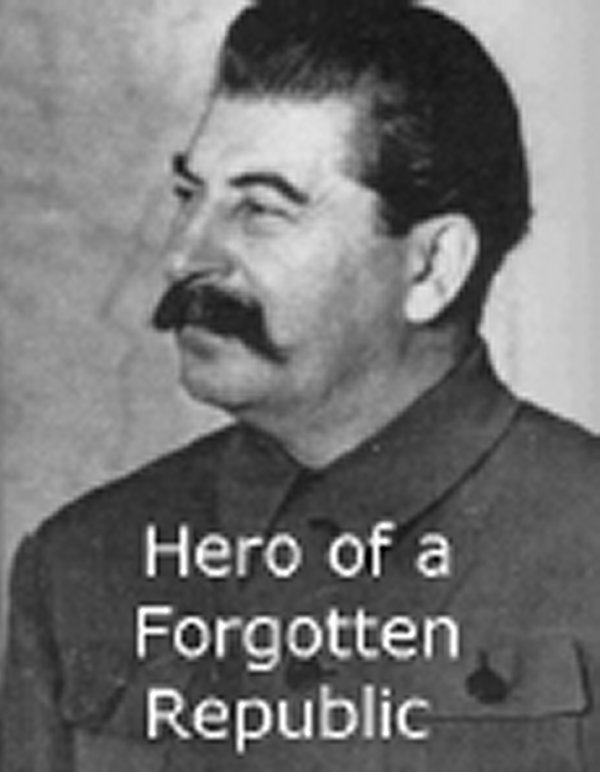
Joe Stalin he might be
Fingers drumming green felt
Calculating his next purge
Fill an other gulag
With Ukrainians
Finger tapping
Focus on the down cards
Other players
Cardboard faces
Pasteboard numbers
Shouts past me
“Double down! Double down!”
Tired first base trucker
Parlaying his bets
To survive another hand or two
In this hell-camp.
Stalin tosses three greens
Past me to the trucker
From his four inch high
Stack of blacks and greens
“Double down! Double down!”
Astonished trucker pushes back
A weathered straw hat
Gazes at the green chips
The dealer upturned six
And his own sixteen
And doubles down.
On and on
Same vein
Stalin winks at me
At second base
Throwing chips past me
The driver promptly loses
But always looks now
To see what Stalin
Thinks is best
While downstream
In third base Stalin
Plays three hands all at once
Table max 200 on each place
And wins wins wins
Speznatz tattoos
On chubby knucklebacks
Stalin and I exchange small talk
And knowing smiles
Once advised
The other side of a line
I was on this side of
Did his final tour in Afghan
Got out first chance he could
When things got shaky
And the walls went down
Now he hauls produce
From east to west coast
Always stops here in-between
Shouting orders
“Double down! Double down!”
To the bloated capitalist pigs
Grumbles price of fuel
Trainloads of Chinese goods
And tyrant highway cops.
Even the dispicable can’t always dodge the steamroller. Kaufman was rewarded, Greenglass spent a few years in prison, punctuated by testimonies before Congressional Committees to help forge a US package of ideas about a war on International Communism. Appropriate enough, liar lying to other liars to create a consistent set of lies. Not to suggest C0mmunists weren’t also lying. They mostly just weren’t elected and appointed officials sworn to uphold the Constitution of the United States.
Federal Judge Irving Kaufman, who subverted the legal processes in his own courtroom to predjudice the jury in favor of conviction of both Rosenbergs, then sentence them to death in the electric chair:
In 1953, Julius and Ethel Rosenberg were sent to the electric chair for stealing the secret of the atom bomb for the Soviet Union.
They were called the “Atom Spies,” and 50 years ago this summer, they were executed for giving the secret of the atomic bomb to the Soviet Union. They are the only Americans ever executed for espionage in peacetime. Greenglass was the star witness for the prosecution against the Rosenbergs – and he also happened to be Ethel Rosenberg’s brother. He served 10 years in prison for his actions as a traitor, and then changed his name and dropped out of sight. As he neared 80, Greenglass decided to break his silence. He talked only after 60 Minutes II agreed to disguise his face and voice.
His story begins in the summer of 1950 when the FBI took Greenglass in for questioning. He confessed almost immediately for spying, and quickly implicated Julius, Ethel and his own wife, Ruth. David and the Rosenbergs were arrested. Ruth Greenglass never was charged.
“That’s what I told the FBI,” says Greenglass. “I said, ‘If you indict my wife, you can forget it. I’ll never say a word about anybody.'”
It was quite simply his choice, he says today. So Greenglass says he turned on his sister to save his wife. “I would not sacrifice my wife and my children for my sister. How do you like that?”
Greenglass made his choice when America was at war with communists in Korea, and in fear of the Soviet Union, which had recently tested its own atomic bomb.
The four spies were unlikely actors in a Cold War drama: Julius was an unsuccessful engineer; Ethel spent most of her time raising their two young sons; Greenglass was a draftsman and a tinkerer; and his wife Ruth was a wife and mother. All had been ardent communists.
During World War II, Greenglass, then a sergeant, was posted to Los Alamos, the secret army base in New Mexico, where thousands of scientists and soldiers were building the atom bomb. Although he had a low-level job, Greenglass says he knew what was going on.
He says Julius Rosenberg recruited him to spy with a simple sales pitch: “He said, ‘We have to help our ally.'” By ally, he meant Russia. “Russia was an ally at the time, and that we have to help them with all the information we get.”
Greenglass told the FBI that he gave the Russians sketches and details on the device used to trigger a nuclear blast. But he says he didn’t enjoy being a spy.
“I was continually conscious of what’s behind me. I didn’t enjoy it. I just did it because I said I would,” says Greenglass.
Did he realize how dangerous it was? “I didn’t really think it was, because I didn’t think the Russians were an enemy,” he says.
His career in espionage came to an end soon after the war ended. Back in civilian life, Greenglass and Julius opened a machine shop together. They argued over the business, and over Greenglass’ growing disenchantment with Communism.
Four years later, Julius warned Greenglass that the FBI was on to them, and urged him to flee the country. Greenglass had a family passport picture taken, but he had no intention of using it.
“I didn’t want to leave the United States to go to some hellhole like Russia or China, or wherever the hell he wanted to send me,” says Greenglass. Instead, he took a bus to the Catskill Mountains. “I figured I’d find an obscure place. And I see that the FBI is following me. And they lose me.”
But he never made it to the Catskills. He went into custody instead. And within hours, he began cooperating with the FBI, sealing the Rosenberg’s fate.
He was the star witness for the prosecution at their trial, and he told the jury about his espionage, and described the activities of Julius, Ethel and his wife, Ruth.
He testified that one evening, he and Ruth brought sketches and handwritten notes about the atom bomb to the Rosenberg’s New York apartment. After dinner, Greenglass said they set up a typewriter on a folding bridge table in the living room, and turned his hand-written notes into a neatly-typed document for the Soviets.
Prosecutors asked Greenglass who did the typing. He said under oath that Ethel did the typing. His wife, who also took the stand, told virtually the same story.
That story was virtually the only evidence the government had against Ethel Rosenberg. But prosecutors argued that Ethel’s typing proved she was an active participant in the spy ring. After the trial, they admitted that without the typing testimony, they could never have convinced the jury that Ethel was anything more than the wife of a spy – and that’s not a crime.
Why did Greenglass lie on the stand? He now says Roy Cohn, an assistant prosecutor in the Rosenberg case, made him do it. Cohn went on to become Joseph McCarthy’s right-hand man.
Greenglass says that Cohn encouraged him to testify that he saw Ethel type up the notes. And he says he didn’t realize at the time the importance of that testimony.
But the jury knew how important it was, and found both Julius and Ethel Rosenberg guilty of conspiring to commit espionage. Judge Irving Kaufman imposed the death penalty.
Fifty years later, we know a lot more than anyone could have known in 1951. For example, we know that much of what David Greenglass said about Julius Rosenberg is true. It has been verified by other, independent, sources, all of which confirm that Julius Rosenberg was a Soviet spy. We also know that there is very little, if any, evidence that implicates his wife, Ethel, in any illegal activity.
But in the days before the execution, there were protests and vigils in New York, Washington and Europe. The Rosenbergs both claimed they were innocent, and many believed in them. There were a flurry of last-minute attempts to get a stay of execution. And there was no shortage of Americans who felt that justice was being done.
Up until the last minute, the authorities were willing to commute the death sentences if the Rosenbergs cooperated and named names. But they refused and were executed on June 19, 1953 – without ever breaking their silence.
Why did Greenglass think Julius and Ethel maintained their silence to the end? “One word: stupidity,” says Greenglass, who holds his own sister responsible for her own death.
—————————————-
But I promised a Denouement:
Of course, it makes no difference now. Any more than it matters who killed JFK, Robert Kennedy, MLK, and President Diem of Vietnam.
Doesn’t matter, really, any more than it matters that the Gulf of Tonkin Incident, the incident used to justify the US involvement Vietnam War, was a manufactured incident. A cynical lie to dupe the US public and arouse patriotic fervor. Same as the Rosenberg trial.
A pyramid of lies, once the foundation’s in place, builds on itself. Only the names of the liars and the names of the victims change. It’s only incidental that sometimes the victims are also liars.
If any lessons can be learned from it all it’s probably only that the romantic patriots can always be trusted. Trusted to believe the lies. The liars can’t trust one another, but they know they can always trust the romantic patriots.
The liars couldn’t succeed without them.
Old Jules
Today on Ask Old Jules on Facebook:
Old Jules, what’s your definition of an idealist?
An idealist is a person who locks his teeth into the ankle of an abstraction and doesn’t let go, doesn’t look for another ankle, doesn’t look closely at whatever’s above and below the ankle.
Good morning readers. Thanks for coming by for a read this morning.
Socorro, New Mexico, isn’t long on good restaurants. But during the several years I lived there, I had a favorite restaurant, and a favorite menu item. The place was owned and operated by an elderly Chinese man with whom I was on friendly, bantering terms.
This lasted until the discovery that MSG in food causes my blood pressure to skyrocket. A few times per week I’d sit myself down, they’d bring the usual, and a couple of hours later my pulse would be visible almost anywhere a blood vessel showed. This was accompanied by a pounding in my head, maybe audible, maybe only seemingly so.
After I figured out the connection between my favorite food item and the blood pressure problem I attempted to discuss it with the owner, though we had a language barrier. The result was an outburst of anger and indignation. I didn’t know yet the MSG was the cause. Just that particular menu item.
I solved the problem by eating elsewhere, but eventually learned that Chinese restaurants, particularly, lean heavily on adding MSG to their foods, and that a surprisingly large number of people have reactions to it similar to mine.
I also began watching the labels on food I bought to prepare at home. What I discovered was that a person sensitive to MSG had best carry a magnifying glass in his pocket and read those labels carefully. Almost everything a person might buy in a can is loaded with it, but especially soups and soup-bases. If a label slips past and gets inside the vehicle it notifies the owner by the rods knocking.
But I was going to say, I love oriental food, and I was in town yesterday, so I clenched my teeth and decided it was a day for risk-taking. There’s an Oriental buffet I’d never tried, so I pulled in. I tried asking whether they had MSG in their food, but it was clear she didn’t understand me. So I went root hog or die.
The food was mediocre, but I didn’t die. I took a couple of extra blood pressure pills when the pounding in my head started, and by the time I got home my blood pressure was so low I didn’t have any business being alive.
I found myself wondering why the FDA cops who faint and revive themselves over one-in-a-billion risks to human health otherwise haven’t jumped on this like ugly on a monkey.
No one remembers anyone
Who remembers anyone
Who remembers
Why she died
But there she is
Wealthy woman young
Good teeth,
No slave.
Those killers
Didn’t kill the slaves
Took them away squat beneath
The loot the weight of
What they carried off
As they did before for her,
Before emancipation
To slave for someone else.
Arroyo cut through ruin
Showed her to the wind and sky
And me a thousand years
After noise and smoke
And screams
Stone hatchet broke the head
Flames brought down the roof
Around her,
Her and her kin
Charred corn
Still on cob
Beside her skull.
She died and partly burned
A long forgotten civil war
Between someone
And someone else
No one remembers
Over something
Neither wind nor sun
Nor these charred bones
Remember.
If I believed in representative democracy I think I might be tempted by this, even though I don’t smoke dope.
There’s something refreshing about seeing someone injecting some humor into all the scowling. This modern religion of self-important in-your-face sneering between opposing political illusions and conflicting certainties about ‘What this country needs‘ and who’s most worthy of hatred and purple scorn ought to get boring for those doing it. For the good of their souls, maybe. Or, failing that, just as a means of demonstrating a human brain resides inside the human skull.
ABOUT WILLIE NELSON’S TEAPOT PARTY
Willie Nelson was busted in Texas for possessing marijuana on Nov. 26, 2010. Following the arrest, Willie founded the Teapot Party, declaring: “Tax it, regulate it and legalize it! Stop the border wars over drugs. Why should the drug lords make all the money? Thousands of lives will be saved.” Since then, Willie clarified the focus of the party. “The purpose of the Teapot Party is to vote in people who believe the way we do,” he stated, “and vote out the ones who don’t.” With that in mind, we’ve embarked on a campaign to find candidates to support in upcoming elections. So far we’ve made four endorsement and there will be many more to come. We encourage Teapot Party supporters to use this site to their advantage. Learn who we’re supporting, read the latest blogs, find out what’s happening in the marijuana-reform community, order free stickers, buy Teapot Party merchandise, keep up with our Facebook and Twitter feeds and upcoming events, such as rallies and meetups. With your support, we can make a difference by ending cannabis prohibition in our lifetimes. Please send donations to the candidates of your choice. Then go out and “vote in people who believe the way we do and vote out the ones who don’t,” just like Willie says.
I suppose old Willie still believes in representative democracy. I’ll try to forgive him being stupid by believing something I don’t. I’ll reciprocate by being stupid enough not to start smoking dope again. Too damned much trouble.
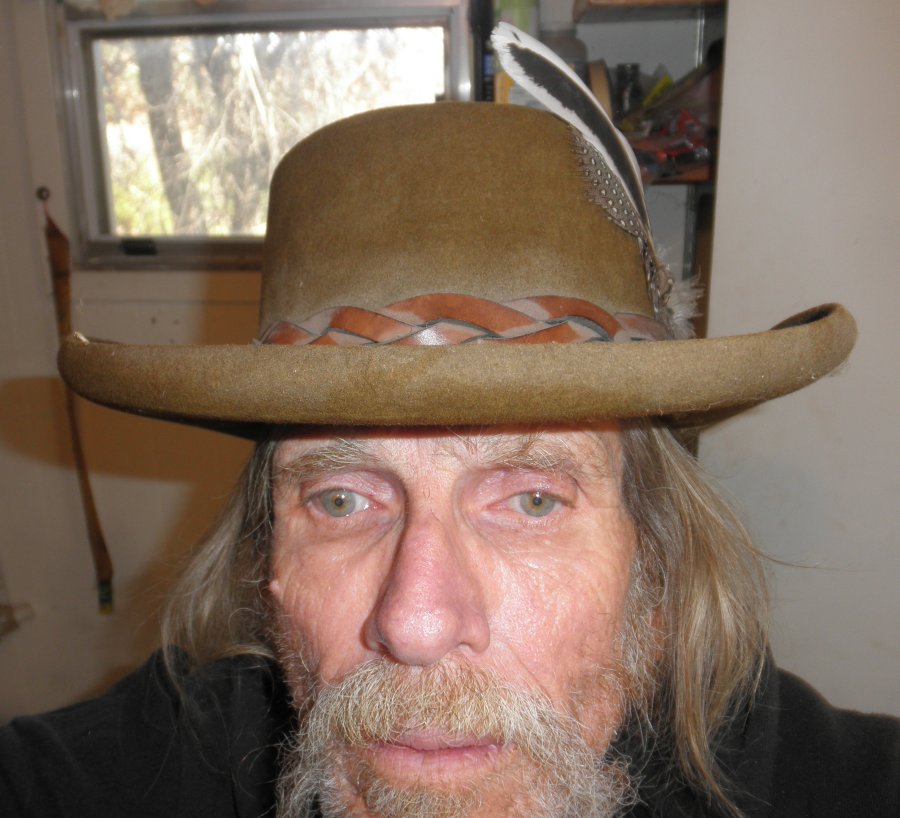
I’m trying to remember when it was I figured that out. Sometime a long time ago, but before too much later, I think it was. I had the High Roller already, but I don’t think I had the gray John B. Stetson yet.
Good morning readers. Thanks for coming by for a read this morning.
When I post a blog I frequently do so in complete ignorance of current events. I don’t have a television, the radio never gets turned on, and I don’t read newspapers or magazines until they sometimes fall into my hands many years after they were printed.
I don’t know and don’t wish to know who wants to be king. The Challenge of 2012: Not Knowing Who Wants to be King And I’m not likely to get any joy from knowing which readers prefer which liar and scoundrel, and which prefer some other one. I have no intention to participate in the scramble to assassinate characters of the occupants of one side of the pool of corruption to give advantage to the occupants of the other side of the pool.
If a post here manages to convey an impression I’m giving support to one political illusion over another, it’s entirely by accident and not to be taken as a launchpad for more intense and focused discourse on the issue.
Seems the advantages of being out of sight and out of mind for most of the population aren’t necessarily advantages when the out-of-sight geography includes something a multi-national corporation wants. All those city folks needing to keep the air conditioners turned down to 70 and to be able to light up the hair dryers every morning probably never ask themselves where the electricity popped out of the ground and hopped into the wires they plug things into.
One more bug on the windshield of civilization. Old Jules
[The following letter was written by former Hopi Tribe chairman Benjamin H. Nuvamsa from Shungopavi. He presented the letter to the Hopi Tribal Council on Friday January 13, 2012]
January 13, 2012
Hopi Tribal Council
Hopi – Tewa Senom
It is time we have a serious discussion about coal mining on our reservation, our water rights and our environment. For far too long, we have pushed these issues aside, not willing to talk about how these issues impact our lives. We must talk about how the Peabody Western Coal Company and Navajo Generating Station are affecting our lives. Since the mid 1960’s, Peabody Coal has been mining our coal, pumping our precious Navajo Aquifer water and paying us pennies on the dollar in return. Navajo Generating Station is emitting dangerous and harmful particulates into the air we breathe. Our coal resources are being depleted. Our Navajo Aquifer has been damaged…
Hydrox jumped off my lap and stalked over to the bed.
“Sometimes you human beings disgust me with your pretense.”
Him being second-in-command around here, I try to keep him up-to-date on my thinkings and directions. Seems prudent to me because he’ll have to take over if I kick. I’d just been asking him if he thought we could get along okay living in a travel trailer.
“Just what ‘we’ are we talking about here? You and me? You and all the cats?” He glared at me. “You, the cats and the chickens?”
I shrugged, wondering where he was going with this. I felt a tirade in the making. “Just you cats and me. The chickens can’t be part of it.”
“Well, that’s a relief, anyway. But I think you need to think through this second-in-command crap and all the what-if-you-ain’t-around side of it.” He gestured with his nose toward the porch. “The only ‘we’ worth talking about involves mutual resolve. Creatures willing to allow the well-being of others within the ‘we’ to influence what they do. No creature unconcerned for the well-being of the others, no creature the others don’t have a commitment to, can be part of a meaningful ‘we’.”
I thought about it a moment. “That makes sense. It’s why I was trying to keep you up-to-snuff on things.”
His frustration was obvious. “Yeah, and that’s where you’re proving how stupid you are. For me,” He tweaked a claw under his chin, “the only ‘we’ around here is you and me. And maybe Niaid, just a whisker.”
This rattled me, but he went on before I could say anything. “When that coon on the porch ran at you and I jumped in, that’s ‘we’. When you go to town and buy food for us, that’s ‘we’. But do you see Tabby or Shiva the Cow Cat lifting a paw for me if I was starving? Do you see either of them jumping in if a coon attacked me?”
He waited while I considered it. “I suppose I don’t.”
“Then they’re not a part of any ‘we’ I belong to.”
The more I pondered it the more it seemed to me he’d come upon an important thread in the fabric of reality I’d been overlooking. Not just with cats and chickens, but with every piece of human intercourse around me most of my life.
When a person goes down to City Hall, or the County Courthouse to perform some necessary business, for instance, and the clerk begins the ritual of obstruction, a ‘we’ is in the process of being defined. The clerk is the spear-point for a huge ‘we’ of contradictory demands on the ‘we’ you occupy.
“Do you have proof of residence?”
“There’s my driver’s license.”
“That’s not enough. I need a utility bill or tax return.”
“I didn’t bring that.”
“Then I can’t help you.”
The ‘we’ that clerk represents just defined a boundary excluding you from that ‘we’ and placing you inside another ‘we’ it considers an enemy. And in a real world, that definition would be mutually recognized, rather than singularly by the human spear-point drawing the boundary.
Which is probably why representative democracy was doomed to eventual failure. In a fantasy of wishful thinking a population created ‘we’ with a set of unrealistic boundaries. When new ‘we’ entities developed around government centers those included in the ‘we’ tribes were those they associated with, lived near, shared a commonality with. In Washington, D.C. In Austin, Texas.
And inevitably those outside that ‘we’ became an obstruction, a product, an enemy to their ‘we’.
“The only ‘we’ worth talking about involves mutual resolve. Creatures willing to allow the well-being of others within the ‘we’ to influence what they do. No creature unconcerned for the well-being of the others within the ‘we’, no creature the others don’t have a commitment to, can be part of a meaningful ‘we’.”
Sometimes it takes an outsider to the human ‘we’ constructions, a feline with a firm hold on reality, to recognize the obvious.
Old Jules
“Electing pet skunks to guard the henhouse might work for a while. But the skunk-instincts and chickens behind the walls they’re guarding metamorphoses the ‘we’ they live in. The skunks become a we with a priority of digging under chicken-house walls and the we of being pet skunks fades until it no longer can call itself a we.” Josephus Minimus
74 years old, a resident of Leavenworth, KS, in an apartment located on the VA campus. Partnered with a black shorthaired cat named Mister Midnight. (1943-2020)
Since April, 2020, this blog is maintained by Jeanne Kasten (See "About" page for further information).
https://sofarfromheaven.com/2020/04/21/au-revoir-old-jules-jack-purcell/
I’m sharing it with you because there’s almost no likelihood you’ll believe it. This lunatic asylum I call my life has so many unexpected twists and turns I won’t even try to guess where it’s going. I’d suggest you try to find some laughs here. You won’t find wisdom. Good luck.











 So Far From Heaven