Tag Archives: Education

Culinary Risk Taking – MSG – Root Hog or Die

Good morning readers.  Thanks for coming by for a read this morning.

Socorro, New Mexico, isn’t long on good restaurants.  But during the several years I lived there, I had a favorite restaurant, and a favorite menu item.  The place was owned and operated by an elderly Chinese man with whom I was on friendly, bantering terms. 

This lasted until the discovery that MSG in food causes my blood pressure to skyrocket.  A few times per week I’d sit myself down, they’d bring the usual, and a couple of hours later my pulse would be visible almost anywhere a blood vessel showed.  This was accompanied by a pounding in my head, maybe audible, maybe only seemingly so.

After I figured out the connection between my favorite food item and the blood pressure problem I attempted to discuss it with the owner, though we had a language barrier.   The result was an outburst of anger and indignation.  I didn’t know yet the MSG was the cause.  Just that particular menu item.

I solved the problem by eating elsewhere, but eventually learned that Chinese restaurants, particularly, lean heavily on adding MSG to their foods, and that a surprisingly large number of people have reactions to it similar to mine. 

I also began watching the labels on food I bought to prepare at home.  What I discovered was that a person sensitive to MSG had best carry a magnifying glass in his pocket and read those labels carefully.  Almost everything a person might buy in a can is loaded with it, but especially soups and soup-bases.  If a label slips past and gets inside the vehicle it notifies the owner by the rods knocking.

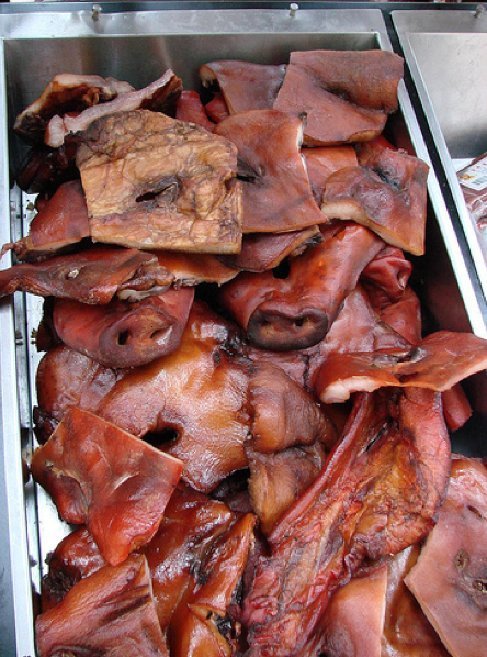
But I was going to say, I love oriental food, and I was in town yesterday, so I clenched my teeth and decided it was a day for risk-taking.  There’s an Oriental buffet I’d never tried, so I pulled in.  I tried asking whether they had MSG in their food, but it was clear she didn’t understand me.  So I went root hog or die.

The food was mediocre, but I didn’t die.  I took a couple of extra blood pressure pills when the pounding in my head started, and by the time I got home my blood pressure was so low I didn’t have any business being alive.

I found myself wondering why the FDA cops who faint and revive themselves over one-in-a-billion risks to human health otherwise haven’t jumped on this like ugly on a monkey.

Old Jules

Today on Ask Old Jules: 

Historical Events Duplicated Today?

Old Jules, does any time in history correspond to what’s going on within the US today?
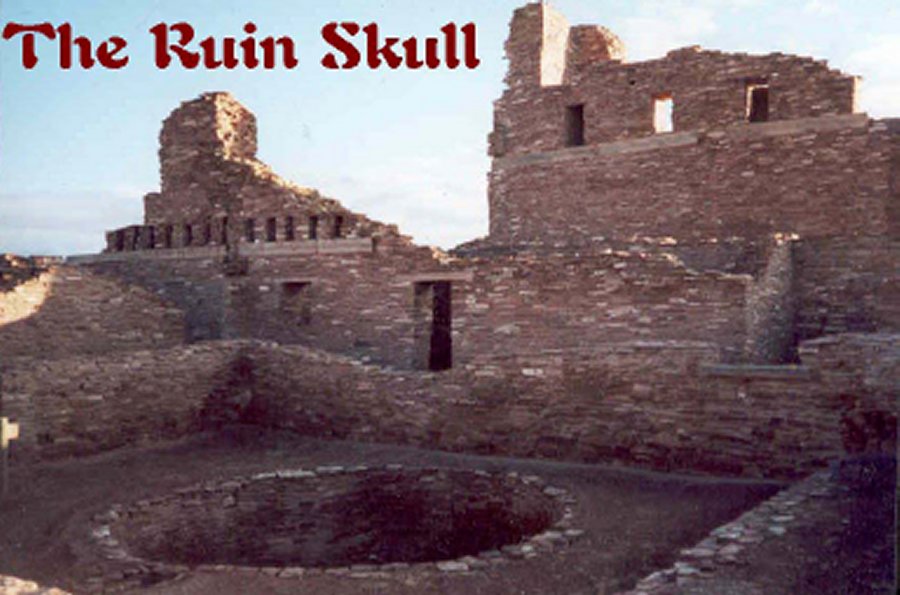
The Ruin Skull – A Long Day Ago

No one remembers anyone
Who remembers anyone
Who remembers
Why she died
But there she is
Wealthy woman young
Good teeth,
No slave.

Those killers
Didn’t kill the slaves
Took them away squat beneath
The loot the weight of
What they carried off
As they did before for her,
Before emancipation
To slave for someone else.

Arroyo cut through ruin
Showed her to the wind and sky
And me a thousand years
After noise and smoke
And screams
Stone hatchet broke the head
Flames brought down the roof
Around her,
Her and her kin
Charred corn
Still on cob
Beside her skull.

She died and partly burned
A long forgotten civil war
Between someone
And someone else
No one remembers
Over something
Neither wind nor sun
Nor these charred bones
Remember.

Old Jules
Copyright©NineLives Press

The Mountain Meadows Massacre – Juanita Brooks

I’m re-reading The Mountain Meadows Massacre, by Juanita Brooks at the moment.  Twenty or thirty years ago when I submerged myself in everything I could find about the event I concluded the Brooks work was the best out there.  When it came into my hands again recently I held back beginning it again to savor the anticipation.  Now I’m midway through it again and it’s as fine a piece of research as ever.

Brooks was a Mormon lady, which made the Mountain Meadows Massacre a work of courage on her part.  The LDS church had spent a century suppressing the realities about the mass homicide of an estimated 60-120 men, women, and children of the Fancher wagon train journeying through Utah to California in 1857, by Mormons and members of a tribe of Native Americans.

The event happened at a time when there was plenty of massacre going on across North America, but was unusual for a couple of reasons.  First, because the people involved were Mormons killing Christians, as opposed to Christians killing Mormons, and the motivation wasn’t acquisition of territory belonging to someone else.   Second, because the circumstances surrounding the massacre involved ‘normal’, dutiful, pious people behaving in ways anyone outside the context could only consider far from normal.  Believing the killing was defensively justified and necessary.

Brooks establishes clearly and thoroughly that the heads of the LDS ordered the massacre and that John Lee, who’d been hanged for it and handed full responsibility by the LDS Church, was carrying out those orders.

An excellent read for anyone interested in history, human behavior, duty, and the ability of the human mind to justify anything it applies itself to.

Old Jules

Computer Saga Proposed Denouement

Good morning readers and thanks for coming by for a read.

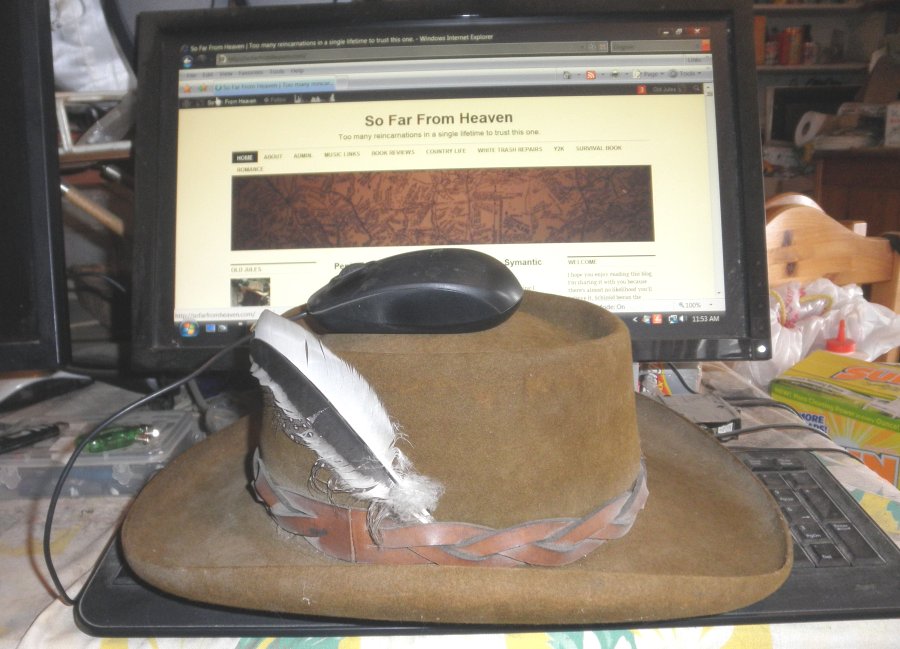
Hopefully by the time you read this I’ll be strutting like a peacock, wearing my Texas Hatters Manny Gammidge High Roller tilted at a jaunty angle, certain I’m a smarty-pants extraordinaire.  At least that’s how I’m planning the final chapter of this monumental butt show.

But it’s 7:56 pm Monday evening, and I’m 43 % done on a 79 mb download of a modem driver.  Six hours 29 minutes from now the box says, I’ll know whether this is going to work.  Except I’ll be in bed six hours and 29 minutes from now, unless I pick that as one of the times I get up to pee.

But here’s the rundown on the plot thus far. 

Ed’s comment reminded me I had a weirdly shaped and sized hard drive I’d yanked out of an old Vista E Machine I bought new at WalMart a few years ago and it died after about six months and $150 spent in repair shops.

So I pulled open the Dell and voil’aismimo!  The drive looked more-or-less the same as the one from the E Machine, aside from some extra parts.  I worked an hour-or-so getting the extra parts off the Dell drive and onto the E Machine one, installed it, reassembled everything, clenched my teeth really hard and squeezed my eyes shut and I turned that commie pig on.

She booted spang up, showed me a screen I hadn’t seen since the E Machine died.  But, the fly in the ointment was that the modem still didn’t get recognized.  I ran through a flurry of downloading alleged drivers from sites all over the web, putting them on a CD, loading in the E Dell Machine and having them snubbed like clerks in camera stores used to snub a person brought in a Brownie Hawkeye for a roll of film.

Meanwhile Norton Symantic was slipping me mickeys behind the scenes, popping screens up at me threatening to keep me company if I kept downloading from non-regular free driver places.

Which I’ll keep short by saying, led me to Dell and my current act of genius downloading 79 mb on a dialup with 12/2 Romax wrapped in electrical tape between me and the power pole. 

So, tomorrow morning when you read this you’ll be seeing words of a man with a modem working on an E Dell Machine running Vista, is the way I want to end this chapter.  Wearing a 1972 vintage Manny Gammidge Texas Hatters High Roller.  A man commanding respect, admiration and quite possibly veneration.  A man you want to be like.  Same as before all this crap happened.

That’s the proposal for the chapter.  Assuming the editors don’t think that 79 mb download wasn’t a high enough price for our guy to pay to get a damned modem working.

I’m going to schedule this tonight before I go to bed to post at 6:00 am.   Just to make sure it goes to work before the editors finish breakfast.

Old Jules

6:46 am edit:  Seems prudent to get other things done before I unplug the modem here and plug it into the other machine to test the driver.  The world needs coffee before it begins the kind of foolishness this day might be destined to bring.  It isn’t that I’m reluctant to step boldly into the future.  It’s just a minor fit of hesitation on my part to contemplate the Odyssey Homer never had to deal with.  Putting a computer on my shoulder and walking inland until someone asks me what it is might be the next step, dragging the Toyota 4-Runner along behind until someone asks me what that is, too, seems a lousy day to anticipate.

12:23 pm edit:

Done Deal

Sculpting Realistic ‘We’ From the Ideal Universe

Hydrox jumped off my lap and stalked over to the bed.

“Sometimes you human beings disgust me with your pretense.”

Him being second-in-command around here, I try to keep him up-to-date on my thinkings and directions.  Seems prudent to me because he’ll have to take over if I kick.  I’d just been asking him if he thought we could get along okay living in a travel trailer.

“Just what ‘we’ are we talking about here?  You and me?  You and all the cats?”  He glared at me.  “You, the cats and the chickens?”

I shrugged, wondering where he was going with this.  I felt a tirade in the making.  “Just you cats and me.  The chickens can’t be part of it.”

“Well, that’s a relief, anyway.  But I think you need to think through this second-in-command crap and all the what-if-you-ain’t-around side of it.”  He gestured with his nose toward the porch.  “The only ‘we’ worth talking about involves mutual resolve.  Creatures willing to allow the well-being of others within the ‘we’ to influence what they do.  No creature unconcerned for the well-being of the others, no creature the others don’t have a commitment to, can be part of a meaningful ‘we’.”

I thought about it a moment.  “That makes sense.  It’s why I was trying to keep you up-to-snuff on things.”

  His frustration was obvious.  “Yeah, and that’s where you’re proving how stupid you are.  For me,” He tweaked a claw under his chin, “the only ‘we’ around here is you and me.  And maybe Niaid, just a whisker.”

This rattled me, but he went on before I could say anything.  “When that coon on the porch ran at you and I jumped in, that’s ‘we’.  When you go to town and buy food for us, that’s ‘we’.  But do you see Tabby or Shiva the Cow Cat lifting a paw for me if I was starving?  Do you see either of them jumping in if a coon attacked me?”

He waited while I considered it.   “I suppose I don’t.”

Then they’re not a part of any ‘we’ I belong to.”

The more I pondered it the more it seemed to me he’d come upon an important thread in the fabric of reality I’d been overlooking.  Not just with cats and chickens, but with every piece of human intercourse around me most of my life. 

When a person goes down to City Hall, or the County Courthouse to perform some necessary business, for instance, and the clerk begins the ritual of obstruction, a ‘we’ is in the process of being defined.  The clerk is the spear-point for a huge ‘we’ of contradictory demands on the ‘we’ you occupy. 

“Do you have proof of residence?”

“There’s my driver’s license.”

That’s not enough.  I need a utility bill or tax return.”

“I didn’t bring that.”

“Then I can’t help you.”

The ‘we’ that clerk represents just defined a boundary excluding you from that ‘we’ and placing you inside another ‘we’ it considers an enemy.  And in a real world, that definition would be mutually recognized, rather than singularly by the human spear-point drawing the boundary.

Which is probably why representative democracy was doomed to eventual failure.  In a fantasy of wishful thinking a population created ‘we’ with a set of unrealistic boundaries.  When new ‘we’ entities developed around government centers those included in the ‘we’ tribes were those they associated with, lived near, shared a commonality with.  In Washington, D.C.  In Austin, Texas. 

And inevitably those outside that ‘we’ became an obstruction, a product, an enemy to their ‘we’.

“The only ‘we’ worth talking about involves mutual resolve.  Creatures willing to allow the well-being of others within the ‘we’ to influence what they do.  No creature unconcerned for the well-being of the others within the ‘we’, no creature the others don’t have a commitment to, can be part of a meaningful ‘we’.”

Sometimes it takes an outsider to the human ‘we’ constructions, a feline with a firm hold on reality, to recognize the obvious.

Old Jules

“Electing pet skunks to guard the henhouse might work for a while.  But the skunk-instincts and  chickens behind the walls they’re guarding metamorphoses the ‘we’ they live in.  The skunks become a we with a priority of digging under chicken-house walls and the we of being pet skunks fades until it no longer can call itself a we.”  Josephus Minimus


Exploring Alley Oop’s Home Circa 1947

When my mom left her second husband near Apache Junction, Arizona  to move near my granddad’s place at Causey, New Mexico, I was considerable upset about it all.  I’d become overfond of the Arizona guy, liked him a lot despite his human flaws that bothered my mom.

Time proved my level of upset couldn’t be handled by beating it out of me, nor by any of the other usual ways people tried back then to nudge a kid back into being seen and not heard.  The Runaways, 1947

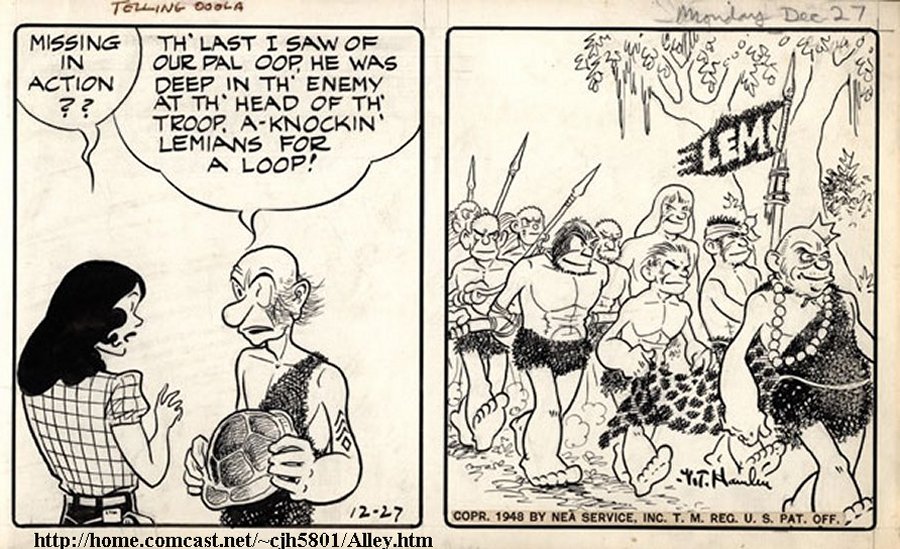
My first step-dad [Arizona] was fond of reading the Alley Oop comic strip to me and I was a huge fan.  Alley was a cave man skipping forward and backward in time thanks to a 20th Century scientist.  Alley even had a 20th Century lady friend named Oola. 

About the only thing I’d brought with me from Arizona was my stack of Alley Oop comic strips.  We’d travelled light across the desert.  And when we arrived in Causey one of the jobs my sisters had was reading those Alley Oops to me, trying to bring up my spirits.  Which I suppose it did until they’d finished reading them to me.

Something more permanent had to be done, and my granddad decided to have a shot at it.  He promised to take me to visit Alley’s home.  Mesa Verde, Colorado.

What a trip that must have been, me pestering him whether we were there yet, how much further before we’d see Alley’s home.  I don’t know how long we stayed, but I never forgot old Alley and his home.  I still had one picture of the cave dwelling he took back then until Y2K.

And of the hundreds of ancient ruins, documented and undocumented, I’ve poked around in during my life, I’ve never visited one, found one, without thinking to myself with a smile that Alley Oop might have lived there, visited there ahead of me.

When Mel King and I were exploring the ruin on Gobbler’s Knob and were driving back to Socorro when he reached into his daypack for something, came out with a human skull it was the first thing I said to him.  “What the hell is that?  You packed off Oola’s skull.  Get it the hell out of this truck!” 

I screeched onto the shoulder and he hid it behind a cedar until  we’d be headed back to Gobber’s Knob so he could put it back where it belongs.

Nowadays I think I have more in common with Alley Oop than with any modern human being.  If there was ever a right time for me to pop out of the gene pool it would probably have been more appropriate temporally in some other Universe where Alley Oop lived and breathed.  It made more sense than this one.

Old Jules


Back Just Before Hippies Were Invented

1964 was a big year in my life.  I rode the USNS Breckinridge troop ship back from Korea with 2000 other GIs coming home, separated from the army late in June.  Hung around Portales, New Mexico for a while, applied to join the Peace Corps, then hitch-hiked to New York to pass the time until I heard from the Peace Corps.

Beatniks hadn’t yet been displaced by hippies and Greenwich Village was jam-packed with thousands of us implying we were beatniks but carefully not saying so.  Hanging around coffee shops writing poetry, playing chess, saying momentous deep-thinking things back and forth to one another.  Listening to folk singers. 

Being rocked back on our heels in mock, simulated shock and disgust when wheat-straw blondes from Westchester down for the weekend to be beatniks, too, refused our advances.  “WHAT?  You don’t believe in FREE LOVE?”

Which, surprisingly, almost always worked.  Provided you’d done a convincing enough job trickling out the bona fides of being a REAL beatnik.  And wouldn’t even think of hopping in the sack with someone so uncool she didn’t even believe in free love.  Even if she did iron her long hair out straight.

So after I hopped the freight to go back to New Mexico, got thrown in jail in Rochester for taking the wrong train, The Hitch-Hiking Hoodoos, got released to hitch home, things stayed eventful for a while.

A guy from Buffalo picked me up on the Interstate, older guy in his 30s.  When I got in I threw the pillow-case with my belongings into the back seat“I don’t know why I picked you up,” he glanced at me with disgust.  “I never pick up hitch hikers.”  

Over the next few miles he questioned me about who I was, where I was from, what I was doing hitching, what I’d do when I arrived, and I explained it all in loving detail.

“Well, I’ve never had any trouble with a hitch hiker the few times I’ve picked them up.  But if I do ever get killed by a hitcher it will probably be some half-baked kid who doesn’t know what he wants in life.”  He thought about it a minute.  “But I don’t have to worry about you.  You threw your gun into the back seat in that pillow case when you got in.”

We talked a lot over the highway between Rochester and Buffalo.  Enough so he didn’t take the Buffalo exit and carried me down to where a tollway squeezed the traffic going south to Cincinnati, Ohio.  He pulled up beside a car with a family in it, man, woman and a couple of kids.  Motioned for them to roll down the passenger-side window.

“Are you going on through Cincinnati?  I’ve carried this guy all the way from Rochester and he’s okay.  He’s going to New Mexico.  But I’d like to get him a ride past Cincinnati.  He’ll never get through that town walking.”

The couple said they were just going to Cincinnati, but we were all watching the traffic edge forward to the toll gates.  “We’d better take him anyway.  He might not get another ride.”

The Buffalo guy was right, but it began the next phase of a long story.  Guess I’d best hold it for another day.

Old Jules


The Great Continental Divide – The Rot Started at the Top

A few generations ago this parking lot was full of people journeying along Route 66.  People stopped here because their engines were overheating, or the kids needed to stretch their legs, or they just wanted to pause for a view of how the water divided.

The view wasn’t all that much, but a dad could walk down below with the kids, step behind a phony hogan, and tell they chillerns if they pee here their water would go both ways, ending up in two different oceans.

The hogan was a lot more inviting back then.

It hadn’t played hotel to a thousand stranded hitch-hikers and drunks looking for a roof.

The roof, of course, still held out the rain and snow.

It hadn’t entered the phase before even the drunks avoided it.

Though all the seeds were planted.  All they needed was nurturing a generation or two.

Garden Deluxe comes into Gallup on tanker trucks and railcars from California.  A local business family bottles it, labels it and keeps it thrifty enough so a bottle could be bought for half a US dollar when that roof still didn’t leak.

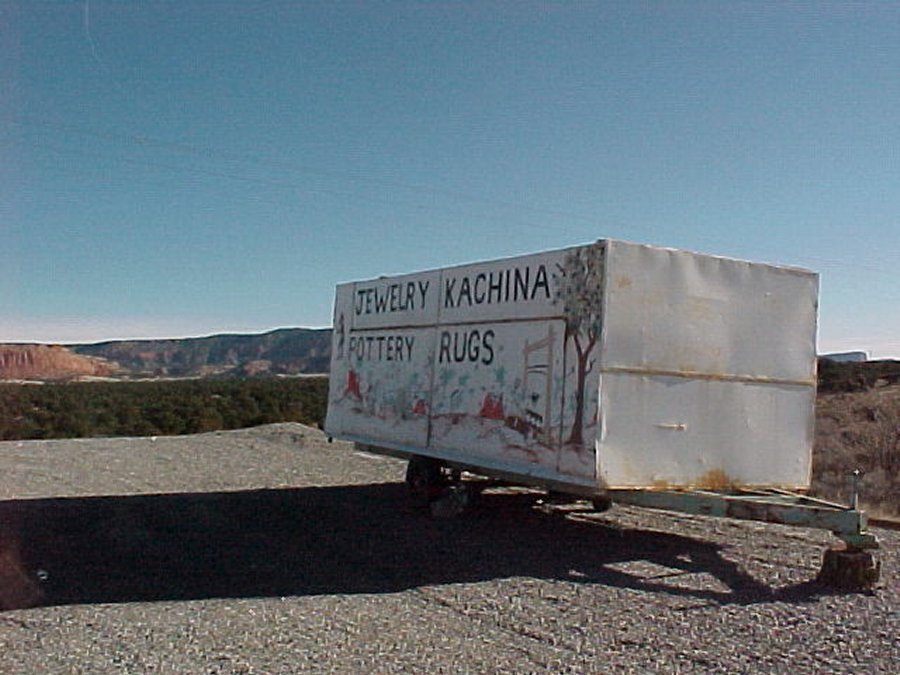
The Kachina were Hopi and Zuni.  Pottery, and silversmithing, all the tribes in the area.  Rugs, Navajo.  But while the years took the roof off that hogan the businessmen discovered Asians can make Kachina, junk jewelry, rugs, and pottery a lot cheaper than anyone struggling to hack out a living with craftsmanship on the Rez.

The motorists didn’t care.  They wanted the Made In China stamp already filling their homes in the lowlands.  The world they lived in took longer to send all their own jobs to Asia.  

Old Jules


A Side to ‘Freedom’ Worth Considering

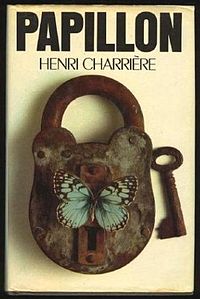
Those of us spoiled to a particular concept of freedom and the fear it’s coming unravelled might be well served to read Papillon once in a while.  I didn’t mention it in my review of it here, but I should have:  Papillon.

From one perspective the entire book is about freedom of a sort we, confined to our mental boxes containing what freedom is, refuse to acknowledge exists, can exist, for ourselves and those around us.  It’s the story by Henri Charriere of his own life, searching and occasionally finding that kind of freedom while trapped in an environment few slaves in history could match for savagery endured.  A deliberate, carefully devised savagery imposed by a modern, civilized nation.

A nation, I’ll add, not too unlike our own.

But what I intended to say about Papillon this post is one of the corner-of-the-eye aspects of freedom and Charriere’s finding of it during the most trying of times.  Once when he was in solitary confinement so severe as to be intended to drive him insane, to break him, destroy him.  Another when he was confined to a boat with other escapees mid-ocean.

These shreds of rhetorical freedom we savor can be unravelled like a wool sweater with a touch of pen to paper.  The freedom Charriere describes are immune to confiscation.   But they’re the responsibility of each of us to find within ourselves.  Nobody’s capable of giving them to us by signing a paper.  We can’t win them by force of arms by storming a Bastille, or Winter Palace.

The winds of history are eroding away those easy freedoms written on parchment and signed into some illusion of reality for most of the citizenry.  That’s happening and there aren’t any heroes likely to ride in on white horses, nor White Houses to save them. 

But we don’t have to allow ourselves the anguish of loss.  A piece of each of us lives outside the rules and the rule-makers, the savages, the rapacious Viking kings of government and finance.

Maybe the starting place for finding real freedom requires losing the illusion that Viking kings can give it to us and take it away.

Choose Something Like a Star


 Choose Something Like a Star

by Robert Frost – 1947

O Star (the fairest one in sight),
We grant your loftiness the right
To some obscurity of cloud –
It will not do to say of night,
Since dark is what brings out your light.
Some mystery becomes the proud.
But to be wholly taciturn
In your reserve is not allowed.

Say something to us we can learn
By heart and when alone repeat.
Say something! And it says “I burn.”
But say with what degree of heat.
Talk Fahrenheit, talk Centigrade.
Use language we can comprehend.
Tell us what elements you blend.

It gives us strangely little aid,
But does tell something in the end.
And steadfast as Keats’ Eremite,
Not even stooping from its sphere,
It asks a little of us here.
It asks of us a certain height,
So when at times the mob is swayed
To carry praise or blame too far,
We may choose something like a star
To stay our minds on and be staid.

It isn’t as though you have a more favorable alternative.

Old Jules

The Challenge of 2012: Not Knowing Who Wants to be King

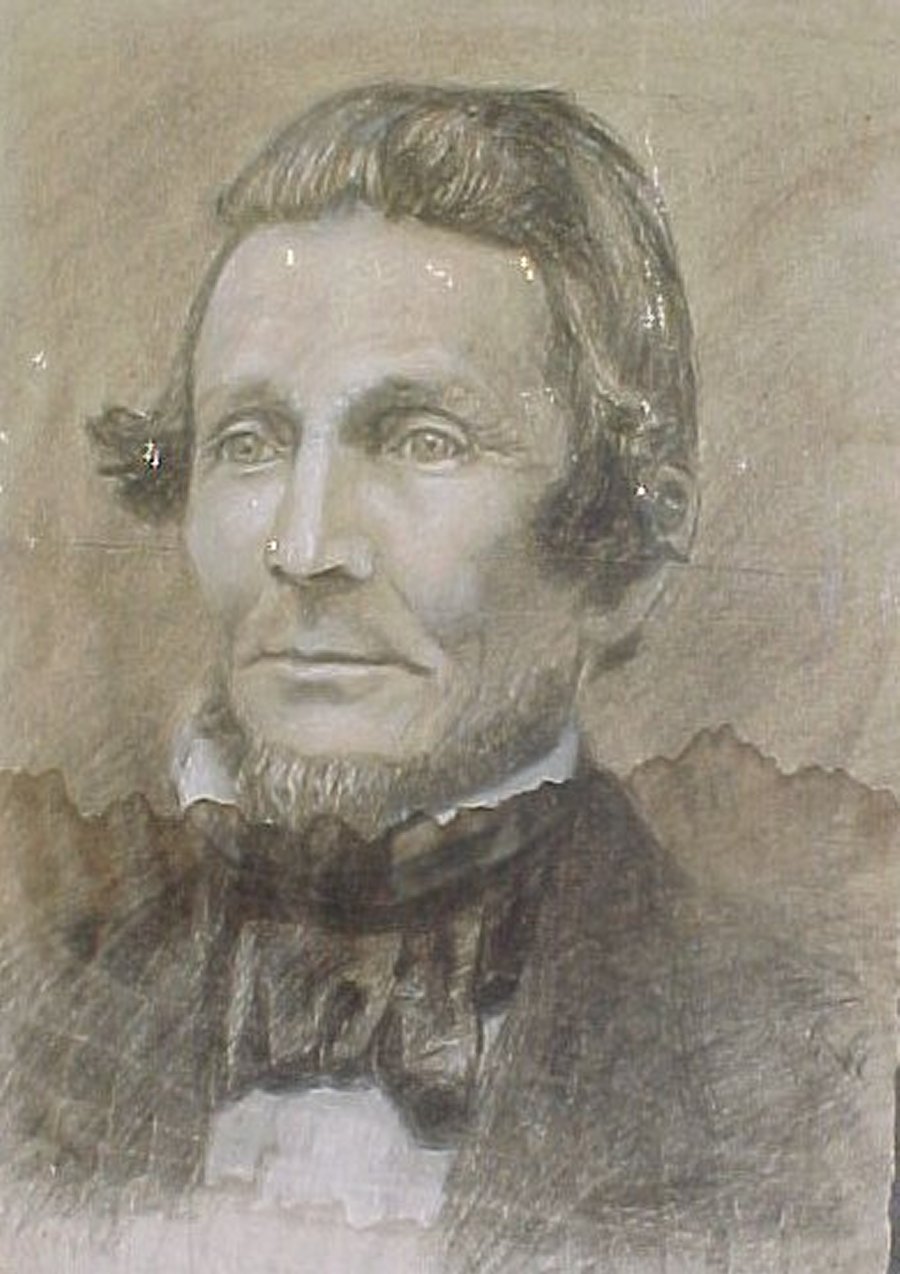
One of my personal goals during the past several decades has been to live through an entire presidential term without knowing which politician occupies the White House.  A second goal is to not know which segment the single party occupying the Congressional seats disguised as two parties pretends to  be the one in power.

I almost made it through a presidential term without knowing who was up there once, but I fell off the wagon inadvertently because of 9/11.  I don’t recall who the guy was who was president then, but I do remember having to know who he was then for a while.

This time around I hornswoggled myself into knowing.  Him being a black guy, I was curious to see whether he’d be any different than the string of white ones preceding him.  But now I’ve satisfied myself he isn’t and my curiosity’s receded sufficiently to allow me to pound it down into the seldom-referred-to compartment of my brain where I try to keep things that are none of my affair. 

Old Sol and I have that in common, not wanting to know who is president of the US.  He doesn’t want to know, either.  Notice how he’s got his face squinched up in preparation for what he knows is coming.

But the challenge doesn’t begin with a new president.  It begins early during each election year as a Chinese fire drill of power-hungry liars telling the truth about one-another, but lies about themselves.  Along with the attitudinal lackeys of each among the citizenry saying things back and forth, repeating the lies in favor of their own preference and in opposition to those they vilify for one reason or another.

I’m going to be modifying the reading material online and offline I expose myself to so’s to help me in my goal of not knowing the names of all those lowlifes and read whatever lies they’re telling about others, and what truths are being told about them by their enemies.

From my point of view the greatest presidents of the US are those nobody ever heard of.  They did their jobs so well they barely get honorable mention in history because nothing noteworthy happened while they were president.  Which ought to be the goal of every president.

Here are some presidents I consider the great ones:

Martin Van Buren


Millard Fillmore


Franklin Pierce

Rutherford B Hayes

James Garfield

Chester A Arthur

Warren G. Harding

I’m including Jefferson Davis because nobody even acknowledges he was once president of half the country:


Here are two candidates for future greatness:

Gerald Ford


Jimmy Carter

Once the willow switch and razor strop went out of style as a method for dealing with loud, greedy, demanding children, the only methods left were ‘reasoning’ with them, which didn’t work, then ignoring them.

I’m going to skip the reasoning and just ignore them.

Old Jules