Tag Archives: New Mexico

Discarded Jewelry

Ruidoso Steak-House
Glanced at her reflection
In the plate-glass window
New squash-blossom turquoise
Sassy Stetson
Patted 50ish blonde curls
And wished
They’d eaten at the casino
Where this didn’t happen
Wrinkled pretty nose
Don’t give him anything
He’ll just get drunk!” Stage whispered
To her Houston lady friend
As though he wasn’t there
She was right of course
Except the old man Mescalero
Was already drunk
He turned away
Then turned back and mumbled
Sing the Song of Life each day
Or when the time arrives you won’t know how
To sing the Song of Death.”

Old Jules


Wilderness Threats


A man I went to grammar school, junior high and some high school with, then several decades later became reacquainted and huff-puffed a lot of up and down mountain canyons recently began visiting this blog.  If no other reader enjoys the tale, at least he will, because he was there:

The following is copyrighted material from a book I wrote once.  I give myself permission to use it here. [ Crazy Lost Gold Mine-ism]

I’ve never concerned myself much with the dangers of wild animals during my extensive time in the woods.  Mostly they’ll mind their own business if a person takes reasonable precautions and doesn’t go out of his way to provoke them.  In New Mexico backlands of the late 20th century the real threats usually come in the form of humans.  When those happen they usually come as suddenly and unexpectedly as finding one’s self in the middle of a herd of elk.

Grasshopper Canyon and Stinking Springs are on the northern end of the Zunis below Oso Ridge on the west face of the mesa.  Two canyons run north and south, parallel to the face, half a mile apart, separated from one another by steep, narrow walls several hundred feet high.  These two walls consist of coral reef from some ancient time when Oso Ridge was an island.  The canyons aren’t easily accessible, so I prospected there a while.

The land below Oso Ridge around Grasshopper Canyon is checker-boarded in ownership.  Grasshopper is all National Forest, but immediately south is a section of Navajo tribal land.  Adjacent to the Navajo section is a section belonging to the Zuni tribe.  Fences between these sections allow a person to always know whether he’s on public land or tribal land.

I was working Grasshopper Canyon with my friend Keith, a stockbroker from Santa Fe. We separated and worked the arroyos southward parallel to one another, gradually moving toward the fence delineating the Navajo section.  Occasionally we’d call out through the woods to make certain we weren’t out-distancing one another.  The last thing either of us expected was an encounter with another human in those woods.

I was bent over taking samples from the bed of a shallow arroyo, just deep enough so when I straightened I could view the small meadow around me.  I stood getting my breath and stretching the kinks out of my back when I saw a man dressed in cammies backing out of the woods at the edge of the meadow.  He was being stealthy, carrying a .22 rifle in a ready position.  He had twenty to thirty colorful birds hanging on a string around his neck the way a fisherman carries a stringer of fish.  As I watched, almost invisible to him with only the top of my head showing above the arroyo, his eyes searched the woods to his right where Keith was working.  Keith had called out from there a few moments previously.

Still watching Keith’s direction the man backed toward me until he was only a few feet away from me.  “Nice string of birds.”  I scrambled up the bank while he spun and pointed the .22 in my general direction.

My partner’s in the woods back behind you.  You don’t want to be firing in that direction.”  We studied one another.  He eyed the shoulder rig I was wearing and the butt of the 9 mm automatic showing from the bottom.  “’You out here killing songbirds?”

Mister Songbird was a young man and from appearances, a Zuni.  He stared a moment longer before answering.  My impression was that he was considering whether I was a game warden or other law enforcement official.  “I’m getting them for Zuni New Year.  They let us do that.”

We talked for a few minutes, me accepting what he said at face value, and the tension gradually dissolved.  He agreed to get the hell out of the canyon because we were working there and wouldn’t want any shooting.  Besides, we’d probably messed up his hunt with our yelling and bustling around the woods.  I watched him back into the meadow to the south and allowed myself to sigh with relief.

Back in Santa Fe I called the US Fish and Game Department.  I thought there was a remote chance the feds were really allowing Zunis to kill protected species birds on National Forest land.  If so, I was prepared to be indignant.

When I told my story the fed was silent a moment.  “You are a lucky man,” he observed.  “You confronted an armed man committing multiple Federal felonies and he didn’t shoot you.”

*     The following didn’t make it into the final draft of the manuscript: The fed also observed the Zuni lad would have spent a lot more years in prison for killing those songbirds than he would have for killing me.  I drew a good bit of comfort from knowing that.

Eventually logic won out over the other appeals of the Zuni Mountains as a location for the lost gold mine I was searching for.  Although the Zunis were handy for me, being only a few hours drive from Santa Fe, they were too far from Tucson.

Also, too many prominent landmarks in the area would have immediately brought the original survivors back.  The route I imagined them following would have taken them within sight of Los Gigantes and enough other one-of-a-kind eccentricities to make the location unmistakable.

Even the Big Notch and Little Notch in the Continental Divide can be seen from miles to the west.  There’s nothing else similar to it in North America.

Marty Robbins – Little Green Valley

http://youtu.be/WT5qegD28Wo

Thinking on your Feet

A friend and I were chewing the fat outside a car wash business he owns next to a convenience store in Las Lunas, New Mexico a few years ago. A pregnant woman who worked at the convenience store came outside and plopped down out of sight of the front door, smoking a cigarette, sitting on the concrete and leaning against the building.

We’d discussed this woman before…. a nice young lady with a life a person wouldn’t wish on anyone…. last time I’d seen her she was sitting in the same spot crying, which is how I came to ask my bud about her story. Anyway, seeing her brought her into the conversation again.

Most recent weirdness in her life:

The lady was  20 years old. She’d gone into Isleta Casino a while back with a friend, began feeding her paycheck into the slot machines. Now, it was illegal for this woman and her friend to be playing the slots, minimum age being 21.

So what happens? She hits a $5000 jackpot on the machine she’s playing. It lights up like Times Square on New Years Eve, making all kinds of commotion, people coming from all directions to see. She knows she’s going to have to show an ID to get the money. So what does this poor lady do?

She and her friend beat feet out of there, leaving the jackpot.

I suppose the first thing that comes to mind is this: What the hell was she doing putting her money into a gambling machine if she couldn’t accept a payoff, supposing she hit?  Did she do some heavy thinking about this?

But, even so, she ought to have been able to get someone legal to accept the payoff and split it with her, thinks I.

But she knew she was breaking the law, and what do you do when you get caught red-handed? Why hell, you run if your knees are still good enough to allow it.

That’s what’s called thinking on your feet.  Thinking afterward what you done-already should have thought before-wards.

Old Jules

Frank Sinatra and Count Basie– Luck be a Lady

Crazy Lost Gold Mine-ism

This post requires some background to get to what it’s about.  The first part is background.  The actual subject of the post doesn’t start until ‘way on down toward the bottom.

Back before Y2K happened I spent a lot of years and energy researching and searching the mountains of SW New Mexico for a particular lost gold mine.

Doing a thing of that sort, the smart individual would keep his mouth shut about it.  But I don’t qualify in that regard.  I spent several years poring over records and winter nights poring over maps with a magnifying glass, almost always certain of knowing where it was, chawing at the bit to get out into the barrancas to file a claim on it.  But also putting my research into a form others searching for it might find helpful.  Insane.

Eventually I found a location where evidence on the ground fit the legend locations well enough to keep me working the west face of that mountain, climbing and unclimbing it with friends and associates, building up a lot of muscle, finding a lot of interesting rocks, and getting surprising assays, but no joy to speak of on gold.

“A burned out cabin ruin with an aspen tree growing out of the inside, bear claw marks 12 feet up, 3 hand forged nails, a longtom sluicebox axed out of a 3 foot diameter log, a spring 75 feet above the sluice, an arrastra below.  A mysterious map chiseled on the face of a 300 pound rock surface depicting the exact layout of the canyon, the cabin, the waterfall, all so accurately depicted the person had to have scrutinized the layout from the mountaintop, then scratched it on this stone 600 vertical feet below and half a mile away.  The rock was carefully placed on the canyon wall above eye-level so it was easily seen, but only by someone looking up.”

By 1998 I’d spent a lot more treasure, worn out vehicles, worn out relationships with lady friends and put a lot of friends to sleep going on about it and spending all my waking hours thinking, searching, or talking about it.  I decided it had taken up enough of my life and it was time to move on to other things after one final effort.

I took several weeks of vacation from work and spent it determined to get that gold mine out of my life, or into it in a way that didn’t include continued searching for it.  During part of it Gale and Dana, another old friend, joined me up there.

But that’s all another story.

During the 1990s I used to get several letters and phone calls a week from other people who were searching for the mine, asking questions about specifics of my research findings, asking questions about various terrain features, or just wanting me to go climb a mountain where they knew it was but didn’t feel like climbing themselves, willing to give me 10% of it if they were correct.  Of course they always knew they were correct.

But gradually that all tapered off.  In 2003, in the desperate throes of surviving the desperate financial aftermath of Y2K I published a book about my research, and the calls, emails and letters started coming in again for a while, but again gradually receded after a few years.  Those guys all got old and everything quieted down.

That lost gold mine slid spang out of my life.

But finally, here’s what this post is about.

Suddenly, beginning a couple of months ago, my old email address box began a new trickle, becoming a stream, of questions about all manner of details about those canyons and researches I elaborated on in the book.  Old guys, some older than I, were suddenly making noises about ideas, searches, evidently studying the book and maps, wanting refinements on what I’d described.

2011, every old worn-out has-been treasure hunter in Christendom  is suddenly wanting me to search my memory-banks about canyons I once stomped around in.  I’ve mostly answered the emails, tried to remember and flesh out what most of them were asking about, but a lot of it’s just too mixed in with too many other canyons, rocks and trails to recover with clarity.

But some of them are actually being subtle but provacative, wanting to argue with me about research findings, value judgements I made regarding 160 year old documents I dug up in the US Archives, military records, and a particular Apache I consider a key in the affair.

Heck, it ain’t as though I found the damned mine.  I don’t know where it is, though I spent a lot of years, treasure, sweat, and women thinking I did.  Now, suddenly I have people coming out of the woodwork wanting me to change my mind about where I thought it was because my reasons for thinking it weren’t the same as their reasons for thinking it’s somewhere I didn’t think it was.

Absolooooodle, incomprehensibly, insane.

Yeah.  It’s real important where I think it is.  If I don’t think it’s where it is, that old gold mine’s likely to switch places with where it thought it was.  Next thing you know it will be where I thought it was.  And that ain’t where these other guys now think it is, so I need to change my mind and think it’s where they think it is.  Otherwise it won’t be there.

I have no idea what the hell this is all about.  Maybe the price of gold combined with worrying about Social Security has the geezers going crazy thinking they’re 50 years old again.

Old Jules

Billy Vaughn And His Orchestra – The Shifting Whispering Sands ( 1956 )

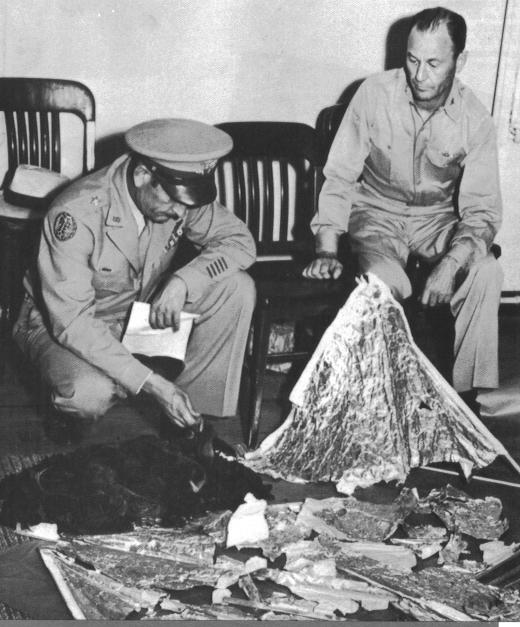
An Afternoon with Aunt Loretta (Proctor)- Roswell, 1947

Kay, the wife side of the couple owning the cabin where I live, is part of the family owning the property adjoining the ranch where the Roswell Incident happened in 1947.  Her Aunt Loretta was the step-mother of Dee Proctor, the youngster with Mac Brazel when he discovered the debris on his land.

Loretta was there when Brazel brought Dee home that day carrying pieces of what they’d found.  She sat at the table with the rest of the family considering while Mac Brazel tried to make sense of it, tried to decide what he should do.

“The piece he [Mac Brazel] brought looked like a kind of tan, light brown plastic. It was very lightweight, like balsa wood. It wasn’t a large piece, maybe about four inches long, maybe just a little larger than a pencil. We cut on it with a knife and would hold a match on it, and it wouldn’t burn. We knew it wasn’t wood. It was smooth like plastic.”

“According to Brazel’s neighbor Loretta Proctor, her 7-year old son Timothy or “Dee” was with Brazel when he first discovered the debris field. But he was also with Brazel when he discovered something else at another site 2-1/2 miles to the east that left him deeply traumatized for the rest of his life.”  This is frequently quoted from numerous locations on the web and in books about Roswell, but it provides a good summation or paraphrase of what Loretta had to say about that part of her experience during our visit recently.

Dee [the accounts continue] never told her exactly what he saw there but did take her to the location in 1994 saying, “Here is where Mack found something else.” Dee Proctor would also duck all attempts at interview and died in 2006.

However, Dee never ducked any conversations with Aunt Loretta, nor with his step-sister regarding the incident, though he was reticent to a degree according to the two women.

The popular accounts continue:  “However, other rancher children are believed to have visited the site, including Sydney “Jack” Wright, who said that two sons of rancher Thomas Edington and one of rancher Truman Pierce’s daughters got to “the other location.” Wright in 1998 would state, “There were bodies, small bodies with big heads and eyes. And Mack was there too. We couldn’t get away from there fast enough.”

—————

A while back Gale, Kay and I went up to Comanche to visit her Aunt Loretta for an afternoon.  I’d recently read Thomas J. Carey and Donald R. Schmitt’s book, Witness to Roswell.  Even though I ‘d thought before reading it the subject had beaten to death several decades ago, the book renewed my interest, so I was enthusiastic about meeting Aunt Loretta and discussing it with her, so I carried a recorder with me.

Loretta lives with her daughter now, raising goats, dancing one night a week, sharp of mind, intelligent and quick of wit.  At 95, she’s a woman with a lot still to say, but careful about how she says it.

I was prepared by recent readings mentioned above, ready with questions, as were Gale and Kay, who’d also done the reading of Witness to Roswell.  We sat for several hours, asked, and she and her daughter answered, sometimes drifting into nuance, squinting with loaded, pointed implication.

As we drove back Gale, Kay and I talked a lot about what Loretta and her daughter told us that afternoon.  It all boiled down to what she’d personally observed, remembrances of Dee when he and Mac arrived at their ranch, asides about Dee, afterward, almost certainly still in possession of the ‘memory metal’ after it was supposed to have been all turned over to the Army.  “A certain little brat kept it hidden away his whole life!” Loretta declared with a measure of smiling venom.

According to Aunt Loretta, Mac was in a quandry over what to do about the mess on his ranch.  He’d heard somewhere the Army would pay a reward for anyone who found a ‘flying saucer’, but he had a lot of qualms about whether to get involved with the government.  Like a lot of people of that time and that area, Mac didn’t have a lot of trust in them.  A huge tract of land not far away had been confiscated from the families owning it just a few years earlier to create White Sands Proving Grounds, and the Trinity Site of the first atomic bomb detonation was just down the road and only a couple of years in the past.

There, in Loretta’s kitchen, Mac decided to go visit his wife and kids in Las Cruces for the next few days to think it over.  It wasn’t until his return from Cruces he went to Roswell and reported what he’d found.  Because of that delay of a week a lot of people in the Corona area knew about it a considerable while before the government did.

She’d provided a vivid description of the site, almost without seeming to realize she was doing it.  The way the ridge was scoured of any plant life, the ‘remembrance’ of the ‘impact’ zone as she gazed at the wall telling about it.  I came away believing Loretta probably visited the site herself, sometime shortly after the event.

But of all the questions we asked Loretta that afternoon the one thing that didn’t happen was any hint of denial of anything related to her, Dee, the events of those days as described in “Witness to Roswell”.

Whatever happened back there in 1947, there’s not much room to doubt that Loretta’s interpretation of it all doesn’t agree at all with government accounts and seems to agree in all ways where her personal experience and observations come into the events, with just about everything the ‘other side’ has been saying all along.

http://www.alienresistance.org/roswellufocrashsitephotos.htm

http://en.wikipedia.org/wiki/Witness_accounts_of_the_Roswell_UFO_incident

Witness accounts of the Roswell UFO incident:
http://roswellinvestigator.com/witness-to-roswell-1.php

http://www.angelfire.com/indie/anna_jones1/daily_record02.html

Old Jules

The Byrds–Mr. Spaceman

Desert Emergency Survival Basics

You survival and preparedness-oriented readers might find something you didn’t already know in here to be useful.  The Introduction section to the book Desert Emergency Survival Basics explains my purposes for writing it better than I can today:

The potential range of human experience includes finding ourselves in unanticipated dangerous situations. Most of those situations have been examined minutely and described in print in the form of survival manuals. Desert survival is not an exception. Excellent books are available to explain primitive survival in the desert southwest duplicating lifestyles of Native Americans a thousand years ago. That is not the intent of this book.

A few decades ago I had an acquaintance with a man named Walter Yates. Walter had the distinction of surviving a helicopter crash in the far north woods by jumping into a snowdrift before the impact. He managed to survive winter months with almost nothing except the clothes on his back when he jumped.

Walter’s experience was a worthy test of human potential for emergency survival in extreme conditions. The margin for error was microscopic. The reason he survived rested on his ability to quickly detach his mind from how things had been in the past, how he wished they were, and accept completely the situation he was in. He wouldn’t have made it out of those woods if he couldn’t rapidly assess his new needs and examine every possibility of fulfilling them. “It’s all in the mind,” he once told me.

The margin for error in the desert is also narrow. That margin is dehydration. Extremes of temperature are also a factor, but they are more easily managed than the needs of the human body for water. Anyone who survives an unanticipated week in desert country did so by either having water, by carrying it in, or finding it.

Over the years I’ve followed a number of search and rescue accounts and discussed the issue with searchers. The general thinking among those workers is that a person missing in the desert southwest should be found or walk out within three to five days. After three days the chances for live return spiral downward. Returns after five days are lottery winners. When a missing person isn’t found within a week, it’s usually because he’s been dead for five days.

This book is to assist in avoiding situations that lead to the need to survive those crucial three days, and to provide the basics of how to walk out and how to find water in the desert southwest. If you need the emergency information here it will be because you became lost, stranded by mechanical failure, or physically incapacitated. I won’t address the bugs and plants you might find to eat. If you have water you’ll survive without eating until rescue.

When this book was written I had a close association with New Mexico State Search and Rescue (SAR). I was also writing a book about a lost gold mine at the time. The State Search and Rescue Coordinator (SARC) knew about the book. I had a special arrangement with him because I was spending a lot of time in remote canyons searching. If something delayed me there I didn’t want them to send out the SAR guys to look for me.

One day in the coffee-room SARC asked me about my progress in the search and the gold mine book. I explained the lost gold mine search to him and how the information available in the past was sketchy.

“So you’re writing a book that’s likely to cause flatlanders to go out into the desert searching for this thing?”

I thought about it a moment before I answered. “It might. A lot of people would have tried anyway, but this book might bring in some who wouldn’t have come otherwise.”

SARC glared at me. His whole world revolved around  flat-landers getting lost in the mountains or desert. Several times every month they’d scramble the forces to try to locate someone misplaced. Sometimes it’s a brain surgeon from Houston who got himself mis-located mountain climbing on the east face of Sandia Mountain within sight of Albuquerque . Other times a physicist from California gets off the pavement in the desert and loses his bearings. Sometimes SAR arrived in time to save their lives. New Mexico back country can be unforgiving.

“If you’re going to publish a book that will take a lot of idiots out where they can get into trouble you’d damned well better include some warnings on desert survival and how they can stay out of trouble! I don’t want to spend the next five years dragging the bodies of your readers out of the arroyos in body bags.”

That conversation ultimately resulted in this tome.

Over time it’s been expanded and rewritten numerous times to eventually become what’s posted here. Here’s the link, but there’s a new page for it on the navigation bar at the top of the page.
Desert Emergency Survival Basics

Old Jules


Sons Of The Pioneers – Cool Water

To Live is to Fly


Good morning everyone, Admin. (Jeanne) here.

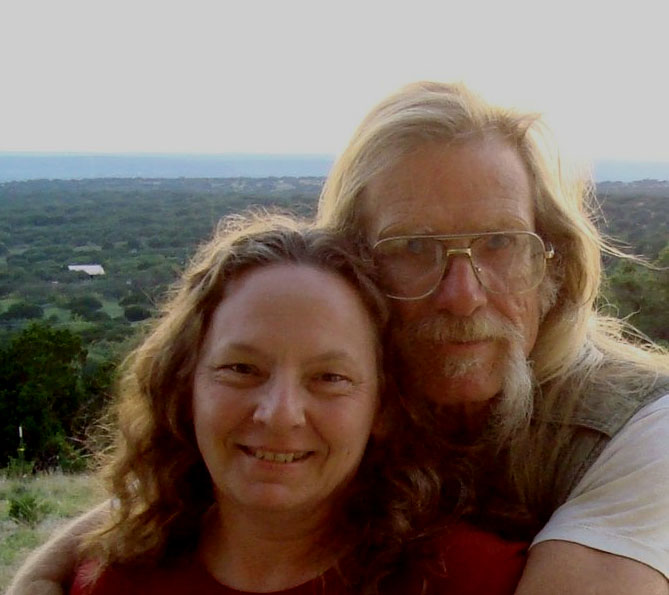
Old Jules told me that some folks have been asking about who I am and wonder how I came to be “behind the scenes” on this blog. He asked  me  to explain a bit about how we met and got to this point.

We actually met in a y2k chat room. When my ex and  I were researching y2k in ’98, I  was new to the internet and immediately became addicted to chat, where this guy who could really turn a phrase caught my attention with his sharp, although often warped, sense of humor. He obviously was an expert about  emergency preparedness and soon he and his y2k website became my number one resource.

When he got his property at a land auction in the summer of ’99, we also bought a piece of land and I went from Kansas to  New Mexico for the first time to sign the closing papers. My family put up our own getaway cabin about a mile and a half down the road from his place.  After three more trips to put supplies in place, I had a suspicion that y2k was going to be less of an event than had been predicted. I  decided to take advantage of the chance to give my kids a taste of a life not only in a different culture, but without telephone, electricity, or indoor plumbing. By New Year’s I was there with all five of my kids, and I  lived there for 4 more months with the three of them that were homeschooling.  Jules and my family became good neighbors. He again became a valuable resource for us when we were studying New Mexico culture, history, and geography.

After my family reunited back in Kansas, we stayed in close contact. When I quit homeschooling and began working outside the home, he again became a mentor for me, since his career  in management positions gave him perspectives that would have taken me years to learn.  After my divorce a few years later we shared a house in Placitas, N.M. for a couple of years before I again moved back to Kansas. I’ve visited Old Jules in New Mexico many times, and in Texas a few times.  We’ve taken a lot of day trips, hit the thrift stores, and shared our cats, music, and books.  We’ve also collaborated on various  projects.  He’s been great about encouraging me in my art work, too.

I work two library jobs, and I’ve always had a passion for reading and writing.  I’ve had blogs myself, but I decided a while ago that my own expression should focus more on my art  than writing. I have other friends who are writers and I enjoy following their progress. Living on the edge as Old Jules does, with a slow dial-up connection on a phone line that I happen to know has a tree branch lying across it right now, makes it difficult for him to maintain a blog site. Since I’ve always enjoyed reading what Old Jules writes, I’m happy to help by using my fast internet connection to set up and maintain the blog.  So this blog is truly a joint project.  When we can, we use photos that we’ve taken ourselves, and discussing which music  fits each post is one of the parts about it that I enjoy most.

Because we live 800 miles apart, we don’t actually see each other very often,  so we’re grateful to live in a time when y2k didn’t bring down the grid,  destroying communications and becoming the end of the world as we know it.
We hope you’re grateful, too.

Mandala 56
Addendum: Here’s a link to my Deviant Art page for those who’d like to see more of my drawings. I don’t update the page very often, but it’s a handy place to have a gallery!
http://mandalagal.deviantart.com/gallery/

Townes Van Zandt– To Live is to Fly

Did You Ever Fake Reading a Book?

The e-newsletter  Shelf Awareness  occasionally includes author interviews where a standard question is “What book have you faked reading?”   This brought to mind something I can tell  now because I don’t think they can take my high school diploma back from me.

When we students who began school in the first half of the 20th Century in Portales, New Mexico entered Junior High in 1957, they explained a lot of what we had to get done during the next few years if we wanted to graduate from high school. If those years passed and we hadn’t done each thing on the list we’d be pumping gas the remainder of our lives.

Among the various academic requirements was Major Book Report every year. I didn’t see this as a problem up front. I was a heavy reader and couldn’t imagine a deadline arriving on that one without me nailing it in plenty of time.

But somehow the 8th or 9th grade came along and spang, there I was, with Mrs. Wilbanks standing before the class announcing day-after-tomorrow our big book reports were due. Suddenly I was in a panic. I’d read plenty of books, but none that came to mind as qualifying for a big book report. Those normally had to be cleared with the teacher ahead of time, which somehow slipped by me for one reason or another.

I don’t know what made me decide to invent a book that didn’t exist.  It seems insane all these decades later.  But I suppose  I concluded I just hadn’t read any Big Books after I went to the library and saw the lists of the ones other kids had been thumbing through and dogearing.

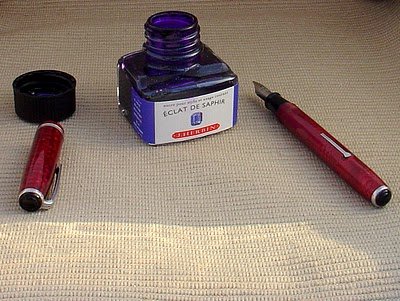
But I got out my Esterbrook fountain pen with the turquoise ink and set to work inventing a Big Book I’d read.  “Chessman”, by Borden Deal .  It was a good book and I regret Borden Deal never wrote it.  I turned in the book report on time and sighed thinking I’d cheated death one more time.

A few days later Mrs. Wilbanks brought the graded book reports in and prepared to pass them back, but she cautioned us to just look at the grades and corrections, then hand them back in.  They’d go into our permanent files with our other Big Book Reports until we graduated High School.

Then she pulled out a book report from the stack I could recognize from my desk near the back of the room.  Sloppy, turquoise handwriting on yellow paper.

I don’t give A+ on Big Book Rep0rts, but I’ve made an exception this time.”  She lighted up the room with her smile and gestured toward me with it while I sank into my seat.  “I believe this might be the best Big Book Report ever written by one of my students.”

Knowing that book report was up there hanging over my head as evidence bothered me a lot.  When I left Portales and headed for another school my 11th year, I hoped they’d let me carry my records so I could snag it, but it wasn’t to be.  Next year I changed schools again and again didn’t get an opportunity to steal it back.

Not until I graduated in 1961 did I again get my hands on my Big Book Report on “Chessman”, by Borden Deal.  I packed it away with all my other important papers and kept it until Y2K, when it went into the fire after one last read.

If you haven’t read the book I recommend you write it.  It’s a winner.

Old Jules


The Coasters – Charlie Brown
http://youtu.be/dS9sOCRH3MU

Swatting Flies in the Last Century


A letter to 6 year old Julia in Kansas before Y2K:

Sunday, Nov. 7, 1999
The Great Divide

Good morning, Julia.

I’m sitting here in the cool dawn, sipping a cup of coffee, listening to the chickens crow and being heckled unmercifully by the blacks for favors. The two polish roosters, Rosencrantz and Guildenstern, are beginning to try their hands at crowing without notable success. They tend to be off on their time and they cut the crowing short of the ur-ur-urrrrr of the more mature birds.

But enough of this chicken news.  I began writing this to discuss the subject of fly swatting with you, certainly a more worthy focus of discourse when watching the birds in their activities, which reminded me how gratified I was by your interest in the various flock members during your visit. So I’ll finish the chicken component of this letter by saying you are right to be interested in them.

The importance of chickens in human life, now and in the past, cannot be over-stated. Even the great human philosopher, Plato, in the Socrates dialogues, put mention of a chicken in the final words of Socrates, prior to his death. Socrates, pacing, reflecting, and finally on the verge of succumbing to the hemlock he’d taken, spoke abruptly; almost as an afterthought, to Crito, (one of his yes-men): “Crito, we owe a cock to Asclepius. Please pay without fail.”

So there you are. In fact, one of the deeper philosophical questions of this and earlier times contemplated by wise men everywhere is, “Why did the chicken cross the road?”

Why, indeed. However, as I’ve said, the subject of this letter was intended to be fly swatting, not chickens, and I’ll not have it compromised by endless meanderings on lesser matters. The prowess with the flyswatter you demonstrated during your visit demands nothing less.

I’ll begin by saying that when I was a youngster (back when the 20th century had only begun its interminable mid-life crisis), it was widely, almost universally,  recognized that children are far more adept at killing flies than are adults. Probably because of their lightning reflexes and sharper eye. This wisdom has suffered neglect partly because of screen doors, refrigeration, air conditioning, indoor plumbing, and other curses of modern life.

In my day, anytime there was a gathering of adults for dominoes or canasta, picnics or outdoor parties, even if there was only one child present, he would quickly be given a fly swatter and put to the task. When more than one child was present, usually it was thought that the rowdiest, most rambunctious child, the one most likely to lead the others to acts of courage, bravado, or cunning, would be the best suited to ridding the affair of the fly nuisance.

I can promise you that in those days my fly swatting skills were second to none. However, over the years I’ve lost my razor edge. My reflexes are no longer as sharp, and the keenness of eye is largely gone, as the case with most adults.

Of course, the proper tools are also the victims of disuse. There were giants in the earth for fly swatting tools back then. For a dime you could purchase a fly swatter with a limber wooden handle and a flap of heavy rubber or leather that was equal to the most severe fly nuisance. My granddad had one he’d made himself of tooled leather that could sometimes send three or four flies at once off to the hereafter.

In those times the fly problem was probably worse than it is today. I’ve never seen it happen, but I was told many times by adults who had themselves seen it, of incidents where a child lapsed in the task he’d been assigned, fell behind, and was actually carried away by swarms of the angry insects.

Anyway, I’m sitting here, a burned-out has-been in the fly swatting arena, hoping to give you a few tips – the old worn out champ passing on a few tricks to a future talent who is yet a novice. Even with the fly swatting tools available in stores today, I firmly believe you can hone the skills with diligence and patience to become, as Marlon Brando coined the phrase in, “On the Waterfront”, a contender.

First off, it’s important to recognize that flies frequently jump backward or drop downward in their efforts to elude the slap. If you anticipate this and lead them a little, you’ll find what would otherwise have been a useless swing that did little more than knock over a lamp or a porcelain knick-knack, will result in the satisfying trophy of a fly in the dishwater or in a large bowl of coleslaw underneath the target area.

Secondly, you need to always keep in mind that while fly killing is a high priority to adults when they put you to the task, the priority invariably changes when they see a dead fly dropping into their drink. So, unless you do it unobserved, I’d suggest you’ll be more widely acclaimed for your skills if you steer well clear of anything but the most subtle or inadvertent trajectory of a defunct fly into any food or drink which is in view of an adult or older child who can’t be trusted to remain silent in the shared joy of secret knowledge. Most can’t, I myself learned in the hard school of experience.

Thirdly, the swing, or swings. Usually the fly swatter, (the tool, not the child wielding it) works best with short abrupt flicks of the wrist from an area only a foot or so above the insect. With the lighter tools of today’s world, the swing probably needs to be handled with vigor and with a little attention to the follow-through. On a window or other surface where the flies are thickly gathered, sometimes a series of rat-tat-tat slaps can net a goodly pile of carcasses and numbers for your growing record book.

Keep in mind that even on days when you are approaching previous records, adults are unlikely to be impressed when a previous record broken is accompanied by fly remains smeared across the front of the refrigerator or permanently embedded in a window screen. Fly killing is a matter involving politics, philosophy, and judgment, as well as the keenness of eye and lightening reflexes mentioned earlier.

I suppose the thing that got me started thinking of writing you about flies is the abundance of them in this house the last couple of days. I don’t know why. Usually they are attracted to areas where there’s livestock. But here there is no livestock. Just the three cats, the chickens, and myself.

You might tell your mom and dad I’ve been using my wood stove the last couple of days. It’s enough to roast a human out of the house with a single large log burning on a cold night. But getting it hot enough to cook food requires a lot of smaller wood. With large logs inside it won’t boil water between now and the day you, Julia, become the bride of some fortunate suitor.

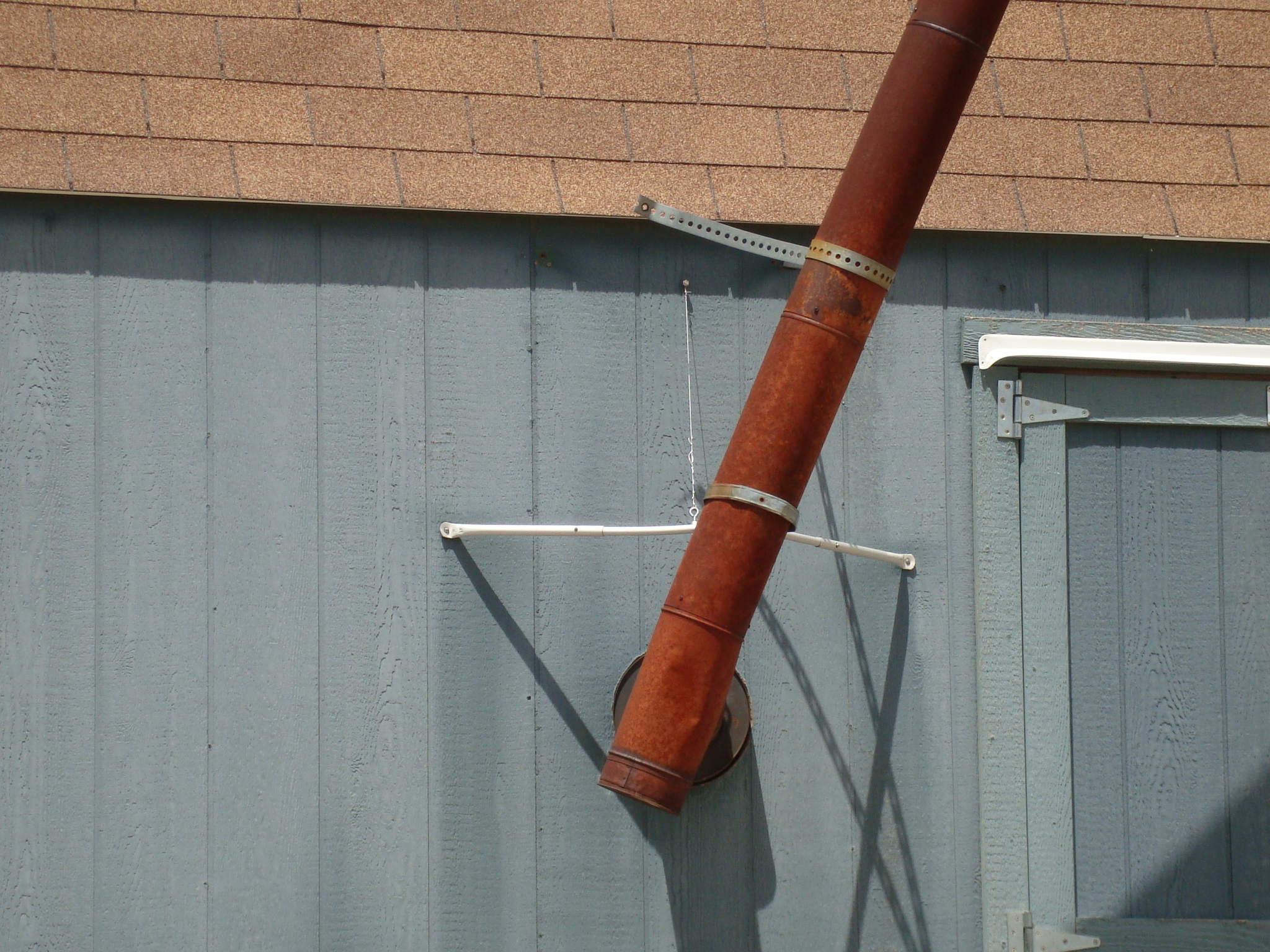
Your dad will want to know the thing I went through the wall with did fine with normal fires, but when I determined to stoke it full of small wood for a breakfast fire and coffee this morning it charred the paper front on the insulation around the outer pipe. Of course, the stovepipe was glowing red through that episode, which is to be avoided.

You might also mention that trying to erect a stovepipe along a wall by one’s self is a thing you haven’t really lived until you’ve done. Cartoons used to show shanty houses with zigzagging stovepipe. I never knew why until now.

Hanging the kitchen cabinets alone was also one of those experiences which, like the man who decided to carry a cat home by the tail, will most likely remain burned in memory for a while.

I’m not inclined to regret anything in my recent past and hope I never will. The person I now am differs from the person I was at your age as a result of cumulative lessons I’ve learned from choices I’ve made between that time and this. However, there’s nevertheless a temptation to gnash my teeth a little for not having taken advantage of your dad’s kind offer to help with the electrical wiring from the windmill, solar panels, inverter, and batteries, into the house. I’m reminded of that offer each time I fiddle with the connections and the hidden short somewhere shuts down the inverter.

Hmmm… this letter has gone on and on. There’s nothing particularly personal or confidential about it, except the tips on fly killing, so feel free to share it with your family. Or keep it until you are able to read better and read it yourself.

Best wishes to your brothers and your mom and dad.

Affectionately,
Old Jules

Note from Julia in 2008:
I honestly don’t remember this at all. This is by far the best letter ever written to me, I’m just glad I can read it and appreciate it now!
~ Julia

Burl Ives– Blue Tail Fly
http://youtu.be/1ardNXjE-_I

Who Has Been an Inspiration in Your Life, and Why?


I’m not an admirer of human beings as being particularly inspirational, on the whole.  Yeah, a lot of human sentences find themselves trapped between quotation marks in fragments people find supportive of viewpoints that won’t stand on their own hind legs.  Pithy wisdomoids giving authority to vapid premises.  Often this does happen in a synthetically inspirational context.  But the sources of those quotes usually don’t appear so wise or unblemished under careful scrutiny.

Maybe ‘inspirational’ isn’t the appropriate word to capture the concept I’m hoping to convey.

Maybe ‘has had an influence on your life you believe helped you to be a person you came nearer admiring than the one you were previously’ would more accurately describe it while filling the need for cumbersome rhetoric.  The inspiration derived from firing wisdomoids back and forth at one another isn’t made of the strong stuff I’m trying to communicate.

For instance, I used to be acquainted with a Vietnam vet, who lived in an Econoline van in Albuquerque.  He had a route of parking spots and a time schedule he’d follow to hang around each place for a while.  The street guys who were dumpster-diving knew his schedule.  They also knew  he’d pay a fair price for  anything he could get his money back on that they’d salvaged out of the trash.  After making his rounds, the Econoline would head to the flea market and he’d sell first to the crowd, then whatever was left to the flea market merchants.

By reselling it from homeless guys dumpster-diving, he provided them a means of getting some cash for a lot of things they’d have no way to sell  for themselves, or would have had a lot of difficulty getting more than a few cents for.  His route superimposed an economic network devised to offer those submerged in hardship a trickle of income, a safety net.  He provided a valuable service.

But what I particularly admired was that, when he came across someone he believed was ready to try drug or alcohol withdrawal he’d pack them up in the van and head off somewhere to the middle of nowhere, usually a small town with a restaurant or grocery store where he could pick up food and supplies. Once out of the city environment, he’d keep the addict in the van a week, two weeks, a month, drying them out, getting them clean, being there for them.

I came across him once parked at Vietnam Memorial Wall park in Truth or Consequences, New Mexico.  I didn’t realize at first what I was seeing.  I just saw his van with the white Ministry sign roughly painted on the side and recognized it and him outside it.  I stopped to chew the fat with him, then heard the moaning in the Econoline.  He caught my eye and shrugged.

“Trying to kick smack.  He’s on his second week.  It ought to start getting better in a few days.”  The odor of vomit, urine and human excretions was strong near the truck, so we drifted further afield as we talked.  Probably he was used to it, but I wasn’t.

Christian guy.  One of the Christians I’ve known that kept me believing there are honest-to-goodness bona fide Christians in the world.

I surely admired his guts, his determination and compassion.  There’s a lot about him I’d admire in myself if I looked inside me and surprised myself finding it there.

Nice to come across a Christian occasionally who isn’t all hat and no cattle.

I wonder what Jesus thought about sin.  Jesus did his talking about loving neighbors, compassion, peace-making, mercy, that sort of thing.  Hardly said anything about sin.  If he could speak his mind today I wonder if he’d forgive Saul of Tarsus the way he did Judas.”  Josephus Minimus

Here are a couple of blogs you might find of interest:

Urbandumpsterdiver’s Blog

Doing It Homeless

Old Jules

Kingston Trio-Reverend Mr. Black
http://youtu.be/sKJiDbvKbZs

John Lennon– Cold Turkey
http://youtu.be/n6wxTkkfLqM