Tag Archives: psychology

I Don’t Know What A Homophobic Is

But I wouldn’t want my brother to marry one.
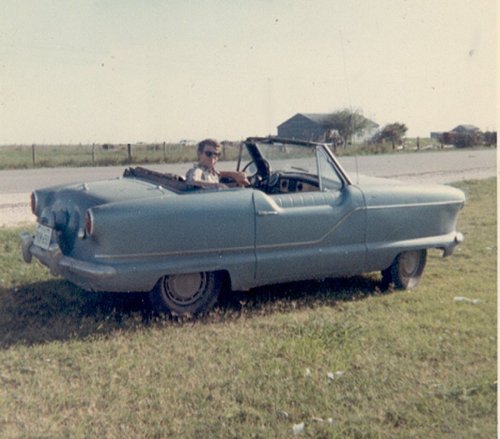
In 1967 I was working 5.5 days a week doing hard physical labor, taking night courses at the University of Houston and having an urgent, compelling romance with my wife-to-be living in Port Lavaca, 150 miles away.  Every minute I could spare I cranked up that Metropolitan and headed west to spend a few hours with her.  Even for a young man exhaustion built and I had a lot of difficulty staying awake while driving.

Picking up hitch-hikers was one of the ways I stayed awake.  Just having someone to talk to on that endless road was a major asset.

1967 was a year of serious racial tensions and polarization.  During the years immediately previous a gradual mind-opening of tolerance was manifested in a brief cliche, “I’ve got nothing against blacks, but I wouldn’t want my sister to marry one.”   For a while a person heard that at least once a week.

One day as I was leaving Houston I stopped for two black guys hitching at an empty stretch of highway.  As they ran up to the car they saw the University of Houston sticker on back and without moving to get in they took on a grinning, belligerant-but-joshing attitude.  “You go to U of H?”

Yeah.  Where you guys headed?”

Still no move to get in.  “We go to Texas Southern [a black university in Houston].   You a queer?  The last guy picked us up went to U of H was a queer.  Dumped us out here ’cause we didn’t want none of him.”

 “I’m not a queer.  I’m going to Port Lavaca to see my girl friend.”

They relaxed and squeezed into the Metropolitan, joshing about the klutzy car, how tight it was, how they didn’t want to be seen riding with a white guy.  “Anyone sees us riding with you they’ll think you’re queer.  They’ll think we’re letting you queer us.”

  As we reached highway speed I grinned and looked over at them.  “I’ve got nothing against queers but I wouldn’t want my brother to marry one.”

Both of them gagged on that, double-took me, one another, trying to decide whether to be offended.  Finally one of them guffawed.  “Hey man, that’s a good one!”  Held his hand up to be slapped.

Turned out to be fairly nice guys headed to Corpus Christi for the weekend.  The drive to Port Lavaca went by fast, once we decided we were just three young guys not needing to fight, fear, or scrutinize every word for some slur or threat.

Sometimes it’s easy to forget how much times have changed.

Old Jules

Discarded Jewelry

Ruidoso Steak-House
Glanced at her reflection
In the plate-glass window
New squash-blossom turquoise
Sassy Stetson
Patted 50ish blonde curls
And wished
They’d eaten at the casino
Where this didn’t happen
Wrinkled pretty nose
Don’t give him anything
He’ll just get drunk!” Stage whispered
To her Houston lady friend
As though he wasn’t there
She was right of course
Except the old man Mescalero
Was already drunk
He turned away
Then turned back and mumbled
Sing the Song of Life each day
Or when the time arrives you won’t know how
To sing the Song of Death.”

Old Jules


My Genes Apologize to Your Genes

It’s become popular during the past few decades for individuals believing they have come connection to a group of dead men judged by hindsight to have harmed other groups of dead men, to apologize for the offending activities of the deceased they believe they’re responsible for to living people it didn’t happen to.

My granddad had a cap and ball pistol he inherited from his granddad.  The butt had a lot of notches carved into it, which probably meant the weapon had been the instrument of the untimely deaths of a good many people who might otherwise have lived longer.

Genetic karma?

The man pictured above owned slaves in his lifetime, fought in wars and feuds.  He was the great-grandfather of the man below, my biological father.

But his daughter was the mother of this man:  Cole Younger.  Killer, bank and train robber, rider with Quantrill during the Civil War.

Meanwhile the same genetic pool was spreading itself across the continent like some sexually transmitted disease.   Cherokee, Choctaw and other tribes sneaked into the mix.

So here’s the problem: 

I want to make all this right with all the people in the gene pool derived from the dead people who were wronged by the dead people within my own gene pool.  I’d like to offer them an apology for the ugly stuff those who share my gene pool did to them.

For instance, the guy with all the hair on his face was part of the ugliness perpetrated against the Cherokee and Choctaw and the Trail of Tears.  Naturally, if I’m to rid myself of the overwhelming guilt I need to apologize to some group of living people those painful things did not happen to.  Cherokee and Choctaw, preferably.

But, whoooowah!  The people on the Cherokee and Choctaw side of my gene pool are me.  How can I convey my regrets to the Cherokee and Choctaw in me from the guilt-laden Anglo side?  And can I assume without fear of error that my Cherokee and Choctaw genes don’t include someone who did something to some other group I need to absolve?

Is there some living group of people out there seething over something that didn’t happen to them, but happened to their ancestors as a result of some offense committed by holders of the Cherokee Choctaw genes?

And what’s all that turmoil and guilt churning around in my gene pool doing to my cells and whatnot?

Just to be on the safe side and try to set things right I think I’d best give myself a present as a gesture to calm things down.  Yeah, I think I’ll eat an orange or banana.

Old Jules


Hats You Can’t Wear Sideways or Backwards

For a number of years I’ve watched people wearing ball caps turned backward and sideways, nobody raising an eyebrow.  I’m not sure why they do it because the purpose of the visor on a ball cap is to protect the nose from Old Sol’s battering.  But I gradually began to wonder if people just didn’t know which piece of a hat is the front, which is the side, and which is the back.

Eventually I decided to perform an experiment.  I carefully selected a hat for my next trip to town, determined to wear it backward all day, seemingly oblivious to that.  I wanted particularly to corner-of-my-eye observe the reactions of people wearing their ball caps backward and sideways.

My findings weren’t ambiguous.  From my first stops of the day I saw that people of every age and gender did double-takes, then attempted to surreptitiously call the attention of someone else to the fact I was wearing my hat backward.  If they had no companion they’d nudge a stranger to share it.  Not once did anyone sidle up to me and whisper, “You’ve got your hat on backward,” as they’d have done if my fly was unzipped.

If I’m wearing a hat when I eat in town I usually take it off a moment while I briefly acknowledge gratitude.  On this occasion the hat was on backward when I entered and took my seat, ordered my food and waited to be served.  The café was well populated and though I pretended to be reading I observed the hat was a subject of notice and concealed, smiling discussion at almost every table.

When the food arrived, after the waitress left, I removed the hat and bowed my head a moment, then replaced it, facing forward.  But, pretending to notice I’d put it on forward, I took it off, looked at it, then turned it backward again on my head, and began eating while still occupied with my book, watching the other patrons.

This brought giggles and laughter, even among those wearing ball caps turned backward and sideways.

My conclusion from this study is that people don’t know what is the front and what is the back of a ball cap, but they do know the front from the back of western-style headgear.  I believe the findings are important enough to justify more in-depth study by PHD candidates in anthropology, sociology and fashion.

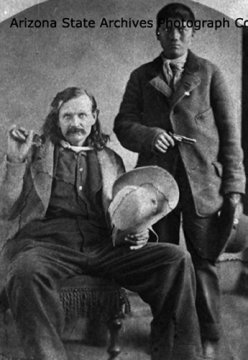
This is Jack Swilling, founder of Phoenix, Arizona, who died in prison awaiting trial for homicide.  He was posthumously acquitted.  However, Swilling’s hat is the issue here.  There’s a bullet hole in it, and it’s been ripped almost in half and sewn back together.  Swilling’s hat could be worn backward, forward or sideways and nobody at all would allow himself to notice.

Here are some other examples of non-ball caps that might be worn backward without concern:

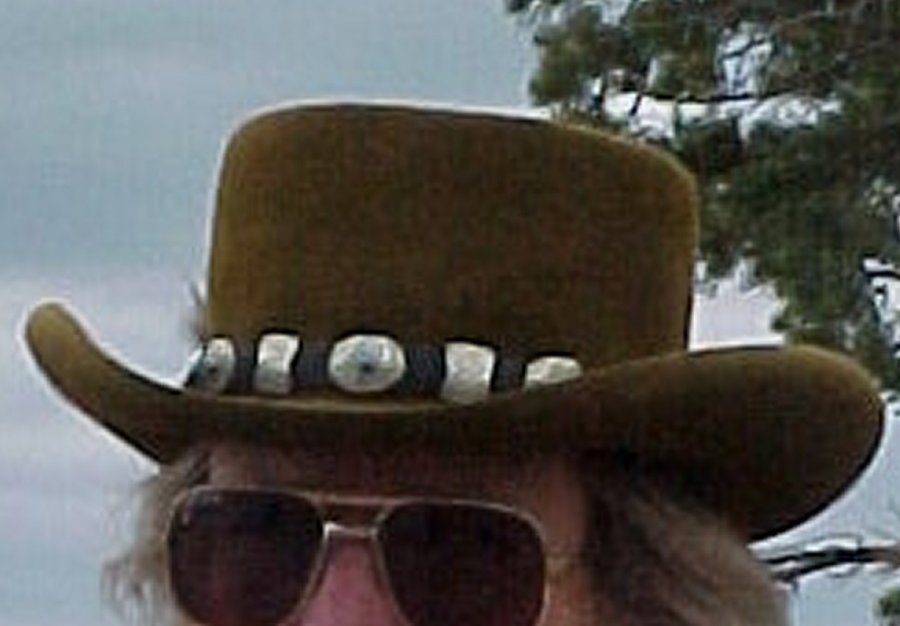
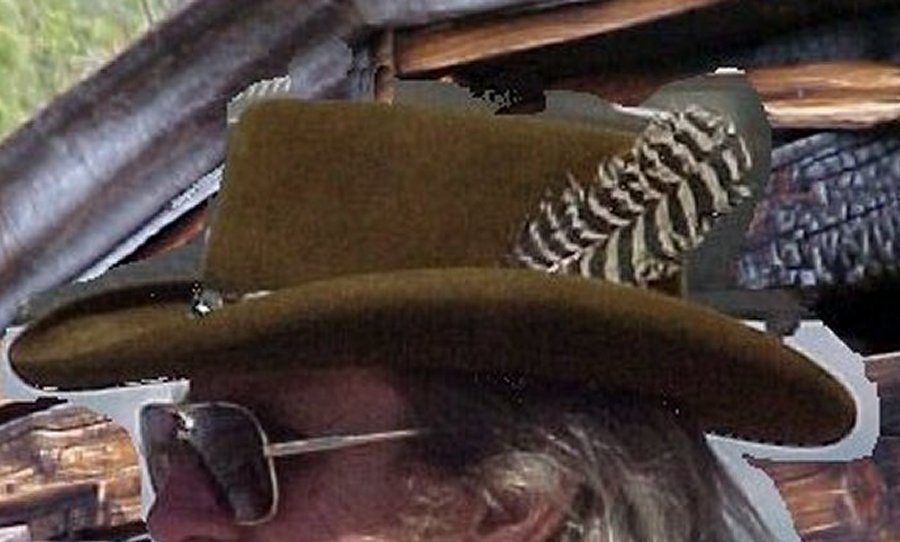
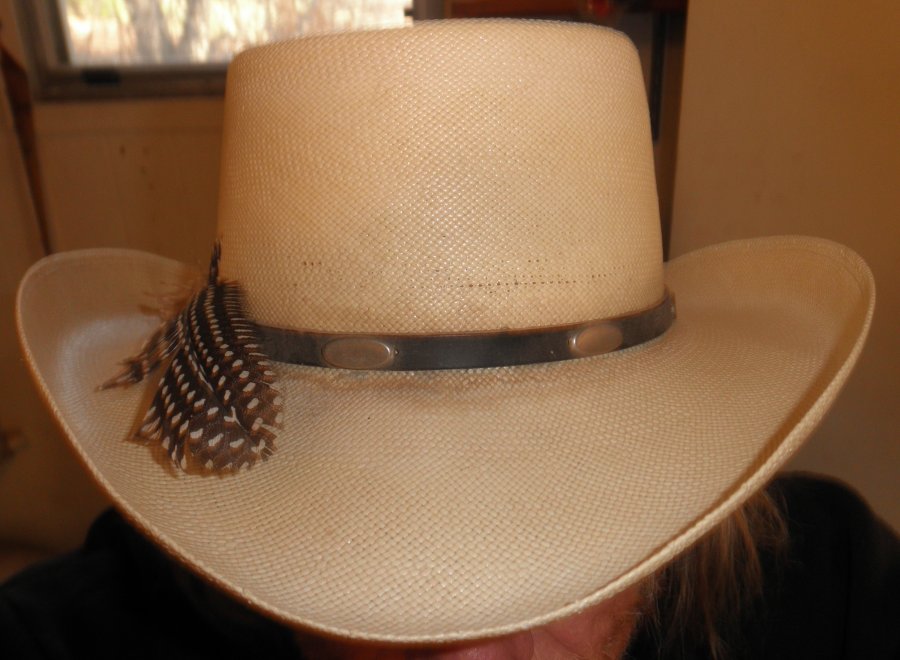
Manny Gammage of Texas Hatters made this hat for me in 1971, or 1972.  The style was dubbed The High-Roller.

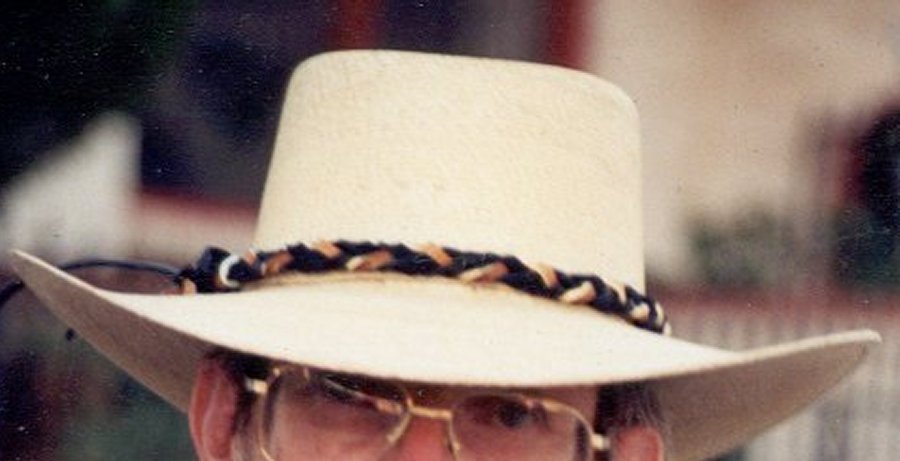
Here it is today with the original Mystic Weave band Manny put on it when he made it.  I’ll leave it to your judgement and the judgement of the PHD candidates whether it ‘works’ backward.

Other possible backward hats:

This pic was taken around 1976 worn conventionally.

Here’s the same hat today, backward.  Your call.

Straw John B. Stetson backward.

Felt John B. Stetson backward.  These last two and the next one are hats I inherited from dead men sent me through thrift stores and flea markets and arranged by the Coincidence Coordinators.

This one is Guatamala palm leaf bought for a dollar in a thrift store.  Maybe the best straw hat ever made.

Backward’s not much different.

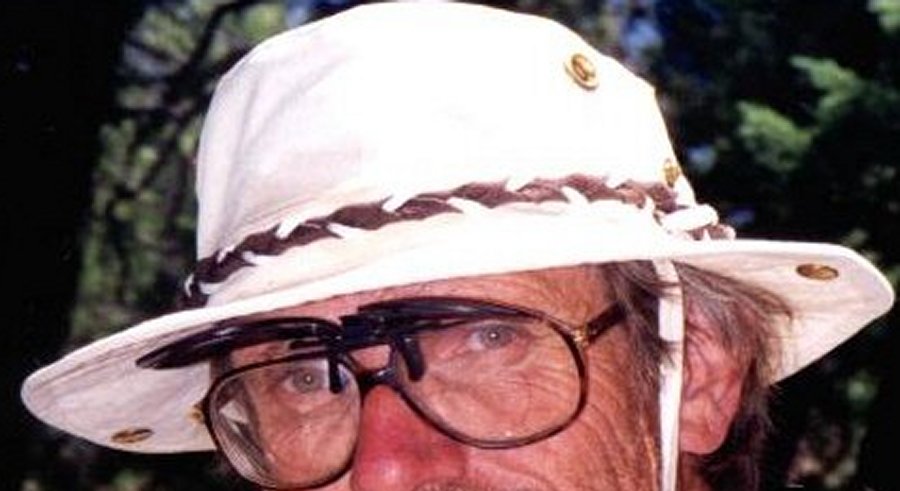
This is a Tilley, the best canvas hat made anywhere.  It can be worn backward or forward without fear.

This is a Tilley knockoff.  Can’t be worn backward or forward with pride.

Gale gave me this dead man hat he picked up somewhere.  Here it’s worn backward.  You can just never tell.

Old Jules

Carl Sandburg, Hats:

HATS, where do you belong?
what is under you?

On the rim of a skyscraper’s forehead
I looked down and saw: hats: fifty thousand hats:
Swarming with a noise of bees and sheep, cattle and waterfalls,
Stopping with a silence of sea grass, a silence of prairie corn.
Hats: tell me your high hopes.

Carl Sandburg, Hats are Sky Pieces:

Proudly the fedoras march on the heads of the some-
what careless men.
Proudly the slouches march on the heads of the still
more careless men.
Proudly the panamas perch on the noggins of dapper
debonair men.
Comically somber the derbies gloom on the earnest solemn noodles.
And the sombrero, most proud, most careless, most dapper and debonair of all, somberly the sombrero marches on the heads of important men who know
what they want.
Hats are sky-pieces; hats have a destiny; wish your hat
slowly; your hat is you.

Joe Cocker–You Can Leave Your Hat On


Lyle Lovett– Don’t Touch my Hat

The Forbidden Door of the Occupy Protests

The politico dependent portion of the US population has gone to enormous effort to keep the boundaries of dialogue within a poured concrete septic tank for an awfully long time.  Those boundaries have confined what can be expressed by the totally disfranchised, the largely disfranchised, the mildly disfranchised and the slightly disfranchised safely outside platforms for discussion.

Two dominant political parties, lobbyists, government contractors, financial institutions, pharmaceutical companies and the health industry, multi-national corporations and defense industry entitlement organizations have all found comfortable niches to work within that structure and prosper.  The symbiosis benefits the yin of government officials, both elected and hired-hands, and furthers the interests of the yang of anyone with the financial backing to feed the gargantuan resulting from it all.

Technology and communications at a grassroots level have conspired to abruptly allow voices outside that structure to be heard in the context of peaceful assembly by citizens with little in common besides their frustration with being locked outside the box.  Evidently enough of that dissatisfaction exists to spread their numbers over a surprisingly wide area.

Enough to set off the burglar alarms across the spectrum of the comfort zones of those accustomed to doing precisely as they wish quietly in warm and friendly waters.  Probably their best strategy would have been to ignore it all and almost certainly it would have gone away.  It would have faded without the tsunami of indignation the bought and paid for elements of mass communication rattling denouncement through every channel, calling out the cavalry, piling insult and venom on those peacefully expressing themselves in harmless ways.

This ‘movement’ wasn’t created by the seedlings who began it.  The Occupy Wall Street movement would have died on the vine if it hadn’t been nurtured and fertilized by the shrill cries of the safe and comfortable denouncing it.  And by continuing to do so they provide the life blood for future expansion.

The protests on wall street are those coming from inside the buildings.  Someone’s opening a door they believed they had locked.

Me thinks the lady [inside the buildings] protests too much.

Old Jules

Desert Emergency Survival Basics

You survival and preparedness-oriented readers might find something you didn’t already know in here to be useful.  The Introduction section to the book Desert Emergency Survival Basics explains my purposes for writing it better than I can today:

The potential range of human experience includes finding ourselves in unanticipated dangerous situations. Most of those situations have been examined minutely and described in print in the form of survival manuals. Desert survival is not an exception. Excellent books are available to explain primitive survival in the desert southwest duplicating lifestyles of Native Americans a thousand years ago. That is not the intent of this book.

A few decades ago I had an acquaintance with a man named Walter Yates. Walter had the distinction of surviving a helicopter crash in the far north woods by jumping into a snowdrift before the impact. He managed to survive winter months with almost nothing except the clothes on his back when he jumped.

Walter’s experience was a worthy test of human potential for emergency survival in extreme conditions. The margin for error was microscopic. The reason he survived rested on his ability to quickly detach his mind from how things had been in the past, how he wished they were, and accept completely the situation he was in. He wouldn’t have made it out of those woods if he couldn’t rapidly assess his new needs and examine every possibility of fulfilling them. “It’s all in the mind,” he once told me.

The margin for error in the desert is also narrow. That margin is dehydration. Extremes of temperature are also a factor, but they are more easily managed than the needs of the human body for water. Anyone who survives an unanticipated week in desert country did so by either having water, by carrying it in, or finding it.

Over the years I’ve followed a number of search and rescue accounts and discussed the issue with searchers. The general thinking among those workers is that a person missing in the desert southwest should be found or walk out within three to five days. After three days the chances for live return spiral downward. Returns after five days are lottery winners. When a missing person isn’t found within a week, it’s usually because he’s been dead for five days.

This book is to assist in avoiding situations that lead to the need to survive those crucial three days, and to provide the basics of how to walk out and how to find water in the desert southwest. If you need the emergency information here it will be because you became lost, stranded by mechanical failure, or physically incapacitated. I won’t address the bugs and plants you might find to eat. If you have water you’ll survive without eating until rescue.

When this book was written I had a close association with New Mexico State Search and Rescue (SAR). I was also writing a book about a lost gold mine at the time. The State Search and Rescue Coordinator (SARC) knew about the book. I had a special arrangement with him because I was spending a lot of time in remote canyons searching. If something delayed me there I didn’t want them to send out the SAR guys to look for me.

One day in the coffee-room SARC asked me about my progress in the search and the gold mine book. I explained the lost gold mine search to him and how the information available in the past was sketchy.

“So you’re writing a book that’s likely to cause flatlanders to go out into the desert searching for this thing?”

I thought about it a moment before I answered. “It might. A lot of people would have tried anyway, but this book might bring in some who wouldn’t have come otherwise.”

SARC glared at me. His whole world revolved around  flat-landers getting lost in the mountains or desert. Several times every month they’d scramble the forces to try to locate someone misplaced. Sometimes it’s a brain surgeon from Houston who got himself mis-located mountain climbing on the east face of Sandia Mountain within sight of Albuquerque . Other times a physicist from California gets off the pavement in the desert and loses his bearings. Sometimes SAR arrived in time to save their lives. New Mexico back country can be unforgiving.

“If you’re going to publish a book that will take a lot of idiots out where they can get into trouble you’d damned well better include some warnings on desert survival and how they can stay out of trouble! I don’t want to spend the next five years dragging the bodies of your readers out of the arroyos in body bags.”

That conversation ultimately resulted in this tome.

Over time it’s been expanded and rewritten numerous times to eventually become what’s posted here. Here’s the link, but there’s a new page for it on the navigation bar at the top of the page.
Desert Emergency Survival Basics

Old Jules


Sons Of The Pioneers – Cool Water

Misplaced Worries

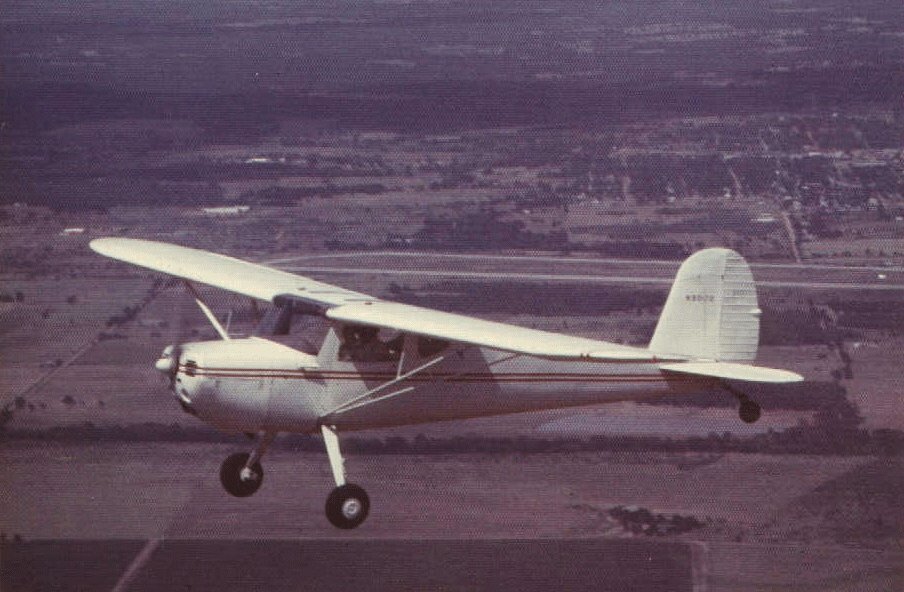
Writing an earlier y2k entry got me thinking how often we humans tend to worry about the wrong things.  Reminded me of a guy I used to fly with a bit during the late 1970s named John Rynertson.  John was a man who flew a blue Cessna 120.  It was a lot like the 140 Helldragger I flew (pictured above).  But he was also a man prone to introduce himself to people around the Killeen, Texas airport as “one of the best pilots around”.

Naturally there were those who didn’t favor his self-introductions involving pilot skills.

John wasn’t a man who could claim a lot of friends.  But he did have a wife almost as desirable as that 120 he flew.  So pretty, she was, that whenever he wasn’t flying, John was worrying about her.  He fretted over what she might be doing when he was off flying, or when he was almost anywhere he couldn’t keep an eye on her.  Which was a good bit of the time.  Old John just worried himself silly about that woman.

Then one day he was flying with some warrant officer from Fort Hood and managed to get more airspeed than that old airframe was willing to put up with.  The 120 wasn’t rated for snap rolls.  But being one of the best pilots around, John just naturally figured they weren’t referring to him when they rated the airplane.  Wings came spang off that mama at about 3,000 feet above the ground.

Turned out John didn’t need to be worrying about what his wife was doing.  If he was going to worry, he needed to be focusing on learning to stay alive and fly at the same time.

Whatever his wife might or mightn’t have been doing while he was alive, she certainly did it after he was grease scattered over an acre of ground.

Similarly, I recall all those kids who used to spend all their time worrying about getting drafted for Vietnam, then overdosed on something and ended up corpses right here in the good old US of A with never having been fired at in anger.

A person needs to use a lot of care, consult an internal map, look at the compass and GPS, picking things to be worried about.  Otherwise he’ll spend all his time worrying about things that don’t happen while the things that do sneak up behind him and tap him above the ear with a ball-peen hammer.
Old Jules

Nat Shilkret & The Victor Orchestra – Lucky Lindy
http://youtu.be/kflQSovXfw0

Make my day, stranger!

I don’t know when we began giving power to strangers. I think it’s a relatively recent phenomenon. Maybe we watched too many Westerns during our formative years, learned from those steely eyed men in saloons that what strangers think about us is worth a gunfight.

Nowadays the extreme version happens in city traffic. Someone shoots someone else a bird. Next step is an exchange of gunfire.

Here’s how the scenario runs:

Some complete stranger pronounces a bias we don’t share.

Our thought response:

“This offends me.”

That thought process is driven by a deeper one:

“I want to be offended. I give this stranger the power to offend me. I assign enough value to what this stranger says, or believes, to allow it to trigger a negative emotional path within me. What this stranger says or believes matters.”

We know better.

Strangers cut too wide a swath in their traits to have any real value. They span the breadth of potential human biases. But even knowing this we give them the power to ruin a moment.

I say this is a recent phenomenon because humans of the past behaved differently. Our forefathers didn’t care what Brits thought about us because they recognized that Brits live within an entirely different set of interests.

Even today a Zuni doesn’t care what a Navajo thinks about anything because from the perspective of a Zuni, Navajos don’t have anything valid to contribute to any meaningful discussion. Navajos live in a different reality from Zunis.

Both Navajos and Zunis choose to allow themselves to be offended by the opinions of Anglos and Hispanics, but there’s a reason. They’ve found taking offense is a means of gaining power over those groups.

But neither a Zuni, nor a Navajo would bother being offended by the thoughts and words of the other because to each there’s nothing the other might think that carries the weight of validity.

Not long ago the same was true of people almost everywhere. The people in the town where I was reared cared about the opinions of people within that town, but they couldn’t have cared less what the people in Clovis, twenty miles away thought. It was generally understood that Clovis people were stupid and might think and say anything.

Today we care what everyone thinks about almost everything. We pretend to believe what they think carries value, but we know better. We just like the feel of being offended..

Make my day, Stranger! I’m handing you the power to offend me.

This leaves me cold.

Human opinion hasn’t held up well under scrutiny. It’s worth about what it costs. Mine aren’t that reliable and I haven’t found those of others to be any better.

Instrumental Theme to Dirty Harry:
http://youtu.be/ZDKRD2q3bYo

Too Much Blame or Praise

Visiting blogs since starting this one has been an unexpected learning experience. The general impression that almost everyone is concerned about the state of the world and the nation wasn’t a surprise.

But the fortified positions, the polarization, the nagging thought that a lot of people would gladly enforce their viewpoints on others at gunpoint if they had the option, is troubling if accurate. The middle ground, the concept of a loyal opposition, even the concept of people still potentially being okay if they have different political, religious, differing gender viewpoints just isn’t out there anymore. No live-and-let-live in the mix.

The level of rancor between opposing opinions approaches a level where it wouldn’t be too shocking if, say, a 9/11 happened in an environment limiting US victims to a particular political or religious bias, and sets of blog dialogues appearing to express:

“What the hell! They were all Tea-Baggers!”

Or,

“What the hell! They were all pinko liberals!”

Or Democrats, Republicans, Muslims, Catholics, Baptists.

There are already posts on blogs I visit saying, “Let God sort them out.”

I can’t help wondering whether I’m the only one troubled by this.

I used to know a guy, a good man, who was also an alcoholic of the sort you’d rather not be too close to. Jay was his name, an ex-Lieutenant Colonel in the US Army Air Corps, B24 pilot of um-de-umph hundred bombing missions over Germany during WWII. War hero.

By the mid-1960s Jay had a drinking problem bad enough to be placed repeatedly into the hands of the Texas Alcoholic Rehabilitation Commission to dry out. Finally, in those days a bright new shining light among the mental health medicos was the pre-frontal lobotomy, was chosen as the tool of choice for curing what ailed old Jay….. But the unfortunate side effects were that a lot of him ceased to be Jay.

But those wise medicos knew what was best for him, they’d read all the recent advances and articles, so they strapped him down to a gurney and inserted electrodes on his temples and shot the juice to him. Several times.

I’d heard about all this, thought it was fairly awful, but what the hell. A few months later I was among a group of young folks friends of his who got invited to spend a day on Galveston Bay cruising around in Jay’s cabin cruiser down there.

Jay was wearing a tee-shirt that proclaimed, “I’d rather have a bottle in front of me than a prefrontal lobotomy”. And he did.

It finally killed him, alcohol, the lobotomy didn’t change that…. but he always believed, afterward, that it was a fairly shabby thing for society to have done to him, that lobotomy. Deprived him of his right to make his own mistakes. At least, it attempted to.

If you boil all that down and scrape the leavings off the bottom of the pot, that’s about the way I feel about the likely outcome of the undercurrents at work in this country.

Someone’s going to get the upper hand, one side or the other.

The ones left holding smaller bag might need a bottle to soften up the resulting enforced prefrontal lobotomies and attitude adjustments.

A Great Cultural Revolution

If old Jay were alive he’d probably buy a tee-shirt.

Old Jules