Tag Archives: Reflections

Khe Sanh – Two Worthy Reads – Book Reviews

The Hill Fights – The First Battle of Khe Sanh, Edward F. Murphy

Considering he also authored Semper Fi, – Vietnam, and is/was probably a fairly gung-ho man, Murphy does a surprisingly workmanlike job depicting what actually led up to the Khe Sanh bloodbath, why became a bloodbath, and where the responsibility for it having become a bloodbath clearly rested.  All without pointing fingers of blame.  He just describes events as reported by the people involved in them.  For instance:

“Fourteen of the eighteen patrols Wilder sent out early in July found NVA, several within mere minutes of being inserted into their patrol areas.  He learned from other intelligence sources that the North Vietnamese 324B Division had moved south of the Ben Hai River with the mission of conquering Qang Tri Province.  When Wilder dutifully reported this to higher headquarters, he unwittingly stepped into the fray raging between General Westmoreland and General Walt.

“Within days General Walt, General Kyle, and Major General Louis B. Robertshaw, commander of the 1st Marine Air Wing, arrived at Wilder’s headquarters at dong Ha for a personal briefing from Wilder.  As soon as Wilder mentioned the presence of the NVA 324B Divbision, Robertshaw rudely interrupted him.  “You’re a liar,” Robertshaw accused Wilder.

If any single incident could sum up what happened to the unfortunate grunts getting themselves blown apart at Khe Sanh over the next couple of years, that probably does it.  What happened to the US lower-grade officers and enlisted men throughout the Vietnam experience, for that matter.

It echoes and it rhymes.  The M16, newly issued and fired for familiarization before being taken into combat.  Jams.  Jams.  Jams.  So the cover story becomes, “You’ve got to keep it CLEAN!  If you don’t keep it clean, it jams.  Your own fault, marine!”

A few weeks later squads, platoons were being slaughtered by the NVA at Khe Sanh.  Found afterward with jammed M16s, unable to return fire against the enemy.  Marines complained, the high command accused them of lying.  Of not cleaning their weapons.  The slaughter continued until a letter home from a dead marine ended up being read on the floor of the US Congress and an investigation began.

The M16 was designed around a cartridge containing a particular propellent.  But a major military contractor with the right connections offered a cheaper cartridge because it contained a different, more inexpensive powder.  Millions of rounds purchased, all defective.  Probably hundreds, maybe thousands of US servicemen lost their lives because they were provided weapons incapable of returning fire without jamming.

Friendly fire?  Khe Sanh began with a US air strike dropping napalm several miles off target on the friendly village of Khe Sanh, killing 250 villagers and injuring hundreds more.  Following that it was helicopter gunships, fighter aircraft and artillery strikes opening up on ground troops by mistake. 

Air forces all over the world from early during WWII provided their planes with IFF [Identify Friend/Foe] radio transponders.  Somehow the concept never seeped down to include ground troops being protected from friendly fire.  As late as Gulf War 1 it continued to happen.  And at Khe Sanh it happened a lot.

Then there were the commanders who just made lousy choices for whatever reasons other than the well-being of the troops they commanded.  “You guys aren’t likely to find anything up there.  Take off your flak jackets and leave them down here.”  Twice.  Two separate occasions.  Two bloodbaths.

There was no overall strategy for US troop involvement in Vietnam.  The curse of the undeclared, presidential wars from WWII onward.  The US high command couldn’t agree among themselves what the roles of the troops under their commands should be and how they should perform those roles.

Despite all this, The Hill Fights – The First Battle of Khe Sanh, Edward F. Murphy doesn’t dwell on this side of things.  He simply provides a detailed history, day-to-day of one of the countless debacles of the 20th Century quickly forgotten when another president needed some other injection of excitement to keep the voters going to the poles, the flags waving, and the patriots pounding their fists on their chests.

[Incidently, there’s a good photo section in the book.  I was surprised to see my old friend,  Mel King as a young marine standing unidentified next to a Company Commander who’d just gotten a few of his men out alive and unhurt.  Mel must have gotten his injuries later.]

—————————————————

A Marine at Khe Sanh, by John Corbett.  A young marine just out of basic training arrives in country at Khe Sanh and spends the next 77 days living in a foxhole, almost constantly under mortar, artillery and rocket attack.  This is his diary. 

Kennedy, Johnson, and Nixon never got around to hanging their heads in shame for the young men the dead and crippled as by-products their Vietnam presidential military adventures.  But then, I don’t suppose any of the other, later ones have, either, for theirs.

After all, a lot of the right people made one hell of a lot of money from those wars.  You can’t make an omlette without breaking some eggs.

Old Jules

Flux Transfer Event Topology

http://science.nasa.gov/science-news/science-at-nasa/2008/30oct_ftes/

Good morning readers.  I’m going to have to kick this around with Old Sol while I’m coaxing him up this morning.  Meanwhile, I’ll tell you it’s nice seeing something coming out of NASA occasionally a person could consider useful and exciting.

The whole 2008 business about the 8 minute cycling had completely escaped my notice until I came across this at http://spaceweather.com/this morning.

HIDDEN PORTALS IN EARTH’S MAGNETIC FIELD: A NASA-sponsored researcher at the University of Iowa has developed a way for spacecraft to hunt down hidden magnetic portals in the vicinity of Earth. These gateways link the magnetic field of our planet to that of the sun, setting the tage for stormy space weather. [video]

Then, a bit of searching turned up this:

Magnetic Portals Connect Earth to the Sun

 http://science.nasa.gov/science-news/science-at-nasa/2008/30oct_ftes/

“We used to think the connection was permanent and that solar wind could trickle into the near-Earth environment anytime the wind was active,” says Sibeck. “We were wrong. The connections are not steady at all. They are often brief, bursty and very dynamic.”

Several speakers at the Workshop have outlined how FTEs form: On the dayside of Earth (the side closest to the sun), Earth’s magnetic field presses against the sun’s magnetic field. Approximately every eight minutes, the two fields briefly merge or “reconnect,” forming a portal through which particles can flow. The portal takes the form of a magnetic cylinder about as wide as Earth. The European Space Agency’s fleet of four Cluster spacecraft and NASA’s five THEMIS probes have flown through and surrounded these cylinders, measuring their dimensions and sensing the particles that shoot through. “They’re real,” says Sibeck.

Now that Cluster and THEMIS have directly sampled FTEs, theorists can use those measurements to simulate FTEs in their computers and predict how they might behave. Space physicist Jimmy Raeder of the University of New Hampshire presented one such simulation at the Workshop. He told his colleagues that the cylindrical portals tend to form above Earth’s equator and then roll over Earth’s winter pole. In December, FTEs roll over the north pole; in July they roll over the south pole.

Sibeck believes this is happening twice as often as previously thought. “I think there are two varieties of FTEs: active and passive.” Active FTEs are magnetic cylinders that allow particles to flow through rather easily; they are important conduits of energy for Earth’s magnetosphere. Passive FTEs are magnetic cylinders that offer more resistance; their internal structure does not admit such an easy flow of particles and fields. (For experts: Active FTEs form at equatorial latitudes when the IMF tips south; passive FTEs form at higher latitudes when the IMF tips north.) Sibeck has calculated the properties of passive FTEs and he is encouraging his colleagues to hunt for signs of them in data from THEMIS and Cluster. “Passive FTEs may not be very important, but until we know more about them we can’t be sure.”

There are many unanswered questions: Why do the portals form every 8 minutes? How do magnetic fields inside the cylinder twist and coil? “We’re doing some heavy thinking about this at the Workshop,” says Sibeck.

If NASA’s going to be throwing money around like a drunken sailor it’s good to know sometimes it hits something worth knowing.  Even a blind hog finds an acorn now and then, I reckons.

Old Jules
Harmless Lunatics, Constraints and Contracts

Good morning readers.  Thanks for coming by for a read this morning.

Back during the last century I used to know a guy in Socorro, New Mexico named Dennis Tolliver, who’d dropped in from some other century and could never quite get the hang of things.   He ran a successful business, worked hard, was considered trustworthy in most ways, even though his business involved selling used automobiles.

In that part of the country everything’s located far enough from everything else to argue compellingly that a person needs a vehicle.  Among the people who went to Dennis to fill their vehicle needs were those who’d proven themselves unworthy of credit.  But Dennis didn’t mind.  He’d sell anyone a car and if need be, he’d carry the note himself.

But even though Dennis was a local legend, even though everyone who bought a car from him knew precisely what to expect, people sometimes wouldn’t make their payments.  They knew Dennis didn’t mind.  He didn’t worry when they fell behind three months.  He’d spot them stopped for a red light, walk up and throw them out onto the pavement, and drive the car back to his lot to sell it again.

A few years before I became acquainted with him Dennis got himself a felony record for armed robbery and resisting arrest.  He was on his way through Grants, New Mexico one Sunday morning and decided he wanted some booze.  Stopped into a grocery store, went through the “NOT SOLD ON SUNDAY” ribbon blocking off the alcoholic beverages section, and took his bottle up to the register.

Clerk:  I’m sorry.  I can’t sell that to you.  I’d lose my job.

Dennis:  Why?

Clerk:  It’s against the law.  They’d fire me.

Dennis:  Hold that thought.

Dennis left the bottle on the counter, went out to his car and brought a Government 1911 Colt .45 out from under the seat.  Went back inside, showed it to the clerk and racked a round into the chamber.

Dennis:  Okay.  The price on that bottle is $7.95.  Here’s $20.  I’m taking it.  You do whatever you need to do.

Dennis settled into his car and took a few swigs while he watched through the store window as the clerk called the cops.  He was on the tarmac opening a can of whupass on the first one that showed up when two more arrived and he was hauled off to the slammer.

As nearly as I could tell the felony record never bothered Dennis, never influenced his behavior in any way.  The police were prone to leave him alone, which was appropriate, because Dennis was a fundamentally honest man.  He lived by his own contracts and promises, and he gave others the benefit of a doubt when it came to living by theirs.

But I’ve digressed.  I was actually going to write a bit about my own lunacies, my contracts with my cats, with my chickens, and the vice grips of necessity and options a person can find himself examining.  Even if he’s a lunatic, a hermit, and lives close to the bone.

At least I never had to be Dennis, or someone else.

But I guess I’ll just have to leave you with Dennis to think about and I’ll mull my own business over in private.

Old Jules

Art Work Update from Jeanne

Last week when I finally cleared the decks and got out all the pens again, I realized how critical it seemed for me to start drawing every day. In the meantime I came across this little book while I was shelving at the library:

It describes Resistance and how to combat it. Those of you who are doing creative work already know what I’m talking about. But knowing the characteristics of Resistance and having a plan to fight it helps. I’m going to have to own this book just in case I ever see myself getting away from drawing again.

So here are a few photos for you showing what I’ve been working on.These aren’t scans, so the photo angles will be a bit off.

Although I find the asymmetrical ones very fun to work on, I also demand that I retain my ability to do the symmetrical ones free-hand. All those curlicues in the middle area compensate somewhat for where it got off track. I hope.

I rarely get out a ruler, but on this one I did for the next stage. I just used it to mark dots where I wanted to start those outside edge designs. Once I had one that I thought was round, and when I got a circular mat cut for it, it turned out it wasn’t round at all. So now I’m more careful about that, either making sure it’s round or not getting round mats!

Here’s one more from the end of last night:
I don’t think it’s finished, but at this point it’s definitely time to walk away and not look at it for a few days.

However, I couldn’t help bringing it over to Paint Shop Pro to see what I could come up with:
Love it!

Here’s a close-up of an old one that I had already matted about 6 years ago. I had pens that weren’t as good as the ones I use now, so I’m brightening it up with better colors:
I guess that center motif has always been a favorite of mine. I need to break away from that.

Just for fun, here’s a photo of the above taken under a black light:

A photo of the work table. My son took a card table and cut off the legs so it’s only about a foot high.  I sit on a cushion on the floor. I have a clamp-on light and a clamp-on magnifier. It works great since I can move it around easily and can use it for anything up to a couple of feet square.
Oh, I also worked on that long strip one lying across the pens. But I’ll show you that one again when it’s finished.
I hope everyone has a good creative day!
Jeanne


Recapping the Lost Gold Mine Search

I think I’ve posted most of this before in earlier posts, but for those who weren’t here to read it at the time, I’ll do it again. 

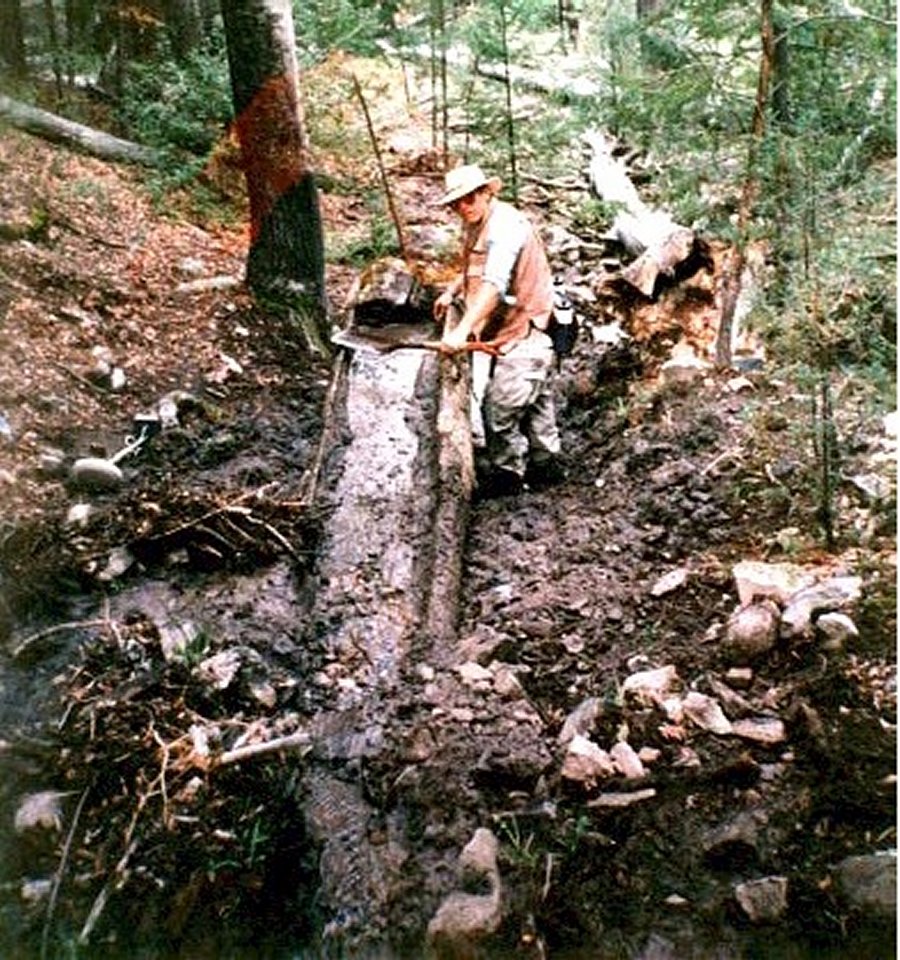
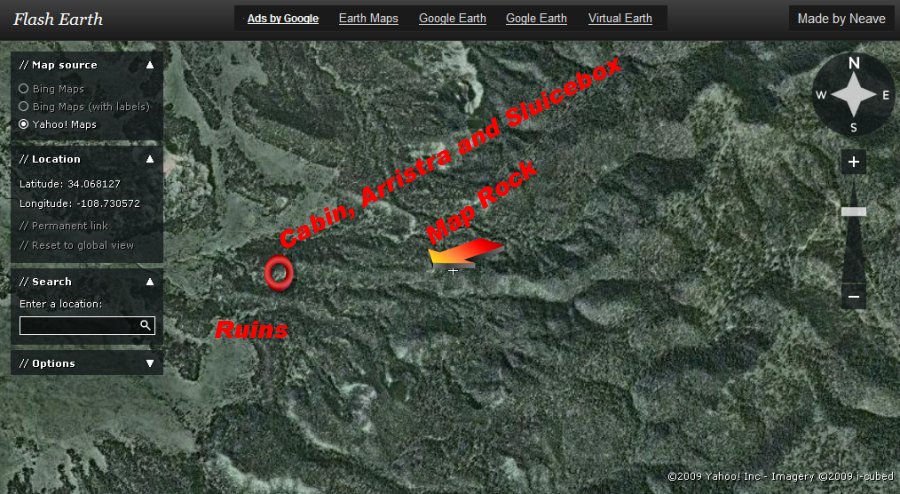
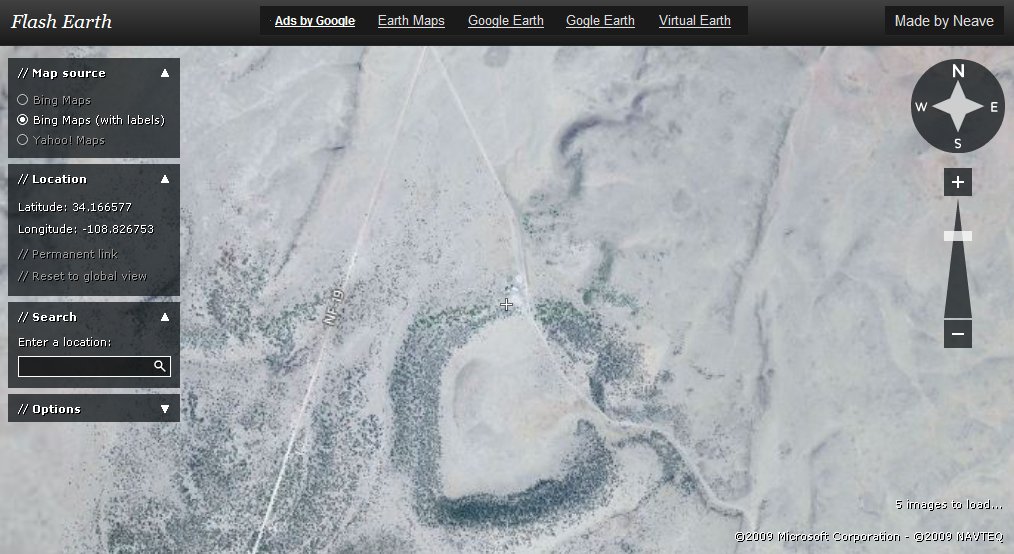
A longtom sluicebox axed out of a 3 foot diameter log, a spring 75 feet above the sluice, an arrastra below.  I’d been walking past the arrastra a few years before I recognized it for what it was.  One day I was leaning against a deadfall aspen getting my breath, gazing at it, when it dawned on me that 500 pound rock had a reason for being shaped the way it was.

A burned out cabin ruin with an aspen tree growing out of the inside, bear claw marks 12 feet up, 3 hand forged nails. 

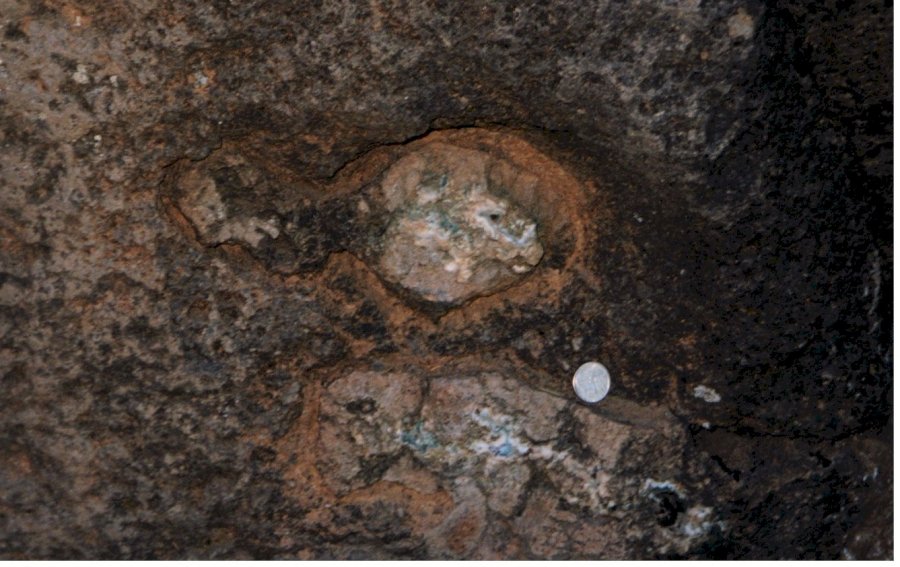
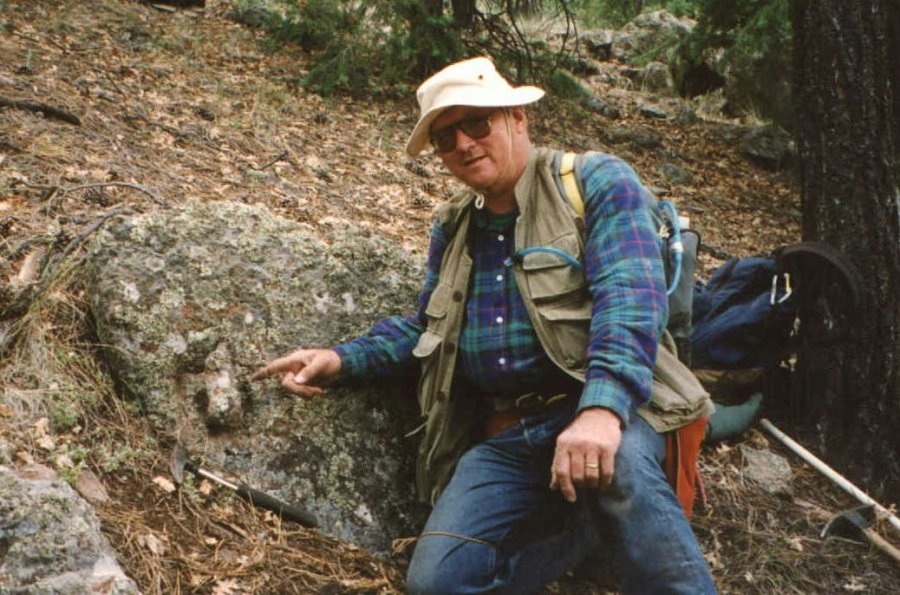
A mysterious map chiseled on the face of a 300 pound rock surface depicting the exact layout of the canyon, the cabin, the waterfall, all so accurately depicted the person had to have scrutinized the layout from the mountaintop, then scratched it on this stone 600 vertical feet below and half a mile away. 

The rock was carefully placed on the canyon wall above eye-level so it was easily seen, but only by someone looking up.

Dozens of places upgrade where the man worked the quartz outcroppings.

Symbols carved into rock faces long ago on the upper-west face of the mountain below the most heavily worked quartz outcroppings near the crest.  None of it made a hell of a lot of sense.

One day I was climbing around up there with my lady friend of the time, Jan.  Following the guy around, trying to figure out what the hell he was doing and why.  We came to a rock face with a quartz outcropping he’d been working, but stopped, obviously half-done.  Not like him at all.

I stepped back a few paces studying it, mildly confused.  Glanced at the ground at my feet and there lay an arrowhead, quarter-inch of the point broken off.  I believed I was looking at the reason he quit before the job was done.

But that long tom and that sluice were testimony the man [or men] working there were in a production mode.  They weren’t prospecting, they were processing ore.  Scrapings from the bottom surface of the sluice, burned and panned didn’t turn any signs of anything heavy.  Downstream just below the V-bottom of the canyon went 100 yards or so to a stricture might have once had a beaver dam, landslide, something clogging it so’s there was a flat bottom with maybe 7-8 feet of sediment.  Along one side a channel had been cut going through the sediment, but not all the way to the bottom of the V.  It would have been a major job getting to the bottom for sampling, never got around to it.

But from the bottom of the existing channel the pans showed a huge amount of heavy, heavy, heavy bead-like material, rusty brown.  Eventually spectroscopic assays showed what was mentioned a couple of posts ago.

And there was considerable more of it in other nearby canyons.

But we never found the source of whatever the guy was running through that longtom, what he was crushing with the arrastra.

Old Jules
The Undone, the Undead and the Unexpected

I should have named those claims the Onyx.  Everything about them, start-to-finish was Onyxpected.

Keep in mind, I was looking for evidence of a fairly specific group of legendary dead men who met their demise in the early 1860s.  Not just any old group of dead guys.  Special dead guys, though mostly nameless.

I’d been compiling, studying the versions of the legend, of accounts handed down by searchers, survivors and a lot of lies I couldn’t afford to judge without checking them out.  The evidence I was looking for was a burned out cabin ruin, maybe a sluicebox, something akin to a waterfall.  A pair of bare peaks roughly 20 miles to the north the legend called, ‘Piloncillos’.  Baldies.  Possibly a formation resembling the head of a bear.

Keith and I had been bouncing around that country for a couple of years, chasing dead men.  The Zuni Mountains, Santa Rita Mesa, Largo Canyon, Red Hill caldera, Pelona Mesa, the Sawtooths.  We saw a lot of fine real estate,  had plenty of adventure, but we hadn’t found anything to nail theory to anything on the ground.

Eventually I began assembling fragments of various versions of the legend, each at least mildly supported by some other version.  Began drawing circles at ten mile intervals outward from somewhat verifiable points, overlapping circles.  I ended up with a slice of orange peel on a map where the circles converged.   On a 7.5 minute USGS topo I counted 32 canyons within the orange peel that seemed to have possibilities.  Numbered them 1-32 with little stickers on the face of the map.

Keith was tied up in Santa Fe a day-or-so longer than I was, so I headed out, intending to cross some canyons off the map before he arrived, meet him at a camp on Elk Plateau when he got there. 

But canyon #3, I learned from a Hispanic rancher I met when I went to cross off Cabin Springs [canyon #2], had a burned out cabin ruin and something he described as a water-trough cut with an axe out of a 3′ diameter tree.  Late evening I arrived and set up camp on Elk Plateau to wait for Keith, me in a state of high anxiety.

But I’ve digressed. 

I was going to tell this story in full, but leading into the subject of platinum, palladium, rhodium, iridium and osmium.  How, in those days a person would have a hell of a time even assaying for them, how if located, they had to be sold through the Platinum Consortium, which wasn’t interested in buying.  How the melting temperature of the stuff makes a serious challenge of smelting it, in any case.  How it takes a special kiln, a special crucible to do anything at all with platinum.

How the New Mexico Bureau of Mines assured me our expensive spectroscopic assay was meaningless, a scam.  “There’s no platinum in New Mexico,” they assured me.  How at the precise time they told me that piece of fiction, the Platinum Consortium was mining the tailings of 19th Century gold mines near White City, New Mexico, for platinum they didn’t want when those mines were active, maybe didn’t even recognize.

How Sunburst Mining Company opened an operation mining platinum, gold and silver in microscopic quantities on the edge of a caldera within view of the peak above my claims a couple of years later.

I’d figured on telling you how they employed over a hundred people over there for a few years, got crosswise with New Mexico Department of Environment, ran into financial problems in other mining locations, went kaput.

And I was going to tell you how Keith and I found a canyon of maybe the weirdest geology I’ve ever come across.  Named it No Name Canyon.

But hells bells, I reckons I’m going to have to save that for another day.

Meanwhile, if you’ve missed the other background on all this you can find it by exploring the tags and whatnot or searching the site for ‘lost gold mine’.

Old Jules

Thoughts on the 1977 School Bus as a Cat House

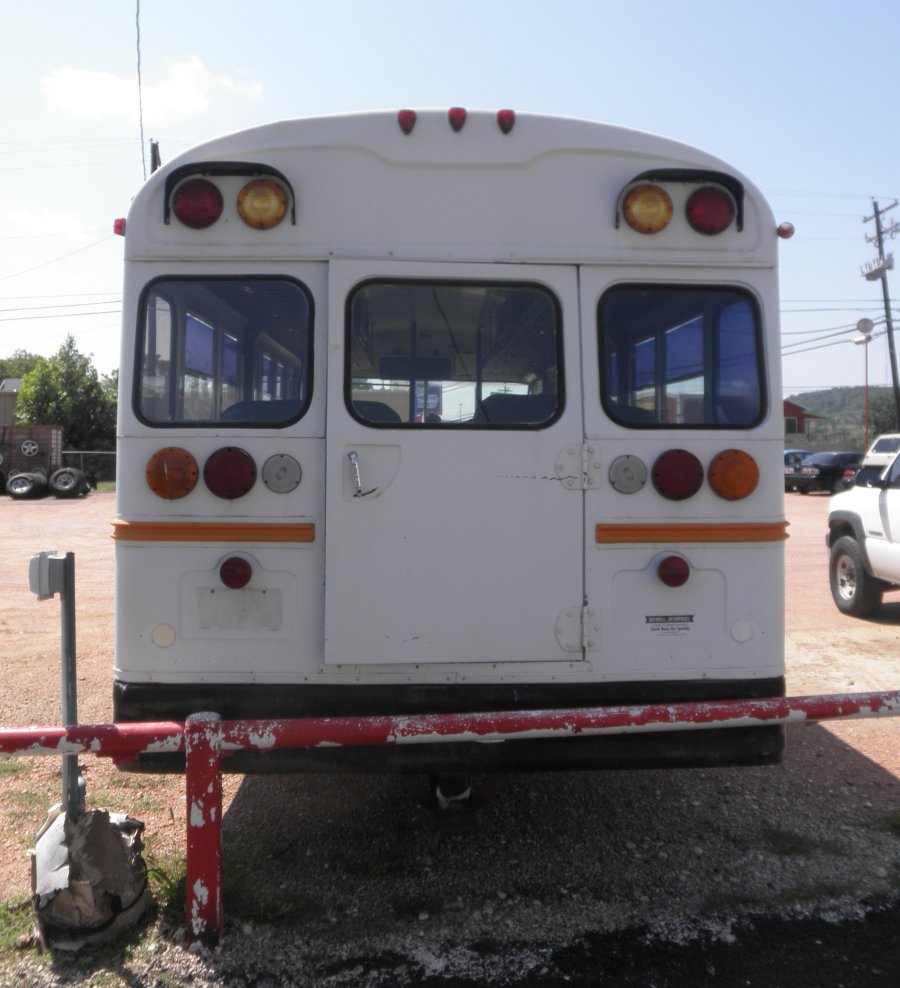
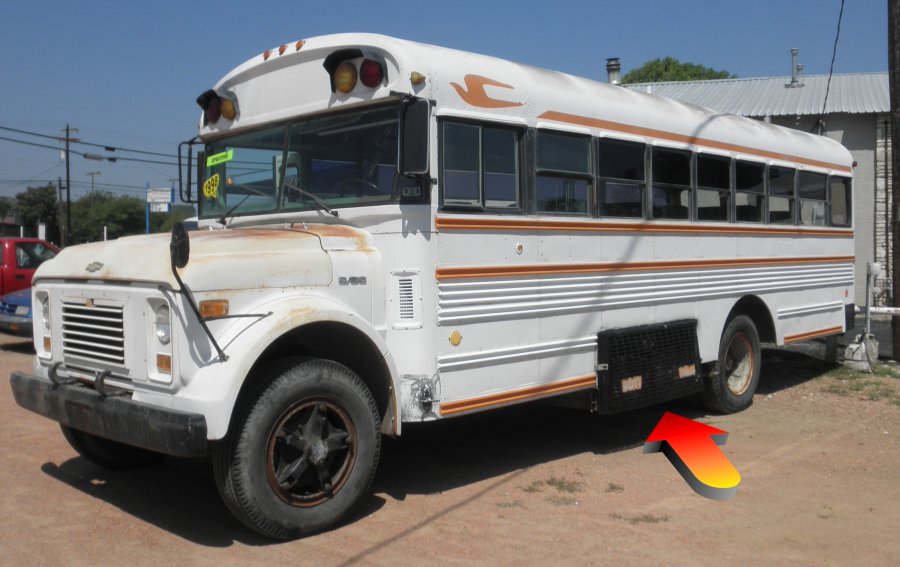
I’ve been scratching under my hat over a number of issues regarding that old school bus as a potential escape route, studying pictures taken last time in town.  Wondering how a person might get around various problems.

One that jumps out immediately is the fact there’s no way of locking the doors, either the front, or the emergency door.  So a person who didn’t fix that problem wouldn’t want to be a sound sleeper.  Or go off out-of-sight of it if he had anything inside he wanted there when he got back.

Another is that no obvious place to mount a spare tire seems to be included in the design. I suppose a person might rig a way to keep one on the roof if there’s no place underneath to hang it. 

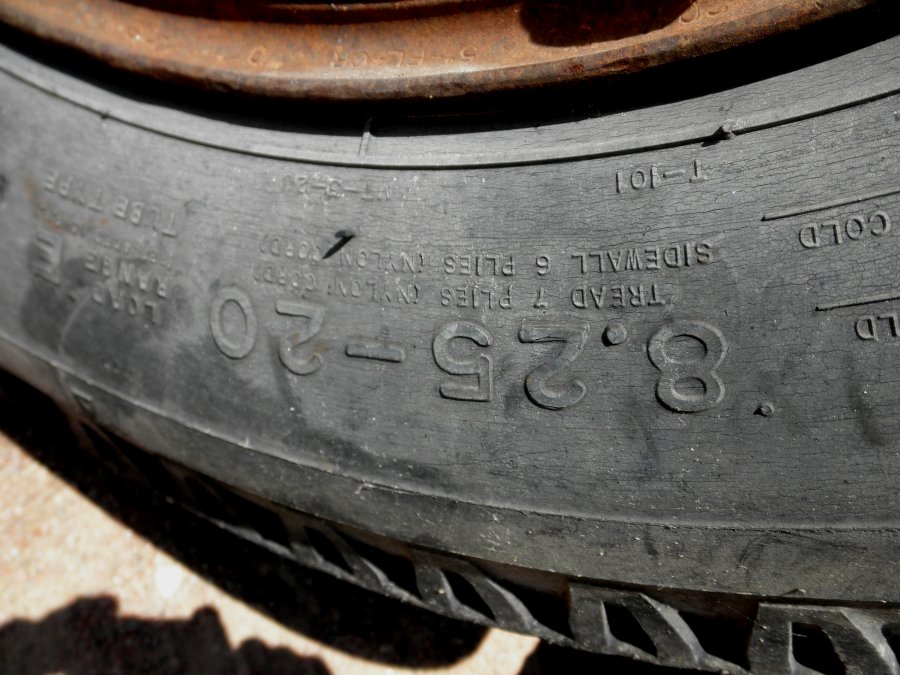
Those wheels appear to weigh 75 pounds or more, though, so getting them up there would be a growth experience.

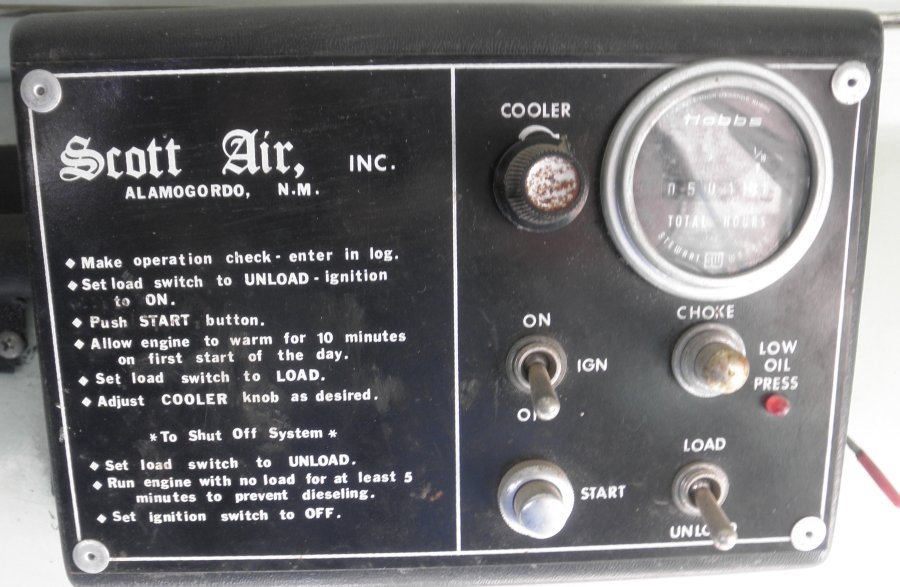
Interestingly, there appears to be an old Volkswagen living underneath there.

Evidently it was retrofitted to power a huge refrigeration air conditioning complex above the rows of seats, both sides.  My thought is that the shelves are nice, but the refrigerator is gonna have to come out.  Maybe the VW engine, too, so’s to make room for a spare tire.

Meanwhile, the windows don’t lock shut and some screens would have to be rigged to keep insects out and provide a disincentive for cats jumping out open windows to explore the highway.

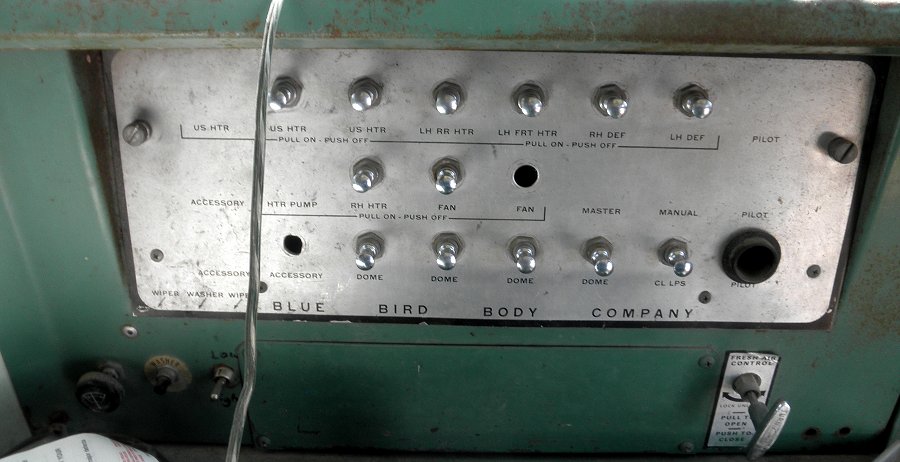
I’ve always wanted something with a lot of switches to try to figure out as I drive along.

Nothing about it, I reckons, that can’t be overcome, but a challenge or two if the thing decides to jump into my life.

[I was watching for a place in here to use the word ‘footfeet’ because it’s such a novel piece of language history involving automobiles.  For the unaware, people used to call the brake, clutch and throttle pedals ‘footfeet’.  But there’s not a lot I can think of to say about the footfeet of this bus.  Hmmm, except,]

The footfeet appear to be intact, adequate and functional.

Old Jules

Gamblers, Gambling and Risk-taking

Previously blogged May 17, 2005

Saturday a recently acquired friend and I revisited one of the sites I spent a lot of time puzzling over during the search for the lost gold  mine.  The place was the focus of the ’98 search  and a good many years prior to that.  Sometimes it amazes me how many times I climbed and unclimbed the west face of that mountain, always finding something new and puzzling.  I spent most of a month camped at the top, friends coming in for a week or so, then heading back to their lives elsewhere without finding what we were looking for, but finding enough adventure, fellowship and mountain air for a while and remember as one of the good times.This was Jim’s first time up there.  We went in mainly to look at a rock pillar that’s peeling away from a cliff face.

It’s a formation that fascinated a man I’ve come to know awfully well by his work; a man I never met, but whom I followed around that mountain puzzling over what he did, how he did it and why he did it.  A man who lived and died 150 years ago, roughly.  A man who knew a gamble when he saw one, went into a canyon spang in the middle of Apache country at a time when the best he could hope for if he was a quick death, or if his luck was bad, hanging upside down over a slow fire.

I’ve been wearing the arrowhead that almost certainly killed him hanging from a leather thong around my neck for a decade or more.  The ruin a few charred logs high, a long-tom sluice he carved with an axe out of a three-foot diameter log, a 400 pound rock he chiseled down to use as an arrastra and a hundred or so signs and symbols he made on rocks, along with his various diggings are all that’s left to tell what kind of man he was.

A gambler, he was, gambling on being caught by Apaches, gambling a broken leg in a place where such a thing was sure death.  A man who believed in himself so thoroughly that in that setting that he pecked away at the base of a 50 ton pillar of rock trying to get at what was underneath until it gives a man the fantods even today to walk beneath it.

One of the things I’ve spent a lot of time contemplating as I watched Orion chasing the Pleiades across the night sky to the background music of wind in the treetops is the thought of how a man of that sort would feel about a world where low-level risk-taking is a criminal offense.

A time when edging the nose of  a vehicle onto the pavement without fastening the seat belt probably won’t get you hurt, but it will almost certainly get you a conversation with an armed pair of mirror sunglasses.  A time when risk is defined in how many years it might take you to get cancer from whatever you’re eating or smoking.  When excessive gambling is betting the grocery money at the blackjack table.

I wonder if he’d have played a wheel, or just picked a few numbers that suited him and bought a hundred tickets with the same six numbers on them, going for broke on something he believed in, the way he did in life.

One of the ways we define who and what we are includes what we’re willing to give up to travel around the sun a few more times.  That guy on the mountain wasn’t inclined to give up much.

Old Jules
A Military Man

Previously posted August 21, 2005:

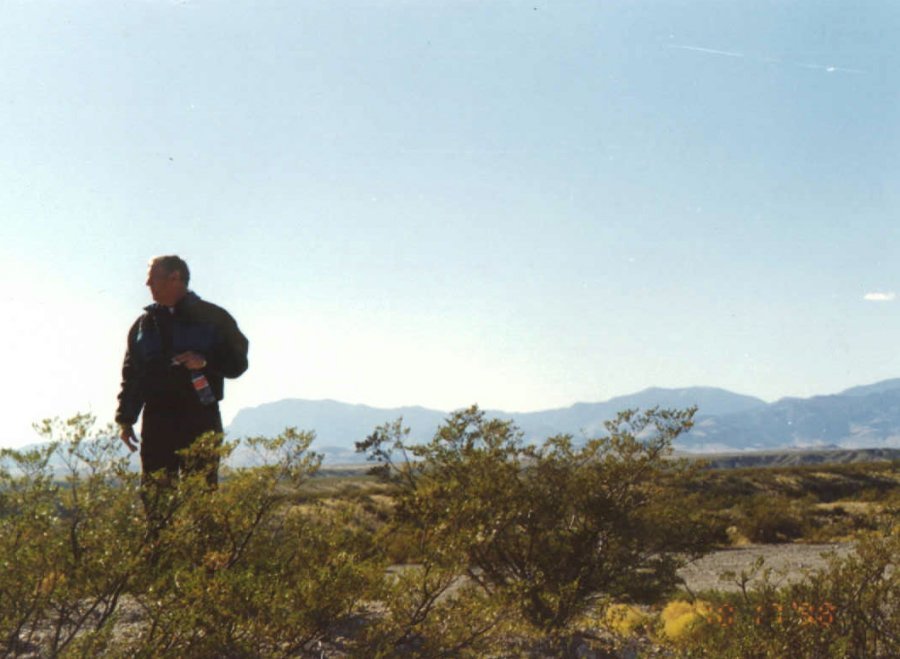
The man in this picture is my old friend Richard Sturm.

[Note:  I’m going to edit this a bit before I post it to the So Far From Heaven blog, add and subtract a few hindsights and afterthoughts.  Jules]

Richard died in December, 2004, in Port Lavaca, Texas.

Richard was a 100% disabled veteran of the United States Army. From 1964, until his death he spent his entire adult life in and out of Veterans hospitals. When he wasn’t in a hospital he was usually in a café somewhere drinking coffee and being friendly with anyone who’d give him the time of day.

Or he was with me, camping, fishing, seeing the sights, singing, passing the time. That happened less than he’d have liked, probably more than I’d have preferred in a lot of instances. Richard wasn’t an easy man to be around.   

A while back [2011] his brother and I were discussing Richard, and Vic remarked, “You never really saw Richard when he was at his worst.”  I didn’t say so at the time, but I think I spent a lot more time with Richard over the years than Vic did, or than Vic was ever aware I did. 

Aside from Richard, all those Sturms were super-achievers, and although I spent a lot of years from 1965 onward considering Vic among my best friends, he was a busy man.  People sought him out.  If I wanted to talk to him, I called him.  Over all those decades I could count on one hand the times he initiated a contact between the two of us.  “People call me.  I don’t call them,” he explained to me once when I mentioned it to him.   I’d guess that applied to Richard, same as it did to me.

But that’s digression, edited in this May, 2012, with a lot of hindsight.

Before Richard volunteered for the Army he was a patriotic youth, intelligent, dynamic, from a family of super-achievers. He graduated from high school with honors, well liked and respected by his teachers and classmates. A young man with a future. Then he joined the US Army.

In 1964, he was stationed in Massachusetts with the Army Security Agency. Without his knowledge or consent, he was selected for an experiment by the career military men who were his superiors. He was given a massive dose of LSD. He sustained permanent brain damage as a result.

Richard spent several months in a mental ward of an Army hospital, presumably under observation by the powers-that-be, to see what they’d wrought. Then they gave him is medical discharge, released him from service and from the hospital, and sent him home without confiding to anyone what the problem was and why it happened.

Several years later after he’d been examined, had his thyroid removed, given electric shock treatments, everything the puzzled medicos could think of to try and improve this mysterious condition, his brother, an attorney, came to suspect something of what had happened. The stories of events of this sort had begun to creep out of hiding and into the press.

A formal demand was made for release of his records, and finally the story came out.

Richard wasn’t injured defending his country. He didn’t get his skull fractured on some battlefield by enemies. He was betrayed by the career military men of his own country, officers and enlisted men, whom he’d given an oath to obey and defend. He served in good faith, and he was betrayed by his country.

Some have noted on the threads that I don’t have an automatic high regard for career military men. They’re correct. Richard’s just an extreme example of thousands of men who’ve been killed, injured, disabled by irresponsible, insane, and idiotic decisions by men who make a career of blindly following orders without thinking, weighing consequences, not feeling any remorse so long as they were ordered to do it.

Like good little NAZIs, Japanese, Soviets, Israelies, Americans, Cambodians, British, Africans, Chinese, Cubans, Argentinans and military men everywhere.  Just following orders. 

Support our troops.

Old Jules

2012 note:  During a conversation with Vic in 2011, I mentioned the LSD experiment and Vic replied, “It’s a shame I could never prove it.  Richards records were all destroyed in a fire at the Army Records Holding Center in the late 1960s.”  Live and learn.  Somewhere back there, I must have heard it from Richard, I came to think the records had been uncovered and it was established, official fact.

Sorting Through Eternities

Previously blogged a few years ago:

After the post a few days ago about the meaning of life I found myself pondering a number of things about how most of humanity relates to the subject.  The great majority of folks in the Judeo-Christian-Muslim world believe they know how to get by with doing some heavy-duty ugly during this lifetime and still end up somewhere good.  Assuming they tip their hats regularly to a diety carefully tailored to forgive them their breadcrumb sins.  It’s the hat-tipping, after all, that’s important.

On the other hand, that same body of humanity’s prone to take a lot of satisfaction knowing the people who didn’t tip their hats right have a tough row to hoe.  Many engage in firefights of advance “I told you so!” insofar as how bad those who didn’t believe them are going to wish they did.

It’s not something I need worry myself about, but sometimes my mind drifts there anyway, imagining what it would be like in an Eternity surrounded by the sort of people who spent their lives absorbed in hat-tipping with one hand, and selling used cars with the other.

Old Jules