Some of you thought I was joking with my recent post about climate change and the current yakyakyakyak by the excitement industry concerning ‘manmade global warming’.
Some of you probably also didn’t notice the comment by Trapper Gale remembering a time four-or-so decades ago when the previous generation of the same institutional experts ran in increasingly small circles setting their hair on fire predicting a coming ice age.
“The last of the ice ages in human experience (often referred to as the Ice Age) reached its maximum roughly 20,000 years ago, and then gave way to warming. Sea level rose in two major steps, one centered near 14,000 years and the other near 11,500 years. However, between these two periods of rapid melting there was a pause in melting and sea level rise, known as the “Younger Dryas” period. During the Younger Dryas the climate system went back into almost fully glacial conditions, after having offered balmy conditions for more than 1000 years. The reasons for these large swings in climate change are not yet well understood. “
Which is an understatement.
Academians have a vested interest in manmade climate change today. They get their names in the journals and newspapers through the power of positive speaking. If they can stir up enough fear by presenting what they don’t know as ‘not yet well understood’ they generate government grants, jobs, power and prestige within their fields. Further study of what they don’t yet well understand, it’s assumed, will provide better understanding in the direction of their assertions.
Somehow the fact their disciplinary ancestors also didn’t yet well understand similarly the precise opposite interpretation of the data. Mined it for all it was worth at the time in study, grants, power and prestige. Opened new frontiers for their progeny when the time came, by reversing what a few decades later remained not yet fully understood.
I’m not suggesting there’s no manmade climate change. Maybe there is. And I’m not suggesting that if there is, it won’t speed the natural progress of planetary warming.
What I am saying is that anytime scientific observers examine data with an expected, hoped-for outcome, [especially when power, money, career advancement and prestige are factors] they have a way of observing selectively.
Same as human beings are prone to do in all other walks of life.
What I’m also saying is that three, maybe four decades from now there’s a reasonable possibility they’ll have mined this crisis dry and be setting their hair on fire with a new crisis to be mined for power, prestige, money and career advancement. Humanity induced plate tectonics, maybe. Earth’s decaying orbit because of atmospheric drag created by airliners.
Maybe they’ll be right. Hell, there’s even a remote chance they’re right about of what they’re saying today. Some piece of it-or-other.
The damned problem is you can’t trust them. They watch the same television you do. They know which way the wind’s blowing and muddling along trying to sail downwind getting the most out of it while it’s hot. Joining the gold rush with the knowledge when this one plays out there’s another lode in Alaska or Nevada they can move to.
Good morning readers. Thanks for coming by for a read.
I was thinking last night before I dozed off about what TV, movies and fiction have done for us that reality couldn’t. I concluded it all boils down to mythology and self definition. An attempt to bring little guys into a larger picture where, in fact, they don’t exist.
Consider this: Can you name a single person involved in the American Revolution below the rank of Colonel other than Paul Revere? Anyone between then and the War of 1812?
From then until the Mexican War you might recall Nat Turner and his brief slave rebellion, or Davy Crockett, Travis, Sam Houston, et al. The mountain men and the fur traders. Meriwether Lewis and Clark, the Kit Carsons, Bridgers, the Coulters and Joe Meeks. The wild and wooly.
And all the names from the lower paygrades you might recall from the Mexican War are there because they were colonels and higher during the Civil War.
Follow it right on through from then until the Wars and whatever else is happening today. Where the hell are the lower-paygrade heroes?
Well, the fact is, they were out there at the time. They were the outlaws, the killers, the people most successful at taking what didn’t belong to them away from the people it belonged to. The James Gang, the Daltons, Butch and Sundance, Billy the wossname, Kid, the Youngers. Buffalo Bill, wiping a species off the face of the continent so’s the trains wouldn’t be troubled by them and cow men could use the land for cows. Masterson, the Earps, Hickok. Steely-eyed killers.
The US needed the genre fiction, the film industry and television to clean up history. The country needed common people out there getting massacred by Apache, Lakota, Comanche, people with names. People below the rank of colonel with names that weren’t John Jacob Astor and weren’t just getting filthy rich and powerful from it all.
So you want the heroes of the west today? Well, there’s John Wayne. Henry Fonda. Steve McQueen. Jeff Chandler on the generic Indian side. Burt Lancaster. Gary Cooper.
All of whom also, by coincidence, became the heroes of all the other wars the US fought. Became the common men of history where none existed before. Winning the west from the people who owned it, whupping the Germans and Japanese, the Vietcong and NVA, the Chinese and North Koreans.
All those heroes, frequently below the paygrade of colonel, helping us to understand our great heritage. Because, after all, our heroes define us in ways we’d be too modest to define ourselves. Most of us ain’t all that successful at taking shit that doesn’t belong to us, individually.
At least those of us who never got higher than the rank of major. The aristocratic dynasties went to Washington but the heroes all came out of Hollywood.
If the guy isn’t disinformationing me about the shape it’s in, this might be the next step in the long road home. He says it’s got all new tires, spent the last 20 years under a carport, says everything works and is willing to provide the means for me to test everything before we finalize a deal.
Says it’s never had any leaks of any kind, roof, plumbing, and the structure, panelling of the coach is solid. Says it has 60,000 actual miles on the gasoline engine.
If he hasn’t sold it by the time I can get to see it I’ll have a careful look at it first chance I can manage.
Thanks, Mr. President For all the things you’ve done The battles that you’ve won The way you deal with U.S. Steel And our problems by the ton We thank you so much
Before they decompose in the grader ditch.
Honest! It just fell!
The ugly?
A touch of class
That gall bladder used to be right THERE.
Mexican Standoff in Chinese
Tanked in China
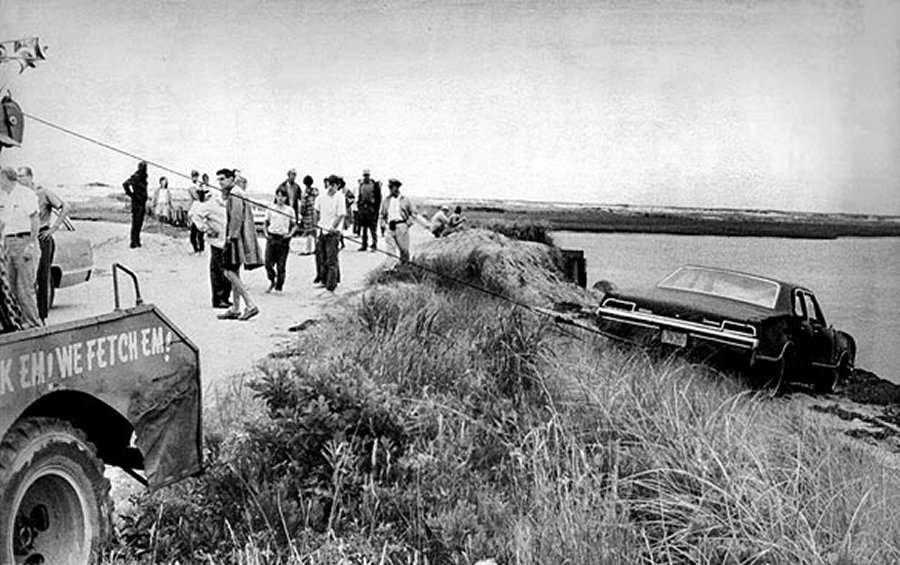
A sobering night for Ted Kennedy, but Mary Jo couldn’t swim. He bounced back, though not so high as previously expected. She didn’t.
Tanked in Martha’s Vineyard
The song has ended but the malady lingers on
Tanked elsewhere.
When Cuba still seemed nearby
The Last Roundup
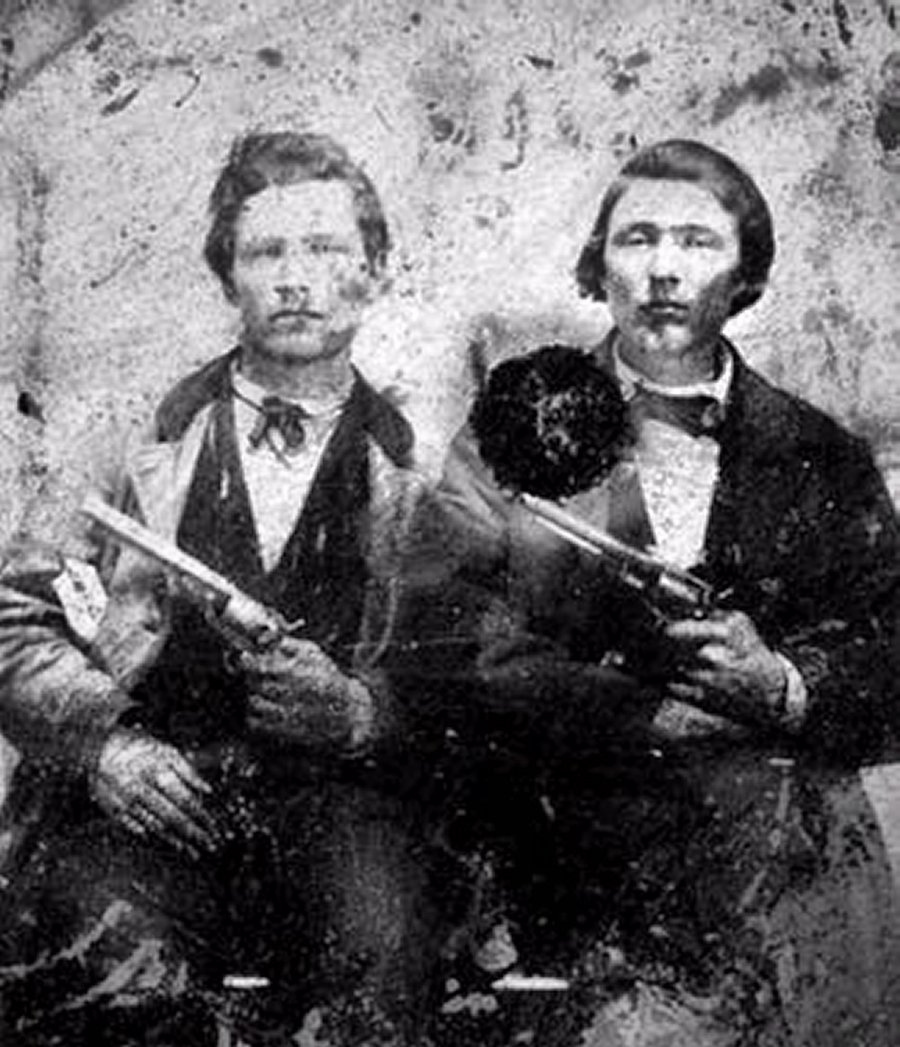
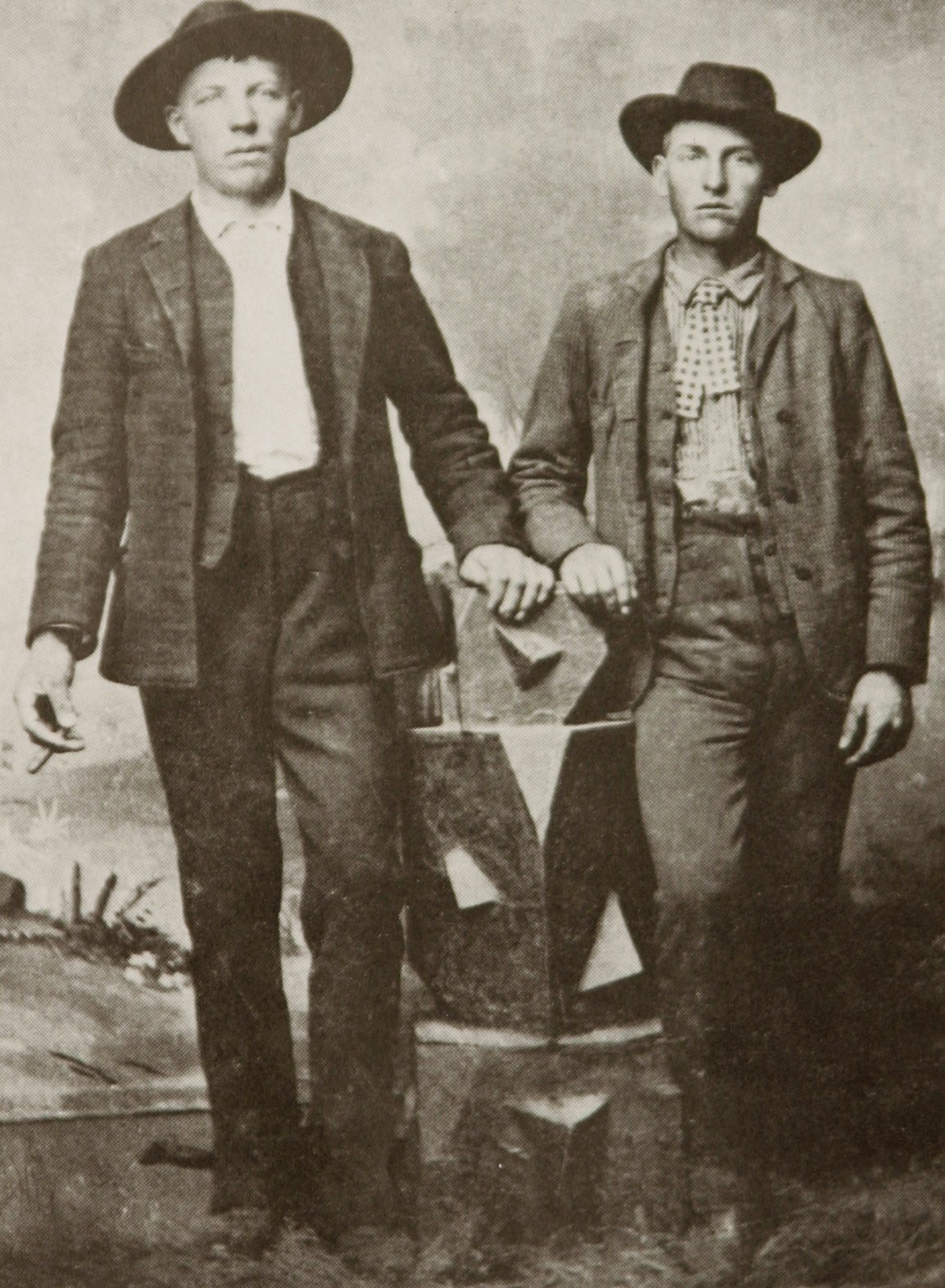
Who ARE these guys?
Party animals
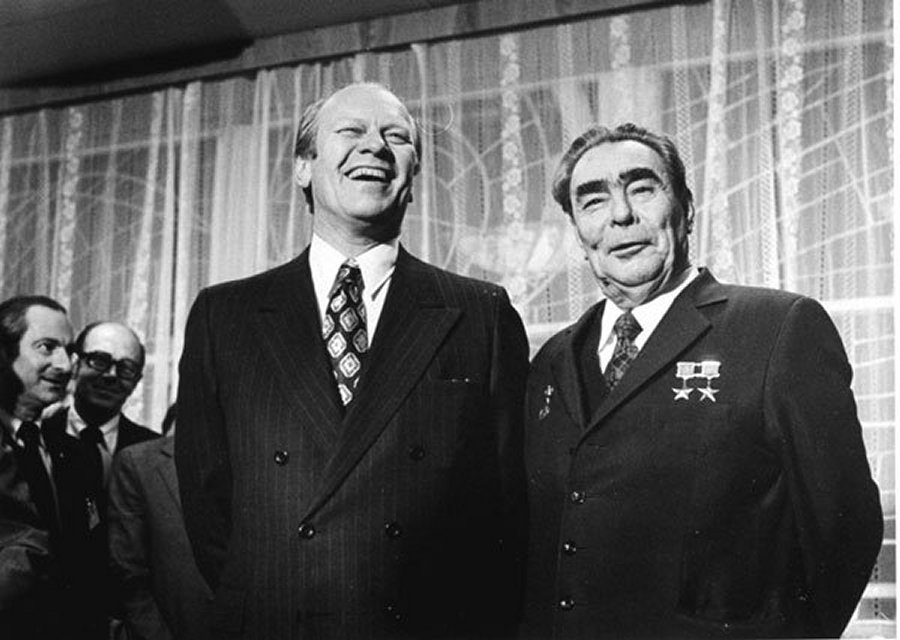
Hi! I’m king.
El Guapo meets Godzilla
Last one on’s a rotten egg
The Presidential War’s over! This helicopter’s destination is Panama, Grenada, El Salvadore, Kuwait, Iraq, last stop in Afghanistan! Show your tickets.
What can a person say about Spiro Agnew? Most of you readers are too young to remember the most well-known, most popular Vice President in US history. He served at a time when the US was torn apart by civil strife, an undeclared, unpopular foreign war, and a level of corruption in the Executive Branch few citizens allowed themselves to suspect.
Agnew. Forced from office for accepting bribes before, “Everyone does it,” became a defense.
But, of course, that was long before Iran-Contra, Bush 1&2, Billary Clinton, Blackwater, and the current king. Nowadays Spiro would seem clean, honest and soft-spoken. A pristine choice for wannabe king for either of the parties:
In April 1973, when revelations about Watergate began to surface, Agnew was the choice of 35 percent of Republican voters to be the next Republican nominee for President, while then-California Governor Ronald Reagan was second on the Gallup Poll. [18]
Spiro Theodore Agnew (pronunciation: /ˈspɪroʊˈæɡnjuː/; November 9, 1918 – September 17, 1996) was the 39th Vice President of the United States (1969–1973), serving under President Richard Nixon, and the 55thGovernor of Maryland (1967–1969). He was the first Greek American to hold these offices.
During his fifth year as Vice President, in the late summer of 1973, Agnew was under investigation by the United States Attorney‘s office in Baltimore, Maryland, on charges of extortion, tax fraud, bribery and conspiracy. In October, he was formally charged with having accepted bribes totaling more than $100,000 while holding office as Baltimore County Executive, Governor of Maryland, and Vice President of the United States. On October 10, 1973, Agnew was allowed to plead no contest to a single charge that he had failed to report $29,500 of income received in 1967, with the condition that he resign the office of Vice President. Nixon replaced him by appointing by then House Minority LeaderGerald R. Ford to the office of Vice President.
Agnew is the only Vice President in United States history to resign because of criminal charges. Ten years after leaving office, in January 1983, Agnew paid the state of Maryland nearly $270,000 as a result of a civil suit that stemmed from the bribery allegations.
Agnew soon found his role as the voice of the so-called “silent majority“, and by late 1969 he was ranking high on national “Most Admired Men” polls. He also inspired a fashion craze when one entrepreneur introduced Spiro Agnew watches (a take off on the popular Mickey Mouse watch); conservatives wore them to show their support for Agnew, while many liberals wore them to signify their contempt.
Agnew was known for his scathing criticisms of political opponents, especially journalists and anti-war activists. He attacked his adversaries with relish, hurling unusual, oftenalliterative epithets—some of which were coined by White House speechwritersWilliam Safire and Pat Buchanan—including “pusillanimous pussyfooters”, “nattering nabobs of negativism” (written by Safire), and “hopeless, hysterical hypochondriacs of history”.[15] He once described a group of opponents as “an effete corps of impudent snobs who characterize themselves as intellectuals.”
By the time I arrived at adulthood the state of the limerick as a masterpiece of the literary foil was in alarming decline. Playboy Magazine attempted to inject new life into the medium during the 1960s and 1970s by paying $500 for limerick submissions accepted for publication. The selection process was tough and they accepted only true masterpieces.
During those years I submitted no fewer than ten [10] limericks per month and never had one accepted. Hundreds of limericks. There was no place in Playboy for second-rate hacks.
While the artform requires a particular meter, the truly well-constructed one needs more. Internal rhyming. Puns. Lilting beat to simulate waves on a beach. A joy to the tongue and ear.
To illustrate my point, here is perhaps the best limerick ever written, once published in Playboy:
The new cineramic emporium
Is not just a super-sensorium
But a highly effectual
Heterosexual
Mutual masterbatorium.
Every time I run those timeless words through my mind, I’m humbled.
I don’t know whether the image at the top of the page depicts a man who once wrote limericks and submitted them to Playboy. He almost certainly could have. Possibly should have.
The Hill Fights – The First Battle of Khe Sanh, Edward F. Murphy
Considering he also authored Semper Fi, – Vietnam, and is/was probably a fairly gung-ho man, Murphy does a surprisingly workmanlike job depicting what actually led up to the Khe Sanh bloodbath, why became a bloodbath, and where the responsibility for it having become a bloodbath clearly rested. All without pointing fingers of blame. He just describes events as reported by the people involved in them. For instance:
“Fourteen of the eighteen patrols Wilder sent out early in July found NVA, several within mere minutes of being inserted into their patrol areas. He learned from other intelligence sources that the North Vietnamese 324B Division had moved south of the Ben Hai River with the mission of conquering Qang Tri Province. When Wilder dutifully reported this to higher headquarters, he unwittingly stepped into the fray raging between General Westmoreland and General Walt.
“Within days General Walt, General Kyle, and Major General Louis B. Robertshaw, commander of the 1st Marine Air Wing, arrived at Wilder’s headquarters at dong Ha for a personal briefing from Wilder. As soon as Wilder mentioned the presence of the NVA 324B Divbision, Robertshaw rudely interrupted him. “You’re a liar,”Robertshaw accused Wilder.
If any single incident could sum up what happened to the unfortunate grunts getting themselves blown apart at Khe Sanh over the next couple of years, that probably does it. What happened to the US lower-grade officers and enlisted men throughout the Vietnam experience, for that matter.
It echoes and it rhymes. The M16, newly issued and fired for familiarization before being taken into combat. Jams. Jams. Jams. So the cover story becomes, “You’ve got to keep it CLEAN! If you don’t keep it clean, it jams. Your own fault, marine!”
A few weeks later squads, platoons were being slaughtered by the NVA at Khe Sanh. Found afterward with jammed M16s, unable to return fire against the enemy. Marines complained, the high command accused them of lying. Of not cleaning their weapons. The slaughter continued until a letter home from a dead marine ended up being read on the floor of the US Congress and an investigation began.
The M16 was designed around a cartridge containing a particular propellent. But a major military contractor with the right connections offered a cheaper cartridge because it contained a different, more inexpensive powder. Millions of rounds purchased, all defective. Probably hundreds, maybe thousands of US servicemen lost their lives because they were provided weapons incapable of returning fire without jamming.
Friendly fire? Khe Sanh began with a US air strike dropping napalm several miles off target on the friendly village of Khe Sanh, killing 250 villagers and injuring hundreds more. Following that it was helicopter gunships, fighter aircraft and artillery strikes opening up on ground troops by mistake.
Air forces all over the world from early during WWII provided their planes with IFF [Identify Friend/Foe] radio transponders. Somehow the concept never seeped down to include ground troops being protected from friendly fire. As late as Gulf War 1 it continued to happen. And at Khe Sanh it happened a lot.
Then there were the commanders who just made lousy choices for whatever reasons other than the well-being of the troops they commanded. “You guys aren’t likely to find anything up there. Take off your flak jackets and leave them down here.” Twice. Two separate occasions. Two bloodbaths.
There was no overall strategy for US troop involvement in Vietnam. The curse of the undeclared, presidential wars from WWII onward. The US high command couldn’t agree among themselves what the roles of the troops under their commands should be and how they should perform those roles.
Despite all this, The Hill Fights – The First Battle of Khe Sanh, Edward F. Murphy doesn’t dwell on this side of things. He simply provides a detailed history, day-to-day of one of the countless debacles of the 20th Century quickly forgotten when another president needed some other injection of excitement to keep the voters going to the poles, the flags waving, and the patriots pounding their fists on their chests.
[Incidently, there’s a good photo section in the book. I was surprised to see my old friend, Mel Kingas a young marine standing unidentified next to a Company Commander who’d just gotten a few of his men out alive and unhurt. Mel must have gotten his injuries later.]
—————————————————
A Marine at Khe Sanh, by John Corbett. A young marine just out of basic training arrives in country at Khe Sanh and spends the next 77 days living in a foxhole, almost constantly under mortar, artillery and rocket attack. This is his diary.
Kennedy, Johnson, and Nixon never got around to hanging their heads in shame for the young men the dead and crippled as by-products their Vietnam presidential military adventures. But then, I don’t suppose any of the other, later ones have, either, for theirs.
After all, a lot of the right people made one hell of a lot of money from those wars. You can’t make an omlette without breaking some eggs.
Hi readers. Some of you evidently come to this blog for the humor, but my brand of humor frequently falls flat for a lot of other readers. So for those of you unable to appreciate my dry, subtle, sometimes off-target attempts at humor I offer perhaps the funniest scene ever to appear on television.
Note the squeeze-box player attempting to keep a straight face while introducing the song. Afterward, the followup by famous wit Lawrence Welk caps the entire performance as he expresses his appreciation for “modern gospel music” performances by young people.
Unlike so many young performers of the time, these already had perfect teeth.
Meanwhile, the songwriters, Brewer and Shipley, were awarded a position on President Nixon’s ‘Enemy List’ and enjoyed honorable mention by Vice President Spiro Agnew before he went down in flames.
Red Grain Truck Blues – Jerry Sires circa 1975-1980
The yellow corn sure looks good up ahead
inside the red grain truck.
It’s piled high to testify
that some farmer had a little luck.
I sure like to drive these country roads
even though they’re changing every day
but I always was kind of slow
and sometimes I just feel in the way.
In the city there’s people getting by
taking in each other’s dirty clothes.
Where the big cars and fine homes all come from
I guess nobody knows.
I wonder how long it can last
When the teeming billions watch and want theirs too.
it all has to come from the earth
and she’s about done all she can do.
You can almost hear her cry
You can almost hear her moan
as another garage door opener
is carved right from her bones,
but daddy needs a new golf cart
and mama needs a new suntan machine.
Oh Bobby wants a race car
and Sally wants a full sized movie screen.
You can almost hear her cry
You can almost hear her moan
when Singapore and Shanghai
want to refrigerate their homes.
Still, daddy needs a new golf cart
and mama needs a new suntan machine
Oh Bobby wants a race car
and Sally wants a full sized movie screen.
The yellow corn sure looks good up ahead
inside the red grain truck.
The yellow corn sure looks good up ahead
inside the red grain truck.
Even the dispicable can’t always dodge the steamroller. Kaufman was rewarded, Greenglass spent a few years in prison, punctuated by testimonies before Congressional Committees to help forge a US package of ideas about a war on International Communism. Appropriate enough, liar lying to other liars to create a consistent set of lies. Not to suggest C0mmunists weren’t also lying. They mostly just weren’t elected and appointed officials sworn to uphold the Constitution of the United States.
Federal Judge Irving Kaufman, who subverted the legal processes in his own courtroom to predjudice the jury in favor of conviction of both Rosenbergs, then sentence them to death in the electric chair:
In 1953, Julius and Ethel Rosenberg were sent to the electric chair for stealing the secret of the atom bomb for the Soviet Union.
They were called the “Atom Spies,” and 50 years ago this summer, they were executed for giving the secret of the atomic bomb to the Soviet Union. They are the only Americans ever executed for espionage in peacetime. Greenglass was the star witness for the prosecution against the Rosenbergs – and he also happened to be Ethel Rosenberg’s brother. He served 10 years in prison for his actions as a traitor, and then changed his name and dropped out of sight. As he neared 80, Greenglass decided to break his silence. He talked only after 60 Minutes II agreed to disguise his face and voice.
His story begins in the summer of 1950 when the FBI took Greenglass in for questioning. He confessed almost immediately for spying, and quickly implicated Julius, Ethel and his own wife, Ruth. David and the Rosenbergs were arrested. Ruth Greenglass never was charged.
“That’s what I told the FBI,” says Greenglass. “I said, ‘If you indict my wife, you can forget it. I’ll never say a word about anybody.'”
It was quite simply his choice, he says today. So Greenglass says he turned on his sister to save his wife. “I would not sacrifice my wife and my children for my sister. How do you like that?”
Greenglass made his choice when America was at war with communists in Korea, and in fear of the Soviet Union, which had recently tested its own atomic bomb.
The four spies were unlikely actors in a Cold War drama: Julius was an unsuccessful engineer; Ethel spent most of her time raising their two young sons; Greenglass was a draftsman and a tinkerer; and his wife Ruth was a wife and mother. All had been ardent communists.
During World War II, Greenglass, then a sergeant, was posted to Los Alamos, the secret army base in New Mexico, where thousands of scientists and soldiers were building the atom bomb. Although he had a low-level job, Greenglass says he knew what was going on.
He says Julius Rosenberg recruited him to spy with a simple sales pitch: “He said, ‘We have to help our ally.'” By ally, he meant Russia. “Russia was an ally at the time, and that we have to help them with all the information we get.”
Greenglass told the FBI that he gave the Russians sketches and details on the device used to trigger a nuclear blast. But he says he didn’t enjoy being a spy.
“I was continually conscious of what’s behind me. I didn’t enjoy it. I just did it because I said I would,” says Greenglass.
Did he realize how dangerous it was? “I didn’t really think it was, because I didn’t think the Russians were an enemy,” he says.
His career in espionage came to an end soon after the war ended. Back in civilian life, Greenglass and Julius opened a machine shop together. They argued over the business, and over Greenglass’ growing disenchantment with Communism.
Four years later, Julius warned Greenglass that the FBI was on to them, and urged him to flee the country. Greenglass had a family passport picture taken, but he had no intention of using it.
“I didn’t want to leave the United States to go to some hellhole like Russia or China, or wherever the hell he wanted to send me,” says Greenglass. Instead, he took a bus to the Catskill Mountains. “I figured I’d find an obscure place. And I see that the FBI is following me. And they lose me.”
But he never made it to the Catskills. He went into custody instead. And within hours, he began cooperating with the FBI, sealing the Rosenberg’s fate.
He was the star witness for the prosecution at their trial, and he told the jury about his espionage, and described the activities of Julius, Ethel and his wife, Ruth.
He testified that one evening, he and Ruth brought sketches and handwritten notes about the atom bomb to the Rosenberg’s New York apartment. After dinner, Greenglass said they set up a typewriter on a folding bridge table in the living room, and turned his hand-written notes into a neatly-typed document for the Soviets.
Prosecutors asked Greenglass who did the typing. He said under oath that Ethel did the typing. His wife, who also took the stand, told virtually the same story.
That story was virtually the only evidence the government had against Ethel Rosenberg. But prosecutors argued that Ethel’s typing proved she was an active participant in the spy ring. After the trial, they admitted that without the typing testimony, they could never have convinced the jury that Ethel was anything more than the wife of a spy – and that’s not a crime.
Why did Greenglass lie on the stand? He now says Roy Cohn, an assistant prosecutor in the Rosenberg case, made him do it. Cohn went on to become Joseph McCarthy’s right-hand man.
Greenglass says that Cohn encouraged him to testify that he saw Ethel type up the notes. And he says he didn’t realize at the time the importance of that testimony.
But the jury knew how important it was, and found both Julius and Ethel Rosenberg guilty of conspiring to commit espionage. Judge Irving Kaufman imposed the death penalty.
Fifty years later, we know a lot more than anyone could have known in 1951. For example, we know that much of what David Greenglass said about Julius Rosenberg is true. It has been verified by other, independent, sources, all of which confirm that Julius Rosenberg was a Soviet spy. We also know that there is very little, if any, evidence that implicates his wife, Ethel, in any illegal activity.
But in the days before the execution, there were protests and vigils in New York, Washington and Europe. The Rosenbergs both claimed they were innocent, and many believed in them. There were a flurry of last-minute attempts to get a stay of execution. And there was no shortage of Americans who felt that justice was being done.
Up until the last minute, the authorities were willing to commute the death sentences if the Rosenbergs cooperated and named names. But they refused and were executed on June 19, 1953 – without ever breaking their silence.
Why did Greenglass think Julius and Ethel maintained their silence to the end? “One word: stupidity,” says Greenglass, who holds his own sister responsible for her own death.
—————————————-
But I promised a Denouement:
Of course, it makes no difference now. Any more than it matters who killed JFK, Robert Kennedy, MLK, and President Diem of Vietnam.
Doesn’t matter, really, any more than it matters that the Gulf of Tonkin Incident, the incident used to justify the US involvement Vietnam War, was a manufactured incident. A cynical lie to dupe the US public and arouse patriotic fervor. Same as the Rosenberg trial.
A pyramid of lies, once the foundation’s in place, builds on itself. Only the names of the liars and the names of the victims change. It’s only incidental that sometimes the victims are also liars.
If any lessons can be learned from it all it’s probably only that the romantic patriots can always be trusted. Trusted to believe the lies. The liars can’t trust one another, but they know they can always trust the romantic patriots.
The liars couldn’t succeed without them.
Old Jules
Today on Ask Old Jules on Facebook:
Old Jules, what’s your definition of an idealist?
An idealist is a person who locks his teeth into the ankle of an abstraction and doesn’t let go, doesn’t look for another ankle, doesn’t look closely at whatever’s above and below the ankle.
74 years old, a resident of Leavenworth, KS, in an apartment located on the VA campus. Partnered with a black shorthaired cat named Mister Midnight. (1943-2020)
Since April, 2020, this blog is maintained by Jeanne Kasten (See "About" page for further information).
https://sofarfromheaven.com/2020/04/21/au-revoir-old-jules-jack-purcell/
I’m sharing it with you because there’s almost no likelihood you’ll believe it. This lunatic asylum I call my life has so many unexpected twists and turns I won’t even try to guess where it’s going. I’d suggest you try to find some laughs here. You won’t find wisdom. Good luck.








 So Far From Heaven
