English Seamen In The 16th Century, Lectures Delivered at Oxford, Easter Term, 1893-94, James Anthony Froude.
Saturday evenings after they finish an auction a couple of blocks from her home in Olathe, Kansas, Jeanne often goes to the parking lot to nose through what didn’t sell and is being readied to haul to the dump. When she comes across books she thinks might be to my tastes, she calls me and asks if I’d like her to snag them and send them to me. This tattered old tome was one such.
I’d never heard of Froude and she said the book was beat up badly, but I made a snap decision and had her take it. Thanks, Coincidence Coordinators, and twice-thanks, Jeanne.
I considered myself modestly well-versed on the times from Henry VIII through Elizabeth, the English Reformation, the Huguenots in Holland, the Inquisition, the Spanish super-power status, and the troubles with Mary, Queen of Scots. But somehow I’d never put it all together. I’d never paused to ask myself how England, a country virtually without military power, no navy to speak of, came to become an empire, a sea power without equal during a relatively short time-span.
I’d also never asked myself the careful questions about the defeat of the Spanish Armada by what amounted to a scattering of privately owned ships, almost without any help from the crown. In fact, a tiny, fragmented private navy having to find ways around the obstructions, mind-changings, mood shifts and flighty fancies and wishful thinkings of Elizabeth.
Froude makes a strong case for the premise that the two greatest western powers of the time, the Catholic Church and the king of Spain, forced them into the future kicking and screaming in protest. By arrogance, pride, cruelty, certainty in the belief they could do anything and get by with it, they blind-sided themselves. They forced a population of merchants and fisherman-sailors to learn to build ships and fight at sea as an alternative to being tortured by the Inquisition, forced into slavery in Spanish galleys, or burned at the stake.
Even after Citizens Hawkins and Drake began ravaging the Spanish shipping, intercepting Spanish treasure, burning Spanish towns in revenge for Spanish and Inquisition atrocities, the Inquisition and Philip refused to see what loomed on the horizon. They continued plotting to assassinate Elizabeth in hopes of bringing Mary to the throne and Catholicism back to the realm. They continued capturing English crewmen and punishing them for doctrinal heresy.
And eventually, assembled the greatest war fleet in the history of mankind to invade the island and restore doctrinal purity. The outcome seemed obvious to them and there appeared to be no other, gazing into their own futures.
But Froude, gazing into the past, has an advantage, looking through the centuries since, past the Napoleonic times, the generations of British imperialism and conquest, to the day the power of the Catholic Church began the first lesson in humility. And to the day the power of Spain imploded.
Good morning readers. Thanks for coming by for a read this morning.
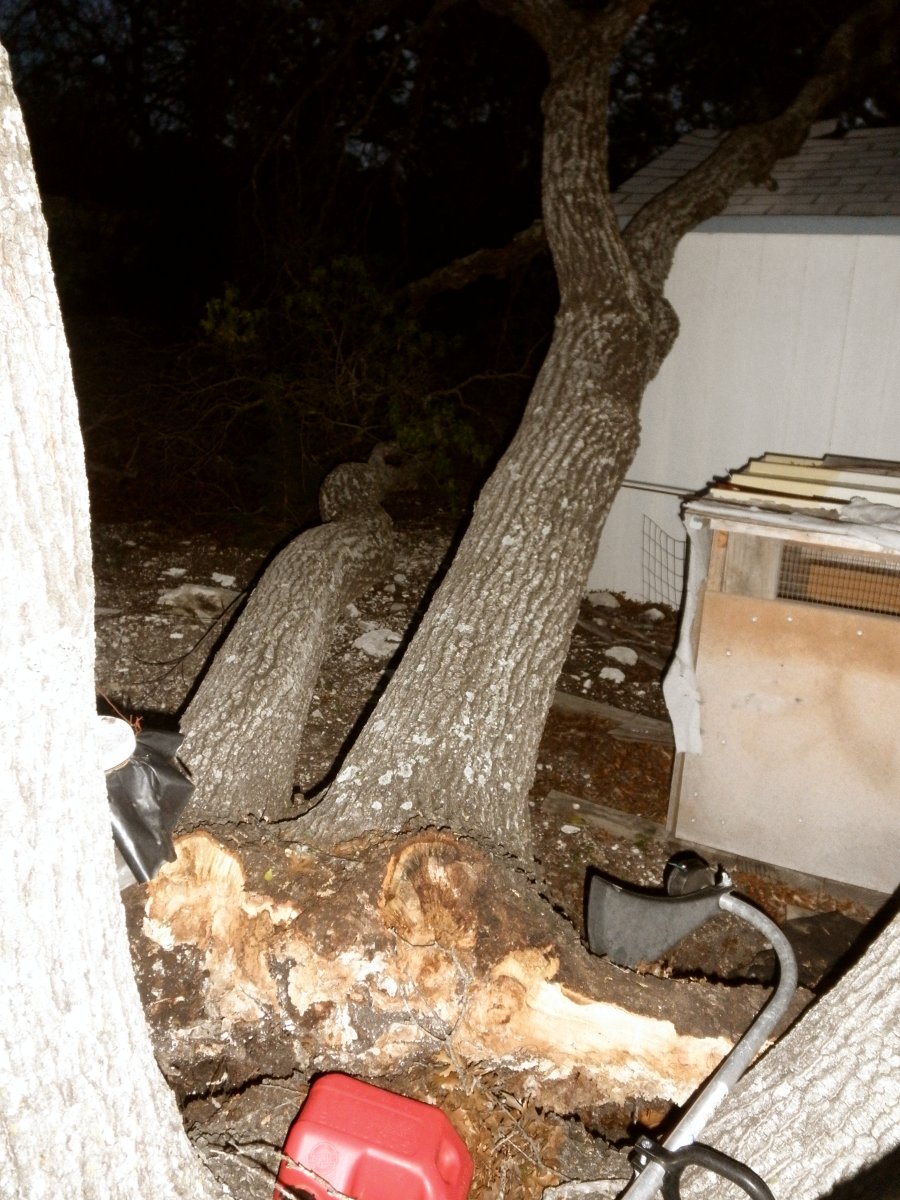
The analogy between Robert E. Lee, Gettysburg and that oak is still nagging at me, but I doubt I’ll belabor this post with the troubling similarities between the two this morning. Though I might.
Gale came down the morning after the Gettysburg event and we performed an after-action analysis of the damages, the implications, and ultimately the other oaks surrounding the cabin showing some level of potential for similarly Gettysburg-like thinking. We concluded there’ll be several other trees coming down because they’re already losing bark, or obviously dead. Others I’ll prune the larger branches on the cabin-side so’s the weight left will cause them to fall away from anything they can damage. Hopefully.
Fact is, the leverage a few MPH of wind in the upper growth exerts a huge mechanical advantage and a person might be prone to over-confidence about the salubriousness of fooling with the weight and balance.
Somewhat the way Pickett trusted the judgement and wisdom of old Robert Lee until the pricetag of trusting was already paid. Lee locked his mind in one direction and managed to blind himself to the obvious, and he said what Pickett wanted to hear.
But I said I wouldn’t go there this morning, and I’m not going to go there just because old Pickett spent the rest of his life blaming Lee for allowing him to do exactly what he wanted most.
Even Meade, the Union commander, trusted Lee so much he was ready to abandon the superior ground, pull back his larger force, more guns, rather than mistrust Robert E. Lee, his opposing commander. Meade’s officers voted to hold position, or there’d have been no Gettysburg.
But I said I wouldn’t go there this morning, and I’m not going to go there
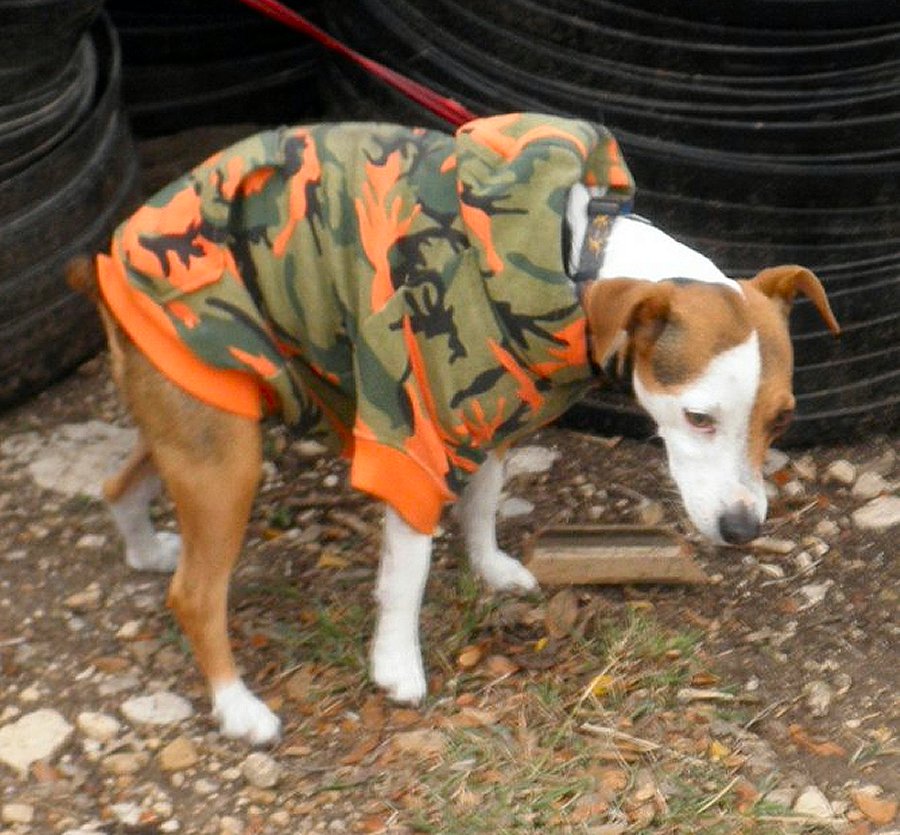
A while back I was trusting the invader cat to be a pregnant female because it was pacing around meowing something awful. Trusting it other times to be a female in heat for the same reason. But I discovered around the same time I made the discovery about the oak, that the invader cat has a pair of jingle-bollocks. I don’t know why the hell it’s meowing. But I trust a pair of jingle-bollocks more-or-less completely when it comes to it.
A lot more than I’m ever going to trust an oak again.
Good morning readers. Thanks for coming by for a read this morning.
Old Sol and I continued our conversation from the previous morning yesterday.
“So. You’re saying you think I need more diversity in my art?”
“I’m sure as hell not saying you need more ego. You’ve got more than enough of that, what with your astrophysicists, Hopi Witch Doctors and Mayan-bean-counter buddies.”
“That was a hurtful thing to say. What are you so irritated about this morning?”
“I’m not irritated. Sometimes your bluster’s a bit tedious though. You’re forever trying to take credit for everything that happens, whether you had anything to do with it or not. But the most cataclysmic event, for instance, that’s happened since man has been around, you had nothing to do with.”
“Um. You’re referring to the megafauna?”
“Yeah. Millions of rhino, mammoth, hippos, sabre-tooth tigers all killed in the space of a few days. Lots of them frozen fast enough to keep them from decaying much. Carcasses stacked up like cord wood over half the planet. If you’re able to do that, big fella, I say go for it.”
“I never said I did. That wasn’t me. We stars are mostly uniformists, gradualists, except for a few rare renegade exceptions. We don’t go in for drama.”
“Okay. I’ll buy that. I envy you, though, getting to see all those giant beasties wiped out.”
“Yeah. It was a sight to behold. Just out of curiosity, what do you think happened?”
“It’s obvious what happened. All a person has to do is discount everything he believes he knows already that would keep it from happening. Then allow himself to look at whatever options are left on the plate. There aren’t many.”
“I’m about out of time. But you’re admitting the reason nobody looks at the obvious isn’t my fault?”
“No. I guess it isn’t. They’re all lap-dancing to their own agendas. Sometimes you end up as part of the agenda, is all. I reckons.”
Old Jules, if you act like something for long enough, will you become like the illusion? If you acted as a good moral, rule-abiding citizen, could you eventually adopt those beliefs and habits?
Good morning readers. Thanks for coming by for a read this morning.
Searching around in my mind as I drove to Kerrville yesterday I was trying to find something, almost anything, the word ‘we’ could be applied to that included all of humanity. Not an easy task, despite most of the lofty notions humans have about themselves.
Intelligence and thinking came to mind, but didn’t survive even long-range scrutiny. Whatever else we might be, human beings are only intelligent when compared to one another within a miniscule range of options. Probably the least intelligent human being able to function is somewhat smarter than the next-best up for consideration in the animal kingdom. And a few notches up on the yardstick, the smartest human being isn’t much more intelligent. But there’s enough difference top-to-bottom to demolish the word ‘we’ when it comes to defining anything all humans have in common.
As for thinking, there’s just not a hell of a lot of it going on. The overwhelming majority of humans are riding along on shock waves created by thinkings of an underwhelming few individuals. Of the several billion humans on this planet there’s not more than a shot-glass full who could figure out how to manufacture a lead pencil. Or, for that matter, a shot-glass. Or build a fire without materials provided by some autopilot composite of individuals not-thinking somewhere else.
Pride held up a lot better, but as I turned it over examining all the nuances I found it was handcuffed to something else. Commitment. This species couldn’t have survived this long without it any more than a tribe of beavers could survive without the non-thinking commitment to building community dams.
And pride is the glue holding it together. A necessary virtue to keep things moving, even though the commitments most frequently to dogs that don’t hunt, haven’t hunted for centuries, but nobody’s devoted enough thought to the matter to notice.
When I was a kid the adults used to say if a snapping turtle ever got a bite on you it wouldn’t turn loose until it thundered. One of the places in this reality where the word ‘we’ can be applied to humanity is our commonality to that imaginary snapping turtle. Commitments come along, sometimes the result of someone thinking something, sometimes just out of the blue, and ‘we’ lock our pride into it and don’t turn loose until it thunders.
When I began this post I intended it to examine human commitments to failed ideals and myths. I planned to reflect on our often failing repeated attempts to commit ourselves to individuals, to political parties, to geographic boundaries.
But I’m going to have to save that for some future post.
I was watching bumper stickers as I drove along considering all this. Proud to be an American. Proud to be a Texan. Proud to be a Native Texan.
Presumably those declarations are a source of pride because of the effort and personal hardship involved in achieving them. If pride had anything to do with personal achievement. Or thinking.
Even the dispicable can’t always dodge the steamroller. Kaufman was rewarded, Greenglass spent a few years in prison, punctuated by testimonies before Congressional Committees to help forge a US package of ideas about a war on International Communism. Appropriate enough, liar lying to other liars to create a consistent set of lies. Not to suggest C0mmunists weren’t also lying. They mostly just weren’t elected and appointed officials sworn to uphold the Constitution of the United States.
Federal Judge Irving Kaufman, who subverted the legal processes in his own courtroom to predjudice the jury in favor of conviction of both Rosenbergs, then sentence them to death in the electric chair:
In 1953, Julius and Ethel Rosenberg were sent to the electric chair for stealing the secret of the atom bomb for the Soviet Union.
They were called the “Atom Spies,” and 50 years ago this summer, they were executed for giving the secret of the atomic bomb to the Soviet Union. They are the only Americans ever executed for espionage in peacetime. Greenglass was the star witness for the prosecution against the Rosenbergs – and he also happened to be Ethel Rosenberg’s brother. He served 10 years in prison for his actions as a traitor, and then changed his name and dropped out of sight. As he neared 80, Greenglass decided to break his silence. He talked only after 60 Minutes II agreed to disguise his face and voice.
His story begins in the summer of 1950 when the FBI took Greenglass in for questioning. He confessed almost immediately for spying, and quickly implicated Julius, Ethel and his own wife, Ruth. David and the Rosenbergs were arrested. Ruth Greenglass never was charged.
“That’s what I told the FBI,” says Greenglass. “I said, ‘If you indict my wife, you can forget it. I’ll never say a word about anybody.'”
It was quite simply his choice, he says today. So Greenglass says he turned on his sister to save his wife. “I would not sacrifice my wife and my children for my sister. How do you like that?”
Greenglass made his choice when America was at war with communists in Korea, and in fear of the Soviet Union, which had recently tested its own atomic bomb.
The four spies were unlikely actors in a Cold War drama: Julius was an unsuccessful engineer; Ethel spent most of her time raising their two young sons; Greenglass was a draftsman and a tinkerer; and his wife Ruth was a wife and mother. All had been ardent communists.
During World War II, Greenglass, then a sergeant, was posted to Los Alamos, the secret army base in New Mexico, where thousands of scientists and soldiers were building the atom bomb. Although he had a low-level job, Greenglass says he knew what was going on.
He says Julius Rosenberg recruited him to spy with a simple sales pitch: “He said, ‘We have to help our ally.'” By ally, he meant Russia. “Russia was an ally at the time, and that we have to help them with all the information we get.”
Greenglass told the FBI that he gave the Russians sketches and details on the device used to trigger a nuclear blast. But he says he didn’t enjoy being a spy.
“I was continually conscious of what’s behind me. I didn’t enjoy it. I just did it because I said I would,” says Greenglass.
Did he realize how dangerous it was? “I didn’t really think it was, because I didn’t think the Russians were an enemy,” he says.
His career in espionage came to an end soon after the war ended. Back in civilian life, Greenglass and Julius opened a machine shop together. They argued over the business, and over Greenglass’ growing disenchantment with Communism.
Four years later, Julius warned Greenglass that the FBI was on to them, and urged him to flee the country. Greenglass had a family passport picture taken, but he had no intention of using it.
“I didn’t want to leave the United States to go to some hellhole like Russia or China, or wherever the hell he wanted to send me,” says Greenglass. Instead, he took a bus to the Catskill Mountains. “I figured I’d find an obscure place. And I see that the FBI is following me. And they lose me.”
But he never made it to the Catskills. He went into custody instead. And within hours, he began cooperating with the FBI, sealing the Rosenberg’s fate.
He was the star witness for the prosecution at their trial, and he told the jury about his espionage, and described the activities of Julius, Ethel and his wife, Ruth.
He testified that one evening, he and Ruth brought sketches and handwritten notes about the atom bomb to the Rosenberg’s New York apartment. After dinner, Greenglass said they set up a typewriter on a folding bridge table in the living room, and turned his hand-written notes into a neatly-typed document for the Soviets.
Prosecutors asked Greenglass who did the typing. He said under oath that Ethel did the typing. His wife, who also took the stand, told virtually the same story.
That story was virtually the only evidence the government had against Ethel Rosenberg. But prosecutors argued that Ethel’s typing proved she was an active participant in the spy ring. After the trial, they admitted that without the typing testimony, they could never have convinced the jury that Ethel was anything more than the wife of a spy – and that’s not a crime.
Why did Greenglass lie on the stand? He now says Roy Cohn, an assistant prosecutor in the Rosenberg case, made him do it. Cohn went on to become Joseph McCarthy’s right-hand man.
Greenglass says that Cohn encouraged him to testify that he saw Ethel type up the notes. And he says he didn’t realize at the time the importance of that testimony.
But the jury knew how important it was, and found both Julius and Ethel Rosenberg guilty of conspiring to commit espionage. Judge Irving Kaufman imposed the death penalty.
Fifty years later, we know a lot more than anyone could have known in 1951. For example, we know that much of what David Greenglass said about Julius Rosenberg is true. It has been verified by other, independent, sources, all of which confirm that Julius Rosenberg was a Soviet spy. We also know that there is very little, if any, evidence that implicates his wife, Ethel, in any illegal activity.
But in the days before the execution, there were protests and vigils in New York, Washington and Europe. The Rosenbergs both claimed they were innocent, and many believed in them. There were a flurry of last-minute attempts to get a stay of execution. And there was no shortage of Americans who felt that justice was being done.
Up until the last minute, the authorities were willing to commute the death sentences if the Rosenbergs cooperated and named names. But they refused and were executed on June 19, 1953 – without ever breaking their silence.
Why did Greenglass think Julius and Ethel maintained their silence to the end? “One word: stupidity,” says Greenglass, who holds his own sister responsible for her own death.
—————————————-
But I promised a Denouement:
Of course, it makes no difference now. Any more than it matters who killed JFK, Robert Kennedy, MLK, and President Diem of Vietnam.
Doesn’t matter, really, any more than it matters that the Gulf of Tonkin Incident, the incident used to justify the US involvement Vietnam War, was a manufactured incident. A cynical lie to dupe the US public and arouse patriotic fervor. Same as the Rosenberg trial.
A pyramid of lies, once the foundation’s in place, builds on itself. Only the names of the liars and the names of the victims change. It’s only incidental that sometimes the victims are also liars.
If any lessons can be learned from it all it’s probably only that the romantic patriots can always be trusted. Trusted to believe the lies. The liars can’t trust one another, but they know they can always trust the romantic patriots.
The liars couldn’t succeed without them.
Old Jules
Today on Ask Old Jules on Facebook:
Old Jules, what’s your definition of an idealist?
An idealist is a person who locks his teeth into the ankle of an abstraction and doesn’t let go, doesn’t look for another ankle, doesn’t look closely at whatever’s above and below the ankle.
NCOs dressing down fresh arrivals who didn’t clean their rifles or had Frito Lay in their gas-mask bags always began, “When Joe Chink comes across that line [fill in the blank]. Joe Chink. The imaginary Chinamen poised across the DMZ sharpening their bayonets. We were there to scare them into not coming South, and whup if they did. 50,000 of us.
They’re still over there waiting, those GIs, 25,000 of them, but nowadays I doubt they’re being threatened with Joe Chink. Joe Chink makes the parts for all their weapons, ammunition, their boots, every item of their equipment. Joe Chink loans money to their overlords to pay for it and pay their salaries.
And back in the God, Country and My Baby heaven Joe Chink’s athletic shoes carry America’s finest boys and jerseys up and down pastures carrying Joe Chink’s footballs for the edification of cheering spectators wearing Joe Chink’s clothing, head-t0-foot.
Back then most of us who had any knowledge of the Republic of Korea military didn’t have much doubt the ROK Army [South Korean] could whip the pants off the US Army if they wanted to, and have plenty left over to take care of Joe Chink if he came across the DMZ.
But nowadays it’s probably North Koreans the US Army’s scaring into not doing anything ugly to all those factories in South Korea making the rest of what US consumers need but can’t get from Joe Chink. Factories, and the ROK Army which could almost certainly still whip the pants off those 25,000 GIs still over there.
“Thank you for your service,” romantic patriots are fond of saying.
Even for people who lived it, the past squirms around and tries to avoid close examination of how things looked going in, compared to how things appeared later.
It’s not easy for the mind to put itself into a time when Vietnam wasn’t a name anyone would recognize. But in 1962 when all the enlisted men in my unit in Massachusetts were required to attend counter-insurgency training the first session required an explanation: “Vietnam is Indochina. Next to Laos.”
Everyone had vivid recollections of a ‘brink of war’ incident in Laos a short while earlier. And Everyone remembered the daily news reports from a few years earlier of the French getting themselves soundly booted out of French Indochina.
Counter-insurgency training turned out to be the pointee-heads in the US Army feeling around for soldiers interested in one of two particular types of duty. ‘Special Forces’ units were being organized, mainly for people who’d already gone through Airborne and Ranger training. Some were already serving in Laos, Cambodia and Thailand. “Sneaky Petes” they were dubbed.
The other type was the Military Advisory Group. MAG. Regular troops stationed in remote areas with Republic of Vietnam units to provide advice, which we Americans were already good at giving a lot of without following it ourselves.
We went through the training, but nobody from my unit volunteered for either of those duties. But within a couple of months three of us who’d attended the training were levied for overseas, to Military Advisory Groups in Vietnam. May, or June, 1963, we’d arrive there.
In those early days a soldier, even an enlisted one, had a number of options regarding assignments, despite the initial levies, if he played his cards right. Sitting down with a friendly Sargeant-Major early in the game and asking advice was the first step.
Vietnam and MAG duty was considered a ‘hardship’ tour, as was Korea, and at that time, Alaska. It wasn’t combat duty. It was just one of the particularly lousy places a troop could be sent in the service of Queen Jacqueline Kennedy.
“It’s a tough call.” Sargeant-Major Griggs had served all over the Pacific during WWII and afterward. “Korea’s colder than hell in the winter. It’s the reason we call it ‘Frozen Chosen’.” He held up his hand showing me the finger he’d had shot off while he watched the Chinese coming across the Yalu River during the Korean War.
“But unless you want to take a chance on getting Malaria, you might be better off in Korea. All that crap down in the South Pacific is a mosquito hell. If you’d like me to I can call the Sargeant-Major of the Army in the Pentagon and see if we can get you a tour in Korea instead of Indochina.”
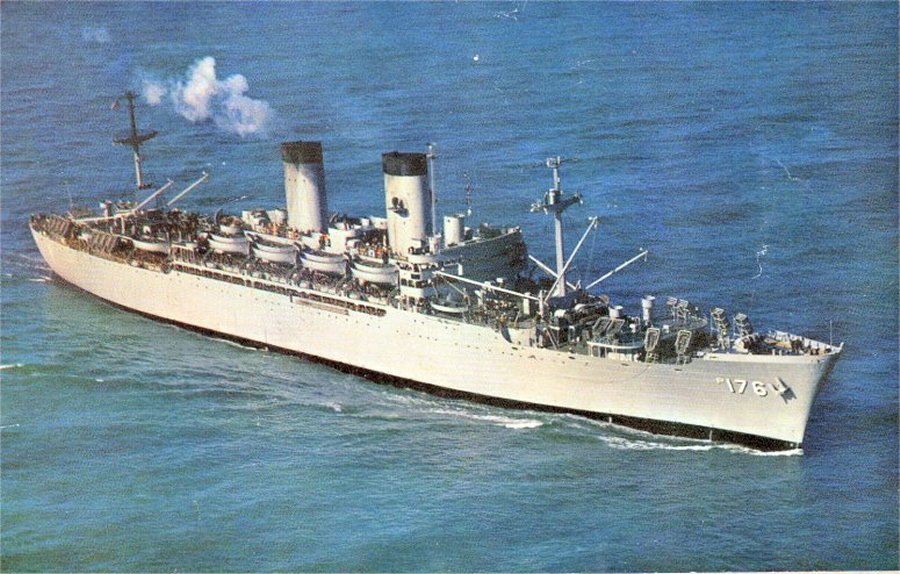
So, after kicking it around a while, I asked him to make his call and find me an assignment in Korea. May, 1963, I found myself on the USNS Sultan with around 2000 other GIs headed for Frozen Chosen.
We had a wild old time on the Sultan. The cruise was a long one because every few hours they’d shut down the engines and lower some kind of sensor to the ocean bottom as part of an ongoing undersea research project. The sea was generally calm, almost glass most of the way, porpoise and flying fish cutting the surface, sometimes banging themselves against the side of the ship.
Below-decks fortunes by enlisted-man standards were lost and won in 24/7 poker, gin, and rummy games. So long as there was no fighting nobody cared what went on down there.
We reached Pearl Harbor and everyone got shore leave for a few hours, preceded by dire warnings about HASP. Hawaii Armed Services Police. “Don’t mess with them. Do what they say or you’ll end up in the stockade or back here on a stretcher.” But 2000 GIs with cabin-fever were too many even for the HASP to keep in line. “Be back on board by midnight. Anyone who isn’t checked in here at midnight is going to wave us goodbye from the stockade.”
Hotel Street briefly had all the usual suspects of merchant mariners, US Navy, and enough wild-assed drunk youngsters off the Sultan to satisfy the most discerning needs of the community. At 11:30 I was standing in line at a tattoo parlor waiting to get a tattoo on a dare. The guy in front of me was getting a cherry tattoo with the words, “Here’s mine! Where’s yours?”
As the artist finished up someone shouted, “We’ve got to get back to the ship. We’ll be lucky if we make it!”
Luckyluckyluckylucky. Back on board as everyone began sobering up the head was full of GIs trying to wash off tattoos. One guy had “In Memory of My Mother” with a rose vine wrapping itself around a tombstone on his bicep. “She ain’t even dead. What the hell did I do that for?”
More endless days at sea, a brief stop in Japan for half-dozen of us toughees to get the socks whipped off us outside a bar by three Australian Merchant Mariners, and on to Inchon.
13 months later the trip home on the USNS Breckinridge was a different matter entirely. The sea was rough, pervasive odor of vomit on all decks. Discipline severe, pecker checks every few days to ferret out the multitude of VD cases. I’ve sometimes thought those troop-ship pecker-checkers might have found the sorriest job a human being could have. Imagine hitting the floor in the morning knowing you’re about to have to watch 2000 of those things milked down before breakfast.
And everyone suddenly knew exactly where Vietnam was. Rumor had it anyone who was going stateside reassignment would be going there in a few months.
Good morning readers. Thanks for coming by for a read this cold morning.
The adventurers are getting old and long in the tooth. I’ve written about this in the past a number of times, but a few days ago I got an email that got me thinking about it again:
Hi J, I hope this finds you well….cats too.
Age 72. Raised in northern Wyoming. Made my living mostly in electronics and related technology. Army vet.
I have been obsessed with that lost gold mine since 1974 and many years ago received a copy of your CD via a guy I think you know….If you had ever watched him shovel.
Bought your book several years ago. Lots of good stuff but editing sucked on the CD.. Also, someone you might know, Bob Gordon of Dallas went on a trip with us once to the Mangus Mt. area (probably in the early ’80’s) and I think I gave him his first copy of Allens and Byerts. Excuse me, but I am currently too many margaritas along right now and need to cut this short. I am convinced I have a lot of the story figured out….Yeah, like I’m alone. But seriously.
I would like to chat with you if only email, Fergy
I replied to his email saying I’d be willing to discuss it by email. Back during the day I spent enough hours on the telephone hearing where it was to break me of any desire to ever do that again. But there’s always a chance someone will come along and add the piece to finish out the puzzle.
When his reply elaborating on his ponderings arrived, he didn’t clear anything up, but it did get me thinking about some things.
Over the years those phone calls and emails have gradually squeezed down to men of advancing age. Most of us are getting so old we’re not likely to tromp up high mountains anymore. And we’re dying off. Of the hundreds of letters and phone calls I got over the years, every one of the originators had solved the mystery, or was near unto solving it. As I always was. Heck, as I still am, though I don’t think about it much anymore.
During the 20th Century thousands of men tried to find that lost mine, as did a similar number during the 19th Century. There was even a movie made about it in the late 1960s.
Sprawling frontier adventure with Gregory Peck as a sheriff who is given a map, said to show the location of a large cache of gold hidden in a valley, and soon finds he’s the target of every fortune hunter in the West. The star-laden cast also includes Omar Sharif, Telly Savalas, Julie Newmar, Lee J. Cobb, Edward G. Robinson. 123 min. Standard; Soundtracks: English Dolby Digital 5.1, Dolby Digital stereo; Subtitles: English, Chinese, Korean, Portuguese, Spanish, Thai; biographies; theatrical trailers.
But as the 20th Century wound down something interesting happened. There were no new legions of youngsters replacing the old ones, researching, reading, poring over maps and trekking into remote canyons. Something was gone, and it’s over.
Old Fergy, Keith and I, a few others are still out there thinking about it, but what we are and what we were is something modern humanity has left behind without noticing it’s done so. I don’t know what that means, but I’m not overjoyed about it. My preferred view of humanity and youth is going to require some adjustment.
Old Jules
Previous posts referring to the lost gold mine search:
No one remembers anyone
Who remembers anyone
Who remembers
Why she died
But there she is
Wealthy woman young
Good teeth,
No slave.
Those killers
Didn’t kill the slaves
Took them away squat beneath
The loot the weight of
What they carried off
As they did before for her,
Before emancipation
To slave for someone else.
Arroyo cut through ruin
Showed her to the wind and sky
And me a thousand years
After noise and smoke
And screams
Stone hatchet broke the head
Flames brought down the roof
Around her,
Her and her kin
Charred corn
Still on cob
Beside her skull.
She died and partly burned
A long forgotten civil war
Between someone
And someone else
No one remembers
Over something
Neither wind nor sun
Nor these charred bones
Remember.
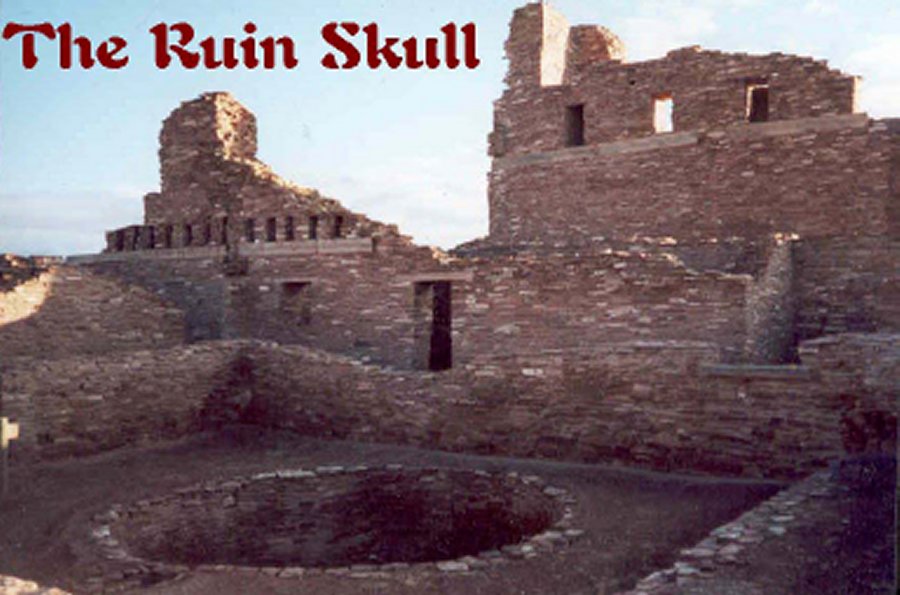
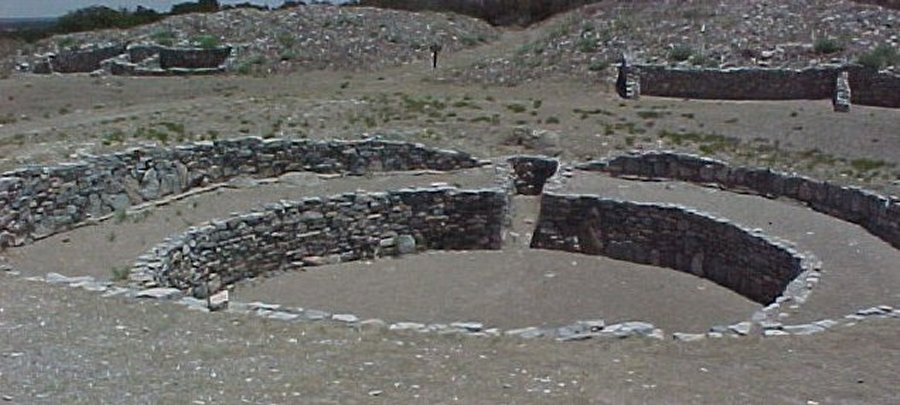
The mountain I used to prospect for several years is covered with ruins wherever there is water. Big ruins. I used to sit on one near my camp and try to imagine what it must have been like.
One summer solstice afternoon I was sitting on the cliff boundary of the ruin watching the sunset. In the basin below there’s a volcanic knob out toward the center of the plains. I’d discovered a single kiva on top of it years before and puzzled over it vaguely. What was that kiva doing there, miles away from the big houses?
But because that day happened to be solstice, I suddenly noticed when the sun went down, it vanished directly behind the point of that Kiva knob! Yon damned Mogollons used it to mark summer solstice!
A place like that fires the imagination, and I spent a lot of time thinking of those people who lived in that ruin. Some of these groups had evidently been in the same locations for 300-400 years, and suddenly their government leaders decided they had to leave. Politicians, or priests, or both, deciding what was best for them.
One day they just left. I’ve always thought it was because of that grim civil war nobody knows anything about that happened among them around the time these ruins were abandoned. Bashing in the heads of anyone who didn’t agree to migrating.
They probably watched and even hosted strings of these travellers along the trail until their own turn came.
What a thing it must have been to be one of them on that last day, saying good bye to the place your great-grand-dad, your granddad, your dad, and everyone else as far back as anyone could remember, including you were all born, lived, and mostly died.
Everyone voluntarily packed a few belongings, a medicine bag and blanket or two, a stone hatchet and a few scrapers, and left, leaving corn in the bin for those coming behind. Abandoned pots lying around all over the place measured the things they couldn’t carry.
Sometimes sitting on that mountain early in the morning it sort of overwhelmed me, the pain and sorrow in those villagers. Probably they all left in the morning one day, after a while of maybe being notified it was their turn. A few weeks of planning. What to take? What to leave behind.
Finally they probably finished the last minute packing the night before. At dawn they made a line down the basin heading south, looking back over their shoulders as long as they could, feeling so sad. Knowing they’d never go home again, wondering about the place they were going.
Remembering how it was playing on the mountain with their grandads when they were kids, remembering the special, secret places kids always have. Just looking and yearning to stay, and already missing that long home where their ancestors had roamed for 2000 years.
They’d have tried to keep it in sight as long as they could, each one stopping to wipe the trail dust off his face, pretending to catch his breaths. But yearning back at the old home place, piercing the heat waves with their eyes, straining to see it one last time, maybe crying, certainly crying inside. The kids probably screeching enough to cover everyone elses grief.
As they trekked south they were joined by other groups from the neighboring villages. The dust rose on the trail making a plume, a cloud around them. They examined these strangers who were now trail mates and wondered who they were.
Some, they probably soon discovered had a mother-in-law, or uncle who came from their village. They got to know one another better there on that hot, sad, lonesome trail away from all they they’d ever known, and they shared the hardships of the journey together for a long time.
Today, it’s just piles of rock, potsherds, holes left by scholars and other diggers for spoils. The land still falls off across Johnson Basin, sun going down over that volcanic nub that once measured the time to plant. Cow men ride their motorized hosses across the old trails, cows stomp around looking for grass, making the pottery fragments even smaller.
But sometimes late at night when the wind howls down the mountain a man might hear, or think he hears an echo of the chants, the drums, the night mumbles and whispers of lovers, the ghosts of lovers. Pulls the bag tighter around his ears and wonders.
74 years old, a resident of Leavenworth, KS, in an apartment located on the VA campus. Partnered with a black shorthaired cat named Mister Midnight. (1943-2020)
Since April, 2020, this blog is maintained by Jeanne Kasten (See "About" page for further information).
https://sofarfromheaven.com/2020/04/21/au-revoir-old-jules-jack-purcell/
I’m sharing it with you because there’s almost no likelihood you’ll believe it. This lunatic asylum I call my life has so many unexpected twists and turns I won’t even try to guess where it’s going. I’d suggest you try to find some laughs here. You won’t find wisdom. Good luck.







![Mackenna's Gold [DVD]](https://i0.wp.com/www.moviesunlimited.com/boxcovers/100_Wide/D17790.jpg)



 So Far From Heaven
.jpg)
;)