Category Archives: NM

The Strangeness – Background Context of Unsolved Homicides

By the time this was published in 1999, I was no longer going up that particular mountain.  I was busy on my Y2K land and dwelling preparations about 50 miles northeast of Quemado.

But this will give you an idea of the general local psychological environment in the area, both while I was working the mountain and [it turned out] later, while I was doing Y2K.

http://articles.latimes.com/1999/nov/20/news/mn-36275

Unsolved Slayings Have Small N.M. Town Living in Fear

Crime: With seven people killed since 1996, residents are openly packing heat. Authorities see no connections among the deaths.

November 20, 1999|PAUL DUGGAN | THE WASHINGTON POST QUEMADO, N.M.

— There’s not much to the town. You come upon it in the vast, yellow-brown emptiness of southern New Mexico’s high desert grassland. It’s mainly just a strip of old storefronts on Highway 60, with some dusty side streets.

In a 40-mile radius of Quemado you might find 500 people, about half of them ranchers living like pioneers on the plains and in the foothills, miles from any neighbor. The rest live in town, in trailer homes and faded stucco bungalows amid the tumbleweeds and pinon trees.

The sheriff, Cliff Snyder, said it used to be a peaceful place in its lonesome way, before all the killings. Now there’s fear in the air, like a foul wind.

Who murdered Gary and Judy Wilson? It’s a mystery. They disappeared in November 1995 and turned up eight months later, so many bones in the woods. Who shoved Gilbert Stark into a 20-foot well and closed the cover in ’96? Who shot the elderly Clark couple and their daughter in ’97? Who put a bullet in the heart of James Carroll, 59, as he stood in his corral just north of town one autumn day last year? The sheriff doesn’t know.

He and the state police said they are convinced the cases aren’t related. They were random eruptions of murder where murder used to be rare, Snyder said. He has no clear explanation for it. All of the victims lived in the countryside around Quemado, about 125 miles southwest of Albuquerque. Before the Wilsons were slain, no one had died by another’s hand in this part of sprawling Catron County in nearly a decade.

And no one wants to be next. In a swath of America where gun control means hitting what you’re aiming at, a lot of folks are packing iron. They’re propping shotguns and rifles beside their beds; they’re driving with pistols on the front seats of their pickups. The sheriff said he doesn’t mind. This is the rural West, he pointed out, and guns are a heritage.

“We’re raised with them,” said Snyder, 42. He shrugged. “If I pull over a vehicle, I figure they’re armed, if they live in this county.”

At El Sarape Cafe on Quemado’s main street, Irene Jaramillo, 43, keeps a .22-caliber semiautomatic on a shelf near the griddle. One morning last week, Paul Strand, 67, who owns a horse ranch south of town, was sipping coffee in the cafe with his wife and holding forth on the subject of their firearms.

“I sleep with a Colt .45 under my pillow,” he said. “I have a loaded assault rifle beside the bed, a Russian-type, ready to roll. And a sawed-off shotgun next to that, loaded, legal, but just barely, in terms of the barrel length.”

Across the street, Carl Geng, who is in his 60s, runs the Allison Motel with his wife. They also own a ranch outside of town. Geng said he thinks he knows the culprit in one of the homicide cases. “I’ve got a .38,” he said, gesturing to his truck in the parking lot. “He sets one foot on my ranch, I’ll blow his head off.”

The sheriff said he and the state police think most or all of the victims were murdered by acquaintances with whom they had personal disputes. As for suspects, investigators have only “theories,” he said.

It’s a crime in New Mexico to carry a concealed loaded weapon in a public place but legal for anyone 21 or older to carry one openly, no permit necessary. James Clark, a Vietnam veteran, started packing two handguns after his parents, William Clark, 84, and Pearl Clark, 74, were slain in 1997 along with his sister, Sharron Hutson, 44. Folks in Quemado are used to seeing him in town with a .45-caliber Colt Peacemaker on his right hip and a .40-caliber semiautomatic in a shoulder holster.

“Which is fine,” said Irene Jaramillo’s husband, Jimmy, who is one of Snyder’s deputies. “I told him, ‘As long as I can see them.’ “

James Clark and his wife, Elaine, 42, now live in the remote trailer home where the elderly couple was murdered. Elaine Clark, who prefers a lighter-weight .35-caliber, sat in the kitchen one day last week with her husband’s heavy semiautomatic on the table in front of her. There was a loaded hunting rifle propped against the freezer by her left hand.

“We always used to brag that it was like the Old West, in the way that your house was never locked,” she said. “Someone passing by, if you were gone, they could come in and get something to eat. But now it’s more like the Old West the way you’re always on guard. You don’t walk up to my house unless I know you’re coming . . . or you could darn well get shot.”

Catron County, with just 3,000 residents, covers almost 7,000 square miles. It’s bigger than Connecticut. Snyder, who was a deputy when the seven homicides occurred, was elected sheriff last year. He has an undersheriff and four deputies, including Jaramillo, who patrols the northern half of the county around Quemado. Half a dozen state troopers also work in the county. But with such a vast area to cover, it sometimes takes an hour or more to reach the scene of an emergency.

Cold Mystery, Fevered Romance and Lost Gold

A burned out cabin ruin with an aspen tree growing out of the inside, bear claw marks 12 feet up, 3 hand forged nails, a longtom sluicebox axed out of a 3 foot diameter log, a spring 75 feet above the sluice, an arrastra below. 

A mysterious map chiseled on the face of a 300 pound rock surface depicting the exact layout of the canyon, the cabin, the waterfall, all so accurately depicted the person had to have scrutinized the layout from the mountaintop, then scratched it on this stone 600 vertical feet below and half a mile away.  The rock was carefully placed on the canyon wall above eye-level so it was easily seen, but only by someone looking up.

I’m guessing the date must have been spring, 1995.  I’d moved my search to the mountain I described above and was performing a systematic search of  the canyon from the discharge to the mountain crest.  I’d filed two mining claims at the location of the cabin and sluicebox pictured in the earlier post, and downstream.  I hadn’t yet found the map rock, and I was spending every moment I could squeeze between job duties, romantic obligations and financial constraints camped on that mountain.

I headed down there planning on spending a week, but on the road the Mitzubishi Montero sprung a water hose a few miles outside of Grants.  It was raining while I mucked under the hood, taping the hose and getting enough coolant in it to drive it to a parts house in Grants, where I installed it in the rain.  I was chilled and soaked as I drove south from Grants, but in too much of a hurry now to change clothes.

By the time I arrived at my usual camp site I was running a high fever and feeling my breathing becoming hard labor.  I hastily dragged a tarp out of the truck,  put my sleeping bag under it and got inside, hoping I’d shake off what I was afraid was coming.  I’d had pneumonia enough times this lifetime to recognize the onset.

The next morning found me weak, fever skylining, knowing I’d better try to get out of there while I still could.  I threw some brush over my gear because I was too weak to reload it onto the truck, and started down the mountain.  My vision was blurred and I was hallucinating, barely able to stay on the two-track.  When I reached the US Forest Service road a line of fenceposts ahead briefly became a line of riflemen aiming at me.

I remember nothing of the trip after that until I found myself at the home of my lady friend in Albuquerque, wrapped in a blanket on the floor of her downstairs because I wasn’t strong enough to climb them, burning with fever, shaking with chills.  She, nursing me with herbs and leftover antibiotics from her medicine cabinet.

“There are some people missing out there where your claims are.”  She was sipping coffee at the table, looking over the paper at me.  “A man and his wife.  The State has people out searching for them.”  She shook her head.  “They must have been right near where you were.”

The couple lived across a basin at the base of the mountain.  I could probably see their dwelling through binoculars from the mountaintop.  They were woodcutters, but I’d never encountered them, to my knowledge. 

As I recovered in Albuquerque the search died away.  The local sheriff announced the couple had probably just abandoned their house and gone somewhere else.  They were nobody, outsiders.  He refused to treat their vanishing act as a possible crime, didn’t allow the State Police to investigate their home.  But the time on the floor in Albuquerque weak as a kitten, tended hand and foot is one of those tender, grateful memories of my years with the lady.

Over the next several months I continued, sometimes in company with Keith, sometimes with other friends, sometimes alone, exploring, sampling, puzzling over what I was finding there.  Then, the first day of elk season that fall I encountered two elk hunters with their truck stuck in a stream bed.  When I finished towing them out, we introduced ourselves.

“Did you hear about those bodies they found in the canyon over there?”  He gestured to the mountain indicating a canyone one over from mine, plus one.   Renfro Canyon on the rock map sketch.  Less than a mile from my claims.  “A bear dug them up.  They were buried in an Indian ruin and a hunter found them this morning.”

The bodies turned out to be the people who’d turned up missing while I was giving myself pneumonia.  I felt reasonably confident the police would be contacting me with questions about whether I’d seen anything, because I was probably the only person on the mountain besides the victims and the murderers at the time it happened.

The Bureau I worked for, Emergency Management Planning and Coordination [EMPAC] was part of the New Mexico Department of Public Safety, though a step-child and somewhat separate.  I went to my Bureau Chief and explained what had happened, asked whether he thought I should go over to the State copshop and volunteer to talk to them about it.

“Man, I wouldn’t touch that.  Let them come to you.  You might be the best suspect they’ve got.”  A lawyer friend gave me the same advice, informally.

So I kept quiet and waited, and they never came.  I kept working that mountain, homicides and multiple-homicides continued to happen over the next couple of years remaining unsolved and generally thought to be uninvestigated, and the entire county became a quagmire of paranoia.  Everyone carrying firearms, nobody trusting anyone.

Meanwhile, the mountain echoed the weirdness and pressure the county was experiencing.  Somewhere during that time began the strangest chain of events and experiences of my entire life.

Which I might describe in a later blog or series of blog posts.

Old Jules

Christmas Eve for a Hermit and Cats in a Mountain Village

I wrote this several years ago in a previous lifetime before Social Security kicked in when I was trying to make a living playing blackjack.

Casino’s Shut Down for Christmas!

Went back down there for some more blackjack and didn’t get in more than a few hands before a pit boss announced they were shutting down the tables, the casino, and sending everyone home to spend time with their families.

Surprised me, but a worthy cause I wouldn’t have expected of them.

Fact is, all those gamblers who aren’t aware that blackjack’s a spiritual experience needed to be off somewhere else, anyway.  Which is to say, pretty much all of them except me.

So, I smiled to meself with a warm red glow that a casino would let the employees go home to be with their kinfolks instead of staying there making a lot of money for the mafia.  Swung over by Taco Bell on the way back out of Bernalillo and picked up three bean burritos and three crispy tacos to celebrate a victory for those employees over casino management.

Brung those tacos and burritos back up to the village and capped the hill looking down into Placitas…. looked as though something awful had happened here….. flashing emergency lights copcar style all down on the main road.  Sheriff with a flashlight was waving me to take a back road.  I rolled down my window, “Accident?”

“No.  Most of the roads are shut down.  People in groups in the middle of the roads singing carols.  You’ll have to take this road.  Be careful.”

Happened ‘this road’ was the very selfsame road I needed to take to trip my young arse home as fast as safety allowed to lock the front gates and turn off the outside lights before any carol singers could catch me unawares and make me listen to Christmas carols.

I don’t so much mind people singing carols.  I think it’s kind of cool, actually, especially if they were to go a step further and listen to the words they’re singing.

On the other hand, I honestly don’t want to listen to the words, the music, nuthun do do with Christmas carols.

I figure if I can go through an entire presidential term without knowing who’s president, and go through Thanksgiving to New Year without hearing a single Christmas carol (most especially ones involving Santy and reindeers), it will be okay to die.  I’ll know I’ve lived right, at least one period of my life.

Anyway readers, if you’re reading this blog you need to get your young arse off the computer and go spend some time with the family.

But if you don’t have somewhere else to be, don’t have someone else, why heck, amigos, rejoice.  Luxuriate in the beauty of being alone with yourself and any cats you might have.

If you don’t have any cats, nor any particular self you can bring yourself to rejoice about, heck.  As Sonny and Cher used to say back when everything was supposed to be pretty well straightened out by now,

You got me, babe.

Old Jules

A Few Things Zuni – Part 1

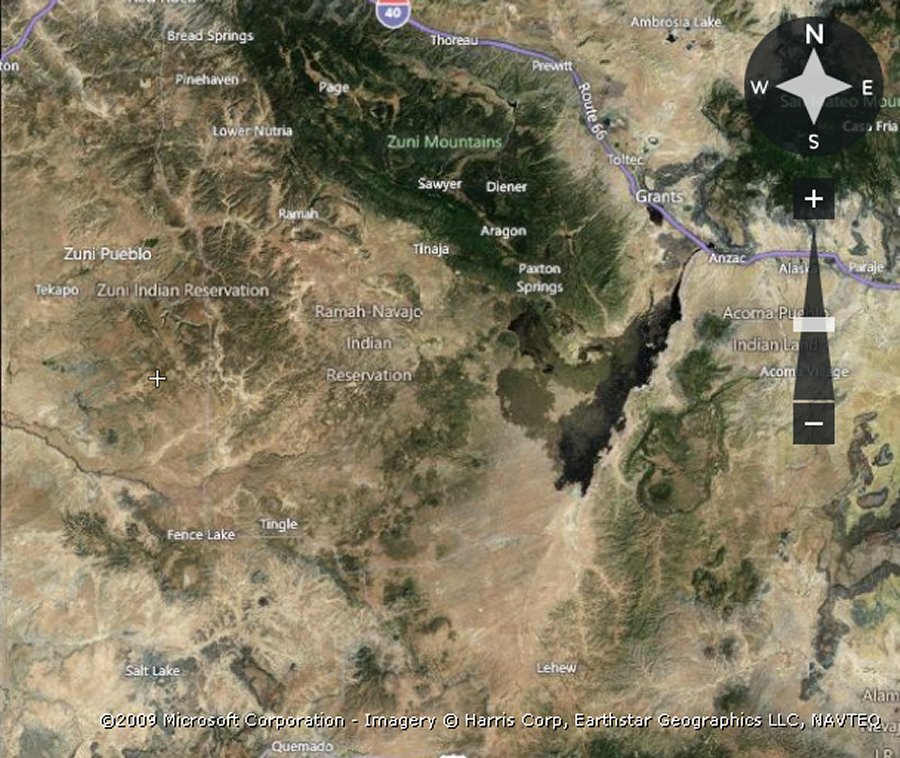
During the early 1990s the Coincidence Coordinators conspired to make Zuni Pueblo and the geography surrounding it a major focus in my life.  I mentioned a bit about Zuni here:  This is Zuni Salt Lake, but over the next couple of whiles I’d like to tell you a bit more about them. 

At the time the overwhelming part of my salary was paid by FEMA and a part of my job involved mitigation of recurring natural disaster damage behind federal disaster expenditures.  In New Mexico a huge percentage of the recurring expense was located on Navajo lands, but flooding on the Zuni River reared its head as a concern during the same time period.

Meanwhile, the Coincidence Coordinators got into the act.  The search for the lost gold mine was being driven by documents from the US Archives, New Mexico State Archives, fragments of mention from 19th Century newspapers, later-in-life memories of men connected to the events and documented in books, topo maps and other researched sources.

Keith and I, examining and submerging ourselves together during that phase of my search, concluded the areas to the east of Zuni, and to the south were prime candidates for the location.  Candidates based on what we knew at the time.  Wilderness Threats.

By my own recollection that phase of the search lasted only three, maybe four years, maybe less.  But it led by numerous routes, into more than a decade of closer association with Zuni, both as a tribe, and as a geography.  I’ll be posting more about that, about Keith’s and my explorations, about the Zuni pueblo and the people living there, and about some aspects of the history and culture.

But I’ll begin by posting this piece of doggerel I wrote a long time ago about my first visit to the Zuni Rez and my first encounter with the Zuni and Ramah Navajo.  That meeting with the Zuni Tribal Council burned itself into my memory as few things I’ve experienced this lifetime have.

Flooding on the Zuni land
Tribal chairman calls
Upstream Ramah Din’e band
Over grazing galls.

Ancient ruins I travel past
Forgotten tribes of old
And finally arrive at last
On Zuni land as told:
Tribal council meets, he chants
A time warp history.

I Listen long the raves and rants
And river mystery:
Navajo must have his sheep
To have his wealth, it’s plain.
Too many kids, too many sheep
Too little grass and rain.
Forgotten white man wrongs and deeds
The raids of Navajo
Corn that didn’t sprout the seeds
And stumbled Shalako
More sheep grazed than in the past
Arroyos grew wide and deep
Siltation settled hard and fast
In riverbed to sleep.

Navajo siltation choked
An ancient channel bed
Water rose above the banks
200 cattle dead
Houses flooded, ruined cars
Fields of grain were lost
A playground field a channel mars
And who should bear the cost?

The tribal chairman Ramah band
Listened to my tale
Stony silence, steady hand
Informed me I would fail.

“If those Zunis don’t like floods
Tell them to reduce the chances;
We’ll hold back our streams of muds
If they’ll call off their damned rain
dances.”

(Doggerel to smile by)

Old Jules

Post-Y2K Cross-Cultural Trials, Trucks and Unwelcome Wisdom

The Cohoe women raised and sheared the sheep, made the dye, hand-wove this rug.

As the post-non-Y2K hard times hardened, I did a lot of scrambling trying to make ends meet. One by-product of that squeeze was that I began doing some trading with the tribes for pottery, rock art, rugs, and other products to resell.

This got me acquainted with a Navajo man who became a running buddy for a while. Curtis Cohoe.  [Not to be mistaken for his namesake, the Mescalero referred to on several posts.]  A man about 50 years old. Pine Hill (Self-determination) Rez. Good family, a generation earlier. His mom and aunt still raise sheep, shear, dye the wool with dye they make from crushed rock and plants, and weave good rugs the old way.

Early in his life, Curtis started out pretty well.  He was intelligent, talented, and I’ve always assumed he must have attended a university.  When he was being an artist everything he did was in demand.  He was an excellent shade-tree baling-wire and chewing-gum vehicle mechanic, and he could chop a cord of wood with an axe almost as fast as I could cut one with a chainsaw.

Worked for the US Forestry Service as a fire fighter, then as a Ranger in California until things went haywire. Back in New Mexico, a cop raped his younger sister and got by with it. Curtis came back and beat the cop to death with his fists, which got him 10 years in prison.

Once that decade of bars was over, Curtis never really got back onto the right track. He had a lot of anger in him, and he had some brothers who were in and out of prison a lot, who kept the pressure on from the law. (Curtis was fairly frightened of one of the brothers, whom he described as a bad-ass. The other was an evangelical preacher who sold some drugs and stole in between times).

Curtis was much of a man in a lot of ways when he was sober, or mostly sober. I’d known him a considerable while before I ever saw him drunk, never realized he was sometimes a drinker.  He shifted his residence frequently between the family place on the Rez and Grants, New Mexico.  Maybe that’s how it escaped my notice. 

But early in our friendship one day I drove up to a place he was doing some artwork painting on a table top in an alleyway next to the railroad track in Grants. I was just in time to see three semi-drunk Din’e toughs in their mid-20s approach him, exchange a few words, and start swinging.

By the time I got out of the truck to help him he didn’t need any help. The two fully conscious ones got to their feet and left at a stumbling run.  The less-conscious one stuck around long enough for me to try to stop the bleeding by tying a bandana around his head while Curtis intermittently kicked in his ribcage.  I’m glad I never met the brother Curtis was scared of and considered a badass.

I don’t know whether I knew Curtis didn’t have a license to drive an automobile.  He frequently drove my truck running errands and chores.  I had no qualms about loaning the Ford pickup to him when he needed to go out to the Rez for one reason or another provided my old Isuzu was running okay. 

One day we were preparing for a trading trip to Shiprock and Curtis left in the Ford to get it gassed up for the trip.  When he didn’t come back for a couple of hours and I saw a wrecker go past towing my truck I immediately went over to the wrecker to find out what was going on. 

“Is this yours?”  He grinned because he knew damned well it was mine.  My apartment was no more than 150 yards from his yard and we both occasionally had coffee a few feet apart in the Chinese restaurant between his place and mine.  “Your damned Indian’s in jail.  Towing fee on the truck’s $50.”

What did he do?”

“They stopped him for a routine traffic check.  He didn’t have a license and when they called it in they found out he’d had a lot of DWIs.  He’s going to be in there a while.”

I paid out the $50 to get the truck out of hock and seethed about it considerably.  It would have been too easy for it all not to happen and I found myself thinking Curtis had about outlived his usefulness in my affairs.

But mutual acquaintances brought me a message from Curtis asking me to bail him out of jail, telling me how sorry he was about it all.  He was going to be stuck in there for at least six weeks if he couldn’t raise bail.  Swore he’d pay me back everything he’d cost me.

I wasn’t Mister Moneybags, but I could squeeze $500 if I had to, and I did over a few days, selling things cheaper than I’d intended.  Once he was released he brought a friend from the Rez over and told me he was going back to Pine Hill for a while.  Asked if he could borrow my pickup for his friend to drive him back out there.  His friend had a license, and I loaned it to him, figuring it would be gone for a day, maximum.

The truck never came back.  Curtis and his friend evidently got drunk on the way to Ramah and got chased by a Navajo-hired cop on the State Highway until they ran the truck into a tree, Curtis driving.  I wasn’t long finding out he was being held in the private penal facility outside Grants, and that he was looking at two years in prison, and I was looking at losing the bail money.

A week or two later I heard a guard had grabbed him and Curtis knocked him down.  He was now looking at no-less-than five years hard time.

Everything else being equal I wouldn’t be surprised if he’s still there.

Sometime afterward I had a buyer for one of the rugs his mother and aunt made, so I stopped in on her for a visit at Pine Hill.  Naturally the subject of Curtis came up.

He needed to stay out of town,” was all she said.

Old Jules


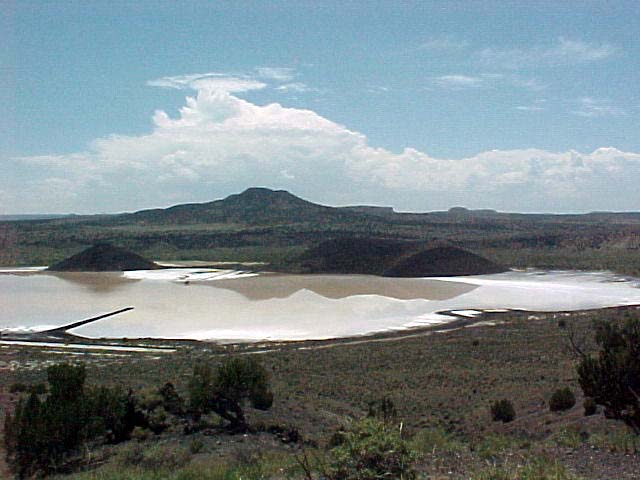
This is Zuni Salt Lake


It’s about forty miles south of the Zuni Rez, almost in AZ.

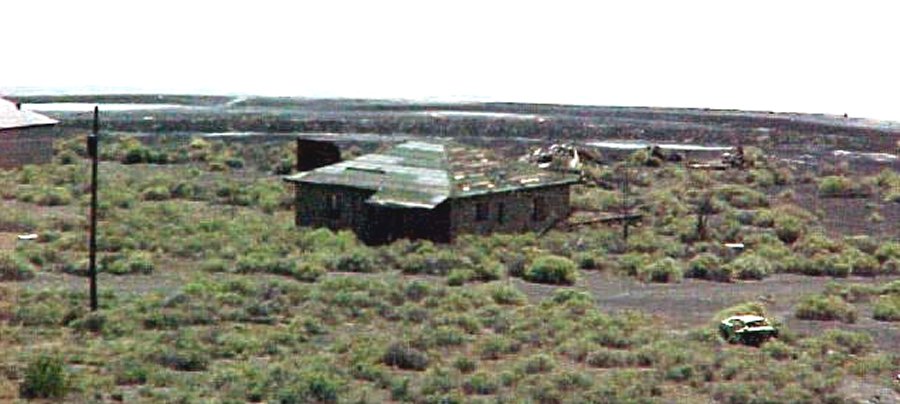
There’s a ghost town you can barely see in the pic…. used to be a considerable community down in there when it was private land, from the mid-1800s until the 1950s, evaporating salt from the huge concrete beds.  Most of the buildings are still intact, though they’re going away rapidly.

Today it belongs to the Zuni tribe, one section of land, but it’s not in the national trust as part of the Rez.  Tribes have been acquiring a lot of land from casino monies and other ways during the past decades, making the lands acquired ‘tribal’, but not Rez, which puts them into an interestingly ambiguous position insofar as road maintenance and county taxes.

Salt Lake was acquired as a piece of a lawsuit against the US government involving an airplane with a hydrogen bomb aboard that crashed on the Rez, with first responders being Zunis, but which the feds didn’t bother telling them about the bomb, leaving emergency workers exposed to hazardous materials without knowing it.  The tribe got a few million out of that, which they used to purchase 60k acres of land to the south of the Rez, but Salt Lake was thrown in as a bonus.

Salt Lake’s a sacred place for the Zunis, home of Salt Mother.  If you are willing to risk hopping the fence and wandering around down there ….. it’s a volcano crater with a hollow secondary plug you can climb, then a spiral trail leading back down inside … that’s where most of the rituals for Salt Mother are held… but all over that section you’ll pass over various religious items from recent times you’d be well advised to leave untouched.

Salt Lake used to be the place all the warring tribes got their salt throughout history.  A place where a constant truce between enemy tribes existed.

It’s also part of what the power companies would love to strip mine.   The great percentage of the desert surrounding it, from north of Springerville, and Saint Johns, Arizona is government land with shallow coal deposits comparatively inexpensive to ‘recover’.  They’ve already converted the desert on the Arizona side to a wasteland.  Still desert, but more in the moonscape vein than the usual, regular arid country mode.

The people in El Paso and Phoenix need electricity so they can fire up their hair dryers every morning, and keep their homes refrigerated.   Those places have climates uncomfortable to the human skin most of the time and they’d rather savage a few million acres of country they’ve never visited and never will than suffer a few degrees of discomfort and use a towel to dry their hair.

Which the Zuni believe would thoroughly piss off Salt Mother, with considerable resulting pain for the Zunis, and all the rest of us.

They might be right.

The Zuni and a few commie-pinko-obstructionist greenie environmentalists are the only people who give a damn, and the other desert-dwellers in the area would welcome the jobs helping ravage the country around them would bring to the area.  The last time I looked the Zuni tribe was burning up a lot of tribal money trying to stop the mine expansion into New Mexico.  The prospects didn’t appear promising because the New Mexico government, the feds, and the mining interests were stacked up singing songs of human progress and greater good.

Heck, it’s been a few years now.  Maybe they’re already mining it.  Probably easier to ask someone in Phoenix or El Paso whether the hair dryer worked this morning and if it did, assume that desert has gone to the moon.

Old Jules


Anachronistic Perceptions and Temporal Priorities

Morning readers.  I appreciate you coming by this morning.

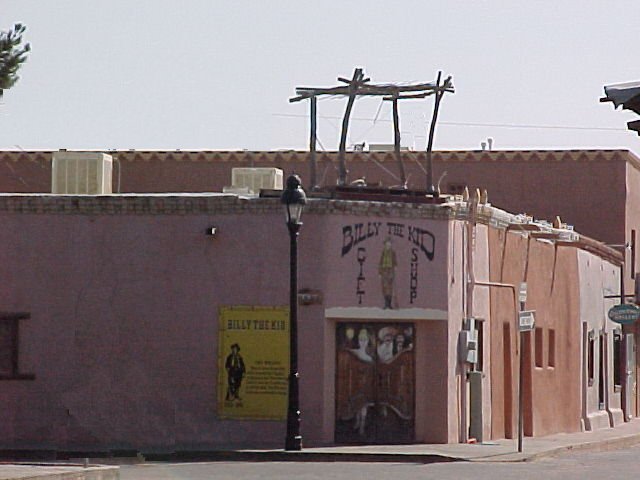
The building pictured is on the corner of the plaza in Mesilla, New Mexico.  I don’t recall at the moment what connection it has to Billy the Kid, other than the fact he hung around Mesilla.  I do know the building was the center-piece for a lot more resounding events than some half-baked kid with a pistol could ever have added to, or taken away from.

That building, in 1860, was the County building where Jacob Snively, former Secretary of War for the Texas Republic, and his partners filed the mining claim for their gold strike at Pinos Altos, New Mexico.  They attempted secrecy, but the word leaked out quickly.  They headed back to the Gila, camped after dark, and woke in the morning surrounded by a booming mining camp sprung up during the night, home of a major gold rush.

Not much later the same building became the headquarters for Colonel Baylor and the first wave of Texan Confederate invaders of the western territories.  The primary Government building for the Confederate Territory of Arizona. 

Baylor recruited from there and volunteer recruits from Mesilla and Pinos Altos comprised the overwhelming part of the force of Sherrod Hunter for his invasion and occupation of Tucson.   One of Snively’s partners, Jack Swilling, commanded the Confederate troops at Picacho Pass, westernmost battle of the Civil War.  Swilling eventually became the founder of Phoenix, Arizona.

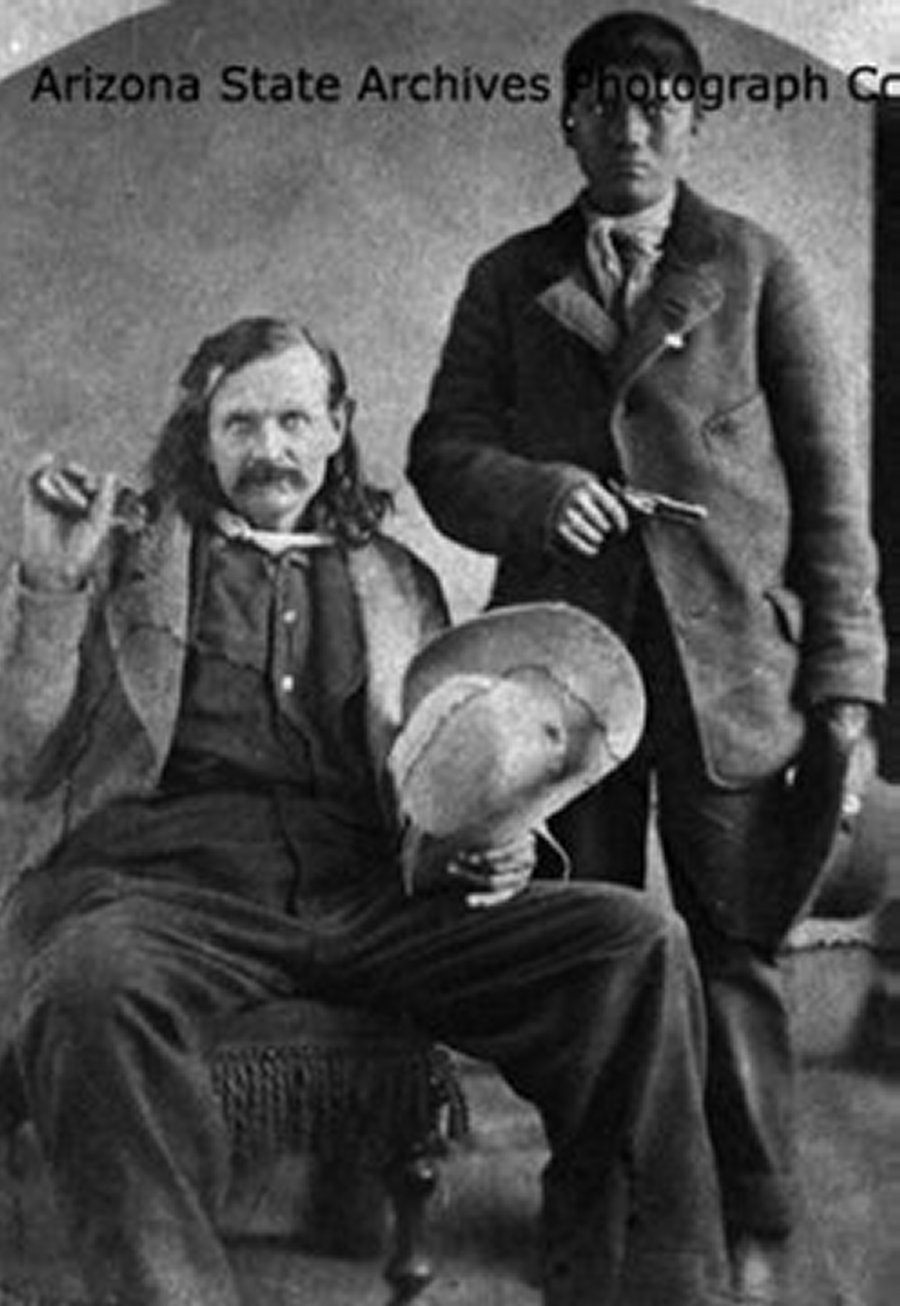
Jack Swilling

There it sits today, that building, proclaiming itself to be something involved with a tiny man with a big pistol, but it has a lot more to say if anyone was listening.

Old Jules


Old Sol’s Moodiness and Being a Character In a Book

In case you’re one of those people who hasn’t been staring at the sun, here’s a brief update before I tell you about an interesting tidbit in my life:  Finding myself a character in a ‘memoir’ [actually a novel] written by my step-brother published as non-fiction.  But important things first:

From http://spaceweather.com/

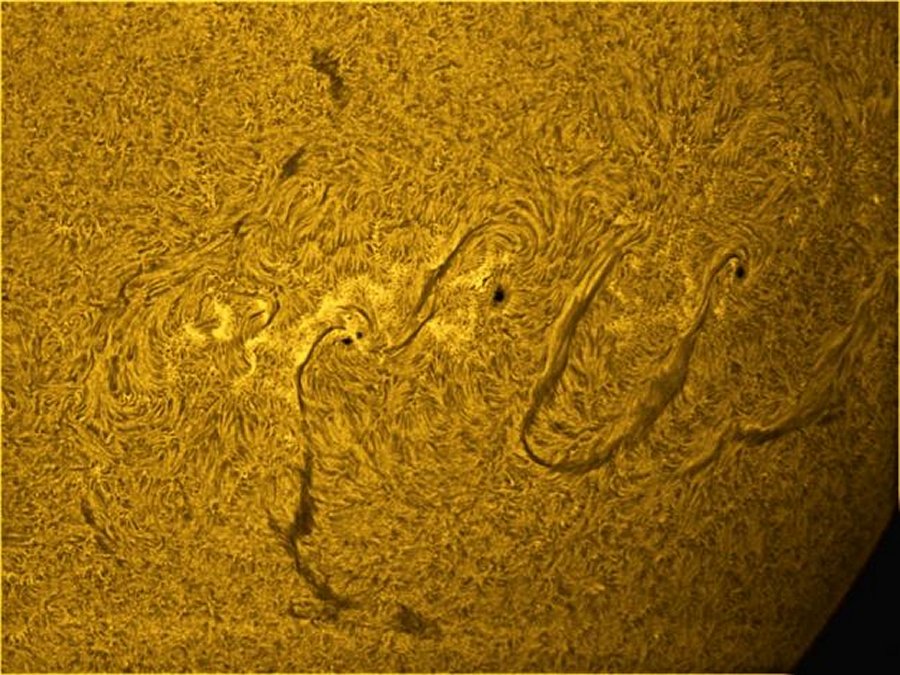
Here he is November 28:

As you can see, the south pole stuff’s maintaining itself, still doing what it was doing when I last mentioned it.

Here’s today.

Still something going on down there, but the grandstanding is still north of the equator.

Strangeness

SINUOUS SUNSPOTS: A line of sunspots stretching across the sun’s northern hemisphere appears to be an independent sequence of dark cores. A telescope tuned to the red glow of solar hydrogen, however, reveals something different. The sunspots are connected by sinuous filaments of magnetism:

“These sunspots writhe and squirm energetically as they rotate away from us!” says John Nassr, who took the picture on Nov. 28th from his backyard observatory in Baguio, the Philippines.

The connections suggest an interesting possibility. While each sunspot individually poses little threat for strong solar flares, an instability in one could start a chain reaction involving all, leading to a widespread eruption. Readers with solar telescopes are encouraged to monitor developments.

I could write a lot about this but none of it would necessarily be true, so I’m doing my best not to have an opinion while keeping my foot in the door for afterward saying “I told you so,” if I can get by with it.

Okay.  Now for the main thrust of this post.  Before beginning the post I visited the Bobby Jack Nelson Forum on Amazon to see what was being said about him: http://tinyurl.com/7zj2la3

A while back I got an email on an old email address I rarely check anymore from a lady who wanted to discuss my step-brother, Bobby Jack Nelson.  She explained he’d offed himself in a nursing home in San Saba, Texas, and that she’d had a long-term relationship with him. 

But Bob had told her a lot of things she’d begun to think were lies.  She just wanted to bounce some of them off me because she knew he and I had associated considerably during the 1980s and early 1990s when he was writing Keepers – A Memoir. http://tinyurl.com/d82tcsk.

 To be honest the whole thing qualified as strange enough to keep life worth living.  Bob and I saw quite a bit of one another during those years, and I knew he was writing a novel about, among other things, his childhood in Portales, New Mexico.  I considered him a friend.

 But one day in the late-1990s [as soon as the novel had been accepted by a publishing house, I later discovered] while I was living in Socorro, New Mexico, I got a call from Bob.  He didn’t mention the novel, but he said he was going off to South America and wouldn’t be returning to the US, so I wouldn’t be hearing any more from him.

I got reports from various mutual acquaintances they’d seen him in Texas here and there, so I figured he just wanted to break off our association, which was puzzling, but okay by me.  Then I got a call from a Dallas reporter asking what I thought of the book, which I hadn’t been aware was published.

 Naturally, I bought and read a copy.  Suddenly it was clear to me why the reporter had called me, but also why Bob had suddenly taken a powder.  My first reaction to reading it would have been to trip up to that mountain town he was staying in while writing it and beat hell out of him.

I was honestly dumbfounded the man could bring himself to publish such a pack of lies as non-fiction.  But a person would have had to have been there, or remembered what he’d said back earlier had happened, to recognize there was barely a grain of truth in any of it.

Gradually I cooled down and just forgot about Bob until the lady contacted me to tell me he was dead, and how he’d died.

We exchanged a lot of emails over several months, and it was a journey of mutual discovery.  But the discoveries came in the form of Bob being an even worse liar than I’d have thought possible knowing already he was an accomplished liar.  And for her, not knowing he was a liar at all, I suppose it provided her some closure to find the man she loved, somewhat idolized, was in awe of, was not the person she’d believed him to be.

 Oddly enough, I think Bob tried to warn me a number of times about himself.  Several times he told me over the years that he was a liar, but I didn’t grasp the extent of what he was saying.  Other times he told me he wasn’t what I thought he was, and I shrugged that off, too.

But what came as a shock to me, first with the book, and later with what the lady told me, was that Bob absolutely despised me.  That, I’d have never guessed during the years I wasted pieces of my life associating with him in what seemed a mutually warm, friendly relationship.

Live and learn.

Old Jules


The Great Tick Migration – Occupy Texas

I wrote this when I lived in Socorro, New Mexico, but I’d guess it’s as timely and germane today as it was then.

It’s sad, but they have to migrate: there’s no good water in the Rio Grande anymore.  It’s all sewage passed downstream from Albuquerque and other towns. 
 
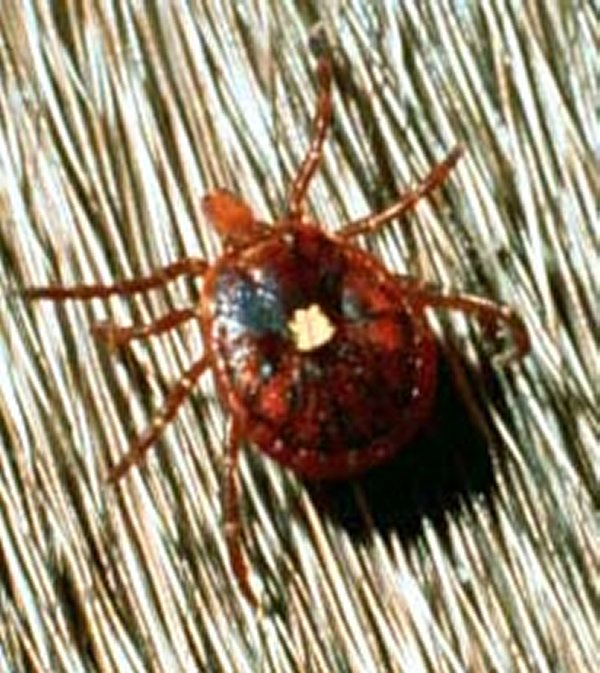
This was almost home to them. Their ancestors arrived with the first cattle drives from Texas in the 1880s. But finally they’ve had enough. Lemming-like they’ve decided as one to return home, Lone Star Ticks to the Lone Star State, same as those invading Confederate Texas humans had to finally stagger and stumble home when things took a turn for the worst..
 
This far south they’ve just begun to gather; just started to come out from under the grassleaves, the treebark, stragglers still coming out of the brush. The main migration gathering is further north in the Isleta lands, Lost Lunas, and up by Belen. 
 
There they’ve mostly already grouped. They’ve dropped off the rats, cows, deer, dogs and coyotes. The earliest ones are drifting south ahead of the others. They’re the lucky ones. Those got far enough south yesterday to find a stray muskrats along the river and get a little something to eat. The stragglers will find it hard going.
 
It’s sad, but hopeful: tiny seed ticks huddling close to their mamas at night, the great herd constricting in the cold dark, mama and daddy ticks worrying about the great crossing of the Jornada del Muerto, about the dearth of animals on the Jornada. But also knowing in their tiny network of neurons passing for a brain, that once further south, things will still not be easy……the migration there, the gathering will have already emptied the countryside of hosts, bloodmeals will be a rarity.
 
When those Isleta and Lost Lunas ticks get as far south as Socorro, the southern ticks will have eaten away everything available. Fishermen will know something’s up by then; they’ll be staying away from the river bottom country sensing some new thing, some change in the atmosphere near the river, hectored by the early gathering; the dogs, the feral cats, the rodents, all driven away from the river bottom by the strange new presence of so many tiny pests. 
 
The animals left will be sucked dry. Probably when the latecomers reach Socorro they’ll have to take their chances in town. Maybe they’ll find pets or townspeople for a last meal before they try to cross the dreaded Jornada del Muerto.
 
Some of them will drift up onto the freeway to find broken-down motorists with flat tires or dead batteries. Truck drivers stopped to urinate by the road or unsuspecting drunks sleeping with the window opened a crack to release the foul tobacco smoke from inside the car will save a few. Maybe an unlucky hitchhiker sleeping under a bridge or one of the frequent escapees from the prison or jail; some hapless hobo along the railroad, waiting for the next train.
 
If the motorist doesn’t get bitten by too many at once there’ll be a chance for a jump south by vehicle across the Jornada and avoiding the hard crossing….a quick ride to Cruces, or Truth or Consequences, or El Paso for a small group if they don’t get greedy and just take it easy on the driver. But so many of these younger ticks want everything now. 
 
It might be hard going for them when they get down toward Cruces. That’s where they’ll first meet the newly arrived fire ants. Also, those deep southern ticks will resent their presence, nudging their little fat grey bodies aside as they scramble in a fold of flesh for a foothold and a meal. And ahead, Texas.

The ancestral homeland.
Renewal.
 
Yes, it’s sad, of the hundreds of millions of ticks starting home; tens of millions won’t make it. There’ll be stained smudges on the freeway where they try to cross, but many run over by recklessly speeding cars.

Thousands clogging the river with their tiny carcasses where the water rose unexpectedly during a crossing, catching many unaware, the long march, the trail of tears, the trek home; so many dead, so many lost, the seed ticks, the mama ticks, the large swollen soft ticks shriveled and wrinkled with hardship….so many friends left back there along the trail, so many loved ones, lost, so many seed ticks lying there in the massive killing fields along the route. 
 
But they’ll do as they can, do as they are able, do as they must, heading south on that lonely migration that long dusty trek, always knowing they won’t be welcomed by their distant kinsmen.

The plethora of ticks in Texas, those hungry, selfish younger generation ticks will push and shove on the hosts, fighting for the best positions in and behind the ears, high on the necks where teeth can’t reach, tiny skirmishes and struggles for position everywhere; on cows, on dogs, on rodents, in the thick hair of women and unreconstructed hippy men in cowboy hats..
 
As always, those selfish Texas ticks will not agree to share their bounty. They’ll fight despite the sad happiness of the return of their distant relations. 

 Old Jules
 

Half-Century of Male Evolution – Bullying Part 3

I’m going to get away from the brave new world of the 21st Century and the animal kingdom for this segment and go back a few million years to my childhood.  I explained a little about that farm on the other side of the railroad tracks here:  Could you choose to live on the street?, but to pursue the bullying issue I’ll elaborate a bit.

The kids who lived on the other side of those tracks were overwhelmingly tough, poor, and ‘bad’.  The families were farm laborers or otherwise unskilled, lots of kids, and Hispanic or considered ‘white trash’.  The kids living there went to Lindsey Grammar School, and the RR tracks defined the boundary between Lindsey and the other two grammar schools.

In 1949, when I was starting school my mother went to war with the superintendent of schools and the school board to make certain I went to East Ward, not Lindsey.  She succeeded.

Meanwhile, on this side of the tracks and the highway there were a few neighborhoods of kids who belonged in Lindsey, but were doomed by geography to go to school with the regular population at East Ward.  One of those was a boy named Floren Villianueva and his siblings.  A tough, bad, mean as hell youngster with older brothers meaner than him.  He and I entered the first grade in the same class.

Floren and I somehow got crosswise with one another almost the first day of classes during recess.  He gave me a blow to the stomach that knocked the wind out of me, doubled me over and might well have been responsible for the hernia of the goozle that’s caused me trouble to this day.

After school each afternoon Floren and his brothers walked home the same route I did, and for a few days they went the extra distance to chase me home, throwing rocks at me when they couldn’t catch me, beating hell out of me when they could.  Me finding safety only when I went through the door to the house.

That naturally came to the attention of my mom after a few days.  One afternoon she was standing on the porch shaking a rug and saw me running across the tracks chased by Floren and his brothers.  They came right into the yard, and she grabbed a broom and chased them off, yelling insults.

When they were gone she turned on me in a fit of rage, grabbed me by the ear and dragged me into the house where she kept her switch.  While she was beating hell out of me she was yelling, “If I ever see or hear of you running from a fight again this is nothing compared to what you’ll get.”

When my step-dad got home she told him about it and he just shook his head.  “Running from a bunch of God-damned Mexicans!” 

I went about in disgrace a few days, the story circulating among the adults with me in hearing distance, all of them dumbfounded by my cowardice.

But I never ran from a fight again.  I started carrying a heavy stick with me walking home and only had to whack one of those other kids upside the head with it one time.  Afterward Floren and I fought a lot of times during recess and I never whipped him, but I took the beatings rather than the alternatives.

This is too lengthy for me to continue where I’m going with it, but it’s necessary background to get in place before going forward in this segment.

Old Jules