Tag Archives: History

Firecrackers Day Celebrations – Name Your Poison

Good morning readers.  Thanks for coming by for a read this morning.

A while back I was talking on the phone with my bud, Rich, in North Carolina.  He’d just returned from a visit to the Georgia Guidestones and was telling me about them, and the general history of the area where they’re located.  One anecdote involved the local hero of the American Revolutionary War.

Seems there was a woman settler in the area famous enough for her contribution to be recognized as a hero and locally a focus of veneration.  She got a bunch of British soldiers drunk and murdered them while they slept.

I don’t doubt a few more dead enemy soldiers was a boon at the time, but I found myself wondering how the woman felt about it after the dust settled, say three, four decades later.  It ain’t as though your average British soldier was a lot different than the people he was fighting against at the time.  Just grunts, following orders, doing what they were told to do, same as soldiers everywhere.  Probably it’s possible to assemble a set of reasonings to appreciate the impact the event had on the outcome of the Revolution, but it’s less easy to bring up any admiration for the lady who did it.

In fact, I’d guess her neighbors and husband were careful not to offend her during her time around them later.  A person who’d do what she did is nobody to be trifled with.

But thinking about all that led me to consider the whole issue of the way we humans celebrate history.  Fairly bizarre, when you consider it carefully.  The British celebrate a guy who attempted to blow up Parliament, but was thwarted, for instance.  Lots of fireworks, but I wonder if they’re cheering the attempt to do it, or the failure of the effort?

For that matter, I wonder if they do much celebrating out on the Rez, shooting off fireworks and cheering the ethnic memory of, say, Custer’s Last Stand.  Or the slaughter of Fetterman’s troops during the Red Cloud uprising.  If they don’t, are they being sufficiently true to their own tribal histories?, I speculates.

Or, at least as grotesque, are the black citizens of the projects all over the US going to be cheering for the institution of slavery that brought their ancestors to this geography so’s to allow them to be here, not Africa?  Whatever the shortcomings of life in modern US ghettos, probably the average modern resident of their ancestral homelands would gladly change places.  Can I hear a few “Amens!” for the institution of slavery in this land concurrent with [gulp, sigh] remembering our noble founding fathers?  Their unselfish efforts and sacrifices along the avenue toward ‘freeing themselves’ from British oppression and tyranny?   

Is anyone in Georgia going to be singing, Marching Through Georgia tomorrow?  Cheering Sherman’s scorched earth burning of Atlanta, and churning across the state burning and looting the citizenry, civilian and military, all the way to Savannah?

Fact is, it all comes out of the same cauldron.  Sip a spoonful of it and you have to either like the overall taste, or focus on the flavor of the meat while ignoring the onions and garlic.  Here, and everywhere else.

For instance, the Japanese probably have enjoyed their post-WWII / pre-tsunami affluence, freedoms, non-involvement in military adventures.  They’d never have gotten any of that without Hiroshima, Nagasaki, Okinawa, the Bataan Death March, the Rape of Nanking, Midway,  Tarawa, et al.  The destruction of the Japanese Empire.

But I’m betting they don’t have a day of celebration for it.

Probably somewhere in Georgia there’s a community of UK citizens visiting, or living out their lives.  Or folks who came here from the UK and became US Citizens.  Maybe tomorrow would be a good day for them to visit the Georgia Guidestones, wave a US flag around to acknowledge that history’s a different place for them now, than it used to be.  In any case, maybe they ought to be conscious of how much they drink and where they do their drinking.  Georgia still has woman patriots.

History’s not an overly hospitable environment without some selectivity and flexibility.  Going out tomorrow and killing a few Brits, Japanese, Yankees, whites, Mexicans, Spaniards, Germans, Vietnamese, Apache, Navajo, Lakota, maybe a few Russians for good measure would help everyone remember, better, what patriotism’s all about.  Or get’em drunk and cut their throats.

At least it wouldn’t be as boring as a parade.  An honest tribute to our ancestors, whomever they might have been, would help us make the same mistakes they did.  Which we will.

Old Jules


Who needs fireworks anyway, when you can have the real thing?


Massacre Canyon – Long After the Dust Settled

Hi readers.  I might have once thought I knew what a massacre was, but time’s eroded my perspective.  During the mid-1990s I made the toughest backpacking trip of my life to spend 8-9 days in there to try for a better understanding of the subject.

Here’s the basic story of the events leading to it being named, “Massacre Canyon”:

http://www.livestockweekly.com/papers/97/07/03/3bowser.html

RETIRED GENERAL Michael Cody served in a somewhat more modern army than the men he and others honored recently at Massacre Canyon in New Mexico, but Cody’s army still traces its history to the men who helped open the West. A student of the era and the area, Cody has an affinity for and an understanding of the men who fought on both sides of the conflict more than a century ago.

Massacre In Las Animas Canyon
Led To End Of Apache Victorio

By David Bowser

HILLSBORO, N.M. — Indian legend maintains that rain at a funeral means the gods are weeping over the death of a great man.

Black clouds boil up over the Black Range Mountains as Michael Cody, a retired U.S. Army general, addresses a gathering along Animas Creek. Soldiers and spectators traveled to this clearing to dedicate a headstone honoring those who fought in Massacre Canyon more than a century ago. Three Congressional Medals of Honor were awarded in that clash Sept. 18, 1879, between the buffalo soldiers of the Ninth U.S. Cavalry and the Apache warriors of Victorio.

“The Battle of Las Animas Canyon did not begin on the 18th of September, 1879,” says Cody, who is working on several books concerning the era. “It had its beginning long before then.”

Until 1872, the Tchine, the Red Paint People of the Apache, made their home around Ojo Caliente in New Mexico.

Prior to 1872, there was a reservation at Ojo Caliente for the Tchine. By 1872, miners and ranchers had come, and the Apache were moved.

They were shifted from reservation to reservation until 1876, when Victorio and the rest of the Tchine left the reservation and went to Ojo Caliente. That winter, they surrendered and were taken to the Mescalero reservation near present-day Ruidoso. They stayed until August, 1878.

“Unable to stand it any longer, Victorio and his segundo, Nana, a 73 year-old man, took the entire Tchine nation, almost 600 people, and left the Mescalero reservation to go home to Ojo Caliente,” Cody says.

The Ninth United States Cavalry, the most decorated unit in the history of the United States Army, was responsible for the area. They were headquartered at Fort Bayard under Col. Edward Hatch.

“When Victorio left the reservation, he headed for Ojo Caliente,” Cody says. “When he got there, he found E Company of the Ninth United States Cavalry. It took Victorio about 10 minutes to turn E Company from cavalry to infantry. He killed about 11 people, eight troopers and three civilians, took 68 horses and mules, and headed out.”

Victorio moved south toward Silver City, New Mexico.

“He hit a couple of small ranchitos to get food, to get some ammunition,” Cody says. “Somewhere between Silver City and Kingston, he ran into a militia group made up of miners.”

Victorio’s band killed about 10 men, took another 50 horses and went down the Animas. Victorio had not lost a man.

Two of the 15 graves in this clearing are those of Navajo scouts who rode with the Ninth Cavalry.

“They were from the Sixth Cavalry, but detached to the Ninth,” Cody explains. “They picked up Victorio’s trail and the entire Ninth United States Cavalry went to the field.”

Second Lt. Robert Temple Emmet was on court martial duty in Santa Fe, N.M., when word came of the attack at Ojo Caliente. Emmet traveled 48 hours by stagecoach to Fort Bayard to rejoin his troops following Victorio down the Animas.

“There are several versions of what happened next,” Cody says. “The stories according to the Apache and in army records does not differ much.”

The First Battalion, commanded by Capt. Byron Dawson with Lt. Mathias Day and a Lt. H. Wright, came upon either an Indian woman down by the creek or a couple of Apache warriors who fired shots at the approaching soldiers.

Ignoring the Navajo scouts’ warnings not to follow, the cavalry chased the Indian woman — or the two warriors — across this clearing about a quarter mile and into what has become known as Massacre Canyon.

The canyon entrance is about 30 yards wide with spires of rock on either side. The trail makes an S-curve through the canyon with a rock outcropping that is about 16 yards wide and three yards deep.

“It’s flat as an arrow,” Cody says. “It’s a perfect place to put about 20 guys with rifles.”

The First Battalion, 25 men from Companies A and B of the Ninth Cavalry and perhaps 50 from Company E, remounted and came through the entrance in single file. With the 75 men well inside the canyon, Victorio opened fire.

Sixty-one Tchine lay along the ridgeline. There were 60 warriors and one woman, Nahdoste, the sister of Geronimo and Nana’s wife.

In the first volley of fire, 32 horses fell. The First Battalion was trapped.

The Second Battalion under the command of Capt. Charles Beyer with First Lt. William H. Hugo and Second Lt. Emmet heard the gunfire and came down the Animas.

As they approached Massacre Canyon, Victorio lifted his fire, let them get close, then opened up again. Victorio now had four companies of cavalry pinned down.

“All this started at 9 a.m. on 18 September 1879,” Cody says. “Victorio followed a classic method of warfare: kill the horses first, then kill the troopers at your leisure — a perfectly executed ambush.”

Late in the afternoon, Lt. Day with a small detachment attempted to break to the head of the canyon to climb up the steep slope and come back along the ridgeline to roll Victorio’s flank.

“As he got on the ridgeline,” Cody says, “the Apache held their fire until he was totally exposed, then opened fire on his flank. Day and his detachment were pinned down.”

Hugo and Emmet with a detachment outside the canyon attempted the same maneuver on Victorio’s other flank. They tried to come up a little canyon on the other side of the ridgeline, climb the massive slope and roll the Apache flank.

“The Apache let him in, then opened fire on his flank,” Cody says.

Now Hugo and Emmet were pinned down.

“By late in the afternoon, it was time to get out of there,” Cody says. “Troops on the valley floor were down to two or three rounds of ammunition per man. The order was given to withdraw. Lt. Day at the head of the canyon refused to obey. He had a man, one of his troopers, wounded on the ridgeline above him, and rather than obey the order, he climbed onto that ridgeline under fire to rescue his trooper. For this the commander of troops threatened him with court martial for refusal to obey his order to withdraw.”

Hugo and Emmet were also given the order to withdraw. They fired three volleys in an attempt to get the Apaches’ attention so the people on the valley floor could get out. It worked, but Emmet also refused to obey the order to withdraw.

“Five of his troopers, buffalo soldiers, were exposed on the ridgeline above him,” Cody says. “Rather than obey the order to withdraw, he climbed the ridgeline to get above those five, drawing fire, then laying down a base of fire so his men could escape. For this Lt. Robert Emmet was threatened with a court martial for refusal to obey an order.”

On the valley floor, Pvt. Freeland was wounded in the first volley. By late afternoon, he was in bad shape. He had taken a bullet through his thigh, breaking the bone.

First Sgt. John Denny, lying on the ridgeline about a quarter mile away, ran through the exposed rock-strewn area to pick up Pvt. Freeland, got him on his shoulders and ran back 400 yards, all under direct fire.

Day, Emmet and Denny were each awarded the Congressional Medal of Honor for their actions.

The field commander, Lt. Col. Nathan A.M. Dudley, who threatened both lieutenants with court martial for not withdrawing, was relieved by Major Albert P. Morrow.

Morrow and the Ninth Cavalry, working with the Tenth Cavalry, continued to chase Victorio.

“The 10th Cavalry blocked the water holes,” Cody says. “The Ninth followed the Apache. The Ninth kept the pressure on the Apache until October 1880 at Tres Cabrillos, when Col. Juaquin Terrazas of the Mexican cavalry got into the act.”

The Mexican government granted permission for the U.S. Army to follow Victorio into Mexico. Morrow’s scouts pinned Victorio down at Tres Cabrillos. Victorio had women, elders and children, and many wounded. They were out of food and ammunition. Morrow informed Col. Terrazas of his intention to surround Victorio and ask for his surrender.

At that, Terrazas withdrew the Mexican government’s permission for the U.S. Army to operate south of the border, insisting that Morrow return to the United States. The Ninth Cavalry wheeled and went back to U.S. soil.

Terrazas surrounded Victorio’s band and slaughtered them.

“It was an abject massacre,” Cody says. “He slaughtered them. He took about 100 women and younger children — not the real little ones — those they eviserated and smashed their skulls. The ones that were old enough, they kept for slaves.”

But Nana, now 75 years old, was out with Nahdoste and 14 warriors gathering provisions. Author Max Evans, whose book on Nana is to be published next year, claims that an Apache medicine woman, Lozen, was also with Nana. According to Evans, Lozen could sense approaching danger. If she had been with Victorio, Evans reasons, the band would have escaped.

“When they got back, they found this slaughter,” Cody says. “That was the beginning of the Nana vengence campaign.”

Every raid that Nana led from then on, he took no prisoners. Nana and his warriors burned and destroyed. Finally, they caught Col. Terrazas.

Nana and his band finally came in.

“When Nana did surrender, he was 76 years old,” Cody says. “They took him to the reservation in Oklahoma and he died there, but he died as an unrepentent hater of the Mexican people. It’s understandable. Honorable men fight for dishonorable causes, but that doesn’t take away from the fact that they are honorable. Nana was an extraordinary, historic figure.”

The services here were the result of seven years of work by Gene Ballinger, a historian and author; Cody and a number of others representing such groups as the Medal of Honor Society, The Buffalo Soldiers Society and other parties interested in preserving New Mexico history.

Twice during the services here on the F Cross Ranch of Jimmy Bason, rain splattered the soldiers and civilians gathered along the Animas.

That evening as most of the participants and spectators sat in their motel rooms in Truth or Consequences or at the S Bar X bar in Hillsboro, the clouds opened up in this rugged, arid land, washing the long-ago battlefield with a heavy mourning rain.

As you can see, it’s not easy to escape a lot of theatrical hand wringing and rhetorical horse manure carried along as baggage when it comes from some retired Army scud with the name Cody worn as a pair of crutches.  A dozen-or-two decades establishes fairly well what those soldiers died for in that canyon.

Even though there’s a USFS road [maintained by US taxpayer funding] leading in from the East, access to the site is denied by the owners of the giant ranch.  For you, me, and any Mescalero Apaches who’d like to see where their ancestors taught the US Army a few basics about ambush.

The only way in involves backpacking down from the Mimbres Divide.  Tough tough tough tough.

But worth every minute of it.  Every drop of sweat it takes to get there.

A person can still examine the pockmarks on the watermelon-sized rocks those soldiers were trying to squinch themselves down behind.  Can still pan spent, deformed rounds out of the canyon bottom.  See the inside of the mind of Victorio, where he placed his men, the landmark selected to commence firing when the troops passed it.

In those days guys like Cody and Gene Ballinger were already doing a lot of posturing and flag waving about the 12 unmarked graves on the plateau you can see in the picture toward the center.  Cody, Ballinger et al didn’t have to pack in.  The rancher to the East allowed them access by the Forest Road.

So during my eight days in there part of the way I passed the time was digging down a couple of feet below the surface various places in the canyon, plateau, and further up Animas Canyon, carefully gathering and placing rocks.  Creating enough other unmarked graves to make it difficult for them to go in and rob artifacts out of the actual graves.  Which I believed then and now, they were in the process of doing.

Old Jules

Roswell – 1947

Just so’s to clear up my own position regarding the ‘Roswell Incident’.

After I read Witness To Roswell I came away convinced all those interviews had put the ball into the other end of the court insofar as what happened back then and who needed to carry the burden of proof.  I carried that line of thought around a few years, including the time of the visit with Loretta.

But my second-thoughts about whether I’d trust the book began when, maybe a year ago, I began getting emails from one of the authors of the book.  I’m not certain what it was about his emails cause me to experience a growing body of mistrust, suspicion and dislike, but something did.  My gut feel left me thinking I wouldn’t trust the guy far enough to want to step on him barefooted.

So, I’m back where I was from the beginning.  I have no idea what happened out on wossname’s ranch in 1947, other than what Loretta said about it during our conversation.  And I quite honestly don’t think it much matters in the overall scheme of things, what happened, what anyone believes happened, nuthun.

Nuthun at all.  I couldn’t care less whether there are aliens zipping around this planet, time travellers, government flying machines, new world order robots, Roswellcrucians, ghosts, phantoms, vampires, or just bored people making things up.

Old Jules

Blushes, Apologies and Corrections Regarding Loretta Proctor et al

About the post a longish whle back: 

An Afternoon with Aunt Loretta (Proctor)- Roswell, 1947 and UFO and Certainties About What Isn’t

I posted a whatchallit, vignette, I suppose, about a visit with Kay’s aunt [I thought], Loretta Proctor.  Evidently I made a lot of foolish errors, for which I apologize.  Here are a series of comments correcting my errors from Veda Proctor.

Hope this clears everything up sufficiently.  I lost track of most family relationships in my own life a long while back and probably don’t attach enough importance to the specifics where they apply to others, is the only excuse I can give.

Veda Proctor:

Jules-just to say, Anonymous has the facts, word for word. Kay is the niece of Ellis Hodge, Mama’s (or as you know her, “Aunt Loretta”) second husband. This is being written by Veda, the daughter that Loretta lives with to this day. I was the one you talked with when you came up with Kay and Gale. Dee was Mama’s third son, not a step son. Timothy is Dee’s son. Don’t know where that all came from. We don’t even call him Timothy. And I don’t think anything ever traumatized Dee. He would never talk about it much, because to a 7 year old, “it was just a bunch of junk”. It really did not impress him at all. He never saw the second sight at all. He never had any piece of it that he kept hidden away, there was one person, deceased many years ago, that she suspected would have some of it, if anyone did. Dee never ducked an interview, he would tell anyone who asked the same thing that he told us. “To a 7 year old, it was just a bunch of junk”. Our family has only been in the area for 95 years, so we pretty much knew who every one was even remotely close. Never heard of Wright, never had a neighbor named Thomas Edington, and Truman Spencer lived over 30 miles away. Travel in those days was difficult, to say the least, so not sure how his daughter managed to get to the site. Mama would have never referred to Dee as a spoiled brat. Until the military came out, the only way anyone got to the site was horseback. So there was not a lot of people knew about it. This article has people from all over the world hunting “hidden relics” that do not exist. That makes me slightly uncomfortable. Anyone who wants to hear what Mama had to say should stick with the basic interview that was posted and can be found by anyone doing a search on Loretta Proctor on their computer. That one has had nothing added, and nothing taken from it. Thank you. And again, I am not anonymous, I am VEDA.
Submitted on 2012/06/25 at 10:21 AM
It dawned on me that Kay is a niece to Lorettas second husband but I stand firm on the names and step situation, And No Metal Was Kept. Also Trumans grandsons were born over 20 years after the crash, Mac Brazels family lived in Tularosa not Las Cruces.

sorry to bother you again but I misunderstood the relationship to Truman. His daughter if she was even born at that time would have had to ride horseback over 30 miles as the crow flies to get to the crash site. I noticed on Vedas response she put the last name SPENCER. That family ranched between WHITE OAks and Carrizozo and the family you referred to ranched close to hiway 285 at least 30 miles from the crash site. I know about the PROCTOR family and that part of the world as I am from that part of the world. There were some EDINGTONS with connections to that area but coming from a family that lived there for years no one knew a THOMAS.

Thanks, Anonymous, for the clarification on the man with the first name of Truman. I immediately think of the ones near Carrizozo, MY MISTAKE!!! Anyone out there, PLEASE do NOT start contacting this family, as trying to get fact from fiction is tough enough, when people, (me included) do not proof read, and inadvertently call a wrong name, much less try to locate something that is not there, in the first place!! Again, you are absolutely, and totally correct in this reply you have made. VEDA

Uppidy Modern Human Beings

Good morning readers.  Thanks for coming by for a read this morning.

21st Century human beings, and those of us left over from the 20th tend to get fairly uppidy and smarty pants about all the people we managed to slaughter during the 20th Century.  That, and how many we’re likely to off inadvertently here pretty soon [what with the Japanese sewer plants spewing radioactivity into next week’s cat food and whatnot].  We think we were special and innovative with WWI, WWII, the Gulags, Cambodia, Viagra – er, Biafra, the German camps, the Rape of Nanking and other incidentals perpetrated by the Japanese Empire, the pre-WWII French death camps in the Carib for their felons and political problems, Mexican revolutions, Great Cultural Revolution in China.

Mostly fairly piddly stuff compared do what a lot of our ancestors pulled off.  About the time we Americans were bragging about how many people got slaughtered at Gettysburg, in China they were actually doing it up right with the Taiping rebellion.  Bloodiest civil war in the history of humanity and until WWII took the trophy for killing more people than any war of any kind.  100,000 people slaughtered in a single day in the battle of Nanking.

A government clerk named Hung got hold of a Christian Missionary tract in the 1850s,  “Good Words to Admonish the Age“, understood it and decided he was the brother of Jesus.  Set about establishing a new heaven on earth with one-hell-of-a-lot fewer people in it, none of whom didn’t believe he was the brother of Jesus.  Came damned close to succeeding, too, insofar as the Manchu Empire was concerned.

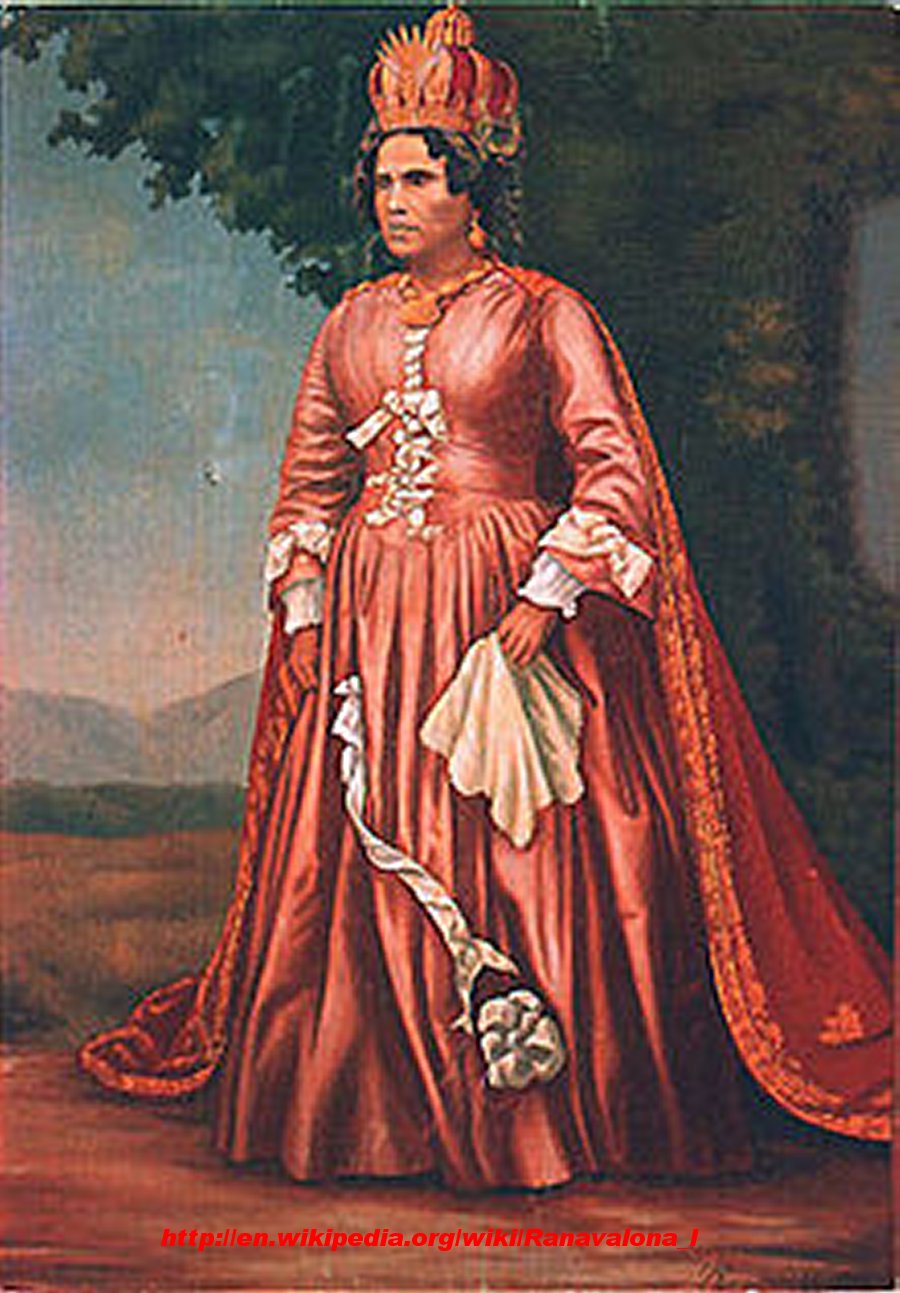
Then there was Queen Ranavalona I of Madagascar, decided she didn’t like people who didn’t belong to her own tribe, killed off two-three million of them during the 1840s.  Survivors dressed up like Europeans, did opera, ate with the right forks and spoons.  But honestly didn’t like Europeans, either.  Butchered or enslaved any of them they could catch.  On second thought, didn’t like anyone else, either.  Gave them mostly the same treatment when they could catch them.

Keep in mind there were a lot fewer people available to be offed in those days, and a million was a lot, compared to the 20th Century where it dwindled down and got piddly.

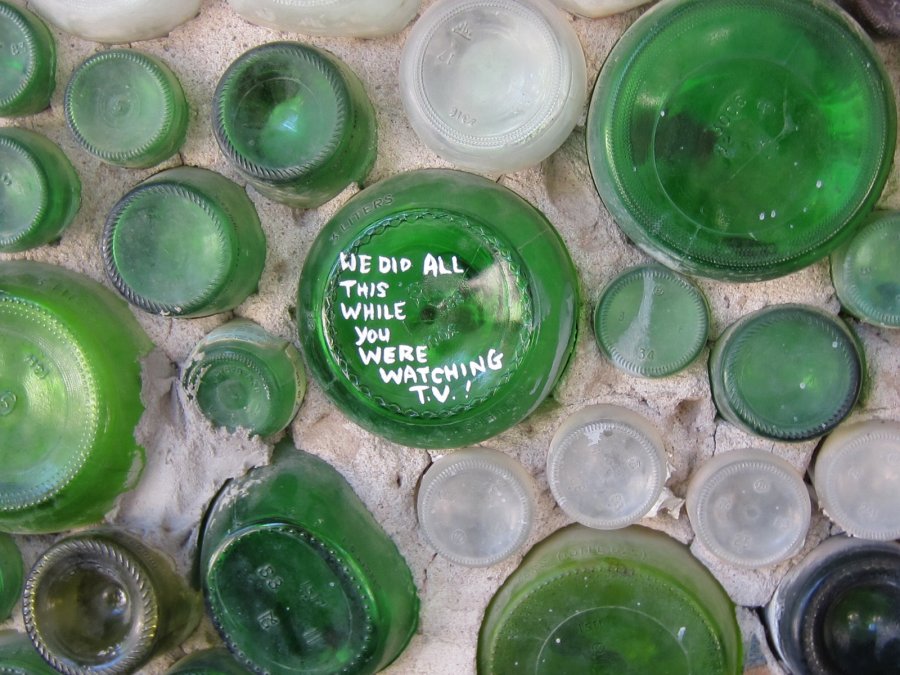
Just because you’ve got a television where you can hear about it and keep count with a computer doesn’t mean you’re any better at it than your great-granddad.  Considering the tools he had to work with, he was better at it than you.

Old Jules

Keeping the Sacrifices Hidden – Straw Men, Trojan Horses and Pick-Pockets

Good morning readers.  Thanks for coming by for a read this morning.

I’ve been pondering this strange dearth of political bumper-stickers, which seems to me to be unprecedented for a year of national elections.  Particularly contests over who’s to be king.  Maybe it’s just the fact it doesn’t matter anymore.  The scrapings of US production so far gone what’s left isn’t worth stealing. 

But maybe there’s another factor at work.

One of the big let-downs of the post WWII era for kings, king-makers, wannabe kings and king-makers, war profiteers, and economic shell-game artists, was the citizenry.  They were stupid, but not as stupid as they needed to be to satisfy the hopes and expectations of those who needed their [preferably active, but at leat tacit] consent to be gang raped.

By the end of the Vietnam War it became obvious that, aside from a few mindless flag-wavers and a re-definition of the word ‘patriot’, most of the citizenry wouldn’t support long-duration undeclared wars, for instance.  Even when the body-bags only contained volunteers.  Even when the sacrifices were disguised in exponential growth of national debt.

Frustrating, tricky business.  Constantly having to dream up Wars on Poverty, Wars on Drugs, Wars on Terrorism to keep them from  noticing their pocketbooks and jobs were going away.  Convincing them  the reason was undocumented workers, non-Christian religious fanatics, and the folks who couldn’t find jobs.

Maybe there’s just a growing realization within the population that it’s already been robbed of everything of value, that it allowed itself to be surrounded with cops, mercenaries, a huge prison system, sophisticated weaponry, and personal debt it can never repay.

And not a single name they could put on a bumper sticker who isn’t a part of what did it, will continue doing it.

Maybe they’re finally just saying, “To hell with it.  They can kill me, but they can’t eat me.”  At least not until someone discovers a way for politicians, bankers, multi-national chief executives, and dynastic wealthy to live longer by ‘donated’ body parts of the citizenry as a means of collecting personal debts or paying off national ones.

Old Jules

Let Big Daddy Fix It

Good morning readers.  I appreciate your visit and read.  I hope you won’t consider this frivolous.

It’s Daddy Day, and there’s a growing body of shrill opinion being expressed on the Web concerning those out-of-control nuclear reactors in Japan and how Big Daddy United States needs to step up to the plate to fix it.  Even though Big Daddy has no more clue than anyone else how to go about doing it.

First off, those reactors haven’t reached their full potential yet, so it’s probably too soon to have the Lincoln Memorial try to jump a motorcycle across them. 

Even though PT Barnham’s loose in Washington and trying to perfect that method of solving historical difficulties, jumping a motorcycle across the problem is still considered extreme, untested, uncertain, at best.

Probably it would be better to try time-tested methods first.  Some of the ways Big Daddy US has solved other pesky difficulties.  Homeland Security and attempts to deal with illegal immigration might provide a model.

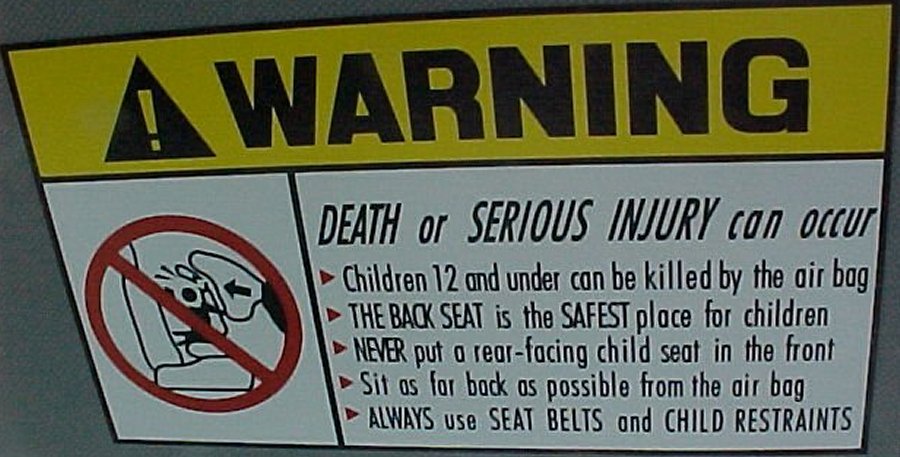
Or failing that, there’s always the old airbag fix:

Anyone strangled to death by an airbag isn’t going to be worrying about mutants, teeth falling out, that sort of thing.

Sending some crews of jailbirds out to pick the fallout up before it can do any damage offers some hope.  Got lots of jailbirds and not-all-that-much radiation yet.  If the radiation increases, hell it won’t do it faster than our number of prisons.

People who never learned to program a VCR, [including me] might find radiation detection instruments confusing, so sniffer dogs trained to detect it could answer the question of where it is and where it ain’t.

Naturally they’d have to be provided facilities.

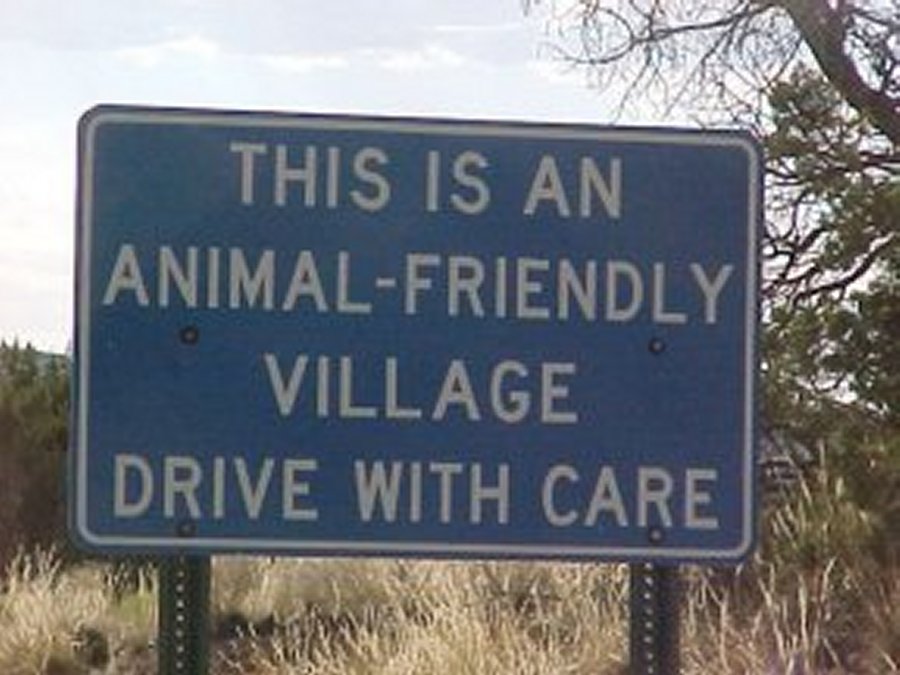
And protection from reckless drivers.

Failing that, a little magic might help.

Or just an acknowledgement there’s a problem.

If everything else fails, this worked for grandaddy and there’s no reason to think it won’t work again.

The Japanese have never been all that receptive to allowing imports from the US, but I’ll bet they’d welcome a few shiploads of those signs.  And there’s potential for a new manufacturing industry here to replace what went to Asia.

It ain’t as though there’s nothing to do in a fallout shelter.

Big Daddy’s tour d’force is entertainment.  Still is.  Never been better.

You can’t argue with a history of success.  I say, “Let’s go for it!”  What are we waiting for?

Old Jules

Dragging the Past Around Like a Cotton Sack

Until you forgives it, I reckons. 

The Coincidence Coordinators will rub our noses in the alternatives just for the hell of doing it.

I’d stopped into the Office Max store in Kerrville to pick up a cheap flash drive when I saw the little bastard.  He and what I figured must be a lady employ of his [now] were looking over the copying machines, taking notes, asking a clerk questions, frowning and muttering to one another.

I couldn’t believe what I was seeing, changed positions pretending to look at other merchandise on other counters to get a better view of him.  Shaking my head in disbelief.  He’d put on a bit of weight, hair’d gone gray, but it was Tony.  The very man I used to swear to myself if I ever caught him out somewhere I’d whip his ass until it thundered.

And here he was in Kerrville, Texas.

Shortly after I came into Grants, New Mexico, after I gave myself a Y2K, discovered I couldn’t find a job paying higher than minimum wage, I went to work for Tony.  He was managing the Rodeway Inn, needed a graveyard shift clerk.  I hired on.

During the interview he drifted to personal conversation.  “What kind of music do you like?”

“Old stuff, mostly.  Rock and Roll, pre-1980s CW.  Bluegrass.  Opera, classical.  I’ve got promiscuous tastes in music.”

“Any kind of music you especially don’t like?”

“Yeah.  I never cared for disco, and what passes for country music now drives me nuts.”

I had no idea.

After I’d trained for a week with one of the day shift clerks the place was all mine from 11:00 pm until 7:00 am.  The radio/stereo was locked in the office behind me, but I didn’t have access to it.  Tony’s apartment was back there, too, but the speakers to the radio were in the lobby.

11:00 pm every night I’d report to work, 11:10 pm every night, just so’s I’d know it was deliberate, the volume would go up almost so’s I couldn’t hear anything else allowing me to check in customers.  Modern all night country music station out of Albuquerque.

When they came down to check out early or to grab some breakfast the customers would often get nasty about it, ask me to turn down the racket.  All I could do was shrug.

I got this far writing the draft before I thought of the ‘Bypass Surgery’ post and song.  Thought it might tell some other tales about working in that motel, and about Tony.  But it turns out it might as well be this post played 78 rpm.

Spark and Tinder for the Next Country Music Wave

I suppose I ought to begin all over and tell you some other tales about old Tony, maybe sometime I will.  Because there are a lot of them, and many were codified in letters I wrote to Jeanne while I was working those long nights.  She’s pestered me plenty of times to post some of them here, though some weren’t about Tony. 

Good stories, though.  The night clerk at the other motel Tony managed across the street giving $25 bjs to the customers and Tony’s reaction when it got back to him.  How he got to banging the woman-prisoners from the State Women Prison who worked daytimes cleaning up, and how pissed he was when he discovered they were also screwing the customers.

How he’d rent the ‘suite’ room out a week at a time to the local crystal meth dealer, then spend his time up there rolling #100 bills, the motel register showing the room as vacant and closed for repairs.

But I ain’t going to waste my time telling you all that.  I’m just going to forgive old Tony for being among the lowest scum tyrants I’ve ever met this lifetime, then do my best to forget that entire episode of my life.

Actually, now I think about it, there are a couple that don’t involve Tony I might get around to telling.

Old Jules

Talking the Walk – Higgs Boson and ‘Science’

http://www.telegraph.co.uk/culture/hay-festival/9307672/CERN-director-says-LHC-will-find-God-Particle-by-end-of-the-year.html

“Rolf-Dieter Heuer, director of CERN where the LHC is based, said he was confident that by the end of the year it will be possible to say whether the Higgs Boson, the particle which is responsible for giving mass to the universe, exists.

“The theoretical particle, nicknamed the God Particle due to its central role it has in explaining modern physics, has never been detected and scientists have been working for decades to prove its existence.

“Scientists hope that high energy collisions of particles in the 17 mile underground tunnel at CERN will finally allow them to create the conditions to allow them to spot the elusive Higgs Boson.

“Dr Heuer, who was speaking at the Hay Festival, said the LHC is scheduled to be closed down at the end of this year for up to two years in order to carry out upgrades that will increase its power and allow it to continue with more experiments.”

Good morning readers.  Thanks for coming by for a read this morning.

Those guys over at CERN need to think of something else to call themselves.  They’re inadvertently allowing their use of language to act as a confession booth.  “. . . scientists have been working for decades to prove its existence,” says just about everything needs saying about the difference between science and engineering.  Or whatever it is they think they’re doing.  “Got me a theory, now I’m going to PROVE it,”  ain’t science.  But the difference is too subtle to penetrate the ice surface those folks are skating on.

For several years now they’ve been bragging about creating ‘baby black holes’ that ‘dissolve’ [they say the little guys dissolve because they don’t know what the hell happened to them – spang lost track of them].  There’s a body of opinion among outcasts and heretics from the ‘science’ religion that some of what’s going on stands a shot at creating black holes that don’t do any vanishing.  Black holes, or something else nobody anticipated. 

At CERN, though, they’re got things to prove and they’re not going to let anything stand in the way of proving it.  When a physicist somewhere raises his hand to suggest they mightn’t know what the hell’s going to come out of this or that, they shout him down.  “There’s an extremely LOW probability of it.”

Back before they detonated the A-bomb at the Trinity Site a group of the physicists there expressed similar concerns.  “We oughtn’t do this.  There’s a minute chance it will set fire the atmosphere of the planet.”

“Why hell, the probabilities for that are low.  How the hell can we know whether it will without TRYING it?”

So guess what!  Trinity didn’t set fire to the atmosphere.  All manner of other great things grew out of it, though.  Hiroshima, Nagasaki.  The Cold War.  Mutually Assured Destruction.  ICBMs.  Chernobyl, Three Mile Island, and a lot of potential today for more drama in the North Pacific centered around Japan.  Countless people born deformed downwind from the low-probabilities that became high-probabilities with Chernobyl.  Arms races all over the world and weapons of mass destruction used as an excuse to invade any country with something worth stealing.

As nearly as I can figure, those Higgs Boson particles [or something rhyming with them] are out there doing their thing all by their lonesome selves without needing permission from physicists.  They do what they do without needing some airhead calling them God particles, Higgs Boson particles, or anything else.

The people at CERN are doing something they’re calling ‘science’, throwing up their hands calling it the innocent pursuit of knowledge, wanting to prove things.  Hopefully one of the things time will prove is they were right about those baby black holes dissolving instead of going into orbit around the sun.

Hopefully they’ll prove the human species wouldn’t have been better served hanging them upside down from lamp posts when they had the chance.

Old Jules

The Undone, the Undead and the Unexpected

I should have named those claims the Onyx.  Everything about them, start-to-finish was Onyxpected.

Keep in mind, I was looking for evidence of a fairly specific group of legendary dead men who met their demise in the early 1860s.  Not just any old group of dead guys.  Special dead guys, though mostly nameless.

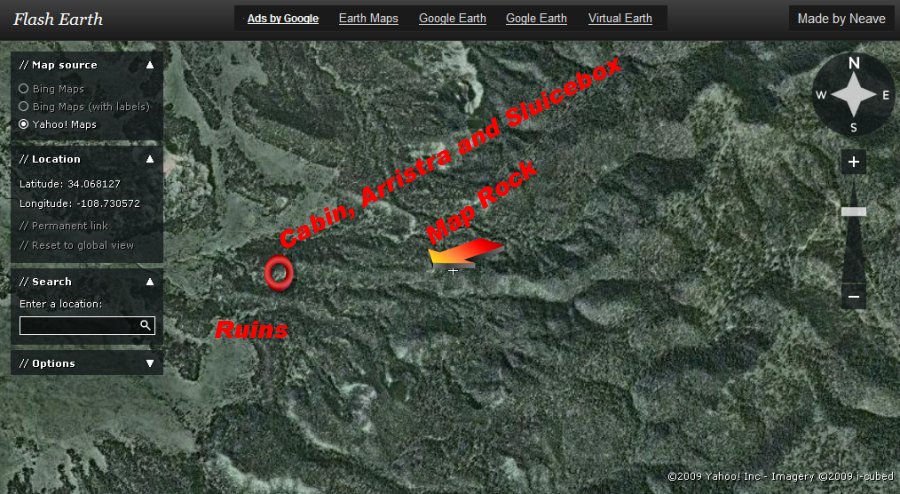
I’d been compiling, studying the versions of the legend, of accounts handed down by searchers, survivors and a lot of lies I couldn’t afford to judge without checking them out.  The evidence I was looking for was a burned out cabin ruin, maybe a sluicebox, something akin to a waterfall.  A pair of bare peaks roughly 20 miles to the north the legend called, ‘Piloncillos’.  Baldies.  Possibly a formation resembling the head of a bear.

Keith and I had been bouncing around that country for a couple of years, chasing dead men.  The Zuni Mountains, Santa Rita Mesa, Largo Canyon, Red Hill caldera, Pelona Mesa, the Sawtooths.  We saw a lot of fine real estate,  had plenty of adventure, but we hadn’t found anything to nail theory to anything on the ground.

Eventually I began assembling fragments of various versions of the legend, each at least mildly supported by some other version.  Began drawing circles at ten mile intervals outward from somewhat verifiable points, overlapping circles.  I ended up with a slice of orange peel on a map where the circles converged.   On a 7.5 minute USGS topo I counted 32 canyons within the orange peel that seemed to have possibilities.  Numbered them 1-32 with little stickers on the face of the map.

Keith was tied up in Santa Fe a day-or-so longer than I was, so I headed out, intending to cross some canyons off the map before he arrived, meet him at a camp on Elk Plateau when he got there. 

But canyon #3, I learned from a Hispanic rancher I met when I went to cross off Cabin Springs [canyon #2], had a burned out cabin ruin and something he described as a water-trough cut with an axe out of a 3′ diameter tree.  Late evening I arrived and set up camp on Elk Plateau to wait for Keith, me in a state of high anxiety.

But I’ve digressed. 

I was going to tell this story in full, but leading into the subject of platinum, palladium, rhodium, iridium and osmium.  How, in those days a person would have a hell of a time even assaying for them, how if located, they had to be sold through the Platinum Consortium, which wasn’t interested in buying.  How the melting temperature of the stuff makes a serious challenge of smelting it, in any case.  How it takes a special kiln, a special crucible to do anything at all with platinum.

How the New Mexico Bureau of Mines assured me our expensive spectroscopic assay was meaningless, a scam.  “There’s no platinum in New Mexico,” they assured me.  How at the precise time they told me that piece of fiction, the Platinum Consortium was mining the tailings of 19th Century gold mines near White City, New Mexico, for platinum they didn’t want when those mines were active, maybe didn’t even recognize.

How Sunburst Mining Company opened an operation mining platinum, gold and silver in microscopic quantities on the edge of a caldera within view of the peak above my claims a couple of years later.

I’d figured on telling you how they employed over a hundred people over there for a few years, got crosswise with New Mexico Department of Environment, ran into financial problems in other mining locations, went kaput.

And I was going to tell you how Keith and I found a canyon of maybe the weirdest geology I’ve ever come across.  Named it No Name Canyon.

But hells bells, I reckons I’m going to have to save that for another day.

Meanwhile, if you’ve missed the other background on all this you can find it by exploring the tags and whatnot or searching the site for ‘lost gold mine’.

Old Jules