Category Archives: 1940’s

Book Review – Into the Rising Sun – Patrick K. O’Donnell


Good morning readers.  Thanks for coming by for a read this morning.

This book ought to be required reading for all these namby-pamby ‘thank you for your service’ self-hugging smugness goodygoody submerged hypocrites, thinks I. 

These are the WWII experiences told by men who came back from WWII and didn’t talk about it.  Didn’t join the VFW, didn’t wave any flags, and grew old holding it inside their heads because what they saw and experienced as young men didn’t fit inside the picture the US Empire was drawing of itself and its conduct of WWII.

Eventually some decided it was time to tell it and O’Donnell was there to record what they said.  Into The Rising Sun was the result.  They told of being sent into places nobody needed to go, under-equipped with incompetent leadership, under-supplied, half-starved into malaria swamps against an enemy no better off than they were.

They told of the most significant experience of their lives.  A dismal experience perpetrated by negligence, mediocrity, politics, publicity and lies for the folks back home waving flags and beating drums.  Sending their own sons off to join them in jungles where getting captured meant becoming a meal for the enemy.  Where shooting all prisoners was the norm. 

Burma, the Solomons, the South Pacific they lived didn’t make its way into any Broadway musicals and the ‘thank you for your service’ expressions represented an irony too confusing to face.  Legions of men betrayed by their government for convenience, whims and indifference.  Betrayed by a failure of the military leadership to commit itself to the reality they were living and fulfill their own responsibilities, the only excuse for their existence.

The 20th Century is loaded with places a person wouldn’t care to have been.  What these men lived wasn’t unique.  Happened so many places to so many men of the 20th Century from all countries a book couldn’t list them all.

But this book probably represents as good a synopsis as anyone’s likely to produce.  It’s good the old men finally told it.

Old Jules

Waldo – Robert A. Heinlein – Book Review

My first introduction to science fiction came in the Portales Junior High School Library around 1958.  One of the first of the hundreds of Sci-Fi books read over the course of a lifetime was Red Planet, by Robert A. Heinlein.  Probably Keith, one of the readers of this blog, stood beside me in PJHS Library and argued over who’d get to check it out first. 

The library didn’t include a lot to select from and we pored over them all.  Thunder and Roses, by Theodore Sturgeon.  City, by Clifford D. Simak.  The Martian Chronicles, by Ray Bradbury.  The Stars are Ours, and Star Born, by Andre Norton. And anything by Robert Heinlein.

Written in 1940, Waldo must have been one of Heinlein’s earliest novels.  By the late 1950s it was still too early to be profound.  Most of the setting, plot, concepts Heinlein visualized in 1940 hadn’t yet come to pass.  Hadn’t made their way into human reality in a form more concrete than a pleasurable indulgence in imagination set to words.  My memories of reading it were vague compared to hundreds of other works by Heinlein and other visionaries who hammered and blasted the new genre into mainstream readership. 

So when Waldo showed up in a box of books in the Saint Vincent de Paul Thrift Store in Kerrville for a dime each and I bought them all, noticing Waldo among them, I was only mildly interested.  Another couple of hours of something to read before dropping off to sleep, I figured.

I was wrong and discovered how wrong I was roughly 20 pages into the book.  Squinted, read and re-read it far past my normal sleep time.  Read it again the next day.  Twice.

Aside from a goodly other phenomena Heinlein described in 1940 that eventually came to pass decades later, he discusses others that haven’t yet made it into mainstream thinking.  One of which includes something I’ve been examining with insane intensity during the past several years, began experimenting with during the late 1990s.  Dropped, partly because of Y2K, partly because the Internet and home computer RAM didn’t yet allow the accumulation and examination of sufficient evidence to arrive anywhere beyond conjecture and assertion.

Thankee, Saint Vincent de Paul Thrift Store.  And thankee Robert Heinlein, particularly for this one.

I keep Waldo close at hand, thumb through it when I’m pondering where things are going as I go through my daily downloading rituals, working my way through the maze to the center. 

You mightn’t, probably won’t be as impressed with this tome as I am.  But I’m betting if you can find it you’ll be more than mildly surprised.  Find yourself asking, “How the hell did Heinlein figure all that out in 1940?

If not, you’ll at least enjoy a fun plot, good characters, a couple of hours of science fiction back when that’s what it was.

Old Jules

Roswell – 1947

Just so’s to clear up my own position regarding the ‘Roswell Incident’.

After I read Witness To Roswell I came away convinced all those interviews had put the ball into the other end of the court insofar as what happened back then and who needed to carry the burden of proof.  I carried that line of thought around a few years, including the time of the visit with Loretta.

But my second-thoughts about whether I’d trust the book began when, maybe a year ago, I began getting emails from one of the authors of the book.  I’m not certain what it was about his emails cause me to experience a growing body of mistrust, suspicion and dislike, but something did.  My gut feel left me thinking I wouldn’t trust the guy far enough to want to step on him barefooted.

So, I’m back where I was from the beginning.  I have no idea what happened out on wossname’s ranch in 1947, other than what Loretta said about it during our conversation.  And I quite honestly don’t think it much matters in the overall scheme of things, what happened, what anyone believes happened, nuthun.

Nuthun at all.  I couldn’t care less whether there are aliens zipping around this planet, time travellers, government flying machines, new world order robots, Roswellcrucians, ghosts, phantoms, vampires, or just bored people making things up.

Old Jules

Blushes, Apologies and Corrections Regarding Loretta Proctor et al

About the post a longish whle back: 

An Afternoon with Aunt Loretta (Proctor)- Roswell, 1947 and UFO and Certainties About What Isn’t

I posted a whatchallit, vignette, I suppose, about a visit with Kay’s aunt [I thought], Loretta Proctor.  Evidently I made a lot of foolish errors, for which I apologize.  Here are a series of comments correcting my errors from Veda Proctor.

Hope this clears everything up sufficiently.  I lost track of most family relationships in my own life a long while back and probably don’t attach enough importance to the specifics where they apply to others, is the only excuse I can give.

Veda Proctor:

Jules-just to say, Anonymous has the facts, word for word. Kay is the niece of Ellis Hodge, Mama’s (or as you know her, “Aunt Loretta”) second husband. This is being written by Veda, the daughter that Loretta lives with to this day. I was the one you talked with when you came up with Kay and Gale. Dee was Mama’s third son, not a step son. Timothy is Dee’s son. Don’t know where that all came from. We don’t even call him Timothy. And I don’t think anything ever traumatized Dee. He would never talk about it much, because to a 7 year old, “it was just a bunch of junk”. It really did not impress him at all. He never saw the second sight at all. He never had any piece of it that he kept hidden away, there was one person, deceased many years ago, that she suspected would have some of it, if anyone did. Dee never ducked an interview, he would tell anyone who asked the same thing that he told us. “To a 7 year old, it was just a bunch of junk”. Our family has only been in the area for 95 years, so we pretty much knew who every one was even remotely close. Never heard of Wright, never had a neighbor named Thomas Edington, and Truman Spencer lived over 30 miles away. Travel in those days was difficult, to say the least, so not sure how his daughter managed to get to the site. Mama would have never referred to Dee as a spoiled brat. Until the military came out, the only way anyone got to the site was horseback. So there was not a lot of people knew about it. This article has people from all over the world hunting “hidden relics” that do not exist. That makes me slightly uncomfortable. Anyone who wants to hear what Mama had to say should stick with the basic interview that was posted and can be found by anyone doing a search on Loretta Proctor on their computer. That one has had nothing added, and nothing taken from it. Thank you. And again, I am not anonymous, I am VEDA.
Submitted on 2012/06/25 at 10:21 AM
It dawned on me that Kay is a niece to Lorettas second husband but I stand firm on the names and step situation, And No Metal Was Kept. Also Trumans grandsons were born over 20 years after the crash, Mac Brazels family lived in Tularosa not Las Cruces.

sorry to bother you again but I misunderstood the relationship to Truman. His daughter if she was even born at that time would have had to ride horseback over 30 miles as the crow flies to get to the crash site. I noticed on Vedas response she put the last name SPENCER. That family ranched between WHITE OAks and Carrizozo and the family you referred to ranched close to hiway 285 at least 30 miles from the crash site. I know about the PROCTOR family and that part of the world as I am from that part of the world. There were some EDINGTONS with connections to that area but coming from a family that lived there for years no one knew a THOMAS.

Thanks, Anonymous, for the clarification on the man with the first name of Truman. I immediately think of the ones near Carrizozo, MY MISTAKE!!! Anyone out there, PLEASE do NOT start contacting this family, as trying to get fact from fiction is tough enough, when people, (me included) do not proof read, and inadvertently call a wrong name, much less try to locate something that is not there, in the first place!! Again, you are absolutely, and totally correct in this reply you have made. VEDA

The Implosion Conspiracy – Louis Nizer – How the USSR got the Atomic Bomb

When Louis Nizer penned The Implosion Conspiracy it might be said enough time had passed to provide perspective.  Two decades had passed since the trial and execution of the Rosenbergs rocked the nation.  Nizer disliked Communists, asserted he’d refuse to defend one in his profession as a defense attorney.  However, he wrote a lengthy analysis of the trial, the transcripts, testimonies, the individuals involved in an even-handed manner that wouldn’t have been possible during the Commie craze days of the events.

Basic events leading to the trial:  The US was developing the atomic bomb at Los Alamos, New Mexico during the late stages of WWII.  The information was being shared with the US Ally, Britain, but kept secret from the US Ally, the USSR.  Elaborate security measures were in place to assure the developments remained the exclusive property of the US and British governments.  Elaborate almost beyond description, devised by the US military and the FBI.
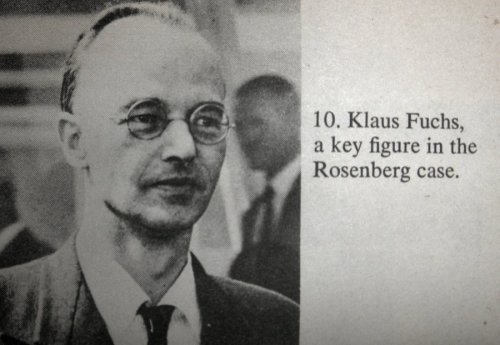
But the British liaison to the project was physicist Klaus Fuchs, a spy for the Soviet Union.  The Germans knew Fuchs to be a Soviet spy, but the British and Americans didn’t, until they gained access to records captured as they advanced into Germany.

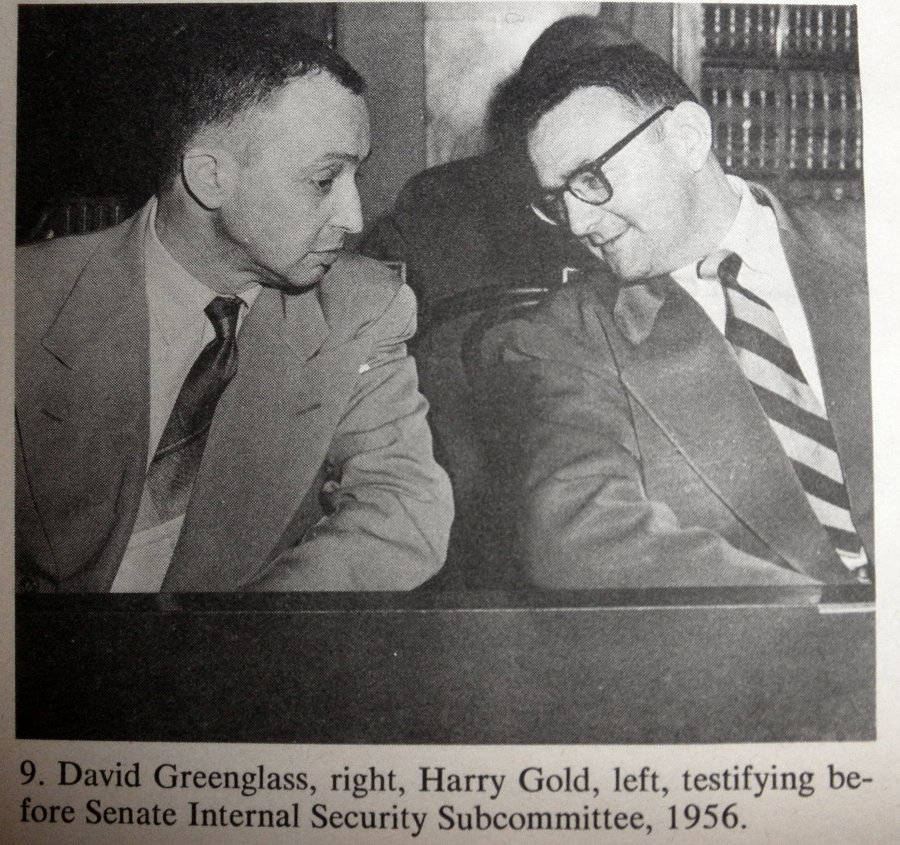
Aside from Fuchs, the other USSR source for information about developments at Los Alamos was David Greenglass, a US Army machinist and brother to Ethyl Rosenberg.  Greenglass had been a Communist his entire adult life and had been separated from an earlier military job because of questions about his loyalty and honesty.

David Greenglass stole the crucial secrets of the lens molds used to detonate the bomb, the implosion device.  By hindsight, it’s clear he did it for money, for the same reasons he stole automobile parts, uranium, anything he could lay hands on to sell on the black market.

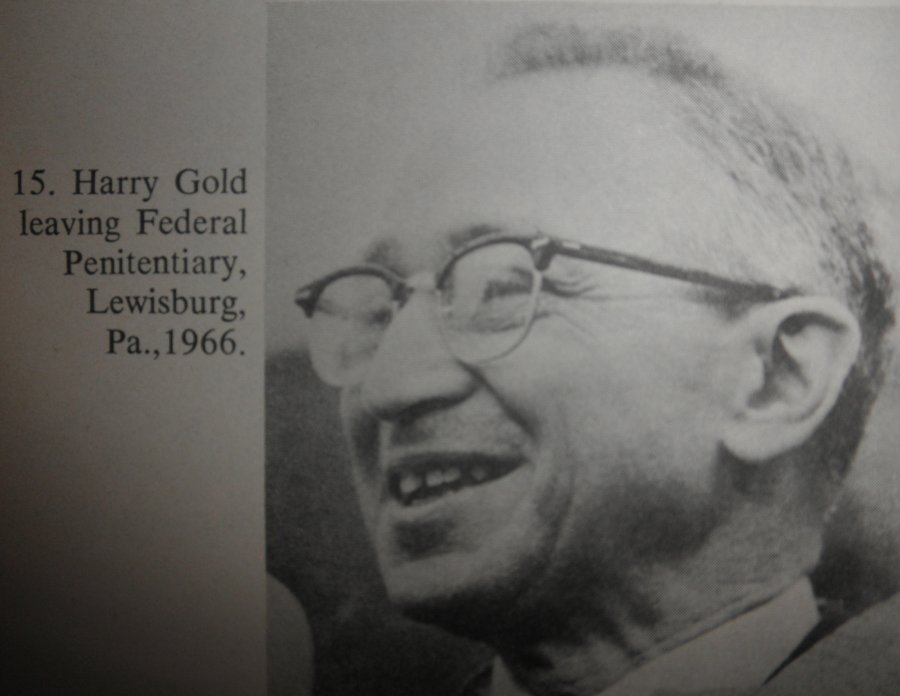
Greenglass passed the secrets to his wife, Ruth, who passed them to Harry Gold.  Gold was the direct connection to the Soviet spymaster, Yakovlev, in the Soviet Embassy.  It’s clear enough from everything provided in evidence and testimony that Gold was a man without loyalty to any nation, ideal, idea, or human being other than himself.  He did it for the money and for no other reason. 
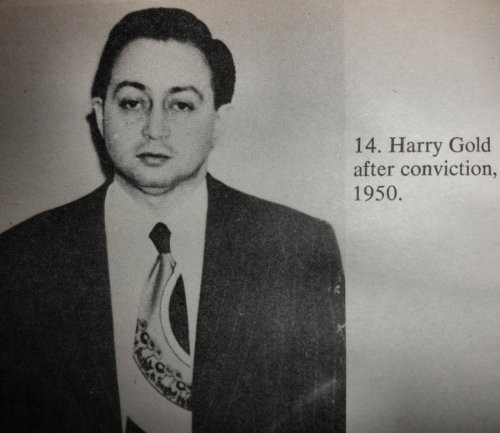
The testimony of Greenglass, awaiting trial for treason, and his wife, Ruth, who  was never charged, provided the testimony connecting Julius and Ethyl Rosenberg to the plot.  The witness stand accusations by Greenglass against his sister and brother-in-law, and the corroborating testimony from his wife, who didn’t yet know whether she’d be charged, constituted almost the only evidence of the prosecution.  The other witnesses directly involved in the plot mostly did not know the Rosenbergs, or barely knew them and knew little of their activities.

Because of the weakness of the government case insofar as testimony and physical evidence of the Rosenberg involvement in actual spy activities, the focus of the prosecution became a trial of Communist ideology.  Witnesses who knew nothing about the plot, the bomb secrets, the Rosenbergs  were called to testify about how they’d switched their own loyalties from Fascism to Communism, then become loyal US citizen-experts making a living selling books and giving lectures on the insidiousness of Communism.
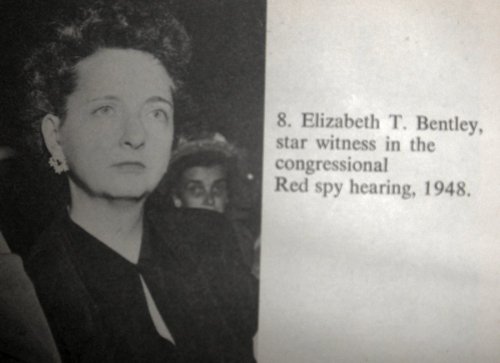
The trial transcripts excerpts Nizer provides make it clear the Defense had two opponents:  the US Attorney prosecutor, and the judge, who constantly intervened, interrupted, interjected in ways clearly intended to prejudice the jury against the defendants.

The key players who gave, or sold the atomic bomb to the USSR in 1945 went free, or were given relatively light sentences.
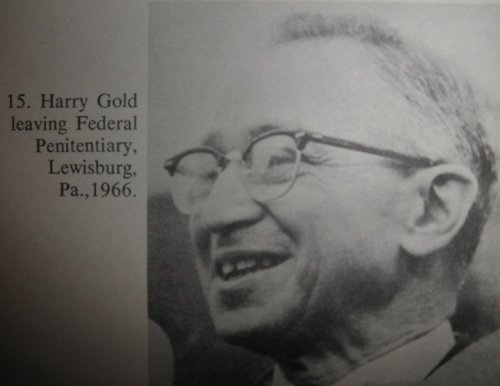
The Rosenbergs, clearly Communist idealists, possibly part of the plot, died in the electric chair.

When Allied forces found documents in Germany revealing Fuchs as a Soviet spy the chain of resulting indictments followed a path to almost all the conspirators except the Rosenbergs.  Before spymaster Yakovlev fled the US, during his last meeting with Gold, he made the following observations:

Yakovlev:  Don’t you remember anything I tell you?  You’ve been a sitting duck all this time.  We probably are being watched right now.  How we pick such morons I’ll never understand!  We’ve been living in a goldfish bowl because of you.  Idiot!  Idiot! 

I am leaving the country immediately.  I’ll never see you again.  Just go away.  Don’t follow me.

He went.

But the answer to Yakoviev’s question is worth an answer.  They recruited from the US Government, the US military, from US universities, from US businessmen.

From the same pool of applicants who later sold their industries, their industrial tools, secrets, capabilities, economies, and debts to the Peoples Republic of China and other foreign nations.

They weren’t Communists, like the Rosenbergs.  They were opportunists, entrepreneurs, devil-take-the-hindmost politicians, like their descendants a few generations later.

Old Jules

Today on Ask Old Jules:  Value of Animal vs. Human Lives?

Old Jules, does an animal’s life mean as much or nearly as much to you as a human’s, or do you feel animals are insignificant/worthless in comparison? Also, do you believe it is ever morally right to harm/kill animals? What about humans?

Exploring Alley Oop’s Home Circa 1947

When my mom left her second husband near Apache Junction, Arizona  to move near my granddad’s place at Causey, New Mexico, I was considerable upset about it all.  I’d become overfond of the Arizona guy, liked him a lot despite his human flaws that bothered my mom.

Time proved my level of upset couldn’t be handled by beating it out of me, nor by any of the other usual ways people tried back then to nudge a kid back into being seen and not heard.  The Runaways, 1947

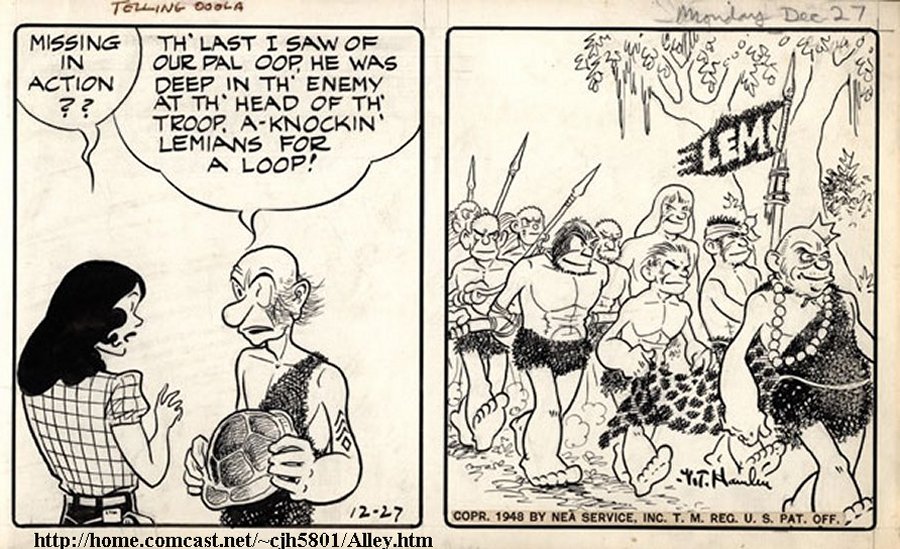
My first step-dad [Arizona] was fond of reading the Alley Oop comic strip to me and I was a huge fan.  Alley was a cave man skipping forward and backward in time thanks to a 20th Century scientist.  Alley even had a 20th Century lady friend named Oola. 

About the only thing I’d brought with me from Arizona was my stack of Alley Oop comic strips.  We’d travelled light across the desert.  And when we arrived in Causey one of the jobs my sisters had was reading those Alley Oops to me, trying to bring up my spirits.  Which I suppose it did until they’d finished reading them to me.

Something more permanent had to be done, and my granddad decided to have a shot at it.  He promised to take me to visit Alley’s home.  Mesa Verde, Colorado.

What a trip that must have been, me pestering him whether we were there yet, how much further before we’d see Alley’s home.  I don’t know how long we stayed, but I never forgot old Alley and his home.  I still had one picture of the cave dwelling he took back then until Y2K.

And of the hundreds of ancient ruins, documented and undocumented, I’ve poked around in during my life, I’ve never visited one, found one, without thinking to myself with a smile that Alley Oop might have lived there, visited there ahead of me.

When Mel King and I were exploring the ruin on Gobbler’s Knob and were driving back to Socorro when he reached into his daypack for something, came out with a human skull it was the first thing I said to him.  “What the hell is that?  You packed off Oola’s skull.  Get it the hell out of this truck!” 

I screeched onto the shoulder and he hid it behind a cedar until  we’d be headed back to Gobber’s Knob so he could put it back where it belongs.

Nowadays I think I have more in common with Alley Oop than with any modern human being.  If there was ever a right time for me to pop out of the gene pool it would probably have been more appropriate temporally in some other Universe where Alley Oop lived and breathed.  It made more sense than this one.

Old Jules


Guide: Adopt Selective ‘Remember’ BS Rhetoric With Surgical Precision

Alive and safe, the brutal Japanese soldiers who butchered 20,000 Allied seamen in cold blood

Just keep it safe and simple pretending to remember something about the ‘fighting’ by Allied troops across the planet.  Hug yourself with some feelgood to help you feel sensitive and patriotic.

http://www.dailymail.co.uk/news/article-491548/Alive-safe-brutal-Japanese-soldiers-butchered-20-000-Allied-seamen-cold-blood.html

Carefully remember today ONLY the Japanese attack on Pearl Harbor carrying some vague message we should remain prepared against similar future events. 

Carefully do NOT remember the Rape of Nanking, the Bataan Death March, the savage treatment of Allied POWs and civilians in occupied territories of The Greater-East-Asian-Co-Prosperity Sphere.

Carefully do NOT remember the beheading of hundreds, maybe thousands of prisoners, the starvation and death by disease of a huge percentage of other prisoners compared to elsewhere, almost anywhere among the armies of either side.

Carefully do NOT remember  the overwhelming percentage of that conduct was perpetrated by enlisted men and officers below the rank of captain.  Men who returned to their homes to be accepted within a couple of years as allies and fast friends of the US and other nations they fought, invaded, raped, pillaged and slaughtered only months earlier.

Carefully do NOT remember the Marshall Plan and the rebuilding of Japanese industry and infrastructure destroyed by the war, rendering much of US industry obsolete or absolescent.  DON’T remember the 20,000 suicide-before-surrender Japanese cliff-jumps at Okinawa.

And while you’re at it see if you can find a feelgood argument with someone  about the ethical and moral side of the atomic bomb, Hiroshima and Nagasaki.

Better to forget all of it than pretend to remember some of it.  Crank up your Mazda, turn on the FM and listen to some oldies while you remember what it was like to have a job.  What happened 1941 – 1945 had nothing at all to do with anything happening today.

You don’t remember a damned thing about anything that happened to other people.  Just remember Santy’s coming to town.

Old Jules


I can’t forget but I can’t remember what – December 7, 2011

Middling cold here and I’m trying to thaw some water for the cats and chickens, along with thawing my fingers enough to type.

There was something I was supposed to remember this morning but I can’t recall what it was even though I started the post and put that pic on it to remind me.  That, and a pic of the Toyota sitting out across the meadow.

Tora tora tora!


Maybe it will come to me later in the day.

Old Jules

A Few Decent Songs About Horses and Mules

My grandad used to sing these first two to me.  I think I probably knew both of them by heart before I began grammar school in 1949:


By the time Marty Robbins recorded this and started it playing on the radio I knew it well enough to make everyone in hearing distance wish it hadn’t played by singing along with it.


This Woody Guthrie version is probably my favorite.


When Jimmy Driftwood recorded this it had everyone in the country singing along when it played on the radio or jukebox.


Strange, strange song. I count it as one of the best CW songs of the 20th Century.


There was an old lady named Mrs. McCormick who had dementia living down the road from us.  If she was outdoors when I walked past she’d usually pay me a nickle to sing this to her.  That, and the fact she thought her husband left on the stagecoach last week and ought to be back soon provides a measure of how far gone she was.  Mrs. McCormick was the only person I ever encountered in almost 70 years wanted to hear me sing more than once.

Old Jules

Best Quick and Dirty Movie Scenes Ever – Baggage Check

There’s a strange logic here:

Life’s full of choices of this sort but we rarely recognize them.


There are several of these, difficult to pick one over another:

We’ve probably all experienced this thing with a pesky fly.


This one’s in a class all its own


I still have a vivid recollection of seeing this for the first time 60 years ago and wanting to get under my seat at the theater.


These two scenes almost belong in the same movie.  Chilling.

 Cabaret – Tomorrow Belongs to Me – “Do you think you can control them?”

http://youtu.be/3EE_BoCw9zk

 Panzerlied (Battle of the Bulge with english intro)  “Too young!  They’re too young!”

http://youtu.be/8JDkdc246QQ

Zulu – The final attack – A brief history of the European conquest of everywhere else.  “They don’t have any tenors among them.  That’s for sure.”

It all sort of runs together:  “Tell your sweetheart not to pine, to be glad her boy’s in line.”

Yankee Doodle Dandy http://youtu.be/2R1jiVcIGcg

Patton – “At least you’ll be able to tell them you didn’t spend it shovelling shit in Louisiana.”


Followed by this:

Network – Mad as Hell Scene  – “I’m mad as hell and I’m not going to take it anymore!”


Cool Hand Luke – “I don’t care if it rains or freezes.”


Treasure of Sierra Madre – “Badges?  We don’t nee no stinkin badges

http://wwyoutubehttp://www.youtube.com/watch?v=CGcVhoHdRFow.youtube.com/embed/MsVi2RqE7ek

North by Northwest – Climbing the American ladder of success


The Alamo – “When I was a boy any girl would turn up a bunch of trees like that, cut a bunch down and one for a ridge pole and build herself a cabin alongside the other.  Seems like all anyone would ever need.”


The Outlaw Josie Wales parleys with 10 Bears – “Dying ain’t so hard for people like you and me.  It’s living that’s hard.  Governments don’t live here.  It’s people who live here.  I’m saying people can live here together without butchering one another.”