Category Archives: 1960’s

Day of Lost Souls (Part Two)


Peer Ratings and Mid-Selection
Mid selection was coming in that beautiful land, and before it arrived, I was fairly certain I would be one of the de-selectees.  I was also fairly certain McCreary would be.  Neither of us fit in.  We weren’t much like the others I thought would be deselected, but we were different.  We’d been through the Minnesota Multi-Phased Personality Test.  The rumor was you couldn’t even lie consistently on that one, except they could sniff you out, flush you like quail in the cool dawn.  I knew I was doomed.

The morning before selection time the staff added the final horror.  Humiliation and forced betrayal.  Peer ratings.

Question:  Here is a list of your fellow trainees.  Top to bottom, list the people you consider most equipped for the task of peace corpsman, down to least favorable.  Top to bottom, who do you like the most.  Down to who you like the least.  And so on.  Sell your young souls, trainees; young Americans…..won’t accept the papers back until you’ve listed them all, every white space above a black line filled with a name of someone here around you.

I was angry, watching 80 eyes probe the room, checking names against faces.  I worked out my own strategy, locking eyes, whenever I could.  I reversed the list they wanted.  Picked the weakest and least liked for my Ajax and Penelope.  Threw the leaders to the dogs.  With my own name at the pinnacle, of course.  But I knew it was futile.

De-selection and Jumping Ship in Honolulu
Still, I was crushed when my name came out on the list of get-outs.  I didn’t notice how the others reacted, and I don’t remember much about the time between the boot and the airplane.  I do know that somewhere in there, I decided I wasn’t going back to the mainland.  Somewhere in there David also decided something similar.

The rain was falling sideways when we got off the plane in Honolulu.  Big Joe Weiss, Korean War marine was with us on the plane to Oahu.  He listened to our dreams talked quietly of staying in the islands with us.  He was as crushed as I was about being given the shove.  But in the terminal building, he couldn’t look at either of us as he told us he was going on to the mainland.  I could see that big Joe was limping inside, hurting.  Maybe worse than I was, with all my bravado.

David and I had some kind of notion about catching a sailing boat, heading for Australia or New Zealand.  We had a couple of hundred bucks each, guts, energy, and no promises to keep.  We’d signed on for a two year stint in Injia, and Injia had belched us back like a bolus flying out the mouth of someone who’s just had the Heimlich performed unexpectedly in the middle of a dying incident.

We spent a few precious bucks on a taxicab…..told the driver we wanted the cheapest hotel he knew of.  It was the Huna Hotel, he took us to.  Twelve bucks a night.  But we were young in that country.

The rain continued through the night, and we emerged from the room still full of energy and bravado….we were taking big steps, making deep tracks in our future lives…..we thought we were about to make big tracks on the land.
Picked up a newspaper looking for boarding houses……David found one belonging to a Japanese lady named Matsushige….he wrote down the address as I looked over his shoulder….wrote on the classified page of the newspaper…..2323 East Manoa Road.

We took a city bus, carrying our bags, our belongings from the dead peace corps experience, and got off at the confluence of east Manoa and Manoa.  The driver pointed a direction for us.

But at 2323, our knock was answered by a man who appeared to be dressed in a pair of WWII Japanese uniform trousers.  He explained curtly that he didn’t know what the hell we wanted, didn’t want to know.  Didn’t appreciate our disturbing his home, his morning. We walked to Manoa and looked….nothing made any sense.

So, we found a pay phone and David called the number from earlier…..wrote 2319 on the newspaper.  Hung up the phone, turned puzzled from the booth.  “Twenty twee twenty twee?”  I burst out in laughter every time I thought of that incident for more than three decades.  I can still see him turning puzzled from the booth, frowning, “Twenty twee twenty twee?”

Matsushige’s Boarding House, Finding Work and a Gypsy Good Time
We settled in at Matsushige’s that day, a second floor room with two bunks, 4 feet or so apart, parallel, a desk between the two at the head.   Shared john with some other roomers….settled in young, full of bravado, full of dreams.

Next day we went looking for work and such.  David took a paper and headed down to check out the openings on Waikiki…..I headed for the bars on hotel street, looking for a job or a hooker to fix me up for my job search.  I’d go down to Waikiki tomorrow to  find my busboy job at the Hilton Hawaiian Village.  Today, more pressing matters.

In a while, I came to a booth with a pretty gypsy lady…..started flirting a bit, talking around the issue.  Was pretty certain she was a hooker.  Finally, “You want a gypsy good-time?” she demanded.
“Yeah!  A gypsy goodtime!”
She took me into an attached room with nothing but a cot, sat me down.  “$10″….she took my money and assured she’d be back in a moment.  I sat there and knew when she brought in a snaggle toothed crone that I’d just lost a sawbuck for another of my lessons in life.

“Here it is!  A gypsy goodtime!”  She and the crone danced back and forth in front of me, all of us laughing.  My life has been rich in gypsy goodtimes, I’ve been a man wealthy in gypsy goodtimes, but that one was best in those times when the coconuts fell beside us and mangos piled high under the trees blocking the sidewalks and David and I grumbled in our cots picking off sunburned skin to throw to the giant roaches.  We were young in that country.

Final Selection – Dropouts and Volunteers – Honolulu
We stayed in touch with a few of the trainees on the big island.  Lillie and I wrote and sometimes talked by phone.  We made plans, after final selection to meet in Oahu, whether she went on to India or not.  Nancy Philson and Priscilla Thomas came through a few days ahead, voluntarily dropped from the venture.  An evening of drunken revelry on hotel street and they were off to the future.

I met Lillie at the airport with the other triumphant survivors.  Chianti, baby gouda cheese, and a rented jeep, and we made long and easy love on the beaches in sight of Chinamans Hat, Hanauma Bay, the blowhole, toward the end, pounding surf spraying the moonlight.  Her red hair tickled my face as we idled the jeep down the inland spine of Oahu, back to Honolulu.

Next night, the gin mills of Honolulu and Hotel Street.  Lillie’d never seen a stripper….I took her to a place I’d been a few nights previously with Nancy and Priscilla.  The best I’d ever seen, her veils of blue velvet, blue chiffon.

They boarded the plane, and India X was off to save the world from hunger, from savage restraints, from a historic dearth of fowl in their diets.  Off to Gujarat.

Back to the Big Island – The Jungle and Solitude
In a while, I flew back to the big island and went into the jungle off the Kohala range, thinking to become a hermit, thinking to die there.  David met a Japanese Hawaiian girl named Janice and flew back to the mainland with her.
In six weeks I came out of the jungle, in a maelstrom of roiling greyblue clouds.  I’d met myself for the first time.  I finally had seen myself, seen god in that quiet forest.  I knew I had more to do.

David’s kids, when he was in the marine corps, and after came to be among my favorite children….Janice, an object of my deep respect.

This year, she left him for a Japanese man.  David’s in Seattle, trying to find what he should do with his life, henceforth. Searching for the greatest gypsy good-time of them all.

And I await the moment I’ll go again into the woods as I did so many years ago beneath a savage sky in that country of youth and springtime.

Life’s a strange place for a human being to have to spend a lifetime.” Josephus Minimus

Day of Lost Souls (Part One)

Today and tomorrow’s post (part two) is a short story that was written many years ago. We had decided it was too long for the blog, even in two parts,  but since many of our readers are also writers,  I think you won’t mind the length.  ~Jeanne

Blue on blue, I tunneled through tints and shades of airy void  from the New Mexico desert to arrive in San Francisco several hours ahead of my outbound rendezvous.  The old DC3 clubbed the air dizzy and crawled over the unconscious body getting me to the coast; hammered the molecules of blue air into something solid as ice to hold man and machine aloft and skim across the bumpy surface.

In some other reality pilots and navigators of the heavens probably do spectra-soundings of color and hue, the way old mariners sounded the nighttime and foggy channel bottoms sampling with buckets to fix their positions by mud color, or sand, or shells.  These sky mariners in the elsewhere examine the debris in the  buckets and ponder;  arid Southwest: almost turquoise.  Inland California:  grey blue.  Coastal: yellow hazy blue.  But that was 1964.  Perhaps the atmosphere has grayed these intervening years, the way my own mustache, eyebrows, and hair has shifted to bare metal silver.

San Francisco
But we were young in that country.  The November 9, 1964, San Francisco airport terminal teemed with us. We milled around the gate that Sunday awaiting our flight to Hawaii.  Ten more days and I’d be a full 21, a legal man.  Full of mature, critical appraisal I skulked the waiting area; studied the rosy cheeks and sunny attitudes; the strapping young adults I knew I’d spend the next piece of my life among.  Though some carried more years, I thought to myself they were mostly kids.

I watched those youngsters straight-on for a while, until they noticed.  Then I shifted and gazed covertly at the reflections from the plate glass window/wall shielding us from the din of steel-gray planes and scorching ash-gray runways cut by yellow stripes threading the distant taxiways to vanish in the heatwaves and hazy yellowblue skies.  I pretended to read my book and scrutinized my soon to be companions out of the corners of my eyes; strained to hear the dribble of their conversations which each seemed to say, “I’m a neat person.  I’m worthy of this.”  Some, I could surmise, tacitly agreed to allow certain others to be as neat as themselves.

We were an elite, the acceptance letter implied.  Only one of every forty applicants, the letter whispered, were accepted for the intensive preparation to save the poor in hungry backward lands.  We were all riding on the bobsled thrill of those flattering words.  As a result the fast pulsebeat of waiting in the terminal became a political caucus.  Probably most of us figured those others were likely to be awfully special, but secretly believed they made a mistake in letting our particular selves in.

The candidates talked films; of Viradiana, of Antonioni, of Fellini and of a swede who made foreign films in those days. Of existentialism.  Talked about the beatnik poets.  All so serious.    What’s your major?  Where did you get your degree?   I pondered the words, scowling to myself.

I could see these mostly weren’t my kind of folks.  I’d scraped and cheated to get a high school diploma several years earlier, did three years in the army.  Hitch-hiked across the country several times, been in jail more than once.  Sweated under a blazing sky in dozens of hellish jobs that didn’t carry any prestige in these circles of toy-people, I thought, who were going off to India to teach the native how to raise chickens.  Bouncing off through rainbow skies bearing the weight of the white man’s burden to teach a culture older than our God how to raise poultry.  But we were young in that country.

I felt uncomfortable in my snazzy dark suit with narrow lapels. My only suit.  It had been the leading edge of fashion when I bought it for $20 a couple of years earlier in Boston.  The pencil thin blue tie with gold flecks felt awful on my neck, and worse as I became conscious of the width of ties the others were wearing.

Trainees impressing one another
As the morning wore into early afternoon more of the India X peace corps trainees filtered in the waiting area from incoming flights, draining the rest of the country of heroes…..I hung around alone and tried to guess which were trainees, and which were just transients.  I gazed at the women who were obvious volunteers, wondering whether any peace corps taboos would stand between me and female companionship during the next few months.  I idly checked out the prospects, most of whom didn’t bear up under a lot of scrutiny.  Rules of training could make for a long dry spell, and the fraternity boys were already busy staking out their campsites among the curly haired goldiloxes of the crew.
Eventually, I noticed a lean, freckle-faced red-headed Irish looking chap hanging around watching, same as I was……he wasn’t mingling with the other selectees much, and he appeared gangling and awkward.  I smiled to myself, musing, probably feeling superior, just as I felt somehow superior to all these fresh-scrubbed college folks, off to slum among the huddled masses.  McCreary,  I learned, was his name.  David McCreary.  At that moment I  watched, listened to, studied a future friend for life for the first time.

Strangely vacant blue-eyed, lanky, ruddy faced and scarlet haired, a lady schoolmarm from Virginia caught my focus.  I heard her tell someone she was an English teacher.  Lillie Rogers.  Lillie Belle Rogers, I learned later.  No raving beauty, but a touch of class, presence, bearing.  Straight and tall.  I sensed an underlying tinge of bitterness in her manner.  Sometime later it came to mind, and in some ways, a female counterpart to McCreary.  There among all the others, I didn’t sense that Lillie would be the lady of this group I’d come to know best.  I’d have rejected that notion, then.  Lillie Belle Rogers.  A long, sensuous neck ahead of Nancy Philson and  Priscilla Thomas in a dead heat.  Women I wouldn’t have picked for myself that day in the San Francisco airport, but in a few weeks, the training gave everyone a chance to show their mettle.  Or their fluff.  For those three and a few others, it was bare, polished metal.

The flight to Oahu was long…..I was seated next to a tough blonde named Georgia Grover…..nice humor, vaguely pretty, and I began laying what I hoped was groundwork for later.  Foundations for things to come which never came.

Arrival in Honolulu
When eventually we arrived on the islands the alienation I felt was already rising.  I didn’t like a lot of folks in those days, and I could tell I mostly wasn’t going to like these.  The chaos leaving the main terminal created visible stress among the chosen.  We had half a mile or so to walk to the Hawaiian Airlines Terminal and the next jump to the big island.  No transportation for the bags.  An early test.

The husky young college gentlemen struggled with their own bags and staggered in macho competition to help the attractive ladies.  Mr. and Mrs. Eebie, the elderly retired couple of the group shuffled along behind with the jaded males and less attractive females while the girly girls and ex-twirlers chattered across the tarmac admiring the white man and his burden.  Georgia Grover shrugged away the offers of help and shouldered her own bags.  Most likely, Lillie Rogers, Priscilla Thomas, and Nancy Philson never had the offer.

Hilo Training Center
During the next weeks the time passed quickly;…..language lessons, chicken house made from lava rock passed down hand to hand, chopping sugarcane in the fields for the thatched roof, a walking bridge made from downed palm trees, formal exercise, poultry disease classes, inoculations against the diseases of the distant east.  I gradually came to know the other trainees, and they, me.  I gradually found a few  worthy of respect.

Somehow we found time to frolic in bluegreen waters under the bluewhite waterfall.  We climbed the nearby cliffs and gazed into the swift discharge.

And late one afternoon I found myself with Lillie whispering from a cradle of limbs in a huge banyan tree near the falls; lips brushing ear and neck to be heard above the cascading clamor of falling water.  Forms and futures swirled in clouds studied through a break in the green umbrella.

One afternoon in a distance run, I began jogging beside the redhead, David.  We outdistanced the whole crowd on a ten mile run, came in long before the rest.  Found we weren’t appreciated for our efforts.  Evidently it was intended to be something of a fellowship, team thing.  The whole affair on the big island was a distance run, and David and I were already far behind.

That night, David and I went into Hilo and had a few beers, exchanging a few dreams, disappointments, and observations about the place and the people.  We were young in that country.

Betting on Future Sheep, or Locating the Moth Balls

While you earthlings are fretting over whether your next king is going to be friendly to your preferred nuances of greed, waste, envy, scorn and target identification, you might want to squeeze in a few minutes to find those moth balls.  The days for protecting your brass monkeys might not be completely over for the year, but keeping the emphasis on the right syllable is as important now as it ever was.

Even though those Pendleton blankets might seem anachronistic today, and knowing there are plenty of sheep still out there grazing, there’s going to be another October and November eventually.  Betting on the come, figuring you can just toss the holey blankets and buy something Chinese to replace them might problematic by then.

There’s a rumor going around the Chinese plan to devote the entire planetary wool production to their world-wide-near-monopoly on steel.  Chinese statisticians and accountants have discovered crescent wrenches and pliers made of wool will do the job as well as the ones made of steel they’re selling now.  And they’ll be worth as much as the dollars US consumers use to pay for them.

Save some of those moth balls for your toolbox.  Next year that might be where you’ll find your Pendleton blankets.

Old Jules


Hindsight, Liars, Dupes, Denouements and the Unspeakable

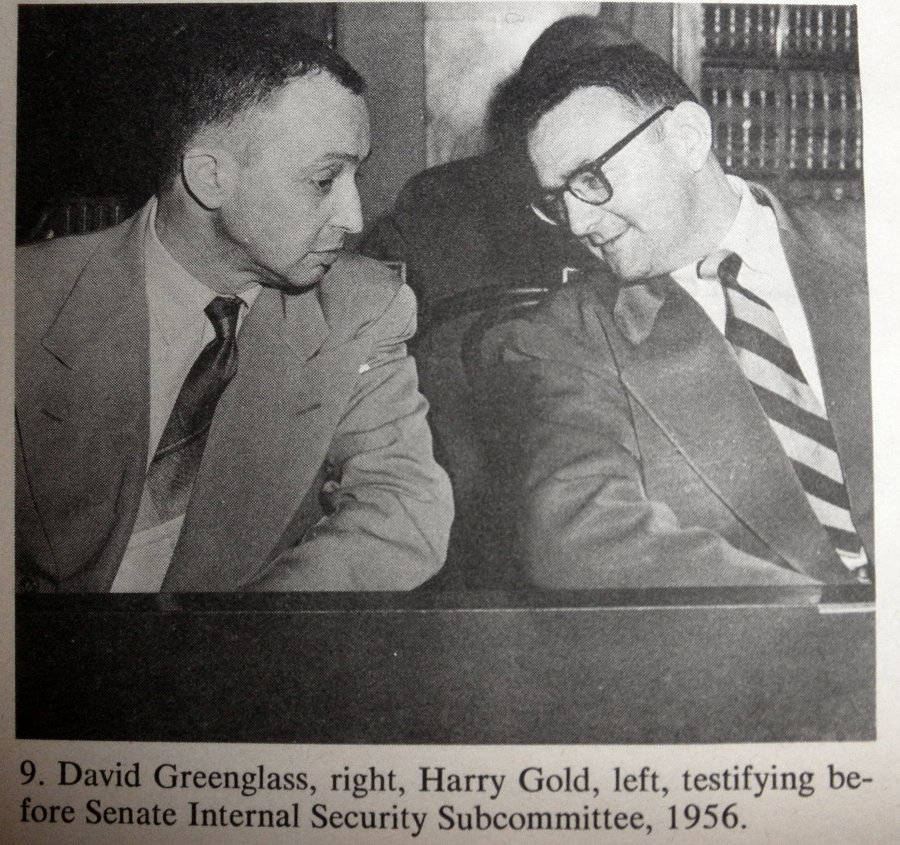
Even the dispicable can’t always dodge the steamroller. Kaufman was rewarded, Greenglass spent a few years in prison, punctuated by testimonies before Congressional Committees to help forge a US package of ideas about a war on International Communism. Appropriate enough, liar lying to other liars to create a consistent set of lies. Not to suggest C0mmunists weren’t also lying. They mostly just weren’t elected and appointed officials sworn to uphold the Constitution of the United States.

Federal Judge Irving Kaufman, who subverted the legal processes in his own courtroom to predjudice the jury in favor of conviction of both Rosenbergs, then sentence them to death in the electric chair:

Born in Brooklyn, New York, Kaufman graduated from Fordham Law School at the age of 21 and worked for two decades as a lawyer in New York City, mostly in private practice but also as an Assistant United States Attorney. From 1949 to 1961, Kaufman served as a judge of the United States District Court for the Southern District of New York, to which he was appointed by President Harry S Truman. In 1961, President John F. Kennedy promoted Kaufman to an appellate position on the United States Court of Appeals for the Second Circuit. He served as an active Second Circuit judge from 1961 to 1987, including a term as Chief Judge from 1973 to 1980. Kaufman assumed senior status in 1987 but continued to hear some cases until his death four years later. On October 7, 1987, he was presented with the Presidential Medal of Freedom by President Ronald Reagan.[1] He died on February 1, 1992 at Mount Sinai Medical Center in Manhattan of pancreatic cancer. He was 81 years old.[2] http://en.wikipedia.org/wiki/Irving_Kaufman

———-

David Greenglass testifying before a Congressional Committee in 1956.

http://www.cbsnews.com/2100-3475_162-563126.html

In 1953, Julius and Ethel Rosenberg were sent to the electric chair for stealing the secret of the atom bomb for the Soviet Union.

They were called the “Atom Spies,” and 50 years ago this summer, they were executed for giving the secret of the atomic bomb to the Soviet Union. They are the only Americans ever executed for espionage in peacetime.
Greenglass was the star witness for the prosecution against the Rosenbergs – and he also happened to be Ethel Rosenberg’s brother. He served 10 years in prison for his actions as a traitor, and then changed his name and dropped out of sight. As he neared 80, Greenglass decided to break his silence. He talked only after 60 Minutes II agreed to disguise his face and voice.

His story begins in the summer of 1950 when the FBI took Greenglass in for questioning. He confessed almost immediately for spying, and quickly implicated Julius, Ethel and his own wife, Ruth. David and the Rosenbergs were arrested. Ruth Greenglass never was charged.

“That’s what I told the FBI,” says Greenglass. “I said, ‘If you indict my wife, you can forget it. I’ll never say a word about anybody.'”

It was quite simply his choice, he says today. So Greenglass says he turned on his sister to save his wife. “I would not sacrifice my wife and my children for my sister. How do you like that?”

Greenglass made his choice when America was at war with communists in Korea, and in fear of the Soviet Union, which had recently tested its own atomic bomb.

The four spies were unlikely actors in a Cold War drama: Julius was an unsuccessful engineer; Ethel spent most of her time raising their two young sons; Greenglass was a draftsman and a tinkerer; and his wife Ruth was a wife and mother. All had been ardent communists.

During World War II, Greenglass, then a sergeant, was posted to Los Alamos, the secret army base in New Mexico, where thousands of scientists and soldiers were building the atom bomb. Although he had a low-level job, Greenglass says he knew what was going on.

He says Julius Rosenberg recruited him to spy with a simple sales pitch: “He said, ‘We have to help our ally.'” By ally, he meant Russia. “Russia was an ally at the time, and that we have to help them with all the information we get.”

Greenglass told the FBI that he gave the Russians sketches and details on the device used to trigger a nuclear blast. But he says he didn’t enjoy being a spy.

“I was continually conscious of what’s behind me. I didn’t enjoy it. I just did it because I said I would,” says Greenglass.

Did he realize how dangerous it was? “I didn’t really think it was, because I didn’t think the Russians were an enemy,” he says.

His career in espionage came to an end soon after the war ended. Back in civilian life, Greenglass and Julius opened a machine shop together. They argued over the business, and over Greenglass’ growing disenchantment with Communism.

Four years later, Julius warned Greenglass that the FBI was on to them, and urged him to flee the country. Greenglass had a family passport picture taken, but he had no intention of using it.

“I didn’t want to leave the United States to go to some hellhole like Russia or China, or wherever the hell he wanted to send me,” says Greenglass. Instead, he took a bus to the Catskill Mountains. “I figured I’d find an obscure place. And I see that the FBI is following me. And they lose me.”

But he never made it to the Catskills. He went into custody instead. And within hours, he began cooperating with the FBI, sealing the Rosenberg’s fate.

He was the star witness for the prosecution at their trial, and he told the jury about his espionage, and described the activities of Julius, Ethel and his wife, Ruth.

He testified that one evening, he and Ruth brought sketches and handwritten notes about the atom bomb to the Rosenberg’s New York apartment. After dinner, Greenglass said they set up a typewriter on a folding bridge table in the living room, and turned his hand-written notes into a neatly-typed document for the Soviets.

Prosecutors asked Greenglass who did the typing. He said under oath that Ethel did the typing. His wife, who also took the stand, told virtually the same story.

That story was virtually the only evidence the government had against Ethel Rosenberg. But prosecutors argued that Ethel’s typing proved she was an active participant in the spy ring. After the trial, they admitted that without the typing testimony, they could never have convinced the jury that Ethel was anything more than the wife of a spy – and that’s not a crime.

Why did Greenglass lie on the stand? He now says Roy Cohn, an assistant prosecutor in the Rosenberg case, made him do it. Cohn went on to become Joseph McCarthy’s right-hand man.

Greenglass says that Cohn encouraged him to testify that he saw Ethel type up the notes. And he says he didn’t realize at the time the importance of that testimony.

But the jury knew how important it was, and found both Julius and Ethel Rosenberg guilty of conspiring to commit espionage. Judge Irving Kaufman imposed the death penalty.

Fifty years later, we know a lot more than anyone could have known in 1951. For example, we know that much of what David Greenglass said about Julius Rosenberg is true. It has been verified by other, independent, sources, all of which confirm that Julius Rosenberg was a Soviet spy. We also know that there is very little, if any, evidence that implicates his wife, Ethel, in any illegal activity.

But in the days before the execution, there were protests and vigils in New York, Washington and Europe. The Rosenbergs both claimed they were innocent, and many believed in them. There were a flurry of last-minute attempts to get a stay of execution. And there was no shortage of Americans who felt that justice was being done.

Up until the last minute, the authorities were willing to commute the death sentences if the Rosenbergs cooperated and named names. But they refused and were executed on June 19, 1953 – without ever breaking their silence.

Why did Greenglass think Julius and Ethel maintained their silence to the end? “One word: stupidity,” says Greenglass, who holds his own sister responsible for her own death.

—————————————-

But I promised a Denouement:

Of course, it makes no difference now. Any more than it matters who killed JFK, Robert Kennedy, MLK, and President Diem of Vietnam.

Doesn’t matter, really, any more than it matters that the Gulf of Tonkin Incident, the incident used to justify the US involvement Vietnam War, was a manufactured incident.  A cynical lie to dupe the US public and arouse patriotic fervor.  Same as the Rosenberg trial.

A pyramid of lies, once the foundation’s in place, builds on itself. Only the names of the liars and the names of the victims change. It’s only incidental that sometimes the victims are also liars.

If any lessons can be learned from it all it’s probably only that the romantic patriots can always be trusted. Trusted to believe the lies. The liars can’t trust one another, but they know they can always trust the romantic patriots. 

The liars couldn’t succeed without them.

Old Jules

Today on Ask Old Jules on Facebook:

Old Jules, what’s your definition of an idealist?

An idealist is a person who locks his teeth into the ankle of an abstraction and doesn’t let go, doesn’t look for another ankle, doesn’t look closely at whatever’s above and below the ankle.

Today on the Ask Old Jules Blog:  Ever Met an Alien?

Old Jules, have you ever met anyone that you suspected might be an alien from another planet or a different dimension?


The Implosion Conspiracy – Louis Nizer – How the USSR got the Atomic Bomb

When Louis Nizer penned The Implosion Conspiracy it might be said enough time had passed to provide perspective.  Two decades had passed since the trial and execution of the Rosenbergs rocked the nation.  Nizer disliked Communists, asserted he’d refuse to defend one in his profession as a defense attorney.  However, he wrote a lengthy analysis of the trial, the transcripts, testimonies, the individuals involved in an even-handed manner that wouldn’t have been possible during the Commie craze days of the events.

Basic events leading to the trial:  The US was developing the atomic bomb at Los Alamos, New Mexico during the late stages of WWII.  The information was being shared with the US Ally, Britain, but kept secret from the US Ally, the USSR.  Elaborate security measures were in place to assure the developments remained the exclusive property of the US and British governments.  Elaborate almost beyond description, devised by the US military and the FBI.

But the British liaison to the project was physicist Klaus Fuchs, a spy for the Soviet Union.  The Germans knew Fuchs to be a Soviet spy, but the British and Americans didn’t, until they gained access to records captured as they advanced into Germany.

Aside from Fuchs, the other USSR source for information about developments at Los Alamos was David Greenglass, a US Army machinist and brother to Ethyl Rosenberg.  Greenglass had been a Communist his entire adult life and had been separated from an earlier military job because of questions about his loyalty and honesty.

David Greenglass stole the crucial secrets of the lens molds used to detonate the bomb, the implosion device.  By hindsight, it’s clear he did it for money, for the same reasons he stole automobile parts, uranium, anything he could lay hands on to sell on the black market.

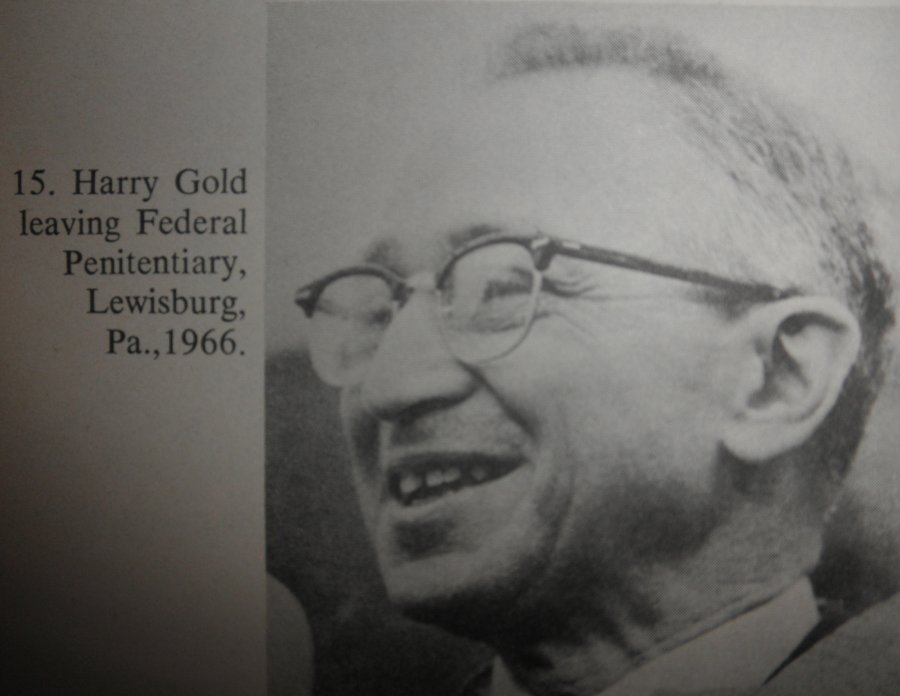
Greenglass passed the secrets to his wife, Ruth, who passed them to Harry Gold.  Gold was the direct connection to the Soviet spymaster, Yakovlev, in the Soviet Embassy.  It’s clear enough from everything provided in evidence and testimony that Gold was a man without loyalty to any nation, ideal, idea, or human being other than himself.  He did it for the money and for no other reason. 

The testimony of Greenglass, awaiting trial for treason, and his wife, Ruth, who  was never charged, provided the testimony connecting Julius and Ethyl Rosenberg to the plot.  The witness stand accusations by Greenglass against his sister and brother-in-law, and the corroborating testimony from his wife, who didn’t yet know whether she’d be charged, constituted almost the only evidence of the prosecution.  The other witnesses directly involved in the plot mostly did not know the Rosenbergs, or barely knew them and knew little of their activities.

Because of the weakness of the government case insofar as testimony and physical evidence of the Rosenberg involvement in actual spy activities, the focus of the prosecution became a trial of Communist ideology.  Witnesses who knew nothing about the plot, the bomb secrets, the Rosenbergs  were called to testify about how they’d switched their own loyalties from Fascism to Communism, then become loyal US citizen-experts making a living selling books and giving lectures on the insidiousness of Communism.

The trial transcripts excerpts Nizer provides make it clear the Defense had two opponents:  the US Attorney prosecutor, and the judge, who constantly intervened, interrupted, interjected in ways clearly intended to prejudice the jury against the defendants.

The key players who gave, or sold the atomic bomb to the USSR in 1945 went free, or were given relatively light sentences.

The Rosenbergs, clearly Communist idealists, possibly part of the plot, died in the electric chair.

When Allied forces found documents in Germany revealing Fuchs as a Soviet spy the chain of resulting indictments followed a path to almost all the conspirators except the Rosenbergs.  Before spymaster Yakovlev fled the US, during his last meeting with Gold, he made the following observations:

Yakovlev:  Don’t you remember anything I tell you?  You’ve been a sitting duck all this time.  We probably are being watched right now.  How we pick such morons I’ll never understand!  We’ve been living in a goldfish bowl because of you.  Idiot!  Idiot! 

I am leaving the country immediately.  I’ll never see you again.  Just go away.  Don’t follow me.

He went.

But the answer to Yakoviev’s question is worth an answer.  They recruited from the US Government, the US military, from US universities, from US businessmen.

From the same pool of applicants who later sold their industries, their industrial tools, secrets, capabilities, economies, and debts to the Peoples Republic of China and other foreign nations.

They weren’t Communists, like the Rosenbergs.  They were opportunists, entrepreneurs, devil-take-the-hindmost politicians, like their descendants a few generations later.

Old Jules

Today on Ask Old Jules:  Value of Animal vs. Human Lives?

Old Jules, does an animal’s life mean as much or nearly as much to you as a human’s, or do you feel animals are insignificant/worthless in comparison? Also, do you believe it is ever morally right to harm/kill animals? What about humans?

‘Squirrelly’ Armijo Survives his own Funeral

A legendary man in the Quemado/Reserve area nicknamed ‘Squirrelly’ Armijo had a good working claim down near Queen’s Head in the Gallos near Apache Creek in the 1940s  through the 1960s. Maybe that’s where he came across a skeleton, and probably just figured he might as well take it home, so he put it in his truck.
Driving up those winding mountain roads he lost control of the truck and rolled it. Squirrelly was thrown clear and the truck caught fire. He must have been out of his head, maybe with a concussion, because he evidently wandered into the mountains in a daze.

The police arrived and found the burned out truck with a skeleton inside and assumed because the truck belonged to him the remains were Squirrelly’s. He was pronounced dead, an expensive funeral held, and he was buried.

Twelve days later Squirrelly wandered out of the woods several miles away, which was a source of, first joy and awe, then suspicion. Initially it was thought he’d killed the person the skeleton belonged to. Then the lawsuits began, the Armijo family and the Funeral home arguing heatedly about who owed money to whom for burying some anonymous skeleton.

The story is so well-known it was used in a book about forensic pathology in New Mexico during the 1990s, the forensic pathologist explaining such a thing could never happen these more enlightened times.  Journey in Forensic Anthropology, Stanley Rhine, University of New Mexico Press, Albuquerque, 1998.  Author Rhine elected to change Squirrelly’s surname to Aramando to avoid any sort of civil action.   The Armijo family’s been herding sheep in that country since the time there was nobody out there but them and Mimbres Apaches.  A lot of them are still there.

“A Premature Funeral

“Bones and Fire
“On June 4, 1959, Forest Service lookouts reported smoke rising from what was assumed to be a small forest fire just east of the Arizona state line, among the 8,000-feet peaks of the San Francisco Mountains of southwestern New Mexico. A firefighting crew dispatched to the scene discovered no forest fire, but an automobile burning furiously on the side of a gravel forest road. Dousing the flames, they found a mass of burned flesh, a skull, some other bones, and some teeth resting inside the burned-out hulk.

“The car was found to belong to a Mr. Armando, well known in the
lightly populated region. His fiery demise prompted the organization of a six-person coroner’s inquest in Catron County. According to former Catron County Sheriff and now Washoe County ( Nevada) Coroner Vernon McCarty, the “six responsible citizens” required by 1950s New Mexico law were most easily found by the justices of the peace at a local bar.

“McCarty observed that an insufficiency of able-bodied citizens could be remedied either by visiting several such spots or by prolonging the official quest at one of them for as long as it took to empanel the necessary six people.

“The resulting coroner’s jury in this case was made up of ranchers, Forest Service firefighters, two bartenders, and a service station attendant. It concluded that the remains were “badly burned and charred beyond positive identification,” according to the Albuquerque Journal for June 17, 1960. Nonetheless, an identification was made by Armando’s two brothers-in-law and the district attorney, apparently functioning in his multiple roles of death investigator and skeletal “expert.” That it was Armando was attested to the by the fact that the human skull was accompanied by some impressively large upper incisors. These prominent choppers had . . .”

Probably Squirrelly never paused to wonder about any moral or ethical issues when he put that skeleton into his truck. He just did it absent-mindedly the way any of us might.  Probably somewhat as Mel did on Gobblers Knob:

Exploring Alley Oop’s Home Circa 1947.

I suppose the Squirrelly story came to mind because it’s a synopsis of the possibilities carried to the ultimate extreme, accompanied by the fact I recently had an email from his great-nephew wanting to ask some questions about my mention of his Queenshead claim in my lost gold mine book.

Old Jules

Previous posts:  Skulls, skeletons and homicides:

The Ruin Skull – A Long Day Ago

Cold Mystery, Fevered Romance and Lost Gold

The Strangeness – Background Context of Unsolved Homicides

Meanwhile, today on Ask Old Jules:  Mirror Holds Information From the Past? –

Old Jules, if someone had a mirror from 40+ years ago, could something be gathered from its backing?

Old Jules replies:  The pastametric pressure of all that stored history would almost certainly explode backward opening a hole into a parallel universe carrying with it the identities and souls of everyone who ever looked into the mirror.  Read more …..


Waiting for Joe Chink – All Dressed Up and Nobody to Fight

NCOs dressing down fresh arrivals who didn’t clean their rifles or had Frito Lay in their gas-mask bags always began, “When Joe Chink comes across that line [fill in the blank].   Joe Chink.  The imaginary Chinamen poised across the DMZ sharpening their bayonets.  We were there to scare them into not coming South, and whup if they did.   50,000 of us.

They’re still over there waiting, those GIs, 25,000 of them, but nowadays I doubt they’re being threatened with Joe Chink.  Joe Chink makes the parts for all their weapons, ammunition, their boots, every item of their equipment.  Joe Chink loans money to their overlords to pay for it and pay their salaries.

And back in the God, Country and My Baby heaven Joe Chink’s athletic shoes carry America’s finest boys and jerseys up and down pastures carrying Joe Chink’s footballs for the edification of cheering spectators wearing Joe Chink’s clothing, head-t0-foot.

Back then most of us who had any knowledge of the Republic of Korea military didn’t have much doubt the ROK Army [South Korean] could whip the pants off the US Army if they wanted to, and have plenty left over to take care of Joe Chink if he came across the DMZ.

But nowadays it’s probably North Koreans the US Army’s scaring into not doing anything ugly to all those factories in South Korea making the rest of what US consumers need but can’t get from Joe Chink.  Factories, and the ROK Army which could almost certainly still whip the pants off those 25,000 GIs still over there.

Thank you for your service,” romantic patriots are fond of saying.

“Kiss my ass,” I’m fond of saying back.

Old Jules

Today on Ask Old Jules:  Is Just One Religion Better?


Vietnam or Korea – Flip a Coin

Even for people who lived it, the past squirms around and tries to avoid close examination of how things looked going in, compared to how things appeared later.

It’s not easy for the mind to put itself into a time when Vietnam wasn’t a name anyone would recognize.  But in 1962 when all the enlisted men in my unit in Massachusetts were required to attend counter-insurgency training the first session required an explanation:  “Vietnam is Indochina.  Next to Laos.” 

Everyone had vivid recollections of a ‘brink of war’ incident in Laos a short while earlier.  And Everyone remembered the daily news reports from a few years earlier of the French getting themselves soundly booted out of French Indochina.

Counter-insurgency training turned out to be the pointee-heads in the US Army feeling around for soldiers interested in one of two particular types of duty.  ‘Special Forces’ units were being organized, mainly for people who’d already gone through Airborne and Ranger training.  Some were already serving in Laos, Cambodia and Thailand.  “Sneaky Petes” they were dubbed.

The other type was the Military Advisory Group.  MAG.  Regular troops stationed in remote areas with Republic of Vietnam units to provide advice, which we Americans were already good at giving a lot of without following it ourselves.

We went through the training, but nobody from my unit volunteered for either of those duties.  But within a couple of months three of us who’d attended the training were levied for overseas, to Military Advisory Groups in Vietnam.  May, or June, 1963, we’d arrive there.

In those early days a soldier, even an enlisted one, had a number of options regarding assignments, despite the initial levies, if he played his cards right.  Sitting down with a friendly Sargeant-Major early in the game and asking advice was the first step.

Vietnam and MAG duty was considered a ‘hardship’ tour, as was Korea, and at that time, Alaska.  It wasn’t combat duty.  It was just one of the particularly lousy places a troop could be sent in the service of Queen Jacqueline Kennedy.

It’s a tough call.”  Sargeant-Major Griggs had served all over the Pacific during WWII and afterward.  “Korea’s colder than hell in the winter.  It’s the reason we call it ‘Frozen Chosen’.”  He held up his hand showing me the finger he’d had shot off while he watched the Chinese coming across the Yalu River during the Korean War. 

But unless you want to take a chance on getting Malaria, you might be better off in Korea.  All that crap down in the South Pacific is a mosquito hell.   If you’d like me to I can call the Sargeant-Major of the Army in the Pentagon and see if we can get you a tour in Korea instead of Indochina.”

So, after kicking it around a while, I asked him to make his call and find me an assignment in Korea.  May, 1963, I found myself on the USNS Sultan with around 2000 other GIs headed for Frozen Chosen.

http://en.wikipedia.org/wiki/USS_Admiral_W._S._Benson_(AP-120) http://en.wikipedia.org/wiki/File:USNS_General_Daniel_I._Sultan_(T-AP-120).jpg

We had a wild old time on the Sultan.  The cruise was a long one because every few hours they’d shut down the engines and lower some kind of sensor to the ocean bottom as part of an ongoing undersea research project.  The sea was generally calm, almost glass most of the way, porpoise and flying fish cutting the surface, sometimes banging themselves against the side of the ship.

Below-decks fortunes by enlisted-man standards were lost and won in 24/7 poker, gin, and rummy games.  So long as there was no fighting nobody cared what went on down there. 

We reached Pearl Harbor and everyone got shore leave for a few hours, preceded by dire warnings about HASP.  Hawaii Armed Services Police.  “Don’t mess with them.  Do what they say or you’ll end up in the stockade or back here on a stretcher.”    But 2000 GIs with cabin-fever were too many even for the HASP to keep in line.  “Be back on board by midnight.  Anyone who isn’t checked in here at midnight is going to wave us goodbye from the stockade.”

Hotel Street briefly had all the usual suspects of merchant mariners, US Navy, and enough wild-assed drunk youngsters off the Sultan to satisfy the most discerning needs of the community.  At 11:30 I was standing in line at a tattoo parlor waiting to get a tattoo on a dare.  The guy in front of me was getting a cherry tattoo with the words, “Here’s mine!  Where’s yours?”

As the artist finished up someone shouted, “We’ve got to get back to the ship.  We’ll be lucky if we make it!”

Luckyluckyluckylucky.  Back on board as everyone began sobering up the head was full of GIs trying to wash off tattoos.  One guy had “In Memory of My Mother” with a rose vine wrapping itself around a tombstone on his bicep.  “She ain’t even dead.  What the hell did I do that for?”

More endless days at sea, a brief stop in Japan for half-dozen of us toughees to get the socks whipped off us outside a bar by three Australian Merchant Mariners, and on to Inchon.

http://en.wikipedia.org/wiki/USS_General_J._C._Breckinridge_(AP-176)

13 months later the trip home on the USNS Breckinridge was a different matter entirely.  The sea was rough, pervasive odor of vomit on all decks.  Discipline severe, pecker checks every few days to ferret out the multitude of VD cases.   I’ve sometimes thought those troop-ship pecker-checkers might have found the sorriest job a human being could have.  Imagine hitting the floor in the morning knowing you’re about to have to watch 2000 of those things milked down before breakfast.

And everyone suddenly knew exactly where Vietnam was.  Rumor had it anyone who was going stateside reassignment would be going there in a few months.

Old Jules


Crazy Lost Gold Mine-ism Re-visited

Crazy Lost Gold Mine-ism

Good morning readers.  Thanks for coming by for a read this cold morning.

The adventurers are getting old and long in the tooth.  I’ve written about this in the past a number of times, but a few days ago I got an email that got me thinking about it again:

Hi J,  I hope this finds you well….cats too.

Age 72. Raised in northern Wyoming. Made my living mostly in electronics and related technology. Army vet.

I have been obsessed with that lost gold mine since 1974 and many years ago received a copy of your CD via a guy I think you know….If you had ever watched him shovel.

Bought your book several years ago. Lots of good stuff but editing sucked on the CD.. Also, someone you might know, Bob Gordon of Dallas went on a trip with us once to the Mangus Mt. area (probably in the early ’80’s) and I think I gave him his first copy of Allens and Byerts.  Excuse me, but I am currently too many margaritas along right now and need to cut this short. I am convinced I have a lot of the story figured out….Yeah, like I’m alone. But seriously. 

I would like to chat with you if only email,  Fergy

I replied to his email saying I’d be willing to discuss it by email.  Back during the day I spent enough hours on the telephone hearing where it was to break me of any desire to ever do that again.  But there’s always a chance someone will come along and add the piece to finish out the puzzle.

When his reply elaborating on his ponderings arrived, he didn’t clear anything up, but it did get me thinking about some things. 

Over the years those phone calls and emails have gradually squeezed down to men of advancing age.  Most of us are getting so old we’re not likely to tromp up high mountains anymore.  And we’re dying off.  Of the hundreds of letters and phone calls I got over the years, every one of the originators had solved the mystery, or was near unto solving it.  As I always was.  Heck, as I still am, though I don’t think about it much anymore.

During the 20th Century thousands of men tried to find that lost mine, as did a similar number during the 19th Century.  There was even a movie made about it in the late 1960s. 

Mackenna’s Gold (1969)

Format:  Mackenna's Gold DVD 
 
Sprawling frontier adventure with Gregory Peck as a sheriff who is given a map, said to show the location of a large cache of gold hidden in a valley, and soon finds he’s the target of every fortune hunter in the West. The star-laden cast also includes Omar Sharif, Telly Savalas, Julie Newmar, Lee J. Cobb, Edward G. Robinson. 123 min. Standard; Soundtracks: English Dolby Digital 5.1, Dolby Digital stereo; Subtitles: English, Chinese, Korean, Portuguese, Spanish, Thai; biographies; theatrical trailers.


But as the 20th Century wound down something interesting happened.  There were no new legions of youngsters replacing the old ones, researching, reading, poring over maps and trekking into remote canyons.   Something was gone, and it’s over.

Old Fergy, Keith and I, a few others are still out there thinking about it, but what we are and what we were is something modern humanity has left behind without noticing it’s done so.  I don’t know what that means, but I’m not overjoyed about it.  My preferred view of humanity and youth is going to require some adjustment.

Old Jules

Previous posts referring to the lost gold mine search:

Crazy Lost Gold Mine-ism, Wilderness Threats, Adventure, Imagination and Keeping the Juices Flowing, Cold Mystery, Fevered Romance and Lost Gold

Today on Ask Old Jules:

Old Jules, which prophet out of known prophets could make a good philosopher, and vice-versa, and why?

http://askoldjules.com/2012/02/13/prophets-and-philosophers/

Back Just Before Hippies Were Invented

1964 was a big year in my life.  I rode the USNS Breckinridge troop ship back from Korea with 2000 other GIs coming home, separated from the army late in June.  Hung around Portales, New Mexico for a while, applied to join the Peace Corps, then hitch-hiked to New York to pass the time until I heard from the Peace Corps.

Beatniks hadn’t yet been displaced by hippies and Greenwich Village was jam-packed with thousands of us implying we were beatniks but carefully not saying so.  Hanging around coffee shops writing poetry, playing chess, saying momentous deep-thinking things back and forth to one another.  Listening to folk singers. 

Being rocked back on our heels in mock, simulated shock and disgust when wheat-straw blondes from Westchester down for the weekend to be beatniks, too, refused our advances.  “WHAT?  You don’t believe in FREE LOVE?”

Which, surprisingly, almost always worked.  Provided you’d done a convincing enough job trickling out the bona fides of being a REAL beatnik.  And wouldn’t even think of hopping in the sack with someone so uncool she didn’t even believe in free love.  Even if she did iron her long hair out straight.

So after I hopped the freight to go back to New Mexico, got thrown in jail in Rochester for taking the wrong train, The Hitch-Hiking Hoodoos, got released to hitch home, things stayed eventful for a while.

A guy from Buffalo picked me up on the Interstate, older guy in his 30s.  When I got in I threw the pillow-case with my belongings into the back seat“I don’t know why I picked you up,” he glanced at me with disgust.  “I never pick up hitch hikers.”  

Over the next few miles he questioned me about who I was, where I was from, what I was doing hitching, what I’d do when I arrived, and I explained it all in loving detail.

“Well, I’ve never had any trouble with a hitch hiker the few times I’ve picked them up.  But if I do ever get killed by a hitcher it will probably be some half-baked kid who doesn’t know what he wants in life.”  He thought about it a minute.  “But I don’t have to worry about you.  You threw your gun into the back seat in that pillow case when you got in.”

We talked a lot over the highway between Rochester and Buffalo.  Enough so he didn’t take the Buffalo exit and carried me down to where a tollway squeezed the traffic going south to Cincinnati, Ohio.  He pulled up beside a car with a family in it, man, woman and a couple of kids.  Motioned for them to roll down the passenger-side window.

“Are you going on through Cincinnati?  I’ve carried this guy all the way from Rochester and he’s okay.  He’s going to New Mexico.  But I’d like to get him a ride past Cincinnati.  He’ll never get through that town walking.”

The couple said they were just going to Cincinnati, but we were all watching the traffic edge forward to the toll gates.  “We’d better take him anyway.  He might not get another ride.”

The Buffalo guy was right, but it began the next phase of a long story.  Guess I’d best hold it for another day.

Old Jules