Category Archives: Native Americans

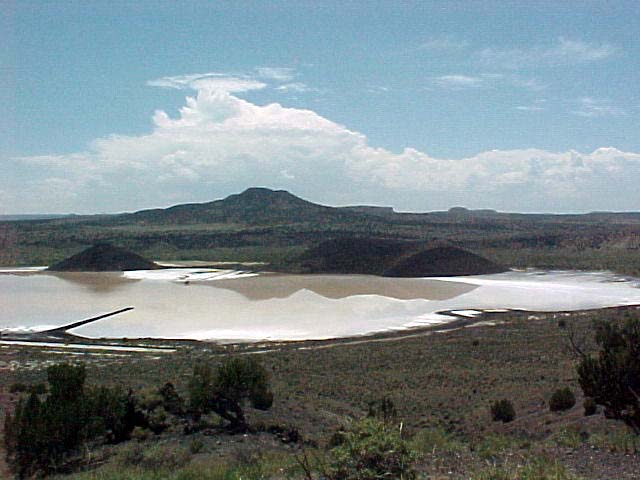
This is Zuni Salt Lake


It’s about forty miles south of the Zuni Rez, almost in AZ.

There’s a ghost town you can barely see in the pic…. used to be a considerable community down in there when it was private land, from the mid-1800s until the 1950s, evaporating salt from the huge concrete beds.  Most of the buildings are still intact, though they’re going away rapidly.

Today it belongs to the Zuni tribe, one section of land, but it’s not in the national trust as part of the Rez.  Tribes have been acquiring a lot of land from casino monies and other ways during the past decades, making the lands acquired ‘tribal’, but not Rez, which puts them into an interestingly ambiguous position insofar as road maintenance and county taxes.

Salt Lake was acquired as a piece of a lawsuit against the US government involving an airplane with a hydrogen bomb aboard that crashed on the Rez, with first responders being Zunis, but which the feds didn’t bother telling them about the bomb, leaving emergency workers exposed to hazardous materials without knowing it.  The tribe got a few million out of that, which they used to purchase 60k acres of land to the south of the Rez, but Salt Lake was thrown in as a bonus.
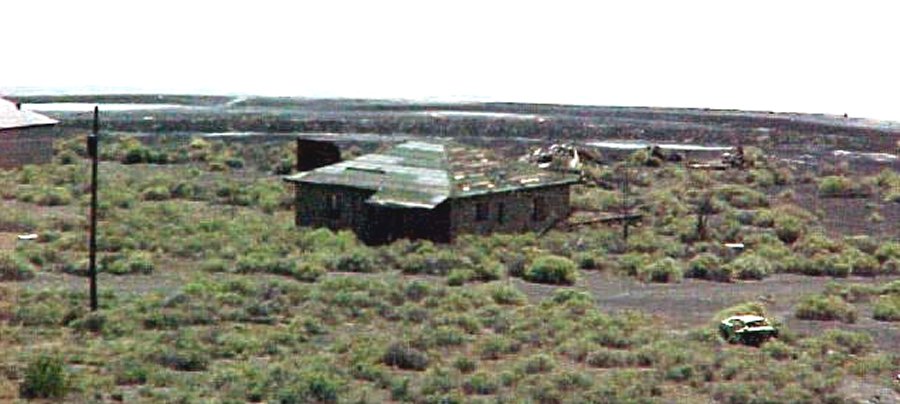
Salt Lake’s a sacred place for the Zunis, home of Salt Mother.  If you are willing to risk hopping the fence and wandering around down there ….. it’s a volcano crater with a hollow secondary plug you can climb, then a spiral trail leading back down inside … that’s where most of the rituals for Salt Mother are held… but all over that section you’ll pass over various religious items from recent times you’d be well advised to leave untouched.

Salt Lake used to be the place all the warring tribes got their salt throughout history.  A place where a constant truce between enemy tribes existed.

It’s also part of what the power companies would love to strip mine.   The great percentage of the desert surrounding it, from north of Springerville, and Saint Johns, Arizona is government land with shallow coal deposits comparatively inexpensive to ‘recover’.  They’ve already converted the desert on the Arizona side to a wasteland.  Still desert, but more in the moonscape vein than the usual, regular arid country mode.

The people in El Paso and Phoenix need electricity so they can fire up their hair dryers every morning, and keep their homes refrigerated.   Those places have climates uncomfortable to the human skin most of the time and they’d rather savage a few million acres of country they’ve never visited and never will than suffer a few degrees of discomfort and use a towel to dry their hair.

Which the Zuni believe would thoroughly piss off Salt Mother, with considerable resulting pain for the Zunis, and all the rest of us.

They might be right.

The Zuni and a few commie-pinko-obstructionist greenie environmentalists are the only people who give a damn, and the other desert-dwellers in the area would welcome the jobs helping ravage the country around them would bring to the area.  The last time I looked the Zuni tribe was burning up a lot of tribal money trying to stop the mine expansion into New Mexico.  The prospects didn’t appear promising because the New Mexico government, the feds, and the mining interests were stacked up singing songs of human progress and greater good.

Heck, it’s been a few years now.  Maybe they’re already mining it.  Probably easier to ask someone in Phoenix or El Paso whether the hair dryer worked this morning and if it did, assume that desert has gone to the moon.

Old Jules
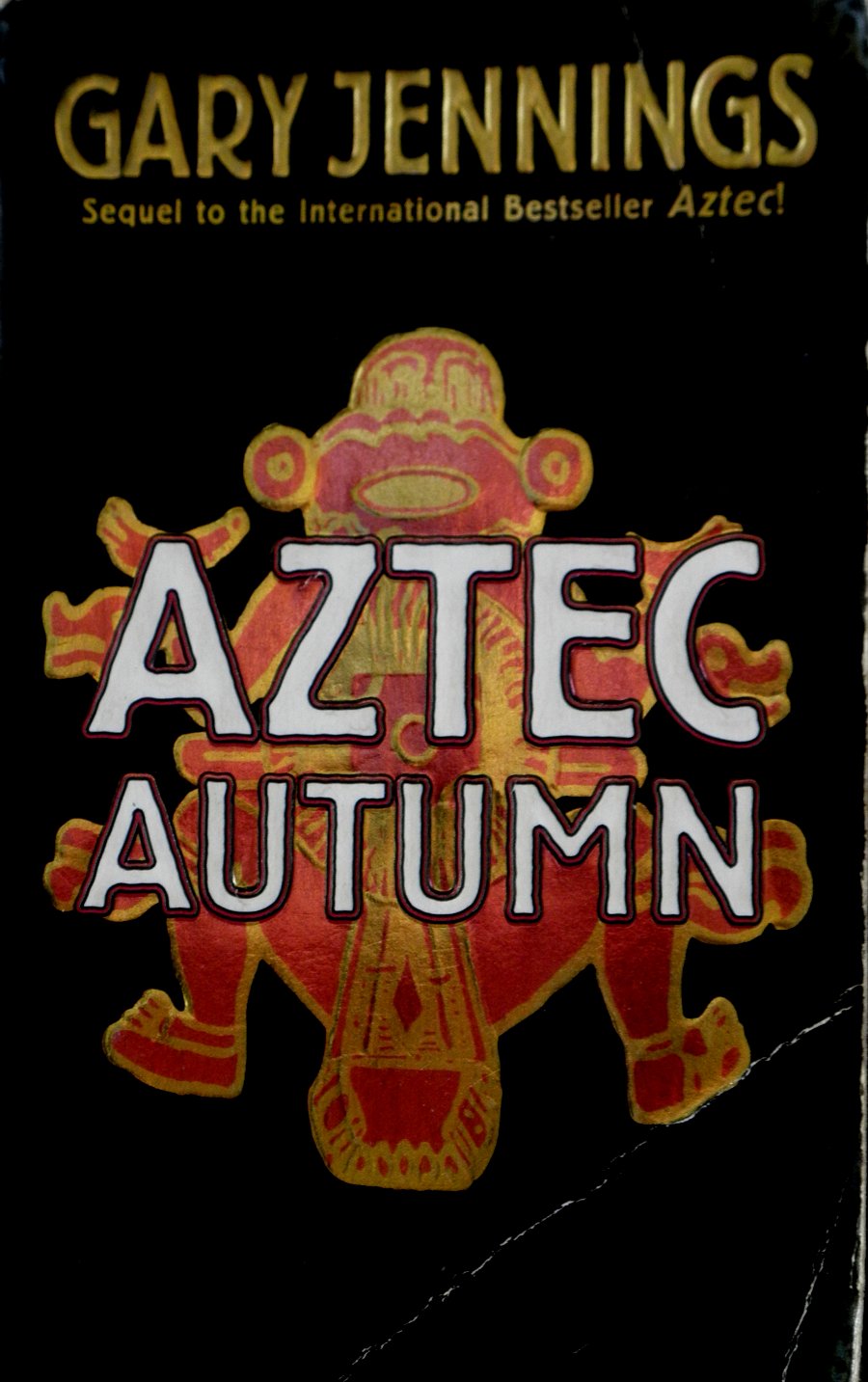
 

Book Review – Aztec Autumn, Gary Jennings

When I came across this tome in a thrift store for a quarter it reminded me I’d read and enjoyed Aztec, by Jennings sometime in the 1990s and enjoyed.  So I snagged it for a quarter and got a read I’d be hard pressed to sell for less than a couple of bucks .

Jennings does a workman-like job of creating strong characters and a seductive plot involving a personal grudge leading to the Mixton War between the tribes of Mexico and the Spaniards.  While Coronado was battling his way around New Mexico searching for the Seven Cities of Cibola, an Aztlan nobleman leading a consortium of tribes and slaves with the intention of driving all whites out of Mexico briefly spilled a lot of Spanish blood.

The primary character, Tenamaxtli, encounters Cabeza de Vaca, Estevan, and Frey Marcos de Niza in various wanderings through the plot, and visits villages throughout northern Mexico for a probably realistic-enough look at conditions and cultures.  There’s also an underlying flow of attitudes and behavior portrayed in the interactions of the tribes among themselves, the Spanish treatment of slaves, both native and imported, and the policies of the Church toward the indigents.

All in all a good read.  If I had it to do over, though, I think I’d have searched out Aztec and given it a re-read before pursuing this one.

Old Jules

A Sobering View of Y2K

That tribal talk a week or so ago got me thinking about an old Mescalero bud I’ve known on and off through the parts of this lifetime that matter. We go long times without seeing one another, but we top off the long spells by bumping into one another in unlikely places.

Kurtiss and I first met working on Skeeter Jenkins’ ranch near Kenna, New Mexico. Must have been 1958, ’59. Skeeter wasn’t a joyful man on his ranch-hands. He’d berate Kurtiss by comparing him to us white lads, then he’d turn around five minutes later and tell us we weren’t half as good cowboying as that damned Apache over there.

I guess the only good that came out of that job was the bond that formed between Kurtiss and me, and the lifelong lesson I learned about not trusting ranchers. Old Skeeter cheated all of us spang out of a hard week pay and spread around the word none of us were worth the board he’d furnished working for him.  Fortunately, he’d done that sort of thing before, so nobody paid him any mind when it came to hiring us for other jobs, which we frequently got screwed out of our pay on, same as with Skeeter.

The last time I ran into Kurtiss must have been 1998, ’99. He and a couple of Arizona broncos were sitting on the tailgate of a truck parked for a powwow in Albuquerque when I came across them and a case of beer that was too close to gone to be any good.  When we’d killed what was left of that case we kicked out of there and spent the night singing ’50s rock and roll songs, getting roaring drunk and filling in on the minutia of our lives since we’d last met.

Spent a good bit of time talking about Y2K also, which was much on my mind at the time, and they’d never heard of it.   I expected that and explained to them. Those Apaches thought that just might be something really fine.

Kurtiss immediately thought of a state cop over toward Ruidoso who’s bad about kicking around folks who’ve had a bit much to drink, “I hope nobody gets to that prick before I do.”

Those Apaches demonstrated some rich imagination concerning the nuances of Y2K aftermath.  “We’ll be able to run raids on the Rio Grande tribes like the old days!”   This didn’t interest the Arizonians.  They were fairly sure Mexico would be open for a bit of raiding, though, and better pickings.

Then Kurtiss went thoughtful.  “I’d sure as hell like to kill me some Navajo.”  He told the old story of Bosque Redondo and all the slaughter the Din’e did to the less numerous Mescalero during the decade years they shared the reservation.   Apache numbers there were decimated until only 1800 were left alive when they escaped the rez and went back to Mescalero.

Bosque Redondo was fresh on his mind because of Navajo whines he heard at the Gathering of the Tribes Powwow. “Mescalero’s too large for such few people.” (The enormous Din’e Rez is getting jam-packed these days, by comparison.) “They ought to take some of that land away and give it to us,” was the general theme.

We fought our way down,” Kurtiss quoted himself. “And you guys multiply like rabbits.”

This led to some laughs and sneers about the theme of the Gathering of Nations Powwow, “Celebrating 400 years of unity (among the tribes)“.

I wonder where that was,” one of the Coyoteros grunted. “The Apache never saw it and neither did our enemies. Those Mexicans and Pima and all those town Indians were lucky the whites came along to save them.”

Mostly those guys were in agreement in their scorn for other southwestern tribes. “They don’t know how to use the land,” gesturing with a nod and a slight pucker of the lips.

A whole different view of the end of life as we know it.

Old Jules


Near-extinct Spiritual Weeds Springing up on the Rez

There’s a temptation to believe we moderns living within the boundaries of the US have a lot in common with one another, and in many ways we do.  But what we have in common with one another isn’t necessarily what we believe we do.  One of those areas of commonality probably has to do with the perception of Native Americans as a somewhat generic group of people with a lot in common with one-another and far less in common with whites and Hispanics.

 This leads to a lot of packages of thinking among people not living on the Rez, whether they’re whites, second or third generation off-Rez Native Americans, Hispanics, or folks who carry a bit of tribal blood in their veins a few generations old, but never lived on the Rez.

 One of the packages contains a romanticized view that the cultural heritages on the Rez still exist, still carry some similarity to those before the coming of Europeans, and are similar to one-another.   The phrase, ‘the old ways’ has found its way into the language of those seduced into buying the package.  The “I-know-the-old-ways-too-because-my-granddad-was-a-Cherokee [or Apache, etc]” syndrome frequently found among artists, blue-eyed-blond-haired ladies in Atlanta, and in cities across the nation among those who see something wrong with modern life and hunger for a deeper spiritual life.

 The fact is, those tribes don’t have much at all in common with one another, aside from being packaged and treated as though they were similar for at least a century-and-a-half by the US Government, far longer for some in the eastern US.   Bits and pieces of the original cultures have survived on some reservations, less on some, almost none on some.  And those cultures remaining are as unlike one another as they are different from European.

But I’ve digressed.  I began this blog entry with the intention of talking about a particular cultural phenomenon re-emerging on Navajo tribal lands, strange and not easily understood by anyone including the Din’e living there.  The Skin Walker.  A person who voluntarily adopts witch-like and other behaviors that violate the most fundamental religious/spiritual forbiddings of the tribe.  The subject, even the name is such that even most Din’e have only a general  understanding of what those practices are.  But there’s no lack of agreement that Skin Walkers are a threat to everyone, a cause for revulsion, anger, fear, hatred.

 On the Pine Hill Navajo (self-determination) Rez south of Ramah Chapter there’s a place that’s come to be called, “Skin-Walker Valley” by everyone who’s willing to use the word.  Interestingly, the valley extends into an area checkerboarded with white-owned lands called Candy Kitchen.

 What’s surprising is that, while the Skin-Walker phenomenon clearly began on Din’e land, the weirdness and negativity spills over and permeates into the white community. Although some good folks, both white and Din’e, live and make out as best they can in this remote area, it’s shockingly pervaded by all manner of crime. Speed freaks and laboratories are drawn there as by a magnet.

 Violence is pandemic. As an example, a few years ago three Navajo youths tortured and killed an octogenerian white woman in her home, puncturing her skull with a screwdriver eighteen times until she died. She had nothing much worth stealing. They did it for ‘fun’.  When the lads were identified they were arrested on the Rez, where tribal authorities resisted giving them up for white justice for several days.

 Meanwhile, deep in the Rez to the north, near Pueblo Pintada, another valley is rapidly coming to be known as ‘Skin-Walker Valley’, and another at Alamo, far to the southeast.

 This phenomenon, were it discussed openly and recognized as in need of investigation, would be far easier for tribal officials to develop strategies to deal with. Open discussion would also help nearby residents and authorities off the Rez toward a clearer perspective concerning an energy and a belief system that is oozing up through the cracks of their lives, slouching across from tribal lands.

But this is getting too long and it’s time to turn out the chickens.  Maybe more later.

Edit:  7:50am

This poem was written a few years ago about an event on the minds of northwest New Mexico at the time.  The fact it happened near ‘Skin-Walker Valley’ was a cause for a lot of concern and confusion.

Last Friday Night

“It’s just too deep in the Rez
For a white-man style killing,” he says:
“A bullet each to the back of the head,
At Pueblo Pentada two brothers are dead;
Two Navajo brothers are dead.

“It isn’t a skin-walker killing;
No feud, not a woman too willing.
A knife, a club, a thirty-ought-six
Is common enough and at least doesn’t mix
White man logic with Navajo tricks:
No bullet each to the back of the head!
But at Pueblo Pentada two brothers are dead!
Two Navajo brothers are dead.”

From Bread Springs to Shiprock you’ll hear people say
“No place is safe now! You can’t get away!”
Nageezi to Yah Ta Hay
You’ll hear the Din’e people say
“The killer’s from Pie Town or Santa Fe.
Some white, somehow, somewhere must pay
For a bullet each to the back of the head!
At Pueblo Pentada two brothers are dead!
Two Navajo brothers are dead.”

Old Jules

Discarded Jewelry

Ruidoso Steak-House
Glanced at her reflection
In the plate-glass window
New squash-blossom turquoise
Sassy Stetson
Patted 50ish blonde curls
And wished
They’d eaten at the casino
Where this didn’t happen
Wrinkled pretty nose
Don’t give him anything
He’ll just get drunk!” Stage whispered
To her Houston lady friend
As though he wasn’t there
She was right of course
Except the old man Mescalero
Was already drunk
He turned away
Then turned back and mumbled
Sing the Song of Life each day
Or when the time arrives you won’t know how
To sing the Song of Death.”

Old Jules


My Genes Apologize to Your Genes

It’s become popular during the past few decades for individuals believing they have come connection to a group of dead men judged by hindsight to have harmed other groups of dead men, to apologize for the offending activities of the deceased they believe they’re responsible for to living people it didn’t happen to.

My granddad had a cap and ball pistol he inherited from his granddad.  The butt had a lot of notches carved into it, which probably meant the weapon had been the instrument of the untimely deaths of a good many people who might otherwise have lived longer.

Genetic karma?

The man pictured above owned slaves in his lifetime, fought in wars and feuds.  He was the great-grandfather of the man below, my biological father.

But his daughter was the mother of this man:  Cole Younger.  Killer, bank and train robber, rider with Quantrill during the Civil War.

Meanwhile the same genetic pool was spreading itself across the continent like some sexually transmitted disease.   Cherokee, Choctaw and other tribes sneaked into the mix.

So here’s the problem: 

I want to make all this right with all the people in the gene pool derived from the dead people who were wronged by the dead people within my own gene pool.  I’d like to offer them an apology for the ugly stuff those who share my gene pool did to them.

For instance, the guy with all the hair on his face was part of the ugliness perpetrated against the Cherokee and Choctaw and the Trail of Tears.  Naturally, if I’m to rid myself of the overwhelming guilt I need to apologize to some group of living people those painful things did not happen to.  Cherokee and Choctaw, preferably.

But, whoooowah!  The people on the Cherokee and Choctaw side of my gene pool are me.  How can I convey my regrets to the Cherokee and Choctaw in me from the guilt-laden Anglo side?  And can I assume without fear of error that my Cherokee and Choctaw genes don’t include someone who did something to some other group I need to absolve?

Is there some living group of people out there seething over something that didn’t happen to them, but happened to their ancestors as a result of some offense committed by holders of the Cherokee Choctaw genes?

And what’s all that turmoil and guilt churning around in my gene pool doing to my cells and whatnot?

Just to be on the safe side and try to set things right I think I’d best give myself a present as a gesture to calm things down.  Yeah, I think I’ll eat an orange or banana.

Old Jules


Best Quick and Dirty Movie Scenes Ever – Baggage Check

There’s a strange logic here:

Life’s full of choices of this sort but we rarely recognize them.


There are several of these, difficult to pick one over another:

We’ve probably all experienced this thing with a pesky fly.


This one’s in a class all its own


I still have a vivid recollection of seeing this for the first time 60 years ago and wanting to get under my seat at the theater.


These two scenes almost belong in the same movie.  Chilling.

 Cabaret – Tomorrow Belongs to Me – “Do you think you can control them?”

http://youtu.be/3EE_BoCw9zk

 Panzerlied (Battle of the Bulge with english intro)  “Too young!  They’re too young!”

http://youtu.be/8JDkdc246QQ

Zulu – The final attack – A brief history of the European conquest of everywhere else.  “They don’t have any tenors among them.  That’s for sure.”

It all sort of runs together:  “Tell your sweetheart not to pine, to be glad her boy’s in line.”

Yankee Doodle Dandy http://youtu.be/2R1jiVcIGcg

Patton – “At least you’ll be able to tell them you didn’t spend it shovelling shit in Louisiana.”


Followed by this:

Network – Mad as Hell Scene  – “I’m mad as hell and I’m not going to take it anymore!”


Cool Hand Luke – “I don’t care if it rains or freezes.”


Treasure of Sierra Madre – “Badges?  We don’t nee no stinkin badges

http://wwyoutubehttp://www.youtube.com/watch?v=CGcVhoHdRFow.youtube.com/embed/MsVi2RqE7ek

North by Northwest – Climbing the American ladder of success


The Alamo – “When I was a boy any girl would turn up a bunch of trees like that, cut a bunch down and one for a ridge pole and build herself a cabin alongside the other.  Seems like all anyone would ever need.”


The Outlaw Josie Wales parleys with 10 Bears – “Dying ain’t so hard for people like you and me.  It’s living that’s hard.  Governments don’t live here.  It’s people who live here.  I’m saying people can live here together without butchering one another.”


Wilderness Threats


A man I went to grammar school, junior high and some high school with, then several decades later became reacquainted and huff-puffed a lot of up and down mountain canyons recently began visiting this blog.  If no other reader enjoys the tale, at least he will, because he was there:

The following is copyrighted material from a book I wrote once.  I give myself permission to use it here. [ Crazy Lost Gold Mine-ism]

I’ve never concerned myself much with the dangers of wild animals during my extensive time in the woods.  Mostly they’ll mind their own business if a person takes reasonable precautions and doesn’t go out of his way to provoke them.  In New Mexico backlands of the late 20th century the real threats usually come in the form of humans.  When those happen they usually come as suddenly and unexpectedly as finding one’s self in the middle of a herd of elk.

Grasshopper Canyon and Stinking Springs are on the northern end of the Zunis below Oso Ridge on the west face of the mesa.  Two canyons run north and south, parallel to the face, half a mile apart, separated from one another by steep, narrow walls several hundred feet high.  These two walls consist of coral reef from some ancient time when Oso Ridge was an island.  The canyons aren’t easily accessible, so I prospected there a while.

The land below Oso Ridge around Grasshopper Canyon is checker-boarded in ownership.  Grasshopper is all National Forest, but immediately south is a section of Navajo tribal land.  Adjacent to the Navajo section is a section belonging to the Zuni tribe.  Fences between these sections allow a person to always know whether he’s on public land or tribal land.

I was working Grasshopper Canyon with my friend Keith, a stockbroker from Santa Fe. We separated and worked the arroyos southward parallel to one another, gradually moving toward the fence delineating the Navajo section.  Occasionally we’d call out through the woods to make certain we weren’t out-distancing one another.  The last thing either of us expected was an encounter with another human in those woods.

I was bent over taking samples from the bed of a shallow arroyo, just deep enough so when I straightened I could view the small meadow around me.  I stood getting my breath and stretching the kinks out of my back when I saw a man dressed in cammies backing out of the woods at the edge of the meadow.  He was being stealthy, carrying a .22 rifle in a ready position.  He had twenty to thirty colorful birds hanging on a string around his neck the way a fisherman carries a stringer of fish.  As I watched, almost invisible to him with only the top of my head showing above the arroyo, his eyes searched the woods to his right where Keith was working.  Keith had called out from there a few moments previously.

Still watching Keith’s direction the man backed toward me until he was only a few feet away from me.  “Nice string of birds.”  I scrambled up the bank while he spun and pointed the .22 in my general direction.

My partner’s in the woods back behind you.  You don’t want to be firing in that direction.”  We studied one another.  He eyed the shoulder rig I was wearing and the butt of the 9 mm automatic showing from the bottom.  “’You out here killing songbirds?”

Mister Songbird was a young man and from appearances, a Zuni.  He stared a moment longer before answering.  My impression was that he was considering whether I was a game warden or other law enforcement official.  “I’m getting them for Zuni New Year.  They let us do that.”

We talked for a few minutes, me accepting what he said at face value, and the tension gradually dissolved.  He agreed to get the hell out of the canyon because we were working there and wouldn’t want any shooting.  Besides, we’d probably messed up his hunt with our yelling and bustling around the woods.  I watched him back into the meadow to the south and allowed myself to sigh with relief.

Back in Santa Fe I called the US Fish and Game Department.  I thought there was a remote chance the feds were really allowing Zunis to kill protected species birds on National Forest land.  If so, I was prepared to be indignant.

When I told my story the fed was silent a moment.  “You are a lucky man,” he observed.  “You confronted an armed man committing multiple Federal felonies and he didn’t shoot you.”

*     The following didn’t make it into the final draft of the manuscript: The fed also observed the Zuni lad would have spent a lot more years in prison for killing those songbirds than he would have for killing me.  I drew a good bit of comfort from knowing that.

Eventually logic won out over the other appeals of the Zuni Mountains as a location for the lost gold mine I was searching for.  Although the Zunis were handy for me, being only a few hours drive from Santa Fe, they were too far from Tucson.

Also, too many prominent landmarks in the area would have immediately brought the original survivors back.  The route I imagined them following would have taken them within sight of Los Gigantes and enough other one-of-a-kind eccentricities to make the location unmistakable.

Even the Big Notch and Little Notch in the Continental Divide can be seen from miles to the west.  There’s nothing else similar to it in North America.

Marty Robbins – Little Green Valley

http://youtu.be/WT5qegD28Wo

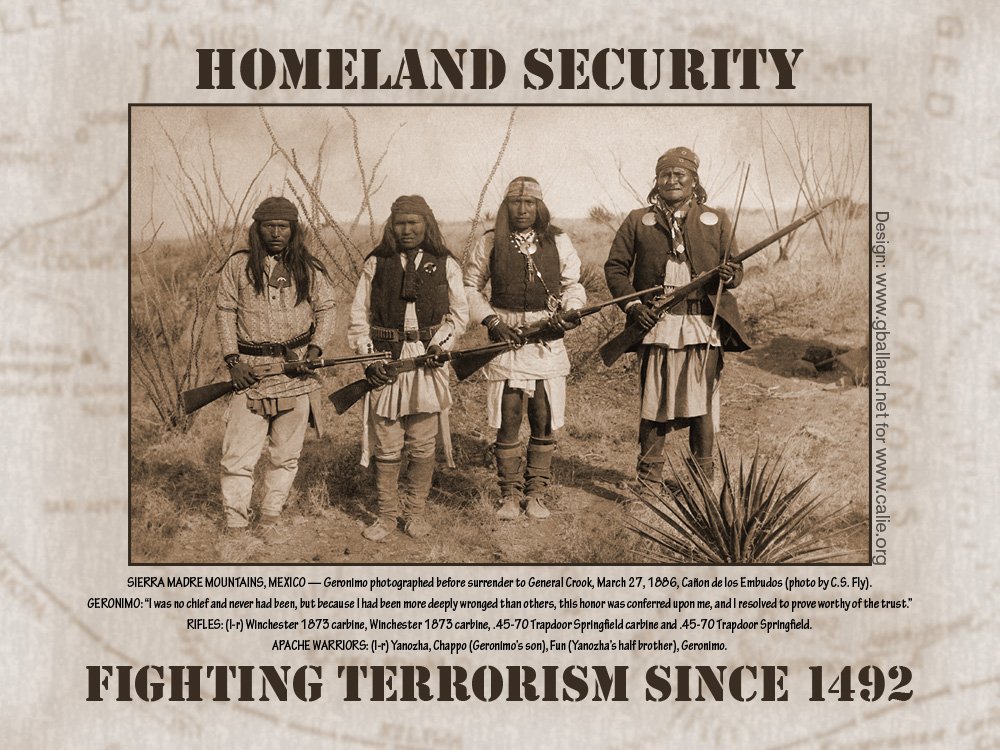
Eavesdropping on Homeland Security

One of the ways I keep up on world events and amuse myself when I’m alone in an eating establishment without a book involves eavesdropping.  I gaze at the food, a picture on the wall, something outdoors through the plate glass, and I listen to conversations at the nearby tables.

It’s curiosity, as much as anything else.  And mostly I lose interest quickly because so often the talk is about some sports event, concert, or a television show.  But sometimes it’s pay dirt.

A while before I left New Mexico I was doing the listening routine to the goings-on among several BDU and otherwise uniform clad people of both sexes, all toting large-bore automatic pistols in holsters hanging from their waists.

Turned out these folks were part of a conference between Federal and State Homeland Security forces (whatever that might be).  I’d never seen that particular uniform combination, nor the patches and medallions, so I listened as closely as I dared without drawing attention to myself.

The eating establishment is on San Felipe Tribal Lands.  Maybe that’s why the conversation drifted in that direction.

Fed:  “Do you have any issues dealing with any of the tribes?”

NM State:  “You wouldn’t believe it.  Everything’s an issue.”

And so on in detail involving a lot of ‘issues’ a person born in 1943 (me), would never have believed could ever be discussed by government employees as though they should be part of any reality here.  The attitude was clearly that the tribes were being irresponsible in reluctance and obstruction of the aims of Homeland Security.

The topic broadened in a while.

NM State:  “I think a lot of people just don’t understand what we’re doing.  They don’t realize how dangerous things are for them.”

Fed:  “That’s a problem all over the country.  I was in Phoenix a few weeks ago .  . ., etc”

That NM Homeland Security lady all dressed up with a gun and nowhere to go was wrong.

I believe most people understand perfectly well what they’re doing and have an inkling of why they’re doing it.  It isn’t a lack of understanding that makes me smile and cheer inside, knowing the tribes, at least, are dragging their feet.

I think people are beginning to ‘realize how dangerous things are for them’, to the extent that dangers actually exist in this hostile reality we’ve chosen for ourselves.   But at least a part of the ‘danger’  people feel involves a new kind of policeman who thinks the US Constitution is obstructionist.

They just don’t know what needs to be done about it.

Tom Russell–Claude Dallas
http://youtu.be/MzYTh2xV5NU

The Rez – “Where commodity cheese rules!”


Johnny Cash– Ballad of Ira Hayes

http://youtu.be/NdNV9JX-Xi8

I was browsing Native American forums, blogs and websites, reading about ethnic supremacy.  One NA has a signature mentioning the Navajo Rez, “where commodity cheese rules!”

Don’t get me wrong.  The NAs on those sites weren’t complaining about all the privileges they get that non-Native Americans don’t.

But the accusations and complaints about racism in this government and among non-Natives got me thinking on the subject.

Ethnic supremacy manifests itself in a lot of ways.  Including patronizing, providing special privilege and freebies for no explainable reason.

I had to conclude, after thinking on it a while, they are absolutely right.  I can’t fathom any other explanation than ethnic supremacy for the commodity cheese, health care, tax-free land, and all the rest:

  • Do you (and your government) believe Native Americans are stupid?
  • Do you believe after more than a century of generations being schooled the same as your own children, that Native Americans are more ignorant than non-Native children when they come to the legal age of maturity?
  • Do you believe they are lazy and irresponsible?

I’ll bet you answered no on all counts.

Okay.

So think about it.

Why are you providing Native Americans free commodities you have to pay for?

Why, exactly, do you believe Native Americans can’t get jobs, same as you do, to pay for their own food?

Why do you provide them roads and schools on the reservations with your tax money, when you have to also pay for the roads and schools in your own communities?

Why, exactly, do you believe Native Americans can’t pay taxes to build schools for their children and roads in their communities with their taxes the same as you do? 

Why do you believe they shouldn’t pay property taxes on their lands, same as you do?

You have to worry, try to find health insurance, pay for dentists, plan and save, give up other things so you can assure when you or your kids get sick there’s a doctor, a hospital.  Braces for their teeth, dentists to drill the cavities.

Why do you believe Native Americans can’t provide for their own health and dental care, same as you do?  Save, sacrifice, plan.  Same as you have to do in your own life?

The reason is obvious enough.

You are an ethnic supremacist. Somewhere inside yourself you believe now, today, Native Americans are more ignorant than you, less intelligent, less responsible, shiftless. 

Almost 150 years after your ancestors finished killing off as many as they could catch and sending the surviving ancestors of the ones living on the Rez today to live on reservations you’re still thinking of them exactly the way your ancestors thought of them.  Still telling them indirectly there’s something primitive inside them keeping them from being able to function in a modern world.  Still telling them they’re victims, even though they were born naked same as you and I were.

You believe they are a bunch of lazy drunks and can’t work, can’t plan, can’t take responsibility for their own lives.

No matter how much you pad it with sensitivity and phony warmth, with sentimentality and fantasies about how sweetly they love the land, with excuses about how badly men who have been dead centuries treated other long-dead men, the bottom line is you believe they can’t make it the same way you do. 

If you didn’t believe they were all those things, you’d scream to high heavenInstead, you wrap yourselves with good feelings about all that’s being done for the NAs.  Give yourselves warm hugs.

And they hate you for it.
Nobody loves an ethnic supremacist.

Old Jules

Afterthought:  Ira Hayes didn’t die drunk in that ditch because of anything white men did to his ancestors.  He didn’t die in that ditch because of anything white men did directly to him during his own lifetime.  Ira Hayes died in that ditch because he didn’t come home from WWII and do what the other men pictured in that flag raising did when they returned.  He died in that ditch because it was what was expected of him.